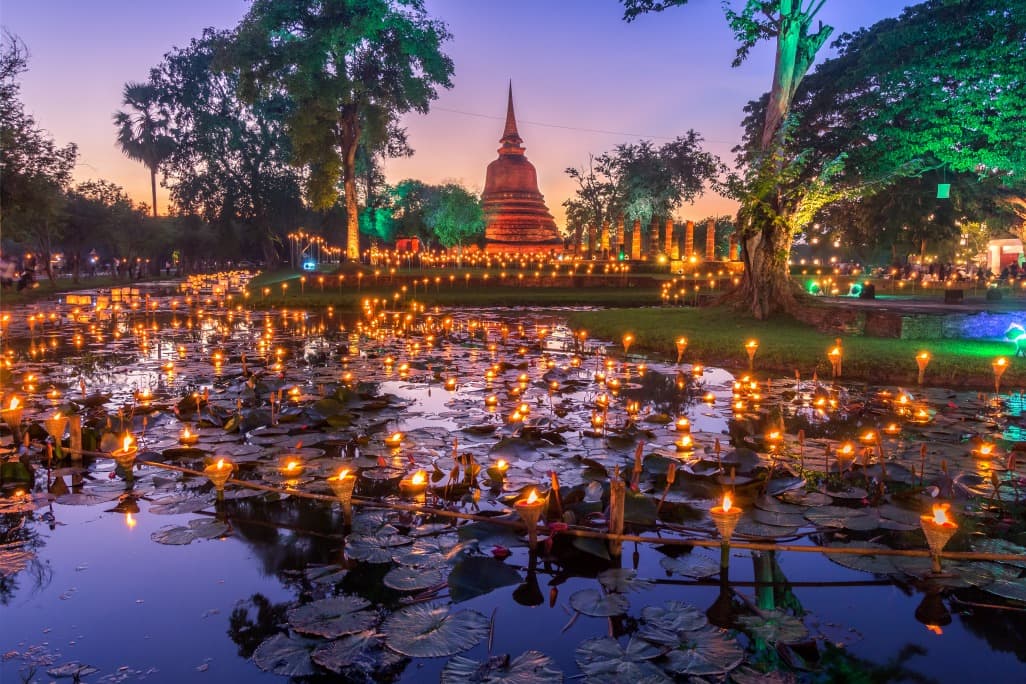
Loy Krathong, the Festival of Lights
Everything you need to know about Loy Krathong in Thailand: the festival's origins, the meaning of krathong, how celebrations unfold, and which cities offer the most magical moments during your journey.
It's one of Thailand's most beautiful festivals. With Brahmanical origins, Loy Krathong is also known as the Festival of Lights. For the occasion, thousands of floating offerings illuminated by candlelight grace the waters across the country. If you're visiting Thailand at the same time, you simply cannot miss this enchanting tradition! Discover everything you need to know about Loy Krathong…
A festival inspired by the Hindu celebration of Diwali
The Loy Krathong, also called the Festival of Lights, owes its origins to King Phra-Ruang and his royal consort, Nang Nopphama during the Sukhothai kingdom. Drawing inspiration from the Hindu festival of Diwālī, this celebration honors the goddess of waters. While in India they pay homage to the goddess of the Ganges, in Thailand they venerate her equivalent, known as Phra Mae Khongkha. The festival, originally Brahmanical in nature, was later adapted by Thai Buddhists. In writings by King Rama IV dating from 1863, it became a ceremony in honor of Buddha.
Since then, Loy Krathong is celebrated each year during the full moon of the 12th lunar month. On this date and throughout the country, particularly along riverbanks, near waterways, and by the seaside, Thai people gather to seek Buddha's blessing and ask for his mercy. Beyond its religious significance, Loy Krathong also marks the end of the rainy season.
Lanterns and floating offerings
To venerate Buddha, Thai people create their own offerings. These are the famous krathong, small vessels traditionally shaped like lotus flowers (though you'll also see them as swans or stupas), crafted from banana leaves. On these miniature boats are placed candles along with incense and flowers. Beyond these three essentials, many add additional offerings such as strands of hair, sweets, coins, or notes…
The offerings are then placed on the water of a river, stream, or beach. Symbolically, this allows people to seek forgiveness, release their grudges and anger, and grant themselves a fresh start. In essence, these offerings are meant to bring good fortune to those who set them afloat. It's even said that if a candle's flame remains lit until the krathong disappears from view, your wish will come true…
Where to celebrate Loy Krathong in Thailand?
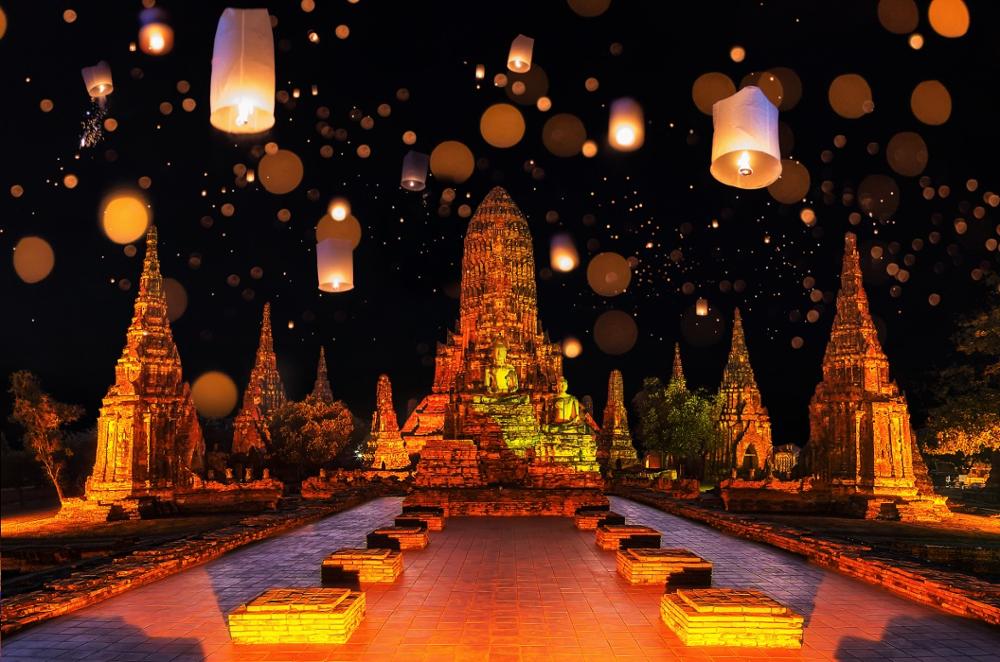
Loy Krathong is one of the country's most beautiful celebrations because it invites the entire nation to join the festivities. Beyond the release of offerings, fireworks, parades, krathong races, and beauty contests take place throughout the country. The best place to celebrate Loy Krathong is its birthplace: Sukhothai. For the occasion, the former capital of the Siamese kingdom organizes a spectacular light and sound show with traditional dances. In Bangkok, the spectacle is grand given the presence of the mighty Chao Phraya River. The festivities reach their peak along its banks near the Rama VIII Bridge!
Chiang Mai is also a prime destination to celebrate Loy Krathong. This is because the famous Lantern Festival, Yi Peng, is also celebrated there on the same day. In fact, they're often confused with one another! You can also celebrate Loy Krathong in Ayutthaya, Suphanburi, Tak, Samut Songkhram, or even on the beaches of the southern islands.
Frequently asked questions
Loy Krathong takes place each year during the full moon of the 12th lunar month, which generally corresponds to November. The exact date varies from year to year.
The best places are Sukhothai (the festival's birthplace), Bangkok at Rama VIII Bridge, and Chiang Mai, which also celebrates Yi Peng.
Yes, tourists can purchase krathong or make their own to participate in this tradition respectfully.
Loy Krathong uses floating offerings, while Yi Peng uses flying lanterns. Both are celebrated on the same day in Chiang Mai.

