Exploring Sak Yant, Thailand's Sacred Tattoo
Sak Yant, Thailand's sacred tattoo, blends prayers, symbols, blessing and ritual. Here's everything you need to know about this ancestral practice.
Sak Yant translates to "tattoo" (sak) and "sacred prayer" (yant). Thailand's sacred tattoo is an ancestral practice that first spread among Buddhist monks, then soldiers, before becoming more widespread. From its origins to the legends, rituals and symbolism of the Sak Yant ceremony… here's everything you need to know about the powers of Thailand's sacred tattoo!
Origins and legends of the Thai tattoo, Sak Yant
It is difficult to trace the exact origins of this traditional tattoo. Its roots are believed to lie in shamanic traditions before being connected to Buddhist practices. In Thailand, the sacred tattoo first appeared in temples. Monks would have themselves tattooed with bamboo by great master monks in order to receive the protections of religious prayers.
These spiritual practices also inspired Thai soldiers and Khmer warriors. Indeed, over the centuries, these warriors invoked the powers of Sak Yant (such as strength or even invisibility) by having themselves tattooed before going into battle! This divine protection earned them a most fearsome reputation. A Thai legend even recounts that Thailand was never occupied by the enemy. Why? Because its soldiers are warriors rendered invisible and indestructible thanks to their sacred tattoos…
Although it has become popularized and widely spread, Sak Yant is still venerated by Thai people. And it cannot be done by just anyone!
Today, it is still possible to have yourself tattooed by Buddhist monks. The most famous place in Thailand to have yourself tattooed with bamboo according to tradition is Wat Bang Phra. If not the monks, it is those called Ajarn or atchane ("master" or "teacher" in Thai) who can perform the Sak Yant while respecting the very specific rituals of the ceremony…
Meaning of Sak Yant
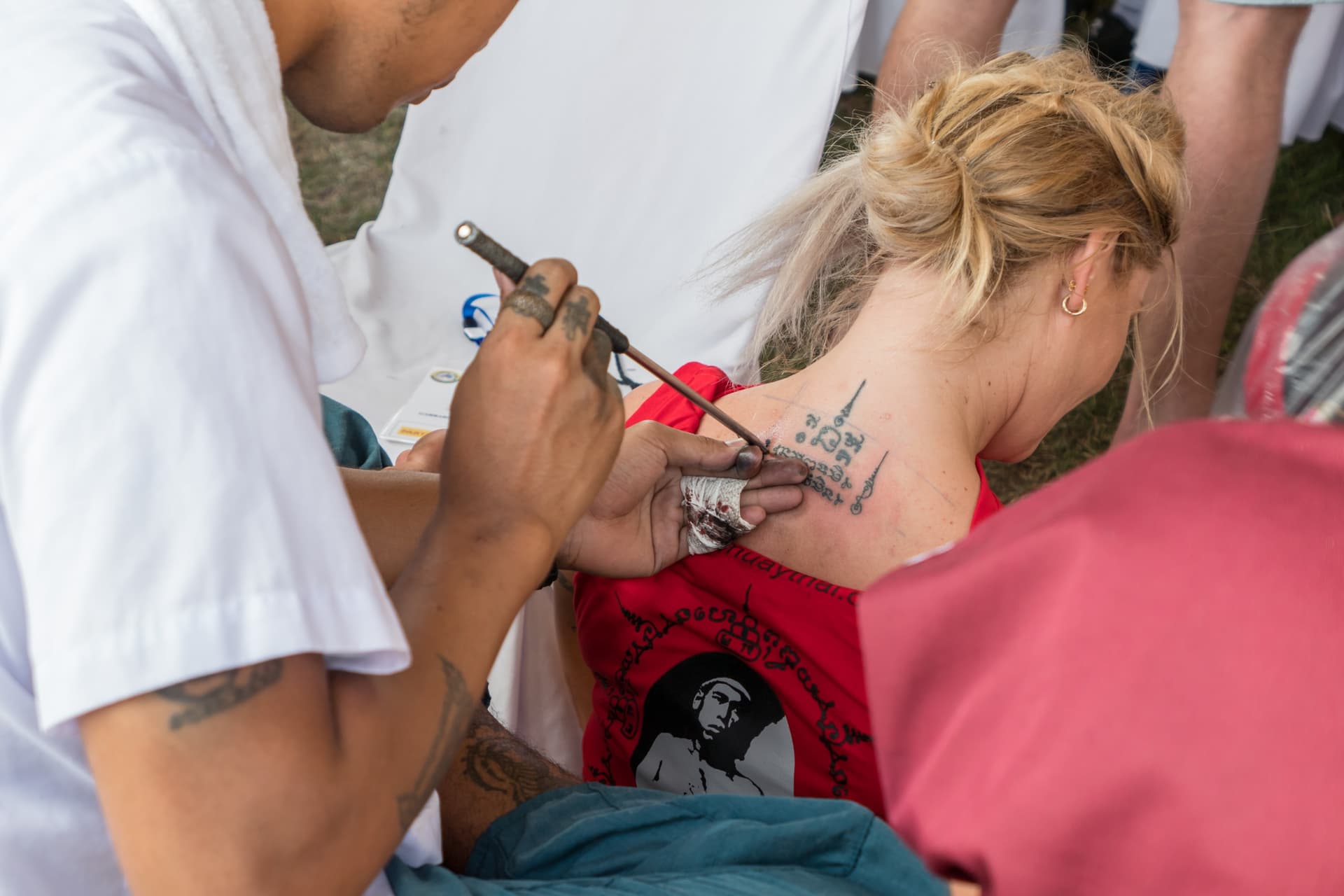
Sak Yant refers to a type of pyramidal-shaped tattoo, written in Sanskrit, that is laden with spiritual significance. Sak Yant masters and Buddhist monks draw these tattoos by hand with great precision.
The tattoo comprises three essential elements:
The Yantras: sacred motifs that incorporate ancient symbols, representations of animals or deities, as well as mantras and prayers;
Phrases in Pali: they are believed to confer magical powers on the wearer;
A final blessing, pronounced once the tattoo is completed.
For them to reveal their full potential, they require the blessing of a master. The design is selected based on your preferences, your personal history and your future aspirations. Each ceremony begins with a consultation with the Sak Yant master, who explains the meanings of the motifs and helps you choose the one that best matches your wishes.
Before the tattoo begins, a sacred prayer establishes a spiritual connection, followed by a second prayer in Pali to activate the tattoo's powers.
List of different motifs: which Sak Yant to choose?
Sak Yant tattoos are distinguished by their intricate motifs and powerful symbols. Each carries unique meanings and powers.
Hah Taew (5 Lines)
The Hah Taew or Ha Taew in Thailand was once primarily a female tattoo, less common among Thai people. This tattoo has become increasingly popular since 2016, especially after Angelina Jolie selected it for her back.
This tattoo is believed to bring health and prosperity and is composed of five vertical lines of phrases in Pali. The lines have specific meanings, ranging from protection against negative influences to increased luck and charisma.
Gao Yord (Nine Peaks)
The Gao Yord is another popular tattoo, offering luck and protection against magical and physical attacks. Composed of nine upward-pointing arrows, it is often considered one of the first Sak Yant. The number 9, symbolizing the nine peaks of Mount Meru in Buddhist mythology and the nine planets in Hindu cosmology, is associated with progress and luck. The design also includes squares containing protective spells written in Khom, an ancient Khmer language, and ovals representing the nine Buddhas.
Paed Tidt (8 Directions)
The Paed Tidt is appreciated for its geometric design, which includes a circle with phrases in Khom and eight ovals representing Lord Buddha. Each is oriented toward a direction of the universe.
This tattoo is designed to offer protection against threats coming from all directions and is often associated with travel, due to its compass-like design. Travelers appreciate it for its reputation of providing protection during adventures.
Yant Suea Koo (Twin Tigers Tattoo)
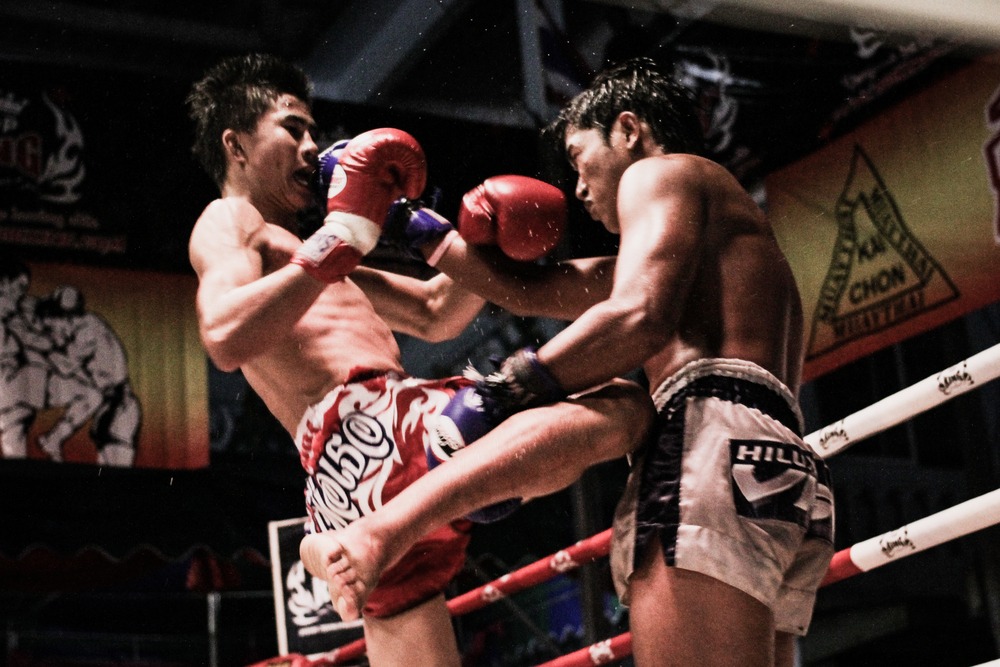
The Suea Koo or twin tigers tattoo is symbolized by two powerful tigers, representing combativeness and resilience. Framed by phrases in Pali in a crescent moon, the tigers are also symbols of the light that guides in darkness. This tattoo is very popular among people in high-risk professions such as police officers and Muay Thai fighters, as well as business leaders seeking to strengthen their leadership and surpass their competitors. It is considered a professional asset, bringing success and protection in their field.
Where to get a Sak Yant tattoo?
Ajarn Noo Kanpai is a renowned address for a Sak Yant. He is the famous master who tattooed Angelina Jolie. His rates can be high, due to his international reputation.
Arjanneng-Thai Sak Yant Tattoo is another trustworthy address to consider.
Rituals and ceremony of Sak Yant
The Sak Yant rituals can vary from one school to another and depending on the tattoo master. But most of the time, the Sak Yant ceremony, which always takes place in a dedicated room (named Sunnak), unfolds as follows: the tattoo wearer must reflect and pay homage to Buddha before committing to respect the rules of conduct required by the master. After several personal and spiritual exchanges, the master can define which sacred tattoo corresponds most to the request. The ceremony ends with a blessing so that the tattooed person can benefit from their new divine powers. Throughout the session, chants and prayers punctuate the ceremony.
Traditionally, the sacred tattoo is performed with a bamboo point even though modernity tends to replace it with a metal point. The ink used must also be blessed. In some cases, ground relics of an ancient monk are even added to it! As for the motifs, as you've understood, you don't really choose them but they are imposed on you. What is certain is that it is preferable to have yourself tattooed on the upper body. And for good reason, the closer the tattoo is to the head (symbol of the soul and sacred part of the body), the more powerful its abilities will be…
Frequently asked questions
Prices range from 1,000 to 5,000 baht depending on the master and the complexity of the motif. Renowned masters like Ajarn Noo Kanpai charge higher rates.
Traditional bamboo tattooing can be more painful than modern techniques, but the pain remains bearable and is part of the spiritual ritual.
No, the master generally chooses the motif based on your personality, your spiritual needs and your personal history after consultation.
A complete session typically lasts 2 to 4 hours, including consultation, rituals, tattooing and final blessing.