The 6 Most Beautiful Temples of Bangkok
Visiting the city of Bangkok without seeing its temples is like going to a desert island without enjoying the beach… It's (almost) pointless! These historical and cultural monuments, but above all spiritual and sacred sites, are the symbols of the capital.
Visiting the city of Bangkok without seeing its temples is like going to a desert island without enjoying the beach… It's (almost) pointless! These historical and cultural monuments, but above all spiritual and sacred sites, are the symbols of the capital. And there's no shortage of choice since there are no fewer than 400 religious buildings! So we've compiled the top 6 most beautiful temples in Bangkok that you absolutely must discover!
In summary:
Bangkok is home to hundreds of temples, here are the most beautiful and most popular ones:
- Wat Pho, the Temple of the Reclining Buddha
- Wat Phra Kaew, the Temple of the Emerald Buddha at the Grand Palace
- Wat Saket, the Temple of the Golden Mount
- Wat Arun, the Temple of Dawn
- Wat Traimit, the Temple of the Golden Buddha
- Wat Benchamabophit Dusitwanaram, the Marble Temple
1. Wat Pho, the Temple of the Reclining Buddha
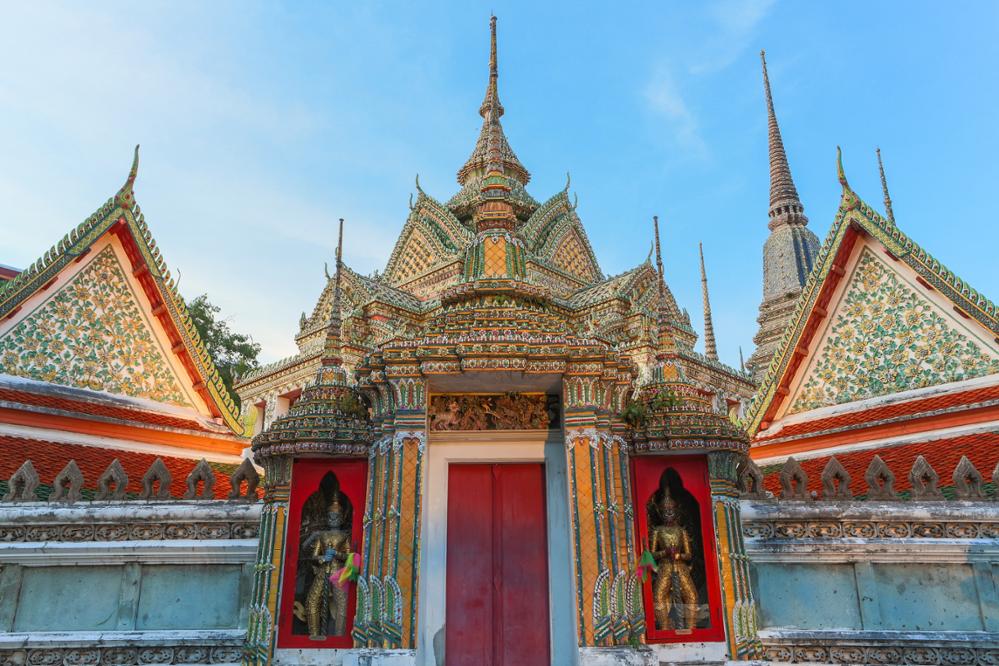
It is the largest temple in Bangkok! But if it's above all renowned as one of the most beautiful temples in the city, it's for its famous and iconic Reclining Buddha! Measuring 45 meters long and 15 meters high, the Buddha statue is covered in gold leaf. As for its feet, they are inlaid with mother-of-pearl… Beyond the Reclining Buddha, all the temple's pagodas offer a spectacular display of colors. Especially at the end of the day when the last rays of sunlight make all the thousands of stones adorning the façades sparkle…
Good to know: Wat Pho is also known for housing one of the country's most important schools of traditional Thai massage and traditional medicine.
Address: 2 Sanamchai Road, Grand Palace Subdistrict, Pranakorn District, Bangkok 10200
Hours: Daily from 8am to 7:30pm
Admission*: 300 Baht per adult (foreign visitor rate). Free entry for children under 120 cm tall.
How to get there? Several options are available to reach Wat Pho:
- By bus: numbers 1, 3, 6, 9, 12, 25, 32, 44, 47, 48, 53, 82;
- By boat (Chao Phraya Express): get off at Tha Chang pier, Tha Tien pier or Pak Klong Talad pier;
- By taxi;
- By tuk tuk.
2. Wat Phra Kaew, the Temple of the Emerald Buddha at the Grand Palace
Better known as the Temple of the Emerald Buddha, Wat Phra Kaew is one of the country's most sacred temples. And for good reason—it houses a sublime Buddha statue carved from a block of jade dating from the 15th century (no less!). Its origins aren't always clear, but this statue, venerated by Thai people, is believed to have been discovered in Chiang Mai and brought to the capital in 1884. The temple is located in the heart of the Grand Palace, the royal residence, on the left bank of the Chao Phraya River.
Address: Na Phra Lan Rd, Phra Borom Maha Ratchawang, Phra Nakhon, Bangkok 10200, Thailand
Hours: Daily from 8:30am to 4:30pm.
Admission*: 500 Baht per person (foreign visitor rate). The price includes access to Wat Phra Kaew and Queen Sirikit's textile museum, also located within the Grand Palace grounds. Note that tickets are sold until 1 hour before closing, i.e., until 3:30pm.
How to get there? Several options are available to reach Wat Phra Kaew:
- By bus: numbers 1, 3, 9, 15, 25, 30, 32, 33, 43, 44, 47, 53, 59, 64, 80, 82, 91, 203, 503, 508, 512;
- By boat (Chao Phraya Express): get off at Tha Chang pier, Tha Tien pier or Pak Klong Talad pier;
- By taxi;
- By tuk tuk.
3. Wat Saket, the Temple of the Golden Mount
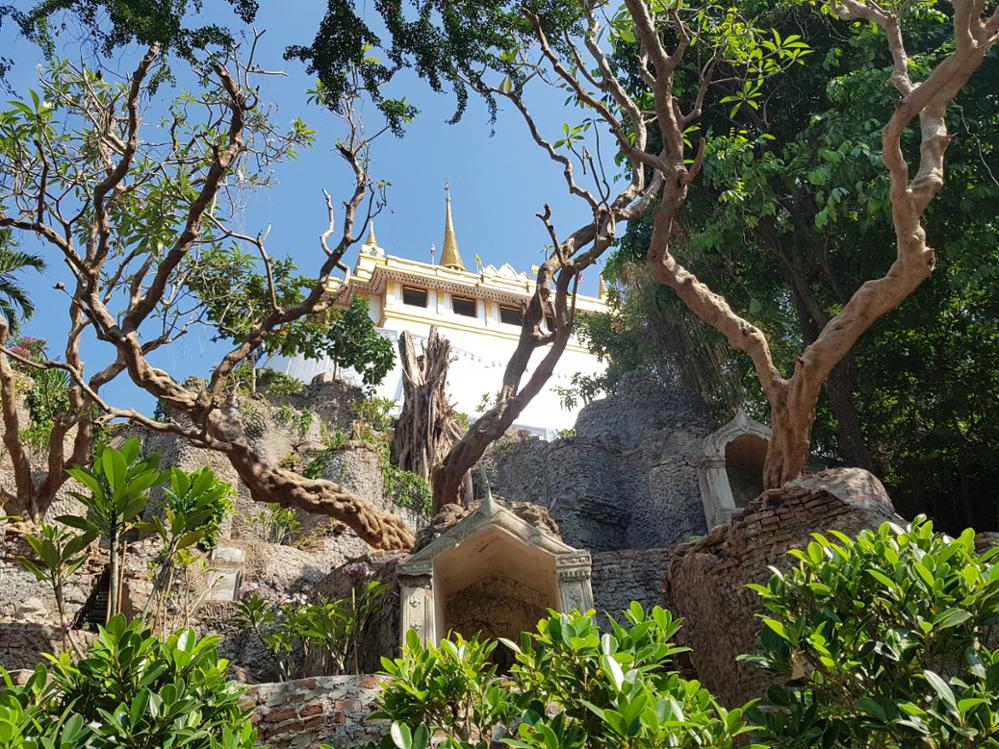
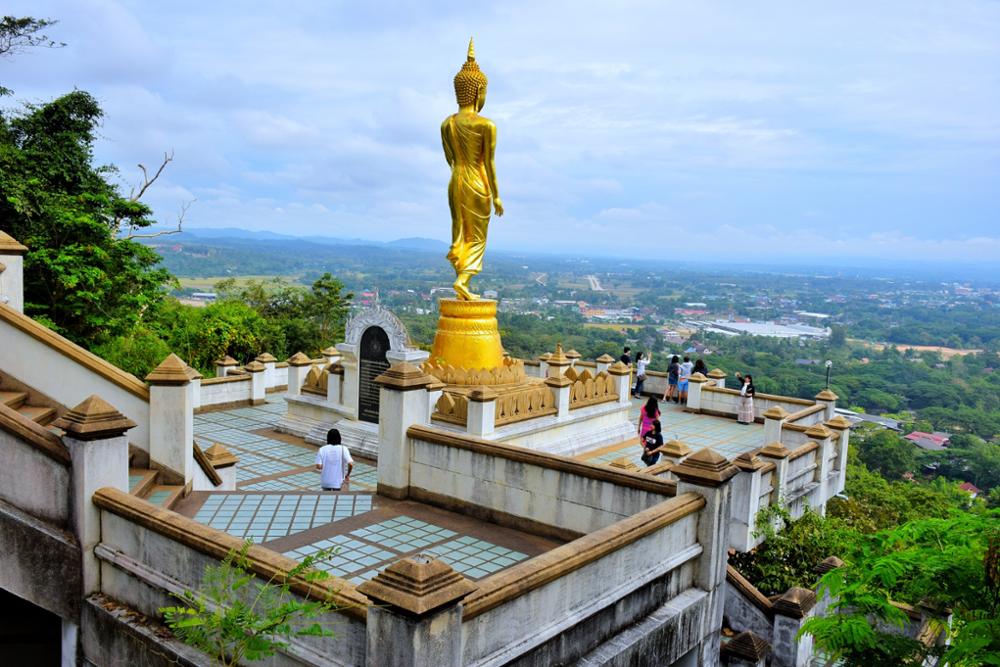
Also called the Temple of the Golden Mount, Wat Saket was built on an artificial hill. The 58-meter-high chedi is said to contain relics of the Buddha. To reach it, you must climb 318 steps! Along the way, you'll encounter numerous animal statues set in an almost fairytale-like setting. Don't forget to ring the bells as you ascend and finish with three gong strikes (one gong as a sign of respect to Buddha, another for Buddhism in general, and a final one for the monks). Once at the summit, you'll discover a breathtaking panorama, one of Bangkok's most spectacular views!
Address: 344 Chakkraphatdi Phong Rd, Ban Bat, Pom Prap Sattru Phai, Bangkok 10100, Thailand
Hours: Daily from 7:30am to 7pm.
Admission*: 100 Baht per person (foreign visitor rate).
How to get there? Several options are available to reach Wat Saket:
- By bus: numbers 8, 15, 37, 47, 49;
- By boat (Chao Phraya Express): get off at Phan Fa Lilat pier (Khlong Saen Saep) or at Tha Phu Khao Thong pier (Khlong Phadung Krung Kasem);
- By taxi;
- By tuk tuk.
4. Wat Arun, the Temple of Dawn
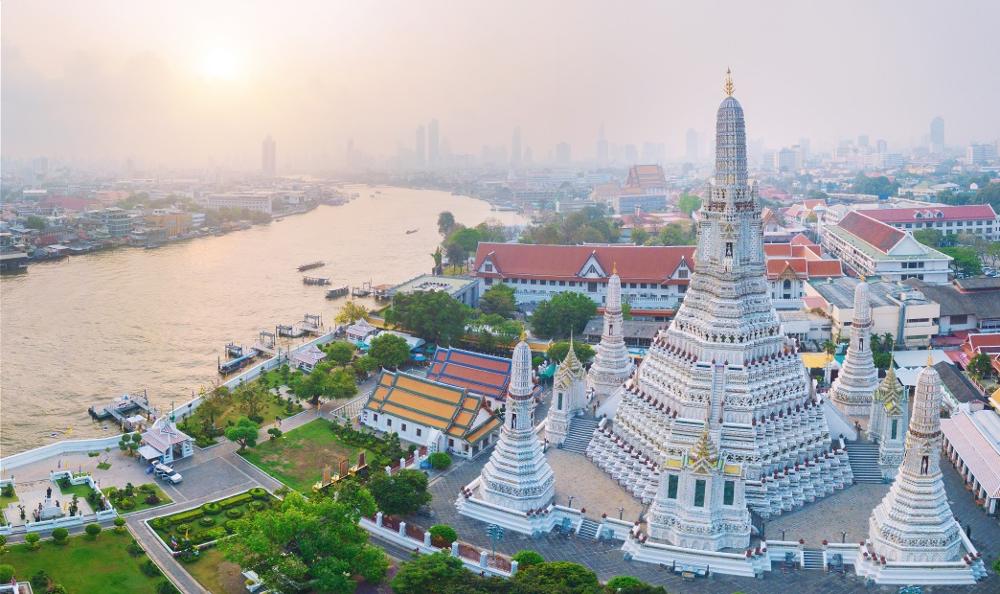
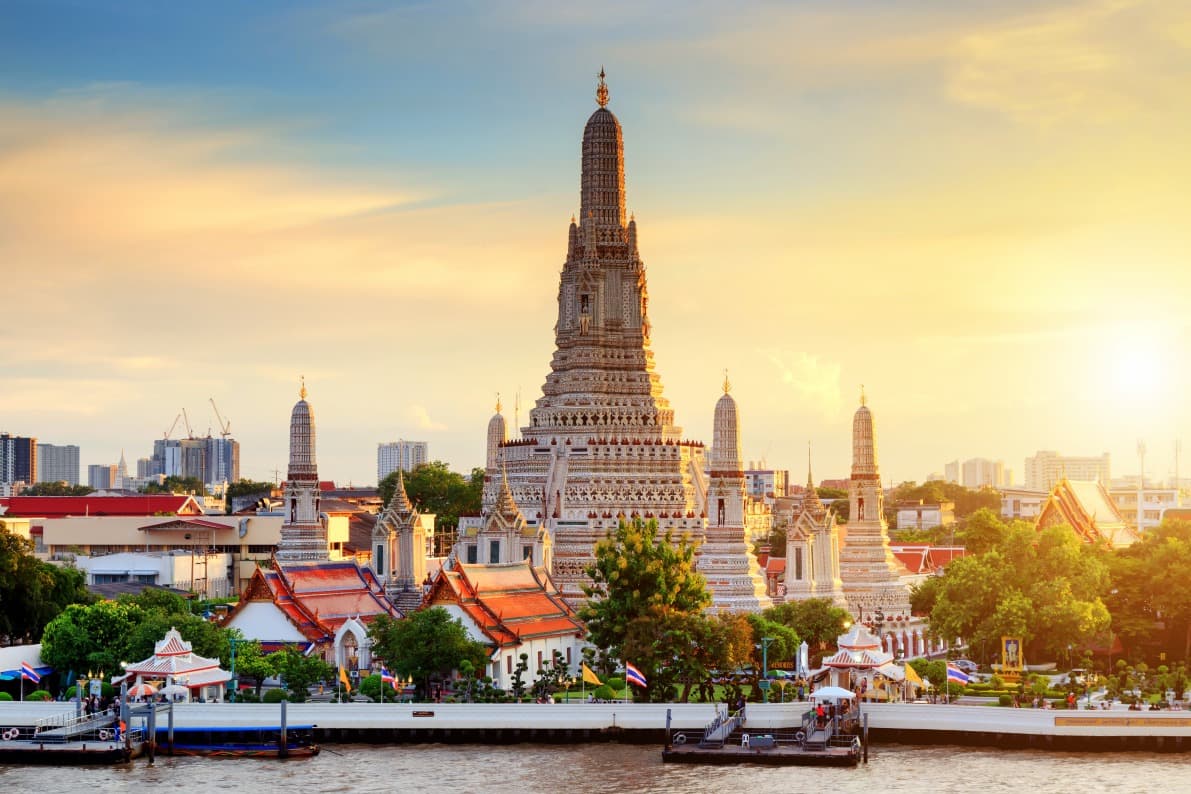
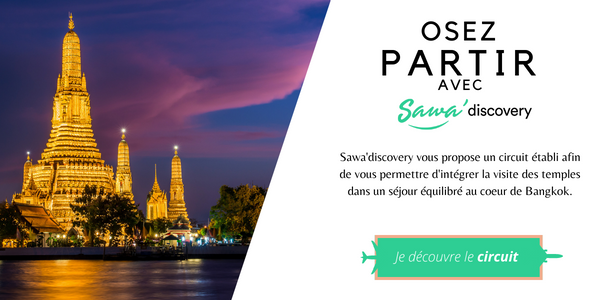
On the opposite riverbank, facing Wat Pho and the Royal Palace, stands Wat Arun. Named Aruna after a Hindu deity, it's nicknamed the Temple of Dawn. Why? Because it's said to be the first building to receive the sun's light… Its main tower at 80 meters high and its 4 other prangs are covered in porcelain fragments and house statues of the wind deity (Nayu). One thing is certain—this temple is equally impressive by day and by night when illuminated, making the Chao Phraya shimmer!
Address: 158 Thanon Wang Doem, Wat Arun, Bangkok Yai, Bangkok 10600, Thailand
Hours: Daily from 8:30am to 5:30pm.
Admission*: 200 Baht per person (foreign visitor rate).
How to get there? Several options are available to reach Wat Arun:
- By Skytrain + boat (Chao Phraya Express): take the BTS Skytrain's Silom Line and get off at Saphan Taksin station, then take the boat and get off at Tha Tien station;
- By bus: numbers 19, 57, and 83;
- By taxi;
- By tuk tuk.
5. Wat Traimit, the Temple of the Golden Buddha
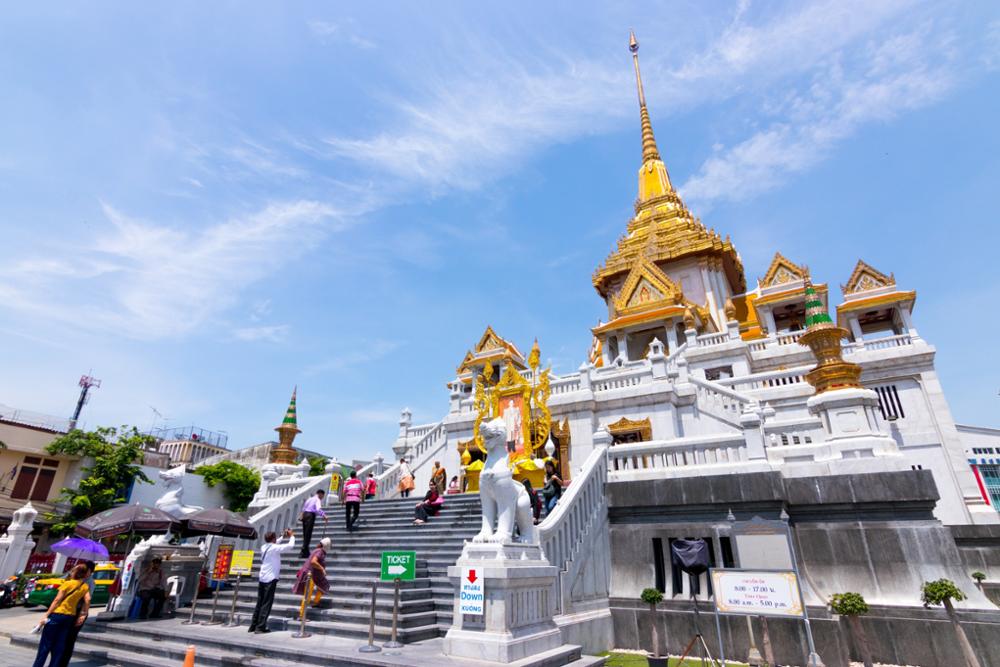
Wat Traimit isn't necessarily the most beautiful temple in Bangkok. But what makes it particularly interesting is what it hides inside. Indeed, it houses one of the world's largest golden Buddha statues! Hence its more common name of the Golden Buddha temple. As a fun fact, this treasure, standing 5 meters high and weighing 5.5 tons, was reportedly discovered by accident. In 1931, monks discovered a plaster statue deemed worthless. It wasn't until it fell to pieces that they discovered the contents… As you've guessed, the golden statue was hidden beneath the plaster! An incredible discovery that you can now see inside the temple...
Note: the temple houses a museum on the third floor, which provides more information about the history of the Golden Buddha.
Address: 661 Charoen Krung Road, Talat Noi, Samphanthawong, Bangkok 10100, Thailand
Hours: Daily from 8:30am to 5:30pm. The museum is closed on Mondays.
Admission*: 50 Baht per person (foreign visitor rate). Museum admission: 100 Baht per adult and 60 Baht for children.
How to get there? Several options are available to reach Wat Traimit:
- By subway (MRT): get off at Hua Lamphong station;
- By bus: numbers 5, 7, or 507;
- By taxi;
- By tuk tuk.
6. Wat Benchamabophit Dusitwanaram, the Marble Temple
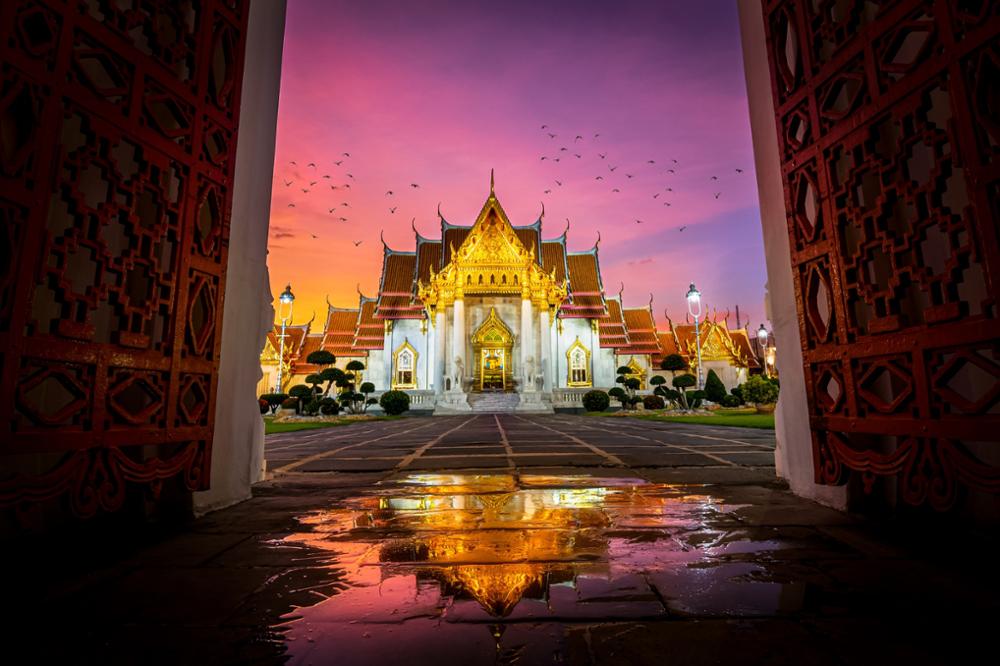
We conclude with a temple built at the end of the 19th and beginning of the 20th century under the reign of King Rama V: Wat Benchamabophit Dusitwanaram (which literally means "temple of the fifth king located near the great Dusit palace"). Also known as the Marble Temple, it's among Bangkok's most beautiful temples and is considered an architectural masterpiece. You'll find Carrara marble (which earned it its nickname) on the floors and columns, a gilded ceiling, Chinese ceramics, teak wood doors, bronze sculptures, and much more… Outside, you can enjoy its beautifully maintained gardens where a serene atmosphere reigns.
Good to know: inside the temple stands a massive Buddha statue, known as Phra Buddha Niramitravichaya Chai. It contains the ashes of King Rama V, who died in 1910.
Address: 69 Thanon Si Ayutthaya, Dusit, Dusit District, Bangkok 10300, Thailand
Hours: Daily from 8am to 5pm
Admission*: 150 Baht per person (foreign visitor rate). Gardens are free to enter.
How to get there? Several options are available to reach Wat Benchamabophit Dusitwanaram:
- By subway (BTS): get off at Saphan Kwai station and walk to the temple (approximately 1.5 km);
- By bus: numbers 2, 10, 12, 60, 72, and 503;
- By taxi;
- By tuk tuk.
Other lesser-known temples to discover
Want more? To go further, here are some other lesser-known temples to see in Bangkok:
- Wat Suthat Thepwararam, one of the royal temples, known for its impressive prayer hall, one of the largest in all of Thailand;
- Wat Ratchanadda: a Buddhist monastery housing the royal temple of Loha Prasat. It's characterized by a metallic structure with 37 spires, representing the 37 virtues necessary for enlightenment;
- Wat Mahathat Yuwaratrangsarit: built during the Ayutthaya period, it's one of the 10 royal temples. It houses the oldest institution of higher learning in Thailand for Buddhist monks;
- Wat Chana Songkhram: renowned for its large seated Buddha and magnificent murals depicting excerpts from the Jatakas, tales of Buddha's previous lives;
- Wat Bowonniwet Vihara: it served as the residence of Nyanasamvara Suvaddhana, former Supreme Patriarch of Thailand, and the burial site of two former Chakri Dynasty kings: Rama VI and Rama IX ;
- Wat Prayurawongsawas Worawihan: renowned for housing Buddhist relics within its ancient white stupa built during King Mongkut's reign;
- Wat Ratchapradit: Built by King Rama IV in 1864, this temple stands out from others with its distinctive gray-colored architecture…
Rules of respectful conduct for visiting a temple in Thailand
As in many cultures, it's important to follow certain rules of respectful conduct when visiting Thai temples, namely:
- Dress respectfully: while wearing a sarong (traditional Thai garment) is ideal, at minimum you must cover your shoulders and knees, whether you're a woman or a man. Similarly, avoid short clothing that exposes the belly, transparent and tight-fitting clothing, and torn garments;
- Remove your shoes before entering temples (unless otherwise indicated);
- Never step on an image of Buddha;
- Never point your feet at Buddha representations;
- Sit properly: cross-legged for men and kneeling with feet facing backward for women;
- Never touch a monk if you're a woman: monks are not permitted to have physical contact with women. To greet them, you can simply make a respectful gesture with your palms pressed together (called wai in Thai);
- Never photograph monks without their permission;
- Don't touch anything;
- Remain silent and respectful inside temples.
*Prices are given as a guideline and may change
Florine Dergelet
Photos
Also discover
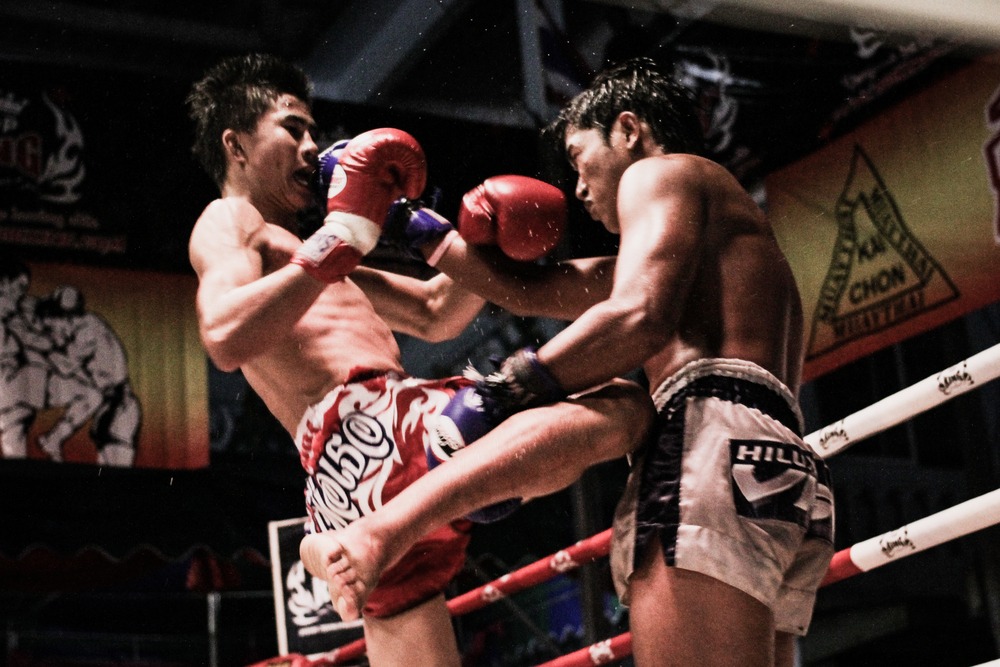
Muay Thai, Everything You Need to Know About Thai Boxing
Discover Muay Thai, Thailand's national martial art, exploring its history, rules, combat techniques, the Wai Khru Ram Muay ritual and the great legends of Thai boxing.
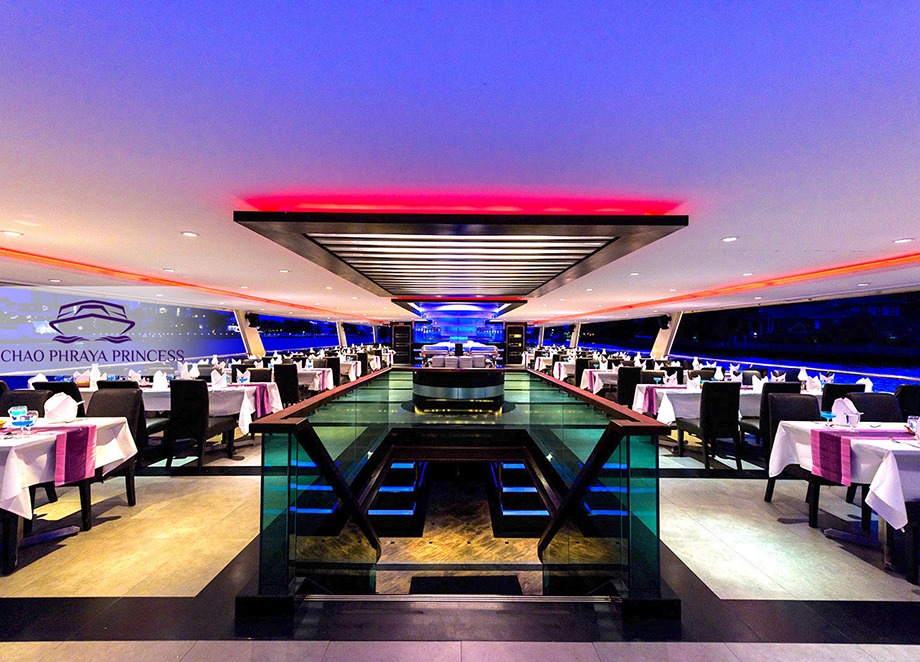
Romantic Dinner Cruise on the Chao Phraya River
For many of us, a luxury trip to Bangkok conjures up images of spa treatments, fine dining experiences, or nights in a 5-star residence. But have you ever considered a dinner cruise on the Chao Phraya River?
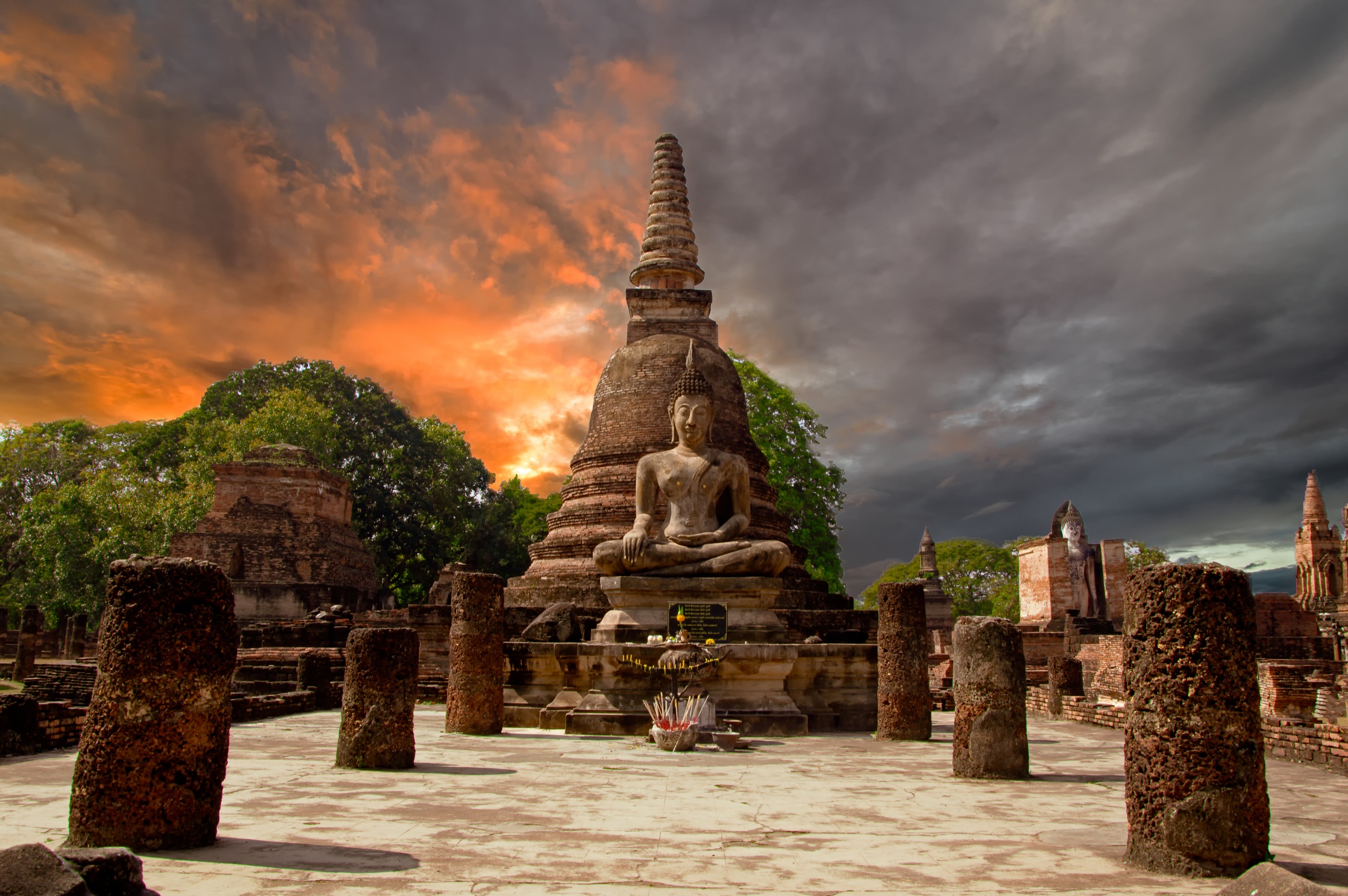
Sukhothai, the historical jewel of the Siamese kingdom
Explore the cradle of Thai civilization, Sukhothai, home to one of the country's most beautiful archaeological sites, designated a UNESCO World Heritage site.