Origins of the Thai Population
From the origins of the Thai people to regional dialects, explore how migrations, Theravada Buddhism and ethnic diversity have shaped Thailand's contemporary cultural identity.
Thailand is an Asian destination renowned for its exotic character. It distinguishes itself through magnificent landscapes, but equally through the richness of its population. Diverse yet united by a shared language and customs, it reflects the evolution of a people at the crossroads of Asia.
What are the origins of the Thai people?
Excavations at numerous archaeological sites throughout Thailand have revealed the presence of prehistoric civilizations dating from 10,000 to 2,000 years BCE. Further discoveries at the Bang Chiang site in Udon Thani Province (Northeast) uncovered traces of a Mesopotamian-influenced civilization employing pottery and bronze objects.
Originating from Southern China, the Thai people established themselves in Yunnan during the 1st century BCE. From the 7th century onward, Buddhism and Indian culture began to spread. The first waves of migration toward present-day Thailand occurred as early as the 11th century.
The Khmers named the first Chinese emigrants "Syams," a term meaning "dark-complexioned." Other states contributed to the composition of the Thai ethnicity, including the Srivijaya Empire (7th-13th centuries), the Dvaravati Kingdom (5th-8th centuries), and the Khmer Empire of Angkor (9th-13th centuries). By the late 12th century, Thai society was organized into a single nation: Siam.
A true crossroads of peoples, languages and cultures, Thailand today counts 60 million inhabitants, among whom 75% are Thai (including nearly 6 million of Chinese origin), 11% are Sino-Thai, 3.5% are Malay, and several minority groups speaking their own dialects: Khmer, Mon, Vietnamese, Laotian, Indian, Persian, and various highland tribes originating primarily from Southern China and Tibet.
Who are the Thai people?
Origins and migration of the Thai people
The migratory movements of the Thai people have shaped the history of present-day Thailand. Fleeing conflict and seeking better lands, these populations gradually left Southern China to settle in the Mekong region. This expansion accelerated in the 11th century, driven by economic and political factors.
The arrival of the Thai modified the regional culture by blending their traditions with those of the Khmer and Mon peoples. This fusion of influences laid the foundation for modern Thai identity, characterized by its diversity and adaptability.
Current ethnic composition of the population
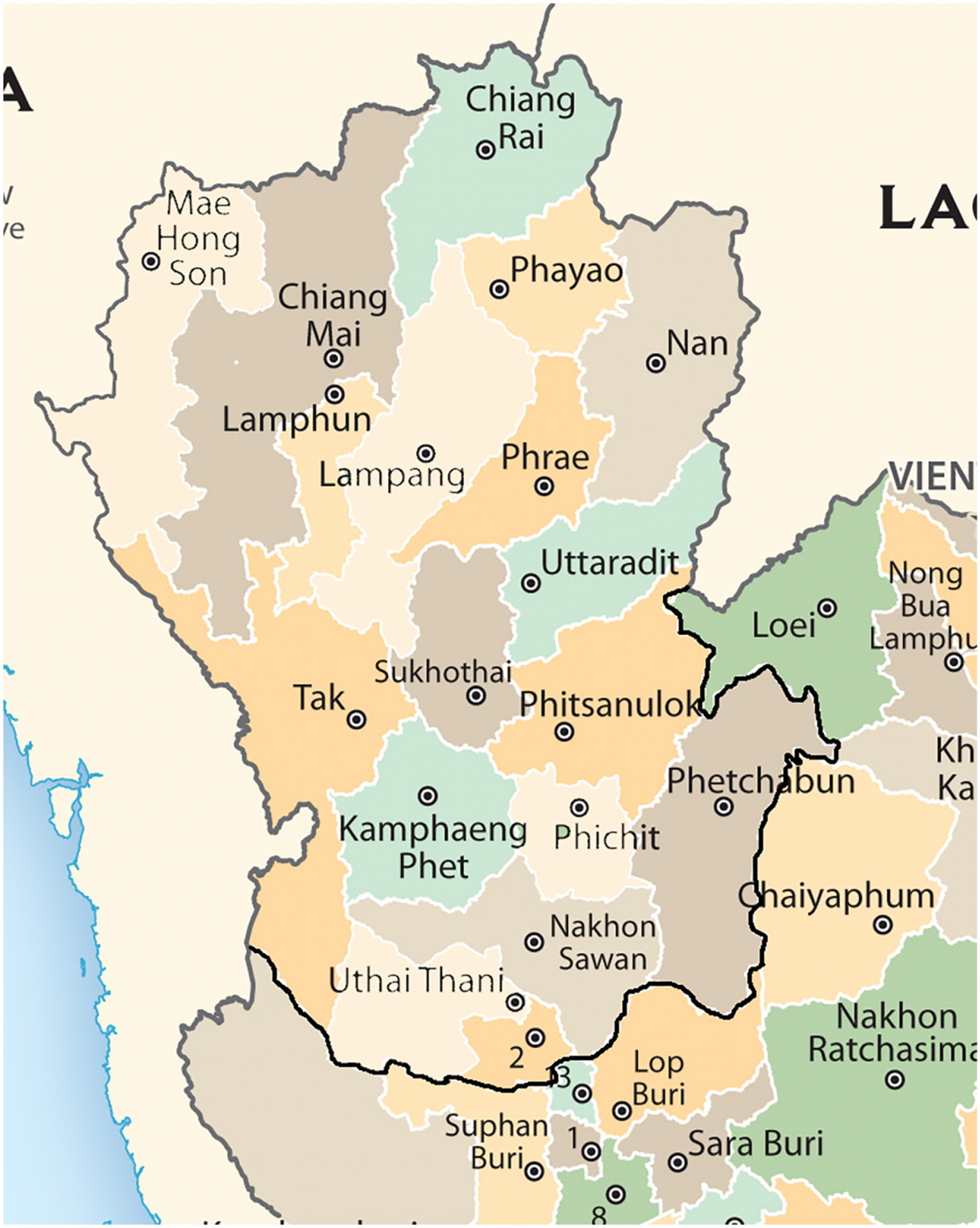
Thailand distinguishes itself through ethnic diversity. Thai people comprise approximately 75% of the population, encompassing Central Thai, Northern Thai, Northeastern Thai (Isan) and Southern Thai. Sino-Thai constitute the second largest group, making up 14% of inhabitants.
Muslim Malays form a significant community in the southern provinces. There are also minorities such as the Mon, Khmer and Vietnamese.
In the northern mountains live several ethnic groups including the Hmong, Karen and Akha peoples.
Religion
Theravada Buddhism
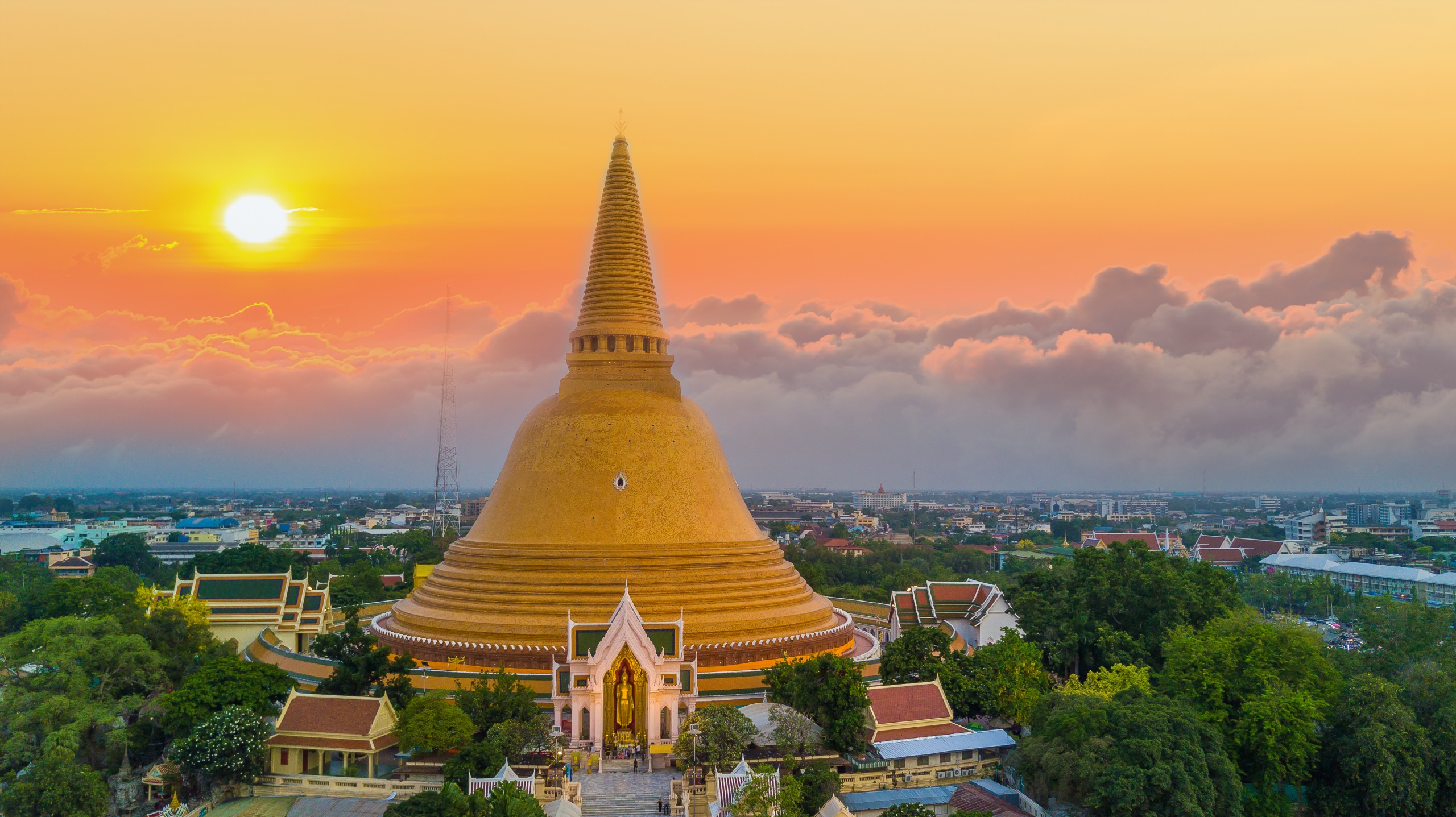
Theravada Buddhism profoundly shapes Thai identity. This branch of Buddhism pervades daily life, from family rituals to national ceremonies. Its teachings emphasize compassion and detachment, values reflected in the benevolent attitude of Thai people.
Buddhist temples serve as centers for community and education. Monks play a crucial role, offering spiritual guidance and preserving traditions. The concept of karma influences social behavior.
This philosophy expresses itself through the country's art, architecture and literature. The Thai calendar is marked by Buddhist festivals, moments of gathering and spiritual renewal for the population.
Other religions practiced in Thailand
After Buddhism, Islam is the country's second religion. It is particularly widespread in the southern provinces.
Thai Muslims, predominantly Sunni, represent approximately 5% of the population.
Christianity, practiced by 1% of the population, is mainly present in urban areas and within certain ethnic communities.
There are also followers of Hinduism and Sikhism in Bangkok.
Animist beliefs persist, especially among minority ethnic groups.
The Thai Language
Origins and evolution of the Thai language
The Thai language belongs to the Tai-Kadai family, which originates from border regions between Vietnam and China. Its evolution reflects the rich history of the Thai people. Over the centuries, Thai has received influences from Khmer, Sanskrit and Pali. The current Thai alphabet, created in the 13th century by King Ramkhamhaeng, marks a turning point in its development.
Characterized by its tonal nature, the Thai language has five distinct tones that modify word meanings. Its grammar, relatively simple, contains neither complex conjugations nor declensions.
Today, Standard Thai, based on the Bangkok dialect, is the official language that unifies the country.
Regional dialects and minority languages
The Isan dialect, spoken by approximately 20 million people in the northeast, resembles Lao. In the north, Lanna or Kham Mueang maintains its cultural importance.
In the south, Pak Tai presents distinct phonetic variations. Highland communities use their own languages:
- Hmong, with its complex tones
- Karen, with multiple variants
- Akha, rich in oral traditions
Pattani Malay, spoken by 1.5 million people in the far south, enjoys growing recognition.