Buddhism in Thailand
In Thailand, Buddhism is lived everywhere: in temples, homes, offerings to monks and the pursuit of merit that shapes daily life and the country's traditions.
Approximately 95% of the Thai population adheres to Buddhism. It was in the 4th century AD that Buddhism spread throughout Southeast Asia in two forms, "Theravada" and "Mahayana". The Theravada form, known as the "Buddhism of the Lesser Vehicle", became established in Thailand through the kingdom of Dvaravati (6th-11th centuries) to become the state religion during the Sukhothai era (13th-15th centuries) until today. Theravada literally means "Teaching of the Ancients" and differs from "Mahayana" or "Buddhism of the Greater Vehicle" found in Northern Asia.
Theravada
Thai Buddhism is the heir to one of the oldest Indian schools of Buddhism, that of the Theravadins. Theravada is more a way of life and thought, an ethic, rather than a religion. It has but one purpose: to abolish suffering and it proposes to achieve this without divine intervention, but through man's own means alone. It is said that Theravada is the form that has best preserved the historical teaching of Buddha Gautama as the unique and most important source of knowledge.
Prince Siddhartha
The first complete biography of Buddha appeared only centuries after his death. However, scholars generally agree to date his birth around the middle of the 6th century BC.
Siddhartha Gautama was said to have been born in Kapilavastu near the border that today separates Nepal from India. The son of a king, he was raised in luxurious seclusion, married at 16 and had a son.
At the age of 21, during an excursion outside the palace, he encountered an old man, a sick person, a corpse and a monk. He then discovered how empty his existence was. Renouncing worldly attachments, he left his palace at 29 and became an ascetic in order to understand the nature of existence and find the "Truth".
For 7 years, he practiced yoga and imposed rigorous ascetic practices on himself. Unsatisfied with this approach, he followed another path, the "Middle Way" between a life of acceptance and total renunciation. He devoted himself at length to meditation beneath a wild fig tree, and it was there, at age 36, that one night he discovered "the Four Noble Truths" and attained enlightenment or "Awakening". He then became the Buddha or "the Awakened One". He preached from village to village and formed a community of mendicant monks known as the "Sangha". He is said to have died in Kusinagara, India, after having devoted the rest of his life to teaching.
Today, tourist circuits offer the opportunity to follow "in the footsteps of the Buddha".
The Buddha's Teaching
The Four Noble Truths and the Noble Eightfold Path
1. Life is nothing but suffering, from birth to death ("the truth of dukkha").
2. The cause of suffering is desire as well as the attachment and greed that result from it.
3. Desire can be extinguished, then suffering will cease to reappear.
4. The path that leads to the cessation of suffering is the Noble Eightfold Path of right or complete virtues: right understanding, thought or mental representation, speech, action, livelihood, effort, mindfulness and concentration. These eight virtues are generally divided into three categories: morality, charity and mental training or meditation.
Thus, man can, by his own means, break the cycle of rebirths embodied by "the Wheel of the Law" and access "nirvana".
The Five Precepts
These are essentially the basic code of conduct to be followed at all times. It includes the prohibition against killing, lying, stealing, becoming intoxicated and engaging in illegitimate sexual relations.
The Three Jewels
Thai Buddhists venerate the "Triratna" or "the Three Jewels": the Buddha, the Dharma (Buddhist teaching) and the Sangha (the monastic order).
The Buddha is omnipresent in multiple forms, from the humble dwelling to the most luxurious places.
The Dharma is taught in primary school and chanted in the "wats" (monasteries).
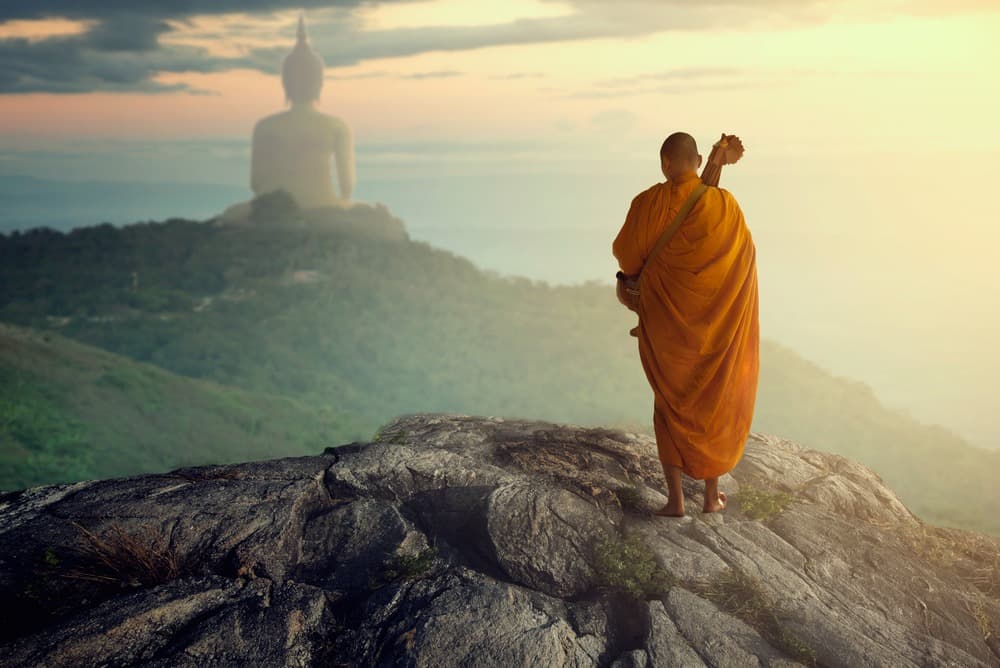
The monks, whom one can see at any hour of the day, clad in their orange robes, embody the Sangha. The Sangha is the religious organization founded by the Buddha. It is headed by a patriarch appointed by the king, "protector of the religion". The patriarch appoints forty-five senior monks for life, who form a council with legislative power. Nine additional monks are appointed for four years and exercise executive power. The links of this religious hierarchy with the government are close.
Merit
Merit is an important element in daily life. It is obtained through acts of charity that are naturally recorded for the next reincarnation. For example, making donations of flowers or food to the Buddha and the monks during their morning alms collection, providing for the needs of the monastery, participating in the construction of temples, meditating, caring for a dog, releasing a bird or a turtle, listening to the good word, observing the eight principles and following the five precepts.
The Monks
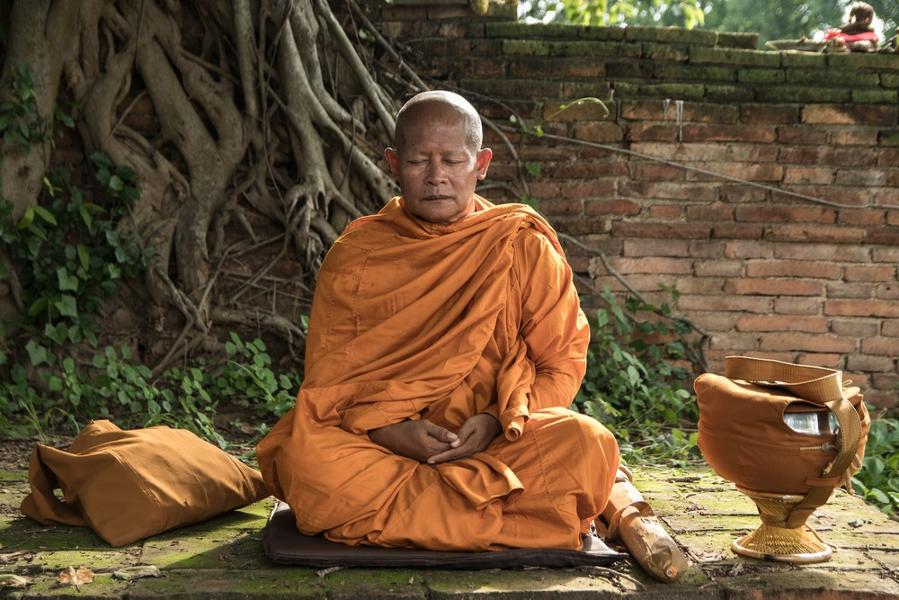
The most rewarding act for a Thai is to don the orange robe at some point in their life. For most, this is a short period after the age of 20, usually during the 3 months of the "Buddhist Lent" between July and October. The monks retreat to their monasteries following a ceremony blending religious solemnity and popular celebration. The future monk, whose head and eyebrows have been shaved, is led in great procession to the temple, carrying a flower and a candle. During this period, according to the very ancient "Thot Kathin" tradition, the faithful offer the monks robes and objects necessary for their meditative life.
Meditation
Meditation is a form of "purification of the spirit" that rids itself of all thought in order to achieve a state of total detachment from the world. It comprises different forms, the most advanced being "the state of Awakening".
Introductory courses in "Vipassana" meditation are offered by certain travel organizations.
Vipassana means seeing things as they really are, beyond their mere appearance. This meditation technique is one of the oldest in India.
Buddhist Art
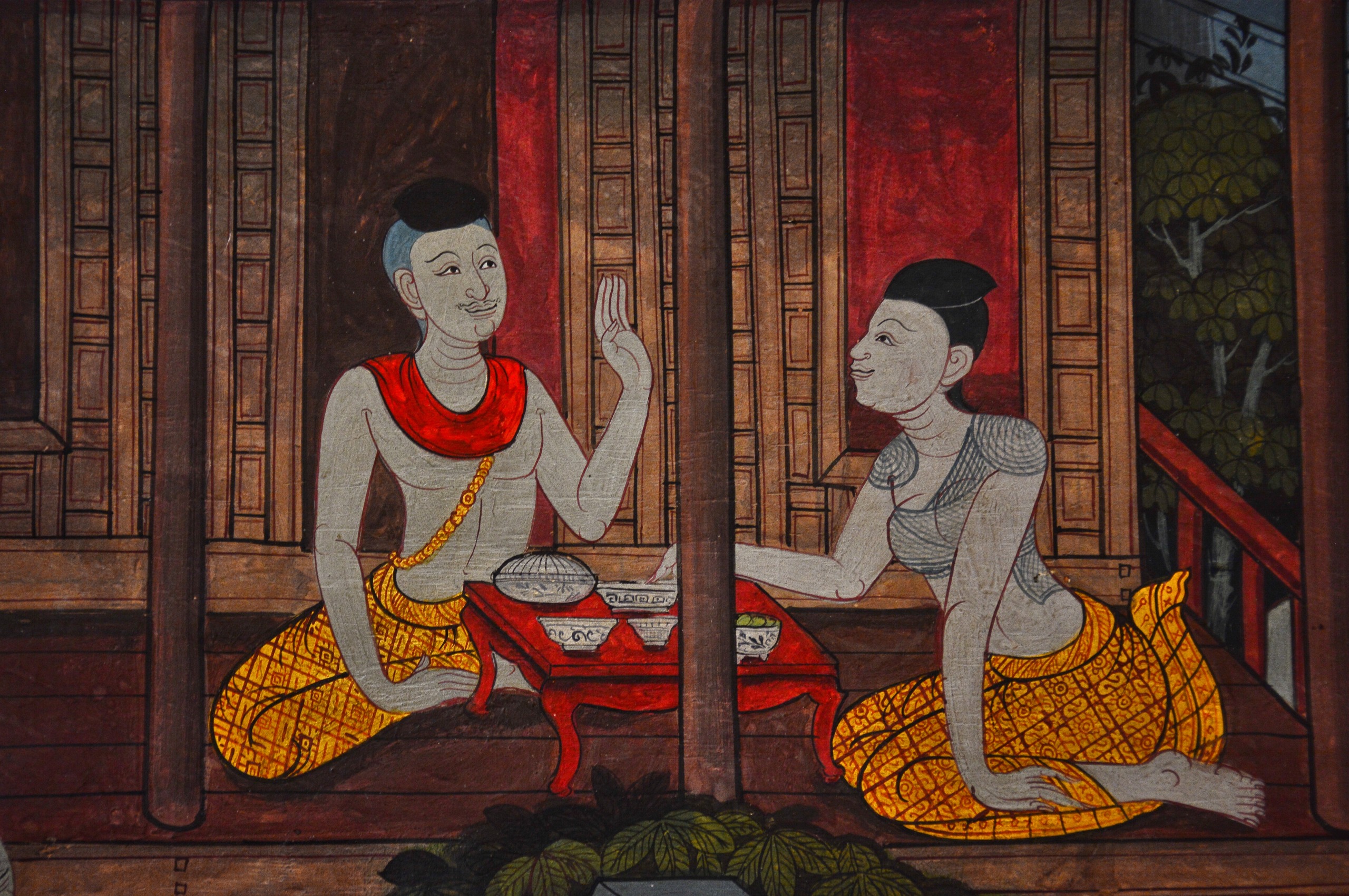
Buddhism has always been the principal source of inspiration for Thai art. The artist's goal is above all to express veneration and obtain merit. Temples are adorned with beautiful paintings and bas-reliefs depicting episodes from the Buddha's life and statues of his image are as numerous as they are sumptuous.
The Image of the Buddha
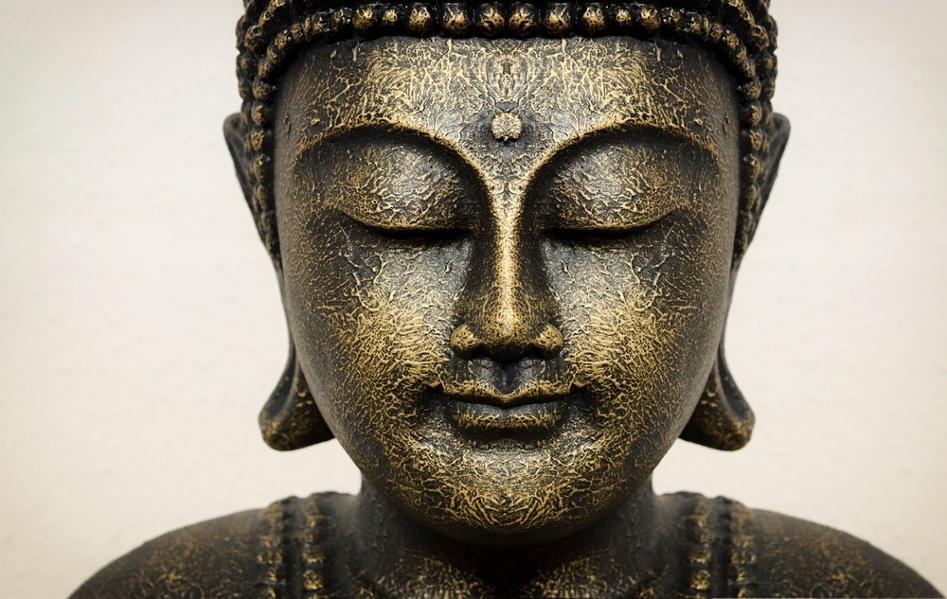
Representations of the Buddha are ubiquitous in Thailand. Not a single temple ordination hall is without an image, often larger than life-size, or even colossal in scale occupying a place of honor; then an infinite number of smaller images – hundreds, sometimes thousands - in the other halls and galleries.
It is common to see people prostrating themselves before these images while making offerings of flowers and incense and showing signs of fervent devotion.
In homes themselves, depending on means, a room is sometimes reserved exclusively for images of the Buddha; otherwise, it is part of a room or a shelf; and they are honored with as much reverence and homage as those in temples. Before touching an image to move or clean it, Buddhists pause for a moment, head bowed and palms joined together as if to ask permission to take such liberty.
Frequently asked questions
Yes, most temples welcome visitors. You must respect the dress code (shoulders and legs covered), remove your shoes before entering and maintain respectful behavior.
Thai Buddhism follows the Theravada tradition, considered closest to the original teaching of the Buddha, unlike Mahayana practiced in Northern Asia.
Yes, many ceremonies are open to the public, notably the morning alms offerings to monks and celebrations in temples during religious festivals.
Several monasteries and centers offer introductory courses. Certain specialized travel organizations also organize these spiritual experiences.