The 10 Most Beautiful Temples of Bangkok
Visit the 10 must-see temples of Bangkok: history, architecture, impressive statues and helpful tips to make the most of each visit.
6:30 AM, Temple of Dawn. The still-cool air carries the fragrance of incense while golden rays caress the stupas of Wat Arun. At this hour, you'll have the privilege of witnessing the morning prayers of the monks, far from the tourist crowds that will descend in a few hours. This is exactly the kind of magical moment that makes Bangkok a spiritually unique destination in the world.
Thailand's capital is home to more than 400 Buddhist temples, each telling a different story. From the royal grandeur of the Grand Palace to small neighborhood sanctuaries where locals come to leave their daily offerings, these sacred places form the true beating heart of the city. During our latest reconnaissance trips, we selected the ten temples that absolutely deserve a place in your itinerary.
Table of Contents
- Wat Phra Kaew: Temple of the Emerald Buddha
- Wat Pho: Temple of the Giant Reclining Buddha
- Wat Arun: The Temple of Dawn's Thousand Reflections
- Wat Saket: The Golden Mountain and Its 344 Steps
- Wat Benchamabophit: The Marble Temple's Elegance
- Wat Traimit: The 5.5-Ton Golden Buddha
- Wat Ratchanatdaram: The Temple of 37 Metal Spires
- Wat Suthat: The Red Giant with Exceptional Frescoes
- Wat Mahathat: Between Meditation and Amulet Markets
- Wat Indharavihan: The 32-Meter Standing Buddha
- Frequently Asked Questions
Wat Phra Kaew: Temple of the Emerald Buddha
Impossible to discuss Bangkok's temples without beginning with Wat Phra Kaew, the most sacred of all. Located within the Grand Palace grounds, this temple houses the Emerald Buddha, a statue of 66 cm carved from a single block of jade dating back to the 15th century. Three times a year, the King of Thailand personally changes the statue's golden robes according to the seasons.
The architecture will leave you speechless: roofs with orange and green tiles, walls inlaid with golden mosaics, demonic guardians (yaksha) standing 6 meters tall. Every detail recounts an episode from the Ramakien, the Thai epic. The murals running across 178 panels constitute the longest narrative painting in the world.
Practical Tip: Arrive at opening time, 8:30 AM, to avoid crowds. Plan for modest dress (long pants, long sleeves) or you'll need to rent clothing at the entrance for 200 THB. Entrance: 500 THB, including Grand Palace access.
The temple closes at 3:30 PM sharp, but we recommend a minimum of 2 hours to appreciate the details. Remember to remove your shoes before entering the main temple—lockers are free.
Wat Pho: Temple of the Giant Reclining Buddha
Wat Pho deserves its reputation as Bangkok's oldest temple. Founded in the 16th century, it houses a Reclining Buddha measuring 46 meters long and 15 meters high, entirely covered in gold leaf. Its 3-meter-tall feet are inlaid with 108 mother-of-pearl motifs representing the Buddha's distinguishing marks.
But Wat Pho is far more than a giant statue. This temple-university contains 95 stupas of all sizes, including four royal chedis of 42 meters each, covered with colorful ceramic tiles that shimmer in the sun. Marble-paved courtyards shelter 394 gold-leafed Buddha statues.
It's also the birthplace of traditional Thai massage. The temple's school of traditional medicine, established in 1955, continues to train the country's finest masseuses today. Marble plaques carved into the walls teach pressure points and ancestral techniques.
Our Insider Tip: Treat yourself to a 30-minute traditional massage (400 THB) after your visit. The masseurs are trained directly by the temple's school. Book upon arrival as there's often a 1-hour wait in the afternoon.
Entrance: 200 THB. Open 8 AM to 6:30 PM. Allow 1.5 hours for the visit, longer if you add a massage.
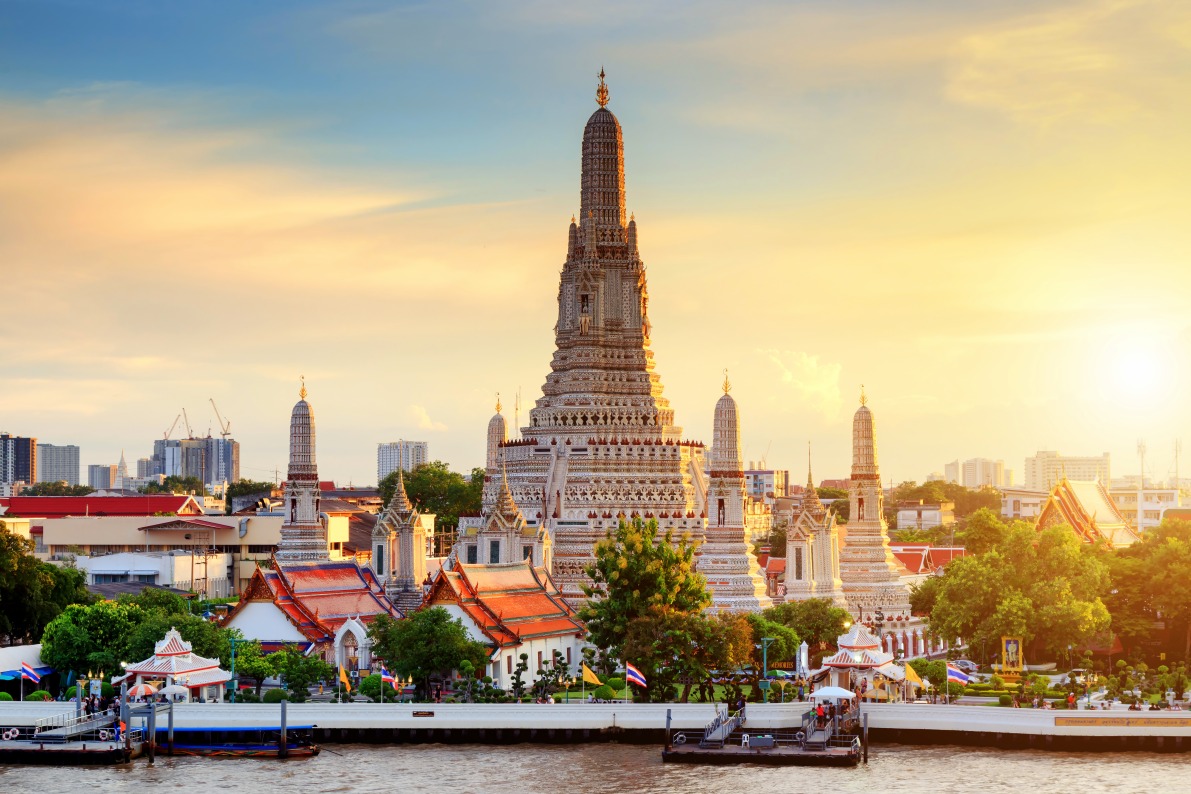
Wat Arun: The Temple of Dawn's Thousand Reflections
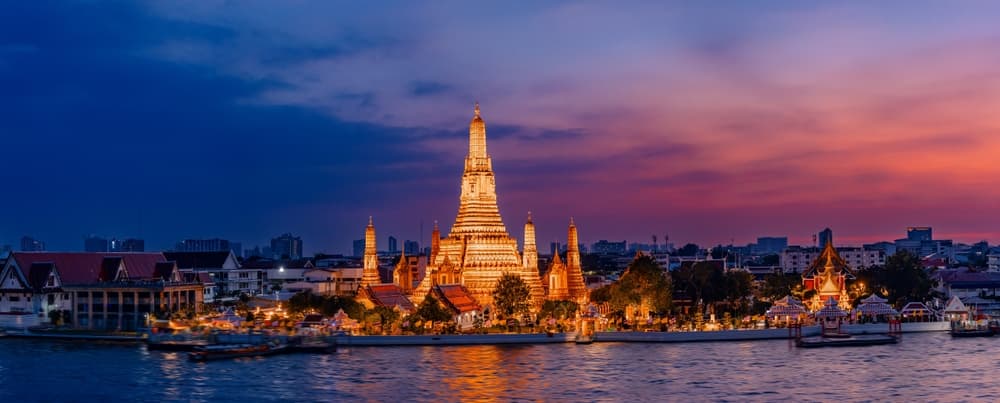
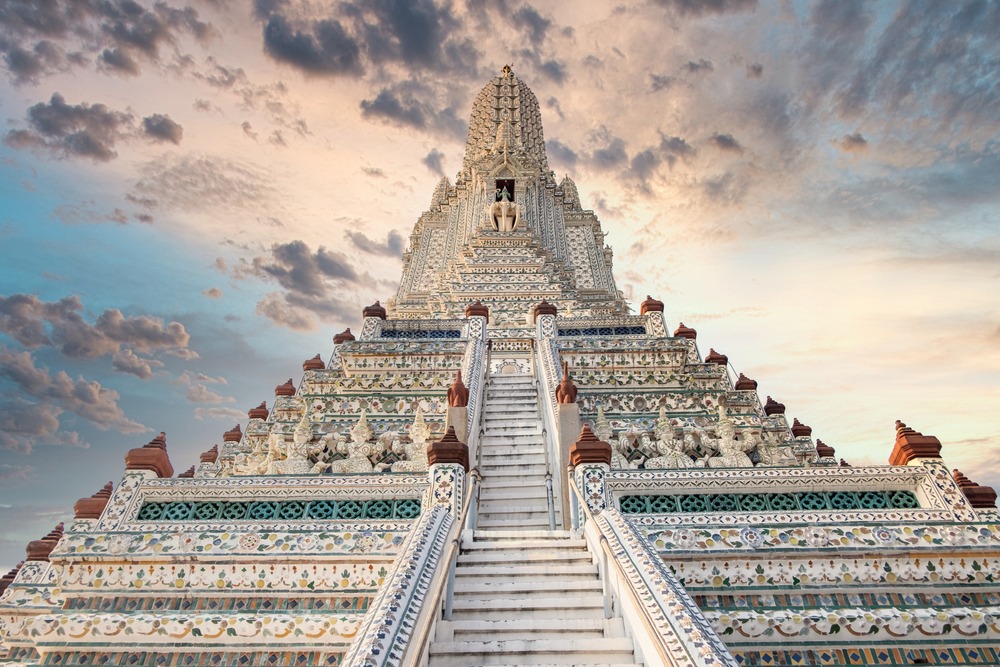
Across the Chao Phraya River stands Wat Arun, recognizable by its unique silhouette. This 17th-century Khmer temple takes its name from the goddess of dawn, and for good reason: at sunrise, its 79-meter towers reflect golden light magically on the river.
The central prang, directly inspired by Angkor Wat, is decorated with millions of colored porcelain shards and shells. These decorations, offered by 19th-century Chinese merchants, create extraordinarily delicate floral patterns. Climbing to the summit (access allowed to the second level) offers panoramic views of Bangkok and the Grand Palace.
Four smaller satellite prangs, equally ornate, represent the four continents of Buddhist cosmology. At their base, Chinese guardian statues protect the temple from evil spirits.
The Local Secret: Come late afternoon to enjoy the sunset from the riverbanks. The visual effect is stunning when final rays illuminate the ceramics. Then cross by ferry (4 THB) to visit the temple illuminated at dusk.
Practical Information: Entrance 100 THB, open 7 AM to 5 PM. The climb is not recommended for those with vertigo—steps are steep and narrow. Ferry from Tha Tien Pier every 10 minutes.
Wat Saket: The Golden Mountain and Its 344 Steps
Perched on an artificial hill of 76 meters, Wat Saket or "Golden Mount" offers Bangkok's finest panoramic view. This artificial mountain, built during Rama III's reign, was initially a failed project: marshy soil couldn't support the structure's weight, and it repeatedly collapsed.
Today, climbing the 344 steps through lush tropical vegetation is a genuine pilgrimage. The path winds through frangipani and banana trees, punctuated by small sanctuaries and gongs that devotees strike to ward off evil spirits. The scent of incense accompanies you to the summit.
At the top, the golden chedi houses Buddha relics offered by India. But it's the 360° view that justifies the effort: on one side the modern skyscrapers of Silom, on the other the corrugated tin roofs of working-class neighborhoods. On clear days, you can even see Don Mueang Airport to the north.
Every November, during the Loy Krathong festival, thousands of candles illuminate the nocturnal climb. Bangkokians come as families to deposit their krathongs (small offering boats) in the temple's pools.
Expert Advice: Climb late afternoon for the sunset, but bring a water bottle. There are no vendors during the ascent. Free entrance, 20 THB donation suggested.
Wat Benchamabophit: The Marble Temple's Elegance
Known as the "Marble Temple", Wat Benchamabophit embodies the elegance of modern Thai architecture. Built in 1899 under Rama V's reign, it harmoniously blends traditional Thai style with European influences in a setting of Carrara marble imported from Italy.
The main bot, pristine white, houses the Phra Buddhajinaraja Buddha in gilded bronze, a copy of the famous statue from Phitsanulok. But it's the 53 Buddha statues aligned in the covered gallery that impress most: each represents a different artistic style, from Dvaravati art to contemporary creations.
The landscaped gardens, rare in Bangkok temples, offer a haven of peace with turtle-filled ponds and shaded pathways. Here reside some fifty monks perpetuating Buddhist teaching traditions.
At early morning hours, witness the monks' alms round. Unlike other temples, here the devotees come to the temple to offer food rather than monks going through the streets. A unique tradition reversal in Bangkok.
Good Plan: Visit between 6 AM and 8 AM to see monks receive offerings. The atmosphere is authentic and you'll meet mostly locals. Entrance: 20 THB, open 5 AM to 6 PM.
Wat Traimit: The 5.5-Ton Golden Buddha
In the Yaowarat Chinatown district, Wat Traimit conceals an exceptional treasure: the world's largest solid gold Buddha. This 3-meter-tall statue weighing 5.5 tons was discovered by chance in 1955. Covered in plaster to hide it from 18th-century Burmese invaders, it revealed its secret when the crane moving it dropped it, breaking its camouflage.
The statue, likely dating to the 13th century, is worth over 250 million dollars today. Its meditation position, half-closed eyes and serene smile inspire deep peace. The 18-karat gold reflects light from neon signs, creating a hypnotic golden aura.
The adjacent museum recounts this fascinating story of accidental discovery and presents Buddhist art from the ancient Sukhothai kingdom. Don't miss the original plaster fragments revealing the ingenious technique used to conceal the treasure.
The modern temple, rebuilt in 2010, contrasts with the antiquity of its treasure. Its clean lines enhance the statue without ornamental excess.
Local Anecdote: Neighborhood residents call this Buddha "Phra Sukhothai Traimit". Many Chinese shopkeepers pray here before opening their stores, convinced that gold brings business luck.
Entrance: 40 THB for the temple, 100 THB for the museum. Open 8 AM to 5 PM. MRT Metro: Hua Lamphong station.
Wat Ratchanatdaram: The Temple of 37 Metal Spires
Just steps from Wat Saket, Wat Ratchanatdaram intrigues with its unique Bangkok architecture. Its Loha Prasat ("Metal Castle") with 37 black wrought-iron spires draws directly from an Indian temple described in ancient Buddhist texts. This 36-meter square building resembles nothing else in Thailand.
Each floor, accessible by narrow stairs, housed meditation cells where monks once retreated from the world. At the summit, a plunging view over Bangkok's roofs reveals a different panorama from the nearby Golden Mount. The 37 spires represent the 37 virtues needed for enlightenment according to sacred texts.
The main temple, less visited than the Loha Prasat, deserves a visit for its remarkably preserved 19th-century murals. They narrate Buddha's life in traditional Thai pictorial style with still-vibrant colors.
Photo Tip: Climb to the top floor at late afternoon. The golden light transforms the metal spires into dramatic silhouettes. Few tourists know this exceptional photo spot.
Useful Information: Free entrance, donations welcome. Climbing the Loha Prasat can be vertiginous—stairs are steep. Closed Mondays. Easily combinable with Wat Saket (5 minutes' walk).
Wat Suthat: The Red Giant with Exceptional Frescoes
Facing the Giant Swing, Wat Suthat imposes its mass of red brick and six-tiered roofing. One of Bangkok's largest royal temples, it houses the Phra Buddha Shakyamuni, an 8-meter-tall bronze Buddha brought from Sukhothai in the 19th century.
But it's the murals that made Wat Suthat renowned. Painted during Rama III's reign, they completely cover interior walls at 2 meters height. These exceptional paintings blend religious scenes with 19th-century daily life: Chinese merchants, Siamese soldiers, war elephants, junks on the river. A genuine illustrated history book.
The exterior gallery houses 156 bronze Buddha statues, each in a different posture. This unique Bangkok collection shows the stylistic evolution of Thai Buddhist art over centuries.
Paved courtyards bordered by 212 miniature stupas create fascinating shadow and light play depending on the hour. This is particularly beautiful late afternoon when oblique rays draw geometric patterns on the flagstones.
Expert Detail: Observe the murals carefully: some scenes show Westerners in suits, testifying to 19th-century Siam's openness. Period artists integrated contemporary innovations into traditional religious art.
Entrance: 20 THB, open 8:30 AM to 5 PM. Allow minimum 1 hour to appreciate the mural details.
Wat Mahathat: Between Meditation and Amulet Markets
Wat Mahathat holds a special place in Bangkokians' hearts. This 14th-century temple houses the Mahachulalongkornrajavidyalaya Buddhist University, the country's most prestigious. Within its walls, future monks and laypeople study sacred texts in Pali and Sanskrit.
The atmosphere is unique: on one side meditation halls where Buddhist Gregorian chants resound, on the other Bangkok's largest amulet market. Every Sunday, hundreds of vendors display precious amulets under the temple arcades. Some, blessed by famous monks, command premium prices.
The main bot, rebuilt several times, maintains sober architectural style emphasizing spirituality over ostentation. The main Buddha in meditation position inspires contemplation. This is where many foreigners initiate themselves to vipassana meditation during 3 to 10-day retreats.
Shaded gardens offer numerous corners for contemplation. Under frangipani trees, groups of devotees gather to recite sutras or share spiritual experiences.
Good to Know: English-language meditation classes happen the first Saturday of each month at 1 PM. Free participation, proper dress required. The amulet market runs every Sunday 7 AM to 5 PM.
Wat Indharavihan: The 32-Meter Standing Buddha
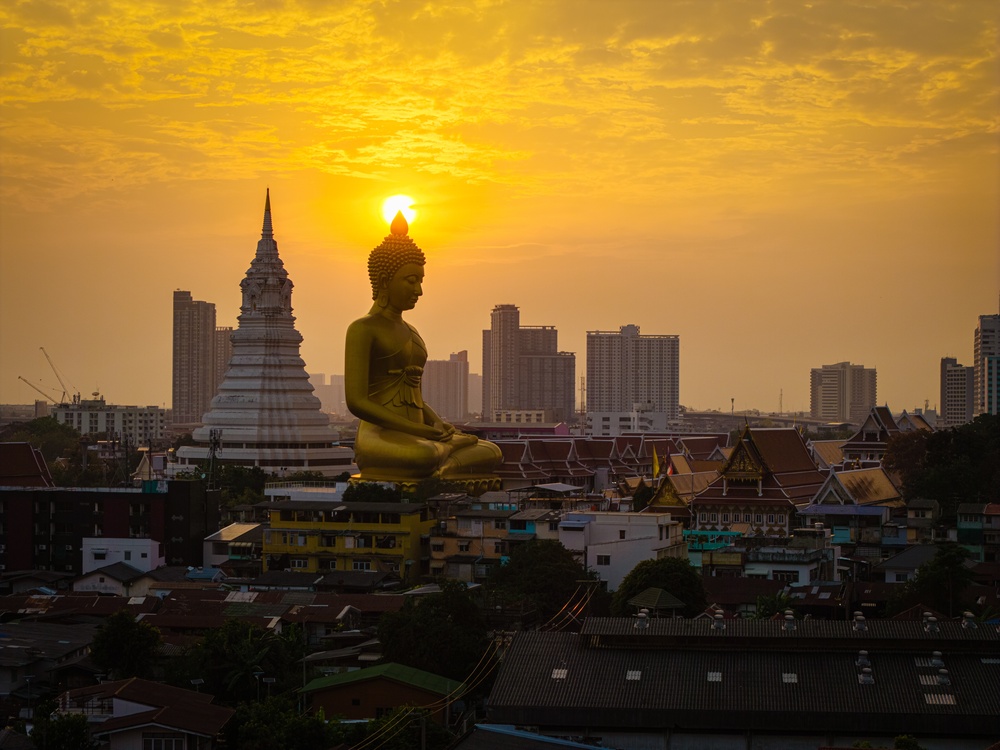
Off the beaten tourist path, Wat Indharavihan astounds with its 32-meter-tall standing Buddha. This golden statue, one of Thailand's tallest, dominates the Dusit neighborhood with its imposing figure. Construction, financed by devotees' donations, took 60 years to complete (1867-1927).
The statue, representing Buddha walking, symbolizes his decision to leave the palace to seek enlightenment. Its perfect proportions strictly follow Buddhist art canons: oval face, aquiline nose, elongated earlobes. The gold leaf, renewed every five years, requires 200 kg of gold.
At the statue's base, a small museum presents the progressive construction and techniques used. Devotees apply gold leaf to the base while making wishes. This practice, very popular among Thais, supposedly brings prosperity.
The temple, less sumptuous than royal counterparts, compensates with authentic atmosphere. It's a neighborhood temple where residents come daily for devotions without regard for tourists.
Local Perspective: Climb the adjacent shopping mall roof (Big C) to photograph the giant Buddha in its urban setting. This sacred-and-modern contrast perfectly summarizes today's Bangkok.
Free entrance, donations welcome. Accessible by taxi-boat from Saphan Phut (pier N6). Open 5 AM to 8 PM.
Frequently Asked Questions
What's the best time to visit Bangkok's temples?
Morning between 7 and 10 AM remains ideal to avoid heat and crowds. Temples generally open at 6 or 8 AM depending on the site. Avoid afternoons (2-4 PM) when temperatures exceed 95°F and tourist groups flood in.
How much do the main temples cost to visit?
Prices range from free entrance (Wat Indharavihan) to 500 THB (Wat Phra Kaew). Average cost: Wat Pho (200 THB), Wat Arun (100 THB), Wat Traimit (40 THB). Budget approximately 1,000 THB to visit the 5 major temples. Small neighborhood temples are typically free.
What should you wear when visiting temples?
Required dress: long pants, long sleeves, closed shoes (removed at entrance). Avoid tight, transparent, or low-cut clothing. Some temples rent appropriate clothing at the entrance (50-200 THB), but it's better to plan ahead.
Can you photograph inside temples?
Photography is generally allowed in courtyards and outside buildings, but often prohibited inside bots (prayer halls). Respect prohibition signs and never photograph monks without permission. Flash is always prohibited.
How do you travel between temples?
Taxi-boats on the Chao Phraya easily connect Wat Arun, Wat Pho and Wat Phra Kaew (20 THB per trip). For more distant temples, combine BTS, MRT and tuk-tuk. A full day allows visiting 3-4 major temples by public transport.
Spiritual Bangkok: Far Beyond Tourism
These ten temples represent only a glimpse of Bangkok's spiritual richness. Each tells a different facet of the Thai soul: Wat Phra Kaew's royal splendor, Wat Benchamabophit's serenity, Wat Indharavihan's popular authenticity. Beyond their architectural beauty, they constitute genuine social centers where devotees, students and curious visitors from around the world intermingle.
Our advice for successful discovery? Take your time. A temple is felt as much as visited. Sit in a shaded courtyard, observe devotees' gestures, breathe incense fragrance. It's in these contemplative moments that Bangkok reveals its true personality, far from urban bustle.
Our local experts design personalized circuits integrating these spiritual jewels into balanced itineraries. Contact us to compose your personalized discovery of Thailand, where each temple becomes a window onto the Land of Smiles' soul.
Also discover
15-Day All-Inclusive Thailand Trip: Suggested Itinerary
Two-week Thailand itinerary: Bangkok, Ayutthaya, Chiang Mai, Chiang Rai, and coastal getaways. Discover a balanced 14-day circuit combining culture and relaxation.
Which Markets to Visit in Bangkok? The 8 Most Beautiful Markets to Discover
Bangkok is more than just floating markets. Discover 6 more authentic markets, featuring flowers, vintage treasures, organic products, local atmosphere and walks far from the beaten path.
Wat Arun
Wat Arun, or the Temple of Dawn, dominates the western bank of the Chao Phraya in Bangkok with its 70-meter prang covered in porcelain mosaics.
Bangkok's Chinatown
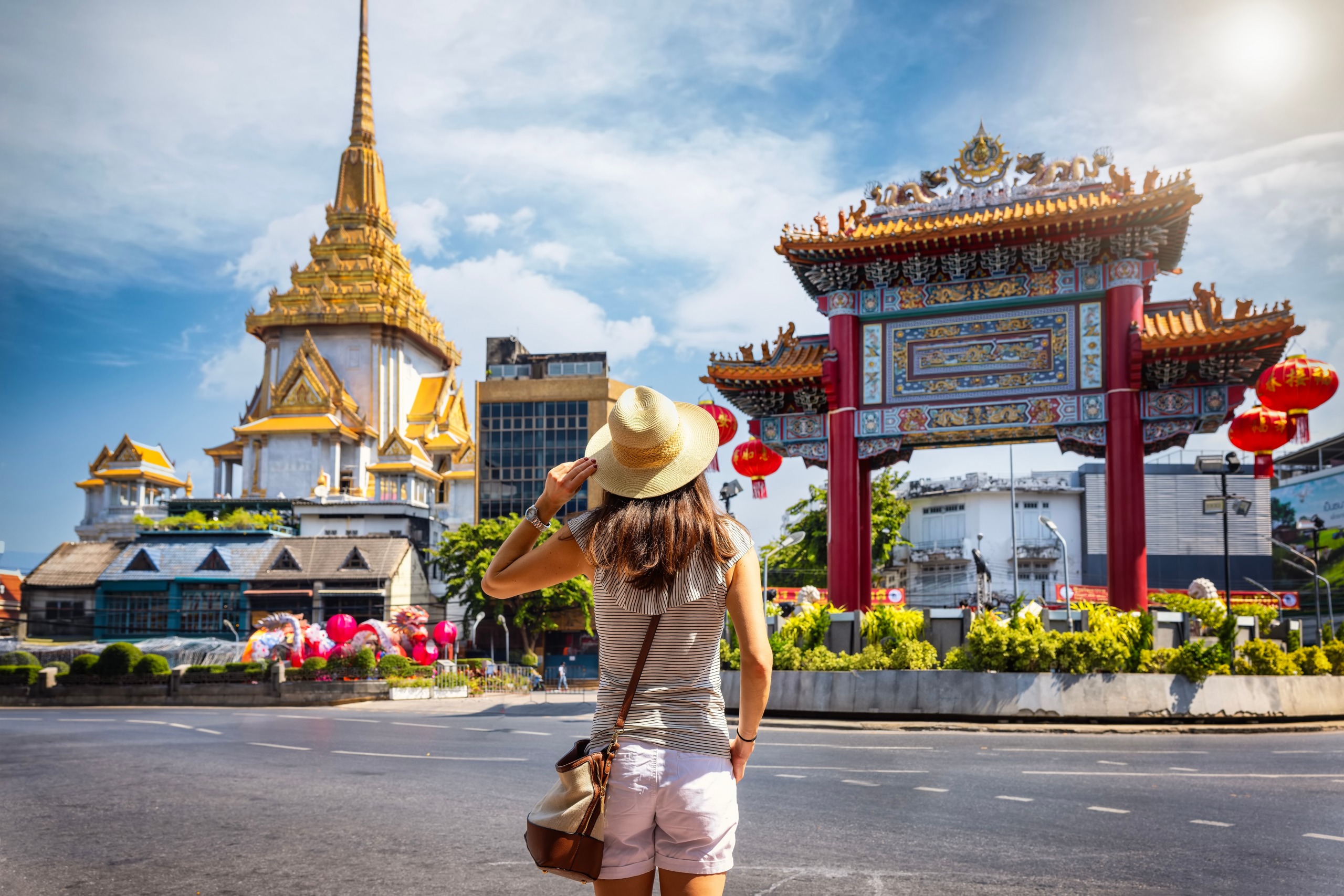
Yaowarat, Sino-Thai temples, heritage museum, and street food: a practical guide to Bangkok's Chinatown, founded in 1782 by Teochew and Hokkien communities.