Prasat Muang Tam
Prasat Muang Tam
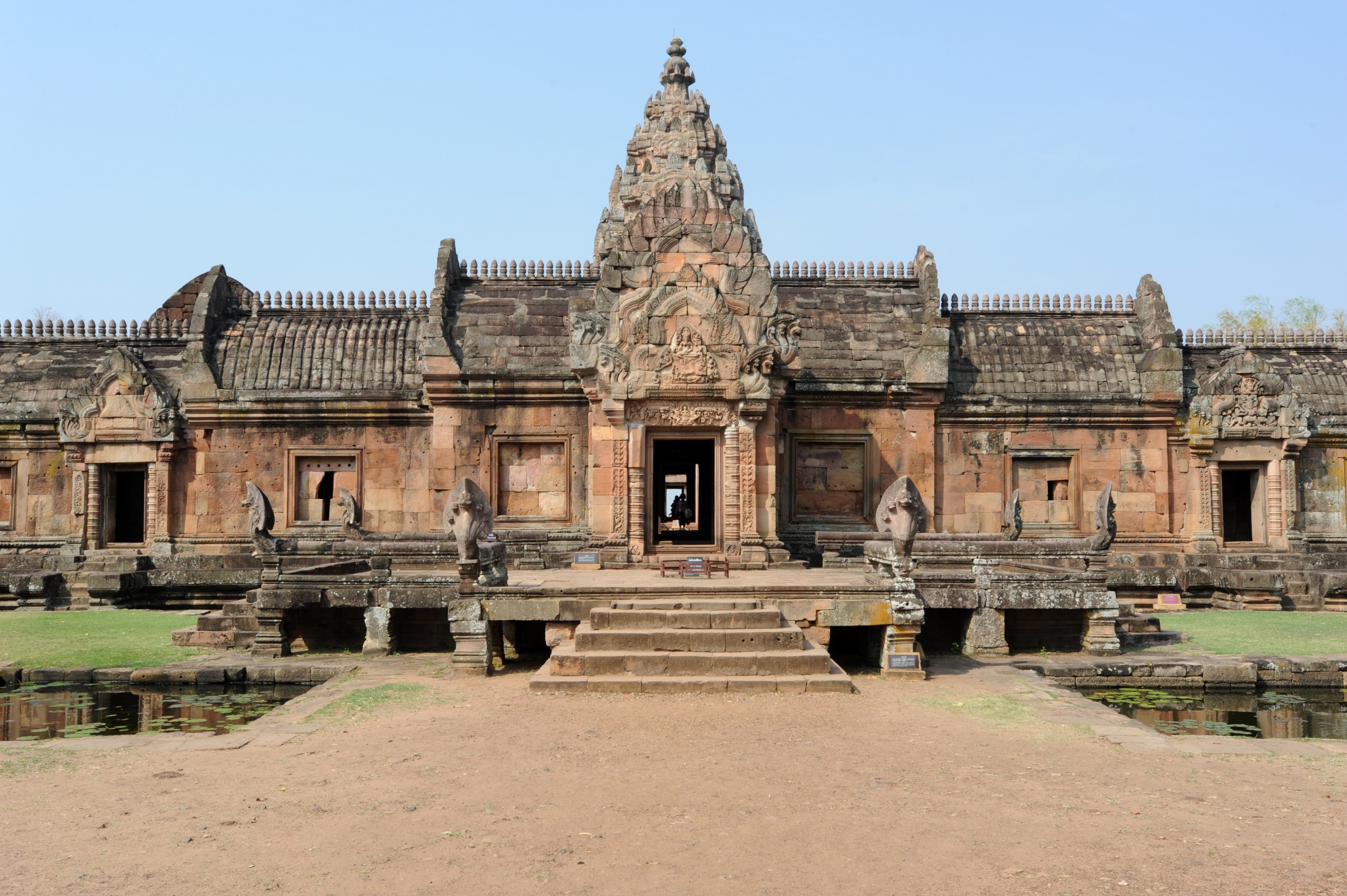
Prasat Muang Tam is a Khmer temple located in Thailand in the province of Buriram (Isan), near the Cambodian border. Its architecture is reminiscent of the wonders of the Angkor monumental complex.
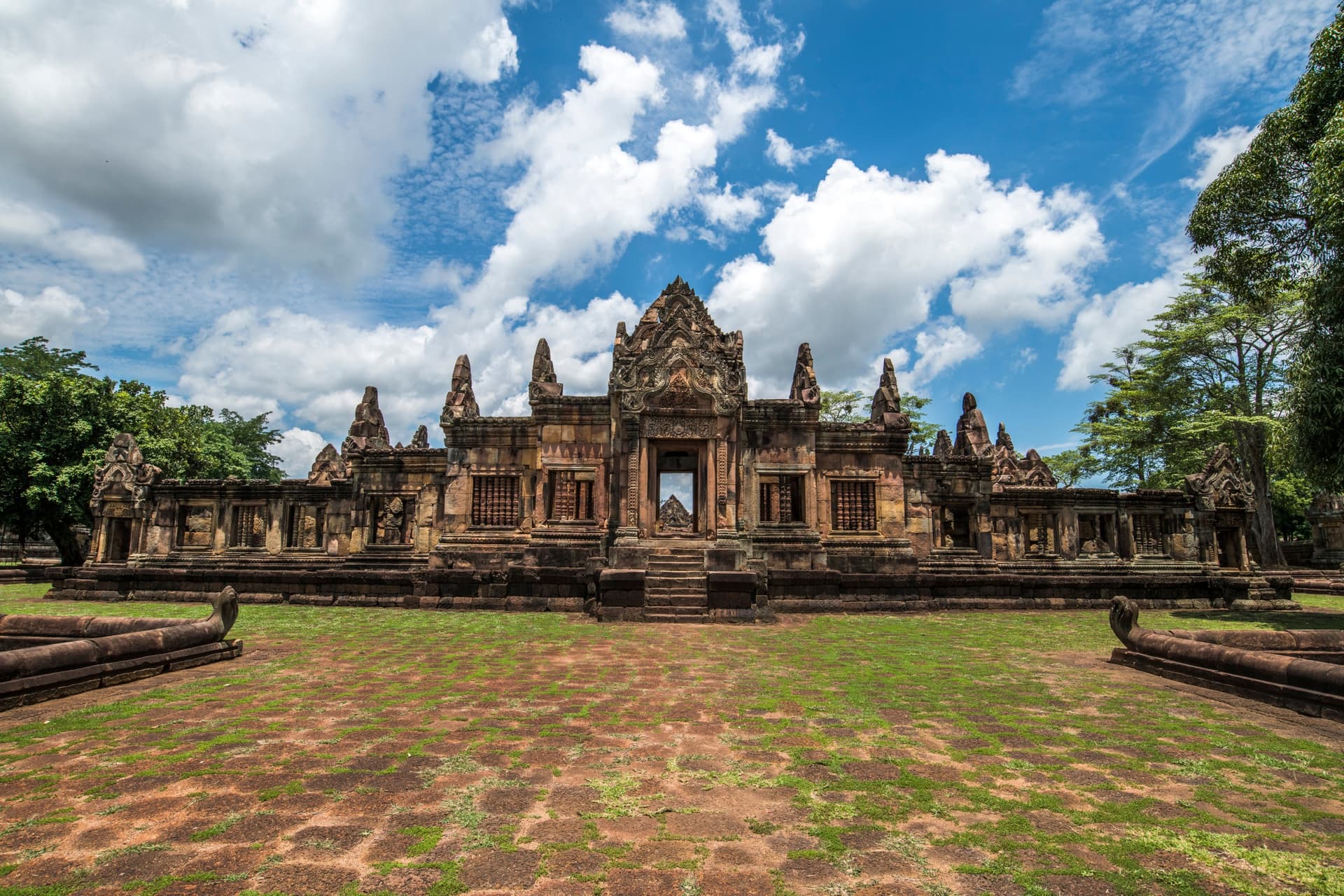
Prasat Muang Tam is a Khmer temple located in Thailand in the province of Buriram (Isan), near the Cambodian border. Its architecture echoes the splendours of the Angkor monumental complex. Its sumptuous millennia-old gateways and the four basins of its outer enclosure will transport you directly to a historical era with Cambodian airs. Recently restored, the monument showcases the capabilities of local craftsmanship while taking you on a journey through time.
Origin of the Temple
During its restoration by Thailand's Department of Fine Arts, unprecedented discoveries were made. Two statues were notably unearthed and are now visible at the National Museum of Bangkok. No inscriptions allowing new findings to be dated were discovered. However, the style of lintels from the period allows experts to identify approximately when it was built. Blending the style of the Khleangs with that of the Baphuon—two buildings and a temple located in the Angkor monumental complex in Cambodia—researchers estimate that Prasat Muang Tam was likely constructed between the 10th and 11th centuries.
The Materials
Located at the foot of a volcano extinct for 900,000 years, the temple is built from sandstone and laterite. These highly resistant stones lend immeasurable charm to the monument while their sound construction has ensured its preservation through the centuries.
Laterite is the stone that gives this unique and distinctive red hue to Khmer temples. Sandstone, for its part, is a relatively common stone. Its porous nature has allowed lichen to settle on the temple's walls, giving it a more authentic, ancient, and wild character.
A Place of Worship for Hindu Deities
The temple was primarily dedicated to Shiva, though researchers did uncover fragments of a Vishnu statue. These two deities are the principal gods of Hinduism. They form part, along with Brahmā, of the Trimurti—meaning each of these divinities represents one of the three divisions of the supreme divinity. Together, they symbolize the cycle of creation (Brahmā), preservation (Vishnu), and destruction (Shiva) of the universe.
Shiva, whose name means "the one who brings happiness," is often considered the god of yoga as the keeper of universal, supreme, and absolute knowledge and capable of seeing "beyond knowledge." He is foremost the god of darkness, the one whose role is the destruction of the universe.
Vishnu, the protector of the universe, is known for his numerous avatars that appear during times of chaos on Earth. This Hindu divinity is generally depicted as a blue man adorned with royal regalia on each of his four arms. He is also represented accompanied by numerous attributes, the most common being the club, the disc, the conch, and the lotus.
How to Get There
The best way to visit is to stay in Buri Ram or Surin and take a bus or taxi from one of these cities. The journey will take between 1 and 2 hours depending on your mode of transport. Note that buses stop a few kilometres from the site, so you'll need to arrange a taxi for the final leg of your journey.
We also recommend visiting Ta Phraya National Park, located about 1 hour's drive south-west of the temple, which is home to a wide diversity of fauna and flora.
Practical Information
Hours: Open daily from 6am to 6pm
Admission: 100 THB for foreign visitors and free for Thai nationals
You can purchase a combined ticket to visit two temples: Prasat Muang Tam and Prasat Phanom Rung. They are separated by 8 km and the combined ticket costs 150 THB for foreign visitors and is free for Thai nationals.
Photos
Give it a go!
Our local experts arrange this activity for you.