The Karen People
The Karen People
Nomads for generations, the Karen move only when survival demands it. Depletion of natural resources, climate unpredictability, peace and security challenges—these factors have shaped their way of life. In harmony with nature, they sustain themselves through agriculture, hunting, and craftsmanship. Discover this fascinating tribe in the Land of Smiles.
Nomads for generations, the Karen move only when survival demands it. Depletion of natural resources, climate unpredictability, peace and security challenges—these factors have shaped their way of life. In harmony with nature, they sustain themselves through agriculture, hunting, and craftsmanship. Discover this fascinating tribe in the Land of Smiles.
Origins of the Tribe
Migrating from Mongolia, the Karen inhabited northern Burma more than 700 years before the birth of Christ. They are a proud tribe of hunters and gatherers. The ethnic group is subdivided into three main communities: the Sgaw, the Pwo, and the Bwé. The most well-known sub-groups are the Padaung, the Pa'O, and the Kayah. According to recent census data, over 4 million individuals belong to the same clan. Karen is their common dialect, a variant of the Tibeto-Burman language family.
Today, An Oppressed Minority
The majority of Karen still live in Burma. In conflict with the country's native populations since 1950, the Karen of Myanmar have been demanding independence for roughly fifty years. Proud and courageous, patriotic rebels continue fighting for their people's freedom. In several Karen villages across Myanmar, peace has given way to bloody confrontations with Burmese forces—a true humanitarian tragedy.
Location in Thailand
Karen migrations to Siam began in the 17th century, and show no signs of stopping given the current situation.
Part of the Karen tribe lives secluded in the mountainous highlands of northwestern Thailand. Though a minority in the country, they occupy the 15 provinces stretching between Chiang Rai and the Kra Isthmus. Fleeing conflict, they chose the Land of Smiles as their new home, drawn to its peaceful way of life. Members of this tribe are particularly attracted to high-altitude regions near water sources. They seek arable land for cultivating rice or corn, and peaceful territories where life flourishes.
How to Recognize a Karen Woman?
Beyond their embroidered cotton clothing, the Padaung women and girls wear a distinctive spiral copper coil around their necks. This ornament serves an aesthetic purpose—it elongates the neck of those who wear it. Girls from the clan begin wearing these rings at age five. Considered harmless to the wearer, the coil exerts pressure on the ribs, which shift into a lower position. It is removed only for maintenance, if the wearer falls ill, or to add additional spirals. A genuine beauty accessory, this neck ring is associated with feminine charm. In the eyes of the tribe's men, those adorned with this ornament are utterly captivating. Nicknamed "giraffe women," the Padaung are remarkably elegant and know how to showcase their beauty through this unusual adornment.
Kayah wives and unmarried daughters from Myanmar are recognizable by their red-striped scarves. They are called "elephant women" because of the brass and cotton rings they wear around their legs.
The Customs and Traditions of the Clan
Originally animist, the Karen are increasingly drawn to Christianity and Buddhism. Nevertheless, shamanic beliefs remain paramount within each tribe, governing society alongside educational folk tales, songs, and dances passed down by the elders.
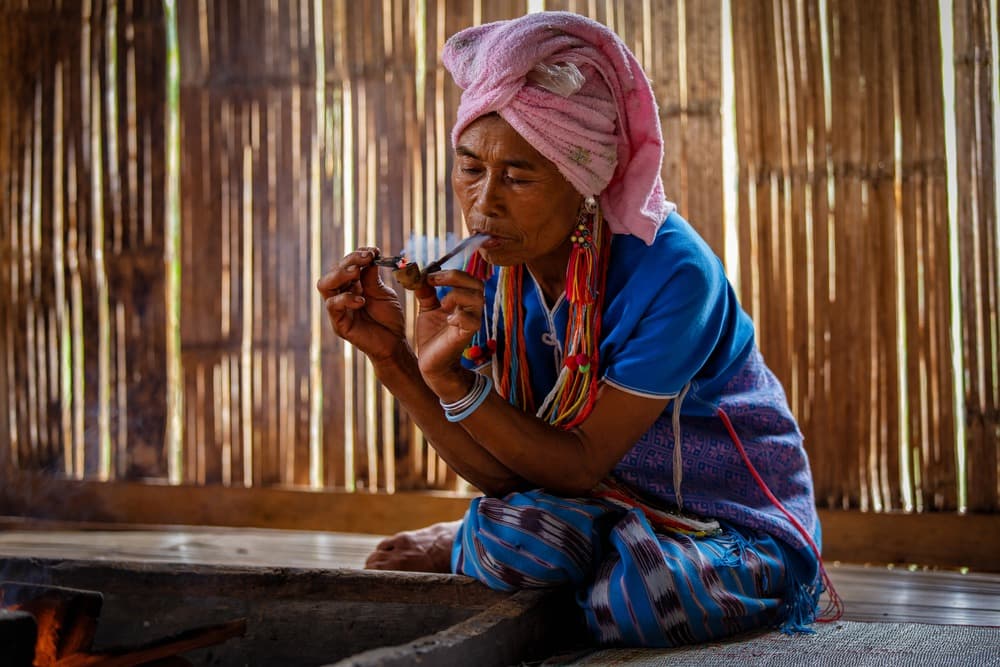
Living in bamboo houses on stilts, this nomadic people are pioneers of ecology. The Karen associate spirits with plants and animals that must be respected. Nature is sacred. Many villages prohibit pig and poultry farming, permitting only small game hunting.
The clan is renowned throughout Asia for its exceptional elephant handlers—a perfect harmony exists between the elephants and these natural zootechnicians.
In every household, betel is chewed throughout the day. Its consistency apparently resembles chewing gum. For villagers, it serves as an ideal pick-me-up to maintain energy while completing daily tasks. While men work the fields and hunt, women weave clothing, gather fruit, and prepare meals.

Photos
Give it a go!
Our local experts arrange this activity for you.