Where to See Turtles in Thailand?
Find out where to see sea turtles in Thailand, which species live in its waters, and how to observe them ethically and responsibly during your trip.
Who can remain unmoved by an animal as adorable and harmless as the sea turtle? If you, too, are an unconditional lover of these marine creatures, then this article is for you! Discover which species of sea turtles can be found in Thai waters and where to go to increase your chances of spotting them. We also share all our tips for observing them in an ethical and responsible manner.
Which species of sea turtles are found in Thailand?
Among the seven species of sea turtles found worldwide, four of them inhabit Thai waters:
The Green Sea Turtle (Chelonia mydas)
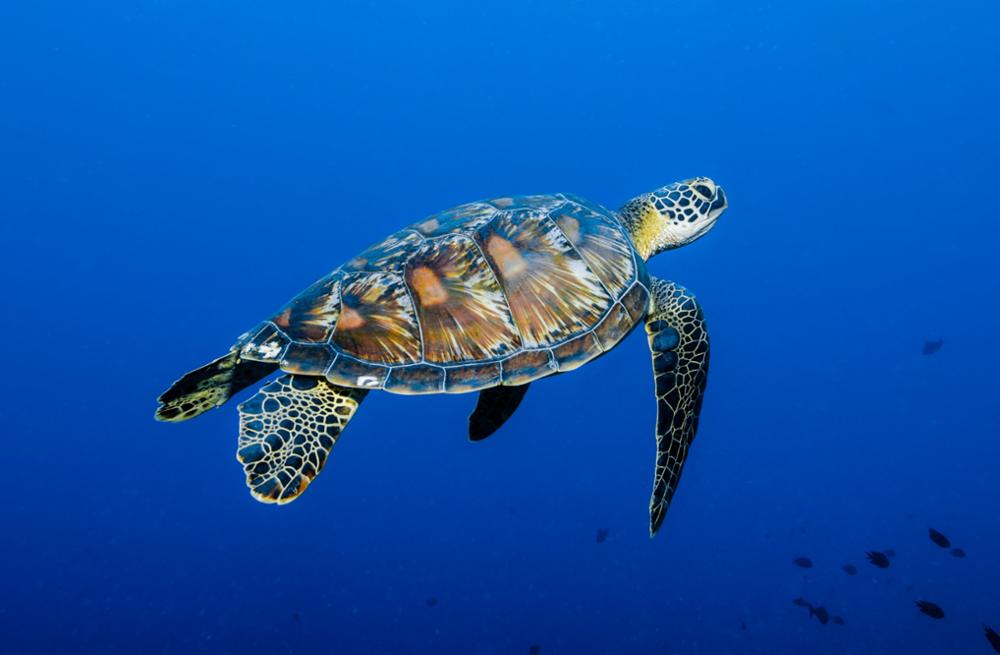
The green sea turtle, along with the hawksbill turtle, ranks among the two most commonly observed species in Thai waters. It is the largest of the hard-shelled turtles, measuring up to 150 cm and weighing up to 200 kilos.
It owes its name to the green color of its flesh (not its shell), which is due to its diet. As an adult, it feeds almost exclusively on seagrass and algae. This distinctive trait has also earned it the nickname "ocean gardener." Additionally, the green sea turtle is one of the few sea turtle species known to leave the water to bask in the sun, unlike other species that only emerge for nesting purposes.
The Hawksbill Sea Turtle (Eretmochelys imbricata)
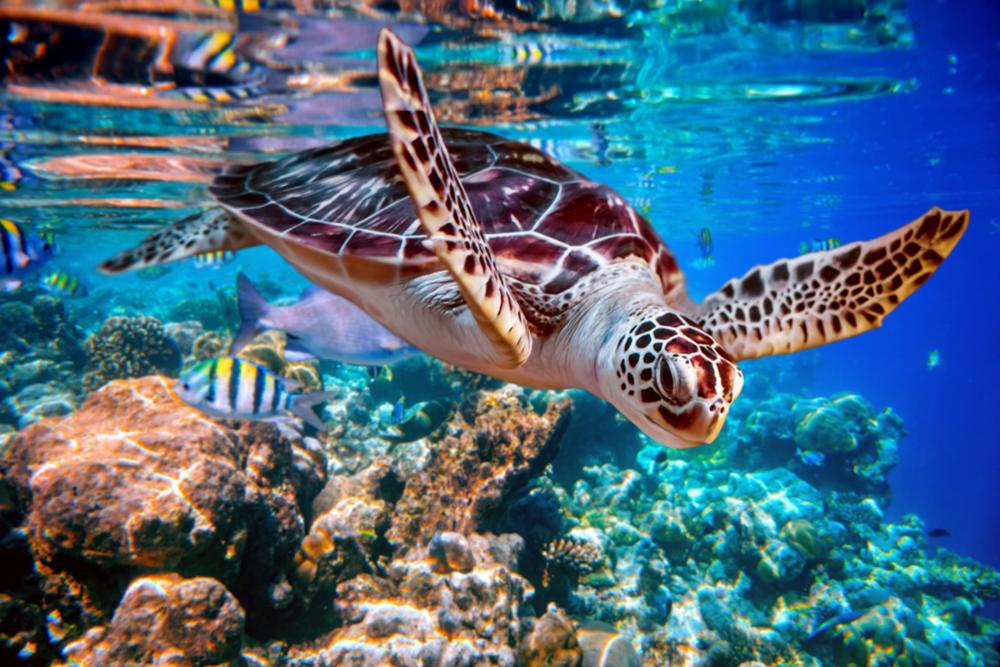
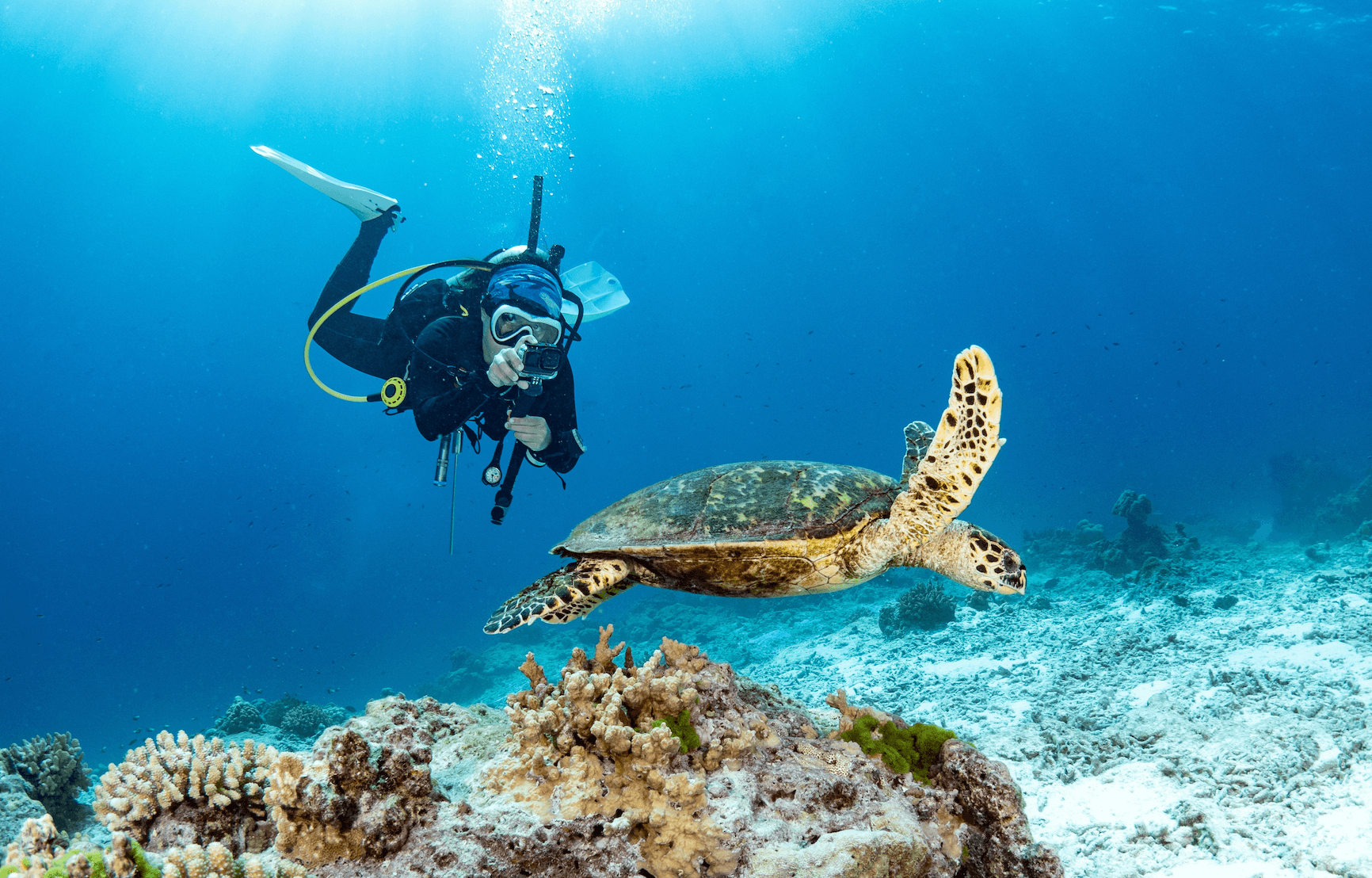
The hawksbill turtle is one of the sea turtle species most frequently encountered in Thailand, along with the green sea turtle. It is easily recognized by its relatively flattened shell of brownish-orange color, with scales arranged like roof tiles (hence its name).
It has a distinctive hooked beak that has earned it the English nickname of "hawk-billed turtle." It is the only known spongivorous reptile species—meaning it feeds exclusively on corals, sea sponges, and anemones.
The Olive Ridley Sea Turtle (Lepidochelys olivacea)
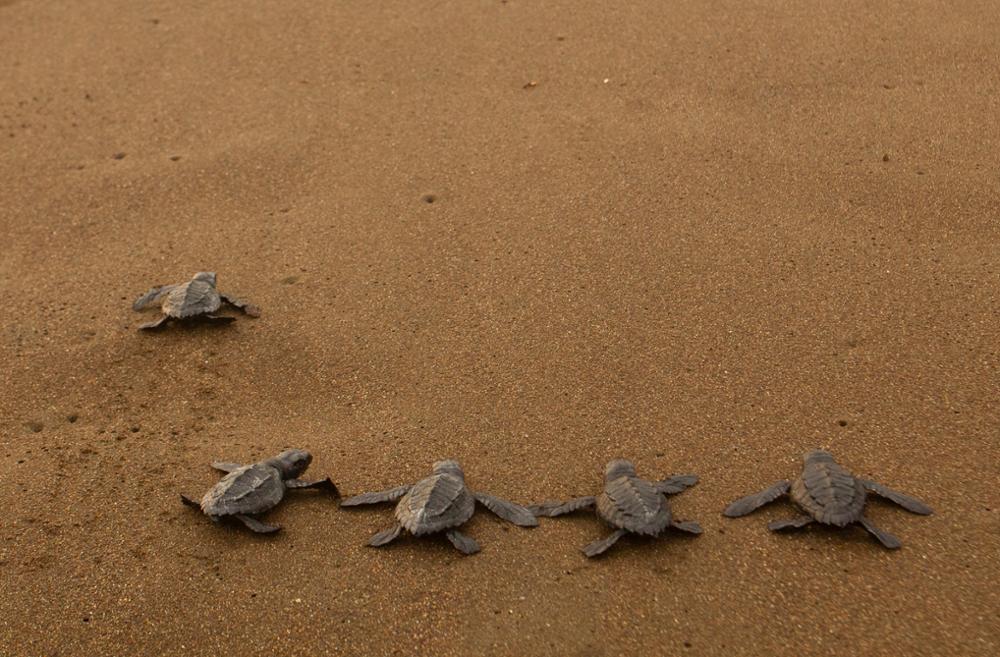
With an average size of 70 cm and a weight of 80 kg, the olive ridley turtle is the second smallest sea turtle after the Kemp's ridley. It is characterized by a hard, heart-shaped shell whose olive-green color gives it its name.
It is known for participating in one of the most impressive nesting phenomena on the planet: the arribada. During nesting season, thousands of females come ashore simultaneously to lay their eggs on the Pacific coasts of Central America (Mexico, Costa Rica, Panama) and South America. It should be noted that this phenomenon is not observable in Thailand, where individuals practice solitary nesting instead.
The Loggerhead Sea Turtle (Caretta caretta)
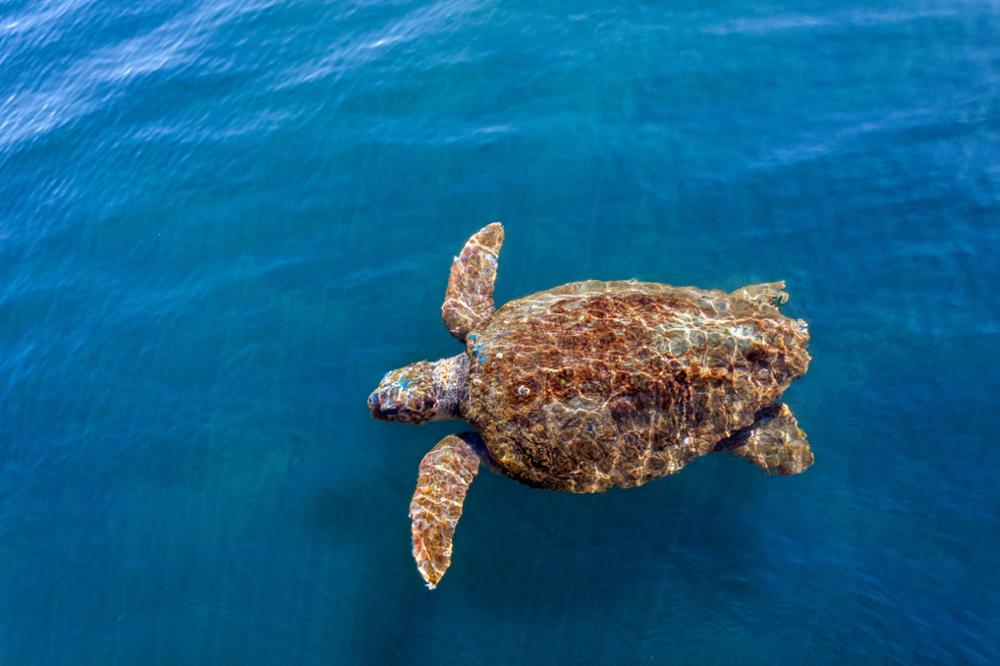
The loggerhead turtle is one of the sea turtle species that can be encountered in Thailand, though sightings are becoming increasingly rare due to the numerous threats it faces, particularly climate change and human activities.
It is easily recognized by its arched shell of reddish-brown color, whose shape resembles a heart. It has the distinctive feature of a very large head, which has sometimes earned it the nickname "big-headed turtle" in certain parts of the world. It possesses an extremely powerful jaw that allows it to easily crush its prey, such as mollusk shells.
The Leatherback Sea Turtle (Dermochelys coriacea)
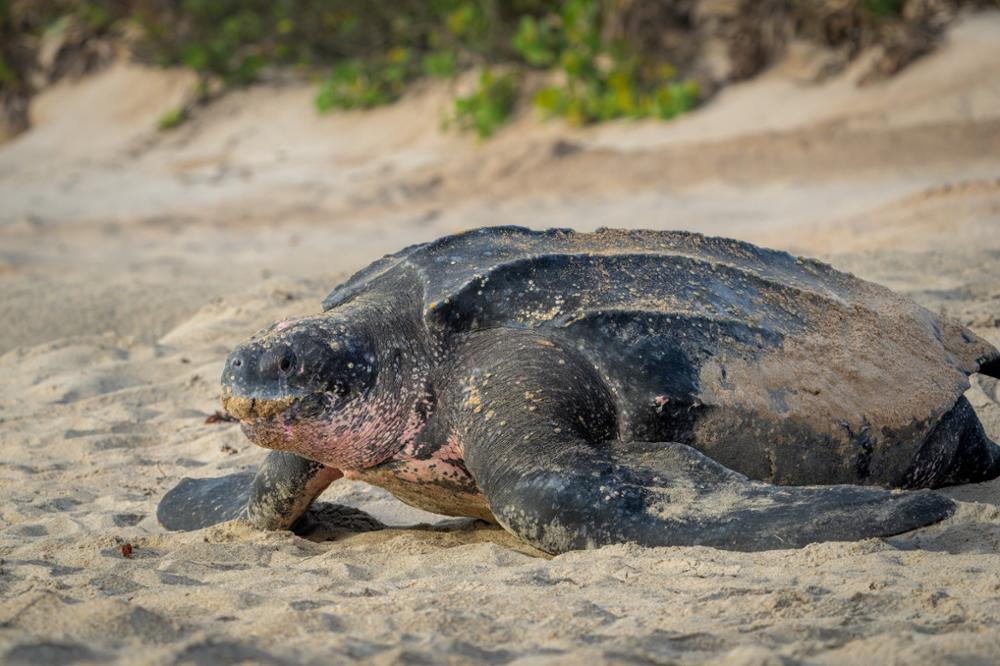
The leatherback sea turtle holds numerous records: it is the largest of all sea turtles and the largest of all turtles in general, as well as the 4th largest reptile in the world. It measures 180 cm and weighs an average of 500 kg, though some individuals reach 1 tonne and 3 meters in length!
Unlike other sea turtles, the leatherback is distinguished by a shell devoid of scales. Instead, it is covered with thick black skin spotted with white. It feeds primarily on jellyfish and holds the record as the greatest migrator among all reptile species! After several years of absence in Thailand, leatherback turtles have been spotted again in recent years, notably on beaches in Phang Nga province where several individuals came to nest.
Where to see sea turtles in Thailand?
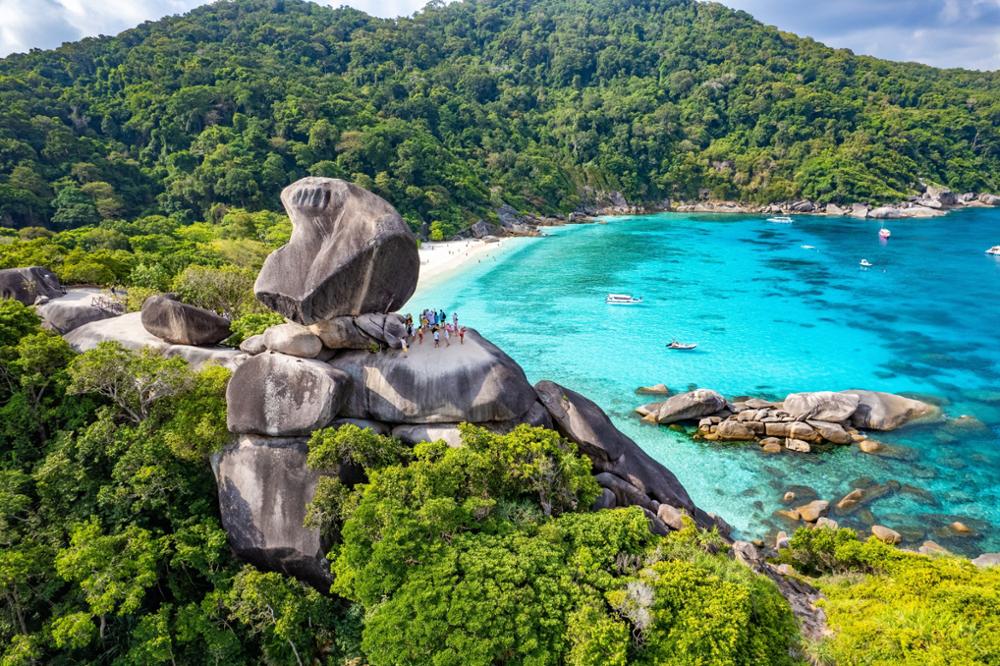
The best places to see turtles in the wild in Thailand
The Similan Islands
Located in the Andaman Sea about a hundred kilometers northwest of the island of Phuket, the Similan Islands initially consist of 9 islands to which two new islands were added to the national park in 1998. Due to its exceptional marine biodiversity, the archipelago ranks among the best diving spots in Thailand.
The waters of the region serve as a refuge for sea turtles, some of which even come ashore to lay their eggs. The Similan National Park is indeed closed to the public from May to October to preserve biodiversity and avoid disturbing turtle nesting and breeding. Among the species encountered, there are green turtles, hawksbill turtles, and more rarely loggerhead turtles.
To see turtles at the Similans, the best option is to plan a day snorkeling excursion or a diving cruise. You may spot them in the waters of islands #7 (Ko Hin Pousar), #8 (Ko Similan), and #9 (Ko Bangu).
The Surin Islands
Located north of the Similan Islands in the Andaman Sea, 55 kilometers from the coast of Phang Nga Bay, the Surin Islands are renowned as must-see destinations in Thailand for diving and snorkeling. The archipelago is particularly known for harboring "Richelieu Rock," one of the best diving spots for seeing whale sharks in Thailand, if not in the world!
Beyond whale sharks, the waters of the Surin Islands also shelter numerous marine species including green turtles and hawksbill turtles, as well as, more rarely, leatherback and olive ridley turtles.
Among the best places to see turtles while snorkeling or scuba diving at the Surin Islands are Ao Tao (turtle bay), Mae Yai Bay, Bon Bay, and Ao Chong Kad (Chong Kad Bay).
Note that, like the Similan Islands, the Surin Islands are closed to the public from May to October to allow the local biodiversity to rest.
Khao Lak and Phuket
Located in Phang Nga province on the Andaman Sea coast, Khao Lak is one of the main nesting zones for sea turtles in Thailand. You may therefore have the chance to see turtles emerge from the water to reach the beaches.
Head to Thai Muang beach (south of Khao Lak), Phra Thong island (north of Khao Lak), or Mai Khao beach in Phuket. Note that sea turtle nesting season in the region occurs between October and March, with a peak between November and January.
Warning! If you are fortunate enough to encounter a turtle on a beach during your stay, be sure to take all necessary precautions not to disturb it (see end of article).
Koh Tao
Located in the Gulf of Thailand, near the islands of Koh Samui and Koh Phangan, Koh Tao island is famous for being one of the most accessible destinations to experience scuba diving and complete your training levels. This small island actually thrives solely on tourism and diving activities.
Literally translated as "turtle island," Koh Tao lives up to its name: coral reefs attract numerous turtles, primarily green turtles and hawksbill turtles. Among the best snorkeling and diving spots where you can see turtles at Koh Tao, we recommend: White Rock, Twins, Hin Pee Wee, Hin Wong, Shark Island, and Aow Leuk.
Learn more about the best diving sites of Koh Tao.
Key takeaway:
Seeing wild animals in their natural habitat cannot be guaranteed. Thus, you may very well see sea turtles at one of these spots or not see them at all. Similarly, you may encounter turtles on other nearby islands without expecting to!
Stay alert wherever you put your head underwater and remember that Thai seabeds always hold surprises. Moreover, the sense of wonder will always be there, with or without turtles in the vicinity!
Sea turtle conservation centers in Thailand
Failed to spot a turtle at one of the aforementioned sites? If you wish to see turtles and learn more about their conservation, you can always opt to visit a conservation center. Here are the main turtle conservation centers to visit in Thailand:
Royal Thai Navy Sea Turtle Conservation Center (Sattahip, near Pattaya)
Located south of Pattaya, within the Sattahip naval base, the Royal Thai Navy Sea Turtle Conservation Center is both a rescue and breeding facility for sea turtles (with turtle release programs) and a scientific research establishment. Open free to the public, the center welcomes visitors wishing to see turtles up close (including hatchlings) and learn more about the lifestyles of sea turtles present in the country.
More information on the Thailand tourism office website.
Sea Turtle Conservation Center (Taplamu, Lam Kaen - Khao Lak)
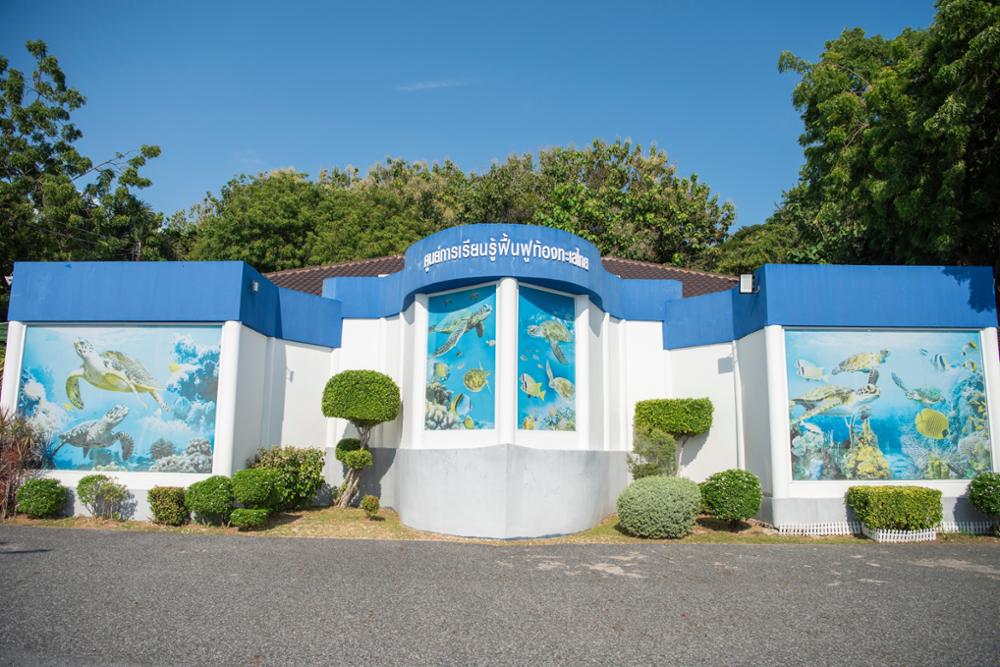
The Royal Thai Navy Sea Turtle Conservation Center in Phang Nga is located within the Tap Lamu naval base, south of Khao Lak. Founded in 1979 at the initiative of Queen Sirikit, the center aims to care for injured and sick turtles and look after baby turtles before releasing them into the wild.
More information on khaolakcenter.com
What are the rules of good conduct to follow?
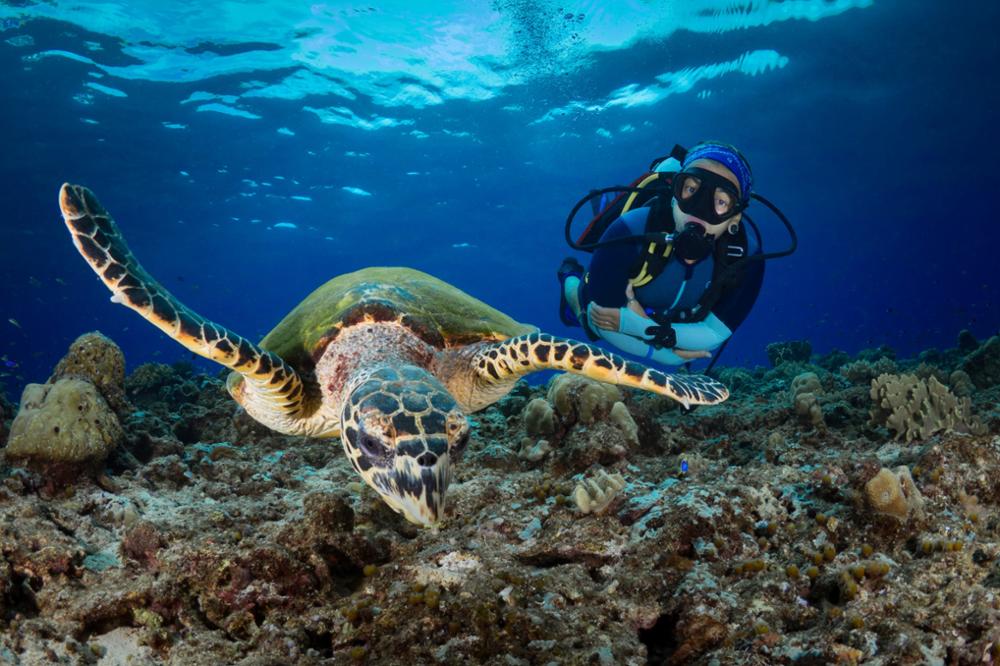
Water pollution, entanglement in fishing nets, ingested plastics, boat strikes, human activities, habitat loss, and diminished nesting grounds—sea turtles face numerous threats. This is why sea turtles are protected by the IUCN, CITES, and Thai legislation. Thus, any disturbance, collection, possession, or trade in turtles or their eggs is strictly prohibited and subject to criminal penalties in Thailand.
Although there is no specific law governing sea turtle observation, it is important to follow good conduct practices to minimize disturbance, namely:
Never touch or handle turtles, whether in water or on beaches;
Maintain a safe distance to avoid harming turtle well-being: minimum 3 meters distance;
Never feed a wild turtle;
Do not approach a turtle head-on: prefer to observe it from the side to avoid obstructing its passage;
Follow local guidelines: certain beaches are closed to the public or require special permission during nesting season. Respect directives to avoid compromising turtle safety and well-being;
Do not use lights near nesting sites as they can disorient turtles;
Avoid making noise or sudden movements in the presence of turtles (in water or on land);
Never touch an egg or hatchling;
Use reef-safe sunscreen to avoid polluting seawater with harmful chemicals;
Choose ethical excursions: if interested in observation outings or hatchling release events, participate in tours organized by experienced professionals such as local conservation centers;
Avoid private facilities that offer to "play with turtles" or allow you to handle them for photos.
Need help planning your Thailand getaway and increasing your chances of seeing sea turtles? Get in touch with us! We'll be delighted to plan your itinerary and connect you with local experts.
For further discovery, also check out:
Frequently asked questions
The best time varies by region. For nesting at Khao Lak and Phuket, choose October to March. For diving at the Similan and Surin Islands, the season runs from November to April.
Yes, snorkeling is sufficient at many spots like Koh Tao. You can also observe nesting on Khao Lak beaches and visit conservation centers.
Prices range from 1,500 to 4,000 baht for a full-day snorkeling excursion, depending on the destination and services included.
No, touching sea turtles is strictly forbidden. Maintain a minimum distance of 3 meters for their well-being and your safety.