Taking the Death Railway
Taking the Death Railway
For your next road trip in Thailand, treat yourself to a journey along the rails of the Death Railway. The tourist train preserves the memory of prisoners of war who perished on the construction site. Everything you need to know.
For your next road trip in Thailand, treat yourself to a journey along the rails of the Death Railway. The tourist train preserves the memory of prisoners of war who perished on the construction site. Everything you need to know.

Death Railway, a historic and emblematic symbol of Kanchanaburi
Of all the monuments in Kanchanaburi, the Death Railway is undoubtedly the most famous. If you wish to explore the surroundings of the Thai capital, do not miss this railway bridge beautifully suspended over the River Kwai. What visitor is not moved by the thought of the war crimes committed on this bridge some 90 years ago? Who would not feel heavy-hearted recalling the suffering endured by prisoners of war, forced to eat spoiled food, exhausted and deprived of medical care? By taking the Death Railway, you will cross other emblematic sites of World War II, such as the JEATH War Museum or Krasae Cave. Then, enjoy the shops and culinary destinations of Kanchanaburi. The visit begins with a touch of sadness but ends in cheerfulness. To see something of the Land of Smiles other than its Buddhist temples, rice fields and waterfalls, taking the Death Railway is a great idea.
A brief history of the River Kwai Bridge
Let us place the railway bridge of Kanchanaburi in its historical context. War was raging in Europe and Asia. Not content with occupying Thai territory, Japan also wanted to attack Burma. But these raids were thwarted by Great Britain. This gave rise to the ambitious but ill-advised idea of building a railway line connecting Siam to Burma.
Faced with a shortage of labor, Japanese officers resorted to drastic measures: they forcibly recruited captive soldiers from Allied countries and Asian civilians to carry out this work. Out of respect for the Siamese Government, Thais were spared. More than 100,000 workers perished during the construction, which, moreover, was left unfinished. The vast majority of them were English, Dutch, Australian and Canadian. The titanic project was a white elephant, as the Allies destroyed it through repeated bombardments.
Aboard the Death Railway
Kanchanaburi, a small remote town in Thailand, is only 3 hours drive from Bangkok. Its name has traveled across the oceans, due to the terrible events that marked its railway bridge. David Lean's film, titled "The Bridge on the River Kwai," made it famous.
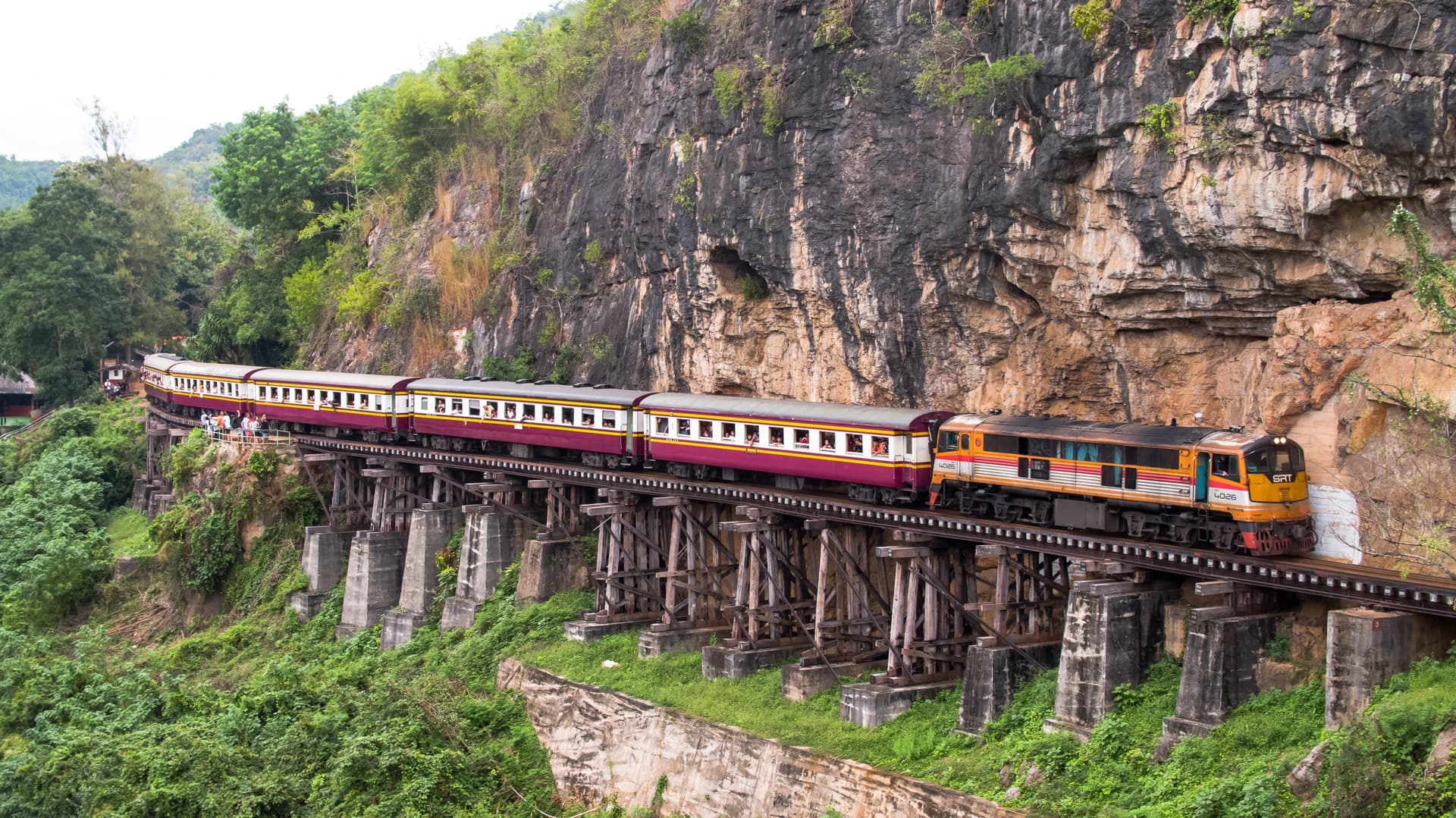
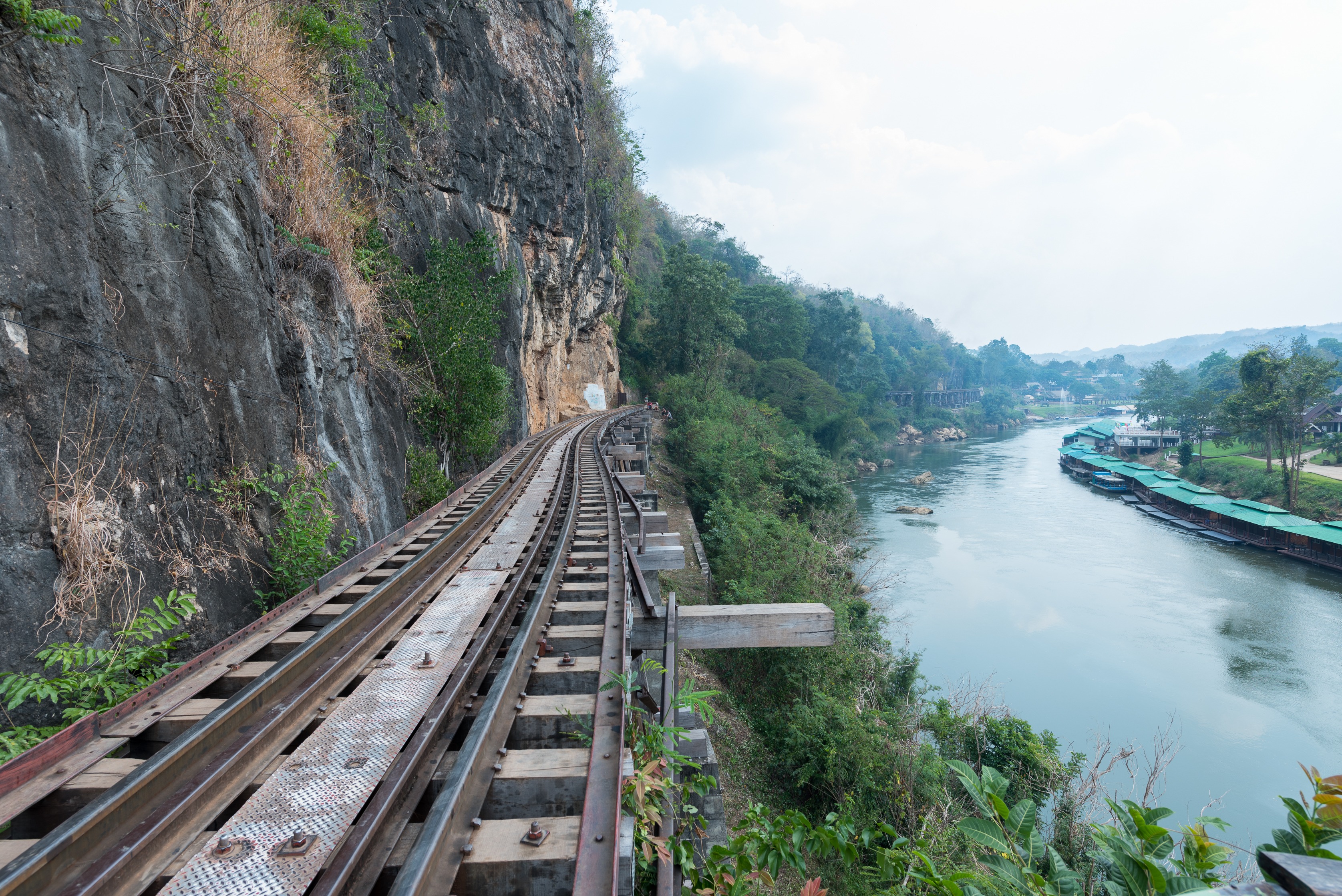
Tourists take the Death Railway to relive the darkest hours of World War II. That said, the gentleness of the landscapes is a strong point of the journey. The Death Train departs from Kanchanaburi and arrives at Nam Tok. To enjoy the best views, passengers are invited to take a seat on the left side rather than the right. The countryside is very floral. The river flows its brown waters, bordered on both sides by tropical shrubs. The mountains stretch as far as the eye can see.
Before boarding, you will certainly appreciate taking a walk on the bridge. Many points of interest await discovery in the surroundings. Photographs illustrating the living conditions of prisoners await you at the DEATH War Museum. It is located below the wooden pontoon, the preliminary version of the structure before its replacement by a steel bridge. Equally interesting is the Thailand-Burma Railway Centre, a private museum run by an Australian historian. Krasae Cave hides in the hollow of a rocky escarpment. There, stone blocks were stored for building the railway. The forced laborers also passed through this underground passage during bombardments. The cave entrance is adorned with an imposing Buddha statue.
The Death Railway tourist train is worn by the years. You will occupy an old-fashioned wooden bench. You will cross farmhouses nestled in the hills and rice fields. Everything breathes serenity, making it difficult to believe that eight decades ago, these old rails witnessed scenes of terrible warfare. Descending at Hellfire Pass, you are free to return directly to Kanchanaburi or continue by visiting the Australian museum near the terminus.
Practical information
· Train schedule
There are three departures per day: if you missed the 6 a.m. train, catch the 10:30 a.m. and 4:20 p.m. ones. These times are given as an indication, knowing that punctuality is not a quality of Thai trains.
· Ticket price
Go to Kanchanaburi train station to purchase your Death Railway ticket. Plan for around 100 baht (€2.70) for a single journey. Tickets are distributed a quarter hour before the train arrives. Preferably leave early in the morning to avoid long queues, as the Death Railway is a coveted tourist attraction. The station is just a short distance from the famous bridge.
· How to get there
Public buses serve Kanchanaburi from the capital. Simply head to the Mochit bus station.
Photos
Also discover
Give it a go!
Our local experts arrange this activity for you.