Kew Mae Pan nature trail
Kew Mae Pan nature trail
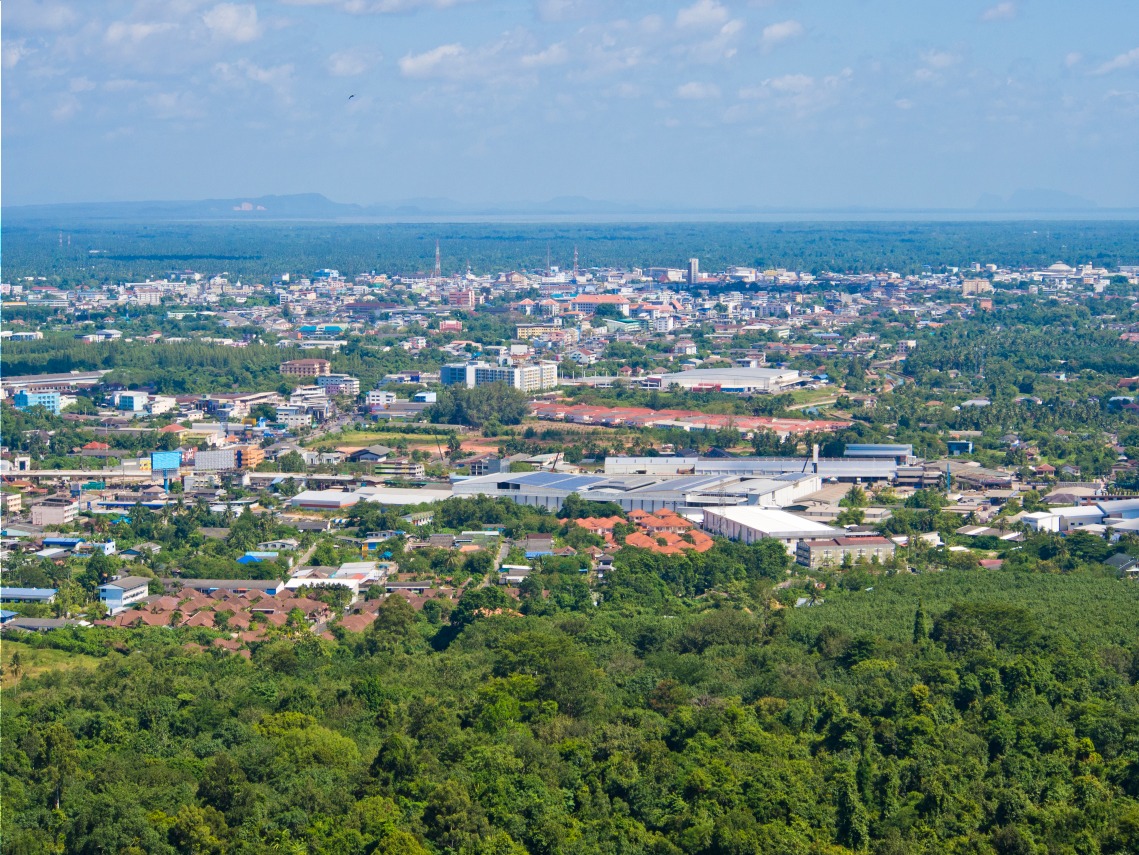
The Kew Mae Pan Nature Trail is a must-do hiking and trekking path for nature enthusiasts. Located within [Doi Inthanon National Park](/guide-thailande/attraction/doi-inthanon), home to Thailand's highest peak, this trail offers some of the country's most breathtaking panoramic views.
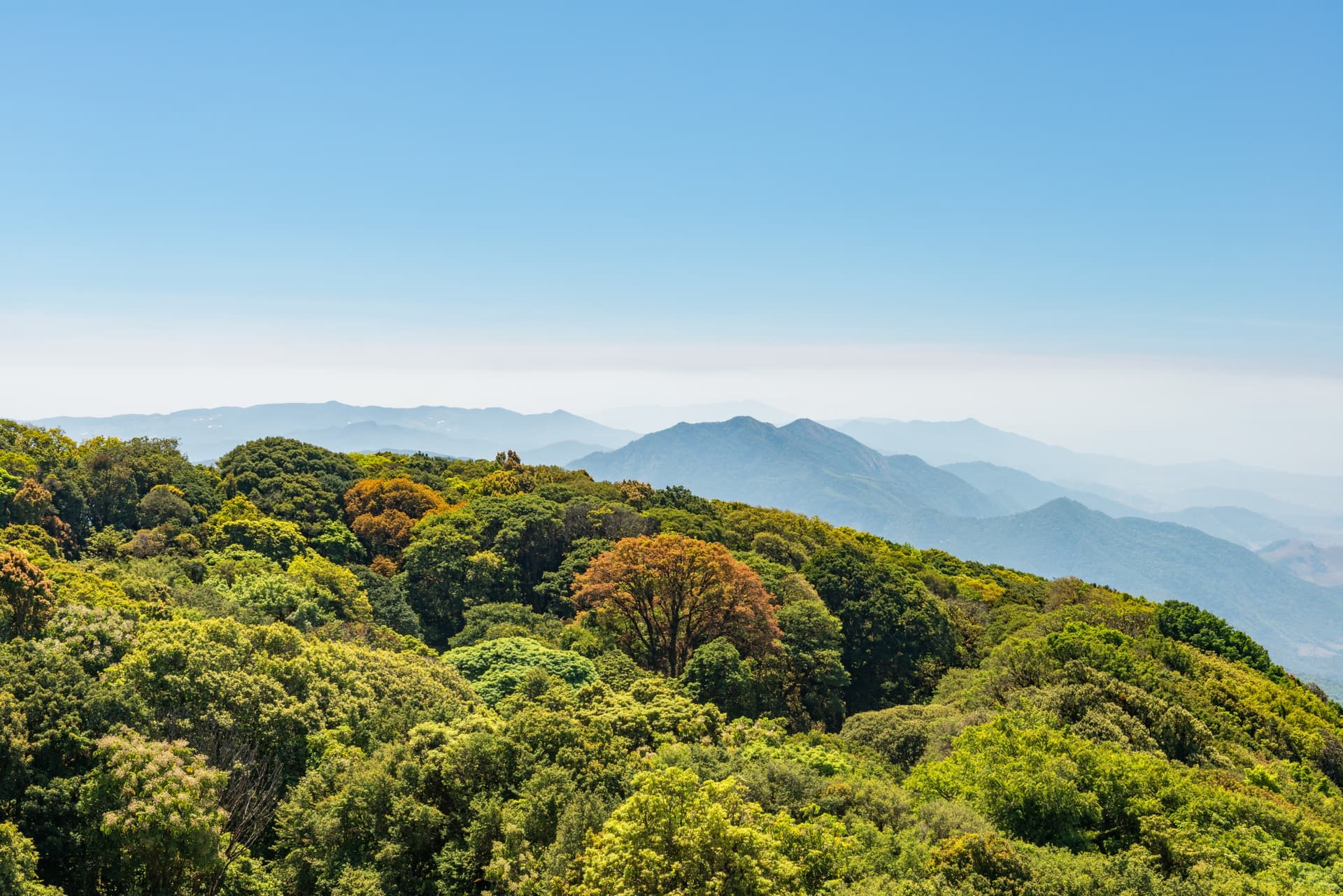
The Kew Mae Pan Nature Trail is a must-do hiking and trekking path for nature enthusiasts. It is located within the zone of Doi Inthanon National Park, where Thailand's highest summit stands. This trail stretches 2.78 km and rewards you at its end with one of Thailand's most spectacular panoramic vistas. Between sea-of-clouds formations and mountains draped in lush jungle, the setting endows this hike with an extraordinary and unmissable character for travelers venturing to the country's north.
Upon arrival at the trailhead
The trail sits at 2,200 meters above sea level, just a few hundred meters from Thailand's highest peak (2,565 meters).
Trail entry is free (already covered by Doi Inthanon National Park admission), but due to the dense and sometimes challenging forest terrain, hiring a guide is mandatory. Your guide will be a member of the Hmong hill tribe. The guides know the route and forest contingencies intimately. Guide fees are only 200 baht for a group of visitors (no more than 10 people). At the trailhead, you'll be given a bamboo hiking stick, which your guide calls the "wooden support."
A trail divided into three stages
Kew Mae Pan is a loop hike, meaning visitors return to the starting point at the end. The trail comprises 3 stages with a total of 21 stations.
The first stage
The first stage is a hike through dense forest (stations 1 to 6) teeming with moss and ferns. The evergreen forest traps cloud moisture, keeping the air refreshingly cool and pleasant to breathe. You can hike at a leisurely pace, savoring the oxygen and temperate climate. Trees grow tall but thin, competing for light while clouds regularly sweep the mountain, saturating the forest with abundant humidity. At station 3, you can observe and listen to the beautiful and serene Mae Pan waterfall, a tranquil, secluded gem.
The second stage
The second stage (stations 7 to 14) leads through an open grassland where brilliant sunshine is warmer than forest walking. This vast expanse shifts in color—emerald green during the rainy season to golden brown during the dry season. Station 9 is the panoramic viewpoint for capturing "the" breathtaking mountain photograph, where early risers await the magnificent sunrise.
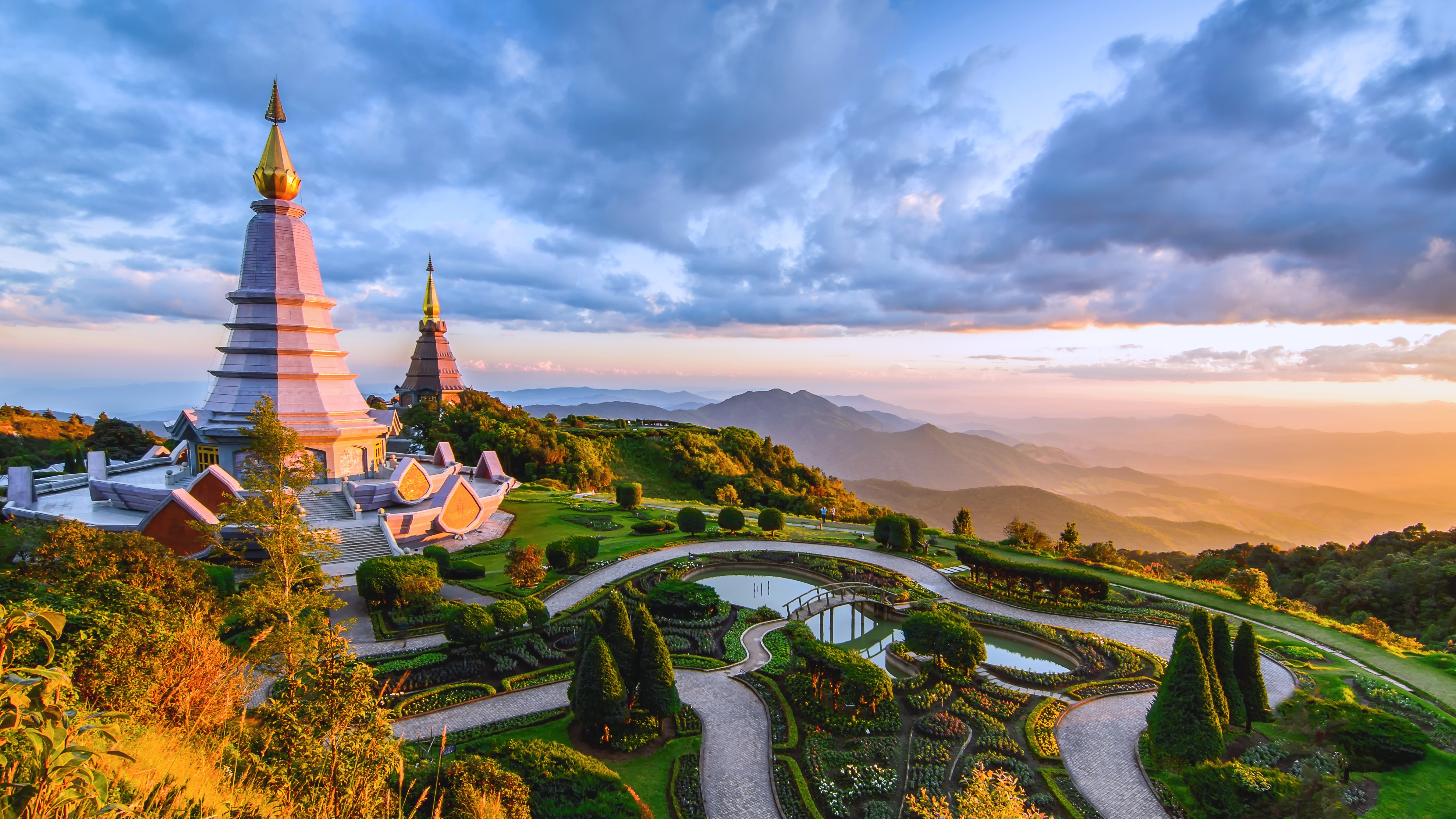
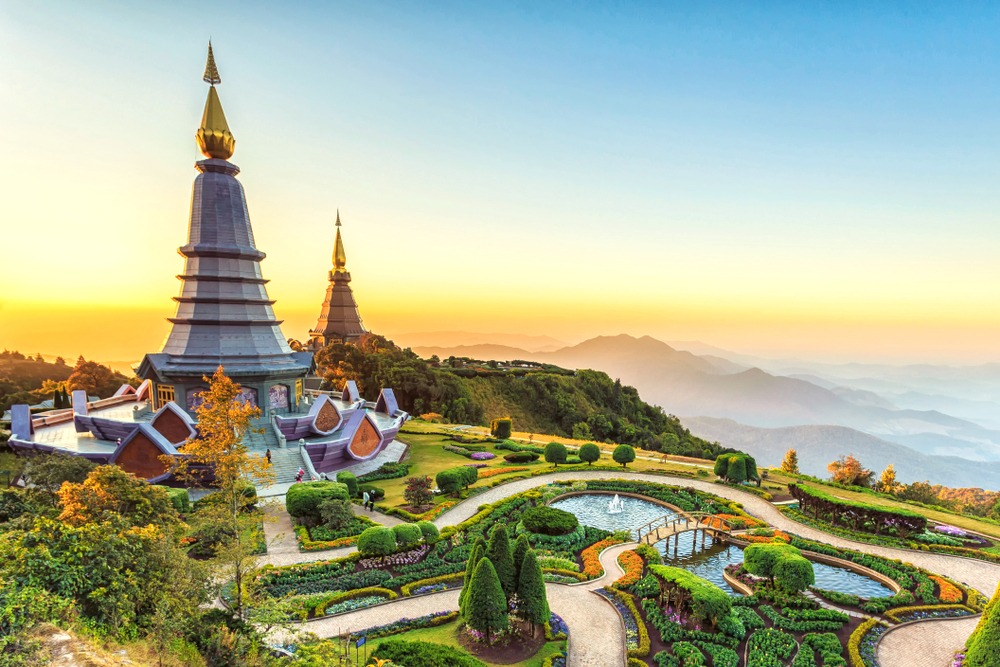
Between stations 14 and 15 lies the vantage point for viewing the King and Queen chedis—the Pra Mahathat Napamaythaneedol Chedi and the Pra Mahathat Napapoommisiri Chedi.
The third stage
Station 15 marks the final stage as we return to the forest. Temperatures drop several degrees below exterior conditions and can plunge to 0°C in winter (December–February).
Near the trail's end, a platform at station 20 allows visitors to rest while absorbing nature's symphony. You can hear the wind's whisper, water's trickle, and birdsong.
Practical information
Several details are worth noting to ensure a smooth experience:
- Depending on weather, visibility will shape your experience—it may reveal mountain vistas beneath clear skies or envelope you in mist, sometimes with a spectacular sea-of-clouds view.
- Sunrise begins around 6:40 a.m. and creates a stunning display until approximately 7:00 a.m. Don't worry if you miss it; the hike and arrival views are equally spectacular.
- Note that Doi Inthanon National Park is open year-round, but the Kew Mae Pan nature trail closes from June to October during the rainy season.
- This highly-rated green trail takes approximately 2 to 3 hours to complete and suits beginner-level hikers. However, it is not recommended for those unable to climb stairs, as certain sections are quite steep.
- On-site guides typically have limited English proficiency. While you can simply follow the path, don't expect detailed conversations or site information—translation of their knowledge is unlikely. No need to worry, though: at each station, interpretive signage in Thai and English explains the trail's various landscapes and ecosystems.
Photos
Nearby
Give it a go!
Our local experts arrange this activity for you.