Thai curry: what are the differences between red, green and yellow curry?
Love Thai curries but unsure what sets them apart? Discover the differences between yellow, red and green curry, from the mildest to the spiciest.
In Thai cuisine, there are primarily 3 types of curry: yellow curry, red curry and green curry. What makes them different? What are they made of? Which Thai curry is the strongest and spiciest? We've got all the answers for you.
What is Thai curry?
First and foremost, it's important to note that curry is not defined as a single spice but rather as a blend of several spices. Unlike Indian curry, which comes in powdered form (because it's made from dried spices), Thai curry comes in paste form. Indeed, the different types of Thai curry are essentially composed of fresh ingredients such as shallots or fresh lemongrass.
What's the difference between red, yellow and green curry?
What are the basic ingredients in Thai curry pastes?
All Thai curries are prepared with the same basic ingredients: chillies, galangal, garlic and onions, lemongrass, coriander seeds, salt and pepper. Shrimp paste is also widely used in making all types of curry found throughout Thailand's iconic dishes. Other aromatics are then added depending on the type of curry desired and everything is pounded in a mortar until a paste forms.
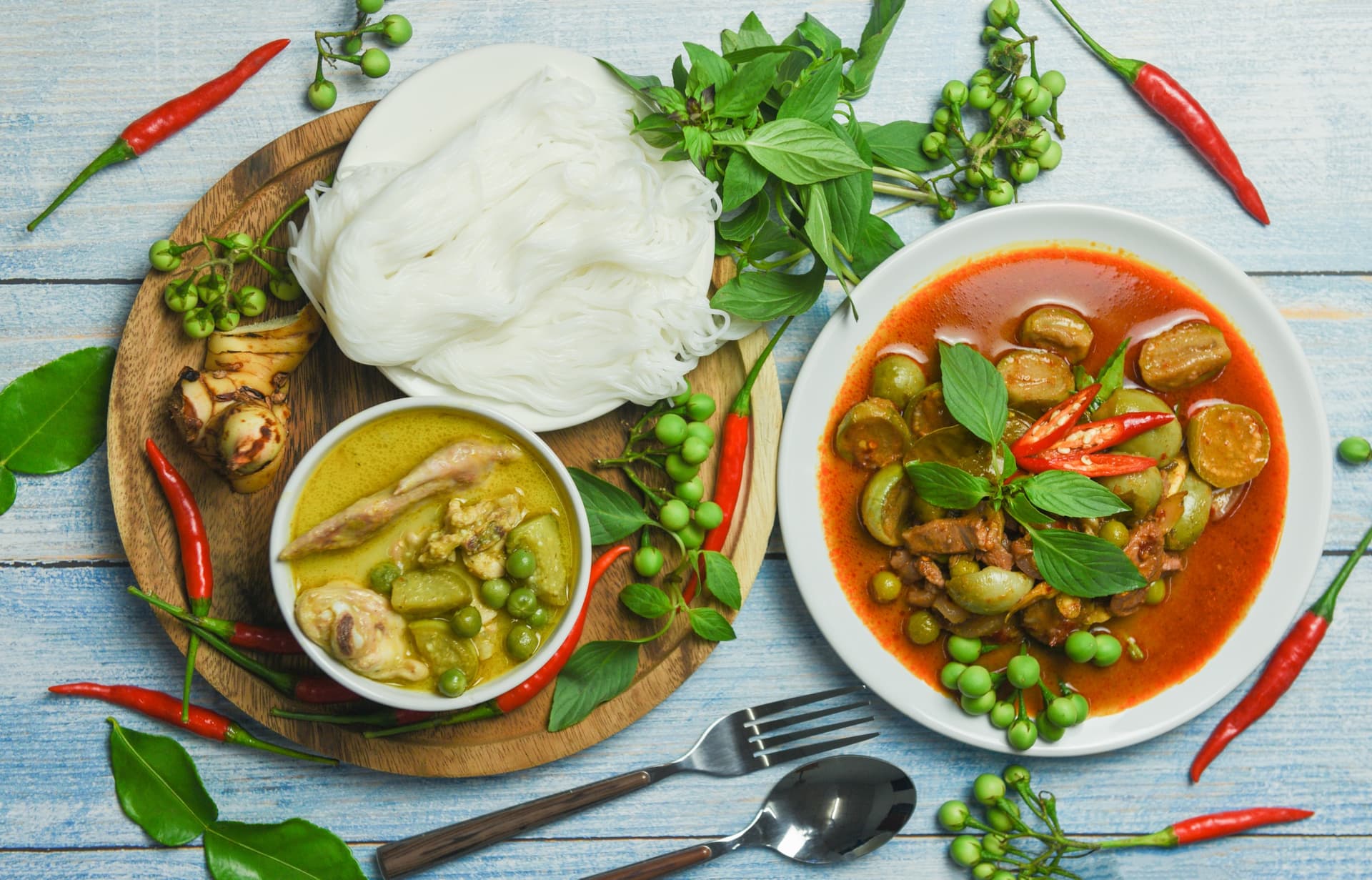
But why do they have different colors? Because they don't use the same chillies. Furthermore, other aromatics are used for each curry type, which can intensify their color (tomatoes for red curry, herbs for green curry...)
What is red curry made of?
Red curry (Krueng Kang Phet in Thai) gets its color from the use of dried red chillies in its preparation. Added to this are the base curry ingredients (coriander seeds, galangal, garlic, lemongrass, shrimp paste) as well as other aromatics such as cumin seeds and shallots. To enhance its red color, some use tomatoes or add chilli powder.
What is yellow curry made of?
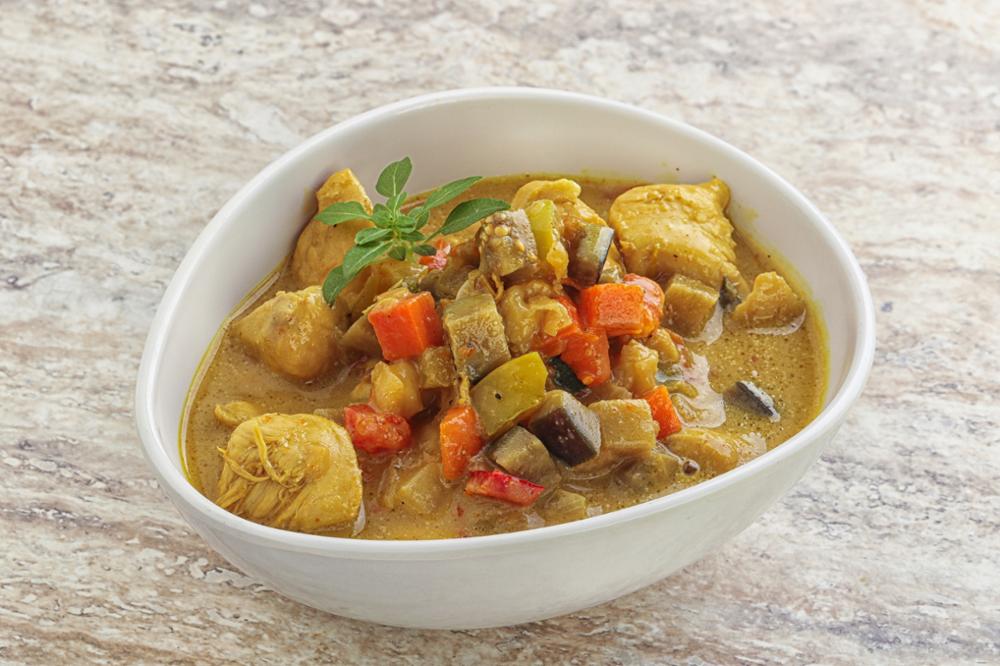
Yellow curry (Krueng kang Kari in Thai) uses roughly the same ingredients as red curry. The only differences? It gets its distinctive color from the addition of a large amount of turmeric. Dried red chillies, on the other hand, are used in smaller quantities than in red curry. Cardamom, cinnamon, cloves and nutmeg can also be used to make yellow curries.
What is green curry made of?
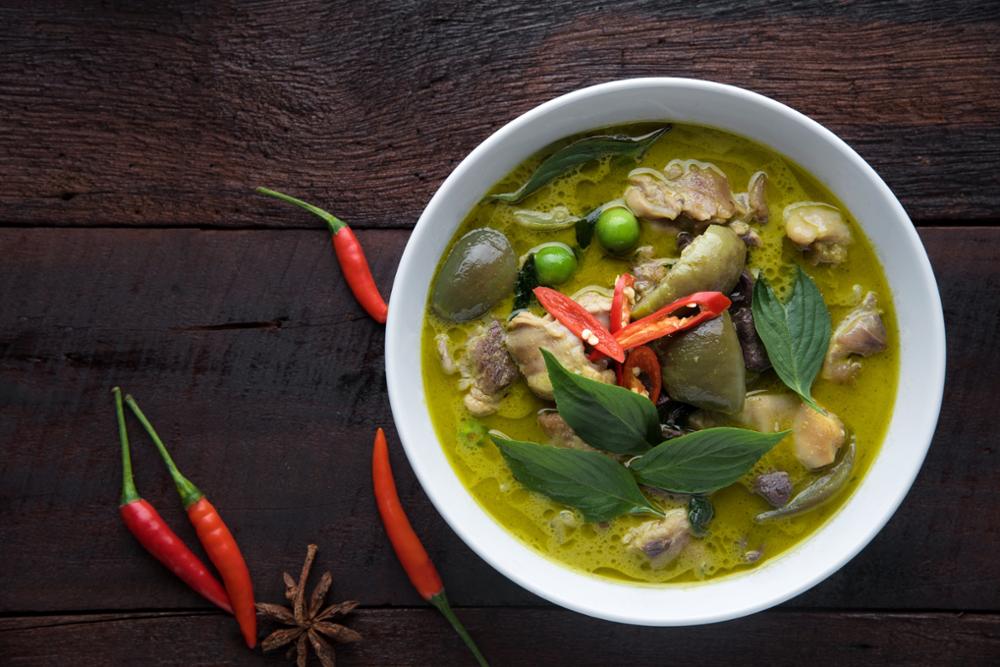
Green curry (Krueng kang Kaew Wan in Thai) is the only curry type to use fresh green chillies (usually bird's eye chillies). These chillies give it its green color along with other ingredients such as kaffir lime leaves and zest, Thai basil, fresh coriander leaves or kaffir lime.
Yellow, red or green curry: which is the hottest?
Many travelers tend to believe that red curry is the strongest of Thai curries because of its bright red color. Yet it's actually green curry that packs the most heat. Indeed, fresh green chillies are much spicier than dried red chillies. As for yellow curries, they are the mildest and least spicy Thai curries because they generally contain less chilli.
Good to know: although green curry is hotter than the others, you might be surprised to find a red or yellow curry that's spicier. The heat level of chillies can vary from dish to dish depending on the amount of chilli used to make the curry pastes.
The trick to know: to tame the fiery kick of chillies, Thai cooks frequently use milk or coconut cream in their curry preparations. And for good reason: coconut milk contains fats capable of neutralizing the effects of capsaicin, the compound responsible for the chilli's heat.
Frequently asked questions
Yellow curry is ideal for beginners as it's the mildest of the three. Its soft flavor and golden color make it the most accessible.
Yes, by buying curry pastes from Asian grocers. Simply mix them with coconut milk and your preferred vegetables or meat.
Fresh curry pastes keep for 1 week in the fridge, while commercial pastes last several months depending on the expiration date.