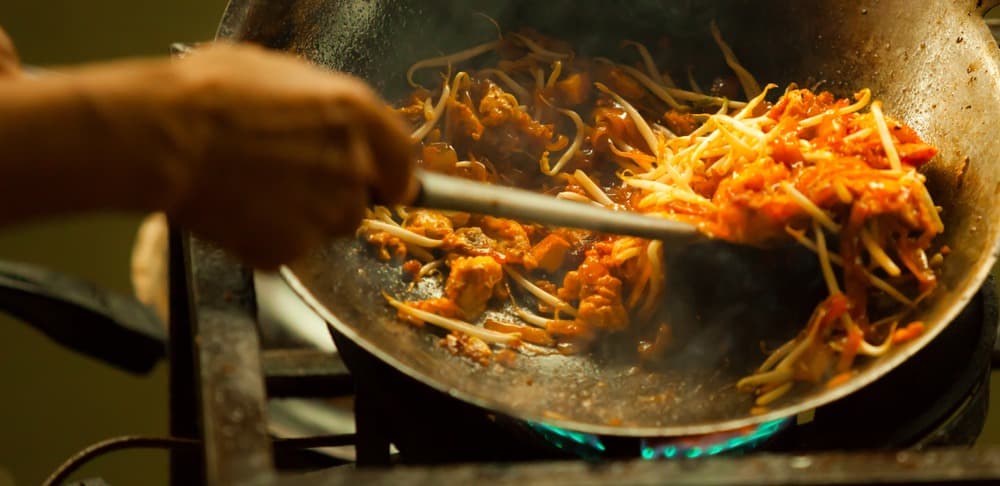
Discovering Thai Cuisine
Thai cuisine captivates with its perfectly balanced flavors and rich regional specialties. Discover what defines its identity and its remarkable success worldwide.
Thai cuisine has become one of the most celebrated culinary traditions in the world. The proliferation of Thai restaurants in major international capitals bears witness to its phenomenal popularity. But experiencing this cuisine authentically in its country of origin is truly something else altogether.
Thai cuisine: a balanced combination of five flavors
Thai cuisine offers tremendous variety in flavors and tastes. It makes generous use of fresh herbs, spices, and countless other ingredients sourced from local markets.
Balance and harmony are two of the qualities that have made it so renowned. Thai cuisine is built on an intriguing combination of five fundamental flavors—spicy, sweet, sour, salty, and bitter—which create contrast while complementing the taste and texture of each dish.
Coconut milk, seafood, and fruits also play a key role in Thai cuisine.
Four regional cuisines
To properly understand Thai cuisine, one must distinguish between the cooking traditions of four distinct regions: the North, the Northeast, the Central, and the East.
Over the centuries, these regional cuisines have absorbed various cultural and ethnic influences, incorporating Eastern and Western elements while preserving their unique character.
Here are the most popular dishes from each region:
In the North: Khao Soy (curry noodles), Kaeng Hang Le (pork curry), Sai Ua (spicy pork sausage), Khantoke dinner (traditional meal where guests sit around a low table), and steamed rice.
In the Northeast: Som Tam (green papaya salad), Lap (minced meat salad), Kai Yang (grilled chicken), and steamed rice.
In the Central region: Kaeng Khiao Wan (green curry), Tom Yum (hot and sour soup), Tom Kha (creamy, hot and bitter soup), Yum (spicy salad), noodle dishes, and steamed rice.
In the South: Kaeng Tai Pla (spicy fish curry), Kaeng Leuang (yellow curry), Kaeng Mussaman (mild curry), Khao Yam Nam Budu (rice salad), Satay (grilled meat skewers with spicy peanut sauce), and steamed rice.
Thai restaurants
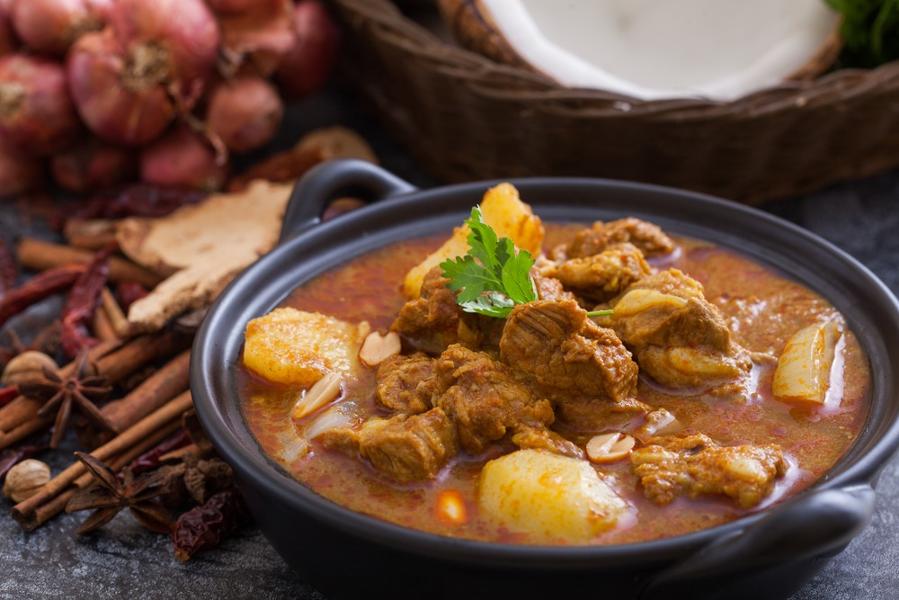
Restaurants serving authentic Thai cuisine are easy to find and typically offer a complete range of Thai dishes.
You'll always discover something new when visiting a different province or region. Local eateries and food stalls provide both typical dishes and an authentic atmosphere.
In larger cities, restaurants, hotels, and shopping centers offer wider selections, including non-Thai cuisine, vegetarian options, and organic dishes.
Learning Thai cuisine
Thai cuisine is one of Thailand's major attractions. It's therefore unsurprising that many travelers wish to learn its secrets. This has led to the emergence of numerous Thai cooking schools throughout the kingdom in recent years.
Finding a Thai cooking school in Bangkok or in the country's major provinces (particularly Chiang Mai) is remarkably simple. Many schools teach fundamental techniques that enable you to prepare an authentic Thai meal at home with ease, just like a true Siamese chef.
Good to know
Thai cooking classes are also frequently offered by hotels located in major tourist hubs such as Chiang Mai, Phuket, Krabi, Koh Samui, Hua Hin, and Pattaya.
Frequently asked questions
Cooking classes range from 800 to 3,000 baht depending on the city and school. Classes in Bangkok and Chiang Mai offer the best value for money.
The level of spice varies by region. You can always request 'mai pet' (not spicy) at restaurants.
Favor street stalls frequented by locals and family-run restaurants in residential neighborhoods.