The Far North: Diego Bays, Tsingy of Ankarana and Nosy Komba
Twelve days in northern Madagascar: Diego Bay, the Amber Mountain forest, the Ankarana tsingy, then three nights on the volcanic island of Nosy Komba.
Duration
12 days
From
€2,150/pers.
Ideal seasons
Apr, May, Jun, Jul, Aug, Sep
Style
Guided tour
Comfort
Charm & Character
Travelers
Couple, Solo, With friends
The spirit of travel
This journey explores northern Madagascar, from the bay of Diego Suarez to the islands of the Mozambique Channel. In twelve days, it connects very different landscapes: a vast bay opening onto the Indian Ocean, a volcanic massif covered in humid forest, a limestone plateau cut into spires, then a small volcanic island where life follows the rhythm of the sea.
The journey begins with two nights in Antananarivo. Flights to Diego depart early in the morning, and this day in the capital allows you to recover from the international flight while discovering the city on foot, from the royal hill to the markets of the lower town and its craft workshops.
In the North, we walk a lot, always at an accessible pace. The 3 Bays are discovered on foot, on the sand, as far as the village of Ramena. Montagne des Français offers a view over the entire bay of Diego. Montagne d'Ambre, an ancient volcanic massif, shelters a humid forest where lemurs and chameleons live. Further south, the Ankarana massif is a limestone plateau carved with caves and canyons: we spend two nights there to dedicate an entire day to it. The volcanic rocks of Ambre and the limestone of Ankarana tell two episodes in the island's history, and it is their complementarity that enriches the journey.
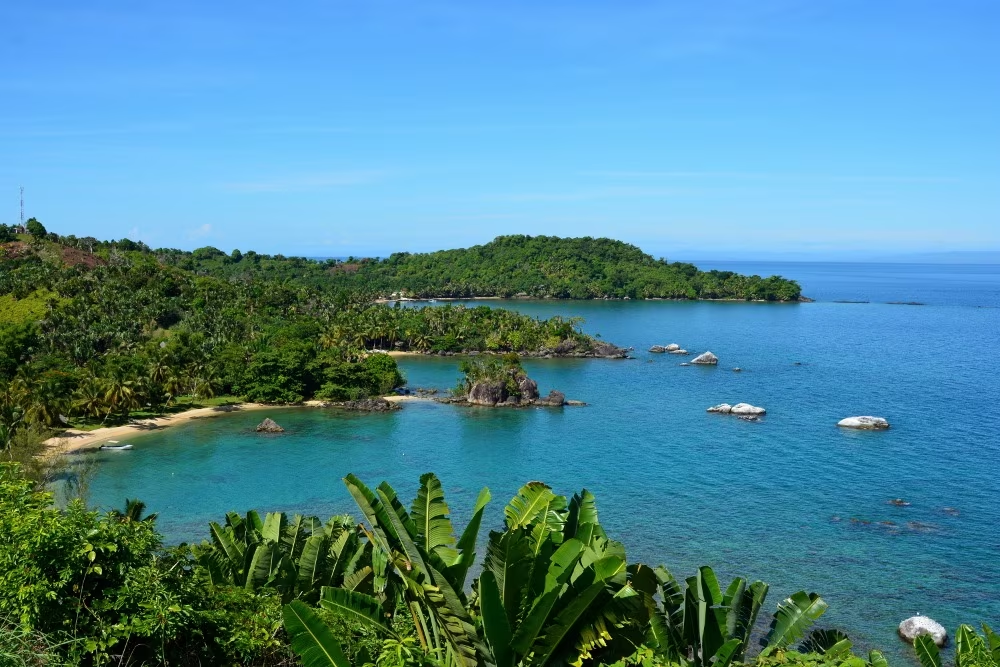
The last part of the journey is spent at sea. From Ankify, a boat takes us to Nosy Komba, a volcanic island covered in forest, without roads or cars. We spend three nights there, the time to cross the island on foot from hamlet to hamlet, then to reach the Nosy Tanikely marine reserve for a day of snorkeling.
In the North, we travel in 4x4 vehicles with our drivers, accompanied by a guide from Détours Madagascar. In the parks and on the islands, local guides join us, and their knowledge of the terrain complements theirs. The accommodations are in the superior category: lodges and charming hotels, by the sea, in the heart of the countryside or facing the tsingy. The journey takes place from April to the end of Christmas holidays.
Détours Madagascar is committed to the Travelife certification approach. On this journey, this is translated concretely: we work with local guides in each park and on each island, our lunches are taken in villages and at local residents' homes, and we observe wildlife without feeding or touching it. At Nosy Komba, this rule is particularly important, as lemurs there have long been fed by visitors.
The stages of your journey
Highlights
Day-by-day itinerary
Arrival in Antananarivo
Upon arrival at Ivato International Airport, a member of the Détours Madagascar team welcomes us and takes us to our hotel in central Antananarivo.
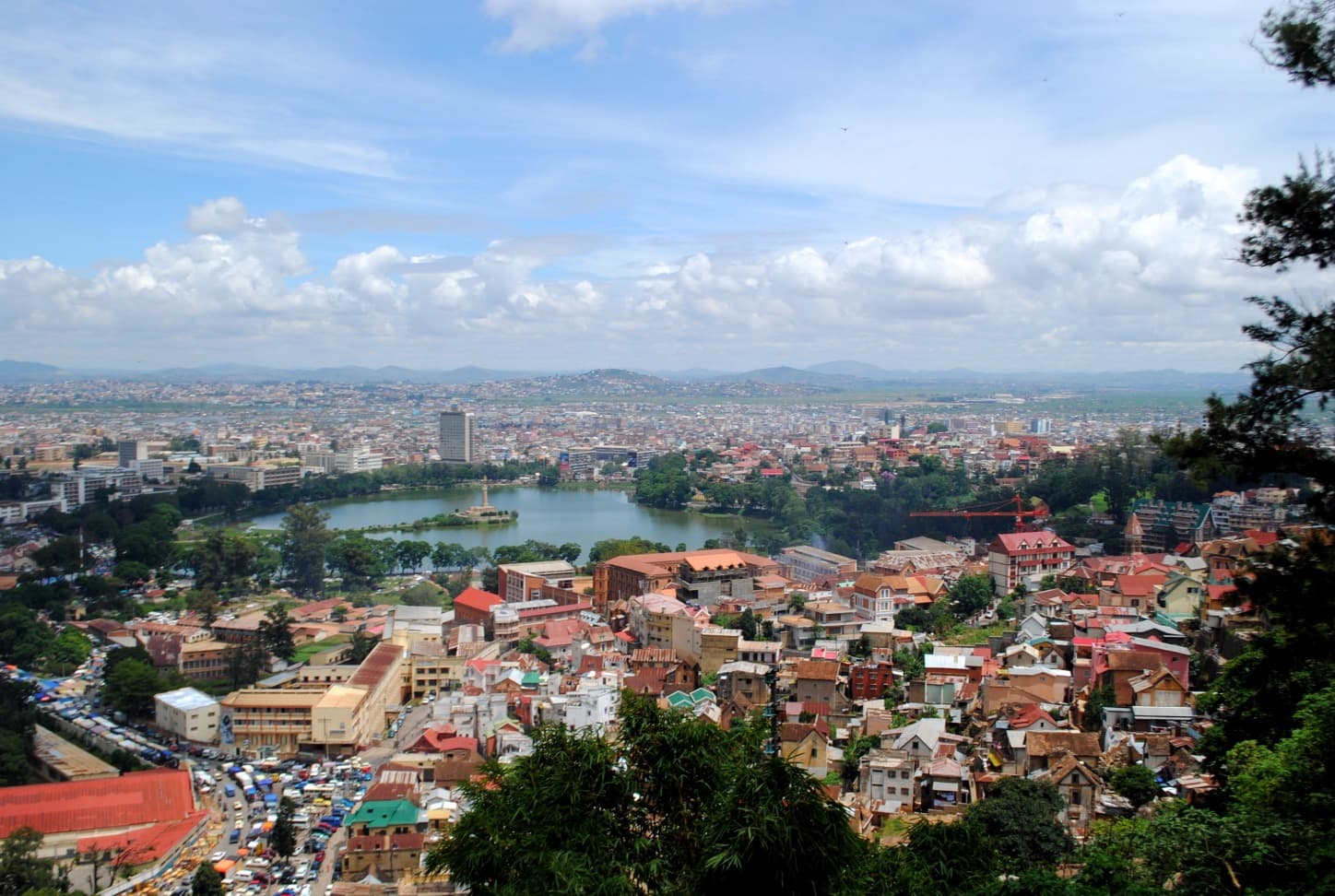
Along the way, we discover the first faces of the capital. The city is built on around a dozen hills, surrounded by the rice paddies of the Betsimitatatra plain. Brick houses with wooden balconies are clustered on the slopes, and long staircases connect the upper neighborhoods to the markets of the lower city.
Depending on our arrival time, the rest of the day is free for us to rest, or for a first discovery of the capital's craftspeople. Antananarivo indeed brings together many artists and craftspeople from the country: blacksmiths, leather workers who work with zebu leather, embroiderers, basket weavers, marquetry makers. Their workshops and galleries are scattered throughout the city, and our guide takes us to those who work on site, in front of their clients. It's an opportunity to understand the techniques and materials, and to take home an object made here.
In the evening, our team answers our final questions about the trip itinerary. Dinner is free, and it's an opportunity to taste the cuisine of the Highlands, based on rice, greens and zebu meat, in one of the city's finest restaurants.
Airport transfer: approximately 45 minutes.
Antananarivo on foot, from the upper city to the markets
This day in the capital is for a simple reason: flights to the north depart early in the morning. It gives us time to recover from the journey, while discovering Antananarivo on foot, in the company of a guide from our team.
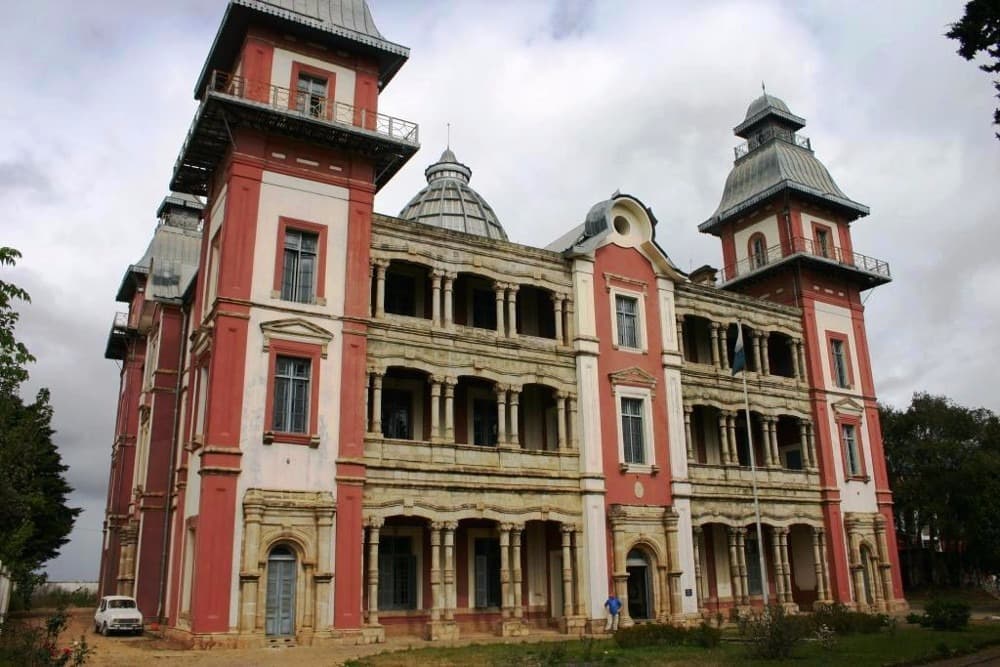
We start from the Independence Square area, then climb towards the upper city by the stairs. Andohalo Square was the place where Merina sovereigns addressed the people and announced their decisions. Higher up, we pass by the house of Jean Laborde, a French craftsman and industrialist in the service of Queen Ranavalona I, then the Prime Minister's palace and the courthouse, before reaching the Rova, the royal enclosure that overlooks Analamanga hill, the city's first name.
From the Ambohitsimbina viewpoint, the view opens up to the entire city, its hills and the rice paddy plains. We then descend through a maze of streets and stairs, through neighborhoods where life is largely lived outdoors, until we reach Mahamasina stadium and Lake Anosy, bordered by jacarandas.
After lunch, we head to the Analakely district and Independence Avenue, the commercial heart of the capital, very lively at all hours. The rest of the afternoon is free. We prepare our luggage early in the evening, as departure for the airport takes place early the next day.
City walk: approximately 4 hours, with stair climbs.
Flight to Diego Suarez and Sakalava Bay
Antananarivo → Diego Suarez I Antsiranana
Early in the morning, we head to Ivato airport for the flight to Diego Suarez, at the northern tip of the island. Seen from the plane, the landscape gradually changes: the Highlands and their rice fields give way to drier reliefs, then to the sea.
At Antsiranana airport, the Malagasy name for Diego Suarez, our guide and drivers await us. They will accompany us throughout the land portion of the journey, until we board for Nosy Komba.
We first discover the city. Diego has developed around its bay, one of the world's largest natural harbors, which made it a coveted military and commercial port. The city retains beautiful colonnaded and arcaded houses, often somewhat weathered, a lively Colbert Street, a colorful market and a port where dhows, fishermen and cargo ships cross paths. The population is very mixed: Antakarana, Sakalava, families from all over Madagascar, the Indian Ocean and beyond.
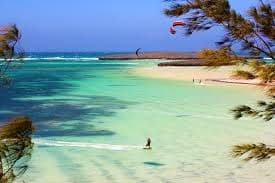
Lunch is on your own in town. In the afternoon, we take the road heading east, through dry countryside, to Sakalava Bay, open to the Indian Ocean. Wind blows strongly there for much of the year, making it a renowned site for kitesurfing and windsurfing. We settle on the beachfront for two nights, and have dinner at the hotel.
Flight from Antananarivo to Diego Suarez: approximately 1 hour 45 minutes. Drive to Sakalava Bay: approximately 40 minutes.
Diego Suarez I Antsiranana → Baie de Sakalava

The 3 Bays Hike to Ramena
This day is spent on foot, by the sea. From our hotel, we head north, skirting the coast from bay to bay, on white and fine sand.
We leave behind us Sakalava Bay to reach Pigeon Bay, more sheltered, where swimming is possible, then Dunes Bay, bordered by large dunes of light sand. The coast alternates beaches, small limestone cliffs and dry vegetation, where euphorbias and small baobabs grow. The landscape is very open, and the ocean breeze makes the walk pleasant, even under the sun.
We then arrive at the lighthouse and the old military batteries that guarded the entrance to Diego Bay. The site overlooks the narrow passage through which ships enter the harbor, and offers a striking view of the ocean on one side and the bay on the other.
The walk ends at the village of Ramena, a fishing village located on a long beach, facing the sugarloaf of Nosy Lonjo. Outrigger canoes are pulled up on the sand, and the fishermen often return in late morning. We have lunch there with a picnic by the water, before enjoying the beach.
In the afternoon, our vehicle comes to pick us up at Ramena to take us back to Sakalava Bay. Dinner at the hotel.
Easy walk on the sand: approximately 3 hours, with no significant elevation change. Return by vehicle from Ramena: approximately 20 minutes.
Baie de Sakalava → 3 Baies
Ramena → Baie de Sakalava
Mountain of the French, in the middle of the baobabs
We leave Sakalava Bay to reach the Montagne des Français, a limestone massif that overlooks Diego Bay. Today it is a protected area managed with neighboring communities, and a local guide accompanies us there.
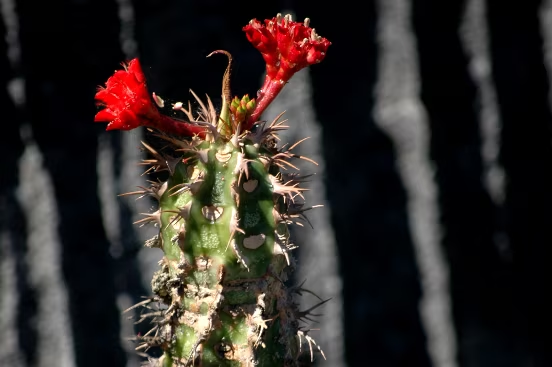
The trail climbs through a dry forest, very different from the humid forests we will see tomorrow. Baobabs are numerous there, with their massive trunks, alongside pachypodiums and euphorbias adapted to aridity. We cross small limestone tsingy, and we encounter military remains from the colonial era: tunnels, small forts and stairs carved into the rock. The name of the massif comes from there. With luck and the guide's eye, we observe chameleons, and sometimes lemurs in the trees.
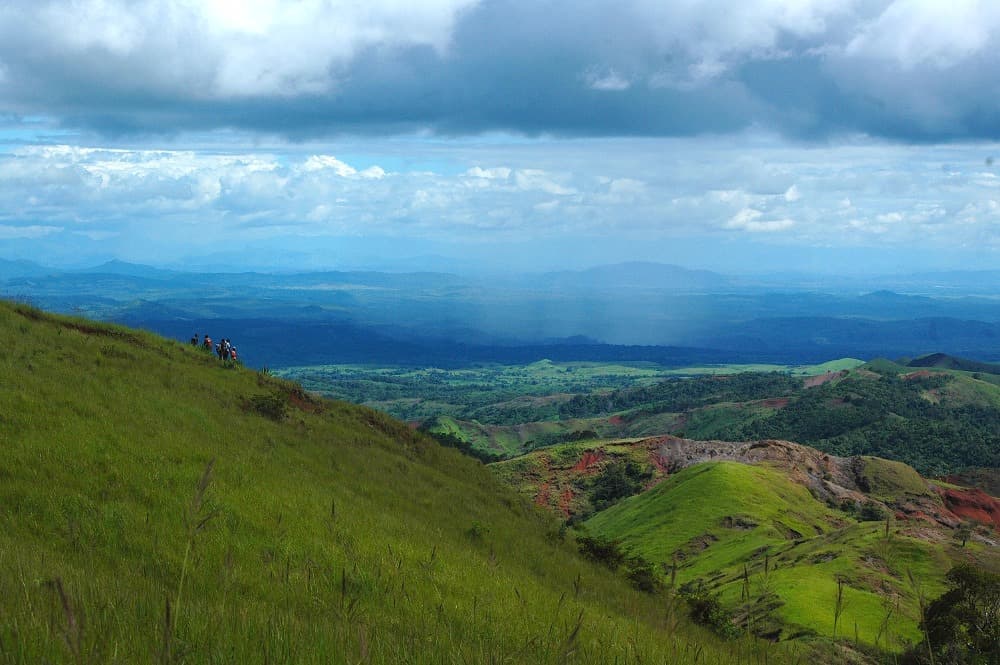
A long staircase leads us to the summit. The view then opens onto the entire region: Diego Bay and its sugarloaf Nosy Lonjo, Sakalava Bay that we have just left, the city of Diego and, to the south, the dark mass of Montagne d'Ambre, where we will walk tomorrow.
After a picnic, we take the road southward, to Joffre Ville, a small highland town built at the beginning of the 20th century at the foot of Montagne d'Ambre. The climate is cooler there, and the evenings pleasant. Installation for two nights and dinner at the hotel.
Road to Montagne des Français: approximately 1 hour. Walk: approximately 2 h 30, 2.5 km with a stair climb. Road to Joffre Ville: approximately 1 h 30.
Baie de Sakalava → Montagne des français
Montagne des français → Joffre ville
The Rainforest of Amber Mountain
Joffre ville → Montagne d'Ambre
We dedicate the day to Amber Mountain National Park, very close to Joffre Ville. This volcanic massif rises in the middle of a dry region. It stops clouds coming from the ocean, and this humidity nourishes a dense forest, very different from yesterday's dry forest. A local guide accompanies us throughout the hike.
The trail crosses a forest of large trees covered with mosses, lichens, tree ferns and orchids. The guide shows us the strangler figs, which gradually encase another tree, or the ramy, whose resin gives off a strong turpentine smell. The waterfalls and crater lakes remind us of the volcanic origin of the massif.
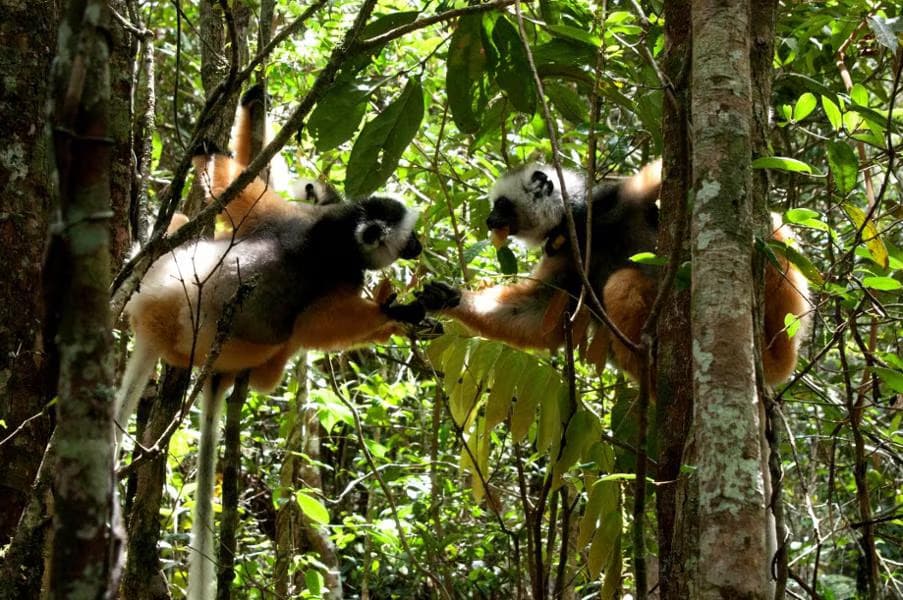
The fauna there is rich. Several species of lemurs live in the park, including the crowned lemur and Sanford's lemur. Amber Mountain is also the domain of chameleons, from the largest to the most discreet, such as the Brookesia, one of the smallest known chameleons, which fits on a fingernail. It takes the trained eye of the guide to spot it in the leaf litter. We can also encounter the uroplatus, a flat-bodied gecko that blends in with the bark. No observation is guaranteed: the forest reveals itself in silence and with patience.
We have a picnic lunch in the park, then return to Joffre Ville in late afternoon. Dinner at the hotel.
Drive to the park entrance: approximately 30 minutes. Hiking: approximately 4 hours, on trails that are sometimes wet and slippery.
Montagne d'Ambre → Montagne d'Ambre
Montagne d'Ambre → Joffre ville
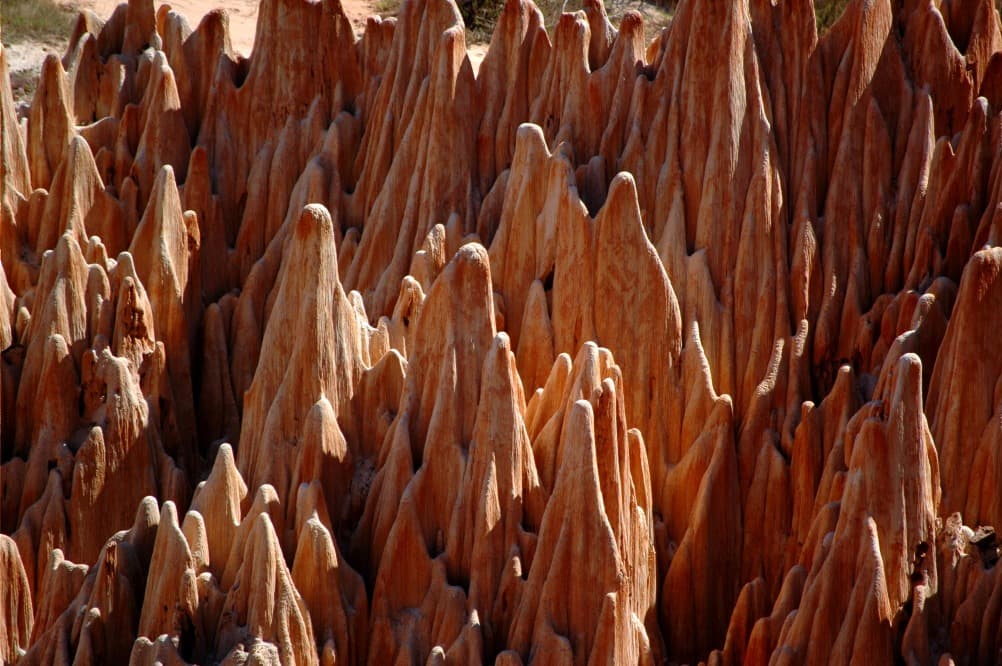
The Red Tsingy, then Ankarana
We leave Joffre Ville heading south on National Road 6. Near the village of Sadjoavato, we take a detour on a track towards the Red Tsingy.
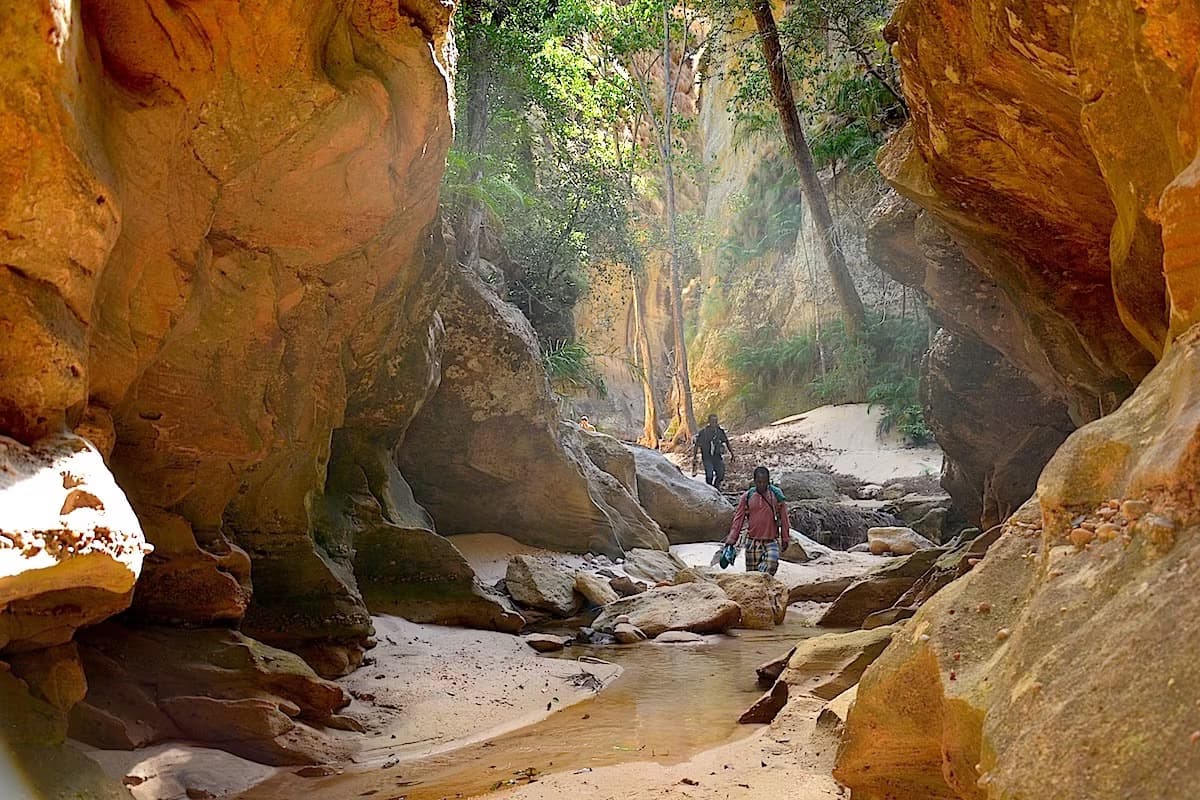
This site is unlike any other. Erosion has carved a ravine into layers of sandstone, marl and laterite rich in iron oxide, which gives it its color. Red, ochre and pink columns and needles remain, changing shade with the light. This landscape is recent on a geological timescale: it formed when slopes were laid bare by deforestation, then carved out by rainfall. We walk through it, following the edge of the ravine and its viewpoints.
We then resume National Road 6 heading south, through savanna countryside and cultivated lands. Gradually, a long gray barrier appears to the west: this is the Ankarana limestone massif, a plateau about thirty kilometers long, riddled with caves, underground rivers and canyons. It is the land of the Antakarana, "those of the rocks", whose ancestors found refuge in its caves.
We settle for two nights to the southwest of the massif, outside the national park, in a very beautiful lodge isolated facing the tsingy. Midday picnic is taken en route. Late afternoon brings calm, and the sounds of the dry forest rise as darkness falls. Dinner at the lodge.
Drive to the Red Tsingy: approximately 1 hour 45 minutes. Walking tour: approximately 1 hour. Drive to Ankarana: approximately 1 hour 30 minutes.
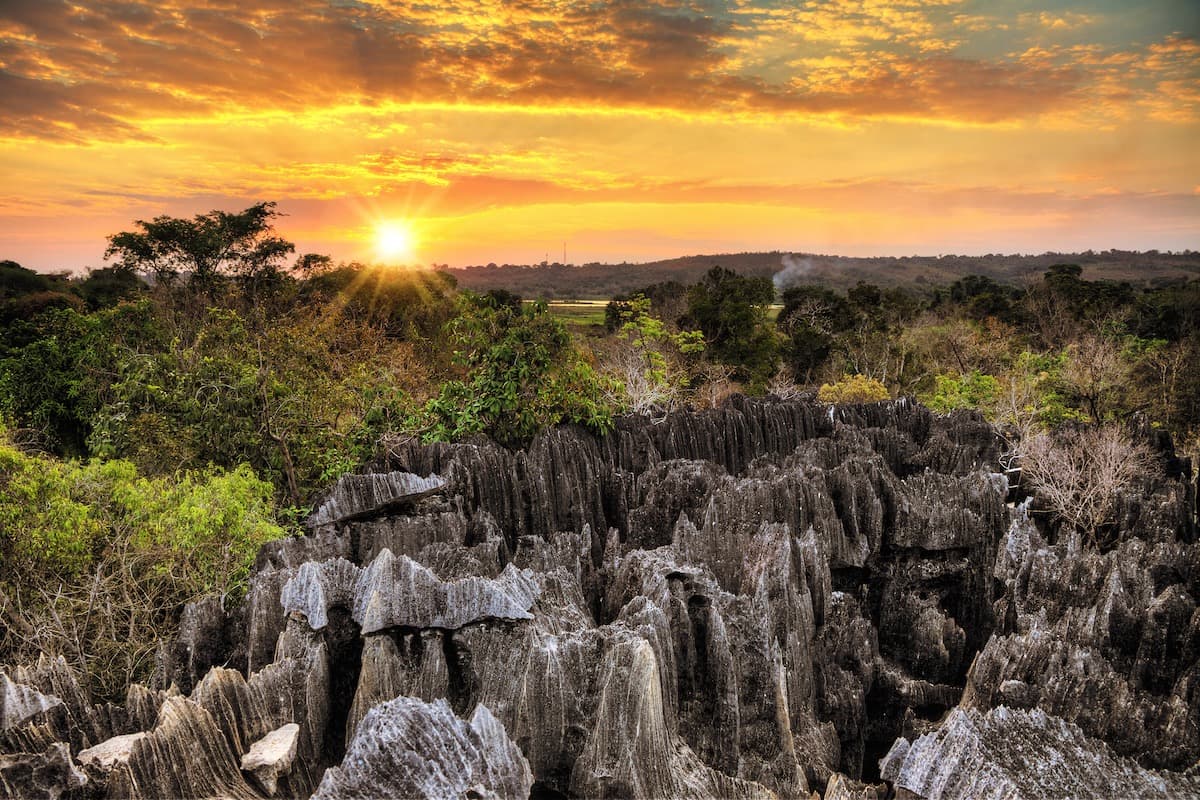
A day in the Ankarana tsingy
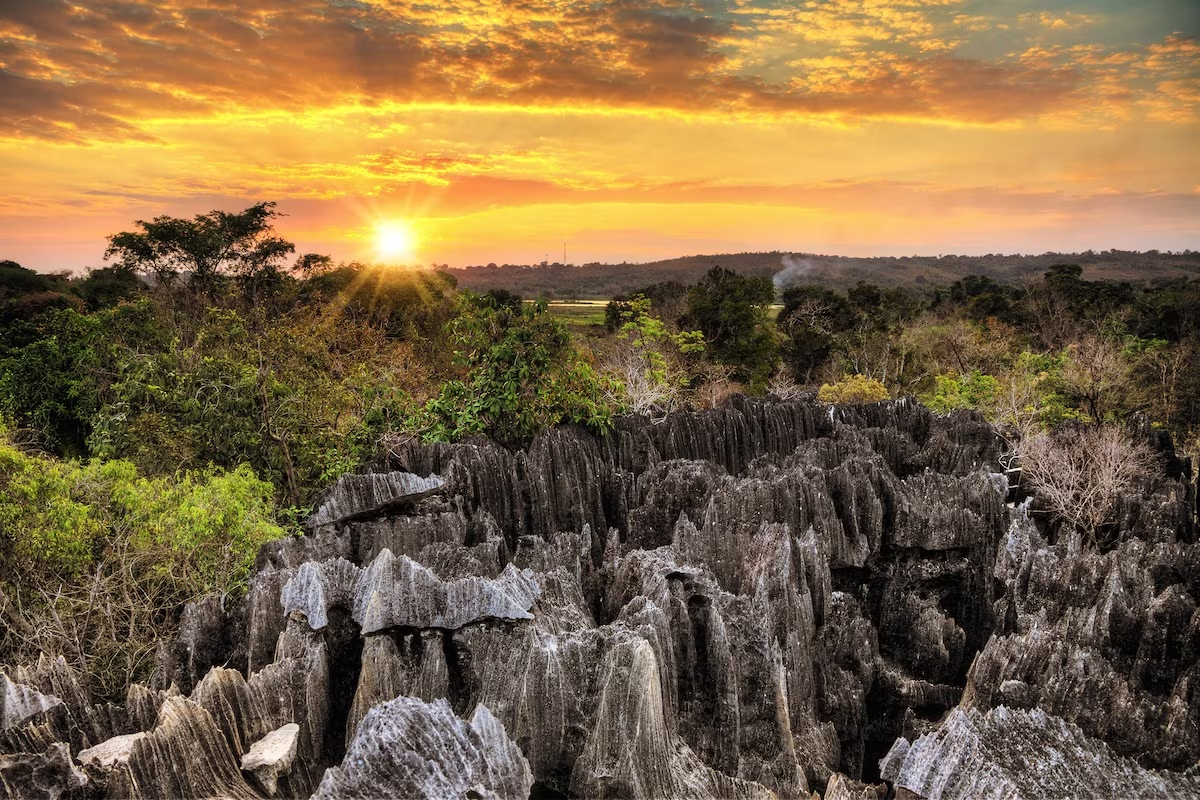
We devote this entire day to Ankarana National Park, accompanied by a local guide. The massif is an ancient coral reef, which became limestone, then was lifted and carved by rain over millions of years. Water dissolved the rock and cut it into blades and sharp needles: these are the tsingy, a word that evokes walking on the tips of one's toes.
We first walk through dry forest, at the foot of the cliffs, where lemurs, birds and chameleons live. The trail then leads to the main sites of the massif. The Tsingy Rary offers fields of fine, closely packed needles, and further on, the great tsingy are crossed via walkways and a suspension bridge over a canyon. Viewpoints open onto a mineral landscape, grey and sharp, where the forest clings to every crevice.
The massif is also carved with caves, some of which shelter bat colonies, and sinkholes where rivers disappear under the rock. The caves have particular value for the Antakarana, who came there to seek refuge and honor their ancestors. The guide explains to us the rules to respect in these sacred places.
We have a picnic lunch in the middle of nature, then return to the lodge in the afternoon. After the hike, a second night at the same place allows you to rest, without repacking our luggage. Dinner at the lodge.
Hiking in the park: the day, with passages over the rocks. Good hiking shoes are necessary.
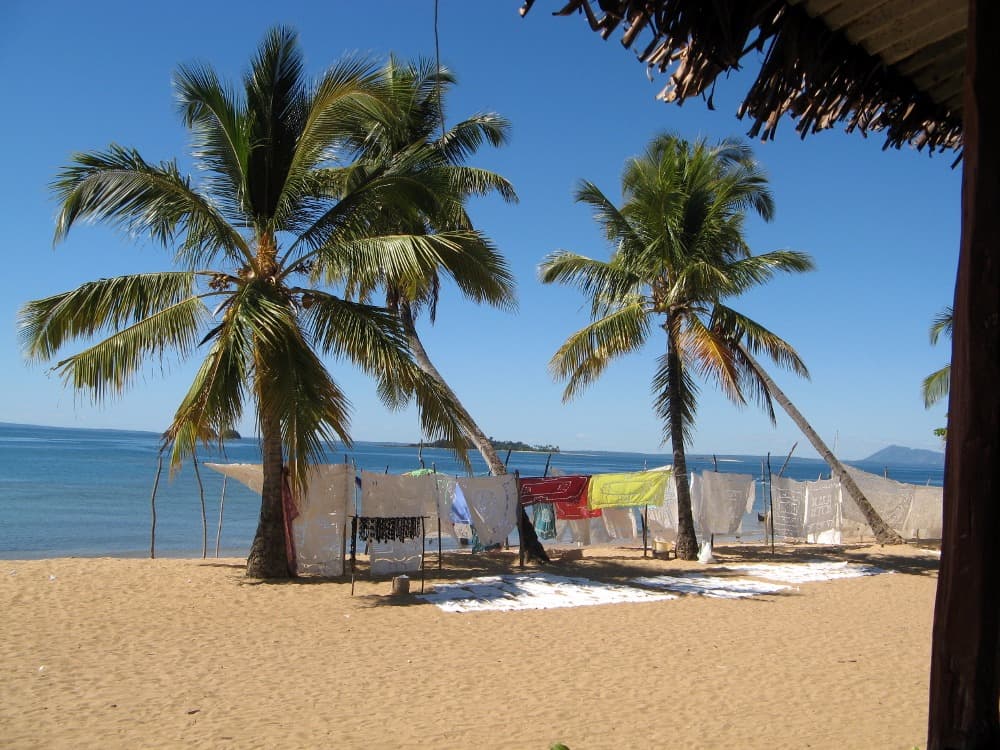
Ankify Road, then crossing to Nosy Komba
Departure is early in the morning, because boat crossings from Ankify are only possible before noon. In the afternoon, the wind picks up and the sea becomes rougher.
National Road 6 crosses the Sakalava country toward the southwest. After Ambilobe, the landscapes become greener, and the road approaches the Sambirano valley, one of the island's richest agricultural regions. Along the fields, we discover cocoa plantations, from which the region produces renowned fine cocoa, as well as coffee, pepper and ylang-ylang, this small tree with yellow and fragrant flowers whose essence is used by perfumers. We sometimes spot distillation workshops along the road.
At Ankify, a small port by the sea, we say goodbye to our guide and drivers. A speedboat then takes us across the bay to Nosy Komba. The island is an ancient volcano covered with forest, which stands between the mainland and Nosy Be. It has neither roads nor cars: the villages live from fishing, farming and crafts.
We settle by the beach for three nights. The rest of the day is free for swimming, rest or a first walk along the shore. Dinner at the lodge.
Road to Ankify: approximately 3 h 45, 160 km. Speedboat crossing: approximately 30 minutes.
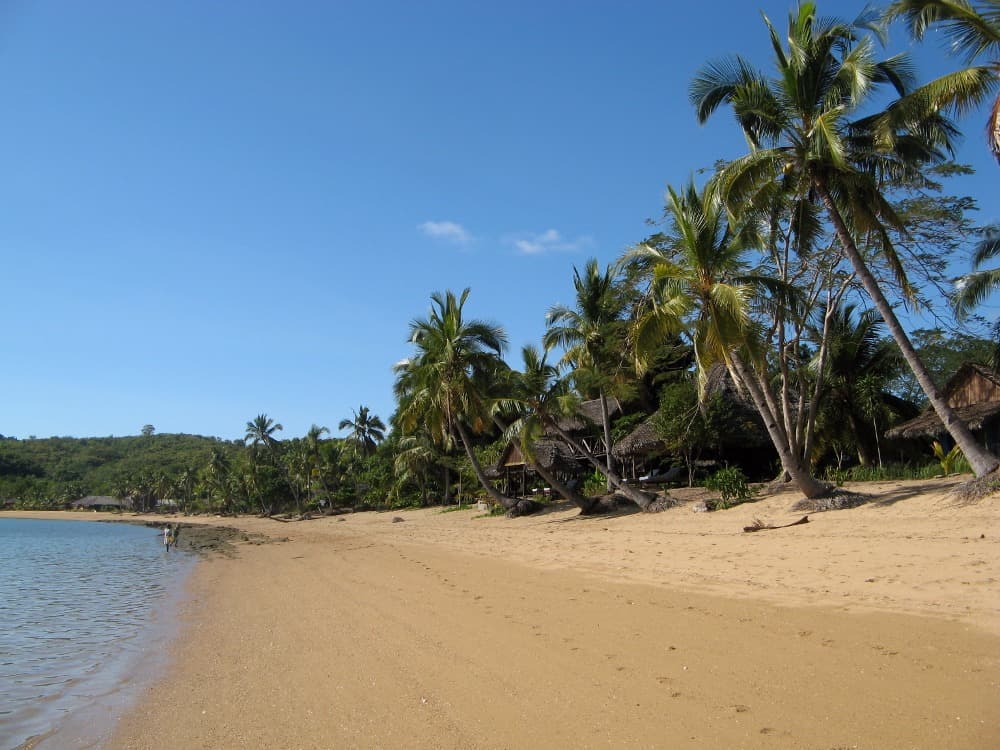
Crossing Nosy Komba on foot
We set off this morning to cross the island on foot, accompanied by a local guide from Nosy Komba. The trail first climbs through cultivated areas and forest, on the slopes of the ancient volcano.
Gradually, the view opens up over the entire bay: Nosy Be to the north, the coast of the mainland to the east, and small islets scattered across turquoise waters. Along the way, we pass through vanilla, coffee and pepper plantations, and our guide explains vanilla cultivation, which requires hand pollination, flower by flower. We pass through small mountain hamlets, where the inhabitants live from their crops and crafts. The women of Nosy Komba are renowned for their embroidery and tablecloths, worked by hand.
The walk takes us to the village of Ampangorina, the main village on the island, and its reserve of black lemurs. In this species, only the male is black, the female being reddish-brown with white tufts on its ears. The lemurs have long been fed by visitors: we observe them without feeding or touching them.
Lunch is served in the village, by the water's edge. We then return by canoe along the coast, with a stop in a small village whose inhabitants specialize in the manufacture of canoes, carved from a single trunk. Free time at the end of the day and dinner at the lodge.
Hiking: approximately 4 hours, with a climb on the slopes of the island. Return by canoe: approximately 45 minutes.
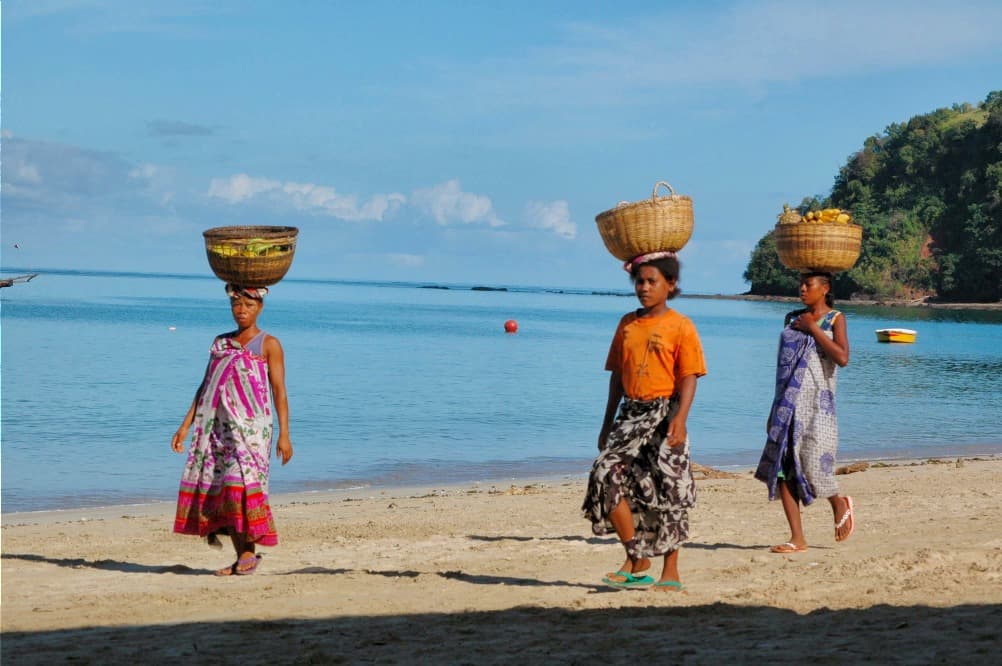
Nosy Tanikely Marine Reserve
This morning, a boat takes us from Nosy Komba to Nosy Tanikely, a small islet surrounded by coral reefs. It is the heart of a marine reserve protected for many years, and its waters are among the richest in the region.
The island, small in size, can be explored quickly on foot: a white sand beach, a trail through the vegetation and a lighthouse at the top, from where the view extends over Nosy Be and the neighboring islands. But the essence is underwater. With a mask and snorkel, we discover coral gardens just a few meters from the shore, parrotfish, butterflyfish and schools of fish in all colors. Sea turtles often come to feed in the reserve, and it is not uncommon to swim alongside them. For those who wish, scuba diving can be organized, at an additional cost.
In the reserve, the rules are simple and strict: we do not touch the corals, we do not walk on them, and we keep our distance from the turtles. The reserve guardians and our guide remind us of these upon arrival.
Lunch is served on site, under the trees. In the early afternoon, we take the boat back to Nosy Komba, before the wind picks up. Free evening to enjoy the beach one last time, and dinner at the lodge.
Boat crossing to Nosy Tanikely: approximately 30 minutes.
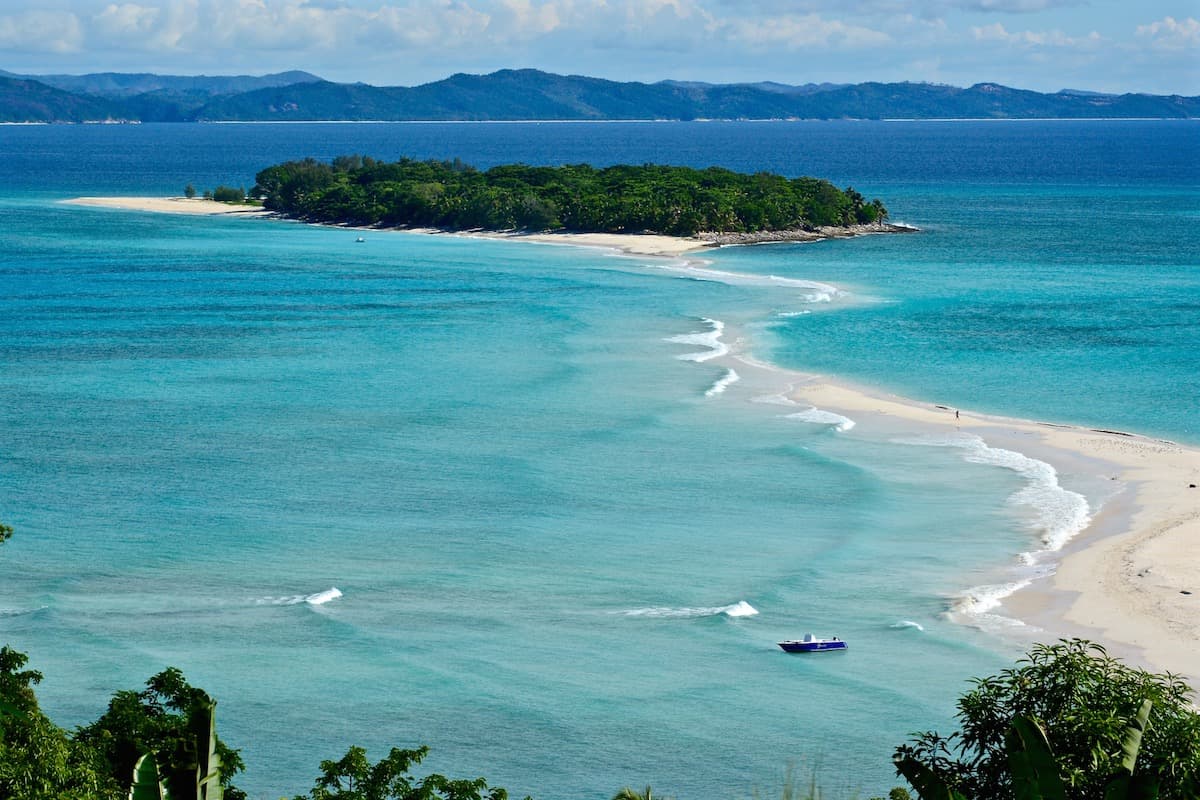
Nosy Be, then return flight
After breakfast, we leave Nosy Komba by boat. The crossing takes place in the morning, before the wind picks up, and takes us to the port of Hell-Ville, the main city of Nosy Be.
Depending on our flight time, we have time to discover a little of Hell-Ville, with its colonial houses, its covered market, where spices, fruits and fish are exchanged, and its bustling waterfront. The name of the city recalls Admiral de Hell, governor of Reunion, who took possession of the island on behalf of France in the 19th century. Nosy Be is nicknamed the island of perfumes, for its ylang-ylang, vanilla and pepper plantations.
A member of our team then takes us to Fascène airport, from which our international flight departs. This departure from Nosy Be avoids a return via Antananarivo and allows us to enjoy the North until the end of the journey.
This is the end of a journey that has taken us from the capital to the islands, through very different landscapes: the great bay of Diego and its beaches, the humid forest of Amber Mountain, the limestone needles of Ankarana, then the calm of Nosy Komba and the coral reefs of Tanikely. Veloma, goodbye, and see you soon at Madagascar.
Crossing to Hell-Ville: approximately 30 minutes. Transfer to Nosy Be airport: approximately 30 minutes.
To Nosy Be
Nosy Be → Paris Roissy CDG
Price per person
Indicative price per person, based on double room. Each trip is customized according to your preferences.
This trip can be tailored to your preferences
This itinerary provides an excellent foundation for discovery, but it can be fully customized. Our local advisors build each trip tailored to your budget, dates and preferences.
Not included
- International flights (arrival in Antananarivo, departure from Nosy Be)
- Domestic flight Antananarivo to Diego Suarez (fluctuating rate, reserved separately)
- Visa fees
- Meals not mentioned in the itinerary and beverages
- Snorkeling and scuba diving equipment
- The single room supplement: €475 per person
- Insurance assistance, repatriation and cancellation
- Tips
- Personal expenses
Included
- Airport welcome and transfers in Antananarivo and Diego Suarez
- Visits to Antananarivo with a guide from our team (days 1 and 2)
- Transport in a 4x4 with driver, fuel included, from day 3 to day 9 (maximum 4 travelers per vehicle)
- A Détours Madagascar guide from day 3 to day 9
- Boat crossings (Ankify to Nosy Komba, Nosy Tanikely, Nosy Komba to Nosy Be) and transfer to Nosy Be airport
- Accommodation in double or twin room for 11 nights, in superior category hotels and lodges
- Breakfasts and meals indicated in the program
- Entrance fees and local guides for parks and reserves (Montagne des Français, Montagne d'Ambre, Tsingy rouges, Ankarana, Nosy Komba, Nosy Tanikely)
- The assistance of our team in Antananarivo throughout the entire trip
Practical Information
Registration is considered firm and final after payment of a deposit of 40% of the total price and acceptance of the specific terms of sale.
The balance must be paid no later than 45 days before the departure date.
See our specific terms of sale for full details.
In the event of cancellation by the traveller, the following fees apply:
More than 60 days before departure: 40% of the total price (deposit retained)
Between 60 and 30 days before departure: 50% of the total price
Less than 30 days before departure: 100% of the total price
We strongly recommend taking out cancellation insurance. See our specific terms of sale for full details.
Your Passport:
Important: your passport must be valid. It must be absolutely and obligatorily valid for 6 months after the end of your stay in Madagascar.
Your travel documents
Your valid passport,
Your international and/or domestic flight tickets,
Your repatriation and emergency care insurance contract,
Your vaccination record if applicable,
Your blood type card if possible.
Obtaining a visa to enter Madagascar
Upon arrival in the territory:
Since February 16, 2026, the visa costs €30 for up to 15 days, €35 for 16 to 30 days, €40 for 31 to 60 days and €50 for 61 to 90 days. It can also be requested online before departure on the official e-visa portal (evisamada.gov.mg). An additional tourist tax of €10 is paid in cash upon arrival.
It is easily obtained upon your arrival in Madagascar.
This applies to all airports in Madagascar that handle international flights.
Upon arrival at the airport terminal, upon exiting the plane, a corridor for passengers is dedicated to issuing tourist visas.
This procedure is the simplest. We recommend it to you.
At the embassies and consulates of your home countries:
For information, download the document explaining the procedure and the file requirements for obtaining a visa from the Embassy of Madagascar.
To participate in our trips, it is strongly recommended to be insured for repatriation assistance and medical expenses abroad.
Your local agency encourages you to familiarize yourself with the specific contract developed with our partner CHAPKA ASSURANCES and AXA ASSISTANCE.
To subscribe to insurance, learn about coverage and rates, follow the link below.
CAP EXPLORER: The comprehensive insurance solution designed to enjoy your trip with peace of mind!
Choose the plan that best suits you:
Explorer'Multirisque
Explorer'Annulation
Explorer'Assistance
Specific to our trips, we strongly recommend subscribing to them.
If you choose to subscribe to one of these plans, the policy detailing all coverage and procedures for claiming any loss are available on the insurer's website.
Your local agency will be aware of it, but only the participant is responsible for complying with the procedures for declaring any loss. The participant must therefore keep this policy with them throughout their trip.
Chapka — Cap Explorer
Our insurance partnerTravel with peace of mind with our partner Chapka. Cancellation, repatriation, medical expenses, baggage… All the coverage for a worry-free trip.
Travel with peace of mind — I'll handle the insuranceFrequently asked questions
A tourist visa is required, issued upon arrival at Ivato Airport (Antananarivo) or online (e-visa). Your passport must be valid for at least 6 months from your date of entry. Before booking your trip, check with Madagascar's consular authorities for the conditions applicable to your nationality, including visa fees and authorized lengths of stay.
Go to the My Trips section to find all your projects.
You can send a message to your host directly from the Tea Lounge.
For a tailor-made quality trip, expect between 160 and 270 euros per day and per person, including accommodation, meals, internal transfers and English-speaking guide. International flights (900-1400 euros return) are additional. Long transfers and domestic flights represent a significant portion of the budget.
Your documents are accessible in the Documents tab of your trip.
Absolutely. We adapt each itinerary to suit your travel profile. For families, we prioritize relaxed pacing, family-friendly accommodations, fun and educational activities, and comfortable private transfers. Our local English-speaking guides know how to captivate children with age-appropriate anecdotes.
It's simple. You exchange with our local team to define your wishes, budget and dates. You receive a detailed itinerary proposal within 48 hours. You adjust every detail together until it's perfect. You confirm and travel with peace of mind. Your local agency remains available 7 days a week throughout your trip.
In case of emergency, contact your local agency immediately.
Payment is generally made in two installments.
Our agency is part of the Nomadays network, registered in France. You benefit from APST (Association Professionnelle de Solidarité du Tourisme) protection, which covers 100% of your funds. Secure payment, professional insurance, and English-speaking assistance 7 days a week on the ground throughout your stay. Travel insurance (assistance and repatriation, cancellation) is not included: we offer it through our insurance partner and strongly recommend it.
Let's talk about your adventure — High Plateaus
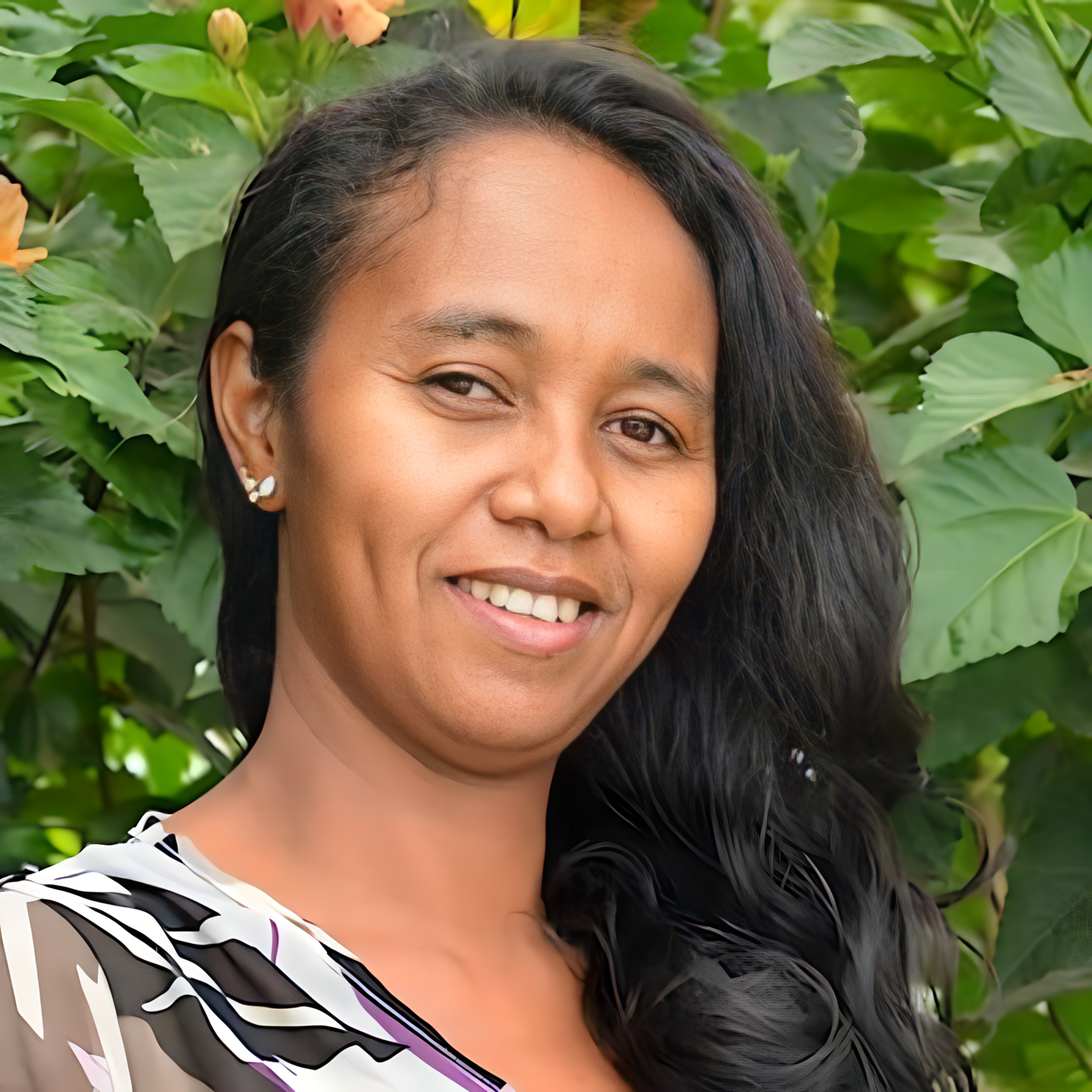
Ambassador of Malagasy fihavanana, based in Antananarivo
For me, traveling to Madagascar is stepping into the spirit of fihavanana: sharing, helping one another, meeting people, and taking time to understand what connects them to their land.
— Noro