Forests, Lakes and Lagoons of the East: from Andasibe to Sainte-Marie Island via the Pangalanes Canal
The indri forest, the lakes and villages of the Pangalanes Canal, then four nights on Sainte-Marie Island, to the rhythm of the Indian Ocean.
Duration
13 days
From
€970/pers.
Ideal seasons
Apr, May, Jun, Jul, Aug, Sep
Style
Guided tour
Comfort
Charm & Character
Travelers
Couple, Solo, With friends
The spirit of travel
This trip is dedicated to Eastern Madagascar, the windward coast, home to humid forests, lakes and coconut trees. Over thirteen days, it connects the Andasibe forest to Sainte-Marie Island, by road, by the Pangalanes Canal and by sea, taking time to stop along the way.
After a first night in Antananarivo, we head down to Andasibe, domain of the indri, the largest of the lemurs. We spend two nights there, exploring the national park early in the morning, then the Vakona reserve, one of the best-protected forests in the region.
The road then takes us to Manambato, where we board the Pangalanes Canal. This string of lakes and rivers, connected by channels dug by hand, runs along the coast for hundreds of kilometres. We spend two nights on the shore of Lake Ampitabe, far from any road, and visit the Palmarium reserve. Then the boat takes us to Tamatave, passing through fishing villages.
We then travel up the clove coast to Mahambo, then to Soanierana-Ivongo, from where the boat departs for Sainte-Marie Island. Four nights on the island leave time to rest, walk, discover its history of pirates and missionaries and, from July to September, observe humpback whales coming to calve in its waters.
This trip is tailor-made, at the date of your choice. A guide from Détours Madagascar and a driver accompany us from Antananarivo to the Pangalanes Canal. On the coast, a vehicle with driver takes us from Tamatave to Soanierana-Ivongo, from where a fast boat takes us to Sainte-Marie. On the island, where everyone organizes their days at their own pace, our team remains available. In the parks and reserves, local guides accompany us. The return to Antananarivo is by plane, on a domestic flight booked separately.
Détours Madagascar is committed to the Travelife certification process. On this trip, this is reflected in concrete ways: we call upon local guides from the parks and reserves, boatmen from the canal and teams from the villages where we stay; we observe wildlife without feeding or touching it; at sea, whale watching follows rules of distance and duration that protect the animals. And we prefer long stays in one location to a succession of stages, for less driving and more time spent on site.
The stages of your journey
Highlights
Day-by-day itinerary
Arrival in Antananarivo
Flight
Upon arrival at Ivato International Airport, a member of the Détours Madagascar team welcomes us and takes us to our hotel in the city.
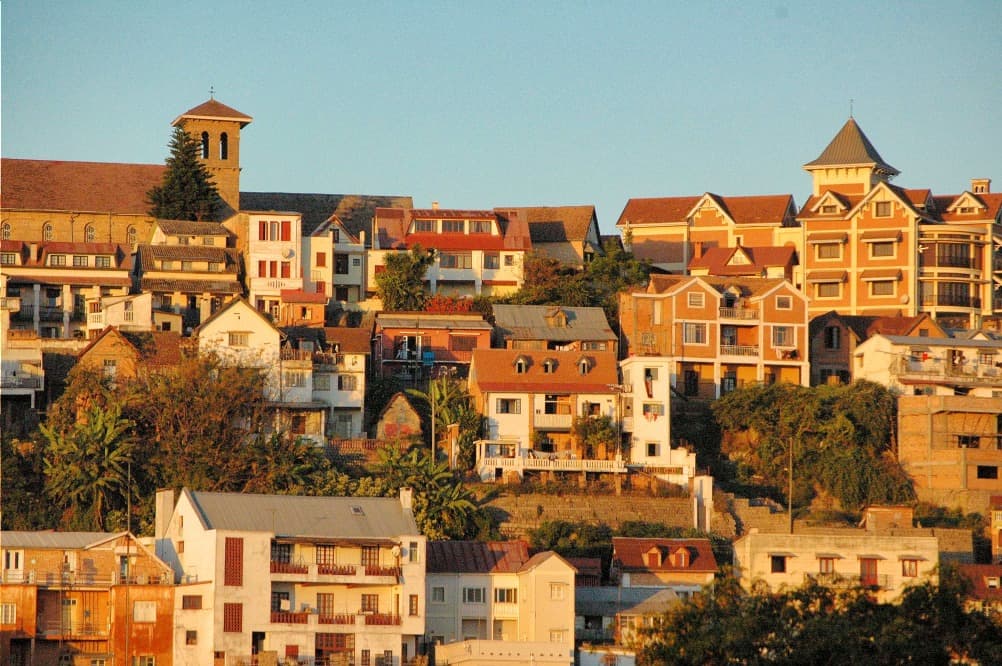
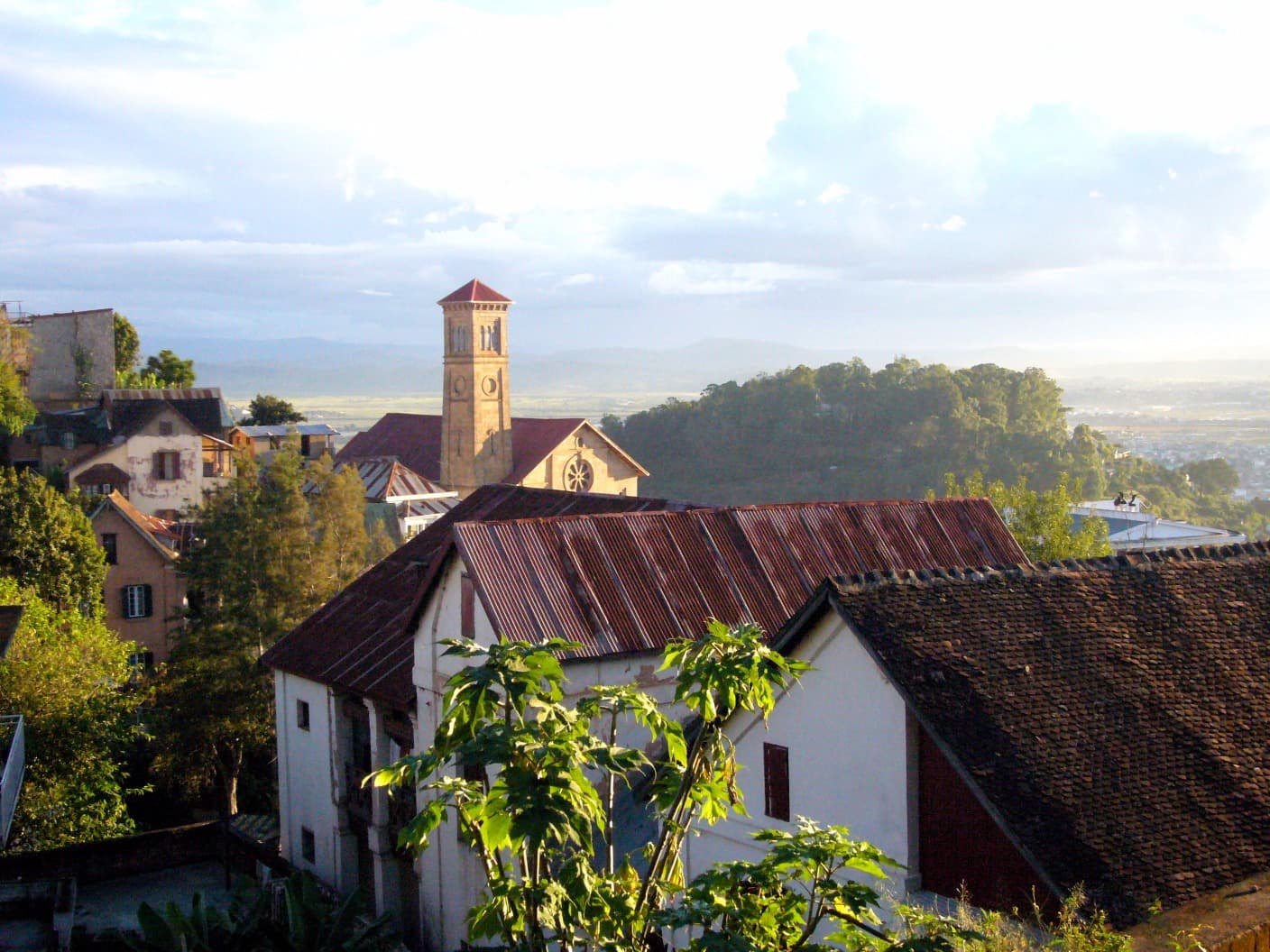
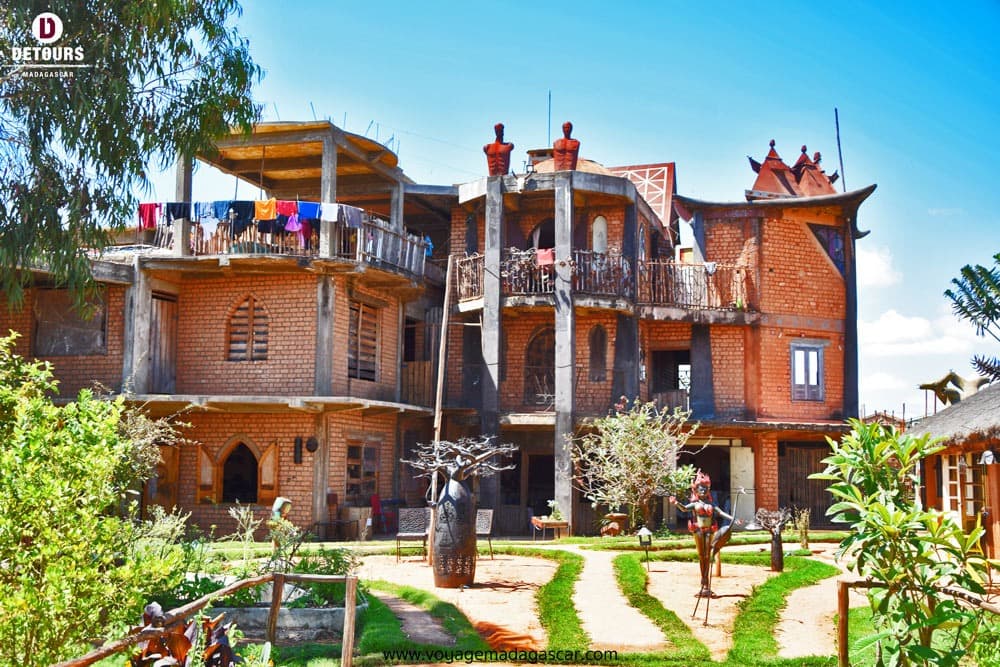
Antananarivo is built on around a dozen hills, in the middle of the rice paddies of the Betsimitatatra plain. Brick houses with stories and wooden balconies cluster on the slopes, and long staircases connect the upper neighborhoods to the markets of the lower city. The city was born in the 17th century on the highest of these hills, around the palace of the Merina sovereigns.
If our flight arrives in the afternoon, we have time for a first stroll: Independence Square, the lively Analakely avenue, or a viewpoint where the view opens onto the entire city at sunset. Life is largely lived in the street, among street vendors, minibuses and rickshaws, in a joyful disorder that sets the tone for the trip.
If our flight arrives in the evening, we go directly to the hotel to rest.
At the end of the day, our team answers our questions about how the trip will unfold. Dinner is at leisure, and it's an opportunity to taste the cuisine of the Highlands, based on rice, leafy greens and zebu meat.
Airport transfer: approximately 45 minutes.
Heading East towards Andasibe Forest
Our guide and driver pick us up from the hotel. We leave Antananarivo heading east on National Road 2, which connects the capital to Tamatave, the island's major port.
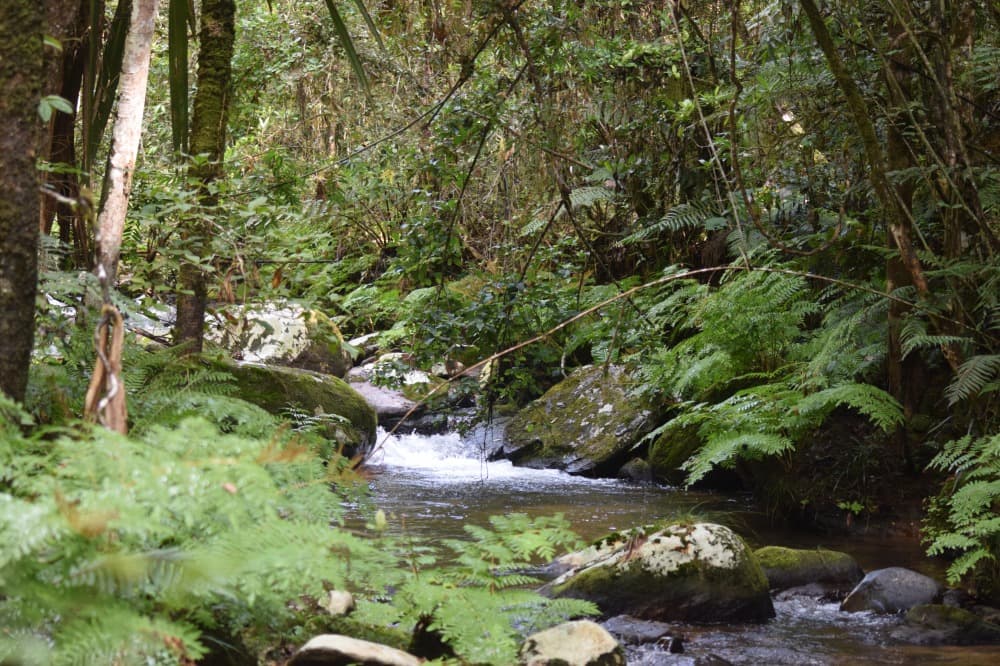
Gradually, the hills of the Highlands give way to a more rugged terrain. The road descends in hairpin bends towards the forest, passing through villages of wooden houses, terraced rice fields and hills where charcoal is drying. The climate becomes more humid, vegetation denser, and waterfalls appear along the roadside.
We make several stops along the way, depending on the landscapes and village markets, where fruits, vegetables and woven baskets are piled high. Just before Andasibe, we stop at the butterfly farm, where butterflies, chameleons, geckos and other reptiles of the region are displayed: to be observed closely, without handling them. Lunch is taken on the road, and we arrive in Andasibe in the afternoon.
Andasibe is a former forest village, located in the heart of one of the great humid forests of the East. The end of the day is free for us to settle in and walk through the village, at the edges of the park we will visit tomorrow morning.
At nightfall, private or village reserves offer visits with a headlamp, discovering chameleons, frogs and small nocturnal lemurs. These outings are not included, and our guide can help us organize them on site.
Road: approximately 3 hours 30 minutes, 150 km.
The indris of Andasibe and the Vakona reserve
We leave early for Andasibe National Park, in the Analamazaotra Reserve, with a local guide. The morning is the best time of day: it's when the indris sing.
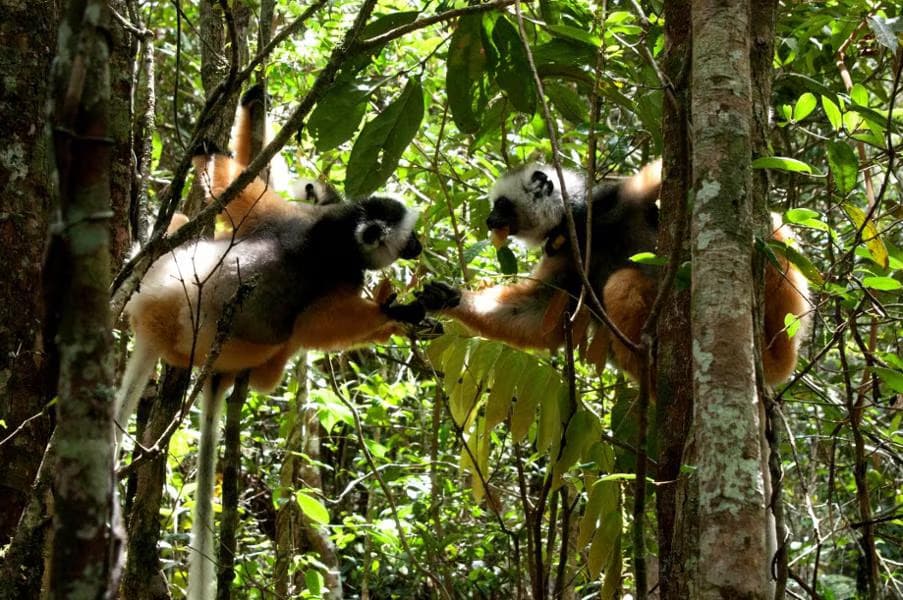
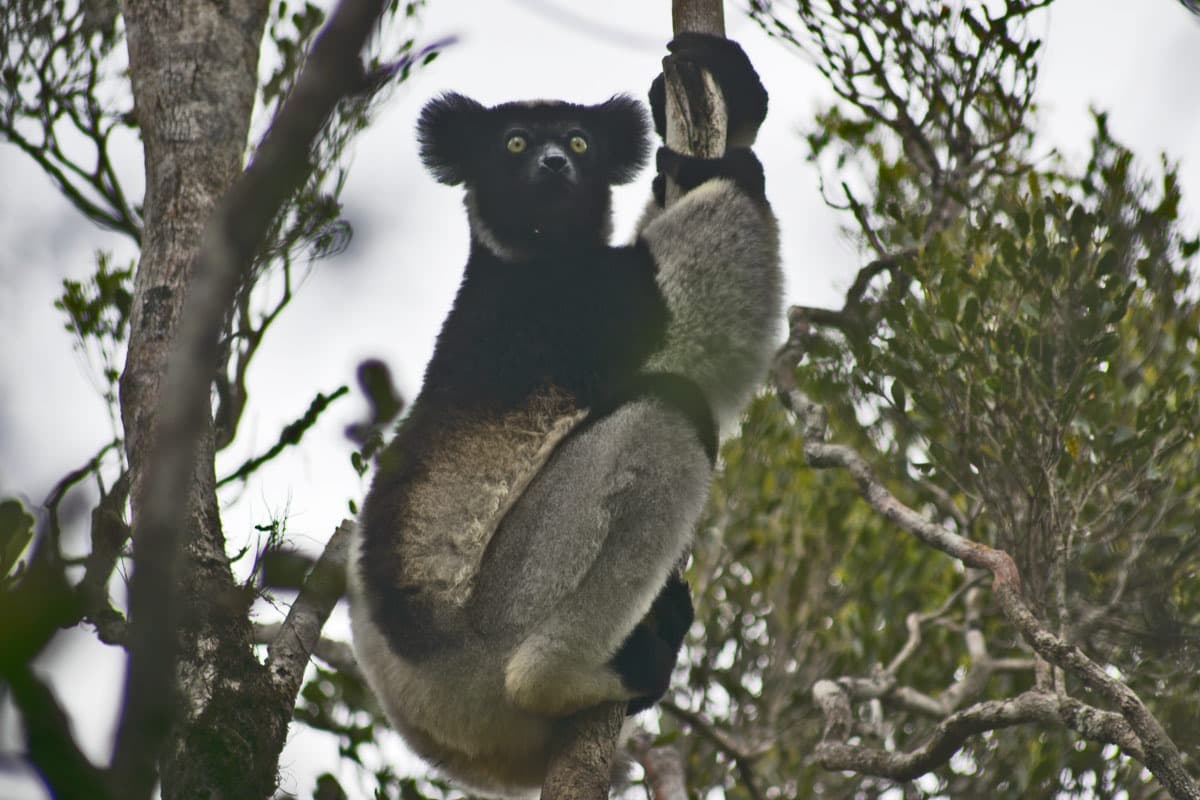
The indri is the largest living lemur. Black and white, almost without a tail, it lives in small family groups in the canopy. Its song, a long powerful wail that carries for several kilometers, echoes throughout the forest and remains one of the most striking memories of a trip to Madagascar. The guide knows the groups accustomed to the presence of visitors, and an encounter is often possible, even though no sighting is guaranteed.
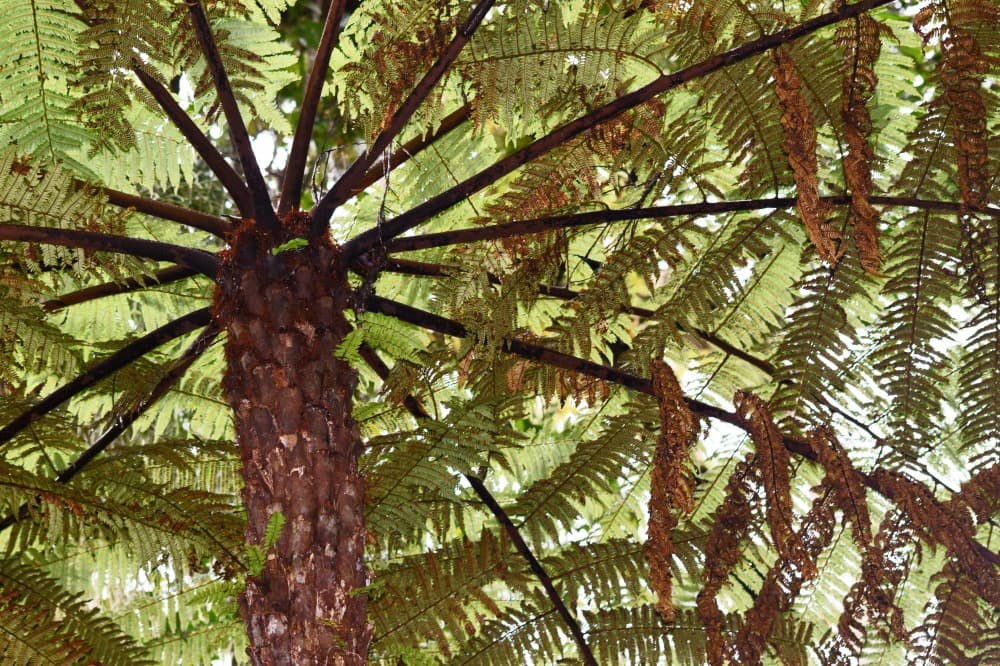
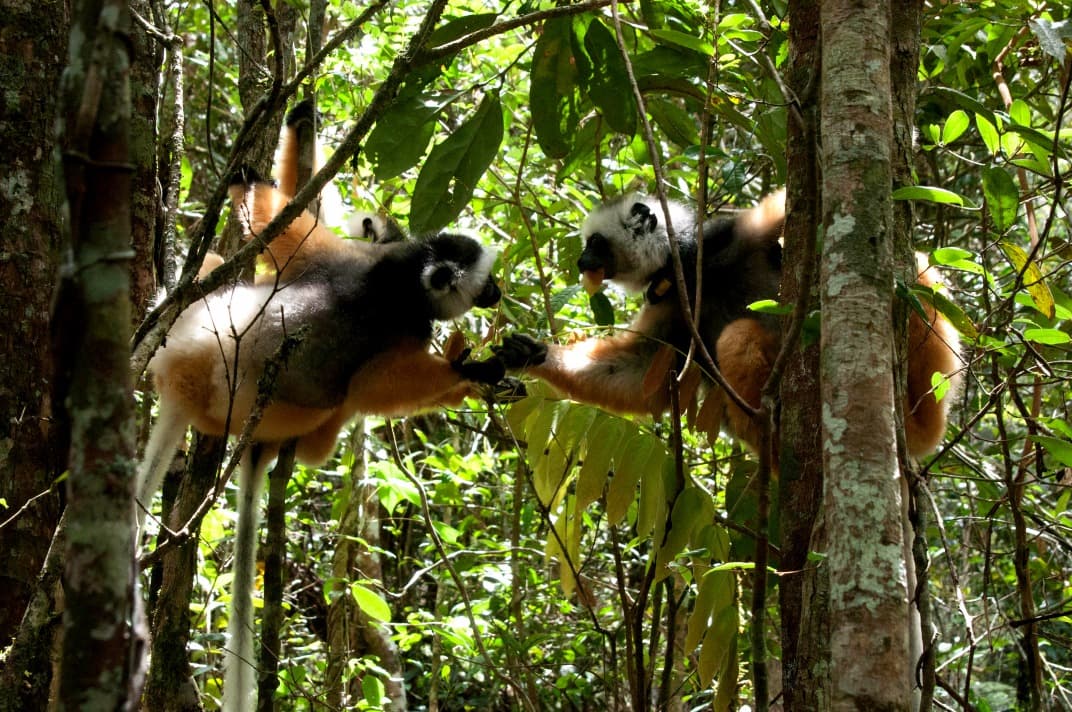
The forest is also home to other lemurs, such as the diademed sifaka or the bamboo lemur, as well as chameleons and many birds. The guide shows us the orchids, tree ferns, rosewood and medicinal plants that villagers still use.
In the afternoon, we visit Vakona Reserve, a few kilometers from the village. It is one of the best-protected forests in the Andasibe region. Along the river and around the lake, the trail crosses a dense forest where several species of lemurs, chameleons and birds live. As in the park, we observe them without feeding or touching them, leaving the animals the distance they need.
Return to the village at the end of the day. Second night in Andasibe.
Andasibe to Vakona: approximately 20 minutes by road.
Towards the Pangalanes Canal
After breakfast, we continue along national road 2 heading east. The road continues to descend through the forest, then crosses plantations of bananas, litchis and clove trees that announce the coast. The air becomes warmer and more humid.
Shortly after the small town of Brickaville, we leave the asphalt for a red earth track, sometimes mixed with white sand. It crosses a countryside of forests and villages until Manambato, on the edge of Lake Rasoabe, surrounded by hills. We have lunch there, facing the lake.
Here begins the Pangalanes Canal. This string of lakes, rivers and lagoons, connected to each other by channels dug by hand at the beginning of the 20th century, runs along the East coast for hundreds of kilometers. For the coastal villages, it remains an essential route, used by pirogues and transport boats.
It is also at Manambato that our guide and driver leave us to return to Antananarivo. We board a motorboat for a short journey to the shores of Lake Ampitabe, at Ankanin'ny Nofy, whose name means "the nest of dreams".
The village is only accessible by water, and the calm there is total. We settle for two nights on the edge of the lake, between the forest and the Indian Ocean, which we hear roaring on the other side of the sand spit.
Road: approximately 3 hours 30 minutes, 120 km, including a portion of track. Boat: approximately 45 minutes.
Manambato → Ankanin'ny Nofy
Ampitabe Lake and Palmarium Reserve
A short crossing of Lake Ampitabe takes us to the Palmarium reserve, which we explore with a guide from the reserve.
Across approximately fifty hectares of coastal forest, the reserve is home to about ten species of lemurs, which we observe in the trees without feeding or touching them. The flora is remarkable: many species of palms, some of which are very rare, orchids, and pitcher plants, these carnivorous plants whose leaves form urns where insects are trapped. The guide also teaches us to recognize chameleons, often motionless on the lower branches.
The rest of the day is free. Many walks are possible, on foot or by canoe. A trail crosses the sand spit that separates the lake from the Indian Ocean, where long wild beaches stretch out. Be careful, swimming there is dangerous due to currents and waves. In the lake, on the other hand, the water is calm.
We can also visit the nearby fishing village, its canoes pulled up on the shore and its huts made of wood and traveler's palm leaves, the traveler's tree. In the late afternoon, the light on the lake and the passage of canoes returning to the village are one of the beautiful moments of the journey.
At nightfall, a night visit in search of the aye-aye, the most strange of lemurs, can be organized as an option.
Second night on the shores of Lake Ampitabe.
Boat to the reserve: approximately 10 minutes.
Through the canal to Tamatave, then Mahambo
Ankanin'ny Nofy → Tamatave
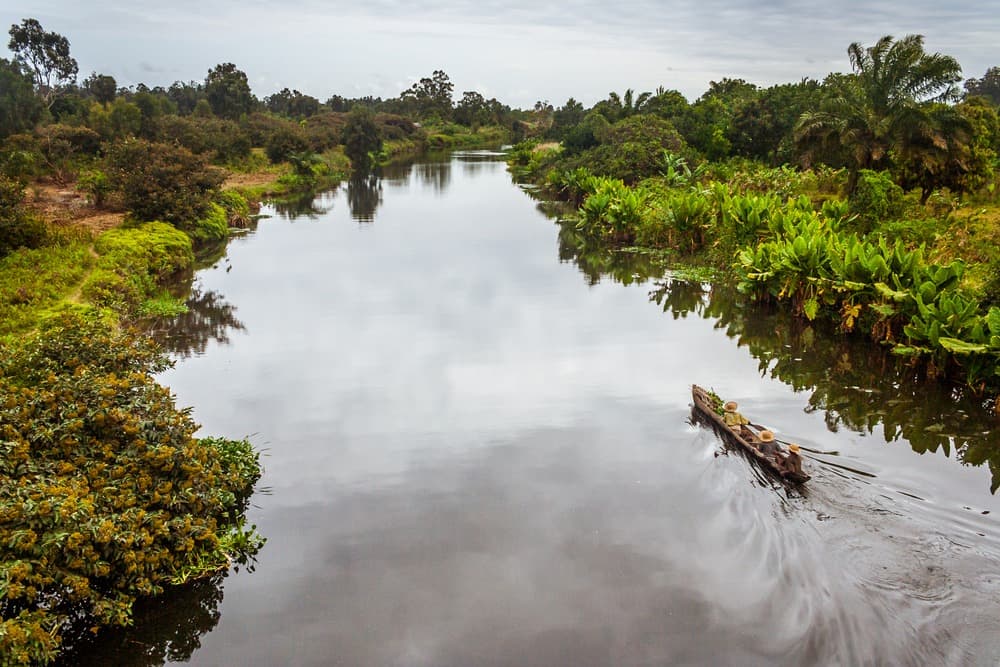
Early in the morning, we take the boat again to descend the Pangalanes Canal to Tamatave. This is one of the most beautiful days of the journey.
The canal passes from one lake to another through narrow channels, bordered by ravinala trees, pandanus and coconut palms. On this aquatic boulevard, we encounter dugout canoes laden with cassava or charcoal, barges and bush boats, the bush taxis of the river. Fishermen are hauling in their fish traps, women washing clothes on the riverbank, and children waving at the boat and shouting. The entire life of the villages takes place at the water's edge.
We arrive in Tamatave late in the morning. Madagascar's first port, the city lives to the rhythm of ships and commerce, and its wide avenues lined with palm trees retain memories of the colonial era. Lunch is taken on site.
A vehicle with driver awaits us there, and we head back north along the coastal road, bordered by coconut palms, clove trees and fishing villages. At Foulpointe, we can make a stop to see the circular ramparts of Fort Manda, built in the early nineteenth century by the Merina kingdom to hold the coast.
We arrive in Mahambo late in the afternoon. This fishing village stretches between dense forest and a lagoon enclosed by a coral barrier, where swimming is possible. Night in Mahambo.
Boat: approximately 3 h 30, 60 km. Road: approximately 2 h 30 to 3 h, 90 km.
The Clove Coast and the Crossing to Sainte-Marie
Early in the morning, at the time set the previous day by the shipping company according to the tide, our vehicle picks us up in Mahambo, and we continue north along the coastal road. This region, the Analanjirofo, whose name means "forest of clove trees," produces a large part of Madagascar's cloves. Depending on the season, the cloves dry in the sun on mats in front of houses, and their smell floats over all the villages.
We cross Fénérive-Est, the regional capital, then a countryside of rice fields, coconut trees and rivers that the road crosses on small bridges. The road is narrow and sometimes damaged, and it takes time to cover these eighty kilometers.
We arrive in Soanierana-Ivongo, a small port town at the mouth of a river. This is where boats depart for Sainte-Marie Island. Our driver drops us at the landing and leaves us here.
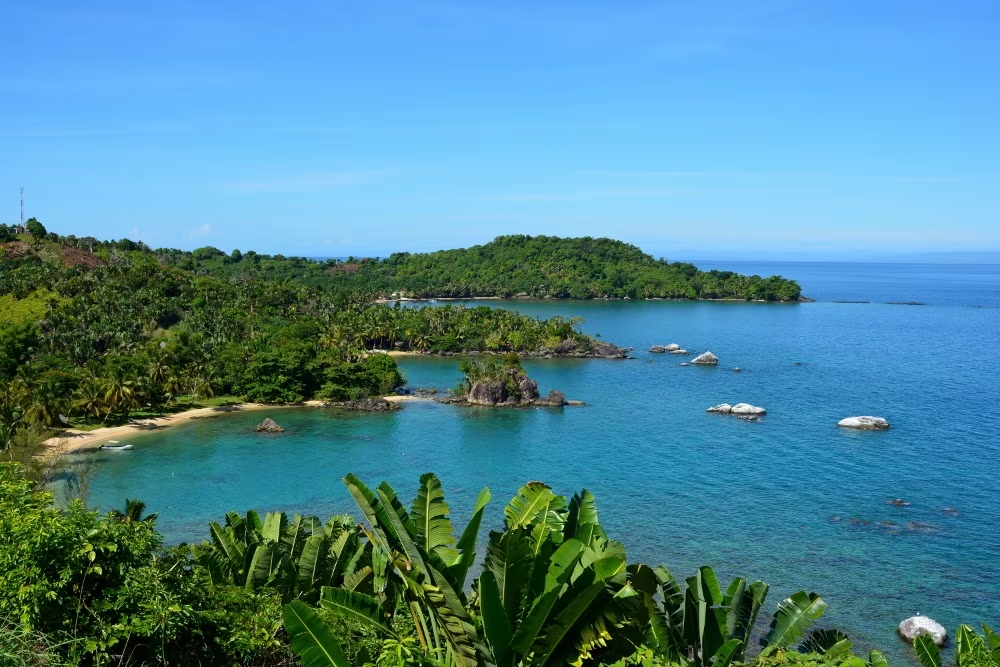
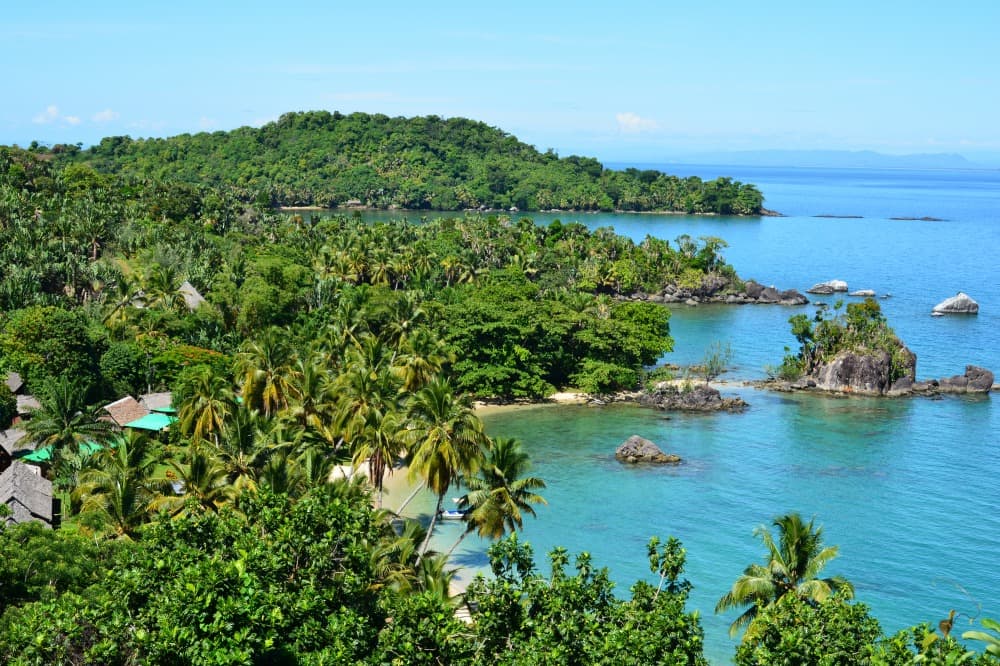
The crossing is done by speedboat. It depends on the state of the sea, calmer in the morning, and can be rough. The schedules are therefore set by the companies day by day, and we follow their instructions. Soon, the green coast of the island appears, fringed with beaches and coconut trees.
In Sainte-Marie, we are welcomed and taken to our hotel, by the sea. The rest of the day is free for us to settle in and enjoy the beach. First of four nights on the island.
Road: approximately 3 h 30, 80 km. Boat: approximately 1 h 30 to 2 h, depending on the state of the sea.
Sainte-Marie, Island of Pirates and Missionaries
Sainte-Marie, Nosy Boraha in Malagasy, is a narrow island about sixty kilometers long, covered with forests and coconut trees, and bordered by beaches and lagoons. We now have four days ahead of us to discover it at our own pace.
This first day can be devoted to its history. In the seventeenth and eighteenth centuries, Ambodifotatra Bay served as a refuge for Indian Ocean pirates, who found water, provisions, and sheltered anchorage there. On a hillside overlooking the bay, the Pirates' Cemetery preserves ancient tombs, facing Forbans Island. It can be reached on foot, via a path that crosses the mangrove.
Ambodifotatra, the island's main town, is a quiet large village, with its market, port, and wooden houses. A Catholic church built in the nineteenth century, among the oldest in Madagascar, recalls the arrival of missionaries.
For those who prefer water, outings in pirogues in the mangrove, sea kayaking or snorkeling around coral reefs can easily be booked from the hotel or in the village. The corals remain fragile: we do not touch them and do not walk on them.
These activities are not included, which leaves everyone free to choose. Our team can help us organize them. Second night in Sainte-Marie.
Sainte-Marie, the South and Île aux Nattes
For this second day on the island, we can head south. The road follows the west coast, between fishing villages, coconut plantations and small coves, until reaching the southern tip of the island.
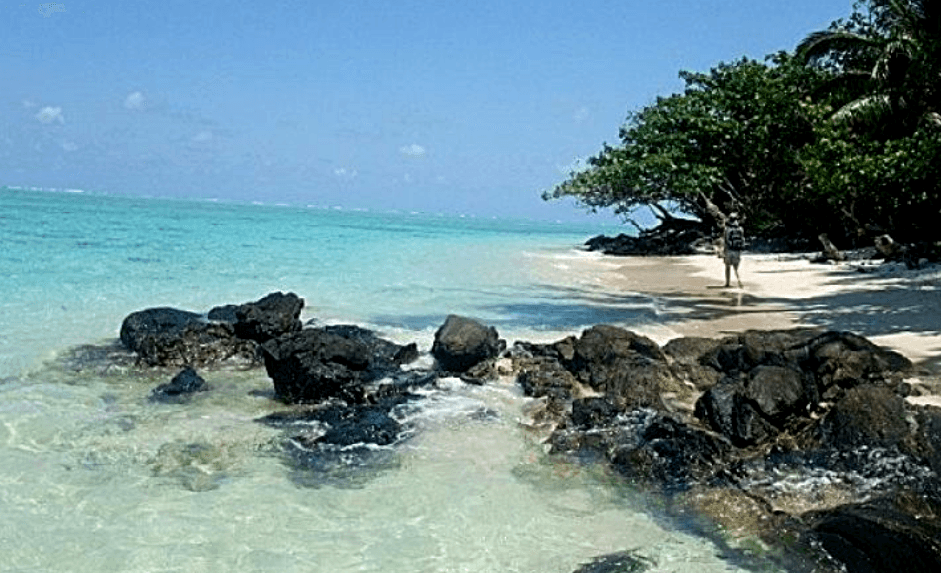
From there, a short crossing by pirogue leads to Île aux Nattes, Nosy Nato in Malagasy. With no cars or roads, it can be explored on foot in a few hours, along sandy paths that connect the villages, beaches and an old lighthouse from which the view embraces the lagoon. Its white sand beaches, fringed with coconut trees and bathed by turquoise water, rank among the most beautiful in the region. Swimming is easy there, in the lagoon protected by the reef.
Days on the island are also made for doing nothing, or almost nothing: reading in the shade, swimming, walking on the beach, watching the outrigger canoes of fishermen. After a week of driving and boating, this rest time is a full part of the journey.
From July to September, humpback whales travel up from Antarctica to give birth and mate in the warm, sheltered waters of the channel that separates Sainte-Marie from the main island. Sea outings to observe them can be booked on site. They follow precise approach rules, regarding distance and duration, which protect the animals, and we choose operators who respect them.
Excursions are not included. Third night in Sainte-Marie.
Sainte-Marie, the north and its natural pools
For our last full day on the island, we can explore the north, which is wilder and less crowded. The road becomes narrower there, then turns into a track, running between forests, rice paddies and villages with wooden houses on stilts.
Several trails lead to hidden waterfalls in the forest, where it's pleasant to cool off, and to deserted coves. At the northern tip, the coast is made of black volcanic rocks where the sea has carved out natural pools. At low tide, the water there remains clear and calm, and swimming is possible sheltered from the waves.
The island can also be discovered by bike or on foot, following paths that cross the interior. Along the way, villagers cultivate rice, vanilla and cloves, and dry fish on racks by the sea. Encounters are simple and warm: the island's inhabitants, the Saint-Mariens, have a reputation for being welcoming, and are happy to take time to exchange a few words.
As on previous days, these excursions are not included and are easily organized on site. Our team can advise us on the outings that best match our wishes and the season.
In the late afternoon, it's time to enjoy the beach and sunset over the channel one last time. Fourth and last night in Sainte-Marie.
Flight to Antananarivo
Ile Sainte Marie → Antananarivo
Depending on our flight schedule, the morning may be free for one last swim or a walk on the beach.
We are then driven to the island's small airport for the domestic flight to Antananarivo. Seen from the plane, the crossing summarizes a good part of the journey: the lagoon and the coast, the ribbon of the Pangalanes Canal, then the forest of the escarpment, which we crossed by road, and finally the rice paddies and hills of the Highlands.
Upon arrival at Ivato airport, a member of the Détours Madagascar team welcomes us and drives us to our hotel in the city.
The rest of the day is free. Depending on the arrival time, we can stroll through the Analakely district, around the covered market and its stalls of spices, basketry and fabrics, or visit the photography museum, which houses old images of Madagascar. The craft markets along the dike road are also an opportunity to bring back some souvenirs: zebu horn objects, embroidery, woven raffia or carved wood.
At the end of the day, our team reviews with us the next day's activities and the time of our transfer to the airport. Night in Antananarivo.
Transfer to Sainte-Marie airport: approximately 20 minutes. Flight to Antananarivo: approximately 1 hour. Transfer to the hotel: approximately 45 minutes.
The highland city of Antananarivo, then return flight
For this last day, we set out on foot to discover the upper town, accompanied by a historian.
We begin at Independence Square, with the palace of Ambohitsorohitra in the background, the former residence of colonial governors, then we climb up through the narrow streets and stairs to the top of Analamanga hill, the former name of the city. Along the way, we pass the palace of Andafiavaratra, the former residence of the Prime Minister, then through Andohalo Square, where Merina sovereigns delivered speeches to the people, and past the old brick houses with wooden balconies of the upper town.
At the summit, the Rova, the Queen's Palace, overlooks the entire plain. It was devastated by a fire in 1995, then restored. Our historian tells us the history of the Merina kingdom, the unification of the island in the 19th century and the arrival of Europeans, and the view encompasses the entire city, its hills and rice paddies.
The afternoon is free for a last stroll or last-minute shopping. In the evening, we are taken to Ivato airport, where a team member accompanies us until we check in for our international flight, which most often departs at night.
This is the end of a journey that has taken us from the forest of the indris to the beaches of Sainte-Marie, through the lakes and villages of the Pangalanes canal. We hope it will leave each of us with the memory of the song of the indris in the early morning and the passage of pirogues on the canal. Veloma, goodbye, and see you soon in Madagascar.
Transfer to the airport: approximately 45 minutes.

Arrival in France
Antananarivo → Paris Roissy CDG
After a night in flight, we arrive in France, generally in late morning.
Depending on the airline chosen, the flight may stop over on the way, in Reunion, Mauritius, Addis Ababa, Nairobi or in the Gulf. The schedules and stopovers depend on the season and airlines: our team confirms them with each person at the time of booking.
This return is also the time to gather your memories, your photos and your notes. If you wish, we will be happy to receive your impressions of this trip: they help us to improve it and to better prepare trips for those who will leave after you.
Price per person
Indicative price per person, based on double room. Each trip is customized according to your preferences.
This trip can be tailored to your preferences
This itinerary provides an excellent foundation for discovery, but it can be fully customized. Our local advisors build each trip tailored to your budget, dates and preferences.
Not included
- International flights
- The domestic flight from Sainte-Marie to Antananarivo (fluctuating rate, booked separately)
- Visa Fees
- Lunches, dinners in Antananarivo and beverages
- Night visits in Andasibe and the aye-aye night visit at Palmarium
- Activities in Sainte-Marie (excursions, sea outings, whale watching, diving)
- Single room supplement
- Insurance assistance, repatriation and cancellation
- Tips and Personal Expenses
Included
- Airport welcome and transfers in Antananarivo
- A guide from Détours Madagascar and the vehicle with driver, fuel included, from Antananarivo to Manambato
- Vehicle transfers with driver from Toliara to Soanierana-Ivongo and fast boat crossing to Sainte-Marie
- Collective boat trips on the Pangalanes Canal, from Manambato to Lake Ampitabe and then to Tamatave
- Transfers between the port, hotel and airport in Sainte-Marie
- Accommodation in double or twin room for 11 nights
- Breakfasts and dinners from Andasibe to Sainte-Marie
- Entrance fees and local guides for Andasibe National Park, Vakona Reserve and Palmarium Reserve, and the butterfly farm visit
- The walking tour in the upper town of Antananarivo with a historian
- The assistance of our team in Antananarivo throughout the trip
Practical Information
Registration is considered firm and final after payment of a deposit of 30% of the total price and acceptance of the specific terms of sale.
The balance must be paid no later than 45 days before the departure date.
See our specific terms of sale for full details.
In the event of cancellation by the traveller, the following fees apply:
More than 60 days before departure: 30% of the total price (deposit retained)
Between 60 and 30 days before departure: 50% of the total price
Less than 30 days before departure: 100% of the total price
We strongly recommend taking out cancellation insurance. See our specific terms of sale for full details.
Your Passport:
Important: your passport must be valid. It must be mandatory and obligatorily valid for 6 months after the end of your stay in Madagascar.
Your travel documents
Your valid passport,
Your international and/or domestic flight tickets,
Your repatriation insurance/first aid expenses contract, -
Your vaccination record, not mandatory,
Your blood group card if possible.
Obtaining a visa to enter Malagasy territory
Upon arrival in the territory:
The visa cost is €35 for a stay of less than 30 days.
It is easily obtained upon your arrival in Malagasy territory.
This applies to all airports in Madagascar that receive international flights.
Upon arrival in the terminal, upon exiting the plane, a corridor for passengers is dedicated to issuing tourist visas.
This procedure is the simplest. We recommend it to you.
From the embassies and consulates of your countries of origin:
For information, download the document explaining the procedure and the constitution of the file for obtaining a visa from the Madagascar embassy.
To participate in our trips, it is strongly recommended to be insured for repatriation assistance and medical expenses abroad.
Your local agency encourages you to familiarize yourself with the specific contract developed with our partner CHAPKA ASSURANCES and AXA ASSISTANCE.
To subscribe to insurance, learn about coverage and rates, follow the link below.
CAP EXPLORER: The comprehensive insurance solution designed to enjoy your trip with peace of mind!
Choose the plan that best suits you:
Explorer'Multirisque
Explorer'Annulation
Explorer'Assistance
Explorer' Complementary Credit Card
Specific to our trips, we strongly recommend subscribing to them.
If you choose to subscribe to one of these plans, the policy detailing all coverage and procedures for claiming any loss are available on the insurer's website.
Your local agency will be aware of it, but only the participant is responsible for complying with the procedures for declaring any loss. The participant must therefore keep this policy with them throughout their trip.
Chapka — Cap Explorer
Our insurance partnerTravel with peace of mind with our partner Chapka. Cancellation, repatriation, medical expenses, baggage… All the coverage for a worry-free trip.
Travel with peace of mind — I'll handle the insuranceFrequently asked questions
A tourist visa is required, issued upon arrival at Ivato Airport (Antananarivo) or online (e-visa). Your passport must be valid for at least 6 months from your date of entry. Before booking your trip, check with Madagascar's consular authorities for the conditions applicable to your nationality, including visa fees and authorized lengths of stay.
Go to the My Trips section to find all your projects.
You can send a message to your host directly from the Tea Lounge.
For a tailor-made quality trip, expect between 160 and 270 euros per day and per person, including accommodation, meals, internal transfers and English-speaking guide. International flights (900-1400 euros return) are additional. Long transfers and domestic flights represent a significant portion of the budget.
Your documents are accessible in the Documents tab of your trip.
Absolutely. We adapt each itinerary to suit your travel profile. For families, we prioritize relaxed pacing, family-friendly accommodations, fun and educational activities, and comfortable private transfers. Our local English-speaking guides know how to captivate children with age-appropriate anecdotes.
It's simple. You exchange with our local team to define your wishes, budget and dates. You receive a detailed itinerary proposal within 48 hours. You adjust every detail together until it's perfect. You confirm and travel with peace of mind. Your local agency remains available 7 days a week throughout your trip.
In case of emergency, contact your local agency immediately.
Payment is generally made in two installments.
Our agency is part of the Nomadays network, registered in France. You benefit from APST (Association Professionnelle de Solidarité du Tourisme) protection, which covers 100% of your funds. Secure payment, professional insurance, and English-speaking assistance 7 days a week on the ground throughout your stay. Travel insurance (assistance and repatriation, cancellation) is not included: we offer it through our insurance partner and strongly recommend it.
Let's talk about your adventure — High Plateaus
Ambassador of Malagasy fihavanana, based in Antananarivo
For me, traveling to Madagascar is stepping into the spirit of fihavanana: sharing, helping one another, meeting people, and taking time to understand what connects them to their land.
— Noro