
Frequently Asked Questions
Your questions about Canada
19 answers prepared by our local agency en Canada — before you go, on the ground, after you return.
The most frequently asked questions
How long is a flight from France to Canada?
A direct flight from Paris to Canada takes 7 to 9 hours to Montreal or Toronto, and 10 to 11 hours to Vancouver. Connecting flights extend the journey to 10 to 15 hours total.
Read the answer 2How to get around in Canada?
In Canada, you can rent a car for total freedom, hire a motorhome in the West, fly to connect provinces, travel by VIA Rail train for scenic landscapes, or take a bus on a tight budget.
Read the answer 3Do I need a visa or an eTA to enter Canada?
French, Belgian and Swiss citizens need an eTA (7$ CAD, valid for 5 years) for air arrivals. Other nationalities require a visa. No eTA required for land or sea entry with a valid passport.
Read the answerAll questions
Is Canada a safe country?
Yes, Canada is considered one of the safest countries in the world with a low crime rate. It offers a stable and secure environment for all travelers, including solo women travelers.
Read the answerWhen is the best time to visit Canada?
The best time to visit Canada is from June to September to enjoy national parks and outdoor activities. Fall (September–October) offers Indian summer with fewer crowds, while winter (December–March) is ideal for winter sports in the Rockies and Quebec.
Read the answerWhat is the climate like in Canada?
Canada features great climatic diversity by region: Arctic climate in the north, humid continental in the prairies and east, oceanic on the Pacific coast, maritime in the Maritimes, and alpine in the Rocky Mountains.
Read the answerWhat is the time difference between Canada and France?
The time difference between Canada and France ranges from -4 to -9 hours depending on the region. Montreal and Quebec are -6 hours, Vancouver is -9 hours, and Halifax is -4 or -5 hours behind France.
Read the answerWhat is the population of Canada?
In 2026, Canada's population is estimated at approximately 42 million inhabitants, making it the 38th most populous country in the world.
Read the answerWhat type of government runs Canada?
Canada is a constitutional monarchy and a federal parliamentary democracy. The Prime Minister heads the federal government, while the British monarch serves as head of state, represented by the Governor General.
Read the answerWhat is the capital of Canada?
Canada's capital is Ottawa, located in Ontario province, bordering Quebec. This city of over one million residents is home to the Canadian Parliament and major federal institutions.
Read the answerWhat is the currency of Canada and its exchange rate?
The official currency of Canada is the Canadian dollar (CAD). Exchange rates fluctuate daily, but 1 € is approximately equivalent to 1.50 CAD. Bank cards are accepted everywhere, even for small amounts.
Read the answerWhat is the size of Canada?
Canada covers 9,984,670 km², making it the world's second-largest country by area, after Russia.
Read the answerWhat activities and experiences can you do in Canada?
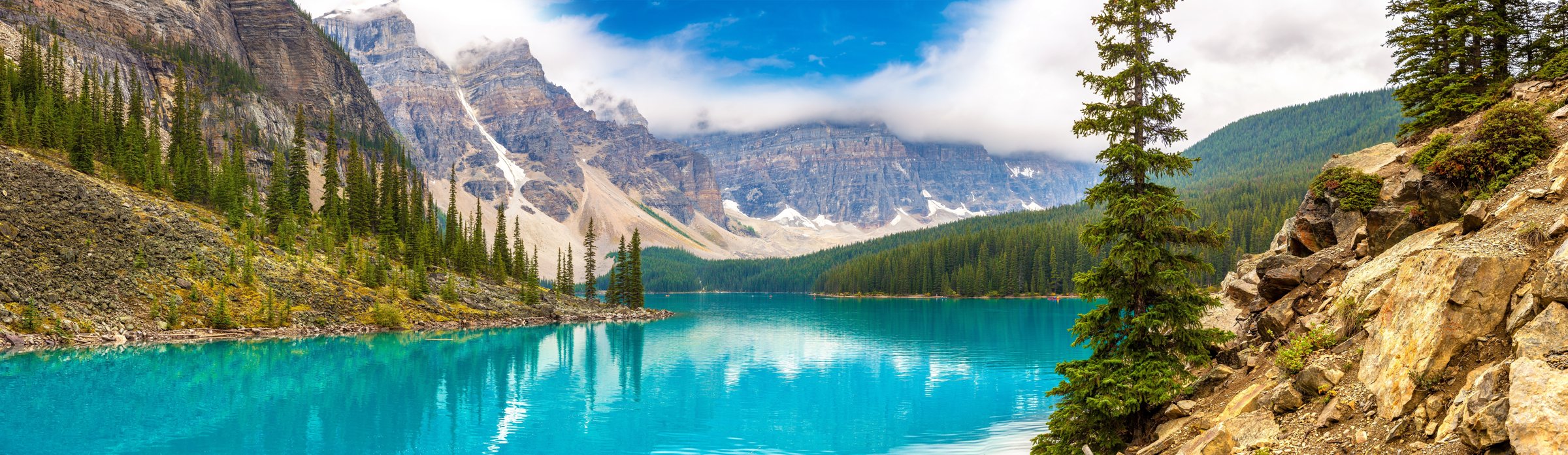
In Canada, you can canoe on turquoise lakes, spot whales and bears, hike in the Rocky Mountains, discover Indigenous culture, and experience dog sledding. The country offers exceptional nature immersion between mountains, forests, and oceans.
Read the answerWhat languages are spoken in Canada?
Canada is officially bilingual, with English (56-60% of the population) and French (21-23%) as official languages. French dominates in Quebec, while English predominates in other provinces.
Read the answerWhat health advice for traveling to Canada?
To travel to Canada, purchase mandatory medical insurance covering medical expenses and repatriation. Update your routine vaccines (DTP, MMR) and consider hepatitis A and B. Protect yourself from insects with DEET repellents and protective clothing.
Read the answerWhat are the essentials to pack in your suitcase for a trip to Canada?
Essential items for Canada include: passport + eTA, layered clothing with fleece and waterproof jacket, thermal base layers if winter, season-appropriate footwear, electric adapter, sunscreen and insect repellent.
Read the answerWhat are the must-see sites to visit in Canada?
Canada's must-see destinations include the Canadian Rockies (Banff, Jasper), Niagara Falls, Quebec City and Montreal, Vancouver and Vancouver Island, Saguenay Fjord, Mingan Archipelago, Gaspésie, and Yukon.
Read the answerWhat souvenirs should I bring back from Canada?
From Canada, bring back maple syrup and maple products, Indigenous crafts (moccasins, jewelry), hockey jerseys, smoked salmon, plaid lumberjack shirts, and items featuring iconic animals like moose and beaver.
Read the answerWhat types of accommodation can be found in Canada?
Canada offers all types of accommodations: chain or independent hotels, youth hostels, bed & breakfasts, apartment rentals, nature chalets, traditional camping or glamping, unique stays (cabins, yurts), and homestays for cultural immersion.
Read the answerCan't find your answer?
Our local agency en Canada answers all your questions directly. personalised questions within 24-48h. No generic form — a real expert answer.
Ask my questionWe use cookies to improve your experience and measure our site's audience. You can choose what you accept. Learn more.