Traveling to Thailand During Low Season: Good Idea or Bad?
Travel to Thailand in low season: find out what to expect during the monsoon and how to choose the right regions and activities.
Are you wondering if it's a good idea to travel to Thailand during low season? To help you make sense of it all, we'll explain everything you need to know about Thai seasons and climate, and we'll list all the advantages and disadvantages of traveling during low season.
The Different Seasons in Thailand
The Two Seasons in Thailand
Generally speaking, the Thai climate can be summed up into two distinct seasons:
the dry season, which runs from November through April,
the rainy season (monsoon), which runs from May through October.
Seasons by Region
Although Thailand has two distinct seasons, the climate varies greatly from one region to another. Here are the different climates by region:
Climate in Northern Thailand:
Northern Thailand's climate can be divided into 3 seasons:
The dry and hot season from March to May,
The rainy season, from June to October, with heavy rains between August and September,
The cool season, from November to February, during which daytime temperatures can drop to as low as 5°C.
Climate in Central Thailand:
Central Thailand experiences very wet periods in April, May, September, and October. However, although July and August belong to the monsoon season, rainfall there is rarer or, at least, never lasts very long.
Climate in Southern Thailand:
The rainy season does not occur the same way between southeastern and southwestern Thailand.
On the side of the islands in the Gulf of Thailand (Koh Samui, Koh Phangan, Koh Tao), rainfall is heavier between October and December. However, it is less so during July and August.
On the side of the Andaman Sea islands (Phuket, Koh Lanta, Koh Phi Phi...), rainfall is much more intense, even during July and August.
Good to know
The period to avoid regardless of region
September, the period of typhoons, is the month when precipitation is most intense. It is therefore the month of the year to avoid in all regions of Thailand.
What to Expect When Traveling to Thailand During the Monsoon
Just because it's rainy season doesn't mean it rains all day long. While the rainy season affects the entire country at different times and intensities, there are still several things to keep in mind:
Temperatures are not affected and it can still be around 30°C;
The rainy season is marked by high humidity, which creates a greater sensation of heat;
Rainfall is not continuous; it's mainly intermittent showers;
There are still beautiful sunny periods between rains or storms;
Rain tends to occur more in the late afternoon or during the night;
The rainy season can arrive earlier or later, especially with climate change.
The Advantages and Disadvantages of a Trip to Thailand in Low Season
The Advantages of Traveling to Thailand in Low Season

More Attractive Prices
The first advantage, and certainly not the least, is that by traveling during low season, you can enjoy much more interesting rates, whether for accommodations, flights, activities, and excursions. This is therefore the ideal season when you're on a tight budget.
Fewer Tourists
Low season naturally means fewer tourists. Because there are fewer visitors, you'll be able to explore normally crowded sites and enjoy them all to yourself.
Another advantage: the fact that there are fewer tourists also allows for more accommodation options. You can thus book at the last minute and improvise your trip day by day.
Greater Ease in Connecting With Locals
Much less solicited than in high season, locals are far more relaxed during low season. In other words, it's the most appropriate time of year to take time to meet residents and connect with them.
Even More Impressive Landscapes
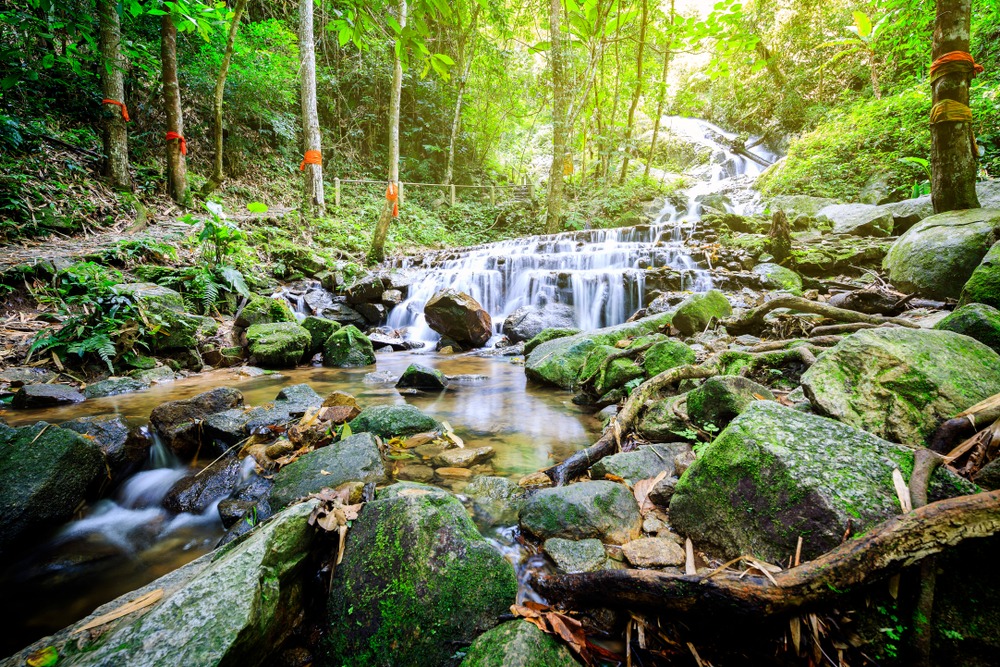
With the rain, Thai landscapes are even more lush than the rest of the year. This is particularly true of the rice paddies in northern Thailand, which display an intense green. Low season is also the ideal time to enjoy activities in waterways (kayaking, rafting...) and to admire waterfalls in the country's national parks. Indeed, during dry season, waterfalls can quickly run dry.
More Festivities
During low season, Thailand is marked by numerous celebrations. Among the must-see events to experience during your stay, we can mention:
Songkran, the Thai Buddhist New Year: this is THE most popular Thai festival. This religious celebration, often compared to the world's biggest water battle, takes place each year in April (according to the lunar calendar).
Loy Krathong, the Festival of Lights: this celebration takes place every year in November (according to the lunar calendar). For the occasion, thousands of floating offerings illuminated by candles drift across the country's waters.
Phi Ta Kon, the Ghost Festival: this 3-day Thai festival in honor of Buddha takes place in Dan Sai, a small village in the Isan region. Again, the date is determined according to the lunar calendar (generally falling between March and July).
The Vegetarian Festival: this traditional Thai festivity is held each year in October. For 9 days, numerous shows and events take place. During this time, a portion of the Thai population follows many rituals and eats exclusively vegetarian dishes.
The Disadvantages of Traveling to Thailand in Low Season
Unpredictable Weather
The rainy season is an unpredictable season. Although rainfall is not continuous, rains can be torrential. In other words, a downpour can literally soak you completely in a few seconds if you don't take shelter.
Furthermore, the rainy season is marked by high humidity. You'll need to be able to handle humid heat, which can quickly become suffocating.
Finally, it's not uncommon for flooding to occur in September and October, particularly in areas with poor water drainage systems.
Fewer Tourist Services
During low season, it's not unusual for tourist services to be fewer. Some establishments (restaurants, hotels...) may close their doors during this time of year (rest assured, you'll always find something open!). Some marine parks may also be closed. Be sure to verify dates before booking.
Additionally, boats and ferries are not always operational. This is particularly the case when a storm occurs and boats don't want to risk crossing the sea. You should always have a backup plan.
More Limited Activities
Due to heavy rains and low-season weather, some activities are not always feasible. This is the case with snorkeling and scuba diving in the Andaman Sea where visibility is extremely poor (note that it's entirely possible to dive in the Gulf of Thailand during this period).
The same goes for treks and hikes, which can be canceled at the last minute if the ground is too slippery, endangering trekkers' safety.
In Conclusion: Traveling During Low Season, Yes But by Adapting Your Itinerary and Activities!

As you can see, traveling to Thailand during low season has its share of advantages and disadvantages. To sum up, it's entirely feasible to travel to Thailand during the monsoon, provided you adapt your trip. How? By adjusting your itinerary according to the climate of the regions and timing, and by choosing activities based on the weather.
Here are some tips to keep in mind if you plan to travel to Thailand during low season:
Don't plan too far in advance or at least always have backup plans if your activity falls through;
Remember to pack rain gear and mosquito protections (spray, long sleeves...);
Favor a stay on the islands of the Gulf of Thailand rather than the beaches of the southwestern coast if you want to enjoy sunshine and go diving;
Enjoy the beach in the early morning rather than late afternoon when showers are heavier;
You'll always find activities to keep you occupied during heavy downpours: take advantage to try the famous Thai massages, learn Muay Thai (Thai boxing), or take Thai cooking classes...
Frequently asked questions
In low season, you can save 30 to 50% on accommodations and 20 to 30% on flights. Activities are also cheaper with discounts reaching up to 40%.
No, it doesn't rain continuously. Rainfall is generally intermittent, often in the late afternoon or at night, with beautiful sunny periods between showers.
Choose the islands of the Gulf of Thailand (Koh Samui, Koh Phangan) in July-August, or the north of the country which experiences fewer torrential rains than the western coast.