How to Prepare Khao Soi? The Authentic Recipe of Chiang Mai's Emblematic Curry
Discover the authentic recipe for Khao Soi, the emblematic soup of northern Thailand, blending creamy curry, crispy noodles and the distinctive flavors of Chiang Mai.
Like every region of the country, northern Thailand boasts its own culinary specialties. Khao Soi is undoubtedly the most popular. Originating from Chiang Mai and influenced by Burmese and Laotian cuisines, this delicious creamy soup is often among travelers' favorite discoveries. Discover the authentic recipe for Khao Soi with chicken to recreate it at home and transport your taste buds to northern Thailand for a meal....
What is Khao Soi?
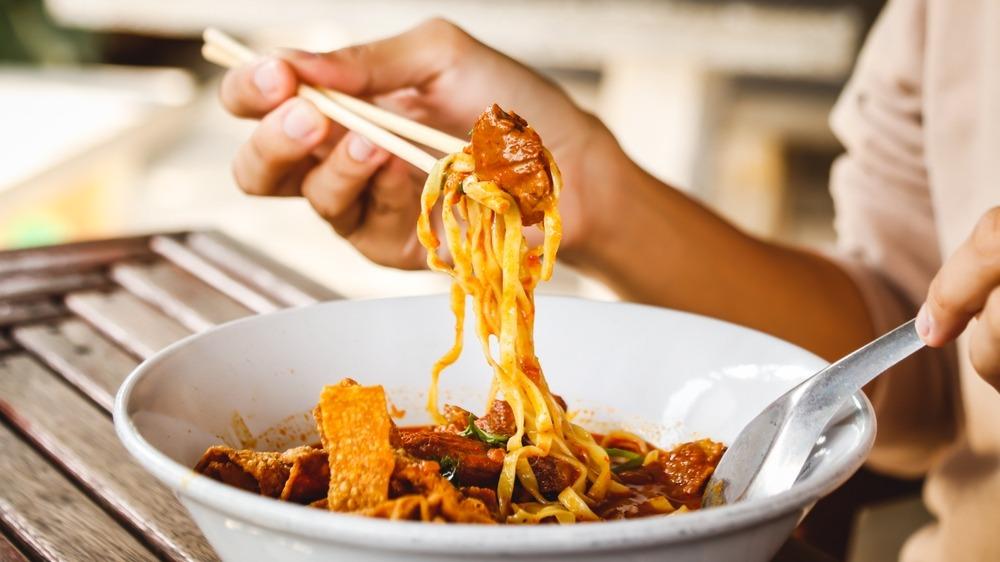
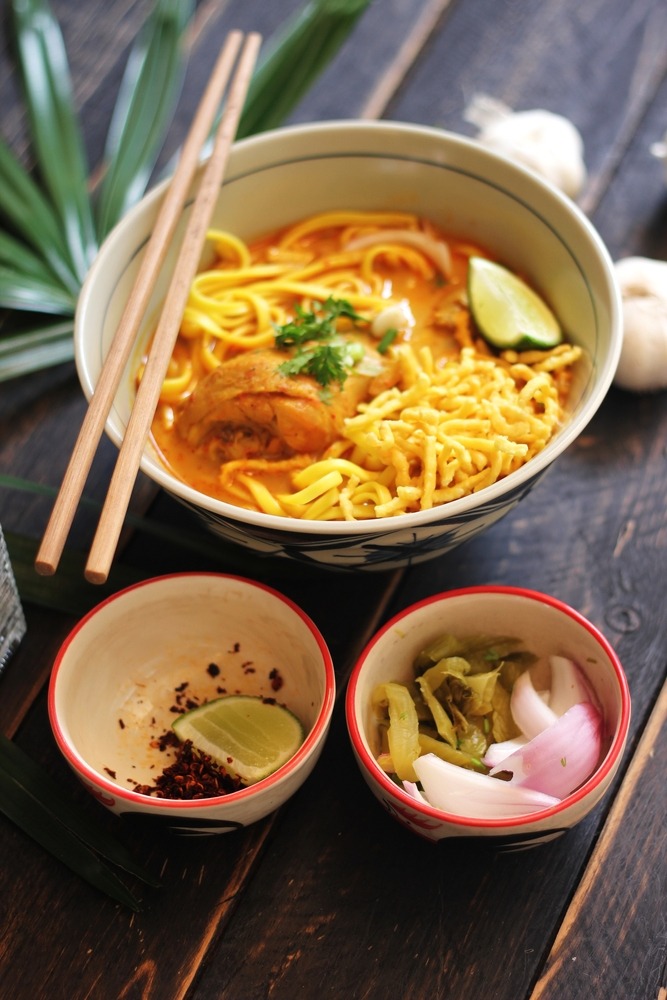
Khao Soi is a creamy curry soup made with coconut milk, chicken, egg noodles, and topped with crispy fried noodles. The curry paste (Prik Kaeng Khao Soi) is the key element of the dish. It combines the fragrance of galangal, fresh turmeric, lemongrass, garlic and shallots, with the depth of shrimp paste and the heat of dried chili.
Originating from northern Thailand, and particularly from Chiang Mai, this emblematic dish of Thai cuisine is a legacy of Burmese and Laotian influences, reinvented with a Thai twist.
🍜 Sawa Discovery's favorite addresses
Here are the favorite restaurants of our local teams for eating the best Khao Soi in Chiang Mai (100% local addresses!) :
Happy Allergy Bakery (for a gluten-free version of Khao Soi!)
Discover all the culinary specialties to taste in northern Thailand.
How to Prepare Khao Soi with Chicken Like in Thailand?
Practical Info
⏱️ Preparation:
20 min
🔥 Cooking:
15–20 min
👨🍳 Servings:
2–3 people🍜 Khao Soi Ingredients
For the curry paste (Prik Kaeng Khao Soi)
2 dried spur chilies (or bird's eye chilies), seeded, soaked then minced
2 stalks of lemongrass (lower part), roughly chopped
2 garlic cloves finely minced
2 shallots finely minced
1 tbsp of peeled galangal sliced thinly
1 tbsp of fresh turmeric, roughly chopped
2 tsp of curry powder
2 tsp of shrimp paste (optional)
1 coriander root
1 pinch of salt
💡 Chef's tip: The curry paste can be made ahead: 1 week in the refrigerator or 3 months in the freezer.
For the broth and garnish
2 chicken thighs
1 cup of coconut milk
2 cups of chicken broth
1/3 cup of Khao Soi curry paste
1½ to 2 tbsp of curry powder
300 g of yellow egg noodles
Vegetable oil for frying the noodles
Note: In Chiang Mai, flat, elastic noodles about 6 mm wide (fettuccine-type) are used.
For seasoning
1 tbsp of palm sugar
1½ tsp of fish sauce
A pinch of salt
Fresh coriander
Lime wedges
Preparation
Step 1: Prepare the Khao Soi curry paste
In a mortar, pound the galangal, lemongrass, coriander root, turmeric and salt until you achieve a fine texture. Add the garlic and shallots, then continue pounding until the paste is smooth and homogeneous. Finish by incorporating the dried chilies, curry powder and shrimp paste. Mix until you have a well-fragrant paste.
If the paste is too dry, you can add a little water. Reserve in a small bowl.
💡 Good to know: Don't have a mortar? You can always blend all the ingredients in a blender or food processor instead!
Step 2: Cook the chicken
Boil the chicken thighs in water until they are fully cooked. Reserve the chicken and keep the broth for the next step of the recipe.
Step 3: Prepare the curry broth
In a wok, heat 1/2 cup of coconut milk over medium-low heat until it comes to a boil. Add 1/3 cup of Khao Soi curry paste and stir constantly until the milk becomes fragrant and slightly shiny. You should see the oil beginning to separate.
Add the chicken, the remaining coconut milk and the chicken broth. Stir to achieve a consistency that is neither too thick nor too thin.
Step 4: Season and simmer
Add the palm sugar, fish sauce and adjust the salt if necessary. Mix. Increase the heat to medium and let simmer for 15 to 20 minutes until the chicken is very tender and the curry thickens. If the sauce becomes too thick, add a little broth to adjust the consistency.
Step 5: Prepare the noodles
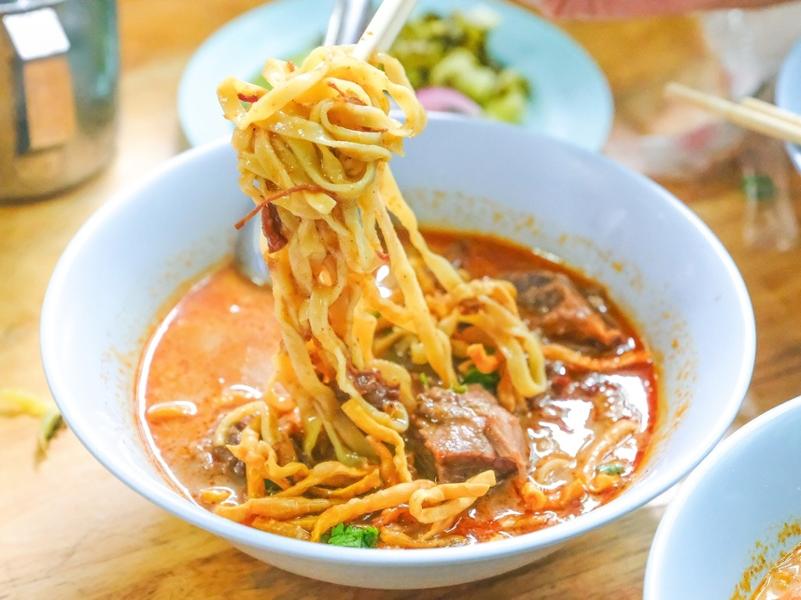
Separate the noodles and set aside about 90 g of noodles (these will be fried later). Cook the remaining noodles in boiling water for about 4-5 minutes: they should remain slightly firm and elastic. It is important not to overcook the noodles as they continue to cook when mixed into the broth. Drain immediately and reserve.
Next, prepare the fried noodles. Plunge the noodles reserved for frying into boiling water for 2 to 3 minutes to soften them slightly.
Drain carefully and pat dry on paper towels to remove excess water (this prevents splattering and ensures perfect crispiness). Heat vegetable oil in a wok over high heat (approximately 350°F). Fry the noodles in small portions for 30 to 45 seconds per side, until they are golden and crispy. Drain on paper towels before serving.
🔎 Remember: The fried noodles should be golden at the moment of serving to maintain all their crunch.
Step 6: Serve the Khao Soi
Use one bowl per person. Pour the boiled noodles in equal portions into each bowl. Pour the curry broth and chicken pieces over the top. Add the fried noodles on top for the crunch.
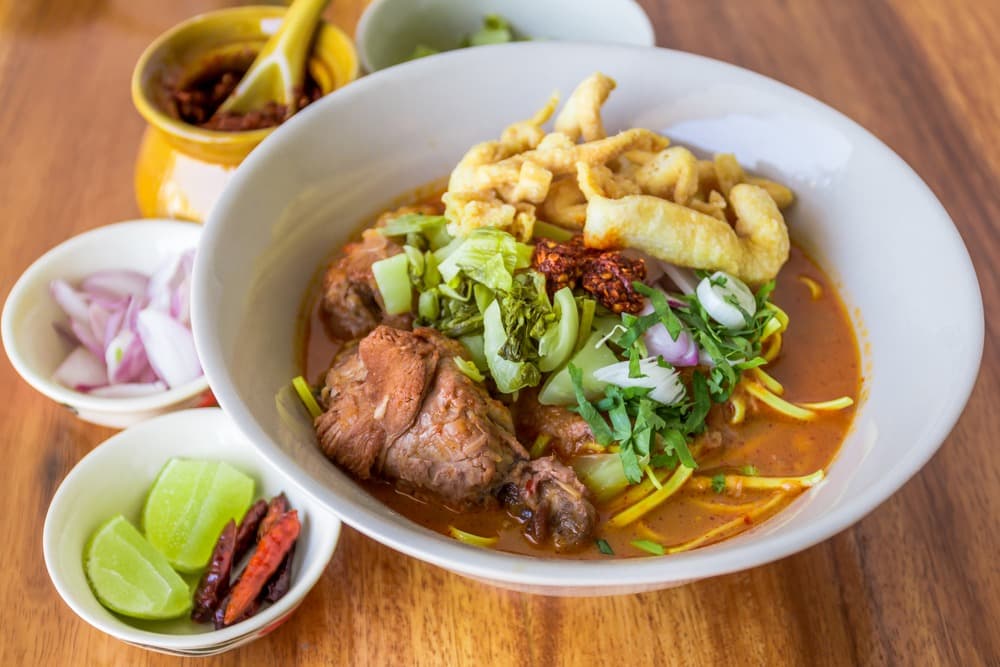
Add freshly chopped coriander and serve immediately. In small bowls on the side, you can also arrange lime wedges, fresh or dried chilies.
Enjoy your meal!
With Sawa Discovery, let us guide you through the flavors, markets and traditions of the Kingdom of Siam. Contact our local teams to organize your tailor-made trip to Thailand and treat yourself to culinary experiences throughout the country.
You can, for example, learn the true recipe for Khao Soi directly during a cooking class in Chiang Mai!
To extend this culinary journey
Also discover:
➜ Mango sticky rice: discover the authentic recipe of Thailand's most famous dessert
➜ Pad Kra Pao: the recipe for the must-try Thai basil stir-fry
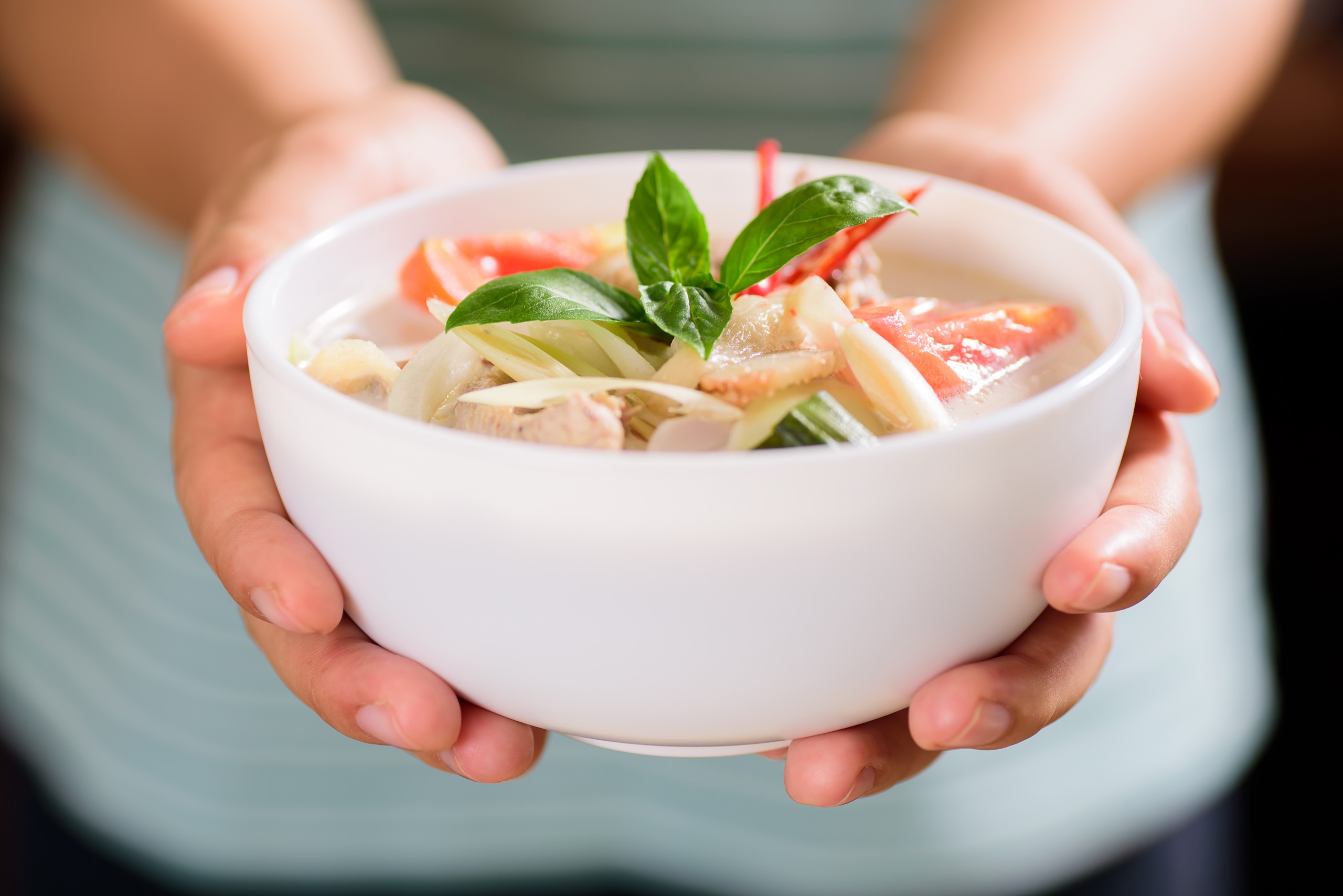
➜ Tom Kha Kai: the recipe for the must-try chicken and coconut milk soup
Frequently asked questions
Yes, you can replace galangal with ginger, use ground turmeric instead of fresh, and omit the shrimp paste for a vegetarian version.
The curry paste keeps for one week in the refrigerator or up to 3 months in the freezer in an airtight container.
You can use fresh tagliatelle or fettuccine as an alternative, adjusting the cooking time slightly.
Images restored from the source website — reposition manually if necessary.