What animals can you see in Thailand?
What animals to see in Thailand? Elephants, monkeys, snakes, tokay geckos, monitor lizards and aquatic wildlife: explore the emblematic species to observe during your stay.
Between tropical rainforest and exceptional marine depths, Thailand is home to extraordinary wildlife that delights animal lovers. But what are the emblematic animals of Thailand you'll be able to observe during your stay? Here are the main ones.
Elephants
The elephant is undoubtedly the most impressive animal you can see in Thailand. Smaller than their African counterparts, Asian elephants are characterized by two domes on top of their heads and smaller ears. Once widely present throughout the territory, the number of Asian elephants is now much lower across the country. Long used as draft animals in forests, pachyderms are also exploited and mistreated for tourism purposes (elephant rides, shows, etc.). An exploitation that has largely contributed to declining numbers in the wild.
You can still see wild elephants in Thailand. If fortune smiles on you, you may encounter them in several national parks during a trek or wildlife safari. Among the best places to see wild elephants in Thailand are:
Khuri Buri National Park,
Kaeng Krachan National Park,
Khao Yai National Park.
You can also encounter elephants in sanctuaries and rescue centers. These facilities are dedicated to saving elephants used in forestry and tourism industries, offering them a new peaceful life while raising public awareness. These sanctuaries thus provide more responsible alternatives for seeing these gentle giants without causing them harm. To see elephants in a refuge in Thailand, we recommend:
Elephant Nature Park in Chiang Mai,
Elephant Haven Thailand in Kanchanaburi,
Wildlife Friends Foundation Thailand in Phetchaburi,
Elephant Sanctuary Phuket,
Bees Elephant Sanctuary in Chiang Mai.
Monkeys
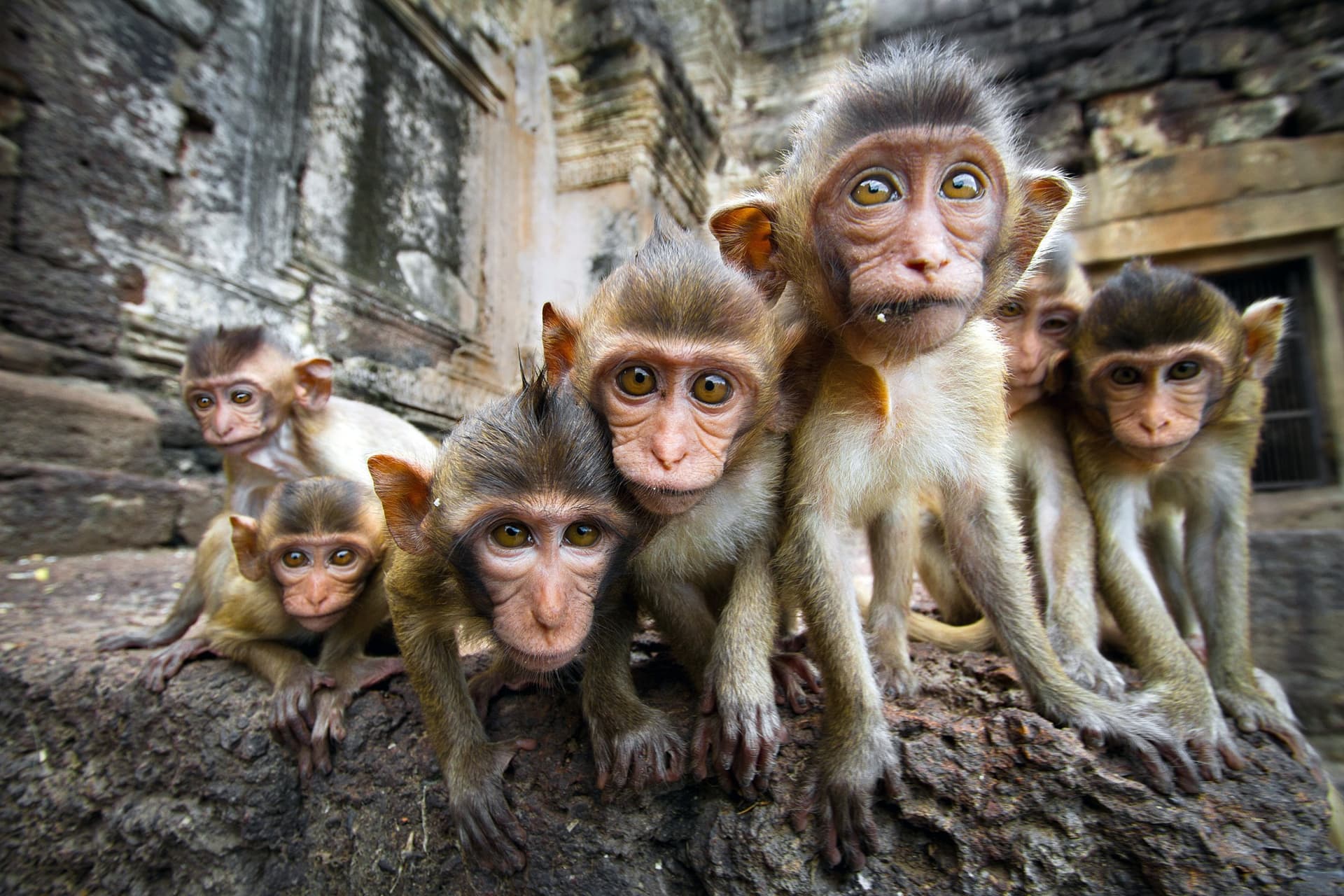
Thai wildlife is home to numerous monkey species, the most common being macaques, gibbons and langurs. These populate wild spaces and national parks (particularly Khao Yai and Khao Sok national parks) but you'll often come across them in cities. This is the case in the famous city of Lopburi, which has literally become the "city of monkeys" due to the impressive number of crab-eating macaques (or long-tailed macaques) that have taken over the area.
While seeing monkeys in the street can be amusing, it's highly recommended to keep your distance. Monkeys remain wild and unpredictable animals that can defend themselves and bite if they feel threatened. Moreover, avoid feeding them because even if you think you're doing the right thing, it makes them more aggressive toward humans. In short, don't try to approach or touch the monkeys you encounter in Thailand—simply observe them from a distance.
Snakes
Thailand is home to many snakes, the most well-known being cobras, vipers, sea snakes, pythons, colubrids, water snakes, wolf snakes, tree snakes, whip snakes, coral snakes, and more. These are more prevalent in the southern region, but you can still encounter them throughout the country, in both rural areas and city centers (particularly during the monsoon season).
That said, don't panic—snake accidents and attacks are extremely rare in the country. In fact, people are more likely to be injured by falling coconuts than by snake bites. To reassure you, know that snakes flee as soon as they detect human presence. Still, remain vigilant when trekking or walking through densely vegetated terrain, and feel free to make noise to scare them away!
Tokay Geckos
Every traveler visiting Thailand keeps a unique memory of these reptiles. Indeed, the tokay gecko is known for its legendary cry (whose sound is similar to its name) that can be heard from about a hundred meters away. This adorable Southeast Asian reptile is one of the largest gecko species. Males can sometimes reach up to 40 centimeters in length! They're recognizable by their large size, powerful jaw, and gray-blue body with white, red, or orange spots.
The gecko typically inhabits tropical forests but is frequently found on the walls of dwellings and sometimes even inside homes. It's a territorial animal that rarely moves from its habitat. It's not dangerous (though it's best to avoid getting too close to prevent bites) and even proves to be an excellent mosquito control, as it feeds mainly on insects. This is precisely why it often prowls near exterior lights where insects are plentiful.
Monitor Lizards
Here's another fascinating animal you can see in Thailand: the monitor lizard. This large reptile can reach 3 meters in length and weigh up to 60 kilograms. It's a semi-aquatic animal equally comfortable in water and on land. You'll find them near water sources, in both rural areas and city centers, notably in Bangkok where they're spotted in the city's numerous parks or along the Chao Phraya River.
With their small dinosaur-like appearance, they can be intimidating. Nevertheless, they're harmless animals that rarely attack humans. However, remain cautious as they can defend themselves if they feel threatened and have no means of escape. Not only can a bite be painful, but it can also lead to infections due to the numerous bacteria they carry.
Aquatic Wildlife
After terrestrial wildlife comes Thailand's aquatic fauna. From the Andaman Sea to the Gulf of Thailand, Thai marine floors host an extraordinary variety of species. During a snorkeling or scuba diving excursion, you'll discover countless ultra-colorful corals, nudibranchs, thousands of tropical fish (clownfish, parrotfish, giant grouper, barracudas, batfish, jacks, triggerfish, remoras) and larger specimens like whale sharks, reef sharks, manta rays, and sea turtles.
To admire aquatic wildlife, here are Thailand's best diving and snorkeling spots:
Koh Tao,
Sail Rock near Koh Phangan,
The Similan Islands,
The Surin Islands
Frequently asked questions
The dry season (November to April) is ideal because animals gather near water sources and the less dense vegetation makes observation easier.
Yes, when you respect safety guidelines: maintain distance, don't feed animals, and follow the recommendations of local guides.
Prices range from 1,500 to 3,500 baht per person depending on duration and activities included at ethical sanctuaries.