Kae-Sa-Luk, the Traditional Art of Fruit Carving
Kae-Sa-Luk transforms fruits and vegetables into genuine works of art. Explore the origins of this Thai tradition and the role it still plays today.
During a trip to Thailand, you'll likely encounter sculptures carved from fruits and vegetables. This custom has a name: Kae-Sa-Luk. Where does this tradition come from? On what occasions do Thai people carve fruits and vegetables? Here's more about these ephemeral works of art...
What is Kae-Sa-Luk?
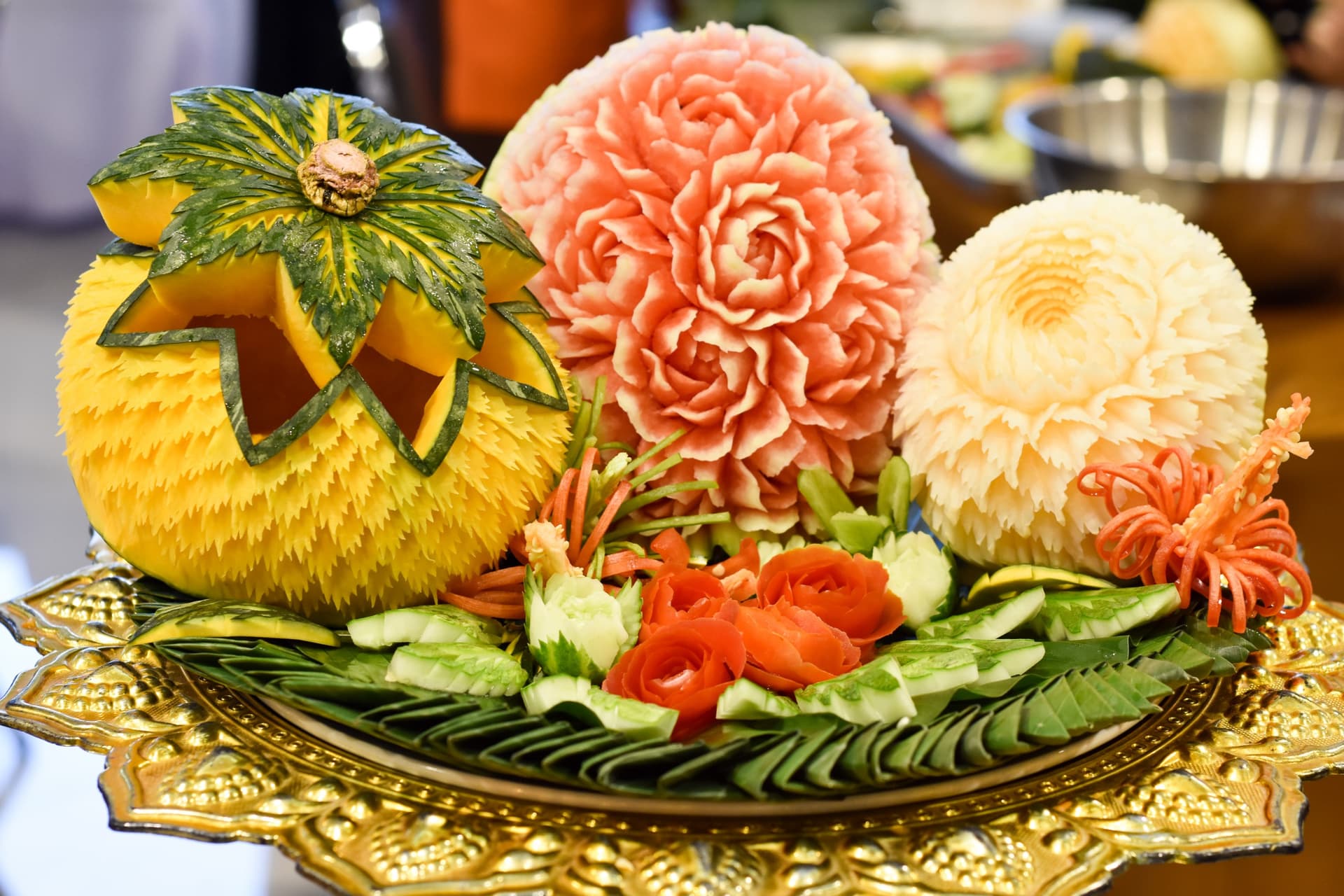
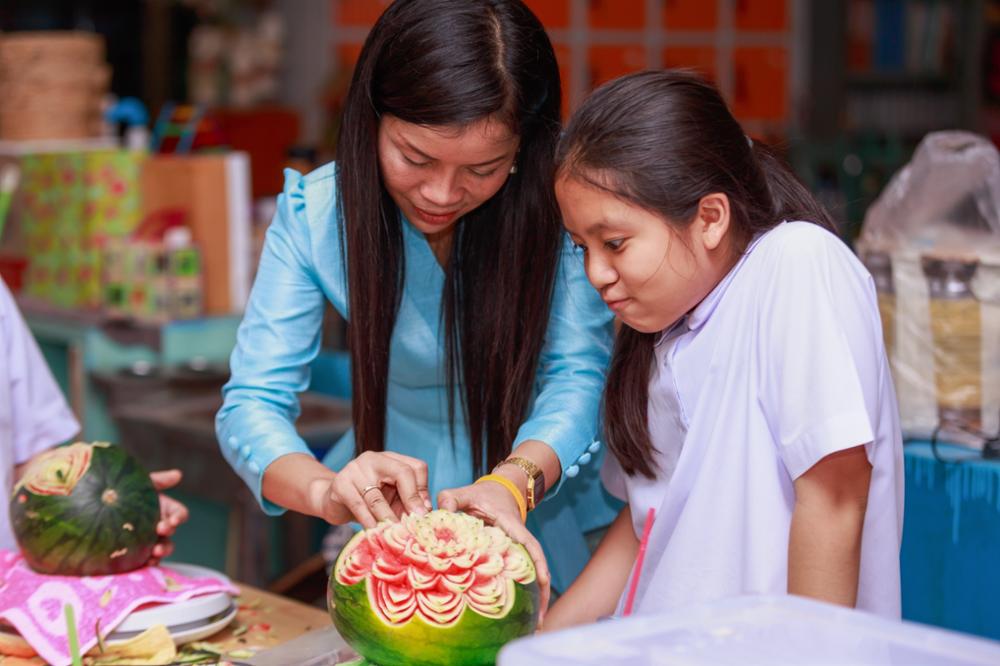
Kae-Sa-Luk is a traditional Thai art form that involves carving fruits and vegetables into ephemeral works of art. Fruits such as melons, watermelons, papayas, oranges, mangoes, and strawberries are used, along with vegetables like cucumbers, carrots, and turnips.
Kae-Sa-Luk sculptors cut and carve fruits and vegetables into multiple forms. Originally, these were primarily representations of flowers and scrolls. Today, fruits and vegetables also take the shape of animals and mythological creatures.
Of course, these sublime sculptures are not meant to last. Generally, they endure for only one to two days. To preserve them and prevent the colours from fading, artists dip the Thai fruits in a mixture of water and lemon juice.
The Origins of Kae-Sa-Luk
Like many traditions, the origins of Kae-Sa-Luk are debated. Several theories compete regarding the earliest fruit and vegetable carvings in the world.
Thai Origins of Kae-Sa-Luk
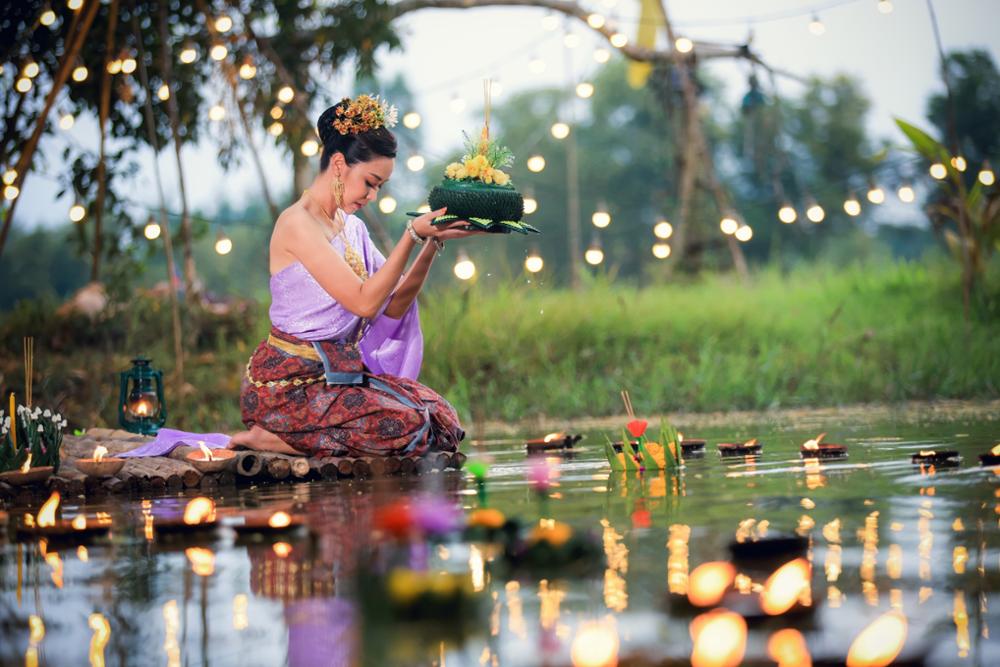
In Thailand, Kae-Sa-Luk is believed to date back to the Sukhothai Kingdom (1238-1438) and is associated with the Thai festival called Loi Krathong. Indeed, it was during this traditional celebration in 1364 that Nang Noppamart, a servant of King Phra Ruang, decided to decorate her Krathong with a flower and a bird carved from a vegetable. This initiative impressed the king so much that he ordered all the women in his kingdom to learn this sculptural art.
Practical Info
What is the Loi Krathong Festival?
As a reminder, Loi Krathong (also called Loy Krathong, or the Festival of Lights) is a traditional Thai celebration inspired by the Hindu festival of Diwali. This celebration honours the goddess of water. In Thailand, it is primarily a ceremony honouring the Buddha.
For the occasion, Thai people create small rafts from banana leaves (called kratong) on which they place offerings (candles, incense, flowers, sweets, etc.). The rafts are then placed on rivers and waterways at nightfall. Loi Krathong takes place each year between October and November, according to the lunar calendar, on the full moon of the 12th month.
Chinese Origins of Fruit and Vegetable Carving
According to others, Kae-Sa-Luk may have originated during the Tang Dynasty (705-907) and Song Dynasty (960-1279) in China. According to this version, fruit and vegetable carving came from Emperor Tang Zhongzong who, after regaining power, offered numerous offerings to the gods to thank them. Among the offerings were the famous fruit and vegetable sculptures depicting mythological animals such as dragons.
Mukimono, Fruit and Vegetable Carving in Japan

Fruit and vegetable carving also exists in Japan under the name mukimono. Here too, the origins of this art are debated. The earliest fruit carvings in Japan are believed to date from the Edo period (1603-1868), when they were used to enhance plates during an era when food was served on unglazed and therefore undecorated pottery.
Kae-Sa-Luk Today
In Thailand, Kae-Sa-Luk is now part of the national and tourism heritage. Thai people continue the tradition to offer gifts to monks but also for preparing offerings during important events (such as ceremonies and weddings) and of course during the famous Loi Krathong festival.
Kae-Sa-Luk is taught in schools from age 11 onwards. It is also a distinct artistic discipline in art schools, on the same level as painting. Numerous festivals and competitions are dedicated to this tradition. Indeed, fruit and vegetable carving competitions are organised annually throughout Thailand.
Frequently asked questions
You can observe Kae-Sa-Luk during the Loi Krathong festival, in temples during offerings, in traditional markets, and at festivals dedicated to this art form.
Kae-Sa-Luk sculptures are ephemeral and generally last only one to two days, even when soaked in a mixture of water and lemon juice for preservation.
Yes, several schools and workshops in Thailand offer Kae-Sa-Luk classes for visitors wishing to discover this traditional art form.
The most commonly used fruits are melons, watermelons, papayas, oranges, and mangoes, as well as vegetables such as cucumbers and carrots.