Walking Tour Along Bangkok's Klongs
Explore Bangkok's klongs through two walking routes along stilt houses, river heritage, street art, night markets, and more genuine sides of the capital.
Traversed by the Chao Praya River, Bangkok is characterized by numerous canals that earned it the nickname "Venice of the East" or "Venice of Asia." These many canals, called klongs, have shaped the city's history and development. We invite you to discover Bangkok's klongs through two walking itineraries.
A few words about Bangkok's klongs...
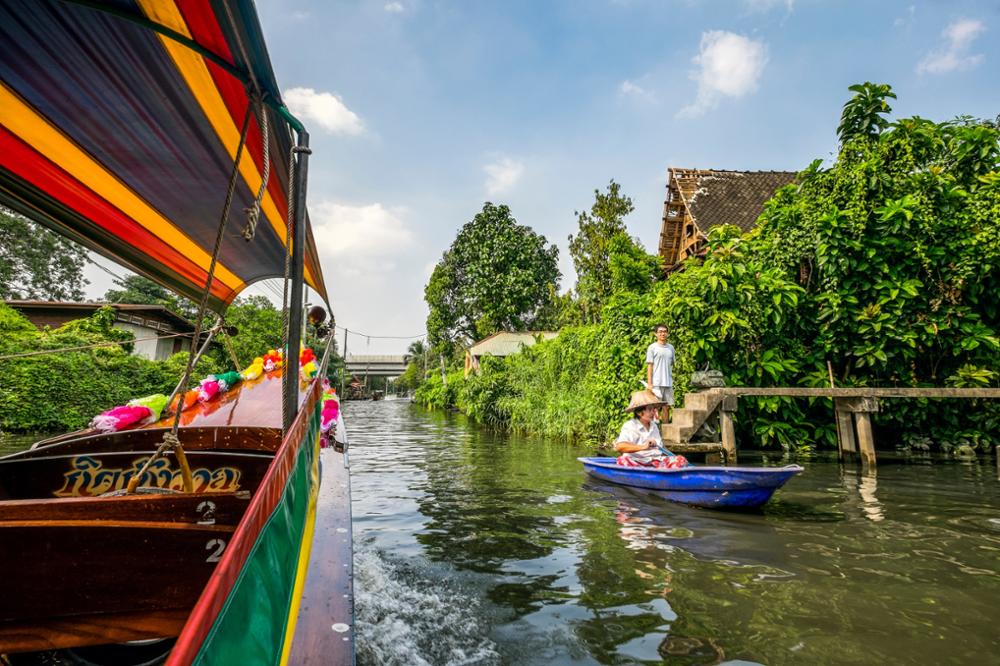
Before Bangkok's modernization, the Chao Praya River served as the city's primary gateway. For centuries, Bangkok's canals were the only means of transport, whether for goods or people. Beyond transportation, the canals were also major commercial hubs (enabling the famous floating markets to flourish) and served as drainage systems.
Until the 19th century, Bangkok had more canals than roads. This speaks to how long the city's residents lived on the water. In the 1970s, many klongs were abandoned in favor of new road construction. The city's modern expansion led to the transformation of numerous canals.
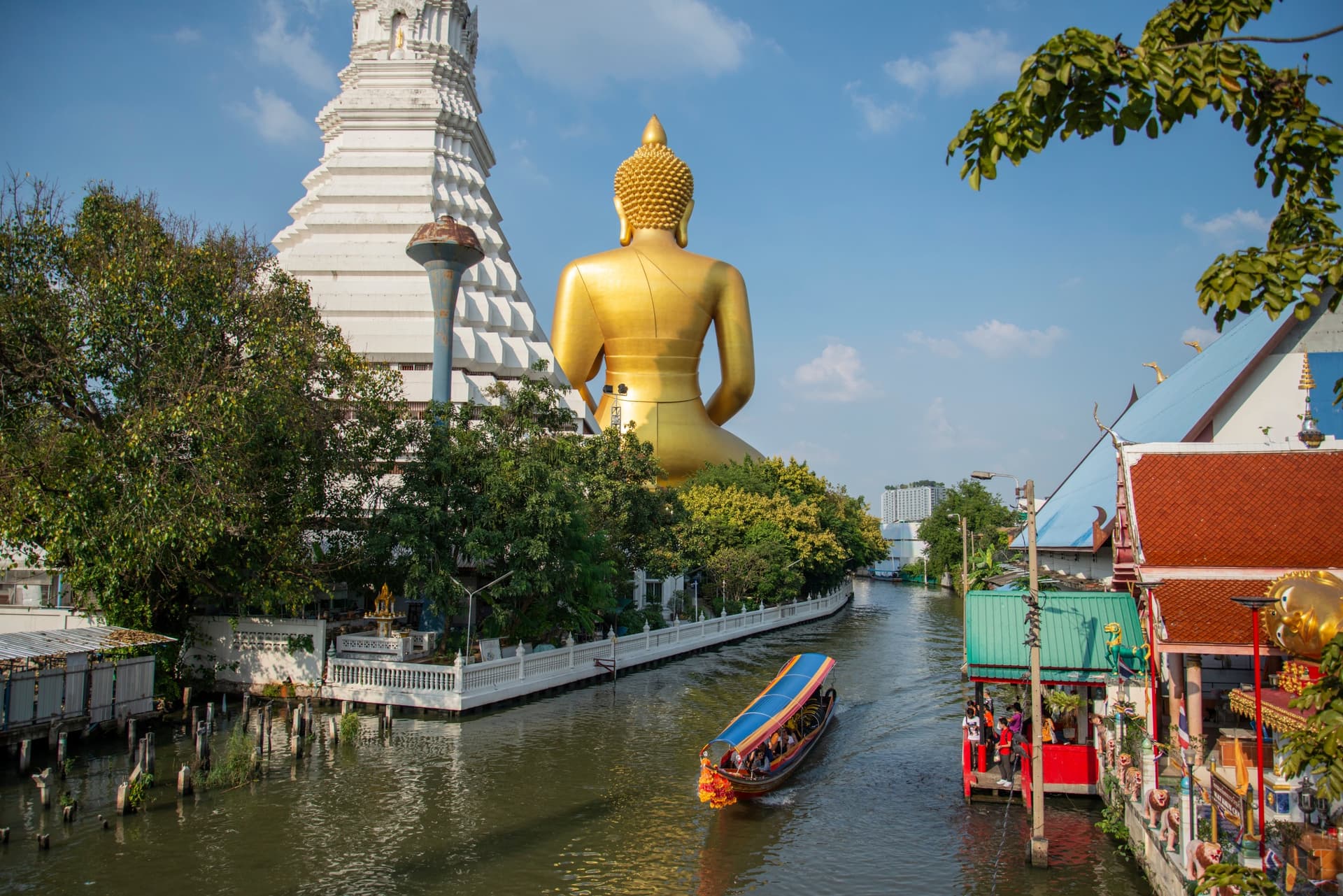
Today, while still used as transport routes for goods and people—with countless shuttle boats, ferries, and traditional long-tail boats—Bangkok's klongs are dwindling in number.
Walking along Bangkok's klongs
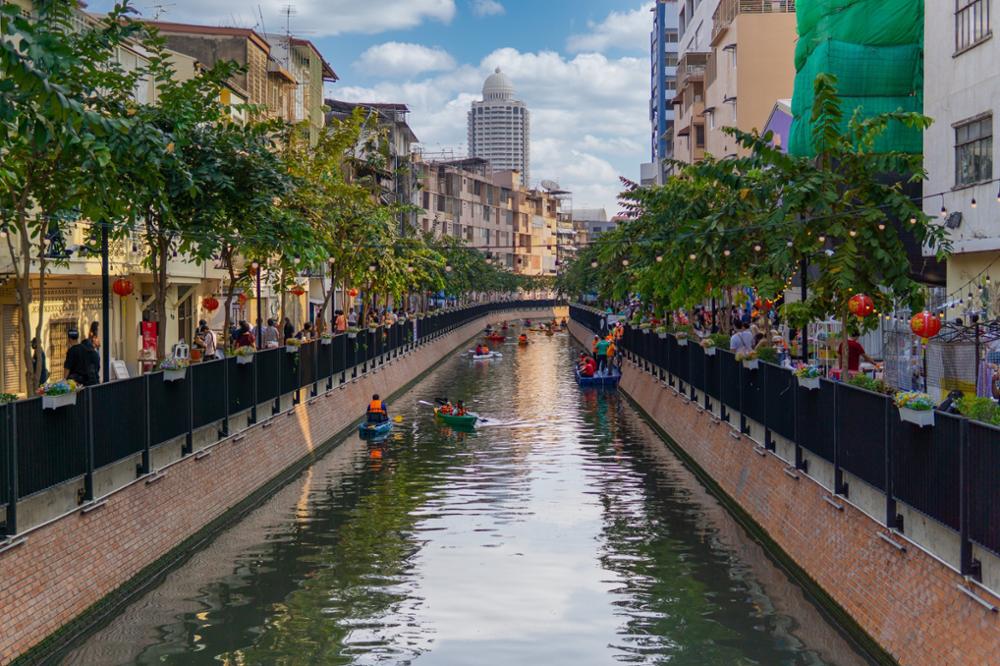
Here are 2 walking itineraries to discover Bangkok's klongs:
Jim Thompson House canal walk, a stroll along the klongs to discover an authentic Bangkok
While klongs are no longer part of most Bangkok residents' daily lives, some locals have preserved their river lifestyle. Walking along the canals, you'll glimpse what the city once was: a typical, authentic Bangkok.
We recommend a walk along the San Saeb Canal. Nestled in the heart of the modern city, this canal transports you back in time and makes you forget the urban hustle.
You'll discover wooden stilt houses, typical of old Bangkok. The neighborhood was long known for its silk factories. Indeed, it's home to the famous Jim Thompson House, now a museum. Across from it, you can still see the wooden houses that belonged to the weavers with whom the businessman collaborated.
To take this short walk along the klongs, head to the foot of the Hua Chang Canal bridge and follow the San Saeb Canal. The path is short—just 1.6 km.
Practical Info
What is Jim Thompson House?
The Jim Thompson House was built from the 1950s onward by American businessman and former OSS agent Jim Thompson. He is renowned for reviving Thailand's silk industry and was a passionate art collector. He assembled an impressive collection of Southeast Asian art: Buddhist statues, traditional paintings, Chinese porcelain, paper prints, woodcuts, looms, jewelry, and antiques.
By renovating six traditional Thai houses, he commissioned this impressive teak mansion to showcase his many artworks, which visitors can discover today at the museum.
Ong Ang Canal, a modern klong filled with street art

As mentioned, many klongs were abandoned in favor of new roads. Such is the case of Ong Ang Canal, located between Pahurat, Bangkok's Indian quarter, and Chinatown.
Constructed in the 1780s, this canal served as a trading and commerce route. It was primarily known for its pottery market, which gave it its name ('Ong Ang' means pottery). With urban modernization, the canal fell into disrepair, earning a reputation as one of the city's dirtiest canals.
Recognizing this problem, authorities decided in 2015 to undertake development work to give it a new life and appearance. After cleaning the canal, developing the banks, and restoring the bridges, the city inaugurated the renovated canal in 2020.
Today, Ong Ang Canal is the perfect place to stroll along the klongs and discover stunning street art. Urban artists have created magnificent murals depicting neighborhood scenes. Among the most renowned artists who have worked here are Alex Face and Mue Bon.
Beyond street art, the canal is also famous for its night market, held on the banks every weekend (Friday, Saturday, Sunday from 4 pm to 10 pm).
Practical Info
Seeing Bangkok's Klongs by Boat:
To explore further, we highly recommend taking a boat tour to discover Bangkok's klongs. You can plan a boat ride in the Thonburi neighborhood, renowned for its old wooden stilt houses. You can make a stop at Wat Arun temple and visit the flower market. A boat ride on the klongs is also an opportunity to discover Bangkok's must-see floating markets.
Frequently asked questions
The San Saeb Canal route is 1.6 km and takes about 1 hour. For Ong Ang Canal, allow 45 minutes.
Walks along the canals are free. Only Jim Thompson House admission is paid.
Avoid the hottest hours (11 am–3 pm). Opt for early morning or late afternoon instead.