Phi Ta Kon: Thailand's Ghost Festival Folklore
Phi Ta Kon: Thailand's Ghost Festival Folklore
Shared by Laotians and Isan natives alike, the Phi Ta Kon celebration—sometimes called the Ghost Festival—draws thousands of visitors to northwestern Thailand. Here's what you need to know.
Shared by Laotians and Isan natives alike, the Phi Ta Kon celebration—sometimes called the Ghost Festival—draws thousands of visitors to northwestern Thailand. Here's what you need to know.
Thais are renowned for their jovial spirit and zest for life, and travelers discovering Isan will find no reason to dispute this reputation. In this northeastern region, in the village of Dan Sai to be precise, a three-day Thai festival honoring Buddha energizes crowds between March and July. Villagers don vibrant costumes and ghost disguises. On this occasion, the deceased join the living to commemorate Prince Siddhârta's return following an extended journey. Dancing, animist rituals, mask processions, and spiritual reverence define Phi Ta Kon—an unmissable event for experiencing authentic festival culture in Northern Thailand.
When and Where Does Phi Ta Kon Take Place?
The Phi Ta Kon festival occurs once yearly in Dan Sai, a small hillside village in Loei Province, an Isan region bordering Laos. The festival's name is somewhat misleading. Phi Ta Kon, or the "Ghost Festival," refers only to the exuberant dance that opens the celebration. The entire event is actually called Boun Bhavet. It spans three days, with its opening date determined by the lunar calendar—typically falling between March and July.
Beliefs and Legends Behind the Festival
Like all Thai festivals, Phi Ta Kon draws roots from Buddhist tales. It commemorates an episode from Buddha's earthly life—when he was known as Prince Vessantara Jataka—recounting his departure from his father's kingdom on a long journey. Jataka embodied compassion, and villagers cherished him deeply. Imagine their astonishment when the presumed-dead prince returned from exile! Singing erupted, dancing began, and the celebration grew so frenzied it awakened the dead from their tombs.
Originally a ritual celebration of Buddha where the deceased joined the living in fraternal dance, Phi Ta Kon later absorbed animist traditions unique to Loei Province. Evidence lies in invocations to rain and harvest spirits.
Festival Highlights
Culture enthusiasts and authenticity seekers will treasure every moment of this ghost festival during an Isan journey. The event unfolds over three days.
Day 1: The Ghost Festival (Wan Ruam)
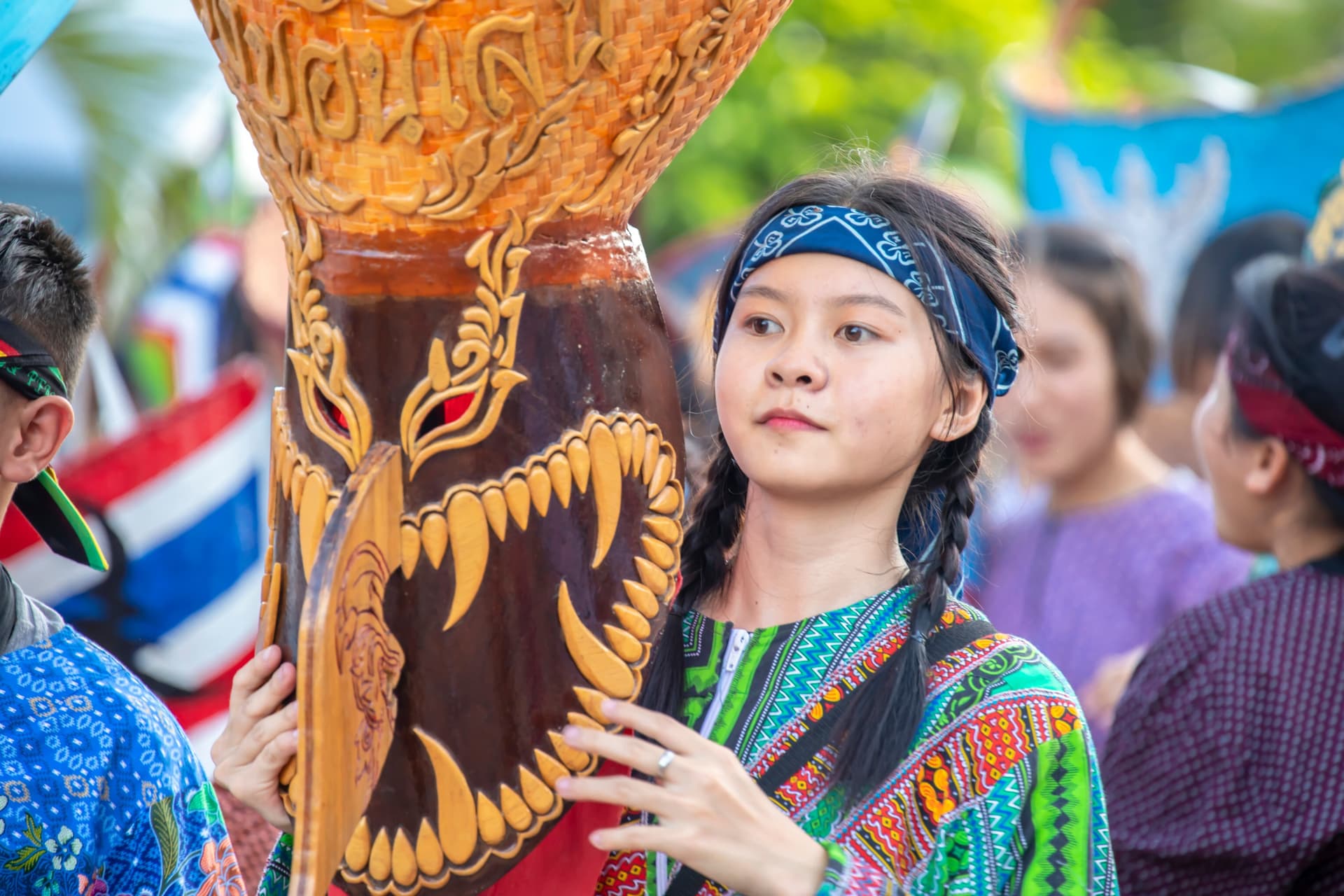
This is the festival's most significant day. Ghost dancers arrive in the village wearing billowing trousers and vividly colored shirts. Masks feature exaggerated caricature details: bulging eyes, noses hanging below mouths, and buffalo horns atop heads. While traditional dance honors Buddha, it also invokes the spirit of Phra Pa Khut, a venerated former Buddhist monk. Local belief holds he protects the Mun River, and his blessing ensures bountiful harvests.
The dance continues with a solemn procession to Wat Chai Phon, the village's principal sanctuary.
Day 2: A Rocket Competition (Rocket Festival)
The day begins with a parade of truly extraordinary masks. Costumes are crafted from local materials: steamed sticky rice balls, palm leaves, carved wood, and more. To thrill spectators, participants attach jingling bells to their belts and display wooden phallic symbols—fertility and abundance emblems.
Folkloric music accompanies the parade. Next comes rocket launching to win favor from nature deities, with the goal of bringing rain during the upcoming agricultural season.
Day 3: Sacred Gathering at Wat Chai Phon
The festival's final day takes on greater solemnity. The faithful gather at the village temple to pray and listen to Buddhist monks' sermons.
Practical Information
How to Reach the Ghost Festival?
Air travel isn't the most practical option for reaching Dan Sai. Phitsanulok Airport, serving Loei Province, lies two hours' drive from the village and offers limited weekly flights. Udon Thani Airport is three hours away by car. Ground transportation proves more convenient. Daily bus services depart for Dan Sai from Phitsanulok and Loei bus stations.
- from Phitsanulok
Dan Sai sits 144 km northeast of Phitsanulok. Buses operate between 12 p.m. and 4 p.m., with two departures daily.
- from Loei
Dan Sai is just 89.4 km from Loei. No direct bus connects the village to the provincial capital, but buses stop there three to four times daily. Travel time is one and a half hours.
Precautions
Though Phi Ta Kon doesn't enjoy the same renown as other Thai festivals, it attracts many Thai visitors. Advance accommodation booking is strongly recommended.
Traveling to Loei between March and July means preparing for intense heat—temperatures sometimes reaching 35°C. Pack rain gear if visiting mid-April or afterward.
What to See and Do Near Dan Sai?
A stay in Dan Sai invites a delightful wine-themed exploration. The village is renowned for wine production. Vineyard walks, discovery of fermentation processes, and tastings of local vintages offer perfect activities during the festival's three days!

Photos
Give it a go!
Our local experts arrange this activity for you.