
Table of Contents
- What extreme hikers are really looking for
- Hua Shan, the ascent that defies the void in China
- Huayna Picchu, the vertical sentinel of Machu Picchu
- Half Dome, California granite and its taut cables
- Caminito del Rey, the suspended Andalusian trail
- The Drakensberg Amphitheatre, African stone wall
What extreme hikers are really looking for
Within the large family of walkers, there are those who choose the slow pace of marked trails and those who dream of something else: a narrow passage, a plank over the void, a cable as the only railing. These out-of-the-ordinary routes are not simply about seeking an adrenaline rush. They often tell a story — that of an ancient pilgrimage, a forgotten industrial site, a summit that defies verticality. Here are five routes whose reputation is well-established, to be approached with clear-headedness, appropriate equipment and a genuine awareness of one's limits.
Hua Shan, the ascent that defies the void in China
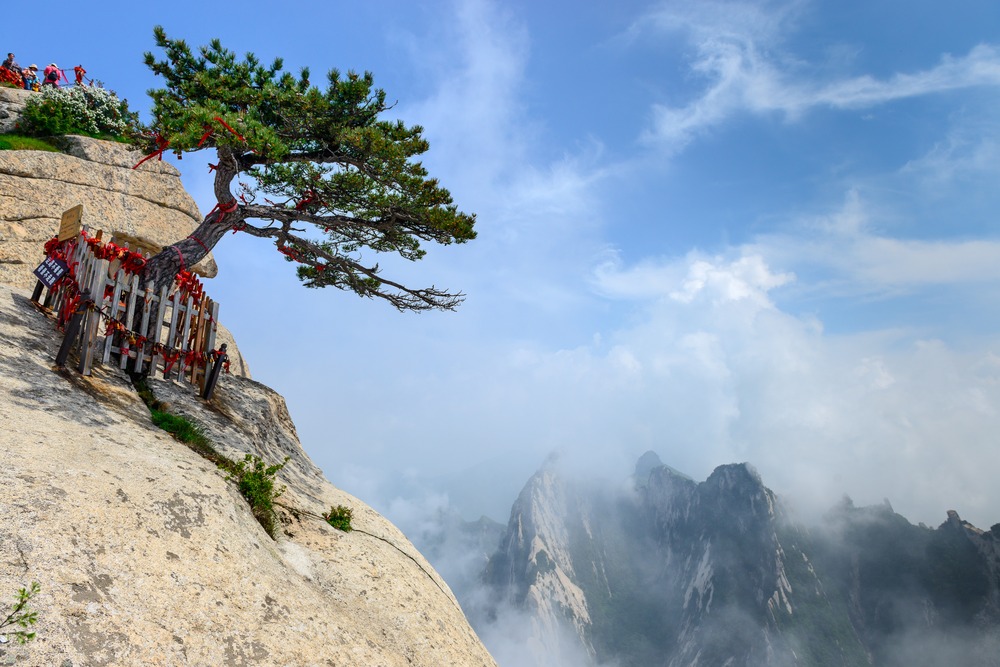
In the heart of Shaanxi, the sacred mountain of Hua Shan belongs to the pantheon of China's five Taoist peaks. At 2,200 metres, a temple stands in overhang, accessible by a stretch of trail that has become legendary: a few wooden planks fixed to the cliff face, chains sealed into the rock, and the void below.
No guardrails, no safety nets: security depends on the harness, concentration and the quality of grip. It's best to set out in the dry season, when the rock is not slippery, and choose sturdy shoes. For travellers who wish to see the summit without venturing onto this passage that has become emblematic on the internet, several alternative trails have been developed and a cable car now leads close to the main peaks.
Huayna Picchu, the vertical sentinel of Machu Picchu
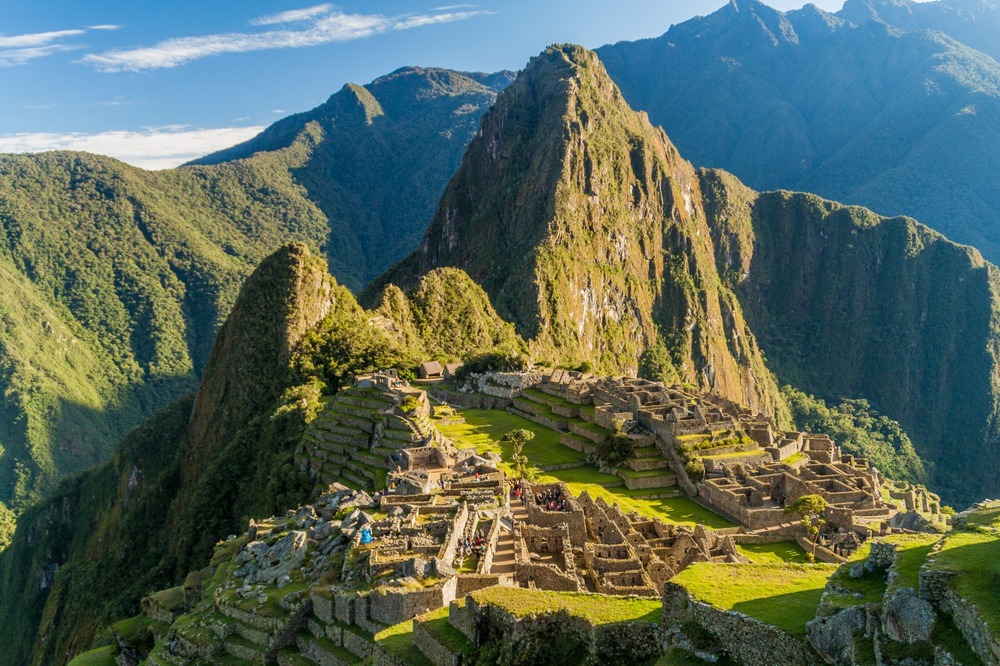
It is the green pyramid that stands in the background of every Machu Picchu photograph. Huayna Picchu reaches 2,720 metres and its ascent, limited to a few hundred visitors per day, requires approximately one hour of sustained effort. The trail, carved by the Incas themselves, becomes so narrow and steep in places that one must use cables fixed in the stone and progress over steps eroded by centuries.
The panorama richly rewards the effort: the Inca city spread out below, the Urubamba valley winding in the distance, and the rare sensation of being suspended between sky and history. For those prone to vertigo, the ascent of Machu Picchu Mountain is recommended instead — longer but much wider and more reassuring.
Half Dome, California granite and its taut cables
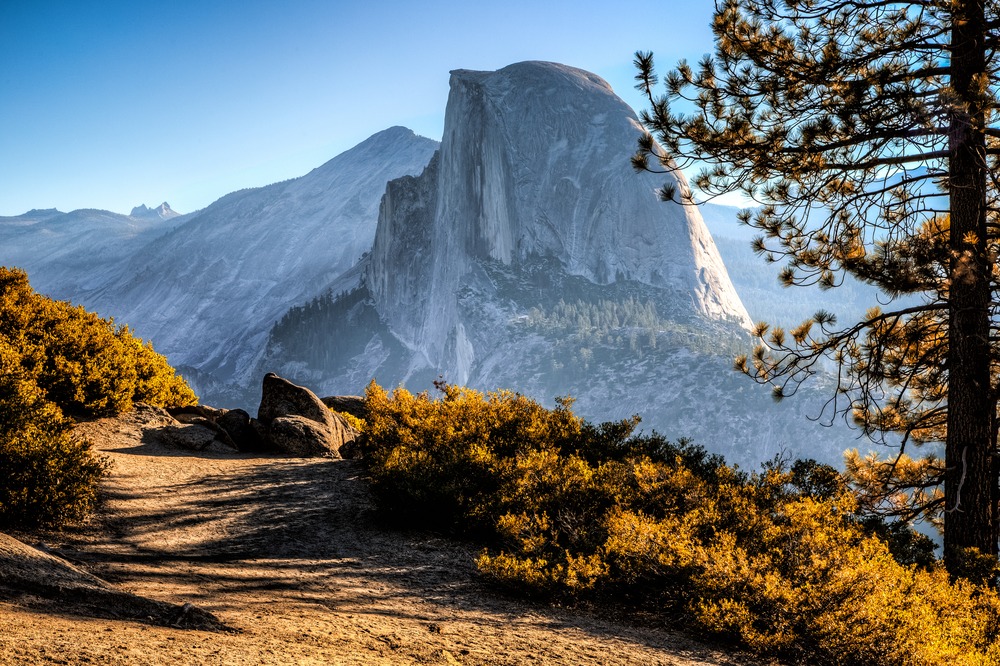
In Yosemite National Park, California, Half Dome raises its granite dome sliced clean, as if it had been cut with a knife by a glacier. The last 400 metres of the ascent constitute the trial: two parallel metal cables, sealed into the rock, along which one must haul oneself almost vertically, the body leaning into the slope.
The physical effort is real — arms, shoulders, calves — and the weather, unpredictable in high season, can turn the stone into a skating rink. Access is regulated by a permit system distributed each spring. Gloves with rough palms, shoes with good grip and careful reading of thunderstorm forecasts are part of the minimum preparation.
Caminito del Rey, the suspended Andalusian trail
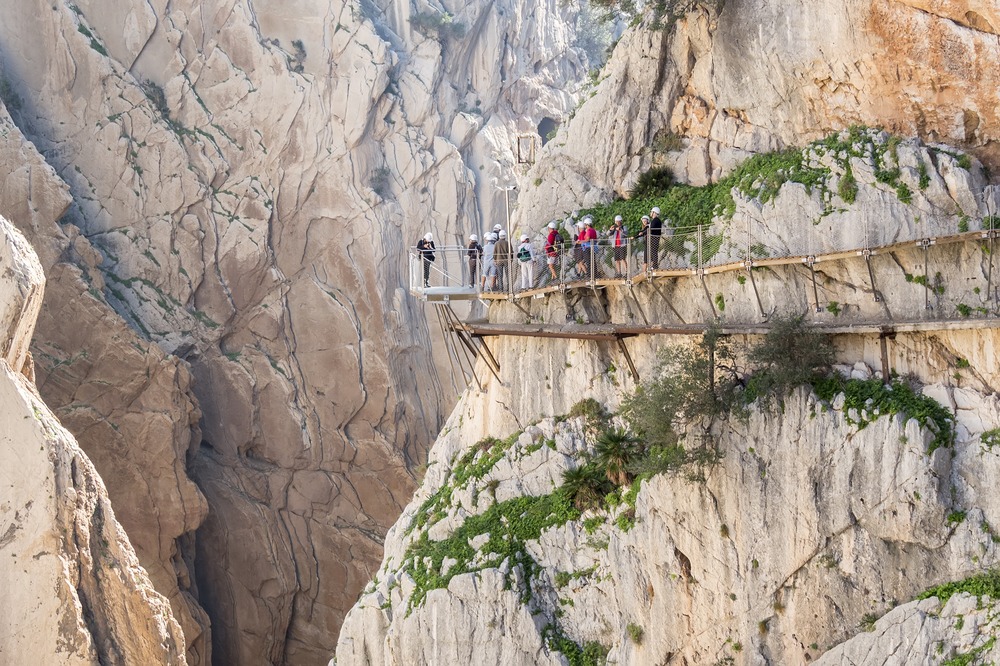
Built between 1901 and 1905 in the province of Malaga, Caminito del Rey was never designed as a recreational route. This one-metre-wide footbridge, clinging to the cliffs of Desfiladero de los Gaitanes for nearly 3 kilometres, served to connect two hydroelectric dams and allow workers to inspect the pipes.
For decades, its state of disrepair had made the trail one of the most dangerous in Europe — a few missing planks, reinforcing iron to step over, a hundred-metre precipice at the foot. Restored and reopened to the public in 2015, the trail remains an aerial experience, travelled with a helmet on the head and a harness around the waist. The thrill is real, but modern safety has transformed the epic into a controlled vertiginous walk.
The Drakensberg Amphitheatre, African stone wall

In the north of the Drakensberg, South Africa, the Amphitheatre deploys five kilometres of nearly straight basalt cliff, one of the most impressive rock faces on the continent. The hike leading to the plateau of Mont-aux-Sources, at over 3,000 metres, ends with two long metal ladders bolted into the rock — a technical passage that solicits arms as much as breath.
At the summit, another spectacle awaits the hikers: the Tugela River launching itself into the void in a waterfall of more than 900 metres high, among the highest in the world. As is often the case at altitude, the weather changes quickly: one sets out early, carries a windbreaker, keeps a margin to descend before the clouds cling to the cliff.

