Vavavato, the secret mountains: trek through unknown land from the Ankaratra to the rice paddies of Betafo
Six days hiking in a forgotten pink granite massif off the maps, between altitude lakes, volcanoes and isolated hamlets, less than 150 km from Antananarivo.
Duration
8 days
From
€680/pers.
Ideal seasons
Apr, May, Jun, Jul, Aug, Sep, Oct
Style
Expeditions
Comfort
budget
Travelers
Solo, With friends, Couple
The spirit of travel
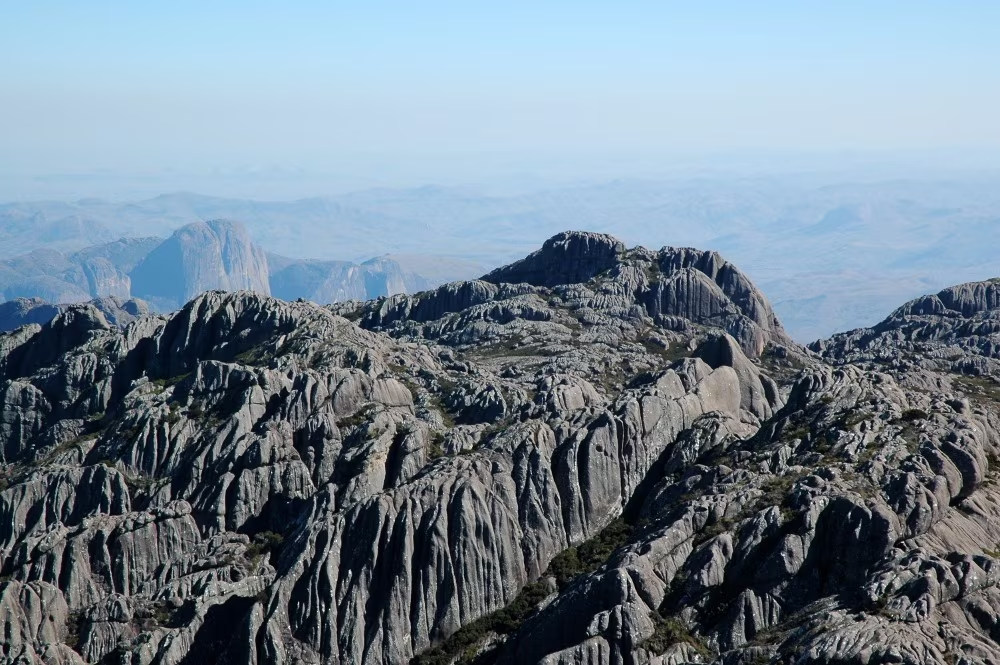
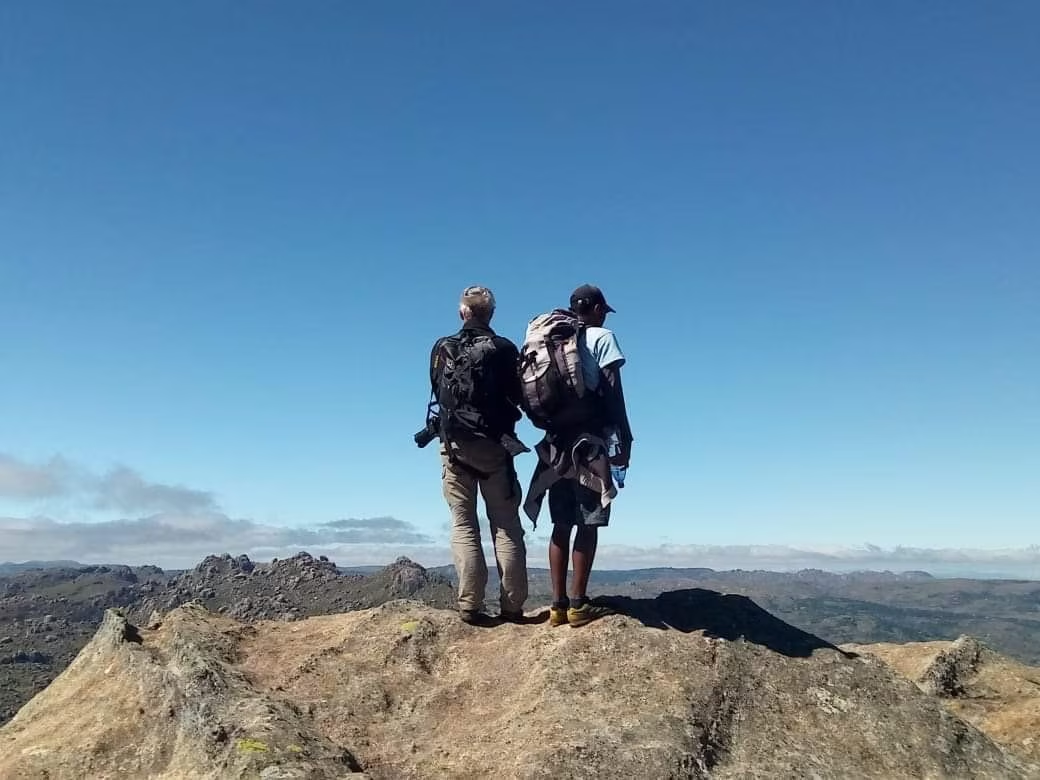
At the edge of the Ankaratra, less than 150 km from Antananarivo, lies a mountain range that almost no one explores: the Vavavato, which the local people also call the Mony Mainty. The crystalline bedrock outcrops everywhere, and its chaos of pink granite, its ridges and its stepped lakes create an very alpine setting, which is no less impressive than the Andringitra massif.
For six days, we hike at around 2,000 meters altitude, from the balconies of the Ankaratra to the rice paddies of Betafo: volcanoes, a myriad of lakes, jagged summits, cultivated valleys and isolated hamlets succeed one another, without roads or passable tracks.
The massif is inhabited by a mountain people who rarely venture down into the valleys of the Highlands. Their dispersed habitat, their herds of zebu and their rice-fish farming lakes tell of another way of living, in near self-sufficiency. Ancient cults remain very present here, and the places retain much of their mystery: when seeking documentation, we found only a simple mention in a 1914 French military document.
This journey is made with a team of porters, a cook and a trekking guide who know the mountain. During the trek, the team sorts the bivouac waste into colored bags and carries it back down the mountain; a bonus is added to their pay for this work, as well as for setting up the tents and helping in the kitchen, where we train the assistants.
Intermediate level: 4 to 6 hours of hiking per day, often off-trail, with regular climbs and descents. Nights are cold at this altitude, and very cold from June to August: we arrange additional porters then, but a good sleeping bag is essential.
Season: April to end of October. Each departure ends the day before a departure of the "Fabulous trekking in the north of Makay", to chain the two treks together.
The stages of your journey
Highlights
Day-by-day itinerary
From Antananarivo to Lake Itasy
We leave Antananarivo towards the west. The road crosses the rice plain of the capital, then the typical villages of the Highlands, with their red brick houses, their granaries and their terraced rice fields. Gradually, large volcanic cones appear on the horizon: we enter the Itasy region.
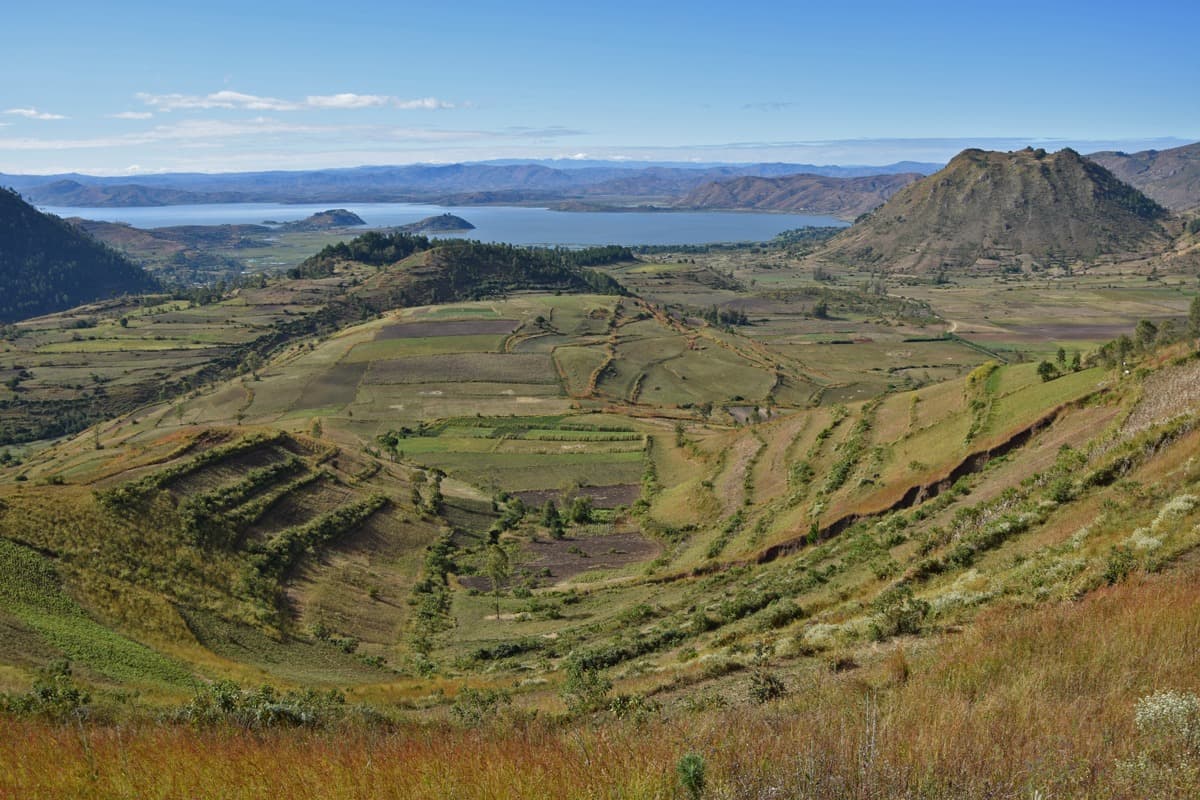
Itasy is a set of several dozen recent volcanoes on a geological timescale. Their lava flows blocked the valleys and gave rise to Lake Itasy, one of the largest in Madagascar. The volcanic soils are fertile, and crops climb the slopes.
Late in the morning, we arrive in Ampefy, a small town nestled on the shore of the lake. After lunch, free time, we set off for an easy walk along the banks. The path crosses hamlets of fishermen and cultivators: pirogues pulled up on the shore, nets drying, rice fields that come to an end at the water's edge. This first walk allows us to find our rhythm and soak up the very peaceful atmosphere of a region rarely visited.
In the late afternoon, the raking light on the lake and on the volcanic cones is particularly beautiful. We return to our hotel in Ampefy, where we meet the team that will accompany us during the trek.
At dinner, our guide presents the itinerary for the next few days. The Vavavato are a granite massif very rarely visited, away from trekking regions. We will walk there for five days, in bivouac, around 2,000 meters altitude.
We check together the necessary equipment for the rest of the journey: warm sleeping bag, clothing for cool evenings, headlamp, already-worn hiking shoes and sun protection. Most of the baggage travels with the porters; everyone keeps with them a small backpack for the day, with water and a warm garment.
This first day is intentionally quiet. It allows you to recover from the journey and prepare for the mountain, in the calm of Lake Itasy.
Road: approximately 120 km, 2 h 30. Walk: 2 hours, easy.
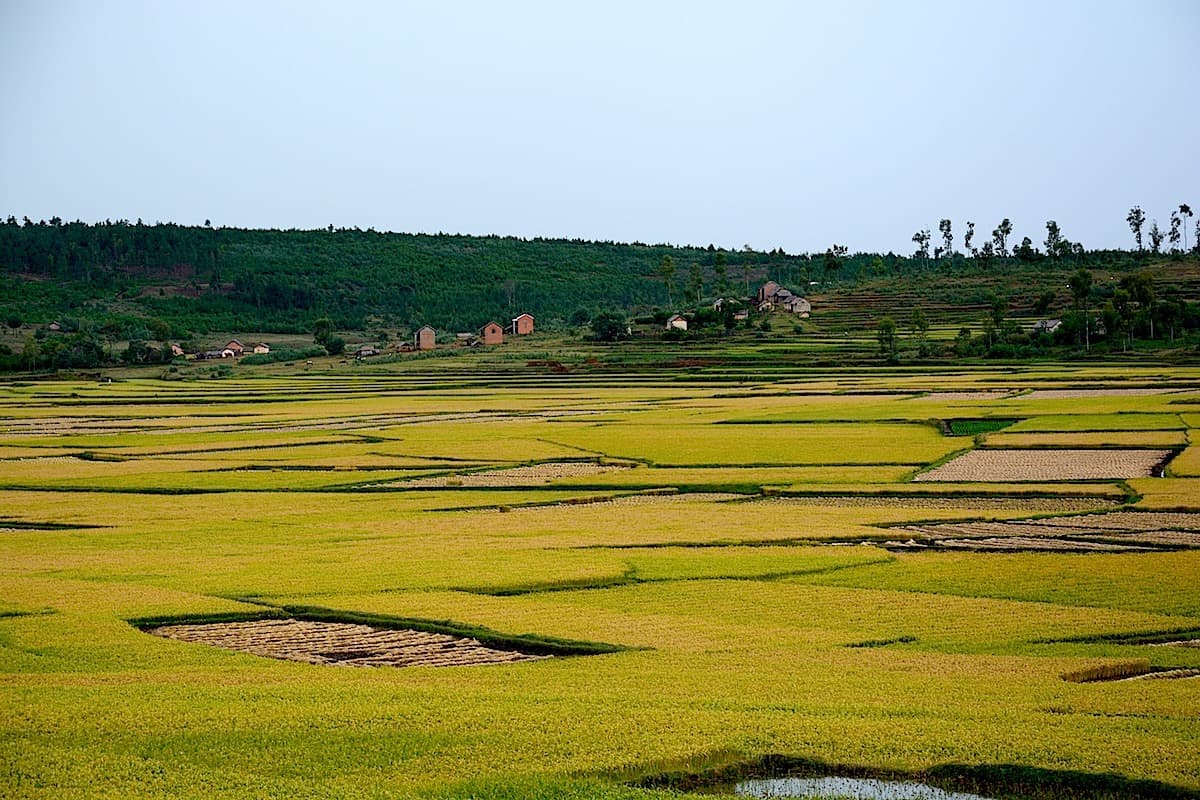
By the Faratsiho road, start of the trek on the balconies of the Ankaratra
We leave Ampefy by one of the most beautiful mountain roads in Madagascar. It winds upwards above Lake Itasy, then snakes along the mountainside to Faratsiho, a small town nestled in the heart of the Ankaratra massif. Here, we are on the highest lands of the island, and mountain landscapes reveal themselves at every turn.
Faratsiho → Balcon de l'Ankaratra
At Faratsiho, we meet up with the porters and the cook. The loads are distributed, the bags are packed, and we set off on foot. Very quickly, the roads disappear: the villages in this region are connected only by trails and cart tracks.
Off the beaten path, we carve our way through an area of high relief, towards the edges of the Bongolava. The villagers are mainly potato farmers, and their fields cover the slopes up to the ridges. The mountains that cut across the horizon, the steep valleys and the agricultural plains of western Ankaratra are reliable landmarks: we are indeed on the Highlands of Madagascar.
The walk is progressive, without particular difficulty. It allows us to find the rhythm of the mountain and get to know the team. Our trekking guide knows every hamlet and every trail, and he introduces us to the locals we meet.
In late afternoon, we reach the Ankaratra balconies, a high-altitude meadow where we set up our first camp, at 1,750 meters. The view of the mountains is majestic, and the peaks sometimes disappear into the clouds. The porters pitch the tents, the cook lights the fire, and we watch the sunset over the western landscape.
Night falls quickly, and with it the cool air. Around the fire, the hot dinner is welcome. The sky, far from any light, is covered with stars.
At the camp, the team sorts the waste into colored bags, according to their nature, and brings them back down the mountain at the end of the trek. This is a rule on all our treks, applied from the first to the last day.
Journey: approximately 80 km, 1 h 45. Walk: approximately 3 h 30, 10 km.
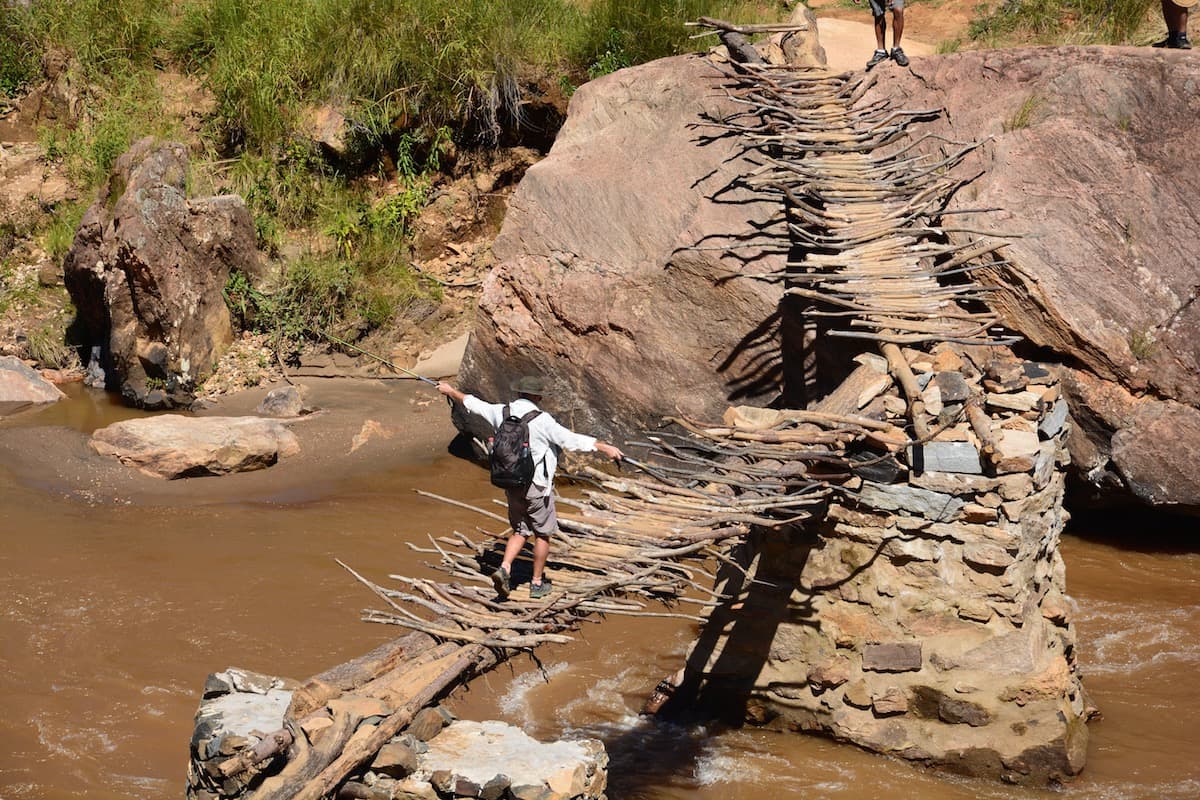
From the balconies of Ankaratra to the granites of Vavavato
Balcon de l'Ankaratra → Ambatobohangy
We walk along the western balconies of the Ankaratra. Below us, due west, the large hilly region of Bongolava stretches out as far as the eye can see. Before us, the secret mountains gradually take shape.
Here, there are no roads. The numerous agricultural villages in the region transport their goods by ox-cart caravans, and we often cross these convoys creaking along the dirt tracks. Rice paddies occupy the valley bottoms, dry crops the slopes.
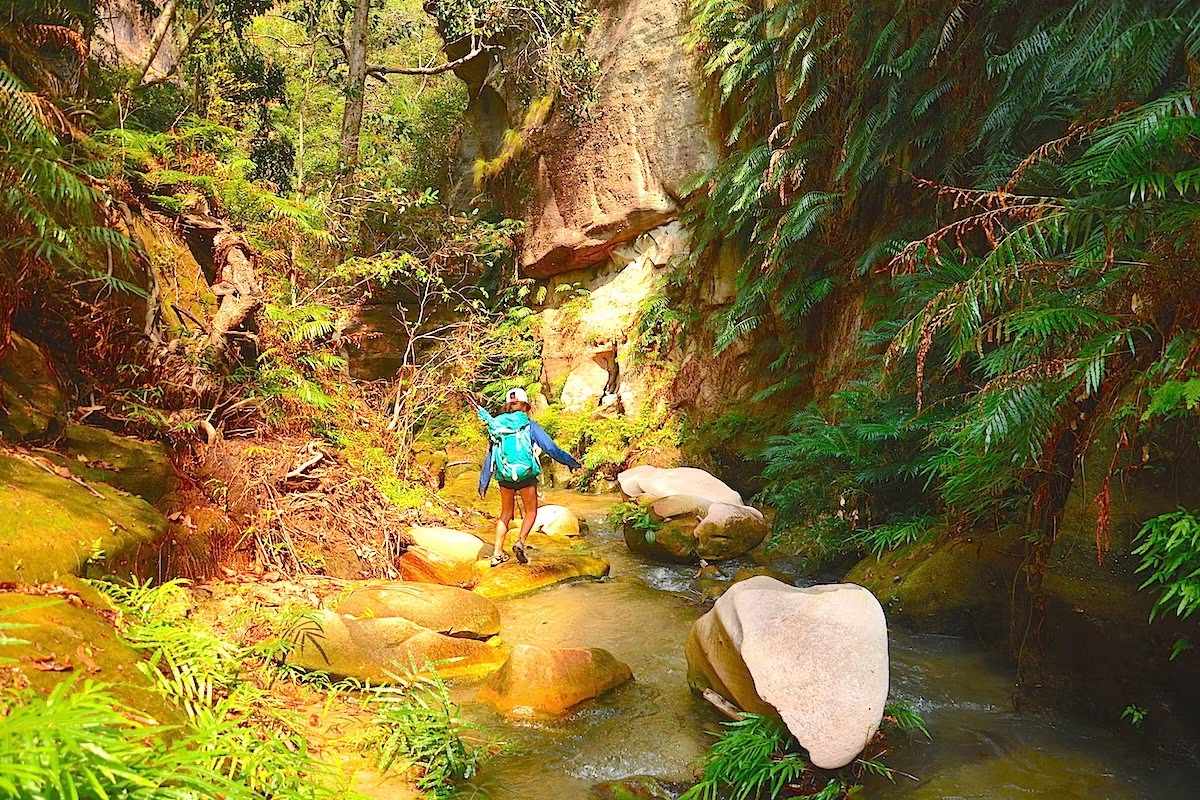
Along a large wooded ridge, we overlook an impetuous torrent that marks the separation between the Ankaratra and the Vavavato. We quickly lose 300 meters of elevation to reach the bottom of this deeply enclosed valley. Between the steep slopes, the torrent and crops clinging to the hillside, the atmosphere is almost Himalayan.
On the riverbank springs a thermal hot spring with boiling waters. It is a traditional healing spa, frequented by local people, who sometimes travel far to be treated there. We make a stop to understand the importance of this place for the inhabitants.
We then begin the climb towards the granites of the Vavavato. The landscape changes: pink rocks outcrop, the paths become narrower, and the vegetation thins out. At the end of the day, a large village with unusually designed houses marks the entrance to this mountain, completely off the beaten trekking paths.
We set up our bivouac near Ambatobohangy. The inhabitants often come to greet us, curious to see walkers arriving in a place where almost nobody passes through. Our guide facilitates exchanges with patience and good humor.
In the evening, the cold sets in quickly at this altitude. Dinner taken around the fire, the stars and the mountain silence remind us that we are now far from everything.
This day marks the transition between two worlds: the cultivated Highlands of the Ankaratra and the granite mountains of the Vavavato, which we will explore for four days.
Hiking: approximately 4 hours, 15 km, with a descent of 300 meters then a climb.
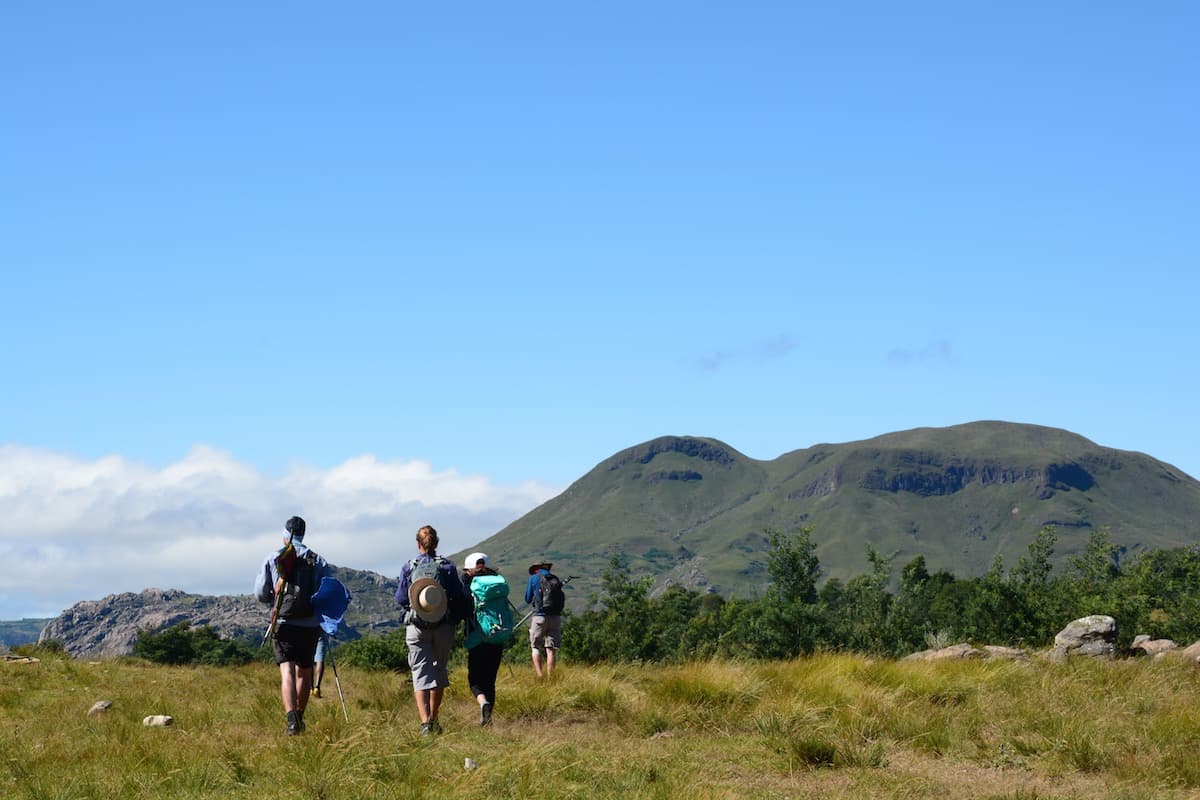
The granite chaos and the ascent of Vohitany
Ambatobohangy → Volcan Vohitany
Volcan Vohitany → Lac Vohitany
We venture into the chaos of rocks. Through a succession of granite ridge lines and valleys that sometimes conceal fragments of ancient forest, our southward journey is varied and exciting. The trails, rarely frequented, connect the isolated dwellings of the highland regions.
Throughout the crossing, lakes are very much present. The inhabitants use them, in traditional fashion, to preserve fish raised in rice paddies during the dry season. Rice-fish farming is the main means of subsistence for the mountain people: tilapias, carp and black bass share the waters with rice.
Housing itself is also very distinctive and contrasts with that of the Highlands. Houses and small hamlets are isolated from one another, and families live apart. Here, there are no defensive ditches or walls around dwellings, as if the mountain itself were enough to protect those who live there.
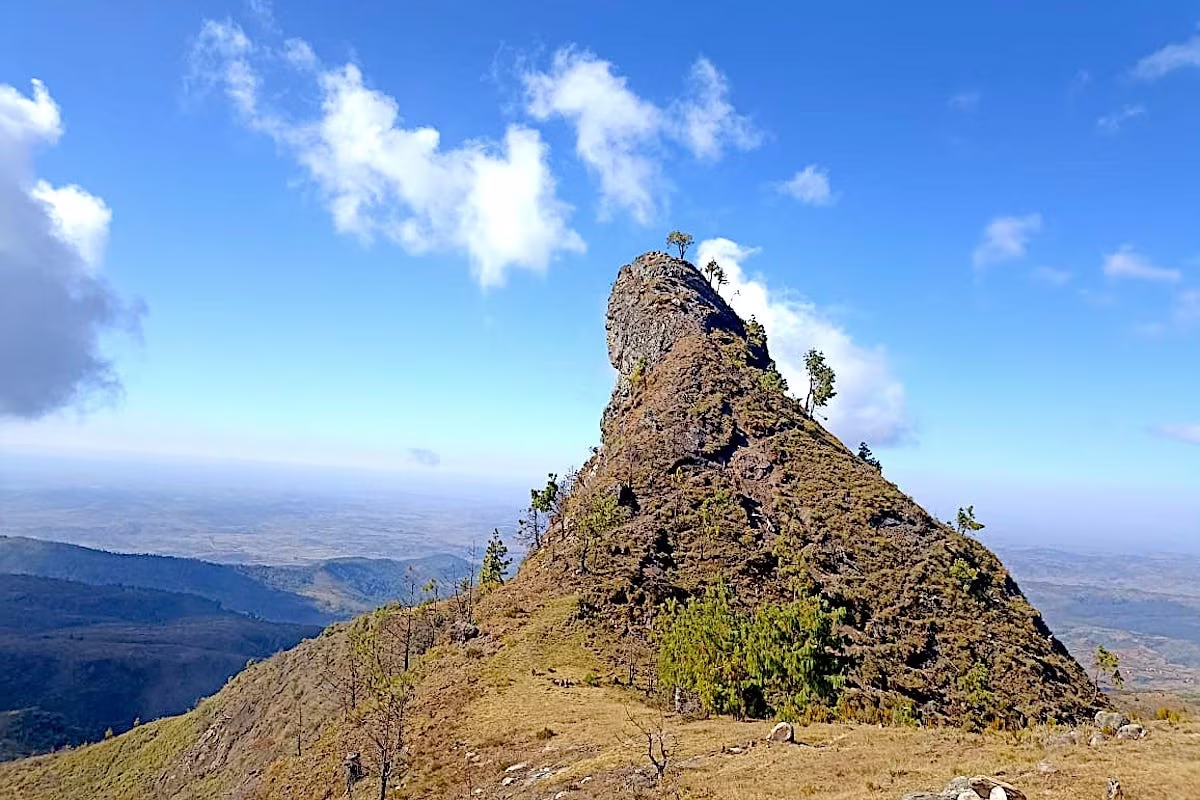
After lunch, we walk at the foot of an immense conical mountain, which dominates the neighboring reliefs by its dark mass. At the heart of the granite, a volcano has broken through: it is Vohitany, our objective for the day. The ascent is sustained but without technical difficulty.
From the summit, the panorama embraces all the Highlands. Starting from the north, we recognize Ankaratra and the Imerina region. At our feet stretch the two branches of Vavavato and, further on, the Mount Ibity region. To the south extends Vakinankaratra, to the west Bongolava; finally, toward the northwest, the volcanoes of Itasy which we left two days ago.
We descend toward a high-altitude lake, a twenty-minute walk away, where the team has set up base camp. Mountain atmosphere guaranteed: the calm water reflects the ridges, and the evening light gilds the granite.
In the evening, the temperature drops noticeably. We dine warmly dressed, before a night under a sky of exceptional clarity, far from any light.
This day is one of the most beautiful of the trek, for the diversity of its landscapes and for this unique panorama over a large part of Madagascar.
Walking: approximately 5 hours, 10 km, then 20 minutes to the lake.
Off the beaten path on the ridges, toward the central valley
Lac Vohitany → Grande vallée
We set off in the cool of the morning, across the large rocky ridges that dominate the bivouac. Progress is made off-trail, slab by slab, to reach beautiful peaks from which the entire structure of the massif can be read: parallel ridgelines, separated by narrow valleys and hollows occupied by lakes.
Before us stands the highest point of the Mony Mainty, like an invitation to climb it. We walk at around 2,000 meters altitude. The air is fresh, almost cold, but the southern sun remains scorching: hat and sunscreen are essential, even in cool weather.
At midday, we emerge into the central valley, at the heart of the mountains. The places are inhabited, and small hamlets are scattered here and there, surrounded by crops and lakes. We cross the entire high-altitude valley to reach a beautiful line of mountains on the other side.
The people here almost never descend into the valleys of the Highlands. Custodians of ancient cults, they are known only to a few scholars, astrologers and traditional practitioners. Their settlement is ancient, predating the Merina expansion, and history has pushed them back to these heights, where they have maintained their way of life. Women remain in the mountains, and families live largely from what they produce.
This region is full of mysteries, and that is why we became passionate about it. When searching for works or documentation on these mountains, we found only a simple mention in a French military document dating from 1914. Here, only the curious and attentive hiker can venture and appreciate the places at their true value.
Our presence remains discreet. We respect local taboos, which our guide explains to us throughout the day, and we take time for encounters, without rushing anything.
In late afternoon, we set up our bivouac at the foot of the mountains. The evening around the fire is an opportunity to reflect on this timeless day with the team.
It is the longest day of the trek, but also the one where we truly enter into the intimacy of the Vavavato.
Walking: approximately 6 hours, 15 km, partly off-trail.
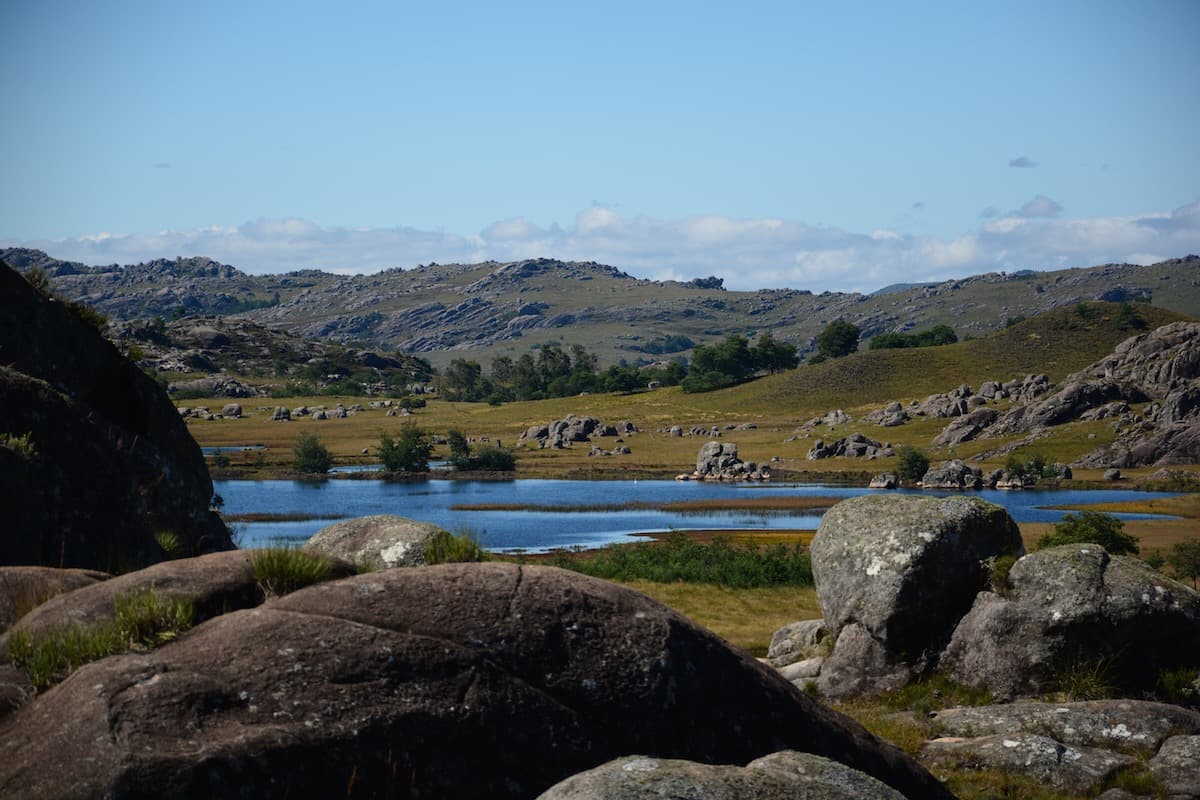
The Shepherds, the Vabus and the Lakes Plateau
Grande vallée → Les lacs
The western chain of the Vavavato stretches towards the Betafo region. Peaks rise on either side of our route, and offer us every opportunity to reach them: this is not mountaineering, but beautiful hikes on granite ridges, with views over the entire massif.
Since entering the mountains, we encounter herds of unusual bovines. These are "vabus": hybrids between zebu and cattle, sturdy like zebus but without humps. The herds are large, and mixed among the vabus are enormous pigs, which go about their business throughout the day.
The herds are watched over by shepherds we spot by the sound of their flutes. These melodies rise from rocky chaos and accompany our walk for a good part of the day. It is one of the strongest images of the trek, and one that travelers remember for the longest.
At noon, we picnic in the shelter of a rock, facing the mountains. In the afternoon, the landscape gradually becomes gentler.
At the end of the day, we reach an astonishing region, scattered with a multitude of lakes and almost flat high-altitude meadows, where rocky outcrops remain very present. Walking through these places, all that's missing are a few yaks to believe you're on the high plateaus of Spiti, in northern India, at the gates of Tibet.
On a soft meadow, by a lake, we set up our final camp. The evening light on the water and granite is magnificent, and the night promises to be cold and starry.
This last evening in the mountains is a remarkable moment. After five days of hiking, the team has become familiar, and we share a festive dinner around the fire. It is also an opportunity to thank the porters and the cook, who have accompanied us since Faratsiho.
At night, the silence is disturbed only by the wind in the grass and, sometimes, the cry of a bird. The next day, we will leave the Vavavato to descend back towards the world of roads and rice paddies.
Hiking: approximately 5 hours, 17 km.
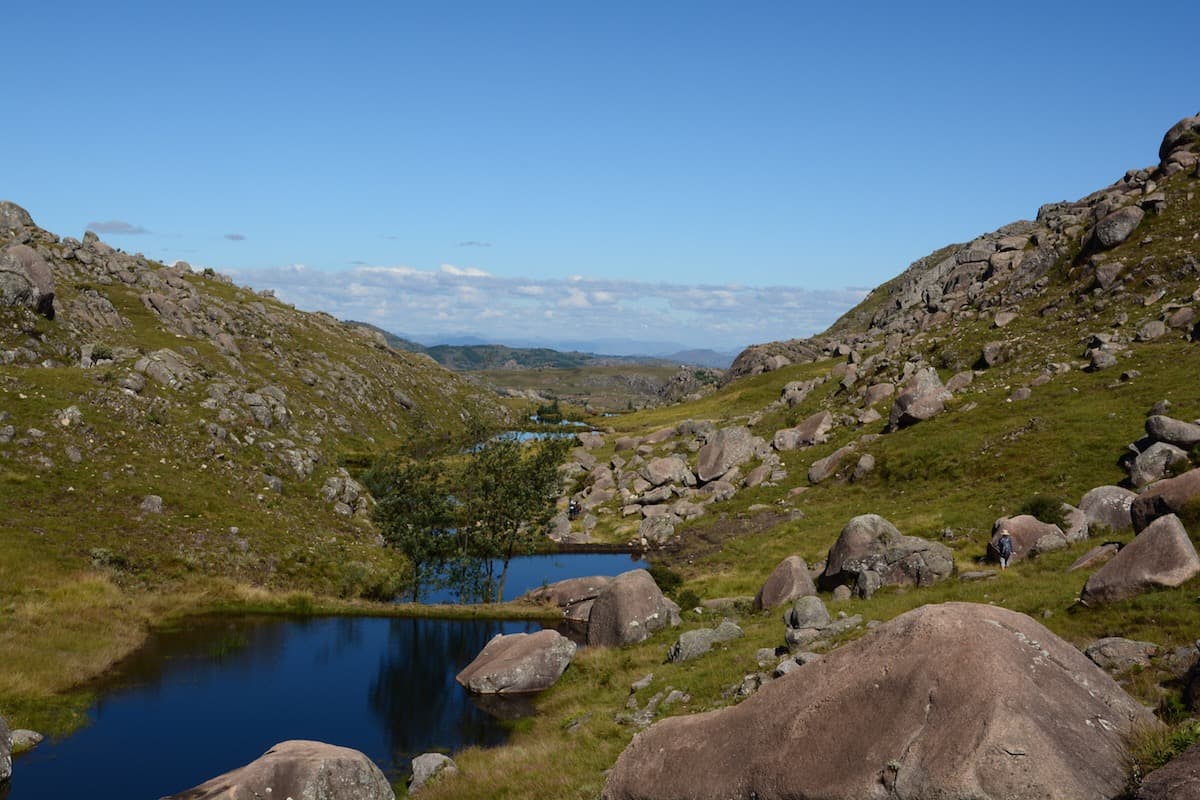
Staircase lakes to Betafo rice fields, then Antsirabe
Les lacs → Betafo
Suddenly, we reach the southern edge of the Mony Mainty. Through a narrow valley, dotted with stepped lakes, we rapidly lose altitude. We leave the granite behind to reach, without transition, the volcanoes: the scenery changes completely within a few hours of hiking.
Here, nature is systematically managed by humans. The hillsides and valley floors are cultivated, shaped and arranged with extraordinary care. The beauty of the terraced rice fields in the Betafo region is striking, especially in the morning light.
From the wild and preserved nature of the Vavavato, we suddenly pass to a controlled nature. This transition is one of the highlights of the journey, and it gives us food for thought about how people have occupied and transformed the Highlands.
On the outskirts of Betafo, human settlement is dense. Villages are scattered across the hills, between the volcanoes, and the wide valleys are entirely dedicated to rice. We meet many farmers at work, children herding zebus and women carrying harvests on their heads.
We reach the town of Betafo at midday, leaving behind us, with some regret, the mysteries of the Mony Mainty. We have one last picnic with the team, before saying goodbye to them. Our vehicle awaits us for the short road to Antsirabe.
Antsirabe, a spa town founded in the late 19th century, is known for its pousse-pousse, its avenues lined with jacarandas and its colonial-era buildings. We settle into our ecolodge, where a hot shower and a real bed are welcome after five nights under canvas.
The rest of the afternoon is free. We can rest, take a tour around town by pousse-pousse or simply enjoy the peace of the garden. Dinner, on your own, is an opportunity to celebrate the end of the trek.
This day marks the end of the hike, but not the end of discoveries: the Antsirabe region still has much to show, and we will see part of it tomorrow.
Hiking: approximately 4 hours, 10 km, downhill. Road: approximately 30 minutes.
Picnic lunch
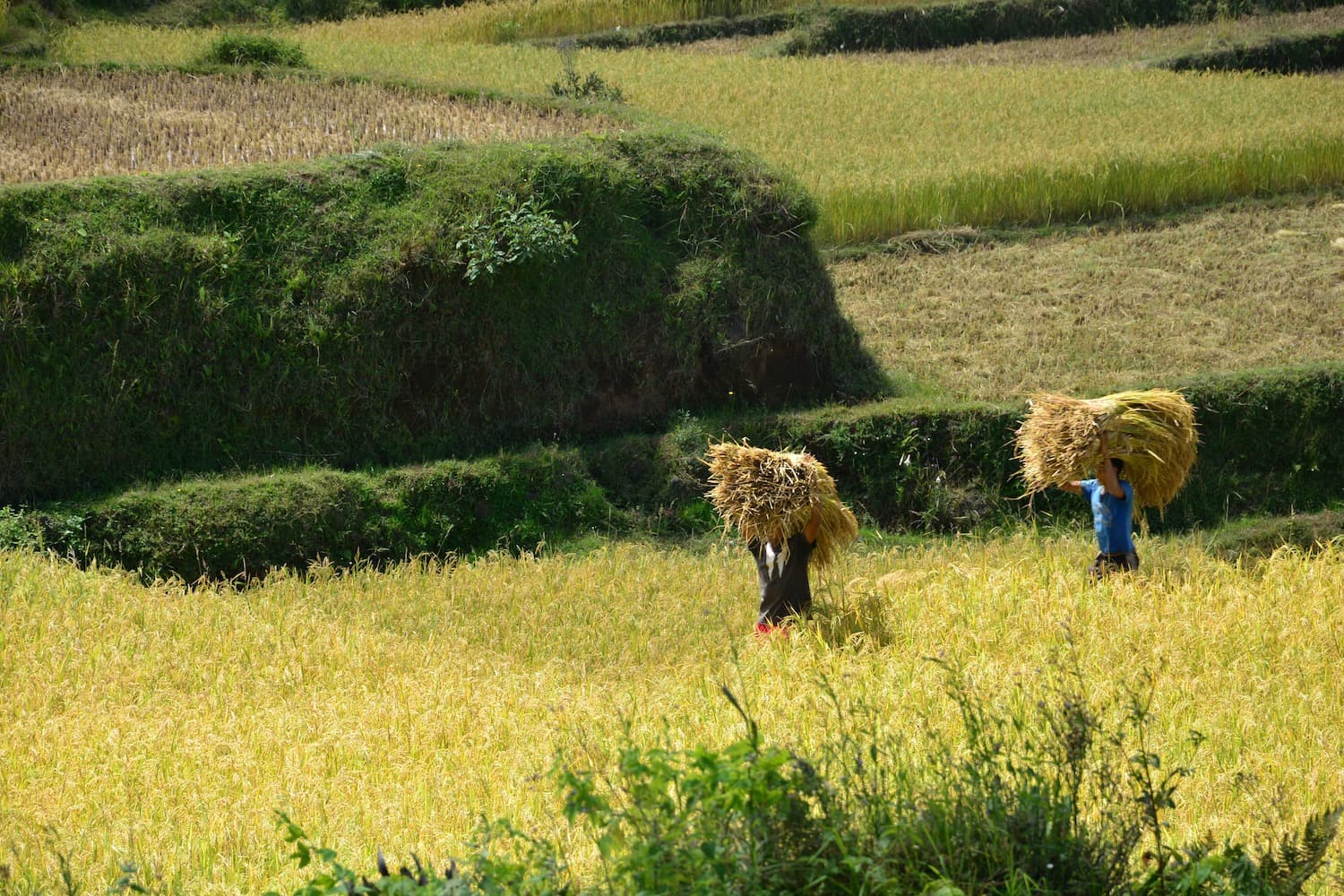
From Antsirabe to Antananarivo via the Highlands Road
We take advantage of the morning to discover Antsirabe and its craftspeople. The city is renowned for its craftsmanship: making miniatures of bicycles and cars from recycled materials and working with zebu horn. We visit a few workshops, where the artisans show us their gestures and techniques.
We then take the national road 7 heading north. The landscape is that of the Highlands: terraced rice fields, villages of red brick, hills covered with crops and, in the distance, the reliefs of the Ankaratra that we walked along a few days earlier. Along the road, brick factories smoke by the rice fields, and stalls of fruits and vegetables announce the markets of the towns. The Highlands unfold their familiar landscapes, now charged with the memory of the Vavavato.
We make a short stop in Ambatolampy, a lively small town on national road 7, to stretch our legs and browse the market. Then the road continues through the hills, where villages become more numerous as we approach the capital.
We have lunch along the way, at our leisure, then we continue towards Antananarivo in the afternoon. The road is busy: carts, bush taxis, roadside markets where fruits, vegetables and woven baskets are piled up.
Upon arrival in Antananarivo, our team accompanies us to the hotel or to Ivato international airport, depending on the return flight schedule.
This trek allowed us to discover a mountain that very few travellers know, just a few hours from the capital. We hope it will leave each person with the memory of the pink granites, the high altitude lakes and the sound of the shepherds' flutes, but also of the encounters made along the way with the mountain people and with the entire team.
For those who have more time, this trek can be followed by the "Fabulous trekking in the north of the Makay", which departs the next day. Our team can also organize other tailor-made extensions, depending on each person's wishes and available time.
Road: approximately 180 km, 5 hours including stops.
Price per person
Indicative price per person, based on double room. Each trip is customized according to your preferences.
This trip can be tailored to your preferences
This itinerary provides an excellent foundation for discovery, but it can be fully customized. Our local advisors build each trip tailored to your budget, dates and preferences.
Not included
- International flights
- Lunch on Day 1, dinner on Day 7 and lunch on Day 8
- The single supplement (individual room and tent, with their porter)
- Beverages, tips and personal expenses
- Insurance (cancellation, repatriation, loss or damage to luggage)
- Visa fees
Included
- The services of a guide throughout the entire trip
- The trek guide, the porters and the cook during the hike
- Vehicle transfers, four travelers per vehicle, fuel included
- Accommodation in double or twin room in Ampefy and Antsirabe (or similar according to availability)
- Five nights under canvas during the trek, camping equipment provided (bring a warm sleeping bag)
- Full board from dinner on D1 to lunch on D7, and breakfast on D8
- Additional porters planned for cold weather
Practical Information
Registration is considered firm and final after payment of a deposit of 30% of the total price and acceptance of the specific terms of sale.
The balance must be paid no later than 45 days before the departure date.
See our specific terms of sale for full details.
In the event of cancellation by the traveller, the following fees apply:
More than 60 days before departure: 30% of the total price (deposit retained)
Between 60 and 30 days before departure: 50% of the total price
Less than 30 days before departure: 100% of the total price
We strongly recommend taking out cancellation insurance. See our specific terms of sale for full details.
Your Passport:
Important: your passport must be valid. It must be mandatory and obligatorily valid for 6 months after the end of your stay in Madagascar.
Your travel documents
Your valid passport,
Your international and/or domestic flight tickets,
Your repatriation insurance/first aid expenses contract, -
Your vaccination record, not mandatory,
Your blood group card if possible.
Obtaining a visa to enter Malagasy territory
Upon arrival in the territory:
The visa cost is €35 for a stay of less than 30 days.
It is easily obtained upon your arrival in Malagasy territory.
This applies to all airports in Madagascar that receive international flights.
Upon arrival in the terminal, upon exiting the plane, a corridor for passengers is dedicated to issuing tourist visas.
This procedure is the simplest. We recommend it to you.
From the embassies and consulates of your countries of origin:
For information, download the document explaining the procedure and the constitution of the file for obtaining a visa from the Madagascar embassy.
To participate in our trips, it is strongly recommended to be insured for repatriation assistance and medical expenses abroad.
Your local agency encourages you to familiarize yourself with the specific contract developed with our partner CHAPKA ASSURANCES and AXA ASSISTANCE.
To subscribe to insurance, learn about coverage and rates, follow the link below.
CAP EXPLORER: The comprehensive insurance solution designed to enjoy your trip with peace of mind!
Choose the plan that best suits you:
Explorer'Multirisque
Explorer'Annulation
Explorer'Assistance
Explorer' Complementary Credit Card
Specific to our trips, we strongly recommend subscribing to them.
If you choose to subscribe to one of these plans, the policy detailing all coverage and procedures for claiming any loss are available on the insurer's website.
Your local agency will be aware of it, but only the participant is responsible for complying with the procedures for declaring any loss. The participant must therefore keep this policy with them throughout their trip.
Chapka — Cap Explorer
Our insurance partnerTravel with peace of mind with our partner Chapka. Cancellation, repatriation, medical expenses, baggage… All the coverage for a worry-free trip.
Travel with peace of mind — I'll handle the insuranceFrequently asked questions
A tourist visa is required, issued upon arrival at Ivato Airport (Antananarivo) or online (e-visa). Your passport must be valid for at least 6 months from your date of entry. Before booking your trip, check with Madagascar's consular authorities for the conditions applicable to your nationality, including visa fees and authorized lengths of stay.
Go to the My Trips section to find all your projects.
You can send a message to your host directly from the Tea Lounge.
For a tailor-made quality trip, expect between 160 and 270 euros per day and per person, including accommodation, meals, internal transfers and English-speaking guide. International flights (900-1400 euros return) are additional. Long transfers and domestic flights represent a significant portion of the budget.
Your documents are accessible in the Documents tab of your trip.
Absolutely. We adapt each itinerary to suit your travel profile. For families, we prioritize relaxed pacing, family-friendly accommodations, fun and educational activities, and comfortable private transfers. Our local English-speaking guides know how to captivate children with age-appropriate anecdotes.
It's simple. You exchange with our local team to define your wishes, budget and dates. You receive a detailed itinerary proposal within 48 hours. You adjust every detail together until it's perfect. You confirm and travel with peace of mind. Your local agency remains available 7 days a week throughout your trip.
In case of emergency, contact your local agency immediately.
Payment is generally made in two installments.
Our agency is part of the Nomadays network, registered in France. You benefit from APST (Association Professionnelle de Solidarité du Tourisme) protection, which covers 100% of your funds. Secure payment, repatriation insurance included, and English-speaking assistance 24/7 on the ground throughout your stay.
Let's talk about your adventure — High Plateaus
Ambassador of Malagasy fihavanana, based in Antananarivo
For me, traveling to Madagascar is stepping into the spirit of fihavanana: sharing, helping one another, meeting people, and taking time to understand what connects them to their land.
— Noro