The Constantinois - in the land of Cirta. Roman Algeria of Constantine
Following the footsteps of Cirta and Trajan's legions, through dizzying gorges and well-preserved Roman cities of Constantina.
Duration
8 days
From
€780/pers.
Ideal seasons
Mar, Apr, May, Sep, Oct, Nov
Style
Guided tour
Comfort
classique
Travelers
Couple, Solo, With friends, senior
The spirit of travel
Capital of Numidia, Cirta already dominated the vertiginous gorges of the Rhumel centuries before Trajan's legions came to leave their mark carved in stone. It is here, in northeastern Algérie, that the Roman Empire wrote some of its greatest African chapters: entire cities rising from nothing, theatres perched in the mountains, thermal baths fed by hot springs and a grid of streets preserved for two thousand years.
This journey crosses the Constantinois in all its historical and human depth. From the "City of Bridges" to the ruins of Timgad, the Pompeii of North Africa, passing through the blue Mediterranean of Skikda, the thermal springs of Guelma and the city of Hippo, where Saint Augustine pondered the destiny of humanity, each stage is an encounter. With Antiquity. With Algérie today. With a people whose hospitality is as ancient as its stones.
The stages of your journey
Highlights
Day-by-day itinerary
First Steps in Constantine, the City of Bridges
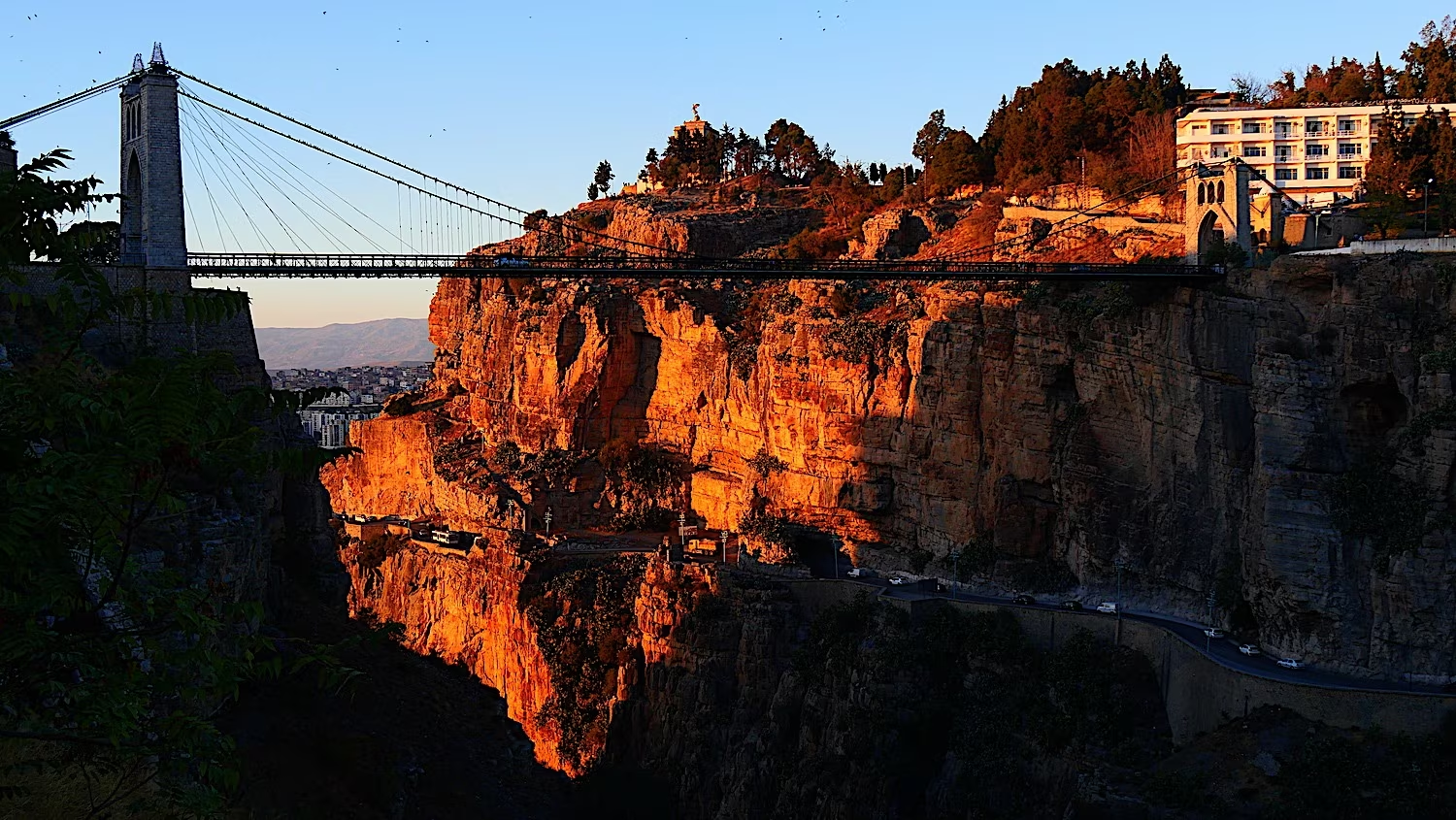
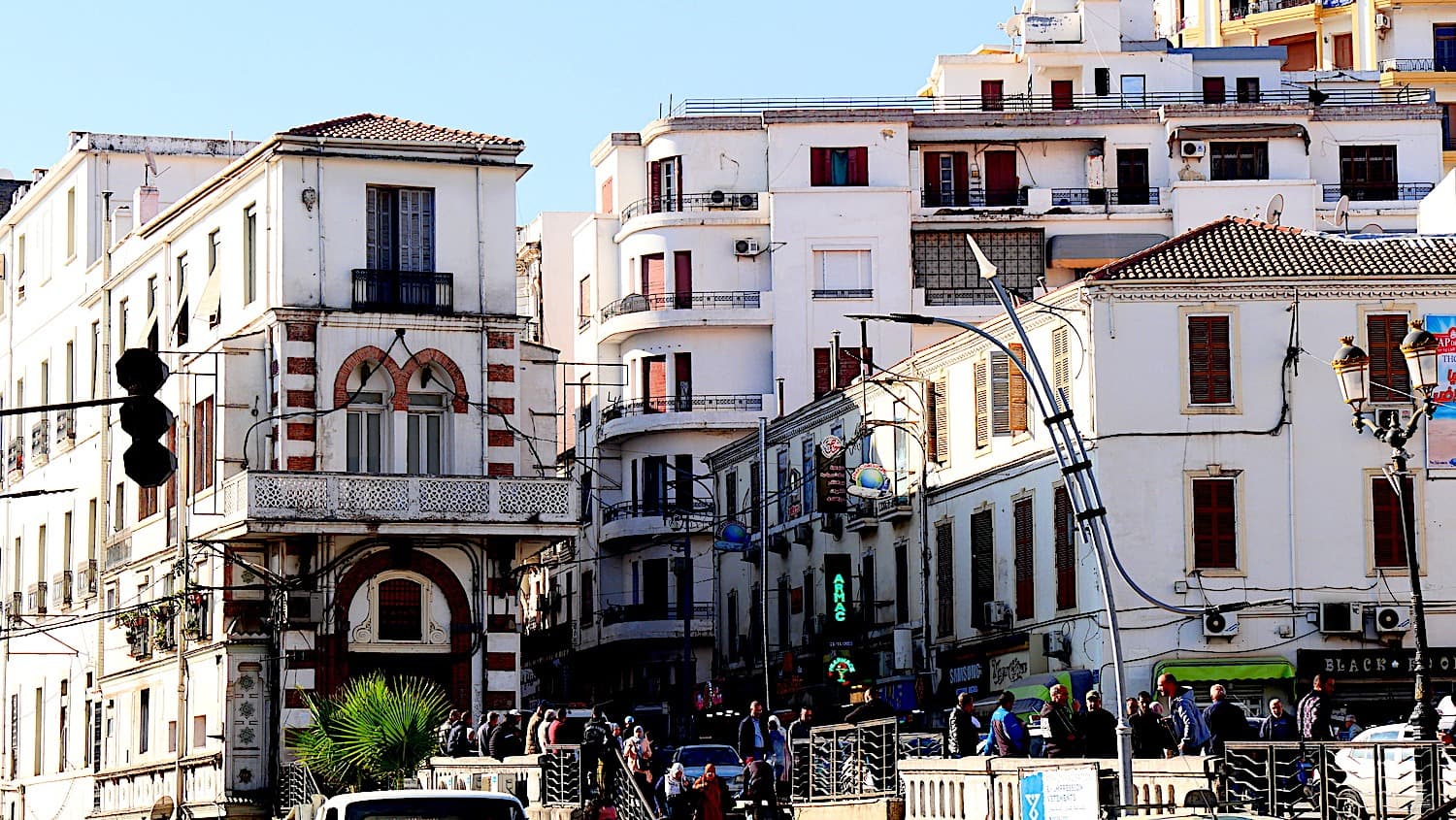
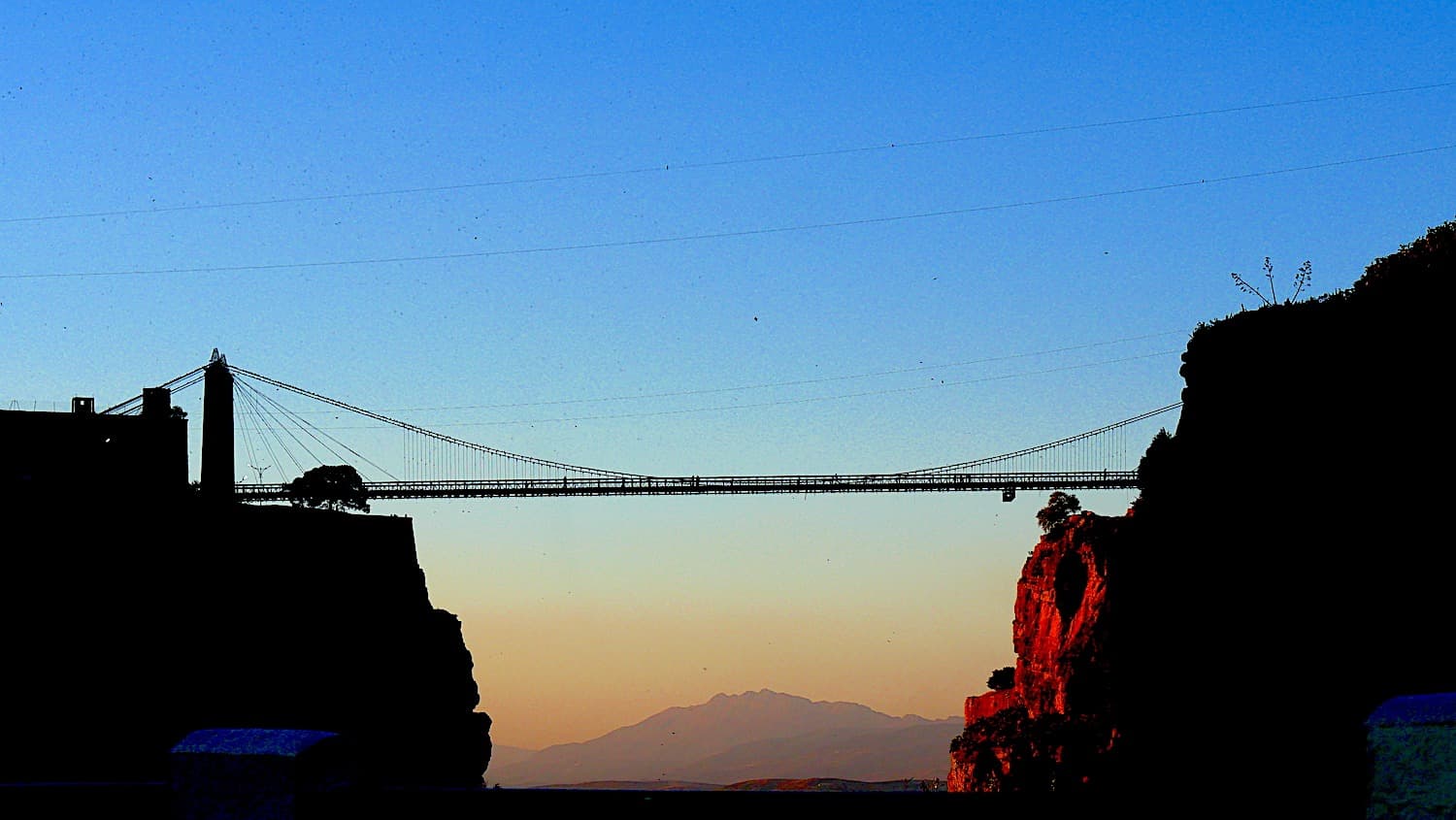
Upon your arrival in Constantine, you discover a city perched on a limestone block at 640 m altitude, surrounded by the deep gorges of the Rhumel. Nicknamed the "City of Bridges", it reveals its singular geography from the very first moments.
After settling into your hotel, you head out for a first orientation walk on the Rock. In the late afternoon light, you discover the suspension bridges spanning the Rhumel gorges. From the old War Memorial, your gaze extends over the surrounding valleys and the foothills of the Numidian chain.
In the evening, you dine in a traditional restaurant in the city center. Weather permitting, you also enjoy a first discovery of Malouf, Arabo-Andalusian music closely associated with Constantine.
Constantine, from ancient Cirta to the souks
This day is dedicated to discovering ancient Cirta, capital of Numidia before becoming, under Constantine I, an important Roman metropolis of Africa. The morning begins at the Cirta Museum, whose collections bring together orientalist paintings from the 19th century, Numidian inscriptions, Roman stelae as well as everyday objects from excavations carried out in the region.
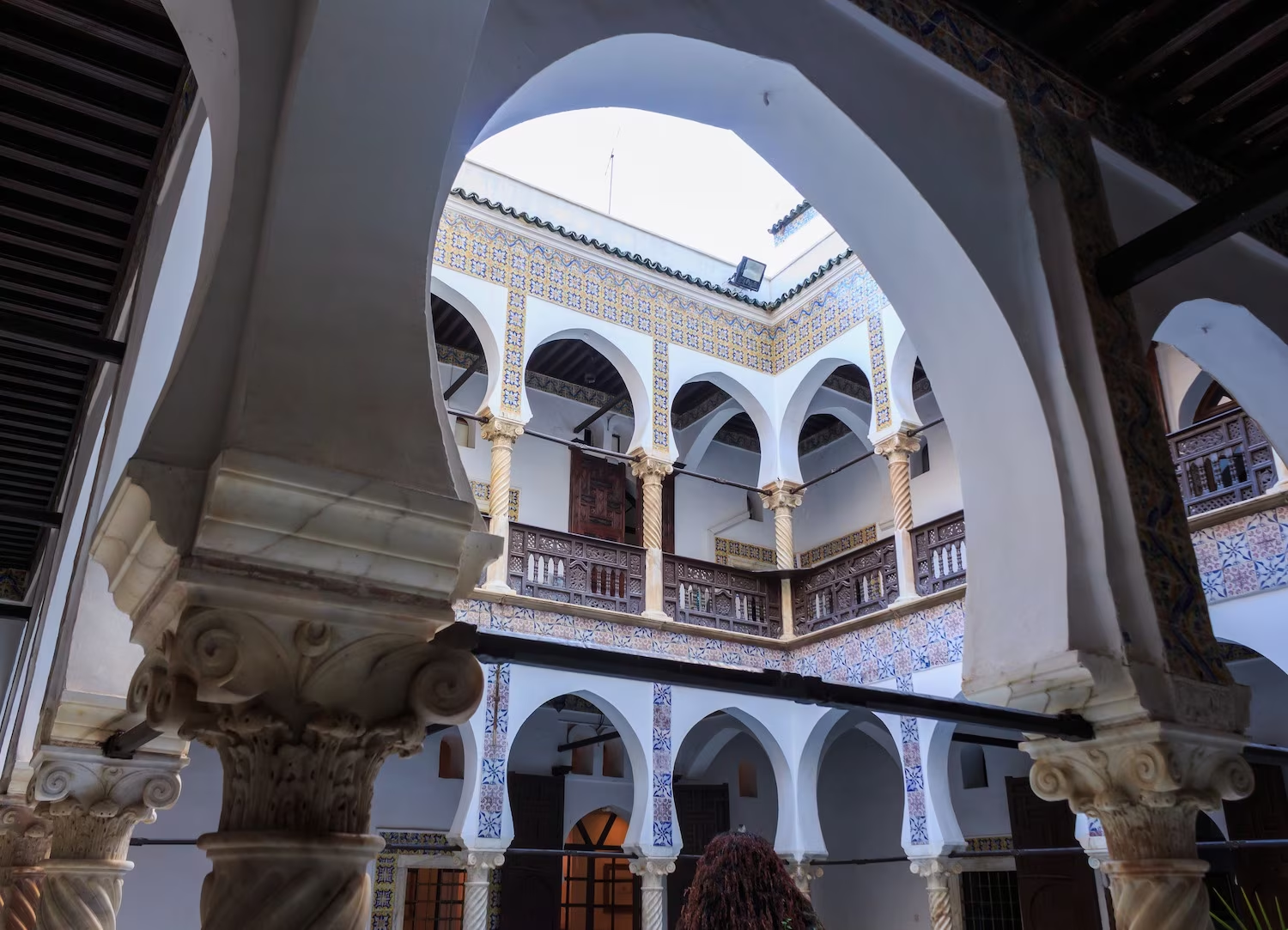
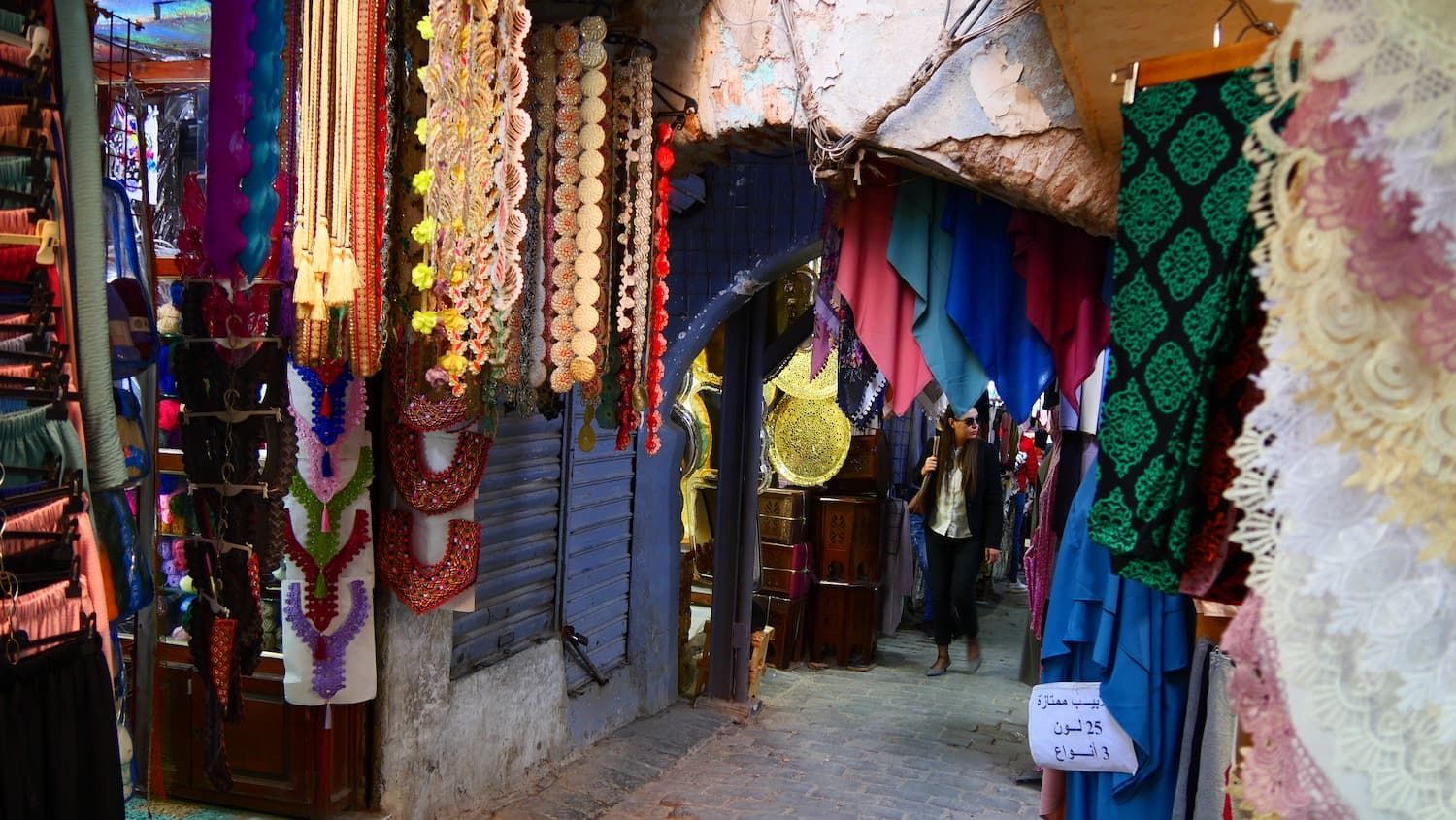
In the afternoon, you explore La Souka, the old quarter of Constantine, through its maze of alleyways. You then discover the Bey's Palace, with its mosaics and arcaded courtyards, then the Emir Abdelkader Mosque, vast and luminous. At the end of the day, you enjoy some free time in the craft souks, among ceramics with Berber geometric patterns, chiseled silver jewelry and spices. You can also discover la Djouzia, a walnut nougat emblematic of Constantine.
Tiddis, ancient Roman stronghold at the gates of Constantine
The morning is devoted to discovering Tiddis, an ancient Roman citadel located on a mountainside, about thirty kilometers from Constantine. Little frequented, the site occupies a remarkable position at the entrance to the Khreneg Gorges, where it once served as an outpost to protect Cirta from incursions from the north. Throughout your visit, you discover the natural terraces built into the ochre rock, the cisterns carved directly into the stone as well as Libyan inscriptions still visible on certain blocks. Tiddis also testifies to the different periods that shaped the region, with Roman presence overlaying earlier Numidian and Berber traces.
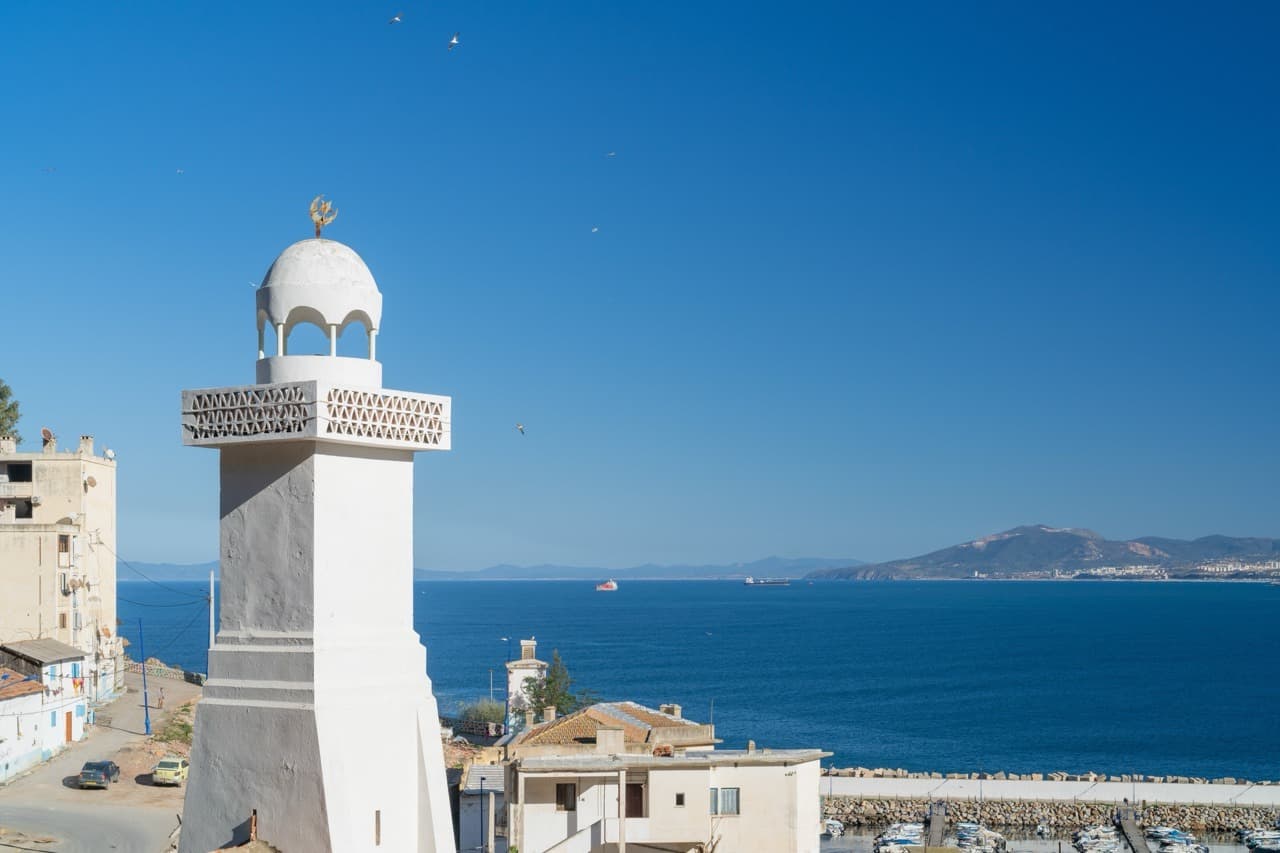
In late morning, you head down towards the coast. Skikda — the ancient Roman Rusicade — opens onto the Gulf of Numidia, with its deep blue waters and wooded cliffs. The afternoon offers a well-deserved break: lunch of grilled fish facing the sea, then relaxation on the Stora beaches. Here, the Mediterranean is not just a backdrop: it is a breath, a counterpoint of light and salt after two days of canyon and stone.
Annaba, Hippo Regius and the Heights of Séraïdi
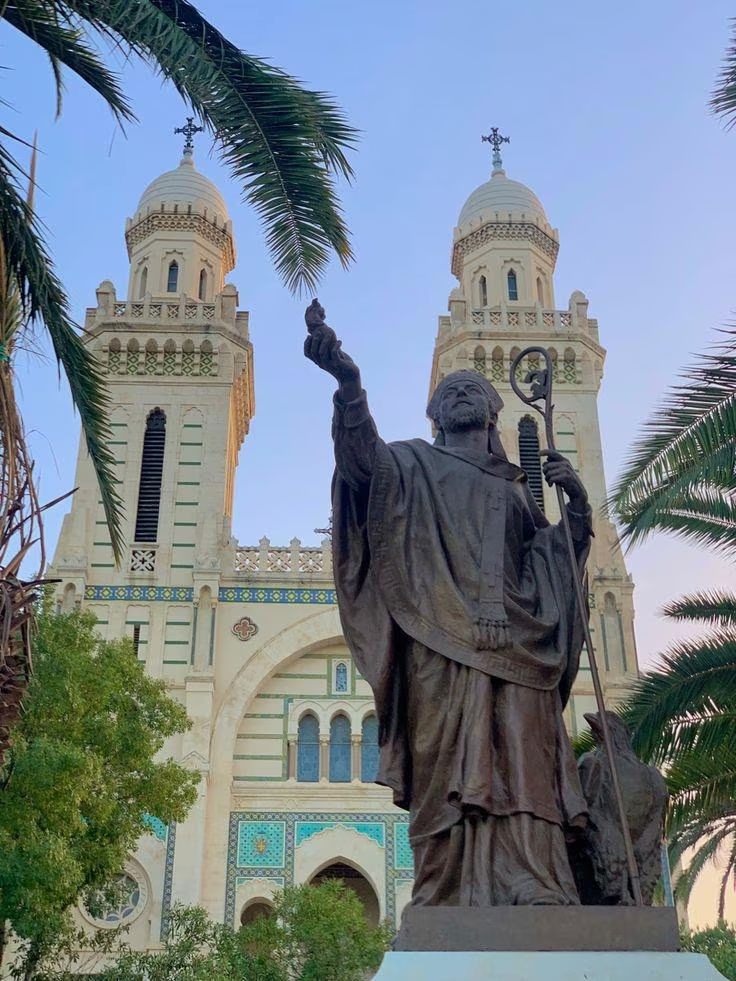
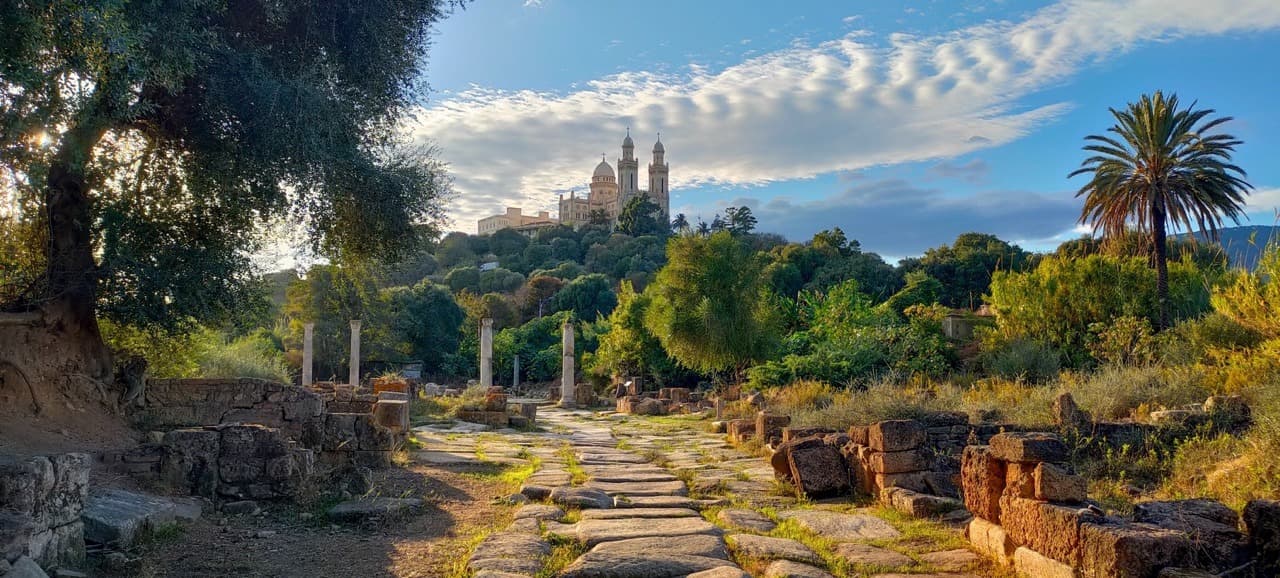
From Skikda, you travel along the coast eastward to Annaba — the ancient Hippo Regius, one of the great cities of Roman Africa. It was here that Saint Augustine, bishop from 396 until his death in 430, wrote The City of God and the Confessions, two texts that would shape Western Christian thought for centuries.
The morning is devoted to the Hippone archaeological site: Basilica of Peace, baptistery, theatre, forum, baths and archaeological museum. The ensemble is less spectacular than Timgad or Djemila, but charged with a particular depth — here, the stones have a soul. You then have lunch with fish on the seafront.
In the afternoon, you climb to Séraïdi, a village perched in the wooded heights of the Edough massif. You discover the complex designed by architect Fernand Pouillon and enjoy a panoramic view over Annaba Bay and the Mediterranean.
Guelma, in the footsteps of ancient Calama
Guelma, the ancient Calama, stands out immediately with its Roman theatre from the 3rd century, one of the best preserved in Algérie. According to inscriptions, its construction was financed by the priestess Annia Aelia Restituta, who spent 400,000 sesterces for the pleasure of her fellow citizens. You can continue your discovery at the adjacent museum, which houses fine collections of coins, bronzes and statues unearthed during excavations conducted in the region.
The day's surprise awaits you a few kilometers away, at Hammam Meskhoutine, where springs gush forth at 90 °C. The Romans, who already came to enjoy their therapeutic virtues, named them Aqua Tibatanae. The setting is strange and bewitching: sculpted by centuries of mineral accumulation, the limestone has given rise to fantastical forms that water vapor makes almost unreal. You take time to discover the place before heading back on the road to Sétif, your base for the stop at Djemila.
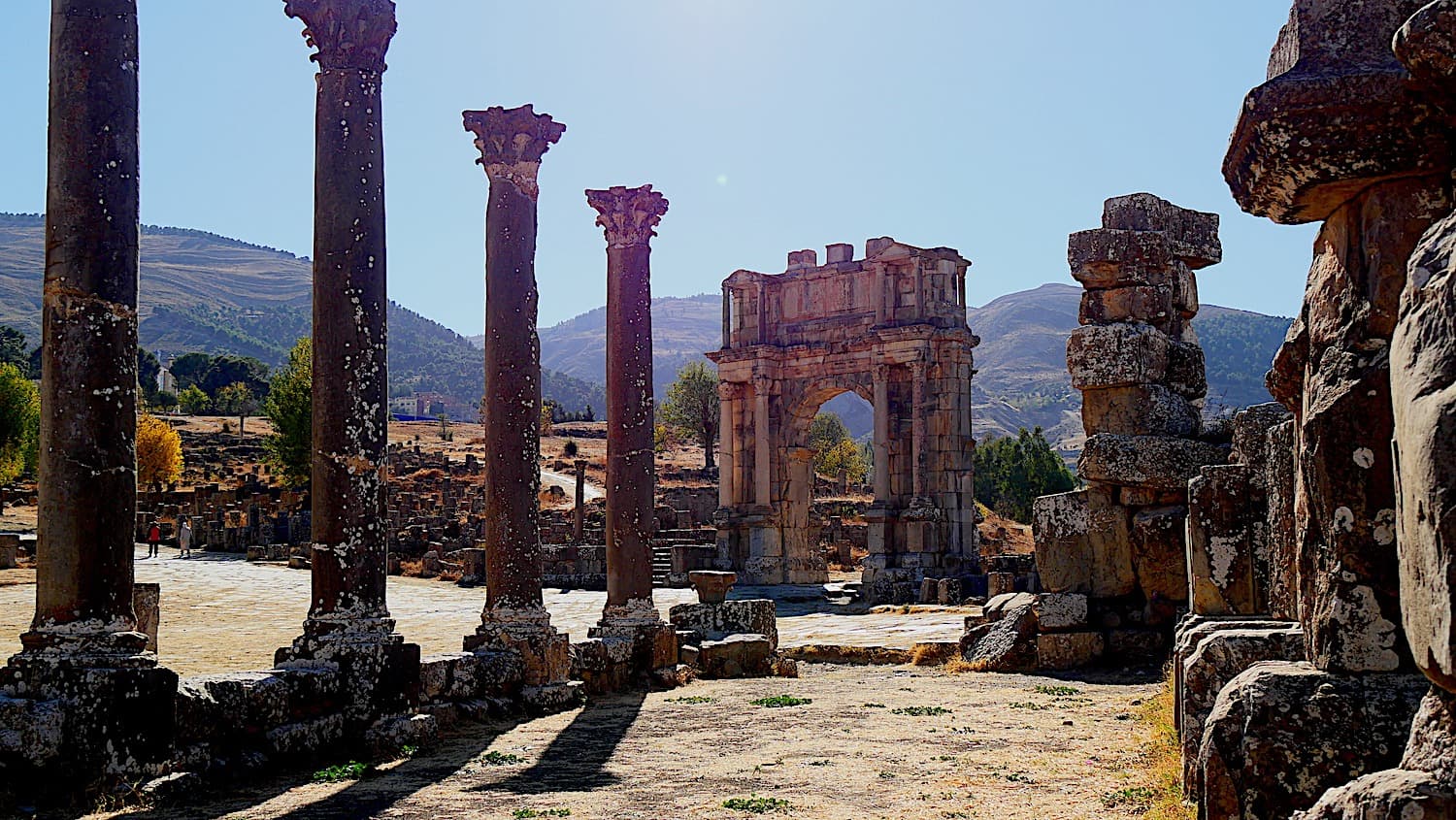
Between Djemila and Cuicul, the city suspended in the clouds
At 900 meters altitude, in the secret fold of mountains that the Romans deemed worthy of a city, Djemila — the ancient Cuicul — is perhaps the finest surprise of the circuit. Listed as a UNESCO World Heritage Site since 1982, it displays over 42 hectares of Roman urbanism remarkably adapted to mountainous topography: streets that follow contour lines and squares that open onto vast panoramas. The visit unfolds with all the time it deserves. You discover the Arc of Caracalla, which marks the northern entrance, then the old forum and new forum, the grand baths, the Christian basilica and the baptistery of the 4th century, whose basin still stands. The discovery continues in the museum, whose walls are entirely covered with mosaics of remarkable fineness and variety.
Medghassen's Mausoleum in the Aurès
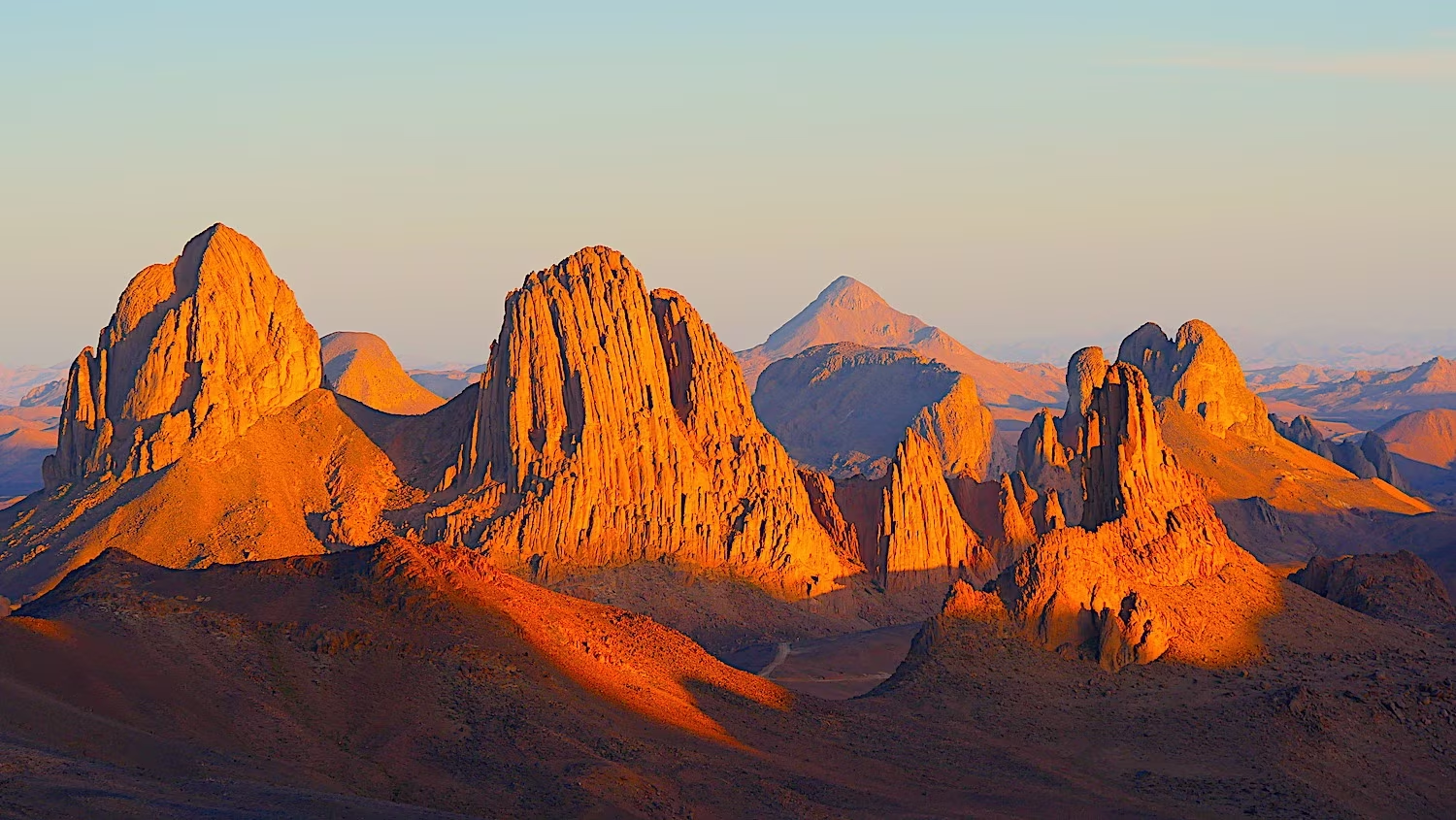
The day begins in the Aurès plain with a vision that seems to emerge from nowhere: the Medghassen mausoleum, a cylindrical Numidian tomb from the 3rd century B.C., the oldest royal monument preserved in North Africa.
Sixty Doric columns encircle this silent tumulus which medieval Arab historians attribute to a king named Madghis. For twenty-three centuries, the mausoleum has stood facing the first ridges of the Aurès, a silent witness to Numidian history.
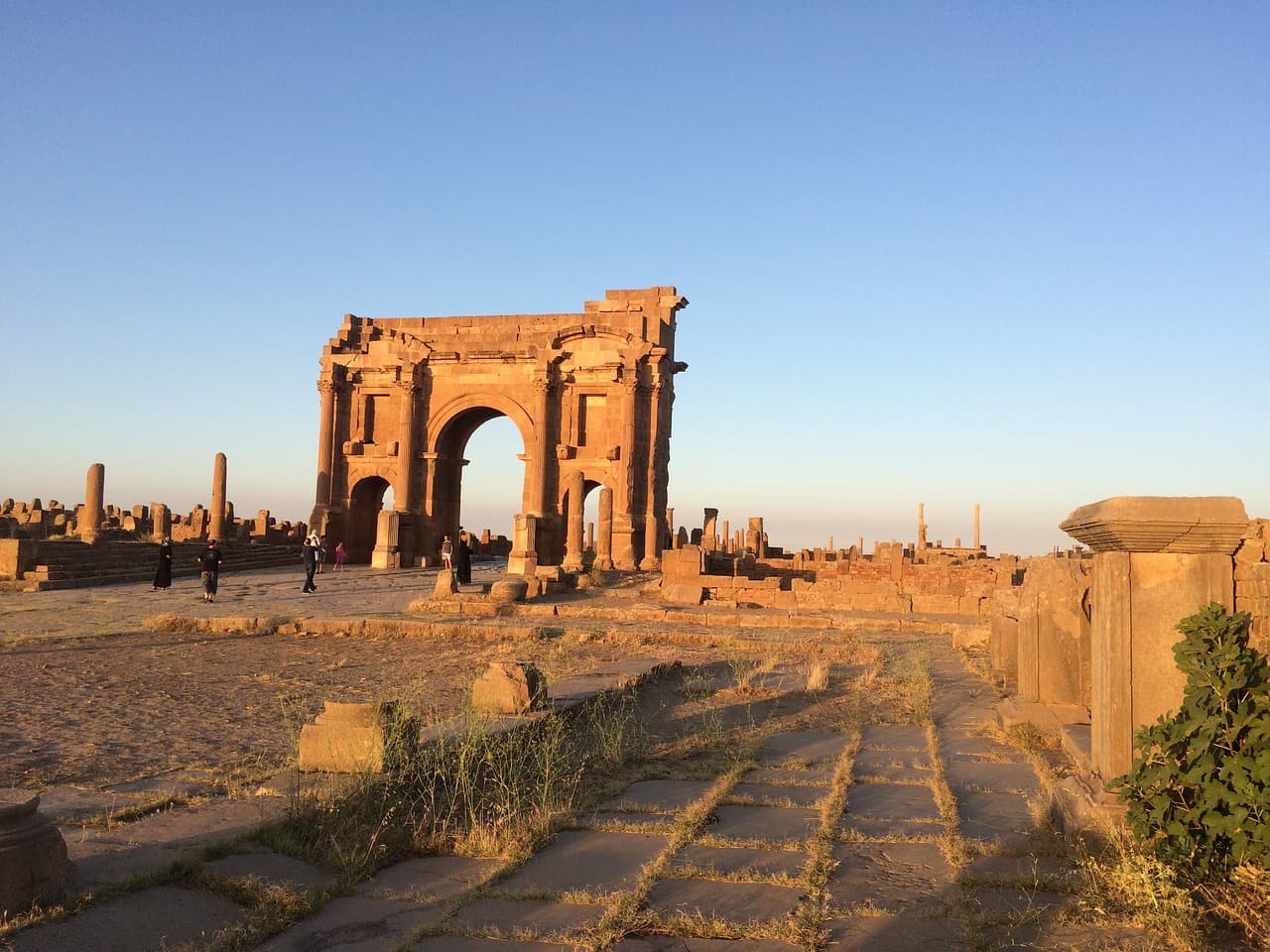
Then comes Timgad. Founded in the year 100 by the emperor Trajan for his veteran legionnaires, the colony of Thamugadi was buried under sand for centuries before being rediscovered in 1765 by British explorer James Bruce.
Its grid plan — two main axes, a central forum, thermal baths, a public library and a theater carved into the hillside — remains strikingly legible. You stroll through it like a living city whose inhabitants disappeared the day before. In a shop in the forum, an inscription sums up the art of Roman living: "Hunting, bathing, playing, laughing — that is living."
In late afternoon, you set off for a short excursion to Lambèse / Tazoult, the former camp of the IIIe legion Augusta, which defended the southern frontier of the Empire. Return to Timgad for dinner.
The Dawn on Trajan's Stones
Get up before the site opens. At dawn, the ruins of Timgad reveal themselves in silence and raking light, offering a spectacle that you won't forget. You take advantage of these early morning hours to cast a final glance at the Arch of Trajan, before the first tour buses arrive.
You continue on the road to Constantine in the morning. A few free hours allow you to enjoy the City of Bridges one last time: one last Moorish café on the Rock, a few souvenirs to take back or simply a stroll through the medina streets. Constantine remains. As it has always resisted — to oblivion, to erosion, to time.
Lunch before your transfer to Mohamed Boudiaf Airport for your international flight.
Price per person
Indicative price per person, based on double room. Each trip is customized according to your preferences.
This trip can be tailored to your preferences
This itinerary provides an excellent foundation for discovery, but it can be fully customized. Our local advisors build each trip tailored to your budget, dates and preferences.
Not included
- International round-trip flights
- Algerian visa fees
- Beverages at table (except mineral water included at lunch and dinner)
- Personal Expenses, Shopping and Souvenirs
- Travel insurance (strongly recommended)
- Tips and gratuities for guides and drivers
- Any service not mentioned in the program
Included
- 7 nights in selected hotels, in double room
- Full board: breakfast, lunch and dinner throughout the entire circuit
- Air-conditioned vehicle transport throughout your stay
- English-speaking guide companion for the entire circuit
- Local guides specialized in major archaeological sites
- Entrance fees for all sites and museums mentioned in the program
- Airport arrival and departure transfers
Practical Information
Registration is considered firm and final after payment of a deposit of 30% of the total price and acceptance of the specific terms of sale.
The balance must be paid no later than 45 days before the departure date.
See our specific terms of sale for full details.
In the event of cancellation by the traveller, the following fees apply:
- Plus de 60 jours avant le départ : 40 % du prix total (acompte retenu)
- Entre 60 et 30 jours avant le départ : 50 % du prix total
- Moins de 30 jours avant le départ : 100 % du prix total
We strongly recommend taking out cancellation insurance. See our specific terms of sale for full details.
The information below concerns travelers who are nationals of the European Economic Area (EEA), Switzerland, and Canada traveling to Algeria for a tourist stay. As entry rules may change, we recommend verifying this information with the official authorities before your departure.
Passport
To enter Algeria, your passport must be valid for at least six months after your date of entry into the country and have at least one blank page for immigration stamps.
The document must be in good condition (no damaged, torn, or altered pages).
Visa
Nationals of the European Economic Area, Switzerland, and Canada must be in possession of a valid visa to enter Algeria for a tourist stay. There is no visa exemption for these nationalities.
The visa must be obtained before departure, from the Algerian embassy or consulate responsible for your country of residence. It is recommended to apply several weeks in advance, as processing times may vary.
Documents generally required for a visa application include:
a valid passport with at least six months of remaining validity,
a completed and signed visa application form,
recent passport-sized photos complying with required standards,
a return flight ticket or booking,
proof of accommodation (hotel reservation or invitation),
proof of sufficient financial resources for the duration of your stay.
The authorized length of stay is generally 30 days, depending on the conditions mentioned on the visa issued.
Travel with children
Minors must be holders of their own valid passport covering the duration of their stay.
In some European countries, when a minor travels without one of their parents, an authorization to exit the territory may be required according to the regulations of their country of residence.
Health
No vaccination is officially required to enter Algeria for nationals of the EEA, Switzerland, and Canada. However, it is recommended to consult a doctor or vaccination center before departure and to ensure that basic vaccinations are up to date (diphtheria, tetanus, poliomyelitis, hepatitis A).
It is also advisable to take out international health insurance covering medical expenses and repatriation for the entire duration of your stay.
Other nationalities
Entry conditions may vary depending on nationality. Travelers concerned should inquire at the Algerian embassy or consulate of their country of residence.
To participate in our trips, it is strongly advised to have assistance-repatriation and foreign medical expenses insurance.
Your local agency encourages you to familiarize yourself with the specific policy developed with our partner CHAPKA ASSURANCES and AXA ASSISTANCE.
To subscribe to insurance, learn about coverage and rates, follow the link below.
CAP EXPLORER: The complete insurance solution designed for a worry-free trip!
Choose the plan that best suits you:
Explorer'Multirisque
Explorer'Annulation
Explorer'Assistance
Explorer' Complementary Credit Card
Specific to our trips, we strongly recommend subscribing to them.
If you choose to subscribe to one of these plans, the policy detailing all coverage and claims declaration procedures are available on the insurer's website.
Your local agency will be aware of this, but only the participant is responsible for complying with the claims declaration procedures. The participant must therefore keep this policy with them throughout their trip.
Chapka — Cap Explorer
Our insurance partnerTravel with peace of mind with our partner Chapka. Cancellation, repatriation, medical expenses, baggage… All the coverage for a worry-free trip.
Travel with peace of mind — I'll handle the insuranceFrequently asked questions
A tourist visa is required and must be requested from the consulate (consular fees apply, processing time 2-3 weeks). An invitation letter or accommodation certificate is required. Your passport must be valid for at least 6 months beyond your planned entry date. Conditions can be stringent. We strongly recommend verifying the rules applicable to your nationality with the Algerian consular authorities before booking your trip.
Go to the My Trips section to find all your projects.
You can send a message to your host directly from the Tea Lounge.
For a tailor-made quality trip, budget between 140 and 240 euros per day and per person, including accommodation, meals, internal transfers and English-speaking guide. International flights (350-700 euros return) are additional. The Algerian Sahara (Tassili, Hoggar) requires a specific budget.
Your documents are accessible in the Documents tab of your trip.
Absolutely. We adapt each itinerary to match your travel profile. For families, we prioritize relaxed paces, family-friendly accommodations, engaging and educational activities, and comfortable private transfers. Our local English-speaking guides know how to captivate children with age-appropriate stories and anecdotes.
It's simple. You exchange with our local team to define your wishes, budget and dates. You receive a detailed itinerary proposal within 48 hours. You refine every detail together until you have the perfect version. You confirm and set off with peace of mind. Your local agency remains available 7 days a week throughout your trip.
In case of emergency, contact your local agency immediately.
Payment is generally made in two installments.
Our agency is part of the Nomadays network, registered in France. You benefit from APST guarantee (Professional Association of Tourism Solidarity) which covers 100% of your funds. Secure payment, repatriation insurance included, and English-speaking assistance 24/7 on site throughout your stay.
Let's talk about your adventure — Eastern Constantine
Pioneer of Algeria's great deserts, based in Ghardaïa / M'zab (puis Alger à partir de 2006)
The desert is not crossed with an itinerary alone. It demands listening, respect, and a certain inner availability.
— Louiza