Pilgrimage Through a Diverse Mauritania
From the golden sands of Amatlich to the ancient engravings of El Beyyed, a journey to the heart of the Mauritanian Sahara.
Duration
15 days
Ideal seasons
Jan, Feb, Mar, Oct, Nov, Dec
Style
Guided tour
Comfort
rustique
Travelers
Couple, Solo, With friends
The spirit of travel
The desert train leaves Zouérat with a dull rumble, winding towards the infinite horizon where rocky plateaus and honey-colored dunes blend together. You enter the Adrar region of Mauritania, land of ancient nomads and caravan cities, where Chinguetti was the seventh holy city of Islam and Ouadane controlled the salt and gold routes.
Your journey takes you from the secret palm groves of Toungad to the mysterious circles of Guelb Er Richat, this "Eye of Africa" visible from space. In the Amatlich erg, the women of Azoueïga perpetuate the ancestral art of basketry, while at El Beyyed, rock carvings bear witness to 7000 years of human presence. Between sandstone cliffs and vast interdunes, you encounter the semi-nomadic camps of El Kheouiya and discover the precious manuscripts of Chinguetti.
This diverse Mauritania reveals its many faces: the fossilized stromatolites of Atar, witnesses to the first signs of life on Earth, the iron mines of Kediet ej-Jill and the shimmering sebkhas of Chemchane. A journey that combines spectacular geology, Islamic heritage and authentic encounters with the last guardians of the desert.
The stages of your journey
Highlights
Day-by-day itinerary
Departure from Paris to Mauritania's capital, Nouakchott
Indicative flight proposal: Royale Air Maroc.
We take off in the late afternoon for Mauritania's capital via Casablanca, Morocco. Once formalities are completed, we welcome you in the Nouakchott airport terminal.
By a short transfer into town, we reach our hotel in the middle of the night for well-deserved rest.
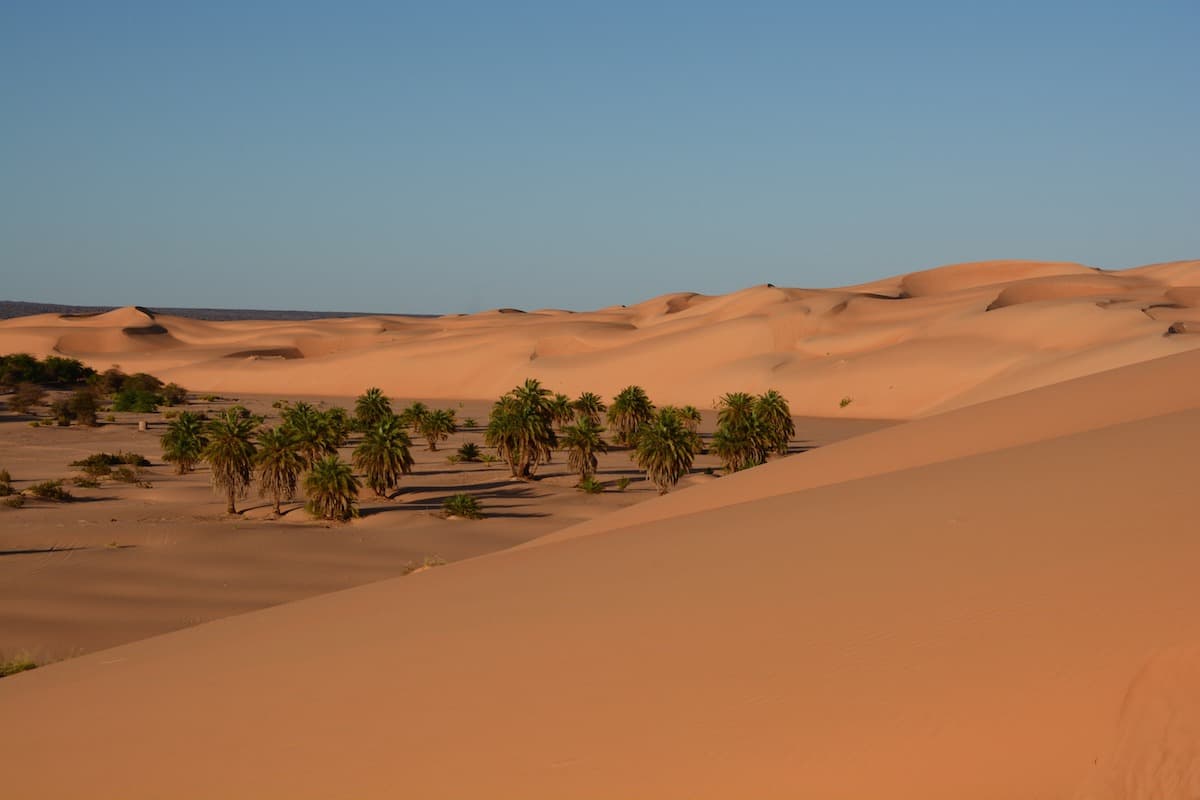
Crossing the Inchiri plains to reach the Western foothills of the Adrâr, the Amatlich erg
After leaving the city and its suburbs, we take the beautiful paved road that runs northeast towards the mining town of Akjoujt.
The Trarza region and the Atlantic coast are now behind us, the vegetation changes and becomes increasingly Saharan. The vast sandy plains of Inchiri lead us towards the somewhat surreal town of Akjoujt. A mining industry is present there and, since the Chalcolithic, Man has been extracting copper, gold and other materials.
The terrain changes and the vast plains give way to small black massifs.
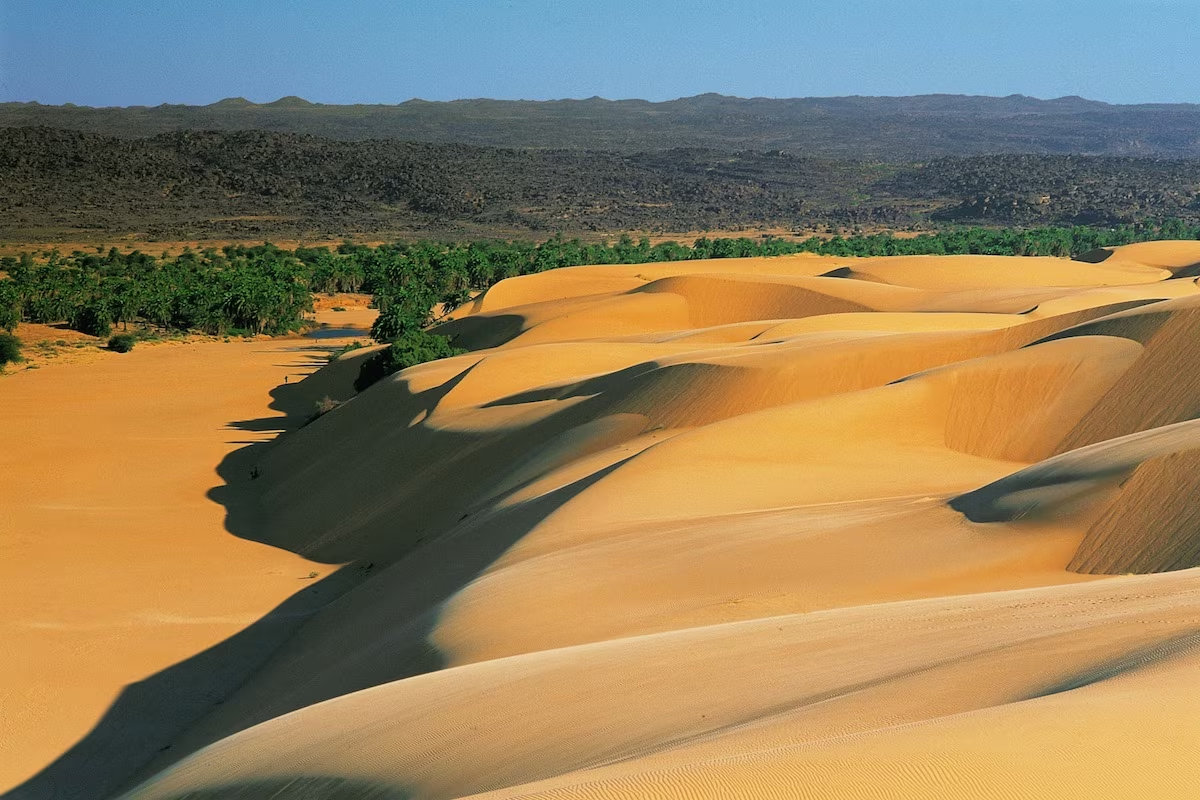
In the middle of the afternoon, the Amatlich dunes appear. They rise from the black mountains of Adrar. After leaving the road, we immerse ourselves in the heart of the dunes.
The Amatlich dune massif
TheAmatlich erg is a small-scale dune massif (130 km x 5 to 8 km) that stretches from NW to SE, from the El Gleitat palm grove to the Damane spillage zone where it takes the name Dkhaïna.
Despite its relatively limited surface area (if one thinks of the Akchar, the Makhteir or the Warane, for example), its variety is great with regard to the vast interdunes and rocky zones that frame it.
This erg, furthermore, was "sculpted" by waters during the "humid" period, 7,000 years ago. Thus, it was very regularly crossed by a wadi at the level of Foum Tizigui and both to the West (towards Akjoujt) and in the wide interdunes that are the Ifizouitne and Amlil Bou kerch, vast spillage zones and wadis are numerous.
Should a "good" rain occur and the former hydrographic network will come back to life for a few days, a few weeks. Thus, Damane to the South and Graret el Fras (the cultivable depression of the mare—which testifies to the past presence of horses—) are among other (of lesser importance) places of regular subsistence crops.
In the distant past, Neolithic man settled all along the Amatlich, his presence was widespread. Neolithic sites are very numerous, some of which have been well studied such as Khatt Lemaiteg (Vernet, 1985) in the vicinity of Damane and Medinet Cbat (Nicole Lambert, 1970) near the El Guechriyé well. The proximity of rock, in the form of various guelbs (peaks) or that of the Ibi noir massif (Ibi el Akhdar) means that the flora and fauna at the edge of the erg are very varied.
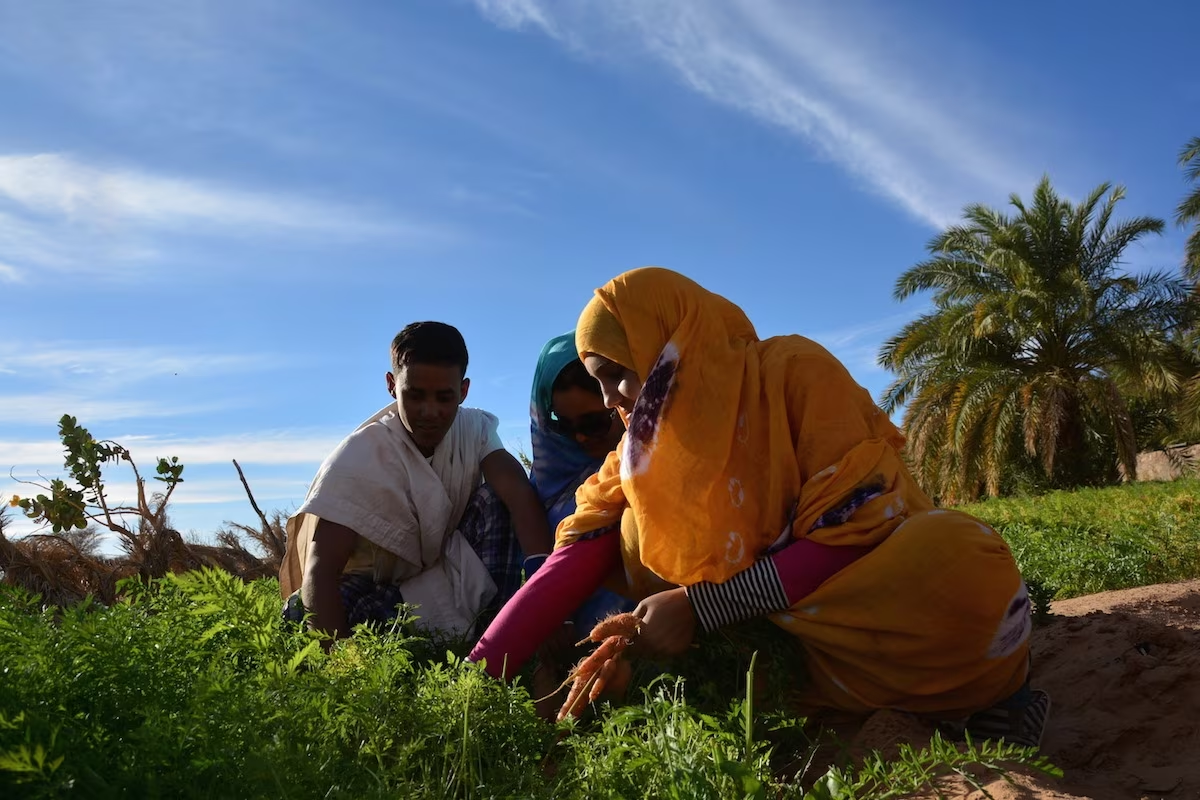
We will meet with the women of Azoueïga. Organized in a cooperative, they perpetuate basketry techniques and weaving of mats in plant fibers.
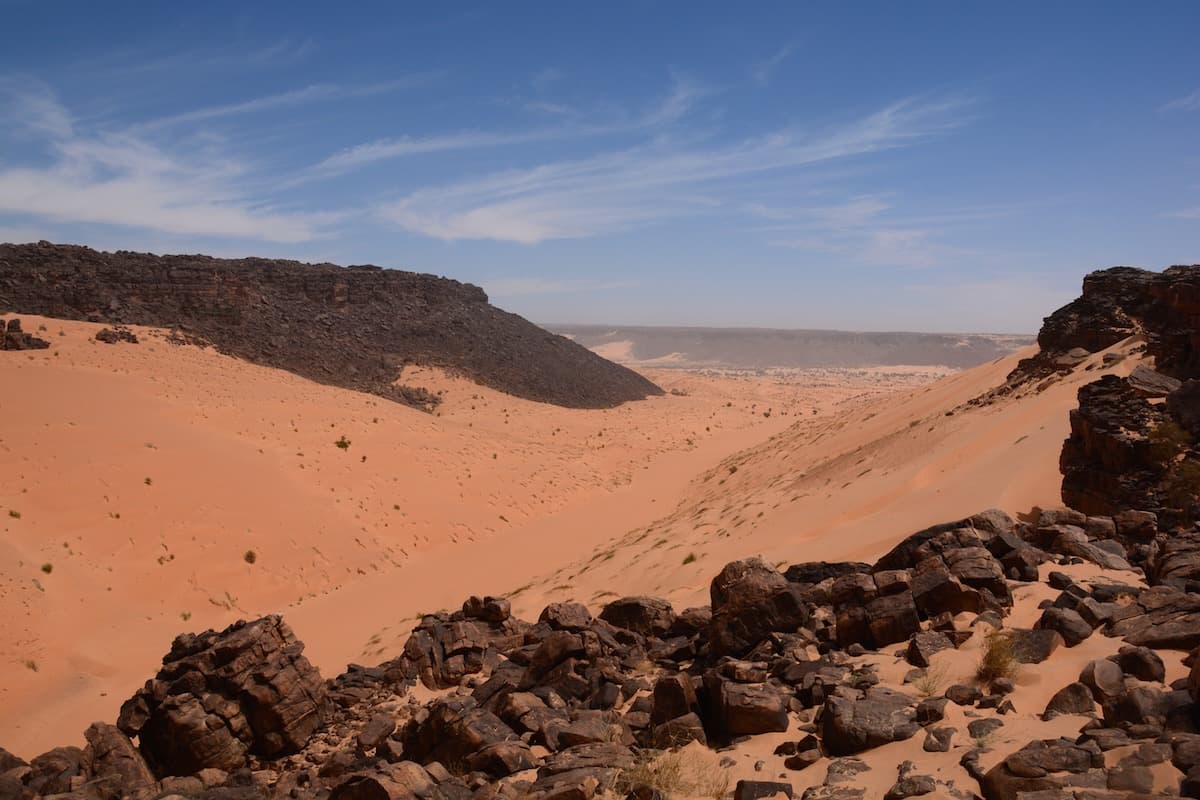
Between cliffs and sands, the Adrâr of palm groves and dates
We skirt the base of the erg Amatlich to venture into the Adrâr plateau. A track allows us to access the edge of a cliff that overlooks the oued El Abiod, a large tectonic fracture with blonde sands and multiple palm groves.
Through the superb Tifoujar pass we reach the bottom of the valley. The landscape is grandiose and the passage by car is spectacular.
Passe Tifoujar → Wad el Abiod (Vallée Blanche)
Wad el Abiod (Vallée Blanche) → Toungad
We head towards the Toungad guelta where it is not uncommon to encounter several migratory birds (white stork, grey heron, various raptors, Saharan or passing through) attracted by the very beautiful water source.
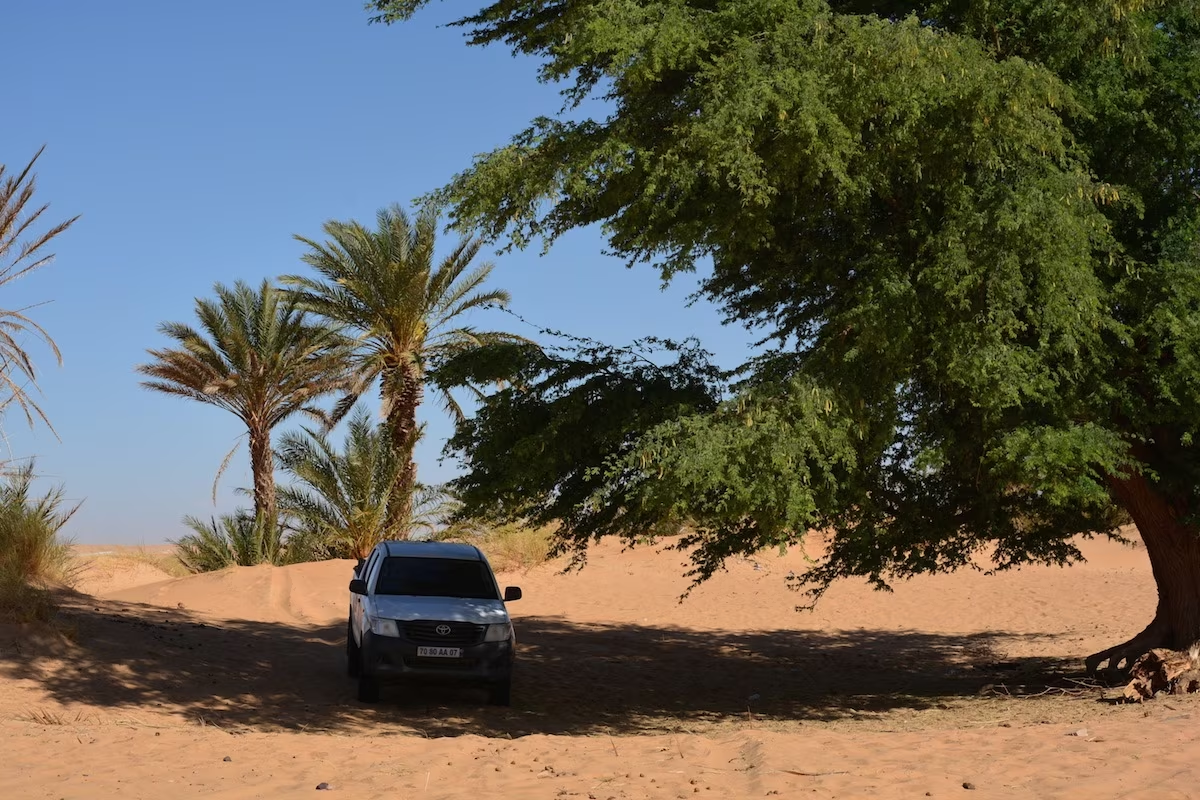
The Toungad gorge takes us to one of the most important palm groves in the region.
The village of Toungad has remained very traditional. We will meet its inhabitants, who are sedentary oasis dwellers.
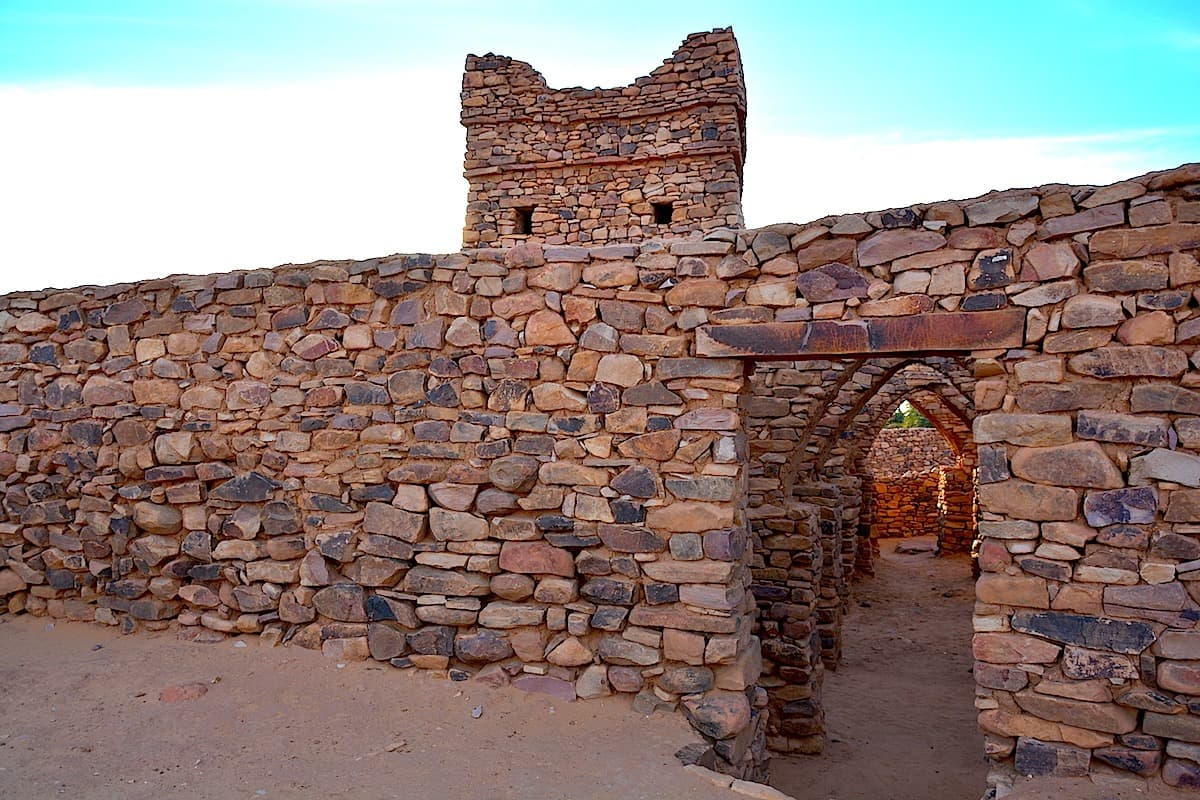
The main plateau of the Adrâr, the spaces of the great nomads and former caravan cities
The very beautiful palm grove of Toungad is framed by two immense dunes pressed against two rocky peaks. At the bottom of the gorge, a beautiful permanent guelta is the secret of this lush vegetation.
The village consists of a few solid houses and also of traditional Maghmeul and tikit made of plant materials.
We leave the village by a beautiful track that gently rises onto the plateau before joining the paved road that connects the regions of Adrâr and Tagant.
We leave the main road to continue due east towards a very beautiful fault of tectonic origin and the largest palm grove in Adrâr. We reach the villages of Mhaireth.
We leave the steep Mhaireth valley by a steep track. It allows us to access the main plateau of the Adrâr Mauritanien. A good track winding between the brown sandstone slabs allows us to reach the main track leading to Chinguetti.
The track is smooth and we reach the town of Chinguetti nestled against the beautiful dunes of the Warane erg.
The ancient city of Chinguetti
Chinguetti was founded by the Ida Ouali around 1525, upstream from Abweyr, which has now disappeared, itself created in 1261.
The probable etymology of the toponym shingitî would be:
well of the horse, from Soninké: si: well + n: of + gede: horse.
Chinguetti was the most active commercial center and the most important city in the Western Sahara. It was considered by Mauritanians as the 7th holy city of Islam with its 11 mosques, its 100 wells and its circle of scholars.
In 1675, a massacre perpetrated by part of the Ida-ou-Ali led to the breaking up of the group, whose survivors founded another ksar in the Tagant, Tidjikja.
Today only a single mosque remains and the memory of prosperous periods…
The main tribes that make up its population are the Ida-ou-Ali, the Laghlal and the Oulad Gheilan.
With their narrow and winding streets, their numerous dead ends, their low and dark houses made of local materials, their virtual absence of squares and communal spaces, Chinguetti and Wadâne have the structure of old ksour densely huddled around their mosques.
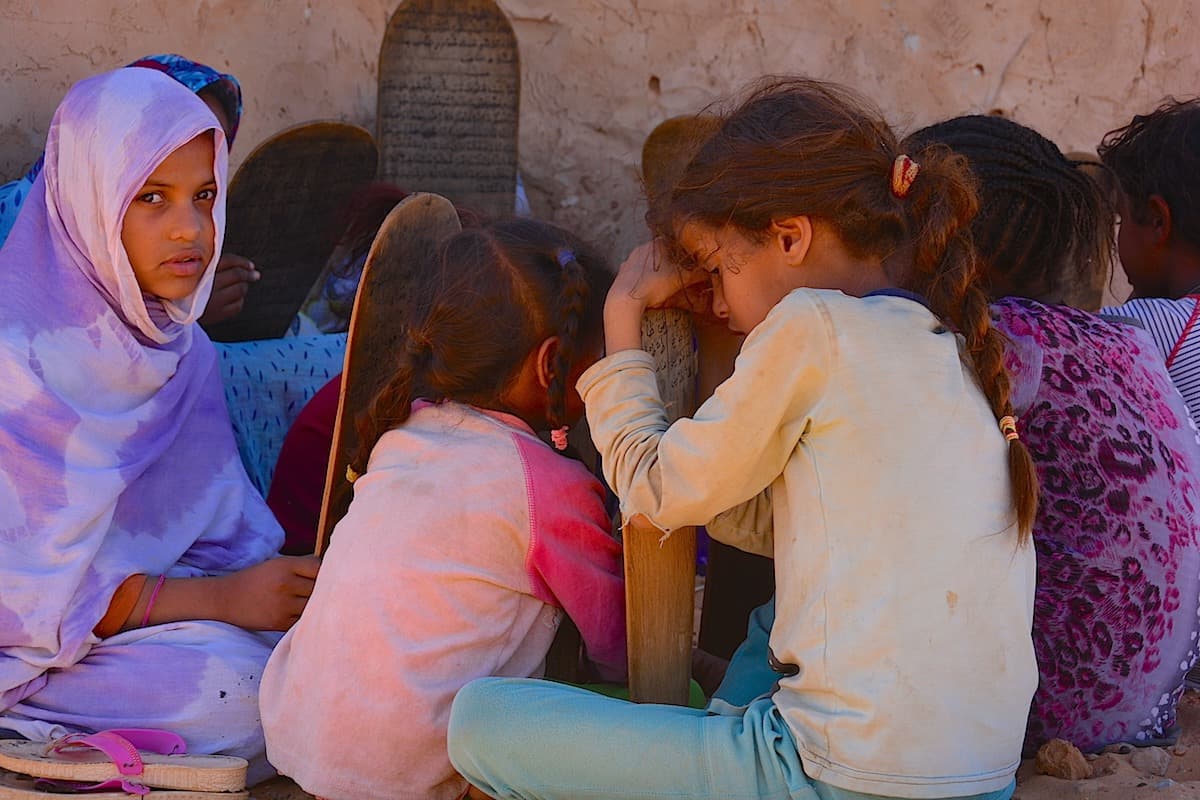
Chinguetti and the Warane Erg, softness of endless dunes
An early morning wake-up allows us to visit this Saharan ksar, private libraries, gardens…
We continue our transfer by vehicle in now sandy surroundings. The "track" passes north of the dune massifs of Wârane and Afam el Merzrougât.
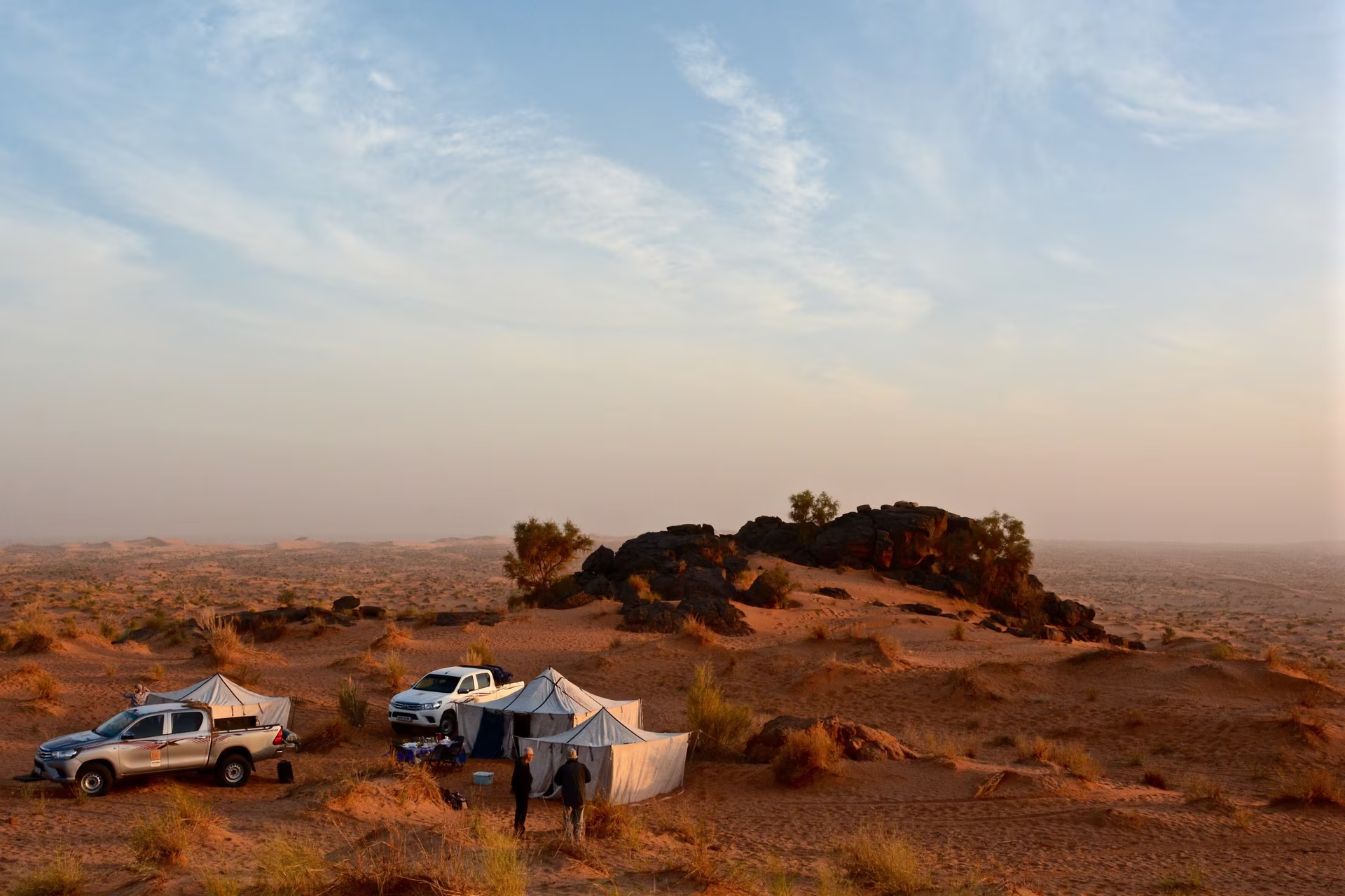
45 km from Chinguetti, the semi-nomadic camp of El Rhéouiyya welcomes us.
The semi-nomadic camp of El Kheouiya is established there during major droughts. The camp has been organizing itself over the past few years: development of goat and camelid breeding (from 2 camels in 1993, now a herd of over 70 animals), creation of a school in 1994, establishment of a small palm grove associated with gardens in 1999 and, now, some permanent structures.
«But we, we remain under the tent» Atfeil, the camp chief, assures us…
The bonds we maintain with the different families of the camp are close and greatly friendly.
The track passes north of the small Herour massif. Between sand and rocks, we head toward the ksar of Wadâne, the last settlement before the vast solitudes of Mauritania's remote borders.
The ksar of Wadâne, (Ouadâne) which was founded, it is said, the same year as Tichîtt (1141), would derive its name from the Arabic word meaning "two riverbeds" (wadân). The details according to which these two wadis would be the wadi of dates and the wadi of sciences are entirely to the credit of the city.
The ancient city is mentioned in writing in the middle of the 15th century in a Portuguese travel report but it remains difficult to form a precise idea of the city's beginnings despite its position on the western axis of trans-Saharan caravan trade.
Wadâne is a dense urban center, of the ksar type, formerly surrounded by a very secure fortified enclosure that resisted all foreign forces until the arrival of the French.
The dominant tribes are the Kounta, the Ida ou El Hadj, the Chorfa, the Amgârîj and the Aghzazir.
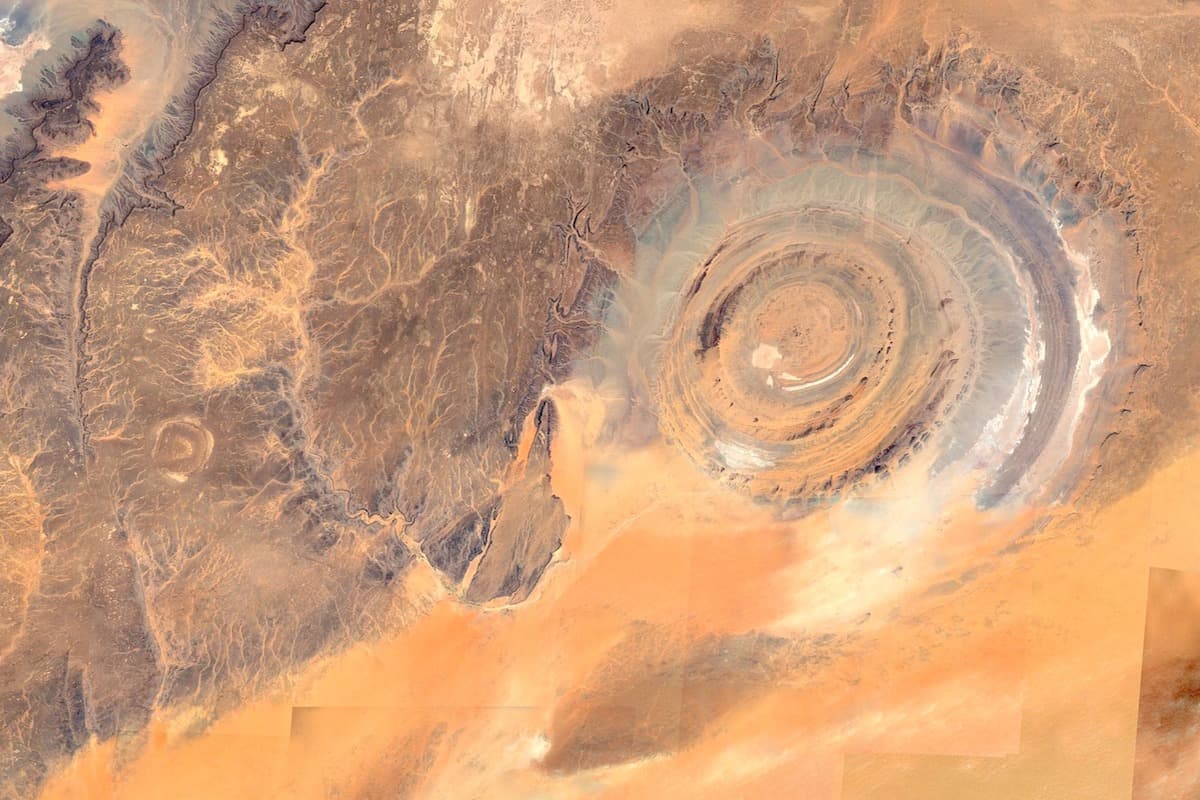
The curiosity of Guelb Er Richât at the El Beyyed circus
We drive towards the Meyateg palm grove which was once prosperous. The tribes from Wadane preserve date palm trees.
Arriving in the geomorphological system of Richât, we reach the ruins of the old Portuguese fort of Agueidir.
We arrive in the strange region of Guelb Er Richat.
The flattened dome of Guelb Er Richât, which appears during the Secondary period, is located at the borders of the dark mountains of the Mauritanian Adrâr, to the west, and the vast flatlands of rocks, stone slabs and dunes of the Taoudenni basin, to the east.
The strange system of concentric ridges of the Richât is so striking that it appears today on all maps, even at small scale.
Richât is the plural of richa (feather), a term that perfectly describes the appearance of its ridges whose lee-facing slopes are streaked with tongues of sand and which dominate the deep flats where goats and camels graze… when, by chance, it has rained.
Because of its very size, it was revealed only very late, by professor Théodore Monod in 1934.
Indeed, no one, whether coming from the rugged plateaus of the north or the dunes of the Majabat Al Koubra (Monod, 1958), to the south and southeast, could imagine that these low ridges are organized in such a perfect concentric system, vaguely elliptical of 22 km and 25 km in diameter, rising from a boutonnière of 45 km, the Taguenzé, opening in the sandstone plateau.
Guelb Er Rîchat (Camp Boisé) → El Beyyed
We cross the entire Guelb Er Richat to reach its northern edge. The stone desert of the Akerdil wadi is difficult for our vehicles as is the track to climb onto the plateau's edge. The rocky enclosure around Guelb Er Rïchat is called the Taguenze.
We now drive across the plateau before reaching the northern edge of the Adrâr. A quick descent takes us into the El beyyed cirque.
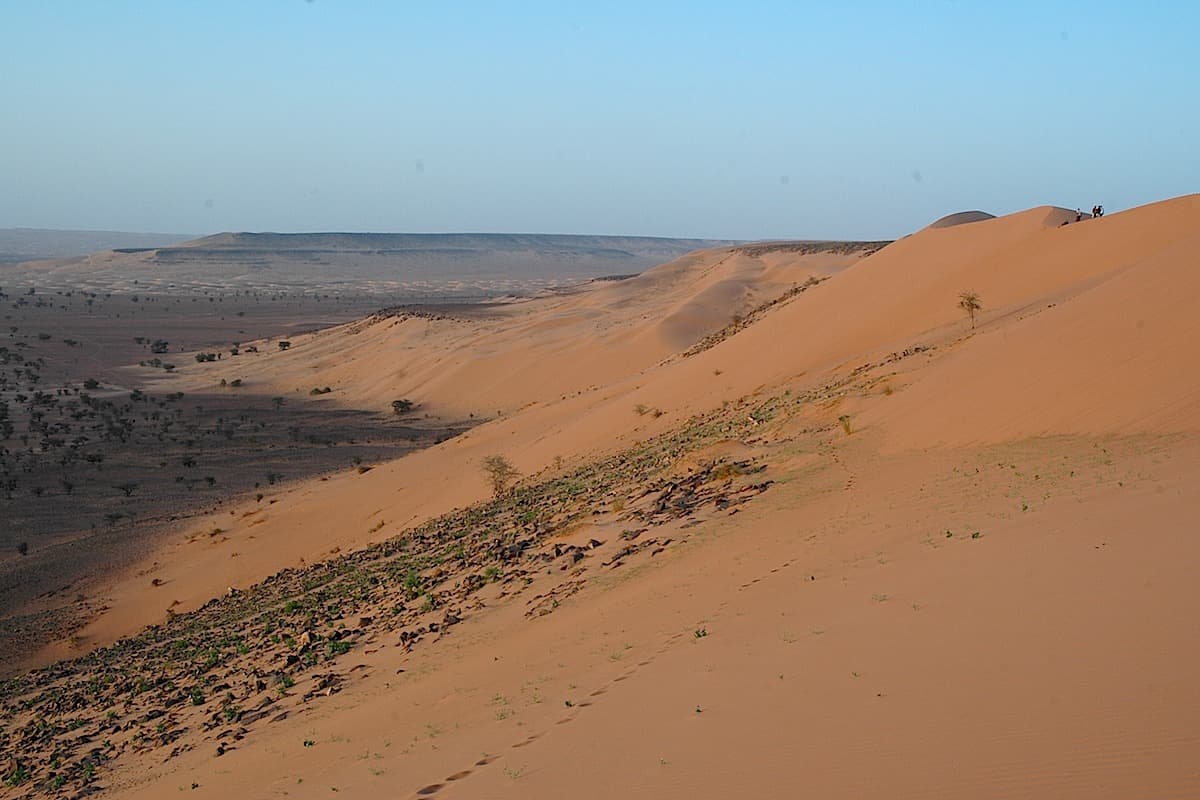
Day discovering the El Beyyed circus, a major site of Mauritanian rock art.
The El Beyyed engraving sites have been known since 1932 (discovery by Lieutenant Girard) and some engravings were probably published by Monod, in a publication we were unable to find.
The four stations (at least) in the sector appear to show significant human presence in the past, which is corroborated by the various water sources still existing, and especially the substantial lithic industry of the El Beyyed cirque.
The Tarf Agher is the southern extremity of the Itletefatène plateau. Finger-shaped, it forms a kind of cape allowing access to the two inlets of Ma'riya and Ghzalia (two forms of gazelle), whose thresholds leading to the plateau each shelter a guelta.
This ensemble forms the eastern part of the El Beyyed cirque. Engravings are found on fallen blocks, essentially at the foot of the cape, others on blocks still at the summit, or on partially tilted sandstone table tops.
Note the presence of tumuli on either side of the point.
On foot, we set out to explore this iconic Saharan location. To the north, the great dunes of the erg Maghteir stretch out while a cirque of cliffs surrounds us.
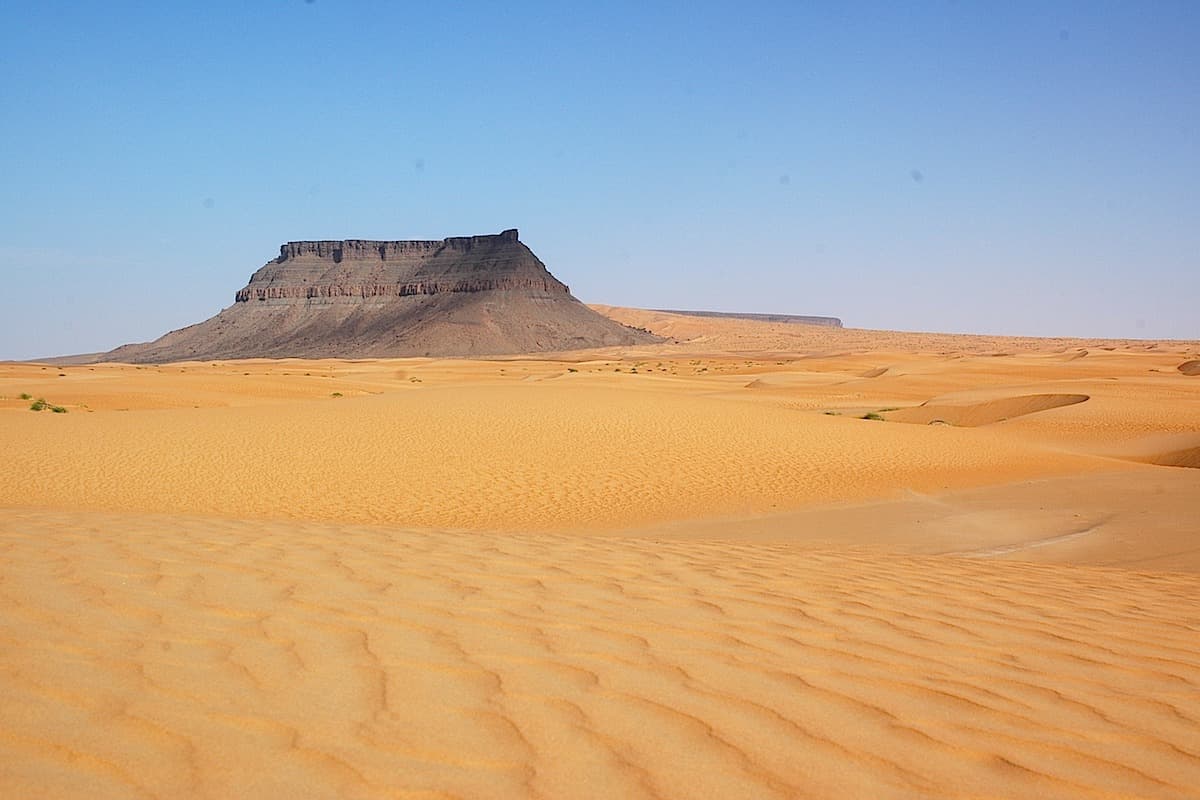
Between the cliffs of the Adrâr and the dunes of the erg Maghteir
Theerg Makhteir is one of these powerful dune massifs running from western Algeria, west of the Saoura to the shores of the Atlantic.
Born under the general name ofErg Chech, it ends its course in the ocean under the name of Azefal.
A cape of the Adrar plateau rises like a ship's bow, thetarf Tazazmout. It marks the entrance to the corridor leading to a hallowed place of the Mauritanian Sahara,El Beyyed.
The Chemchane sebkha and the stromatolites plateau of Atar
Heading due west, we skirt the main cliff of the Adrâr. The sebkha Chemchane forms a vast depression that we call the baten (belly).
This long corridor gradually leads us to the wadis flowing into the Atar basin. We reach the asphalt ribbon heading toward northern Mauritania. We are in very particular rock formations, stromatolites.
Stromatolites are the oldest structures that can be linked to biological activity; they are fairly common in Precambrian carbonates.
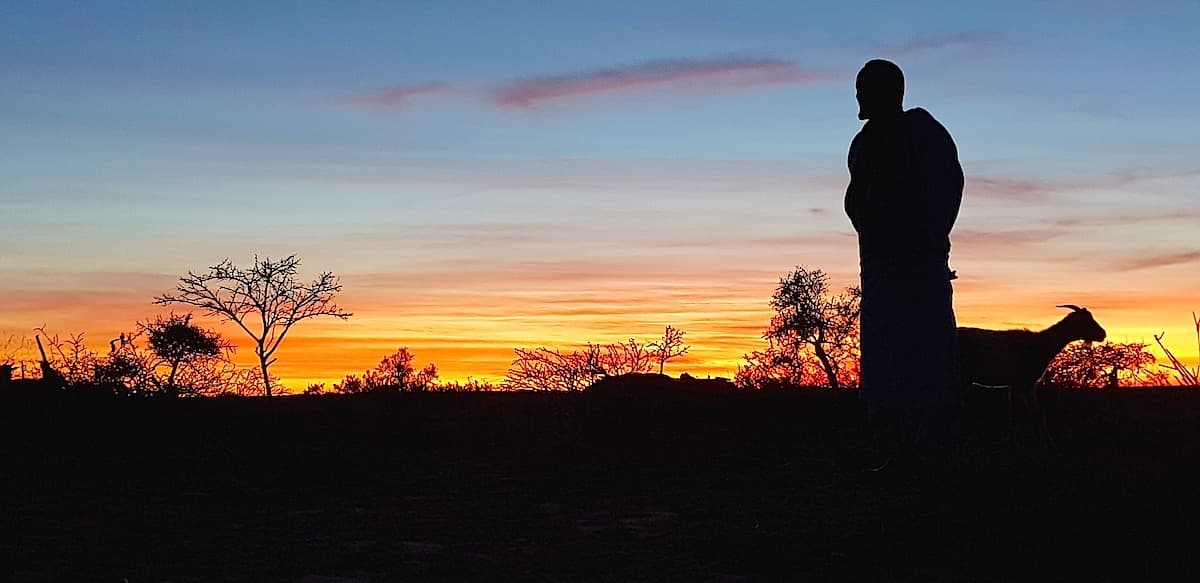
Towards the North of the country, Zouerat and the iron mine
We take the beautiful asphalt road heading north to Mauritania. The road quickly leaves the Adrâr massif to head toward Choum in the corner bordering Western Sahara.
Zouérat, the mining city of the north, will be discovered after 4 hours of driving.
The mining city of Zouérat
Zouérat is close to the border with Western Sahara and is the capital (wilaya) of the Tiris Zemmour region.
It is also the 3rd city in the country. Zouérat receives iron ore from mines on the plateaus, including those of F'Derick, Tazadit and Rouessat.
It is the starting point of the Zouerate-Nouadhibou railway line which is used for exporting iron ore to the port of Nouadhibou, then by ship to importing countries.
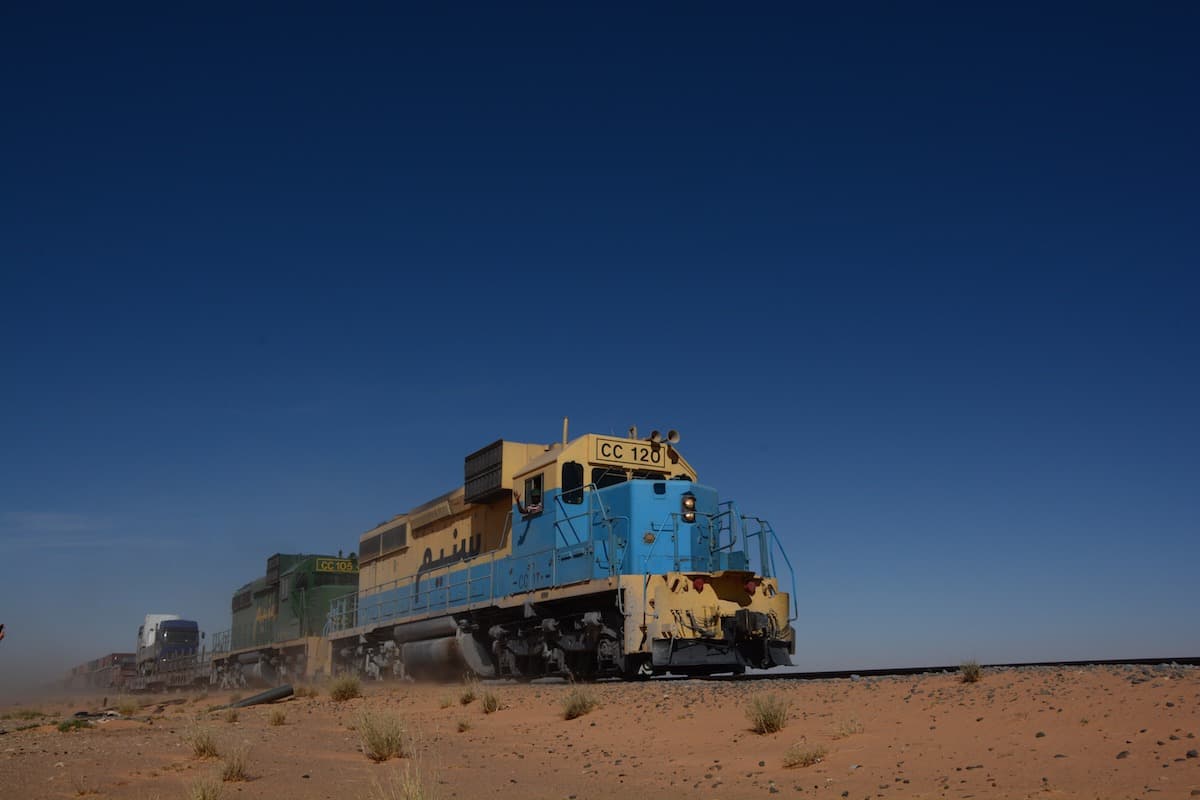
The mining city of Zouérat and the world's largest train
At the beginning of the day, we head towards one of the world's largest iron mines. It is a surreal visit in a desert environment.
The first mineral train departs at 2 PM. We board the unique daily passenger car. The journey lasts 4 hours until the city of Choum, the first stop.
Taking a seat on the mineral train is an adventure in itself, we travel like Mauritanians, with them. Exchanges quickly become friendly and very interesting.
These out of the ordinary trains, whose length can reach 2.5 km, consist of 3 or 4 diesel-electric locomotives with 200 to 210 hopper cars for iron ore, with a payload of 84 tonnes, and a variable number of service cars.
Generally, passenger cars are attached to the first daily train. These daily services are managed by a SNIM subsidiary.
The railway line between Zouérate and Nouadhibou allows iron ore extracted from Kediet ej-Jill to be transported to the port of the country's economic capital, where it will be loaded onto ore carriers bound for industrialized countries. This desert train was considered the longest (220 wagons for a length of 2 km), the heaviest (22,000 tons, 100 tons per wagon), and the slowest in the world (15 to 18 hours to travel the 650 km between Zouérate and Nouadhibou). Only this last point remains valid, as in recent years, an Australian train has become the longest and heaviest in the world.
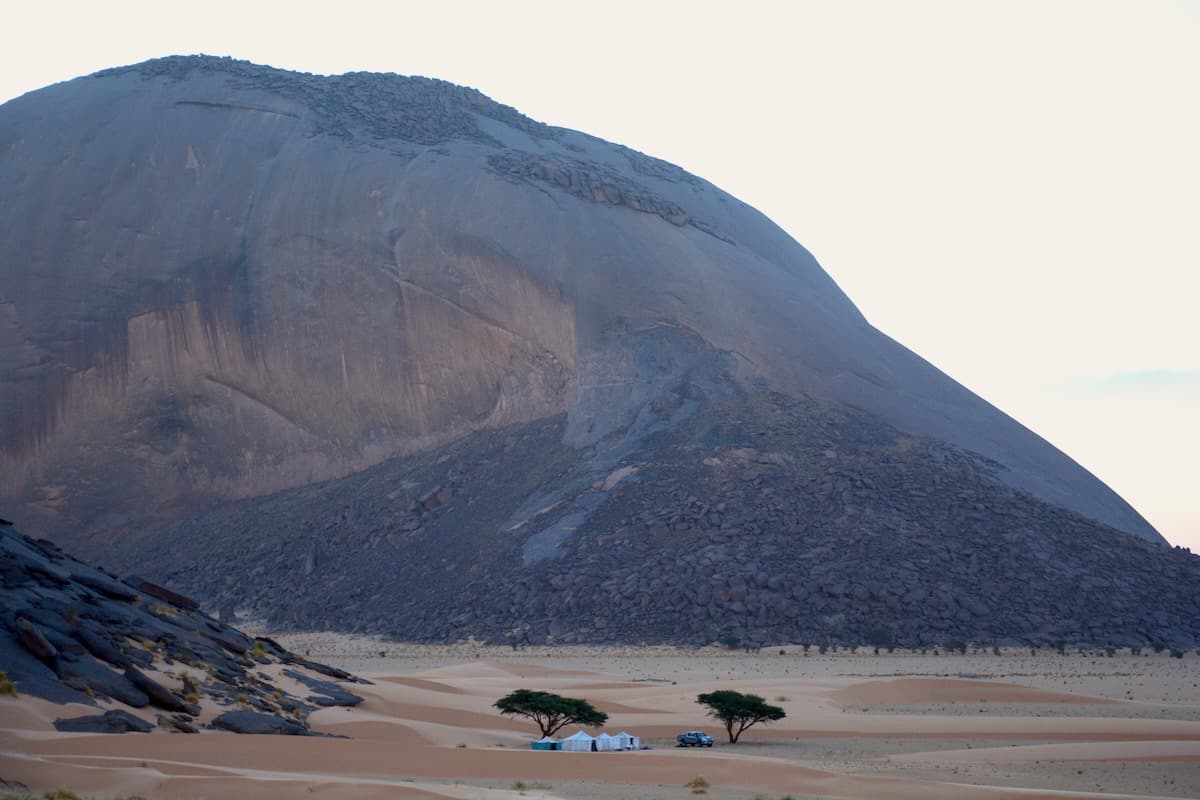
The Monoliths of Ben Amira and Aïcha
We cross the large town of Choum to take the track due west. We skirt the border of Western Sahara, former Spanish Sahara claimed by the Sahrawi peoples.
The granite monoliths of Ben Amira and Aïcha raise their characteristic domes above the sandy plain.
The Ben Amira monolith is one of the most breathtaking places in Mauritania. This enormous mass of granite rock rises to over 600m.
With the sand dunes surrounding it, it provides an excellent Saharan landscape. Ben Amira is the largest monolith in Africa and the third largest in the world, after Uluru and Mount Augustus located in Australia.
Saharan immensity to reach the Atlantic coast and Banc D'Arguin
Along the railway line, we drive through vast flat plains occasionally interrupted by small ridges of active dunes. We quickly reach the village of Timimichat then the Inal railway junction.
Discovering Imragen's Natural and Human Environment
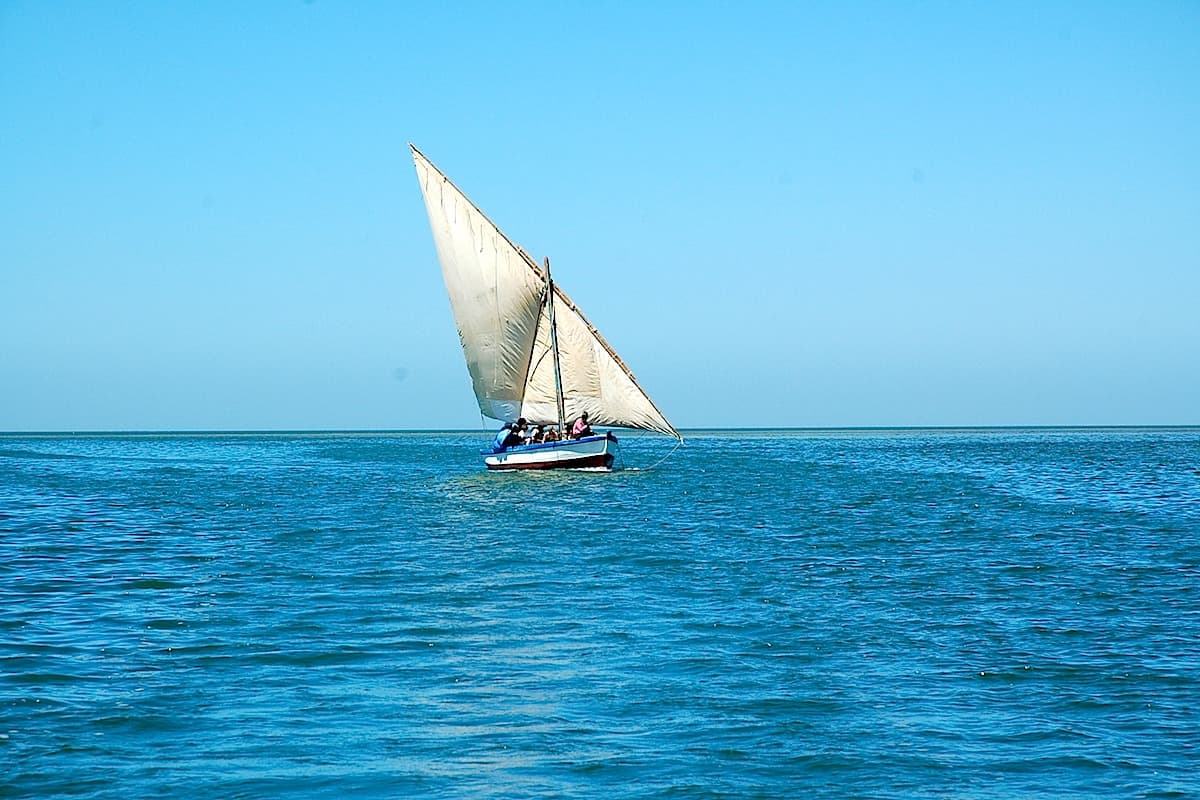
Early in the morning, we board the Canarian lanches used by Imragen fishermen to move silently through the channels between the islands.
The exceptional richness of the Banc d'Arguin is made up of its very important bird life. Myriads of birds take flight at our approach, forming incredibly beautiful movements in the sky. Marine mammals are also present. It is not uncommon to see dolphins and, with great luck, killer whales.
We share a moment with Imragen fishermen navigating through the channels of the Banc d'Arguin. The mudflats, the myriads of birds, the marine mammals are their daily life.
On the Atlantic coast to reach Nouakchott
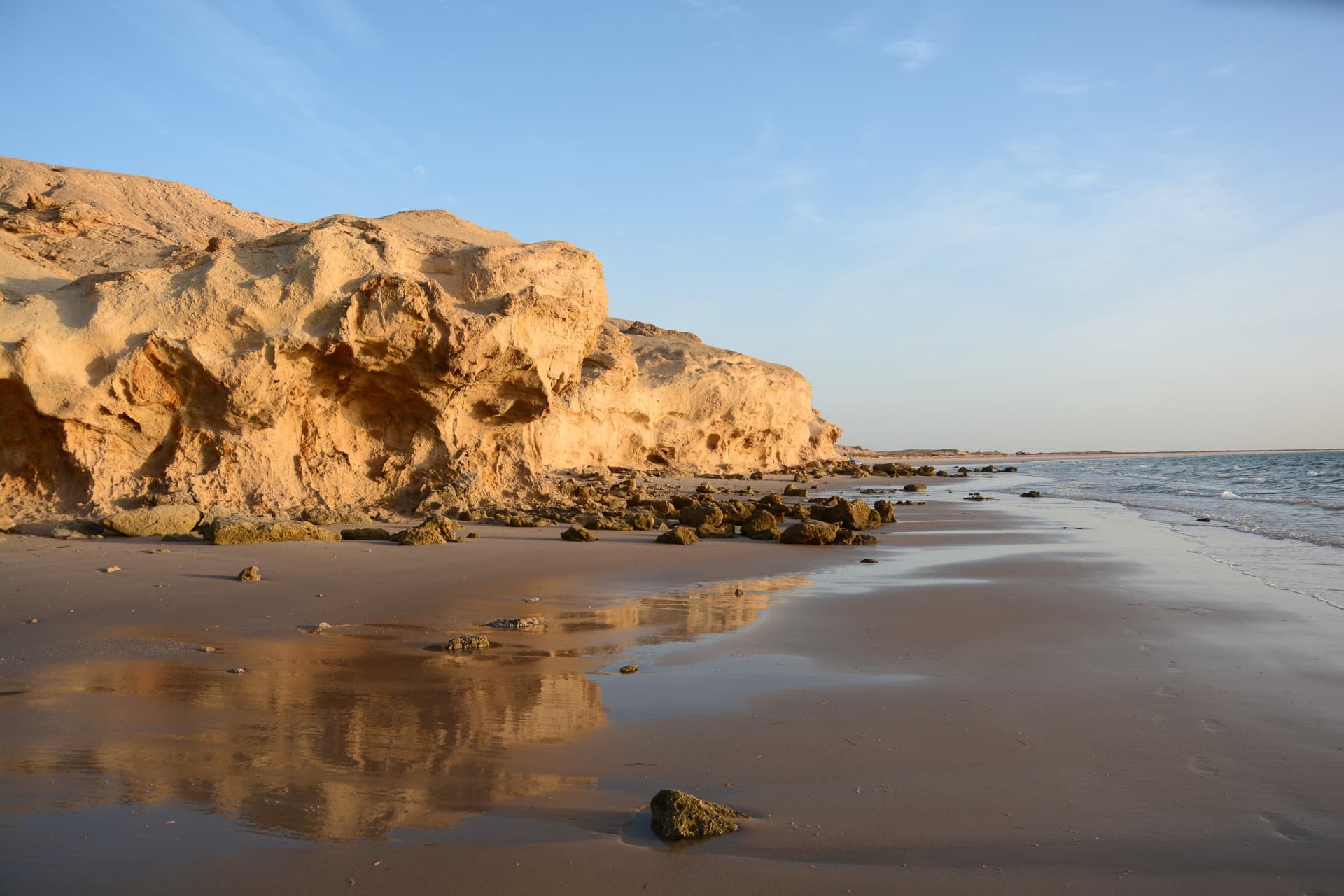
Early in the morning, we head south. Weather and tide permitting, we drive along the Atlantic coast on the beach.
Here, the desert and sea blend together. The Sahara ends its course, pushed by the Trade Winds into this ocean with cold currents.
Following your flight schedule to France, we transfer you to the Nouakchott-Oumtounsy International Airport.
Practical Information
Registration is considered firm and final after payment of a deposit of 30% of the total price and acceptance of the specific terms of sale.
The balance must be paid no later than 45 days before the departure date.
See our specific terms of sale for full details.
In the event of cancellation by the traveller, the following fees apply:
- More than 60 days before departure: 40% of total price (deposit retained)
- Between 60 and 30 days before departure: 50% of total price
- Less than 30 days before departure: 100% of total price
We strongly recommend taking out cancellation insurance. See our specific terms of sale for full details.
The information below concerns travelers who are nationals of the European Economic Area (EEA), Switzerland, and Canada traveling to Mauritania for a tourist stay. As entry rules may change, we recommend verifying this information with the official authorities before your departure.
Passport
To enter Mauritania, your passport must be valid for a minimum of six months after the date of entry into the country and must have at least one blank page for immigration stamps.
The document must be in good condition (no damaged, torn, or altered pages).
Visa
Nationals of the European Economic Area, Switzerland, and Canada must in principle have a visa to enter Mauritania. This visa can be obtained:
from the embassy or consulate of Mauritania in your country of residence before departure,
or, depending on current conditions, upon arrival at Nouakchott International Airport (visa on arrival), for a stay of up to 30 days.
It is strongly recommended to inquire with the Mauritanian authorities or the competent embassy before departure, as visa application procedures may change.
The authorities may request:
an exit ticket from the territory (return or onward flight),
proof of sufficient financial resources for the duration of your stay,
a hotel reservation or an invitation letter.
Health and vaccinations
No vaccinations are officially mandatory to enter Mauritania, with the exception of the yellow fever vaccine if you are arriving from a country where this disease is endemic.
However, several vaccinations are strongly recommended by health authorities:
Hepatitis A and B
Typhoid
Meningococcal meningitis
Rabies (depending on planned activities)
Update of your routine vaccination schedule (diphtheria, tetanus, poliomyelitis)
Antimalarial prophylaxis is recommended for the entire Mauritanian territory. Consult a doctor or an international vaccination center before your departure.
Security and registration
Mauritanian authorities may require the registration of foreign travelers with local police or gendarmerie services within 48 hours of arrival, particularly outside the capital. It is advisable to inquire about the obligations in place at the time of travel.
Due to the security situation in certain regions of the country, it is recommended to consult travel advice issued by the authorities of your country of residence before departure.
Traveling with children
Minors must hold their own valid passport covering the duration of the stay.
In some European countries, when a minor travels without one of their parents, an exit authorization from the territory may be required according to the regulations of their country of residence.
Other nationalities
Entry conditions may vary depending on nationality. Travelers concerned should inquire with the embassy or consulate of Mauritania in their country of residence.
To participate in our trips, it is strongly advised to be insured for evacuation assistance and medical expenses abroad.
Your local agency encourages you to review the specific policy developed with our partners CHAPKA ASSURANCES and AXA ASSISTANCE.
To subscribe to insurance, learn about coverage and rates, follow the link below.
CAP EXPLORER: The comprehensive insurance solution designed for a worry-free journey!
Choose the plan that suits you best:
Explorer'Multirisque
Explorer'Annulation
Explorer'Assistance
Explorer' Complémentaire Carte Bancaire
Specific to our trips, we strongly recommend subscribing to one of them.
If you choose to subscribe to one of these plans, the policy detailing all coverage and claims procedures are available on the insurer's website.
Your local agency will be aware of this, but only the participant is responsible for complying with claims reporting procedures. The participant should therefore keep this policy with them throughout their trip.
Chapka — Cap Explorer
Our insurance partnerTravel with peace of mind with our partner Chapka. Cancellation, repatriation, medical expenses, baggage… All the coverage for a worry-free trip.
Travel with peace of mind — I'll handle the insuranceFrequently asked questions
A tourist visa is required and is issued upon arrival at Nouakchott Airport or at the consulate. Your passport must be valid for at least 6 months beyond your entry date. The security situation requires heightened vigilance. Before booking your trip, please check with the consulate or embassy of your destination for entry requirements applicable to your nationality.
Go to the My Trips section to find all your projects.
You can send a message to your host directly from the Tea Lounge.
For a tailor-made quality trip, budget between 180 and 300 euros per day and per person, including accommodation, meals, 4x4 with driver and English-speaking guide. International flights (500-800 euros return) are additional. The desert, the Sahara train and the beaches offer unique experiences.
Your documents are accessible in the Documents tab of your trip.
Absolutely. We adapt each itinerary to travellers' profiles. For families, we prioritise relaxed paces, family-friendly accommodations, fun and educational activities, and comfortable private transfers. Our English-speaking local guides know how to capture children's attention with age-appropriate anecdotes.
It's simple. You exchange with our local team to define your wishes, budget and dates. You receive a detailed itinerary proposal within 48 hours. You adjust every detail together until you reach the perfect version. You confirm and travel with peace of mind. Your local agency remains available 7 days a week throughout your trip.
In case of emergency, contact your local agency immediately.
Payment is generally made in two installments.
Our agency is part of the Nomadays network, registered in France. You benefit from APST (Association Professionnelle de Solidarité du Tourisme) coverage, which protects 100% of your funds. Secure payment, repatriation insurance included, and English-speaking assistance 24/7 on the ground throughout your stay.
Let's talk about your adventure — Adrar
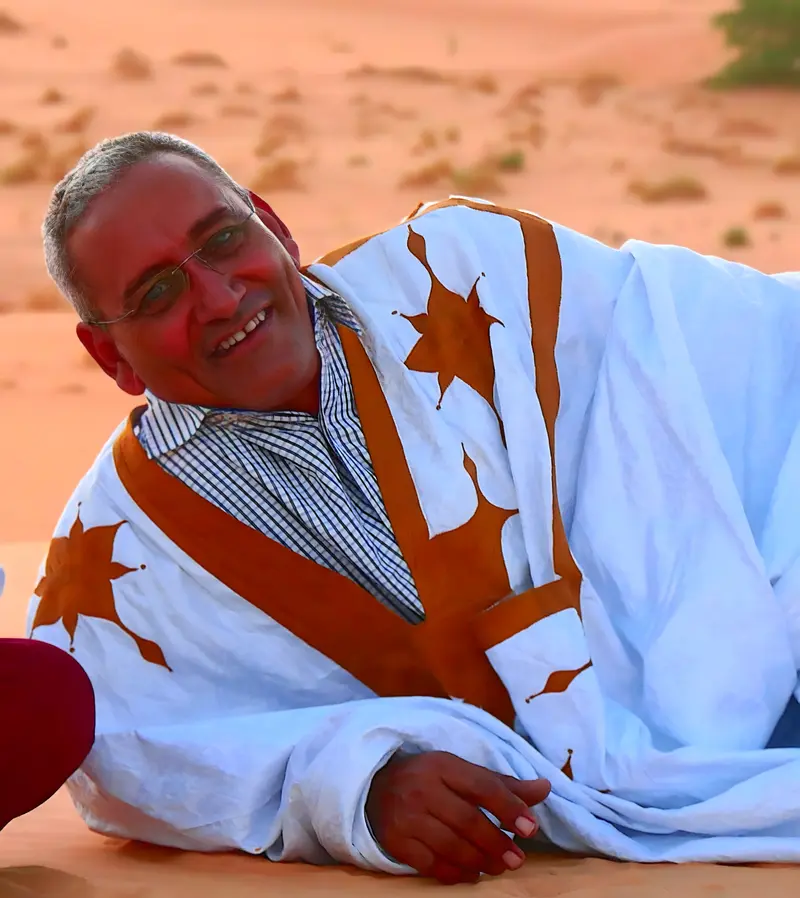
Craftsperson of journeys in the heart of Mauritania, based in Atar
Mauritania is a country that reveals itself with respect and patience. My role is to help each traveler approach it in the best conditions, with confidence and curiosity.
— Isselmou