Phrae
Phrae
A historic city in northern Thailand, Phrae charms with its Lanna temples, colonial teak houses and Mo Hom indigo craftsmanship. An authentic stop away from mass tourism.
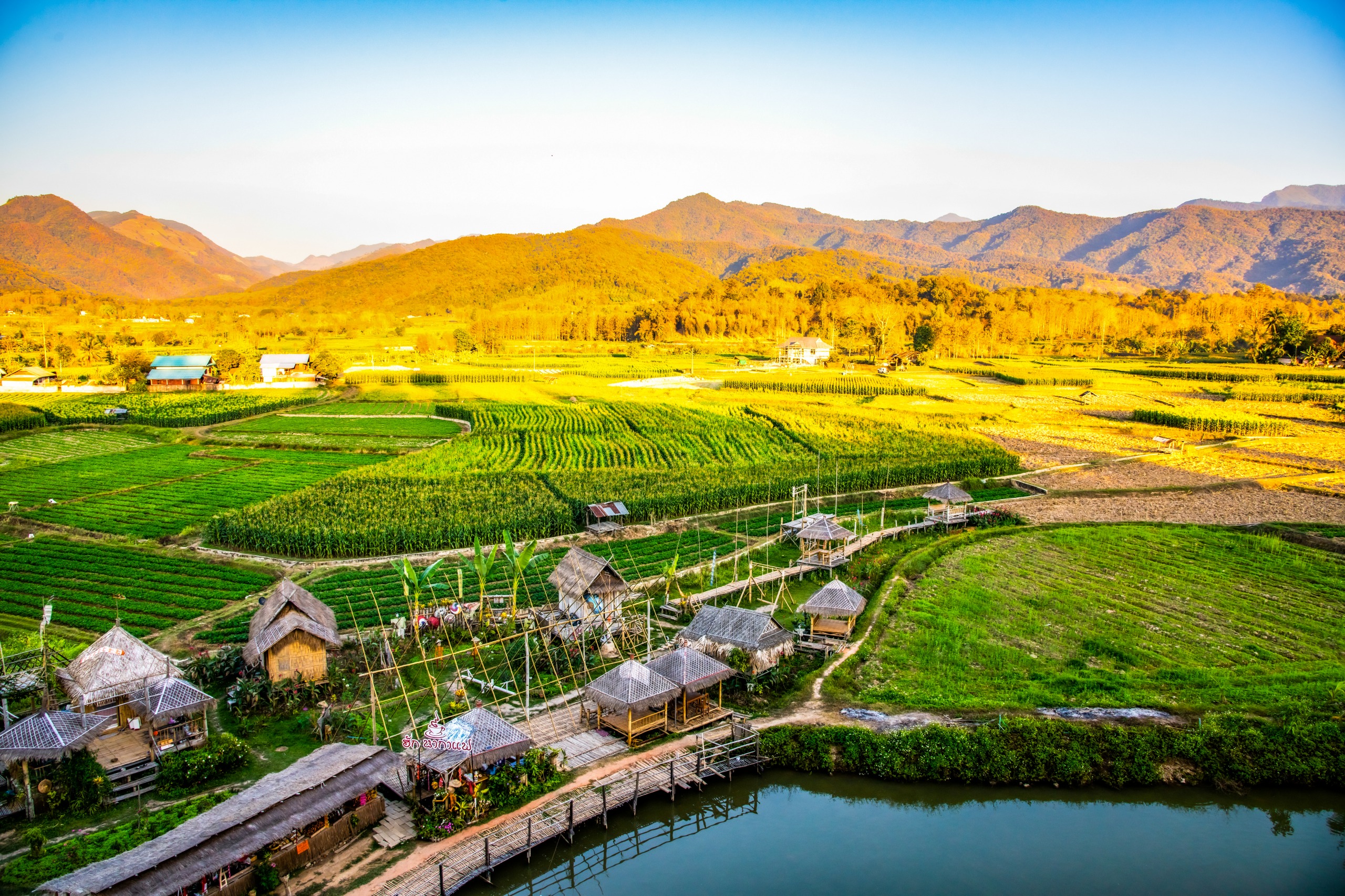
Nestled in the northeast of Thailand, Phrae lies at the foot of the mountains that separate Thailand from Laos. This is a spiritually significant city still relatively untouched by tourism, yet singularly rich in history. Its numerous temples, ancient walls and colonial teak houses bear witness to this legacy. The city is home to 20,000 residents, particularly appreciated throughout the country for their hospitality. In Phrae, you are sheltered from mass tourism and the atmosphere is decidedly peaceful.
History
The city of Phrae was founded by the Mon people at the end of the first millennium when it belonged to the Haripunjaya kingdom. In 1443, it came under the dominion of Chiang Mai under King Tilokaraj's rule.
As a testament to its antiquity, the city is accessible through four gates corresponding to the cardinal directions: Pratu Sri Chum to the North, Pratu Chai to the South, Pratu Mai to the East, and Pratu Man to the West.
Built on an oval plan, it shares the same shape as its two neighbouring cities. Blessed with teak forests, the Phrae region attracted the English and Burmese in the 19th century and became a celebrated centre for teak exploitation, much like Lampang.
Phrae Today
Indigo craftsmanship is widely practised throughout Thailand and holds an essential place in Phrae like all provinces in the country. However, the city is currently the leading reference in the production of blue shirts.
What to See in Phrae?
Phrae region is the ideal destination to discover traditional Thai culture in complete peace. Though little frequented by tourists, the city brims with ancestral beauty that will captivate you with Thailand's charms.
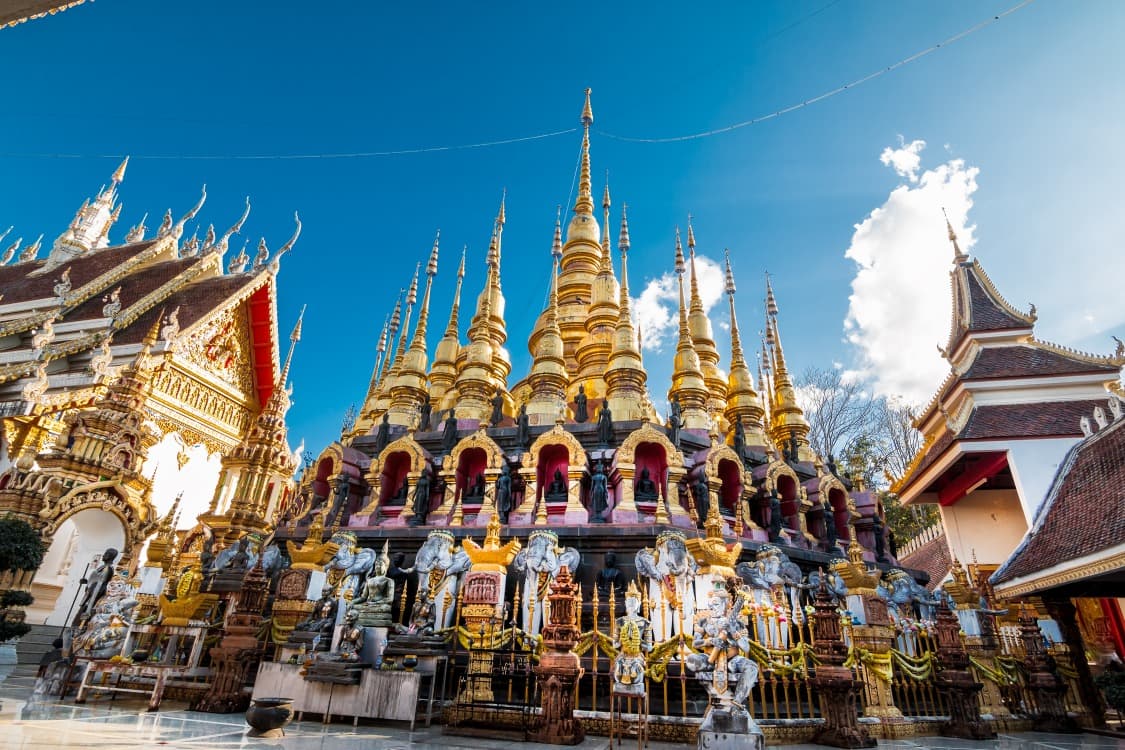
The city is home to around a dozen temples worth discovering. The oldest is Wat Lang, renowned for its lush surroundings and the small wooden house nestled within its grounds. Among others, Wat Phra Non, which has existed for 200 years, preserves the region's typical architecture and houses a reclining Buddha statue. It is equally worthwhile to visit the charming Wat Phong Sunan hidden behind the Vongburi House, and Wat Phra That Cho Hae, an important pilgrimage site adorned with ancient teak trees. Nevertheless, the greatest tourist attraction remains the Wat Phra That Suthon Mongkhon Khiri.
You'll encounter several colonial wooden houses throughout the city. Don't hesitate to explore the Vongburi House, dedicated to the Prince of Phrae 130 years ago, and the Chao Lang House, built entirely in teak.
If you love nature, the Erawan caves are also worth visiting for their distinctive splendour.
What to Do in Phrae?
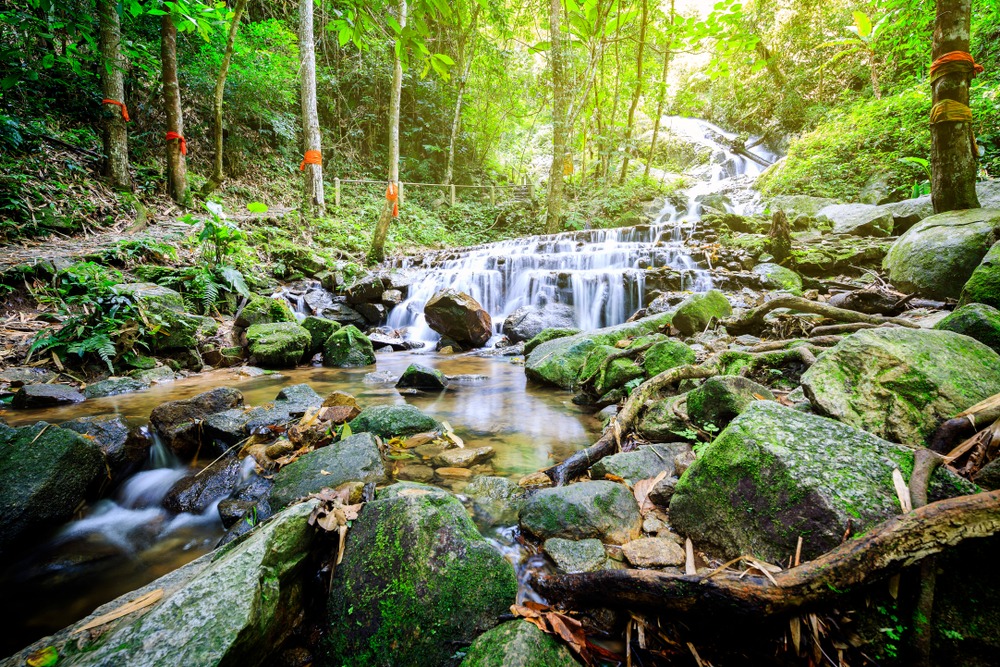
A region rich in forests, waterfalls and mountains, this is a true paradise for adventure enthusiasts. Several thrilling activities are available, such as rafting on the Yom River, camping, or trekking in the Mae Yom National Park.
Head down to the Ban Thung Hong village to discover the Mo Hom indigo dyeing that brings fame to the city. There, you'll experience unique and enjoyable moments dyeing a handkerchief, scarf or other accessory yourself—something you can take home as a souvenir.
To make your stay in Phrae truly memorable, don't miss visiting the Kad Phra Non night market on Saturday evenings to experience a relaxed, less touristy atmosphere with locals.
This cultural region hosts various annual festivals: the Kin Salak Fair, the Phra That Cho Hae Fair, among others.
Climate
Phrae enjoys a tropical savanna climate where winter is predominantly dry and pleasant. During this period, rainfall decreases and the average temperature is around 23°C. However, it's considerably cooler in December.
Thus, the best time to visit Phrae is the winter season, between November and April, to avoid heavy rains. Knowing that in April, the average temperature reaches 31°C, it is the hottest month of the year.
Summer, marked by the rainy season, begins in May and ends around late September. Nevertheless, showers are brief in Phrae except in August when precipitation averages 419.6mm.
How to Reach Phrae?
The city is isolated at the foot of the mountains, but it is easily accessible. To get to Phrae, you can take:
The bus: several buses depart from Bangkok to Phrae for a 10-hour journey. You can also reach the city from Chiang Mai in just 4 hours.
The train: this mode of transport allows you to enjoy the scenery. Trains from Bangkok and Chiang Mai serve Den Chai station, located 23 km from the city.
The plane: you can fly from Bangkok to save time.
Getting Around the City?
Phrae is relatively flat and you can walk around the interior of the ramparts, knowing this is the most interesting part of the city. However, it's possible to rent a bicycle locally for easier navigation. You can also hop into a tuk-tuk or hire a local taxi, commonly called a songthaeo, for greater comfort.
Photos
Attractions in Phrae
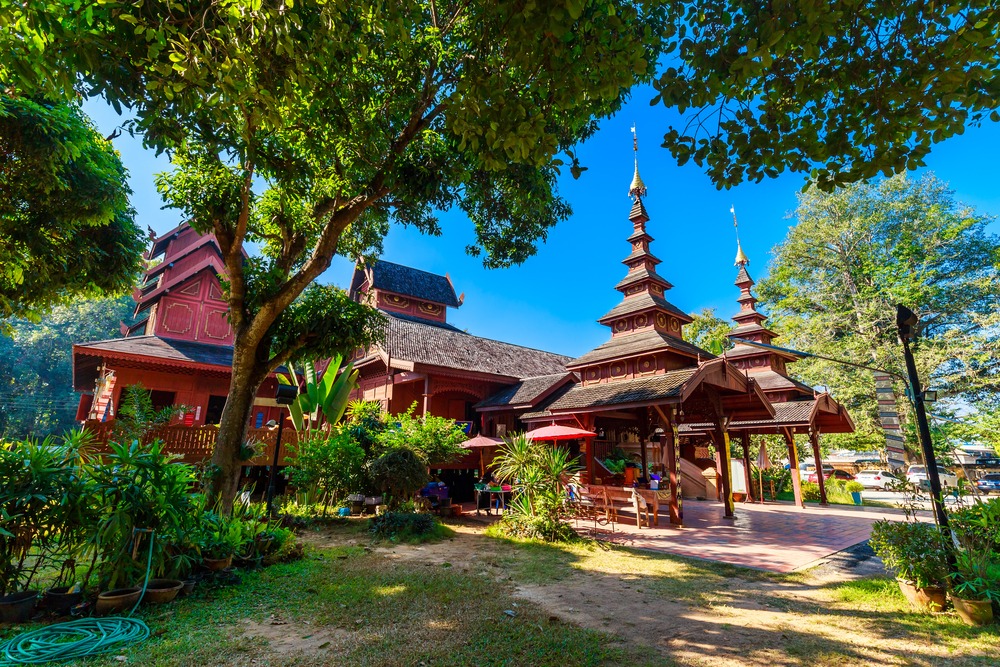
Wat Chom Sawan
Temple en teck de style Thai Yai achevé en 1894 à Phrae, le Wat Chom Sawan illustre l'art shan dans le nord de la Thaïlande.
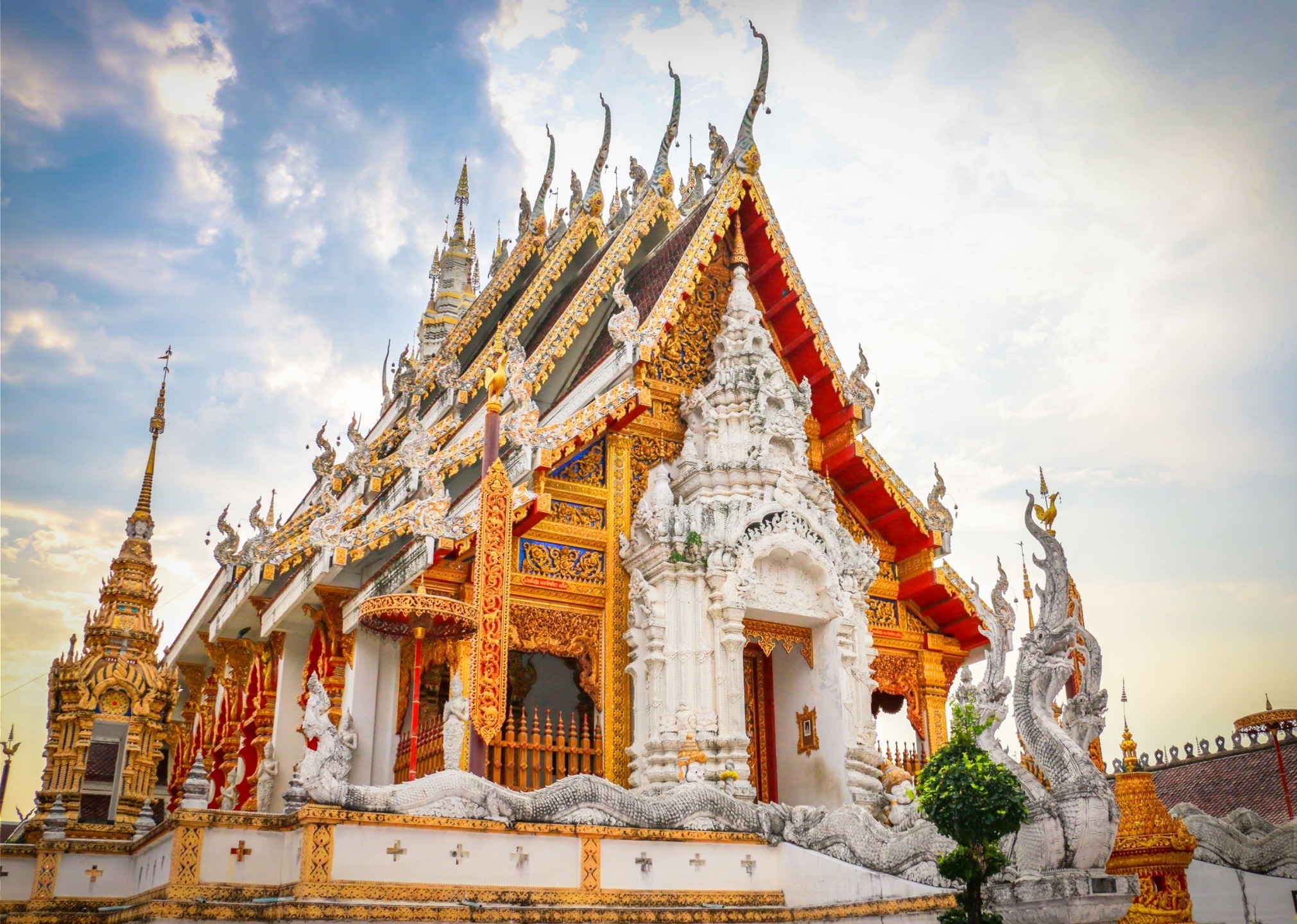
Le Wat Phra That Cho Hae
Sur une colline au sud-est de Phrae, le Wat Phra That Cho Hae abrite un chedi doré de 33 m et l'une des reliques bouddhistes les plus vénérées du Nord de la Thaïlande.
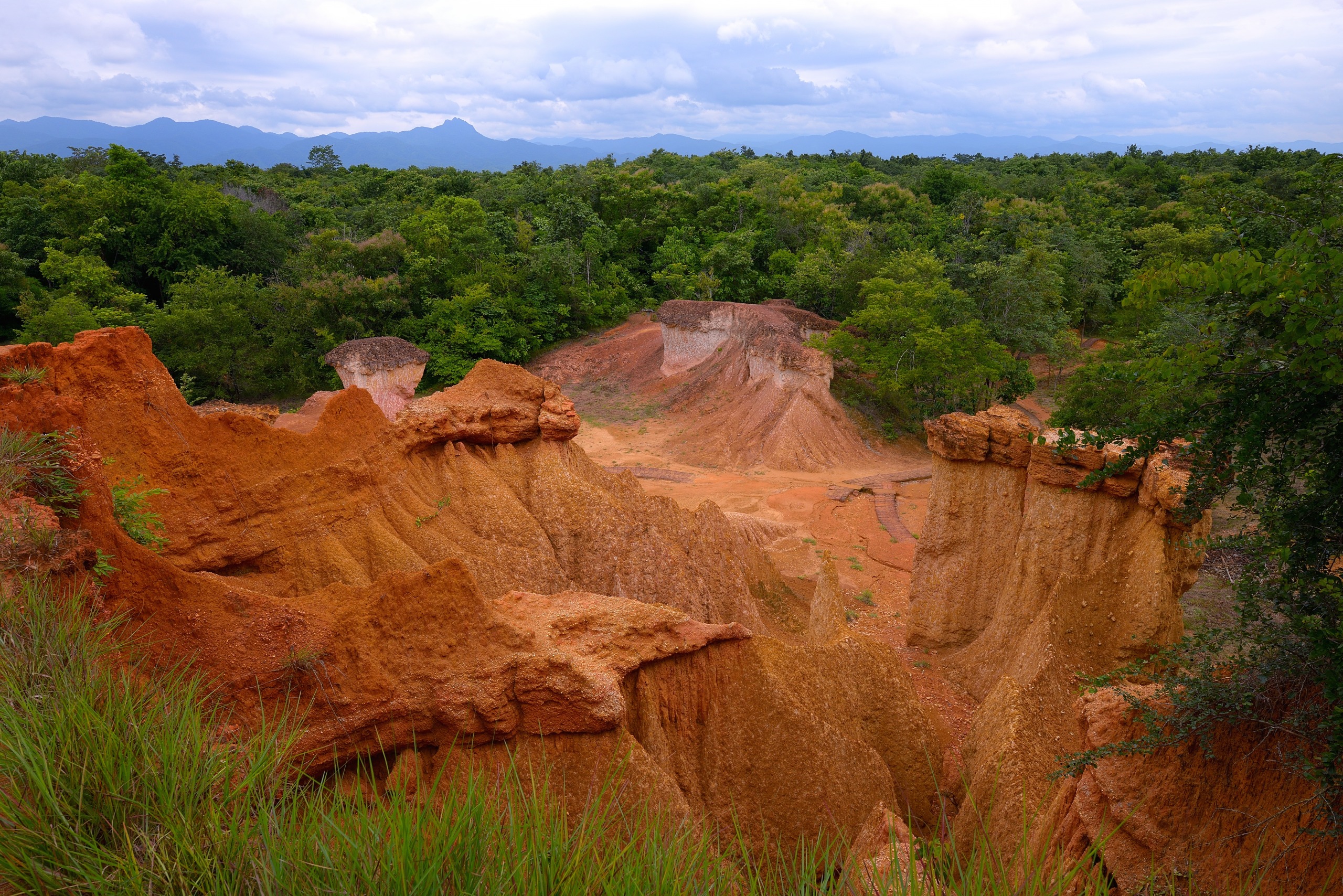
Parc forestier de Phae Muang Phi
À une dizaine de kilomètres de Phrae, le parc forestier de Phae Muang Phi aligne des rochers champignons sculptés par l'érosion sur 27 hectares.
Accommodation in Phrae
See all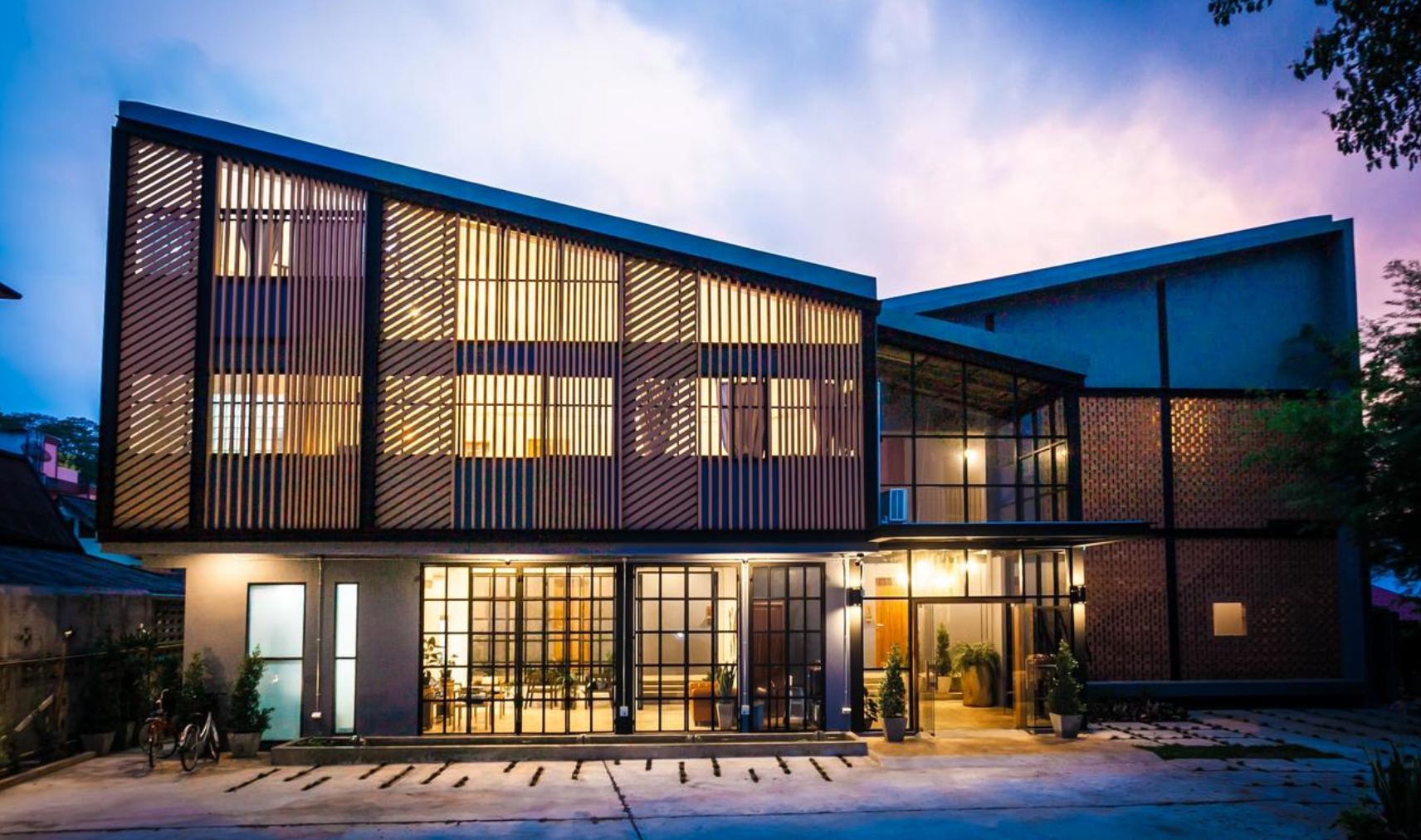
Want to discover this destination?
Our local advisors design your tailor-made trip.