Discovering the Ergs and Forgotten Tassilis - Admer, Tihodaïne, Ifedeniouene
Between golden dunes and sandstone labyrinths, a journey to the heart of the carved secrets of Tassili N'Ajjer.
Duration
8 days
From
€1,040/pers.
Ideal seasons
Jan, Feb, Mar, Oct, Nov, Dec
Style
Expeditions
Comfort
rustique
Travelers
Couple, Solo, With friends
The spirit of travel
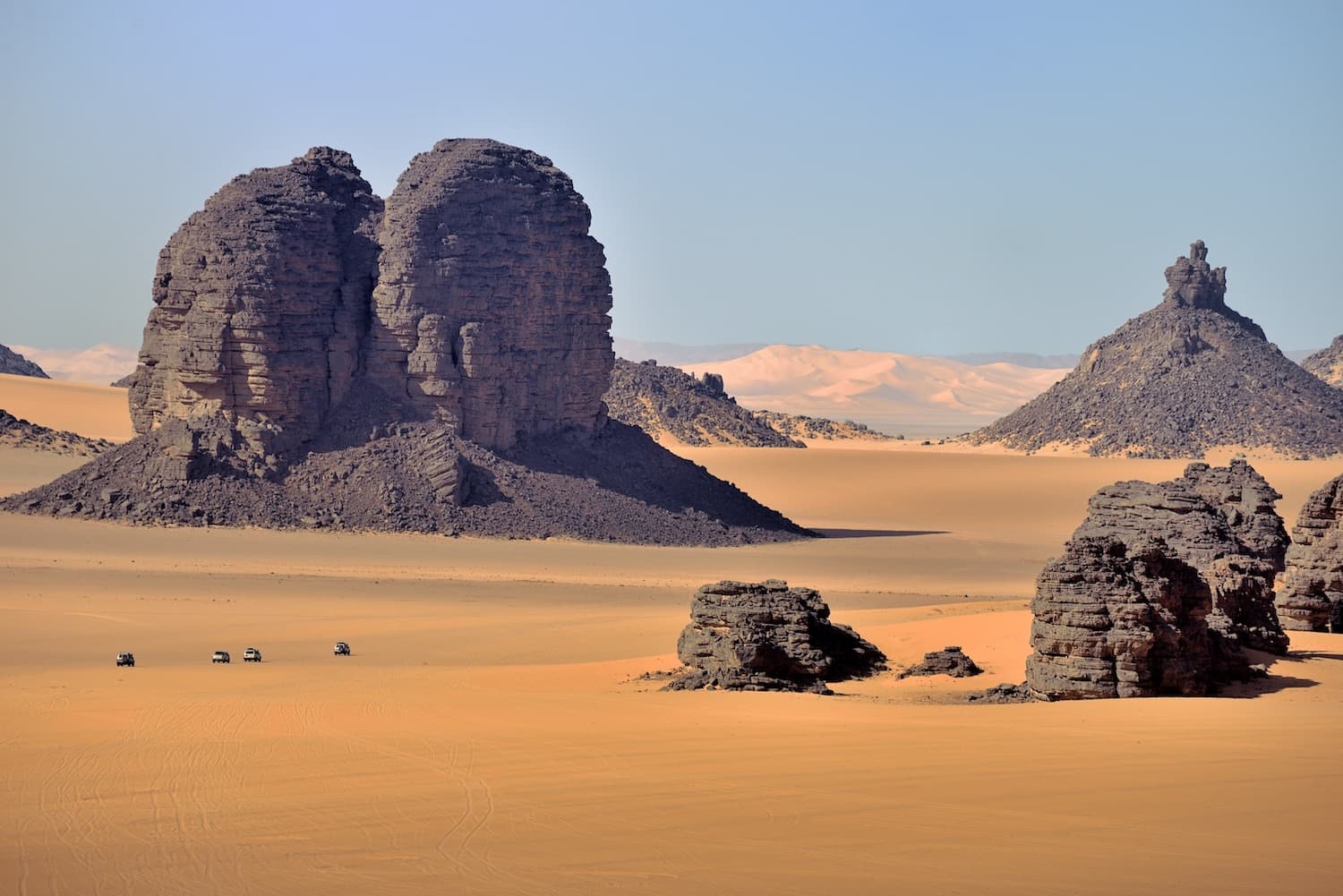
Our adventure begins at Djanet, at the foot of the impressive Tassili N'Ajjer, from where we set off by 4x4 towards the Erg Admer. The golden dunes guide us towards the Tafassasset, where the Tazat mountain marks our entrance into the volcanic region of the Adrar Ajjer. We spend the night in the In Abaro dunes, enveloped by the silence of the desert under a starlit sky.
We continue our journey towards the erg Tihodaïne, famous for its Neolithic tombs and spectacular landscapes. We camp there, enjoying the tranquility of the desert. At dawn, we head towards Tin Batoulet, a labyrinth of eroded sandstone where we discover rock paintings during easy walks.
We then explore the Tassili Ifedeniouene, a vast labyrinth of sandstone sheltering ancient rock art sites, which we discover on foot, amazed by their beauty and mystery. We spend the night under the stars, in a peaceful setting.
Crossing a geologically complex region, where sedimentary rocks meet black basalts, we reach the Afara plain for one last night under the stars.
Our journey ends at Djanet, where we explore its streets and lively market, soaked in Tuareg culture. After a final dinner savoring local specialties, we head to the airport, our hearts filled with unforgettable memories of our Saharan 4x4 adventure, enhanced by easy walks that allowed us to discover unique and unspoiled places.
The stages of your journey
Highlights
Day-by-day itinerary
Paris > Algiers > Djanet
Paris Aéroport → Alger
Departure from Paris to Algiers, where you will be welcomed by the charm of the Algerian capital.
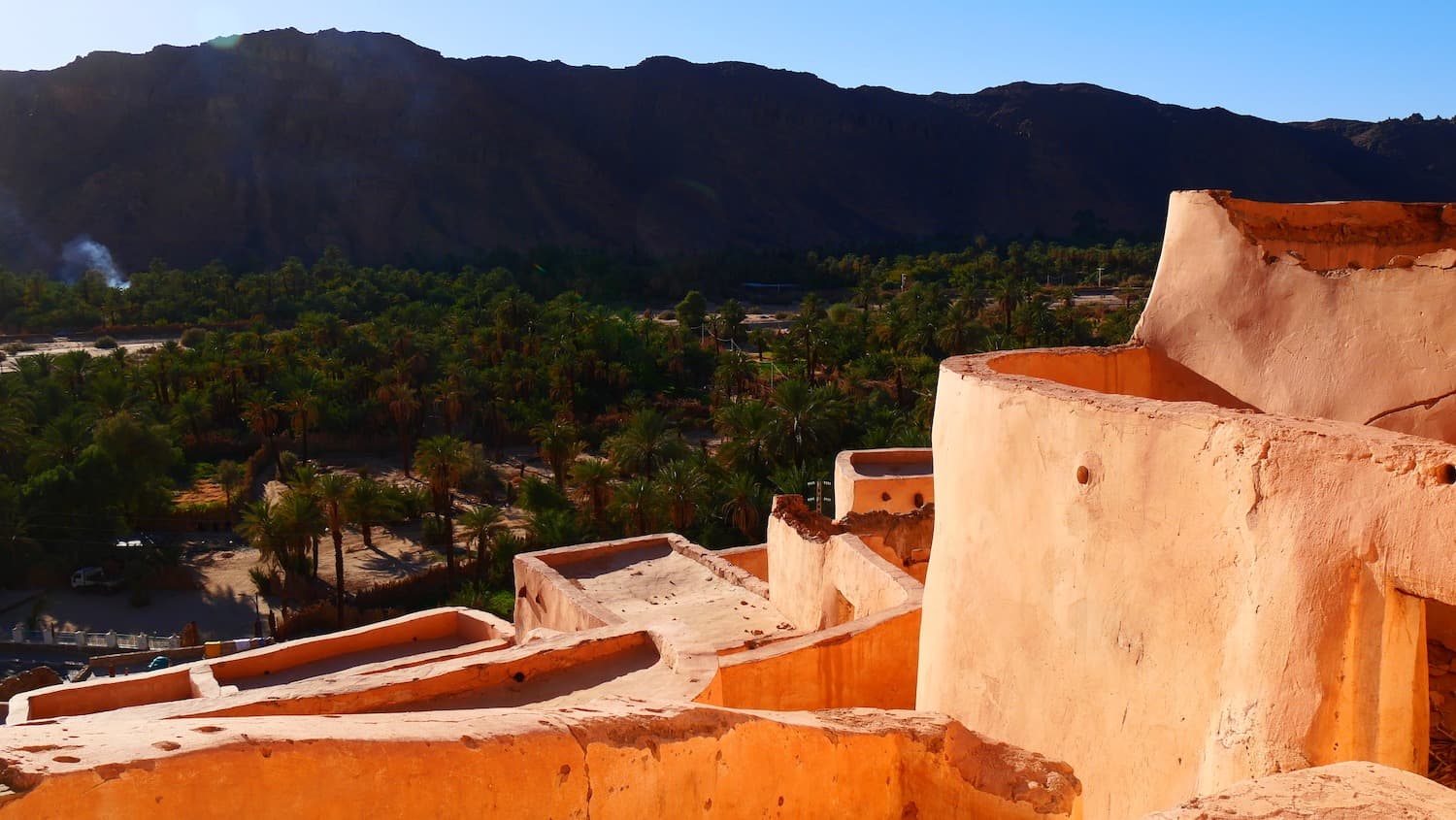
After completing visa formalities at Algiers airport, we will take a flight to Djanet. Arriving in Djanet around 1:30 AM on the night of Day 1 to Day 2, you will be transferred to your hotel for a well-deserved night. Enjoy the comfort and local hospitality to rest before the start of your Saharan adventure.
By default, we offer trips departing from Paris. However, you can take advantage of all flights to Algiers departing from a large number of European cities. International and domestic flights are not included in our proposal, but we can help you organize them upon request.
Djanet > Erg Admer > Tin Abaro
Djanet → Tin Abaro
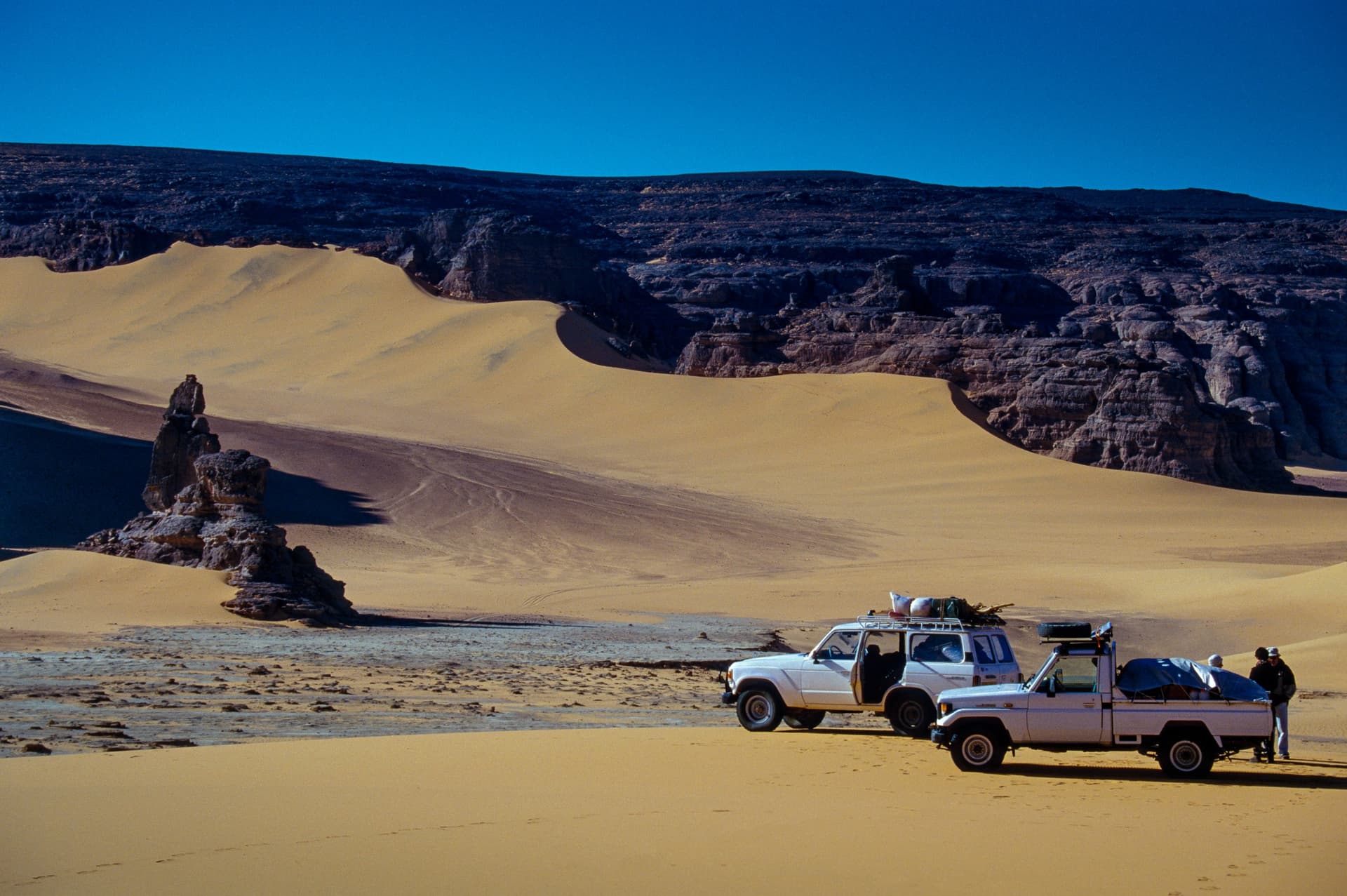
We leave Djanet heading towards the Erg Admer. The town is nestled in a fold at the foot of the great cliff of Tassili N'Ajjer, an impressive natural spectacle that peacefully dominates the landscape. The blonde dunes of the erg develop in the form of a ribbon, blocking our path westward and inviting us to follow their sinuous course. We skirt these majestic dunes to reach the confines of Tafassasset, a region where the desert seems to stretch infinitely.
Before us stands the mountain of Tazat, an imposing formation that marks the volcanic region of Adrar Ajjer. Its robust profile and mineral tones contrast with the softness of the sands. A lens of dunes welcomes us for the night, offering natural shelter against the desert winds. We settle in the dunes of In Abaro, where silence is disturbed only by the murmur of wind on sand. The colors of the sunset transform the dunes into a golden sea, and stars begin to twinkle in the night sky. It is here, in this peaceful and isolated setting, that we spend the night, enveloped by the tranquility and wild beauty of the desert.
Tin Abaro > Djebel Ounane > Erg Tihodaïne
Tin Abaro → Erg Tihodaïne
We continue our journey through vast Saharan landscapes. The horizons are distant, and the Ajjer barrier is now behind us. In the distance, a new halo of light emerges: the Tihodaïne erg.
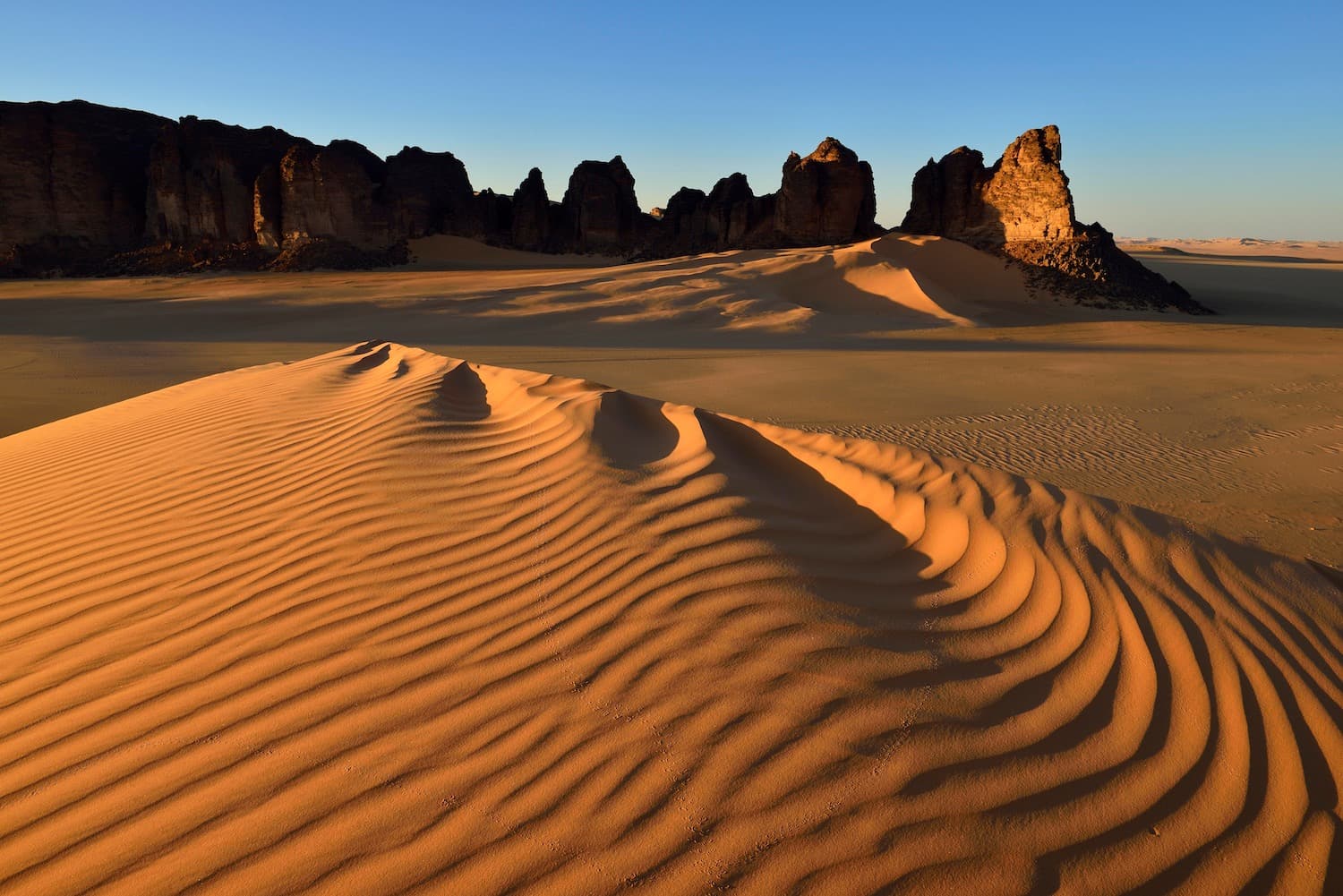
The Tihodaïne Erg is emblematic in the imagination of Saharans. Located between Djanet and Illizi, along the north-west slope of Tassili N'Ajjer, it is distinguished by its almost round shape and covers an area of approximately 1000 km² with a diameter of around 45 km. This site is particularly known for its numerous funerary tombs dating from the Neolithic period, making it a fascinating place for enthusiasts of ancient history. At the heart of this erg stands a small mountain massif, adding a unique touch to this desert landscape.
The Tihodaïne Erg is surrounded by spectacular landscapes, and the region is rich in archaeological deposits, including Acheulean sites that attest to ancient human presence in this area. We take time to walk through this singular universe, where each dune and each rock formation whispers tales of the past. We establish our camp in this treasury of dunes, enjoying the silence and peace of the desert, a moment of serenity and connection with nature.
Erg Tihodaïne > Tassili Tin Batoulet
Erg Tihodaïne → Tin Batoulet
Early in the morning, we take advantage of the beautiful light in the dunes of the erg. The rays of the rising sun color the sand with a soft golden glow, creating an enchanting natural spectacle.
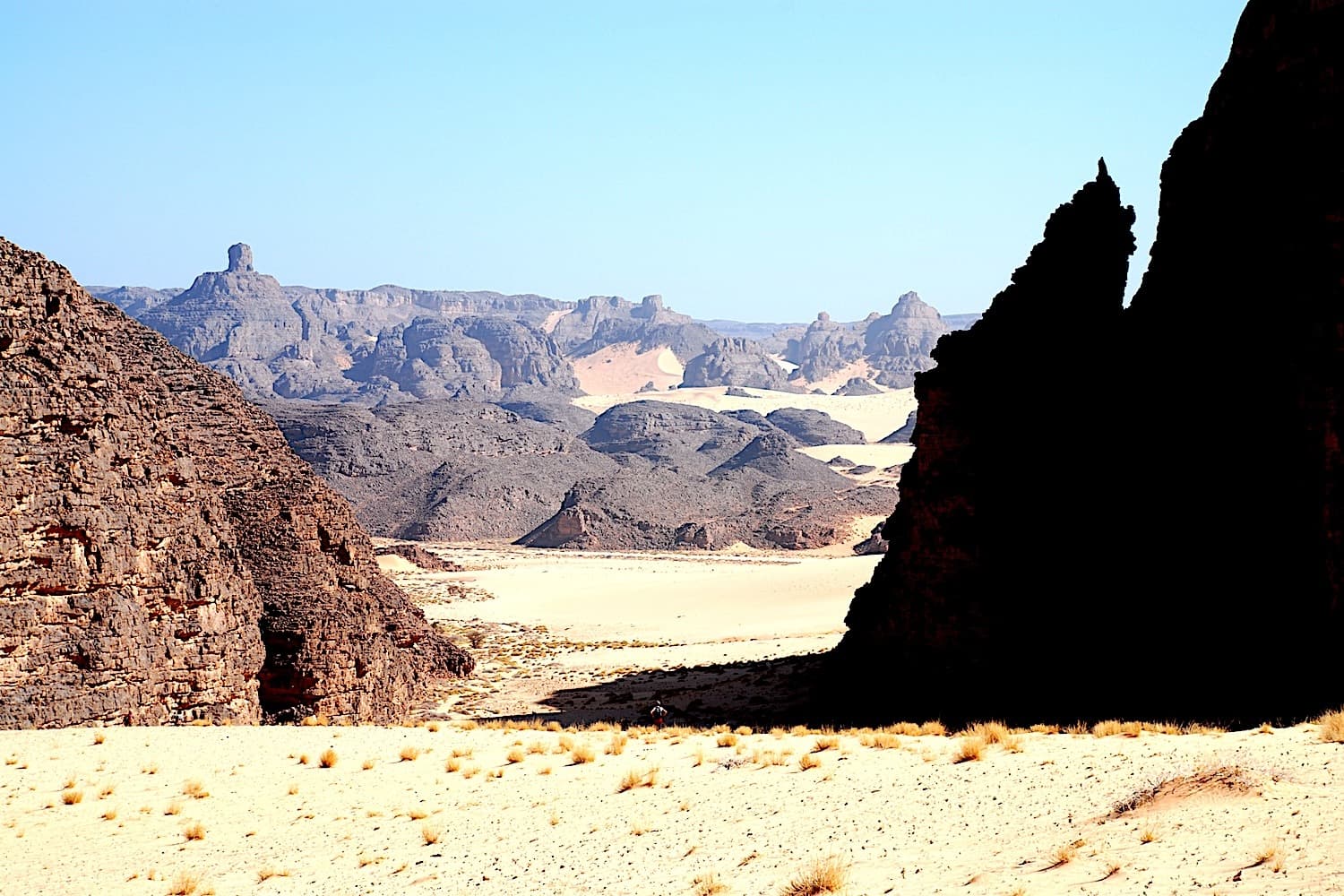
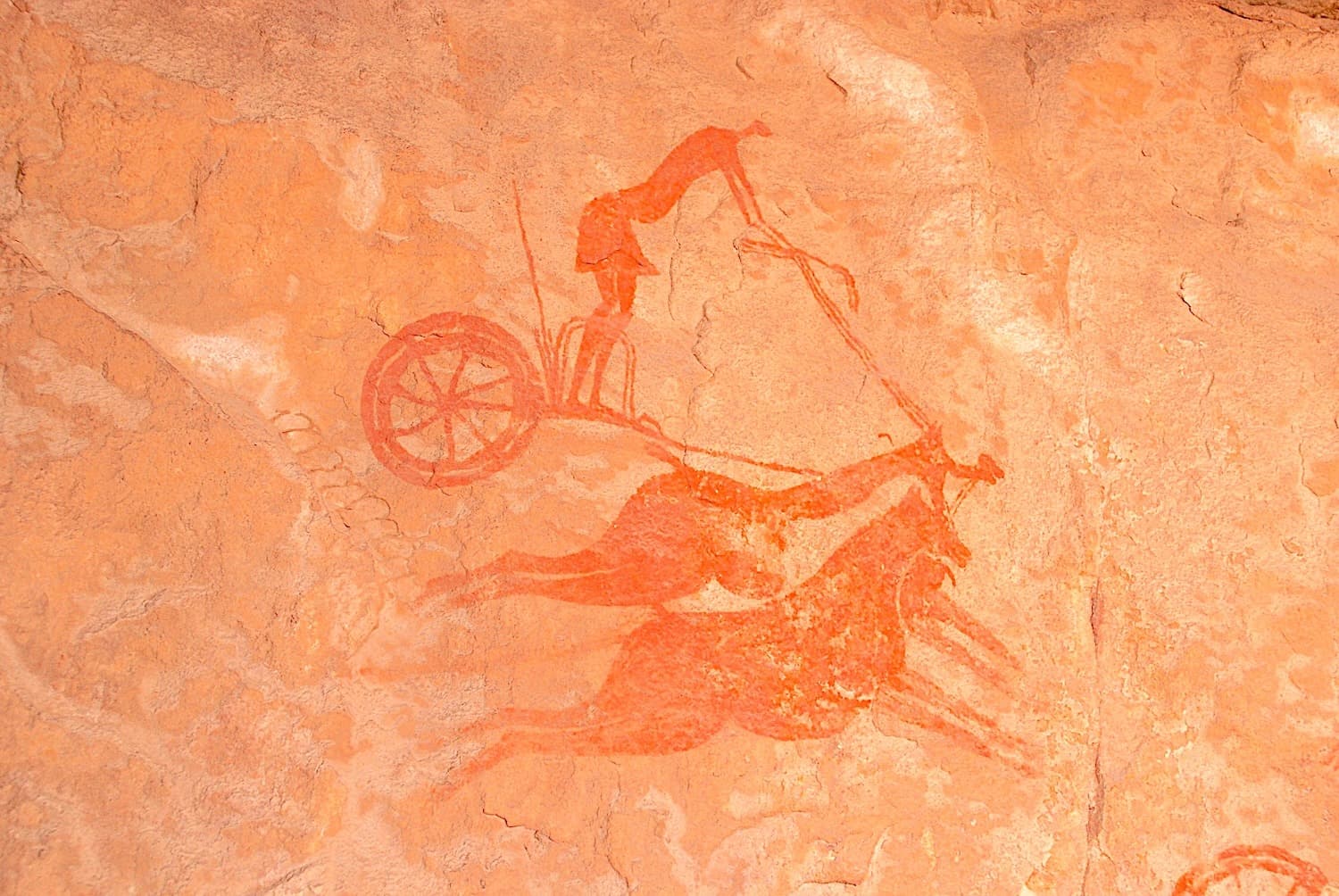
We resume our vehicles for a short stage that takes us into the chaos of sands and rocks of Tin Batoulet. This labyrinth of eroded sandstone, sculpted by water, wind and time, is home to sites of magnificent rock paintings. Every corner reveals traces of ancient history, engraved on the rocky walls by the peoples who crossed these lands.
We spend time wandering through this very special universe, where each rock formation tells a story. The silence of the desert is interrupted only by the murmur of the wind, creating an almost mystical atmosphere.
We establish our bivouac in this environment, surrounded by wild and unspoiled beauty. Under the starry sky, we share stories and moments of conviviality around a campfire. The night in the desert offers a unique serenity, where the magic of the stars and the calm of nature blend together.
Tin Batoulet > Tassili Ifedeniouene > In Alagh
Tin Batoulet → In Alagh
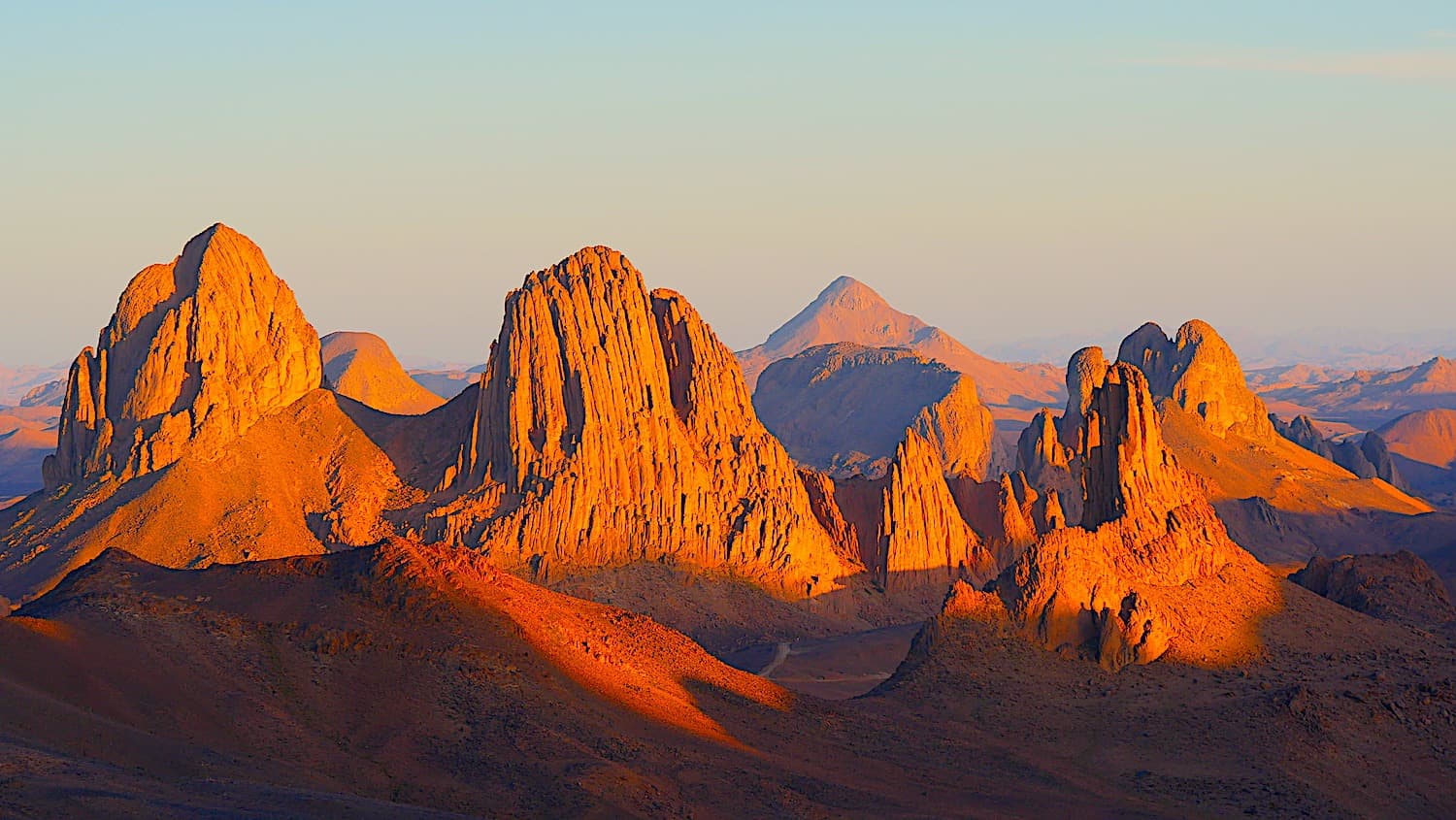
We dedicate our day to discovering Tassili Ifedeniouene. In this immense labyrinth of sandstone and sand hide a multitude of rock art sites, silent witnesses to a distant past. The stone forests are impressive and create phantasmagoric shapes, sculpted by erosion and time. We take time to stroll on foot, in complete tranquility, exploring every corner of this landscape that is both strange and captivating.
At the end of the day, we set up our bivouac in a wonderful place, far from the hustle and bustle of the world. The desert, with its peaceful silence, envelops us as the sun sets, tinting the stones with a golden glow.
The rock art of Tassili n'Ajjer was revealed to the world in 1909 by Captain Cortier, who reported the first discovery of this prehistoric art. Subsequently, other explorers such as Lanney, Conrad Kilian and Bernard also made discoveries, but it was in the 1930s that the importance of this Saharan center of prehistoric art began to be understood, thanks to the discoveries of another military officer, Captain Brenans.
Since Henri Lhote's mission and his team in 1956, tasked with carrying out a complete survey of the entire rock art ensemble, Tassili art has acquired well-deserved world renown. These paintings, the oldest of which date back to the early period of domestication, cover a period of more than 7000 years, some being sub-current.
The variety of subjects and especially of styles reveals the presence of different artistic groups, geographically localized and associated with certain fauna, with special types of characters and weapons. These artistic groups, or "schools", probably reflect concrete ethnic groups, limited spatially and located chronologically, possessing distinct artistic traditions and symbolic foundations. The classification and chronology of these schools are established according to various formal criteria, such as execution techniques, styles, superimpositions, patinas, as well as depicted themes such as the physical types of characters, fauna and weapons.
These rock paintings and engravings testify to the presence of numerous populations and varied fauna, indicating more humid periods in the past.
In Alagh > Afara > Tadjasset > Tasset
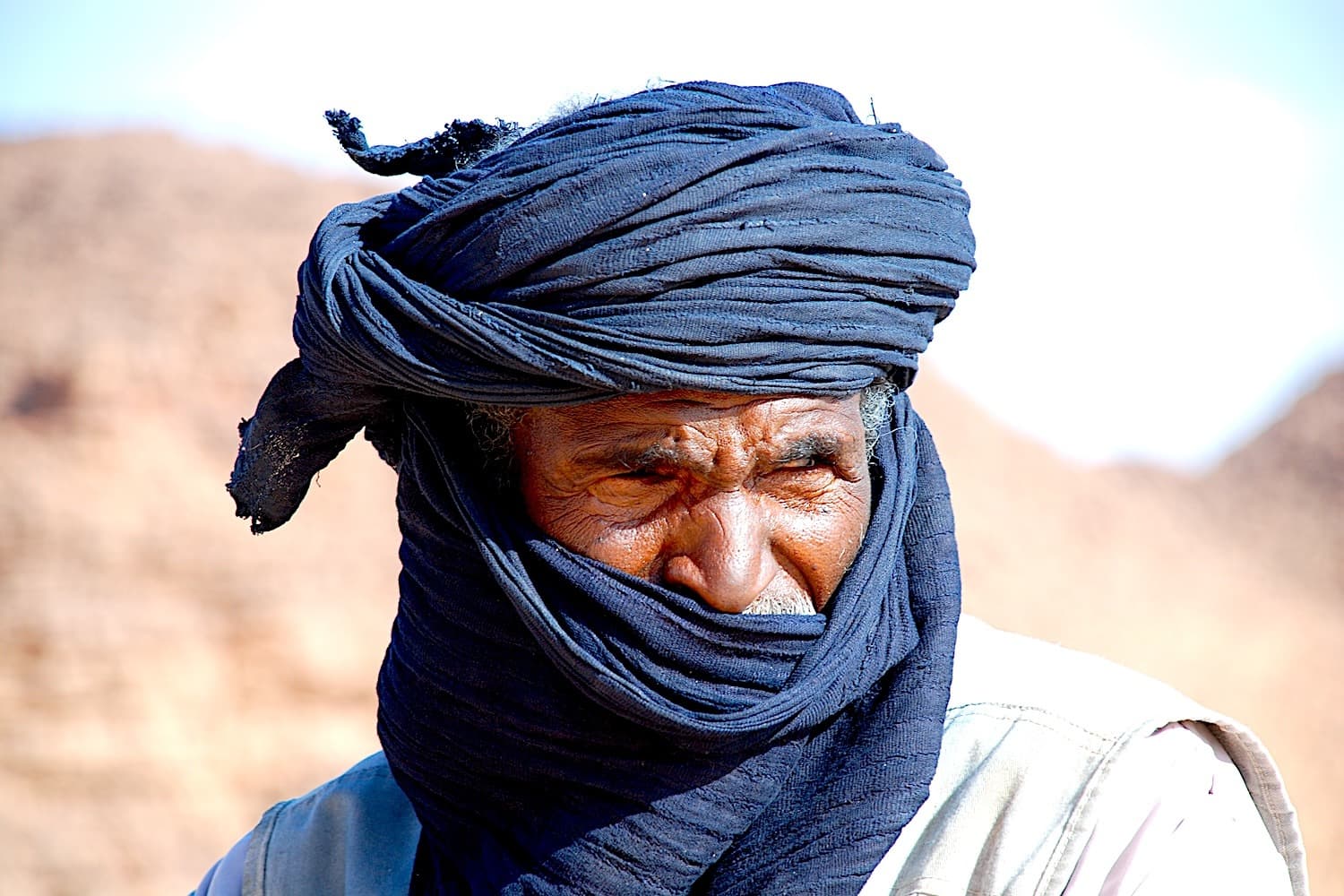
We leave the Tassili Ifedeniouene to approach a vast furrow that marks the connection between the sandstone tassili and the volcanic region of the Adrar Ajjer. The contrast is striking between the brown sedimentary rocks, bearing witness to millennia of erosion, and the black basalts of this highly localized volcanism. Along the way, we observe the subtle geological transitions that testify to the complex history of this region, with each layer of rock telling part of the tumultuous past of these lands.
Progressively, we reach the Afara plain, then Tasset, where we will spend the night. The plain, with its vast open expanses and infinite horizons, offers a peaceful setting for our bivouac. As the sun sets on the horizon, golden light envelops the landscape, creating a serene and soothing atmosphere. Shadows lengthen and the outlines of rocks stand out in the twilight, adding an almost mystical dimension to this natural setting.
The Ajjer region is home to a rich fauna, though often nocturnal. Among the carnivores, we find striped hyenas, jackals whose yelps often echo through the night, foxes, fennecs, wildcats (Felis sylvestris), as well as the cheetah, although the latter has become rare.
Rodents are well represented in this region, with species such as hares, squirrels, goundis, jerboas and gerbils. You can also observe their neighbors, the hyraxes. Among other animals, you will find porcupines (Hystrix cristata), hedgehogs and primates such as patas and hamadryas baboons.
Gazelles, unfortunately, have become rare due to intensive hunting.
The reptilian diversity is remarkable, including different species of snakes such as the Moïla and the Schockari, as well as vipers, notably the Vipera cerastes (or sand viper) and the Cerastes cerastes (known as the horned viper). Many reptiles, including dobs (Uromastix), agamas and monitors, also populate this region.
Scorpions can be frequent, especially during the hottest periods of the year.
Finally, the avifauna is relatively abundant in this region. You can observe ravens, falcons, owls, doves and bee-eaters, as well as a large number of European or African passerines, often with very colorful plumage.
Tasset > Essendilène Canyon > Djanet
After breakfast, we skirt around the Adrar Ajjer to reach the large village of Bordj El Haouas, also known as Zawatalaz, formerly called Fort Gardel. This is the place where part of the Touaregs of the Ajjer were once settled. We then rejoin the road that connects southern Algérie to Illizi, before continuing towards the north of the country. This historic route, crossing varied landscapes, offers us a glimpse of the geological and cultural diversity of the region.
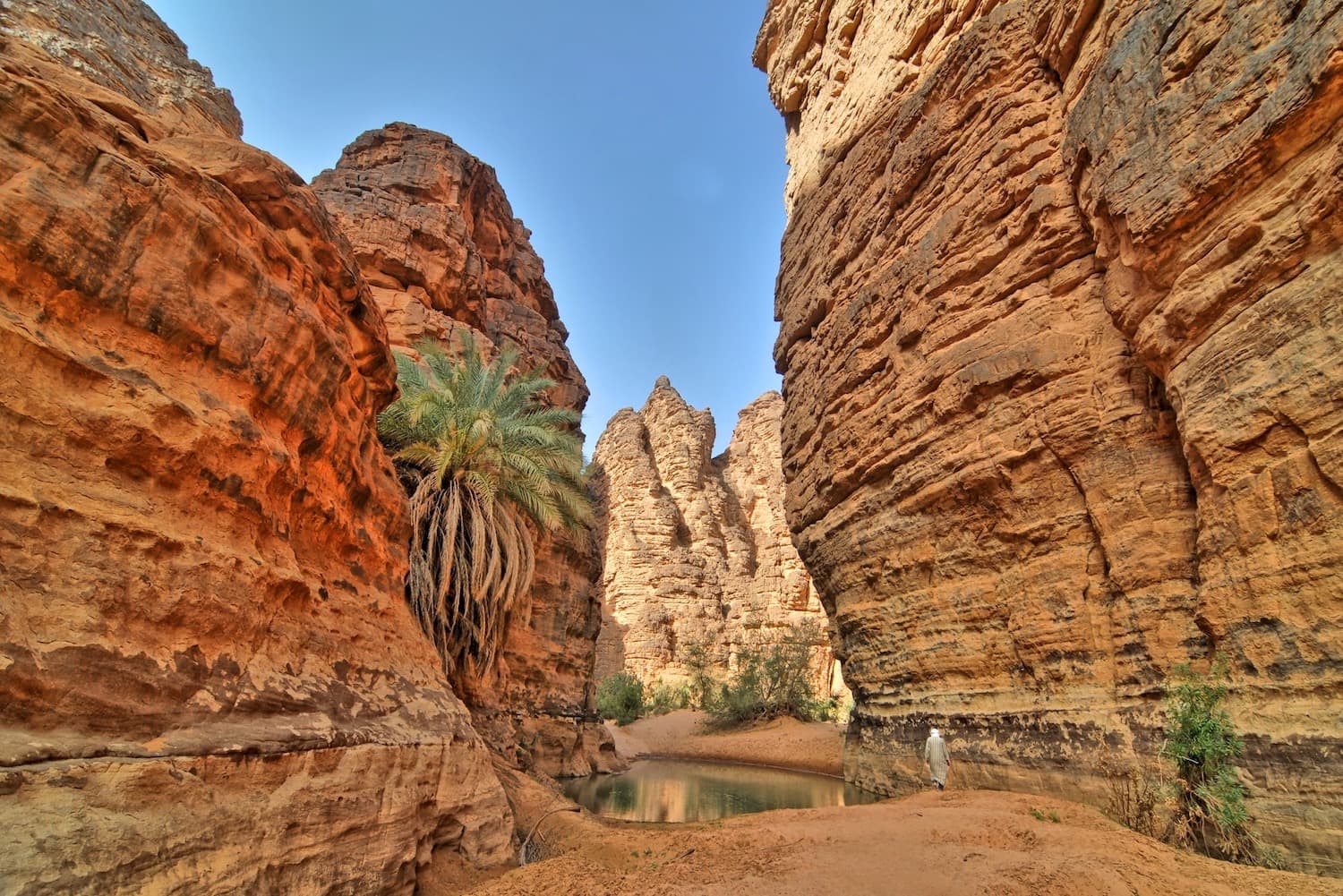
We skirt the Tassili towards Essendilène, a magnificent gorge famous for its water sources, or gueltas. These natural formations, brought to light by Roger Frison-Roche's novel, "Le rendez-vous d'Essendilène", add a touch of mystery and beauty to our journey. These gueltas, oases of life in the aridity of the desert, are havens of peace where water and rock meet to create a landscape of enchanting beauty.
In "Le Rendez-vous d'Essendilène" by Roger Frison-Roche, Nicole, a determined young woman, sets out to search for her fiancé, Roland, a French officer who disappeared in the Sahara. This adventure novel explores themes of love, solitude, honor, and determination in the face of challenges posed by a hostile desert environment.
The Sahara, and particularly the Tassili n'Ajjer region, is described as a character in its own right, both magnificent and dangerous. The desert landscapes, with their endless dunes and spectacular rock formations, offer a striking backdrop for this quest. The narrative alternates between the perspectives of Nicole, Roland, and Tallit, a Touareg woman, offering an immersion into local life and the interactions between French military personnel and indigenous populations.
This novel is an ode to passion for the Sahara, where every detail highlights the beauty and harshness of this desert, making this quest an unforgettable journey through one of the most hostile and fascinating environments on the planet.
We resume our journey to reach Djanet, the jewel of the Ajjer. We arrive in the mid-afternoon, and upon arrival, a good shower awaits us to refresh us after this long drive across the desert.
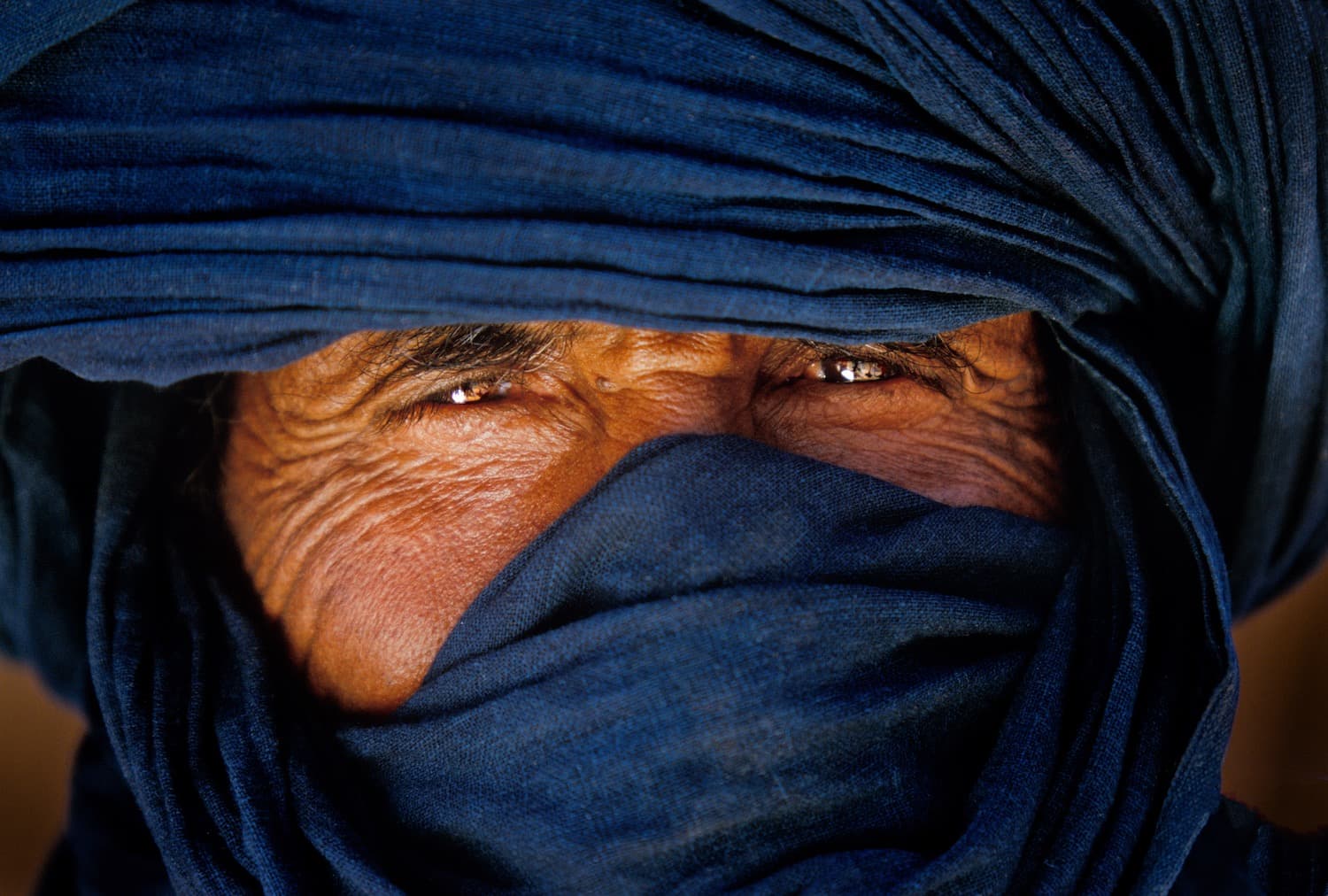
Refreshed, we then set out to discover the capital of the Ajjer. We explore its picturesque streets, where every corner reveals a piece of the rich local history, and we immerse ourselves in the lively atmosphere of its emblematic market. Here, Touareg culture unfolds in all its splendor through vibrant colors, artisanal fabrics and traditional objects that catch the eye and evoke local craftsmanship.
After a final dinner, savoring local delicacies one last time, we head to the airport around 10:30 p.m.
It is with our minds full of unforgettable memories of our Saharan adventure that we leave this land of contrasts and wonders, taking with us the magic of these desert landscapes and the warmth of its inhabitants.

DJANET > ALGIERS > PARIS
We assist you with check-in in the middle of the Saharan night, under a starry sky that adds a magical touch to this stage of your journey. After check-in formalities, you board your flight which will take you to Algiers early in the morning.
Alger → Aéroport De Paris
Upon arrival, you can continue your trip to Paris or other destinations.
Price per person
Indicative price per person, based on double room. Each trip is customized according to your preferences.
This trip can be tailored to your preferences
This itinerary provides an excellent foundation for discovery, but it can be fully customized. Our local advisors build each trip tailored to your budget, dates and preferences.
Not included
- Visa fees payable upon arrival on Algerian territory
- International and national flights to Djnet
- Insurance "Cancellation", "Repatriation" and "Travel Risks"
- Your personal expenses: all beverages during restaurant meals
- All costs incurred by a possible extended independent stay
Included
- Welcome and transfer to Djanet during the night of Day 1 to Day 2
- Hotel or guesthouse in Djanet on a room basis Double or Twin
- Trip in a comfortable 4x4 vehicle equipped for this type of expedition
- English-speaking Tuareg guide with thorough knowledge of the region
- All Saharan bivouac equipment except sleeping bag
- All logistics throughout the entire 4x4 raid
- Full board throughout your stay with us
- Room available in Djanet on day 8
- Meal at the restaurant in Djanet of your choice
- Transfer and assistance for the Djanet Algiers flight
Practical Information
Registration is considered firm and final after payment of a deposit of 30% of the total price and acceptance of the specific terms of sale.
The balance must be paid no later than 45 days before the departure date.
See our specific terms of sale for full details.
In the event of cancellation by the traveller, the following fees apply:
- Plus de 60 jours avant le départ : 40 % du prix total (acompte retenu)
- Entre 60 et 30 jours avant le départ : 50 % du prix total
- Moins de 30 jours avant le départ : 100 % du prix total
We strongly recommend taking out cancellation insurance. See our specific terms of sale for full details.
Les informations ci-dessous concernent les voyageurs ressortissants de l'Espace économique européen (EEE), de la Suisse et du Canada se rendant en Algérie dans le cadre d'un séjour touristique. Les règles d'entrée pouvant évoluer, nous vous recommandons de vérifier les informations auprès des autorités officielles avant votre départ.
Passeport
Pour entrer en Algérie, votre passeport doit être valide au minimum six mois après la date d'entrée dans le pays et comporter au moins une page vierge pour les tampons d'immigration.
Le document doit être en bon état (pas de pages détériorées, déchirées ou modifiées).
Visa
Les ressortissants de l'Espace économique européen, de la Suisse et du Canada doivent être en possession d'un visa valide pour entrer en Algérie dans le cadre d'un séjour touristique. Il n'existe pas d'exemption de visa pour ces nationalités.
Le visa doit être obtenu avant le départ, auprès de l'ambassade ou du consulat d'Algérie compétent selon votre pays de résidence. Il est conseillé d'en faire la demande plusieurs semaines à l'avance, les délais de traitement pouvant être variables.
Les documents généralement requis pour la demande de visa comprennent :
un passeport valide avec au moins six mois de validité résiduelle,
un formulaire de demande de visa dûment rempli et signé,
des photos d'identité récentes conformes aux normes requises,
un billet d'avion aller-retour ou une réservation,
une preuve d'hébergement (réservation d'hôtel ou invitation),
une preuve de ressources financières suffisantes pour la durée du séjour.
La durée de séjour autorisée est généralement de 30 jours, selon les conditions mentionnées sur le visa délivré.
Voyage avec des enfants
Les mineurs doivent être titulaires de leur propre passeport valide couvrant la durée du séjour.
Dans certains pays européens, lorsqu'un mineur voyage sans l'un de ses parents, une autorisation de sortie du territoire peut être exigée selon la réglementation du pays de résidence.
Santé
Aucune vaccination n'est officiellement exigée pour entrer en Algérie pour les ressortissants de l'EEE, de la Suisse et du Canada. Toutefois, il est recommandé de consulter un médecin ou un centre de vaccination avant le départ et de s'assurer que les vaccinations de base sont à jour (diphtérie, tétanos, poliomyélite, hépatite A).
Il est également conseillé de souscrire une assurance santé internationale couvrant les frais médicaux et le rapatriement pour toute la durée du séjour.
Autres nationalités
Les conditions d'entrée peuvent varier selon la nationalité. Les voyageurs concernés doivent se renseigner auprès de l'ambassade ou du consulat d'Algérie de leur pays de résidence.
Pour participer à nos voyages, il est fortement conseillé d'être assuré en assistance-rapatriement et frais médicaux à l’étranger.
Votre agence locale vous encourage à prendre connaissance du contrat spécifique élaboré avec notre partenaire CHAPKA ASSURANCES et AXA ASSISTANCE.
Pour souscrire à une assurance, connaître les garanties et les tarifs, suivez le lien ci-dessous.
CAP EXPLORER : La solution d’assurance complète conçue pour vivre sereinement votre voyage !
Choisissez la formule qui vous correspond le mieux:
Explorer'Multirisque
Explorer'Annulation
Explorer'Assistance
Explorer' Complémentaire Carte Bancaire
Spécifiques à nos voyages, nous suggérons fortement d’y souscrire.
Si vous choisissez de souscrire à l’une de ces formules, la convention détaillant l’ensemble des garanties et les modalités de déclaration du sinistre sont disponibles sur le site Internet de l'assureur.
Votre agence locale en aura connaissance, mais seul le participant est responsable du respect des procédures de déclaration de tout sinistre. Le participant doit donc conserver cette convention avec lui pendant toute la durée de son voyage.
Chapka — Cap Explorer
Our insurance partnerTravel with peace of mind with our partner Chapka. Cancellation, repatriation, medical expenses, baggage… All the coverage for a worry-free trip.
Travel with peace of mind — I'll handle the insuranceFrequently asked questions
Oui, un visa touristique est obligatoire pour les ressortissants français, à demander auprès du consulat d'Algérie (environ 85 euros, traitement en 2-3 semaines). Lettre d'invitation ou attestation d'hébergement requise. Passeport valide au moins 6 mois après l'entrée. Les conditions peuvent être exigeantes.
Rendez-vous dans la section Mes Voyages pour retrouver tous vos projets.
Vous pouvez envoyer un message à votre hôte directement depuis le Salon de Thé.
Pour un voyage sur mesure de qualité, comptez entre 140 et 240 euros par jour et par personne, incluant hébergement, repas, transports internes et guide francophone. Les vols internationaux (350-700 euros A/R) sont en supplément. Le Sahara algérien (Tassili, Hoggar) reste un budget spécifique.
Vos documents sont accessibles dans l'onglet Documents de votre voyage.
Absolument. Nous adaptons chaque circuit au profil des voyageurs. Pour les familles, nous privilégions des rythmes détendus, des hébergements familiaux, des activités ludiques et pédagogiques, et des transferts privés confortables. Nos guides locaux francophones savent capter l'attention des enfants avec des anecdotes adaptées à leur âge.
C'est simple. Vous échangez avec notre équipe locale pour définir vos envies, votre budget et vos dates. Vous recevez une proposition d'itinéraire détaillée sous 48 heures. Vous ajustez ensemble chaque détail jusqu'à la version parfaite. Vous confirmez et partez l'esprit tranquille. Votre agence locale reste disponible 7j/7 pendant toute la durée du voyage.
En cas d'urgence, contactez immédiatement votre agence locale.
Le paiement s'effectue généralement en deux fois.
Notre agence fait partie du réseau Nomadays, immatriculé en France. Vous bénéficiez de la garantie APST (Association Professionnelle de Solidarité du Tourisme) qui couvre 100% de vos fonds. Paiement sécurisé, assurance rapatriement incluse, et assistance francophone 24h/24 sur place pendant tout votre séjour.
Let's talk about your adventure — Great Saharan South
Pioneer of Algeria's great deserts, based in Ghardaïa / M'zab (puis Alger à partir de 2006)
The desert is not crossed with an itinerary alone. It demands listening, respect, and a certain inner availability.
— Sylvain