
Contrary to what is often imagined, the Trans-Siberian is not a train but a mythical railway route, one that connects Moscow, the federal capital, to Vladivostok, a Russian port opening onto the Pacific. Completed in 1916 under the reign of Tsar Nicholas II, this line entered legend for a simple reason: with its 9,288 kilometers, it remains to this day the longest railway line in the world. Seven time zones, birch forests stretching to the horizon, Mongolian steppes, Lake Baikal in the background… More than a journey, the Trans-Siberian is a crossing through time as much as through space. Before you set off, here's how to calmly prepare for this extraordinary railway adventure.
Table of Contents
- Formalities and what you need to prepare
- Choosing your route: Trans-Siberian, Trans-Mongolian, Trans-Manchurian
- Booking your tickets without surprises
- Which sleeping car should you choose?
- FAQ
Formalities and what you need to prepare
The first step, and undoubtedly the least poetic, concerns paperwork. To enter Russian territory, a visa is mandatory. The application is submitted to the Russian consulate in France or through a specialized agency. The file contains several documents:
- a passport valid for at least six months after the visa is obtained,
- the completed application form,
- a photocopy of your passport,
- compliant identity photos,
- a return ticket,
- travel insurance proof covering your entire stay.
A Russian peculiarity: you will also need to present an official invitation, called a voucher. This document, essential for obtaining a tourist visa, is issued by an authorized travel agency or hotel. If you extend the experience to Ulaanbaatar or Beijing, add a Mongolian visa and a Chinese visa to this list, to be anticipated several weeks in advance.
As for luggage, traveling aboard is more like a mini-life than a simple journey. A few essentials to slip into your bag:
- Food provisions: depending on the package chosen, one meal per day may be included. A dining car exists, but its prices quickly add up. It's better to bring your own supplies: instant noodles, freeze-dried soups, tea, biscuits, dried fruits… Each car has a samovar that dispenses boiling water at will. Remember to bring a mug, utensils, and a knife.
- Bedding: sheets are sometimes charged as an extra. A lightweight sleeping bag, an eye mask, and earplugs make nights considerably more comfortable, especially in third class.
- Toiletries: trains do not have showers. Washing is done at the sink in the restroom: bring wet wipes, soap, toilet paper, and a pair of flip-flops or slippers.
- Entertainment: the hours stretch out, the landscape glides by, and that's precisely the essence of the journey. Books, notebooks, card games, downloaded music… Don't forget an external battery, as electrical outlets are rare on board.
Choosing your route
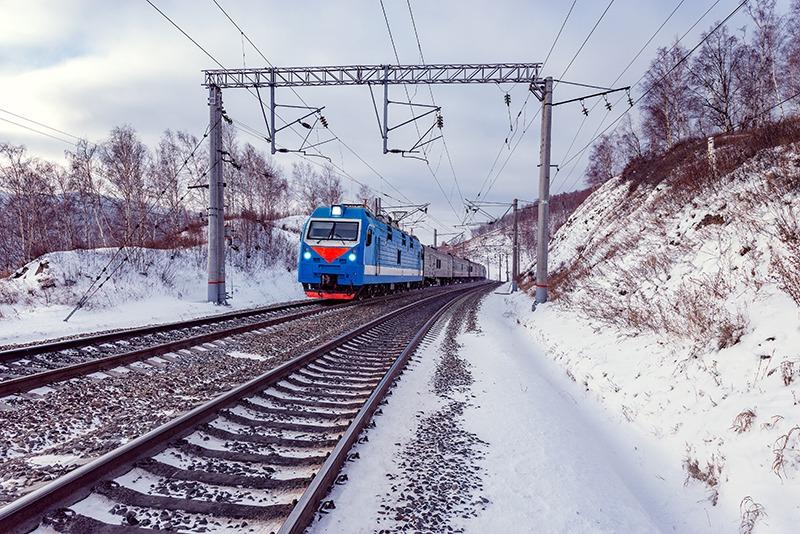
Doing Moscow-Vladivostok in one go is approximately six days and seven nights without getting off. Many prefer to split the journey into several segments, both to break up the monotony and to discover the cities along the way. Caution: each stopover requires a separate ticket. Once you get off, your original travel ticket is no longer valid, so the itinerary must be planned in advance.
Here are the stops most appreciated by long-distance travelers:
- Moscow: beginning or end of the journey, the capital concentrates the country's main monuments — Red Square, the Kremlin, the metro decorated with mosaics.
- Novgorod: the oldest Russian city, where, according to chronicles, Prince Rurik founded in 862 what would become the Russian state.
- Saint Petersburg: the "Venice of the North," its canals, the Hermitage and its imperial palaces need no introduction.
- Kazan: capital of Tatarstan, where European and Oriental influences coexist. The Qolsharif Mosque, rebuilt in 2005, is among the largest in Europe.
- Perm: gateway to the Urals, renowned for its fine arts gallery and its wooden Permian sculptures.
- Yekaterinburg: memorial city of the Romanovs, where the imperial family was executed in 1918. The Church on the Spilled Blood was built in tribute to their martyrdom.
- Novosibirsk: the country's third-largest city, young and industrious, famous for its opera and ballet theater, one of the largest in Russia.
- Ulan-Ude: capital of Buryatia, at the crossroads of Russian and Mongolian cultures, recognizable by its carved log houses and its immense bust of Lenin in the central square.
- Irkutsk: the "Paris of Siberia," point of access to Lake Baikal, the world's largest freshwater reservoir and deepest lake.
- Vladivostok: Pacific terminus, military port turned city undergoing full renewal, with its cable-stayed bridges, its jagged bay and its Orthodox churches.
The Trans-Mongolian
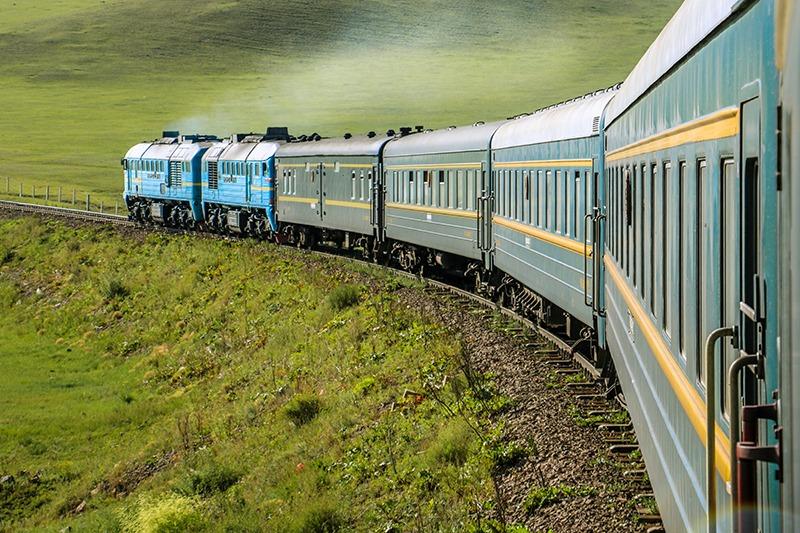
The Trans-Mongolian shares the Trans-Siberian route until Ulan-Ude, then turns south to reach Ulaanbaatar, in Mongolia, before continuing to Beijing. Plan for approximately four days between Moscow and the Mongolian capital. It's the ideal option for those who wish to combine steppes, yurts, and the Gobi Desert.
The Trans-Manchurian
A lesser-known variant, the Trans-Manchurian follows the historic line to Chita, then heads toward China via Harbin. Longer than the Trans-Mongolian, it avoids Mongolia and crosses Manchuria, a region marked by particularly dense Russo-Chinese history.
How to book your tickets
Three options are available to you. The most adventurous is to buy your tickets directly at Russian ticket windows. It's possible, but it requires a certain flexibility with your schedule: seats are often snapped up, particularly from June to August. Avoid this if your dates are fixed.
A useful tip on site: a mini Russian dictionary and a Cyrillic alphabet table will save many situations, as English remains rarely spoken in provincial train stations.
Second option: online booking on the official Russian Railways website (RZD), which offers an English-language interface. Tickets go on sale approximately 45 days before departure, so don't delay in securing them.
https://pass.rzd.ru/main-pass/public/en
Finally, to spare yourself administrative pitfalls (voucher, non-exchangeable tickets, poorly coordinated connections), going through a specialized agency remains the most peaceful solution.
Good to know: all Trans-Siberian trains run on Moscow time, including in stations thousands of kilometers away and several time zones to the east. Set your watch accordingly to avoid missing your train!
Which sleeping car should you choose?
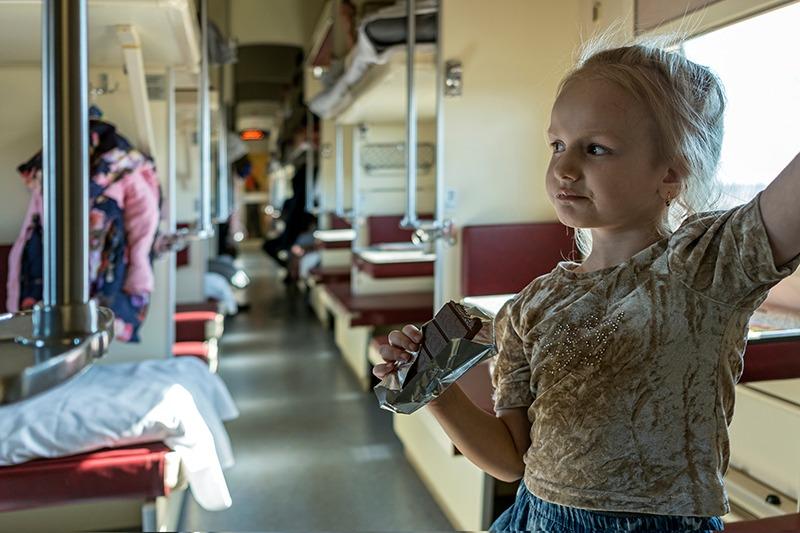
At the time of booking, three categories of sleeping cars will be offered to you, each with its own atmosphere:
- First class — Spalny Vagon (SV): two berths per compartment, a bit of privacy, luggage storage, sometimes a television. Comfortable but expensive, and not widely available: cars are rare, book early.
- Second class — Kupe: four berths per closed compartment. This is the most balanced option between comfort and price. Ideal for families or friends; traveling solo, you'll share the cabin with other passengers, often an opportunity for memorable exchanges.
- Third class — Platzkartny: an open car with 54 berths, without partitions. Four beds on the central aisle and two along the corridor, making eighteen side berths. Less private, certainly, but it's probably the best way to share the daily life of Russians, to observe life in the car, to be invited for tea or an impromptu conversation.
All that's left is to pack your bag, set your watch to Moscow time, and let the birch trees roll by. Safe travels…
Florine Dergelet
FAQ
How long does the Moscow-Vladivostok crossing take?
Without stops, the complete Trans-Siberian journey lasts approximately six days and seven nights, over 9,288 kilometers and seven time zones. However, the majority of travelers choose to break up the journey into several stages to visit the cities along the way.
Do you need a visa to take the Trans-Siberian?
Yes. The Russian visa is mandatory and requires a voucher (letter of invitation) issued by an authorized agency or hotel. If you continue to Ulaanbaatar or Beijing, also plan for Mongolian and Chinese visas.
Which class should you choose on board?
The kupe (second class) remains the best compromise for most travelers: closed compartment with four berths, decent comfort, reasonable price. The platzkartny (third class) is unbeatable for meeting locals, while the spalny vagon (first class) offers privacy and comfort, at a significantly higher price.
Can you eat well on board?
A dining car is present on virtually all trains, but it's recommended to bring your own supplies. Each car has a samovar providing boiling water continuously, perfect for preparing tea, soups, and instant noodles. Stops at stations also allow you to buy local specialties from the babushkas.
When should you book your Trans-Siberian tickets?
Tickets go on sale approximately 45 days before departure on the official Russian Railways website (RZD). It's better to plan ahead, especially during peak season (June-August), when seats sell out quickly. Going through an agency remains the simplest solution for coordinating multiple segments and formalities.
