
Table of contents
- Tren a las Nubes — Argentina at 4,200 meters
- Maeklong, the market that folds up to let the train through
- Gokteik, the metallic audacity of colonial Burma
- La Nariz del Diablo, the arduous work of the Ecuadorian Andes
- Takamori, brushing the breath of Mount Aso
There are railway lines that do more than simply connect two stations. Suspended on the slopes of mountain ranges, set in the middle of a neighborhood market or winding around the edges of an active volcano, they tell as much about geography as they do about human ingenuity. Here are five lines that, each in their own way, turn train travel into an experience where beauty meets vertigo.
Tren a las Nubes: climbing the Argentine Andes
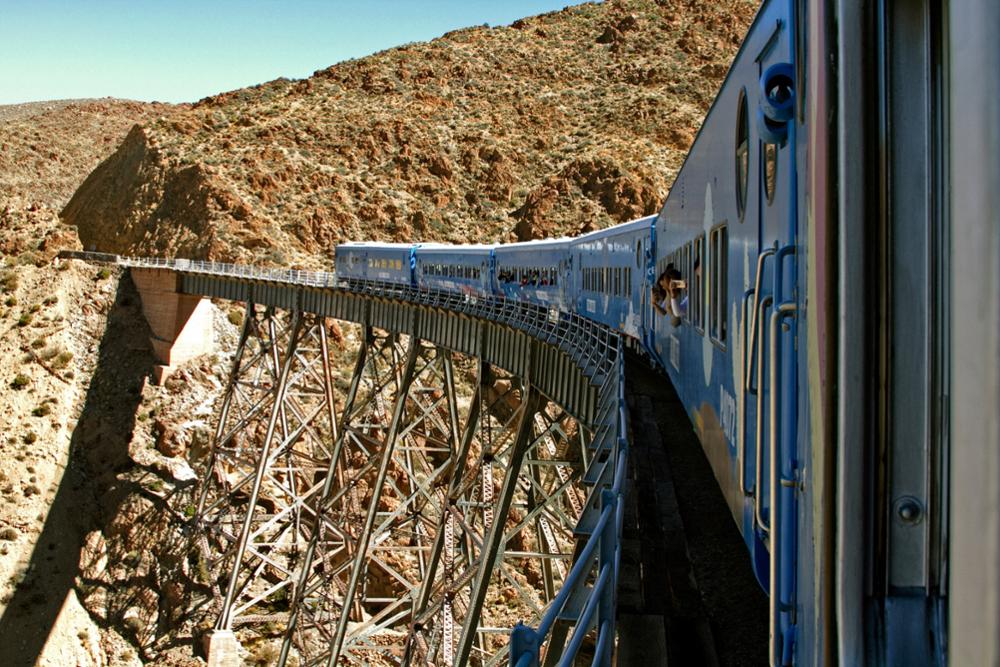
In northern Argentina, where the Andes mountain range wrinkles the horizon, a convoy slowly climbs up to 4,200 meters altitude. It's called the Tren a las Nubes, the "train of the clouds," and the image is more than just a metaphor: at this altitude, the cars actually pass through banks of mist.
The history of this line is less romantic than it might seem. Before being used by travelers, it served to transport minerals extracted from the region. Today transformed into a tourist route, it remains one of the highest railway lines in the world — and one of the few where you need to plan, in addition to your camera, some time to acclimatize to altitude sickness.
Maeklong, the train that shares the rails with a market
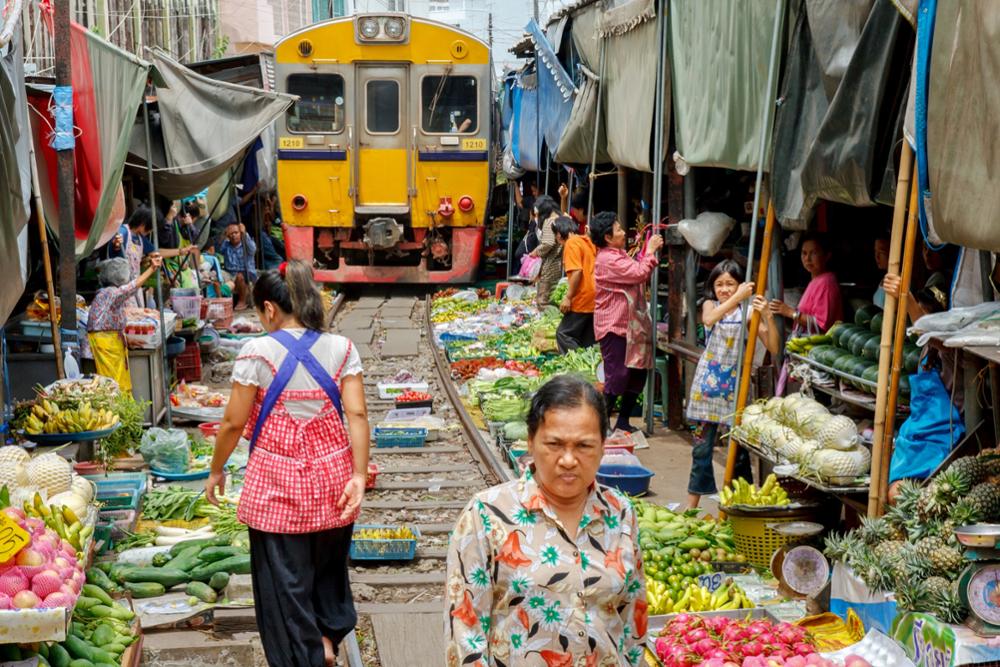
An hour from Bangkok, the Maeklong Railway has nothing spectacular about its route. Its uniqueness lies in a detail: its rails also serve as the central aisle of a fresh produce market. Fish stalls, fruit baskets, parasols and tarpaulins are set up just centimeters from the metal.
Several times a day, a bell announces the arrival of the convoy. Within seconds, merchandise and awnings retract in a precisely choreographed movement, the train passes slowly, then everything returns to its place as if nothing had happened. The danger here lies not so much in the track as in the almost surreal proximity between everyday life and the machine.
Gokteik, the suspended heritage of Burma
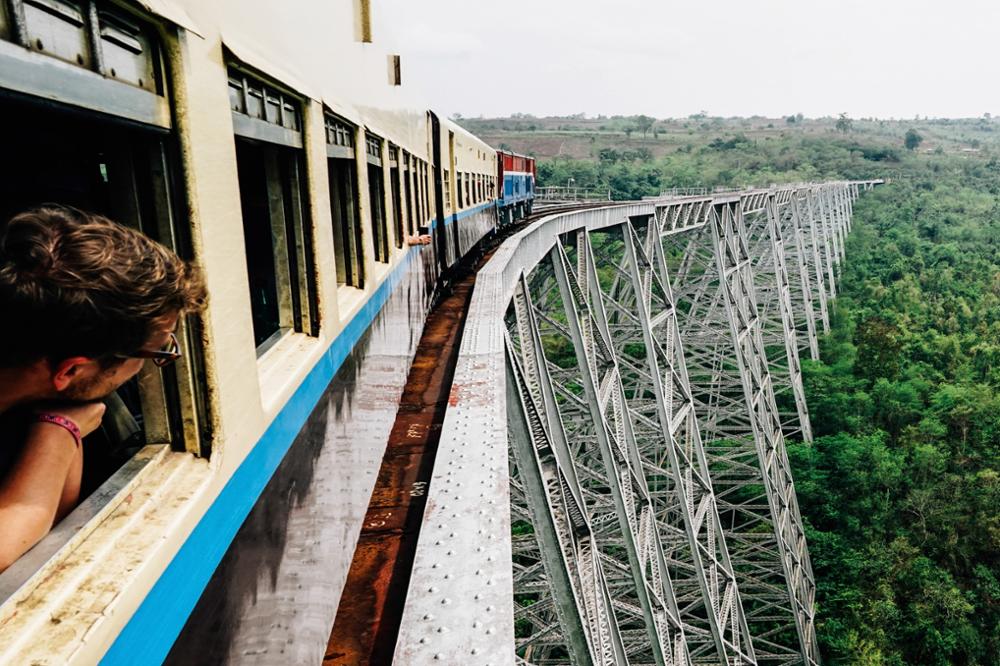
Inaugurated in 1901, the Gokteik viaduct remains the highest bridge in Burma. Its 688 meters long and 97 meters high rest on a metal framework from another era, positioned above a gorge carpeted with tropical forest.
The train connecting Pyin Oo Lwin to Lashio advances across it with prudent slowness, almost ceremoniously. The crossing takes long minutes during which the gaze plunges onto the cliffs and canopy. It is one of those journeys where the sensation of fragility paradoxically becomes part of the pleasure: you understand, as you pass, what "opening a country to the world" meant at the beginning of the 20th century.
La Nariz del Diablo, an Ecuadorian challenge on a mountainside
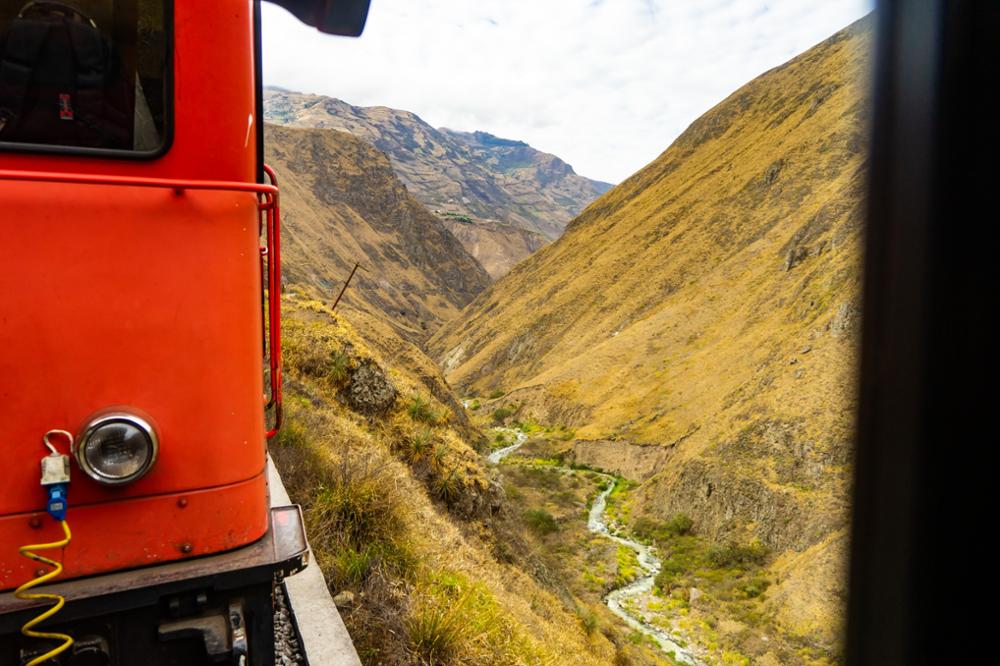
In Spanish, it's called the Nariz del Diablo, the "devil's nose." Built in the early 20th century in the Ecuadorian Andes mountain range, this section of railway has the reputation of being one of the most difficult to build in the world. To overcome the near-vertical slope of a rocky wall, engineers designed a zigzag system that allows the train to climb and descend through successive advances, up to approximately 2,700 meters altitude.
Originally connecting Quito to Guayaquil, the section open to the public today focuses on the stretch between Alausí and Riobamba, due to wear on the structure. For a long time, the most daring chose to travel sitting on top of the cars. The practice has since been regulated — but the line itself has lost none of its reputation as a railway adventure.
Takamori, skirting an active volcano
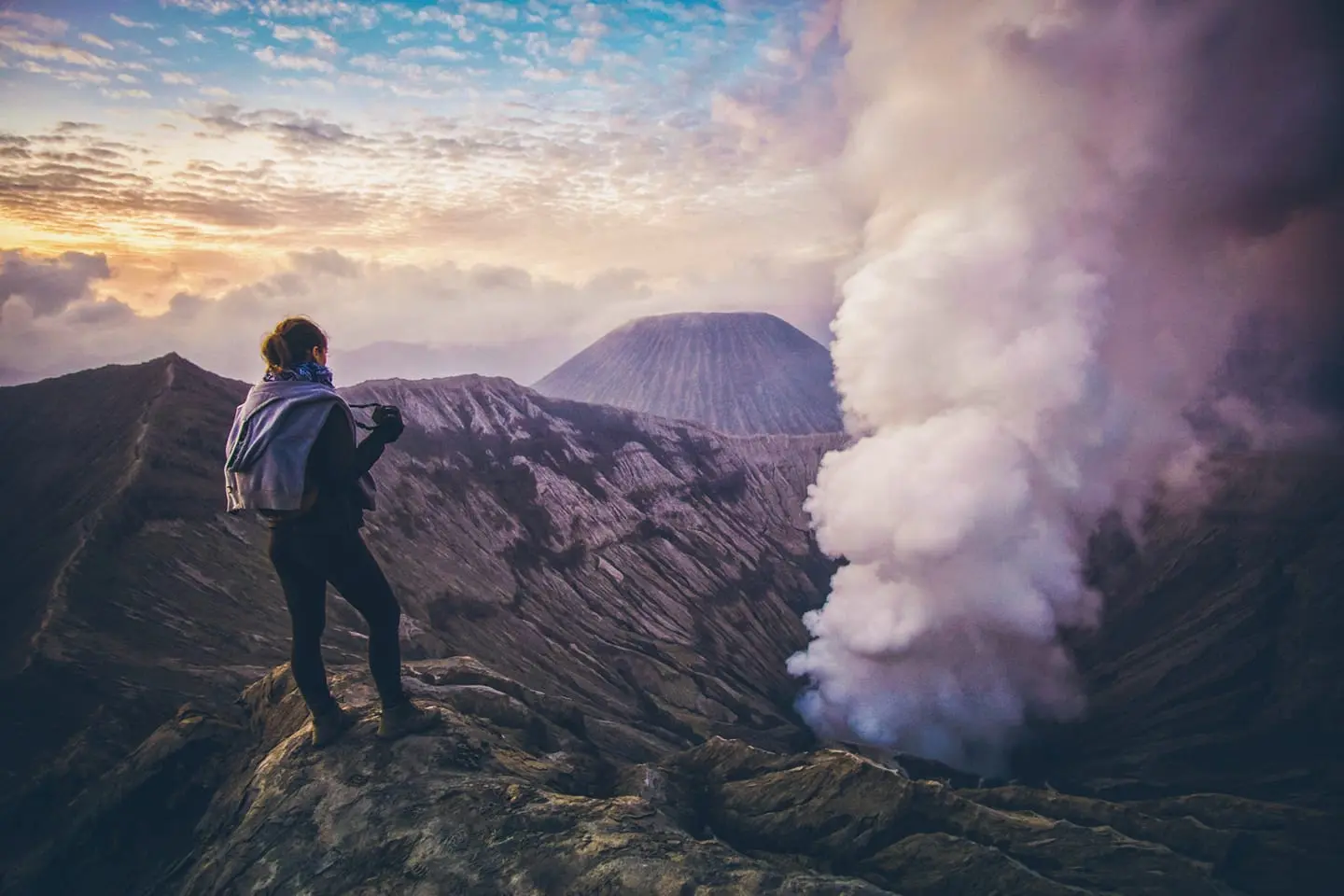
In southern Japan, on the island of Kyushu, the Takamori line is the only route operated by the Minamiaso Railway. It runs at the foot of Mount Aso, the largest active volcano in the archipelago, whose caldera smokes permanently on the horizon.
The 2016 earthquakes weakened part of the track and certain sections have remained closed. The possible route today connects the Takamori station to the Nakamatsu station, through peaceful countryside where you would almost forget, were it not for the gray silhouette of the volcano, that you are traveling on one of Japan's most geologically unstable points. It is precisely this tension — between the gentleness of the landscape and telluric power — that makes the line memorable.
Florine Dergelet

