They are of different nationalities, they don't know each other, but these women all have one thing in common: they make us travel!
We went to meet four strong female figures from the Nomadays collective. Through their portraits, discover the stories of these inspiring women who take us on a different kind of journey around the world. Doubts, smiles, travels, struggles... they have all experienced a journey full of obstacles but today are proud to be free women.
Sopheap, travel coordinator at Seripheap in Cambodia
« For me, working was the most important thing to be able to live »
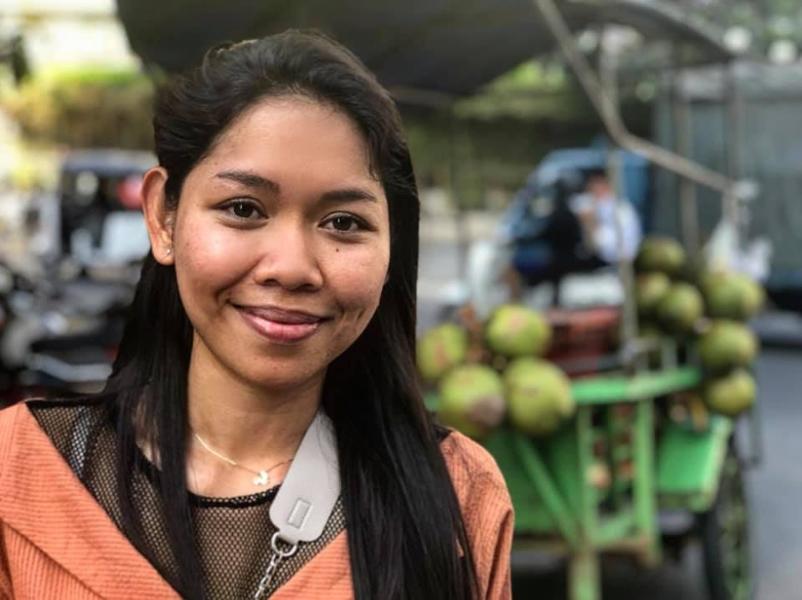
You were born in Phnom Penh 27 years ago. Your personal and professional journey is an example of courage and determination. Can you tell us your story?
I was born in Takeo province, in southern Cambodia. I have 2 older sisters and 4 brothers. In 1998, when I was 6 years old, I had to leave my native village after my father's death to go live with my aunt in Phnom Penh. Every morning, I woke up at 6am to work at the Steung Mean Chey landfill with my cousins.
One day, a team from the NGO Pour Un Sourire d'Enfant (PSE) came to visit the landfill. They were looking for children who collected garbage. I was there. They asked me several questions. Then they came to visit me at my aunt's house to see what conditions I was living in.
In 2000, thanks to the PSE association, I was able to go to school. I made new friends, learned the Khmer language and even foreign languages like French and English. In 2011, I obtained my high school diploma from the Ministry of Education, Youth and Sports program. Then, thanks to a scholarship, I continued my studies at the Institute of Foreign Languages (Royal University of Phnom Penh) with a specialization in French to pursue a career in tourism.
In 2015, I obtained my tourism diploma in French from the Royal University of Phnom Penh and went on to do an internship at a travel agency.
How did you start working at Seripheap?
I knew the founder of the incubator where the Seripheap agency was located. He advised me to join this agency because Cyrille, the current director, was looking for English-speaking employees. I joined the team in 2017.
What is your role within the travel agency?
I am a travel coordinator: I develop itineraries across the entire Cambodian territory that I know inside out. I really enjoy this work. It allows me to put into practice what I studied at university. Today I am bilingual and I realize that the English language has served me well. It allowed me to find this job, something I never would have thought possible when the NGO Pour un Sourire d'Enfant wanted to send me to school. For me, working was the most important thing to be able to live.
Francette, cook and kitchen team leader at Toumay Voyages in Chad
« Tourism is a vector for emancipation for us women »
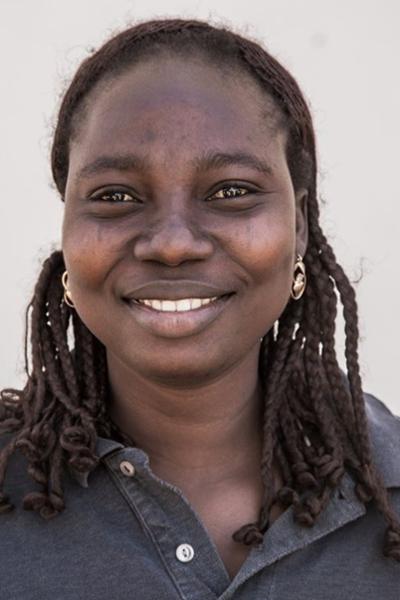
How did you join the Toumay Voyages agency team?
I am from the Moundou region, in southern Chad. When I joined the Toumay Voyage team in 2012 during the first charter flights to Faya, I had never worked in tourism. I had never even been to the north of the country and had never had contact with the desert!
They trusted me and from one day to the next, I found myself dropped in the middle of the Tibesti desert as a cook on a 4x4 expedition. There were only men from the north in the team, Gourans, Dazagas and a group of tourists. My mission was to talk about Chadian women and cook for everyone.
It must have been difficult being the only Chadian woman in an unknown environment?
Yes. The expedition conditions, the daily travels, the French culture I didn't know, the northern Chadians who spoke badly to me... At first I cried, in the evening, at night when no one could see me.
Then over time, I became more professional. I learned to manage my kitchen on the fly and meeting the travelers was decisive: they gave me confidence, comforted me and allowed me to face my Chadian brothers, stand up to them and claim my place.
And how do you live today?
Today I live in N'Djamena and I know my trade inside out. I participate in the TREG (a long-distance running race) and I have friends all over Europe. Tourism is struggling unfortunately, but I have become a free and proud woman who laughs more often than she cries. Recently the NGO African Park, which manages the Ennedi reserve, hired me. So here I am, going to maintain the independence I fought so hard to gain.
According to you, what can tourism bring to Chadian women?
I know many women who work in tourism. At Toumay Voyages, there is also Ester, Noura, Auntie Maye... they are all exemplary women who face their daily life with style and courage. Tourism is a vector for emancipation for us women. We just need to be given the place we deserve, not as a servant or a souvenir seller, but as collaborators in a united team. That is what Toumay Voyages has been able to offer us.
Alexia, co-founder and production manager at Kayala Voyage in Guatemala
« I crossed paths with many tourism development initiatives within Mayan communities. And I became aware that there were beautiful places where standard circuits didn't go »
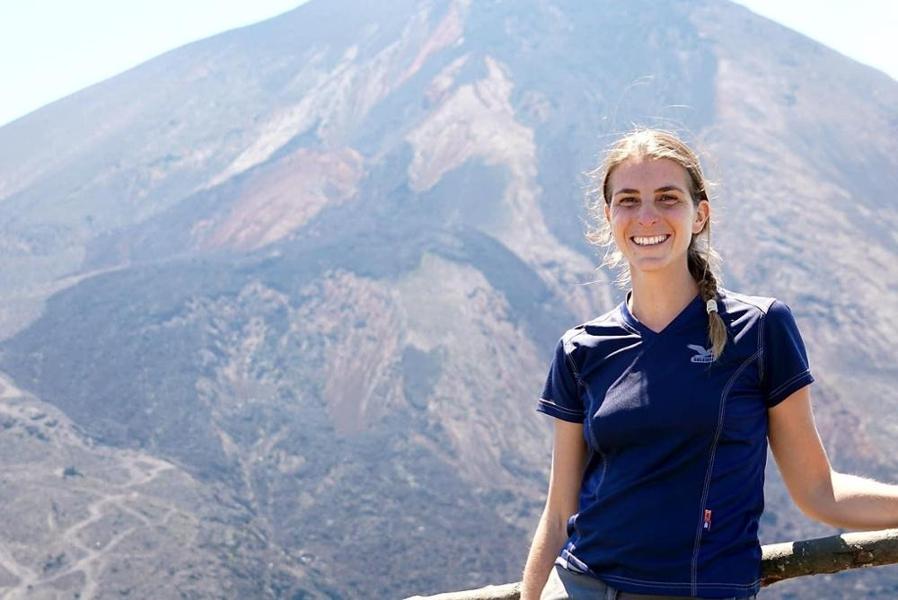
You are from Aix-Les-Bains in Savoy, where does your passion for travel come from?
I was lucky to have parents who gave me a taste for travel, and especially my mom who, at 18, left alone to live in South Africa. As a child, the beautiful images from travel magazines fascinated me: deserts, lush vegetation... From an early age, I had the call of travel, of discovery.
What is your education background, your first trip?
My parents were not very inclined to let me travel alone before I came of age, so I had to wait. After a Scientific High School diploma, I pursued Applied Foreign Languages, in English, Spanish, with a specialization in Latin America. My first trip abroad alone was eventually in England as part of an Erasmus exchange. I continued my studies at the International School of Commerce and Development 3A, in Lyon, with the initial objective of pursuing humanitarian work. I did my internships in Peru as a program coordinator for the Panpachay Association, which provides educational, psychological and medical support to disadvantaged children in a neighborhood of Arequipa, a city in the south of the country.
I immediately fell in love with South America and although working in humanitarian aid was my initial wish, I realized these jobs didn't suit me. Not enough freedom of action and movement for my taste.
How did you decide to commit professionally to tourism?
For a few years, I alternated between several-month stays in South America and Asia, odd jobs in France and experiences in various international solidarity associations abroad. My 8-month trip to Asia was a long period of introspection. I wanted to find a way to combine my passions and my professional life. One day, I made a list of what made me vibrant in life: travel, discovery, foreign cultures and languages, mountain sports, nature, meetings, sharing and feeling useful. The conclusion seemed obvious to me: move towards adventure tourism with positive local impact.
Why did you choose Guatemala as your home?
In 2011, I was fortunate to join the production department of a trekking agency. Then I went to work for that agency's service provider in Guatemala. Having traveled through the territory many times both personally and professionally (as a guide or on reconnaissance), I became aware of the richness of this country, on all levels: cultural, human and natural.
You created your own local agency Kayala Voyage in 2016, how was the idea born?
I crossed paths with many tourism development initiatives within Mayan communities. I also became aware that there were beautiful places where standard circuits didn't go. There was a missing link between travelers seeking authenticity and immersion and the many local projects with almost no visibility, especially internationally. It was my need for freedom in developing itineraries and the direction I wanted to give to my actions that drove me to create Kayala Voyage.
In your opinion, how do Guatemalan women participate in and benefit from the country's tourism development?
In Guatemala, male-female inequalities are very marked. It is a patriarchal society. The tourism sector is no different. Hotels, tourist transport companies, local agencies are owned for the most part by men.
The impact of tourism on women's lives is more visible at a very local and rural level. Groups of women, particularly weavers, sometimes widows of the civil war, have organized themselves into cooperatives. To have a positive impact on local populations, you have to go towards these associations. The economic benefits are direct, and organizing as an association allows them to benefit from training, to develop, to have a strategic vision, to diversify income sources, to achieve financial autonomy. There are wonderful examples of economic development at local scale by women around Lake Atitlán. I think for example of a women's cooperative that grows medicinal plants and makes cosmetics, herbal teas and natural salves, resulting from their ancestral knowledge. They are wonderfully well organized, transmit with pride and passion part of their knowledge in respect for their culture and the environment, to travelers who can also buy the products.
Simonette, guide-escort at Détours Madagascar
« You have to fight and never give up »
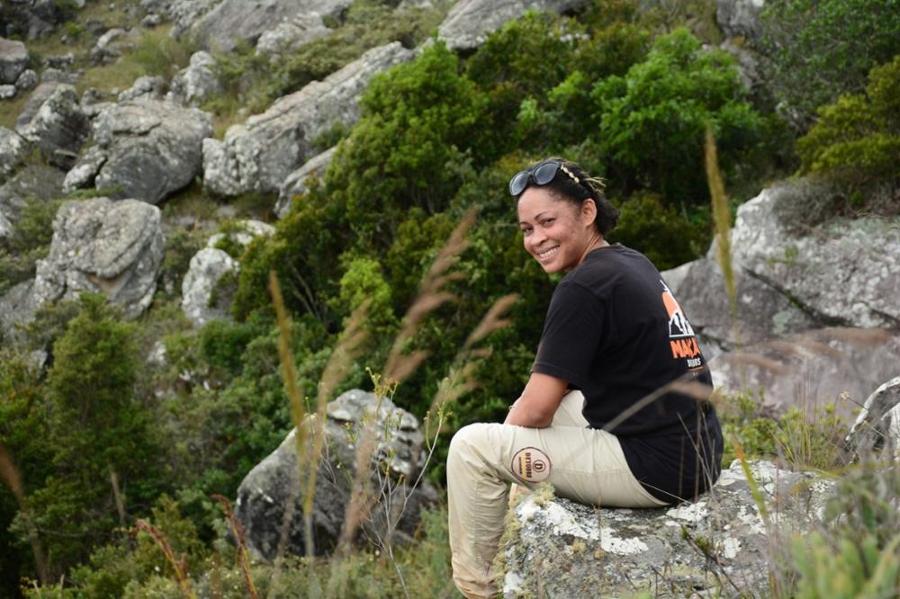
Where are you from?
I was born in Diego Suarez, in northern Madagascar, and grew up in Ambanja with my 2 brothers and 2 sisters. My mother raised us alone. I was the youngest in the family and to help my mother send us all to school, I sold fritters. After getting my high school diploma, I took on various odd jobs: sewing and Malagasy art. I sold my creations locally in my village.
Were you still able to continue your studies?
Yes, thanks to these two talents I've had since childhood and that I put to use as I grew up, I was able to pay for three years of university studies in Communication and IT, take English courses at a specialized school, and follow guide training that a travel agency in Antananarivo had offered me.
How did you become a professional guide?
It was the travel agency where I was doing my training that offered me to become a guide. I remember telling them no because I didn't even know where Antsirabe was! It was eventually alongside the guides of this agency that I began to learn the trade. I have been a tour guide since 2005.
You joined Détours Madagascar in 2017. What do you appreciate about this new team?
I applied to Détours Madagascar thanks to a friend who already worked there. I intend to stay because I joined a very nice team that advocates sharing and mutual help. I particularly enjoy exchanging with new people who don't necessarily have the same beliefs, the same languages, the same cultures... It is a real privilege, an honor and a great pleasure for me to introduce my traveling friends to all of this. I speak in particular Italian (which is not very common with us) and French.
If you had to sum up your journey?
Today I am the mother of 2 daughters aged 9 and 4. I remain convinced that whatever happens in the home, in marriage, in professional life, you have to fight and never give up.