
Land of safari par excellence, Africa remains the dream destination for lovers of wide open spaces and wild fauna. From Kenya to Tanzania, passing through South Africa, Namibia, Uganda or Botswana, each country offers its own vision of travel in the heart of nature. Here is our selection of the ten African safaris that deserve, in our opinion, a particular detour.
Table of Contents
- Amboseli National Park in Kenya
- Serengeti National Park in Tanzania
- Kruger National Park in South Africa
- Etosha Park in Namibia
- Chobe National Park in Botswana
- Bwindi National Park in Uganda
- Ngorongoro Conservation Area in Tanzania
- Masai Mara National Reserve in Kenya
- Manyeleti Reserve in South Africa
- Okavango Delta in Botswana
- FAQ
Amboseli National Park in Kenya
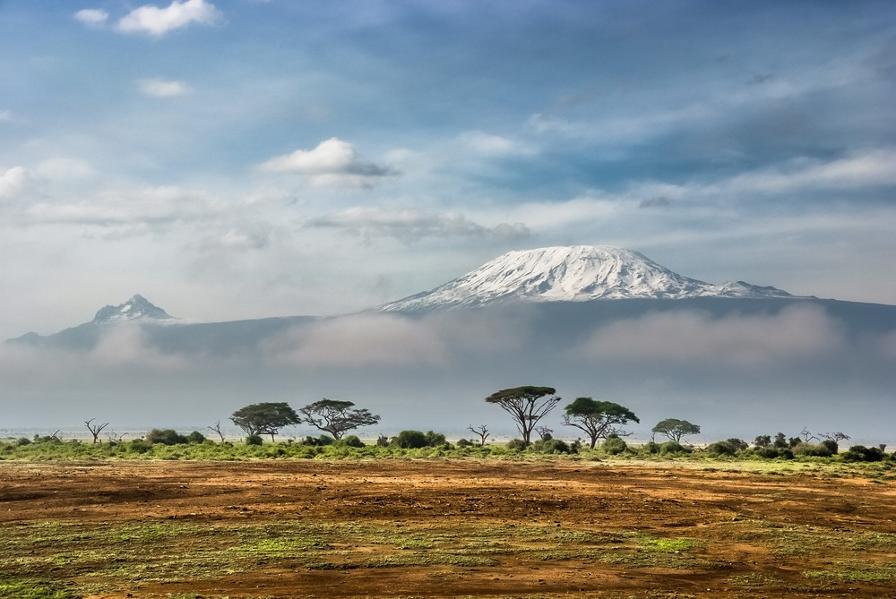
The Amboseli National Park opens our ranking, and it's no accident. Nestled in the center-south of the country, in the heart of the mythical Great Rift Valley, just a few kilometers from the Tanzanian border, it offers one of the most striking landscapes on the continent: the snow-capped silhouette of Mount Kilimanjaro, Africa's highest peak at 5,895 meters, stands out on the horizon, dominating grassy savannas where dense wildlife flourishes.
The park, which extends over nearly 392 km², owes its name to the Maasai word "Empusel," which means "dusty and salty place" — a direct reference to its large dried-up lake. During a jeep safari in Amboseli, you mainly observe imposing herds of elephants, among the most studied in the world thanks to the research of scientist Cynthia Moss. Hyenas, buffalo, wildebeest, gazelles, antelopes and zebras complete the picture, and with a little patience, lions and cheetahs sometimes let themselves be spotted at dawn.
Depart
Set out for a magnificent family stay that combines safari and beach.
Our recommended circuit: Safari camping with family
Serengeti National Park in Tanzania
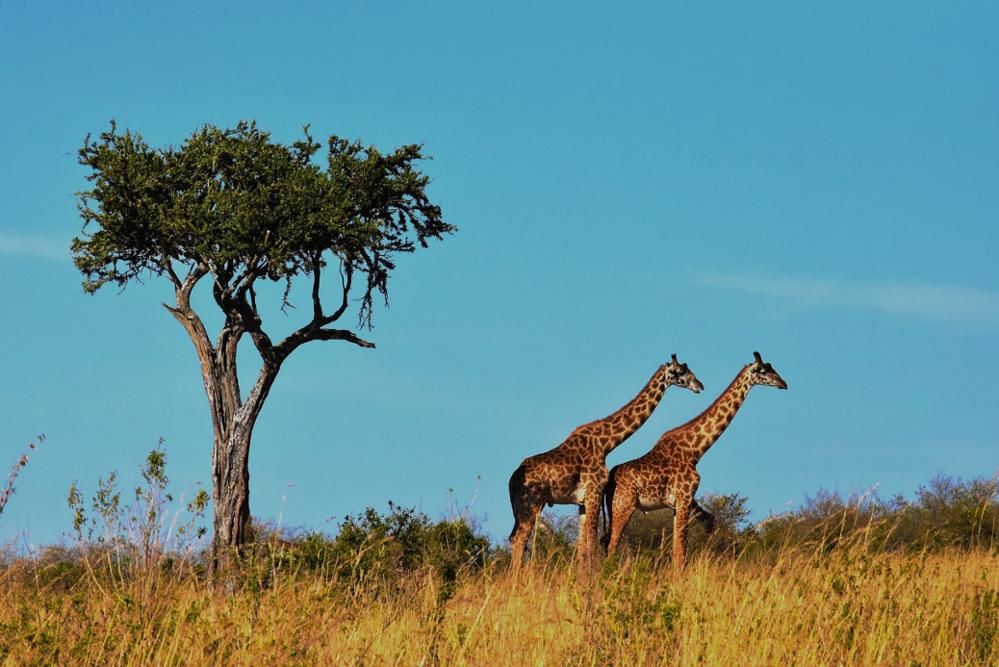
Heading to Tanzania, and one of the most celebrated reserves in the world: Serengeti National Park. Inscribed on the UNESCO World Heritage list since 1981, this territory of 14,750 km² takes its name from the Maasai word "siringet," which refers to these endless plains where the sky seems to touch the earth. Its reputation rests on the extraordinary wealth of its ecosystem, which combines plains animals, herbivores, large predators, reptiles and migratory birds.
Many travelers come here to hunt for the famous Big 5 — lion, leopard, elephant, rhinoceros and buffalo — but the Serengeti also contains fascinating secondary fauna: Nile crocodiles lurking in rivers, leopard tortoises, black-necked spitting cobras, topis, kongonis, Grant's gazelles, servals or fearsome black mambas. The park is also the scene of the great migration, this annual movement of nearly two million herbivores that rhythm the ecosystem's life between Tanzania and Kenya.
Depart
Set out for an incredible safari stay that takes you to the most beautiful parks and reserves in northern Tanzania.
Our recommended circuit: Jeep Safari in the Northern Parks
Kruger National Park in South Africa
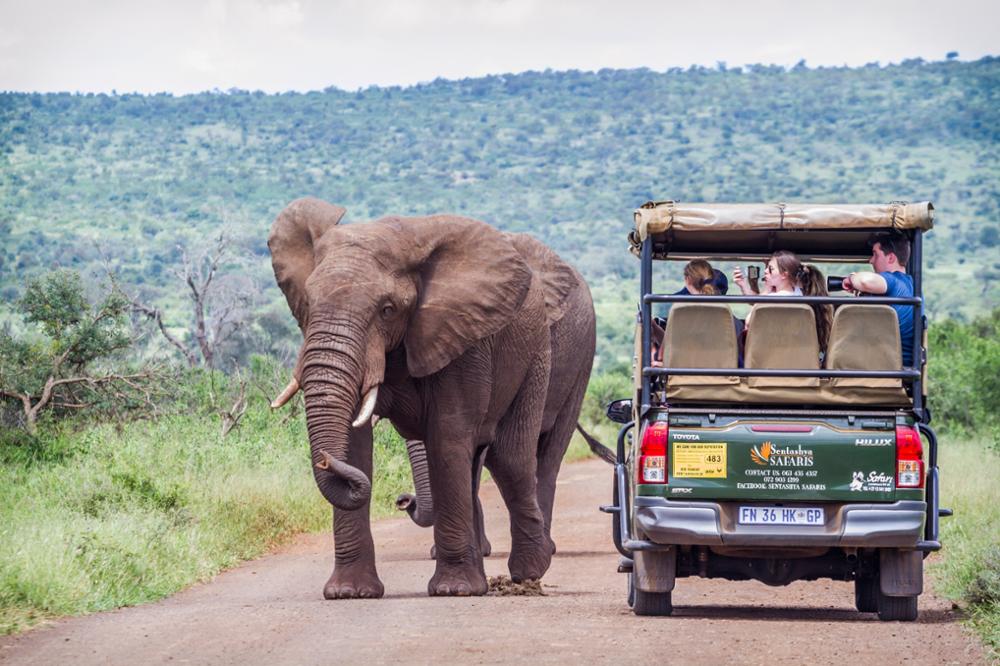
The Kruger National Park, created in 1898, is one of the oldest and largest in Africa. With nearly 20,000 km², it stands as a worldwide reference for observing large wildlife and is virtually a must-see stop on a trip to South Africa. All the continent's emblems are united there: alongside the Big 5, you will encounter hippopotamuses, giraffes, zebras, African wild dogs and nearly 500 recorded bird species.
Good to know: many private reserves border the park and allow for a more intimate safari experience, often in refined lodges. The Timbavati reserve is famous for its white lions, the Klaserie reserve allows walking approaches close to animals, and Sabi Sand remains one of the continent's best spots for observing leopards. Combining two or three of these reserves is an excellent way to vary experiences during the same stay.
Etosha Park in Namibia
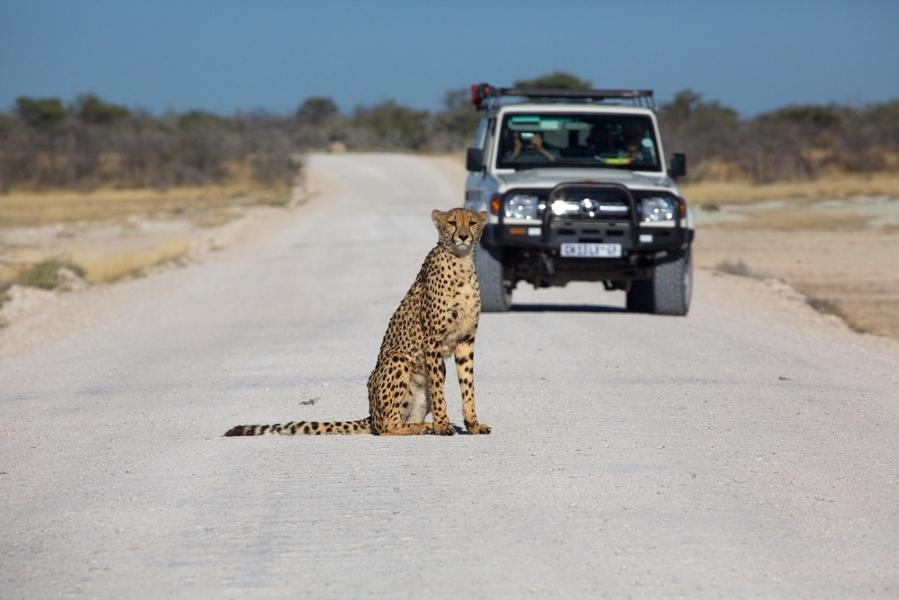
More discreet than its neighbors, Namibia nevertheless holds pleasant surprises for travelers. Its moderate visitor numbers make it a destination of choice for those seeking calm, off the beaten path. Etosha Park, created in 1907, is its most striking illustration. Its vast salt pan — an immense dried-up lake of more than 4,800 km² visible from space — gives this territory an almost lunar character and constitutes an ecosystem of rare singularity.
The aridity of the landscape is here an advantage: sparse vegetation and few water points concentrate animals and greatly facilitate observation. During a safari at Etosha, you regularly spot elephants, zebras, rhinoceroses (the park harbors one of the world's most important populations of black rhinoceroses), giraffes, hyenas, wildebeest, impalas, oryx, warthogs, as well as vultures, martial eagles, ostriches and flamingos when the season permits.
Chobe National Park in Botswana
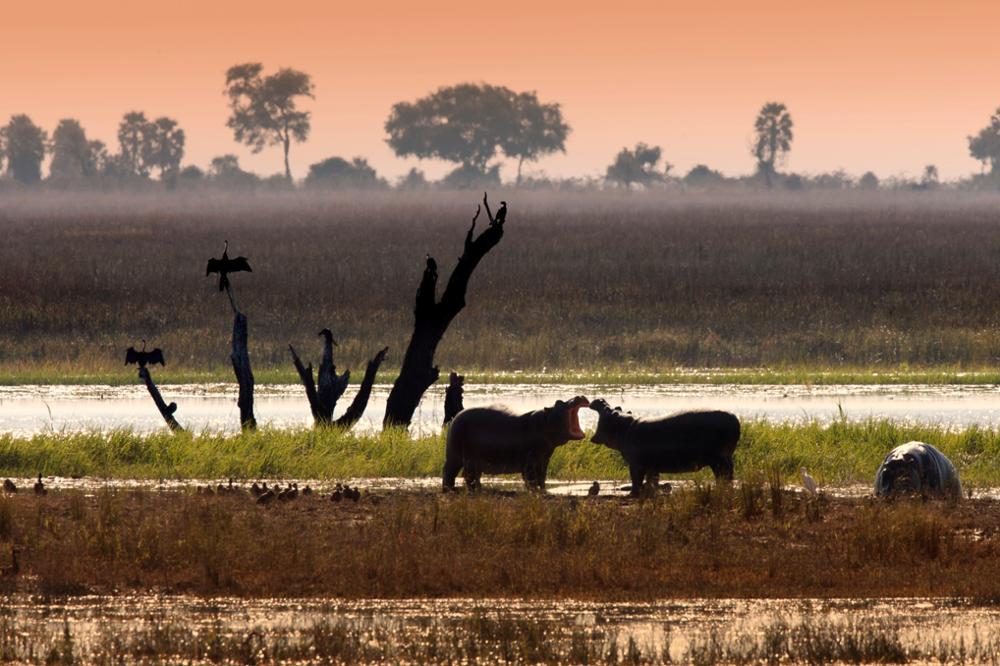
Located at the far north of Botswana, on the Namibian border, Chobe National Park harbors one of Africa's highest concentrations of large wildlife. It is home to notably more than 50,000 elephants, one of the continent's largest populations. Lions, leopards, cheetahs, buffalo and antelopes of all kinds also roam there, and the park's diversity makes it one of the prime destinations for an animal safari.
Chobe's other particularity lies in its eponymous river, which borders the park to the north. Boat cruises there constitute an experience in their own right: at sunset, from the water, you observe herds coming to drink, while hippopotamuses, Nile crocodiles and water birds — African fish eagles, jacanas, kingfishers — enliven the banks. Another way, more peaceful, to approach the safari.
Bwindi National Park in Uganda
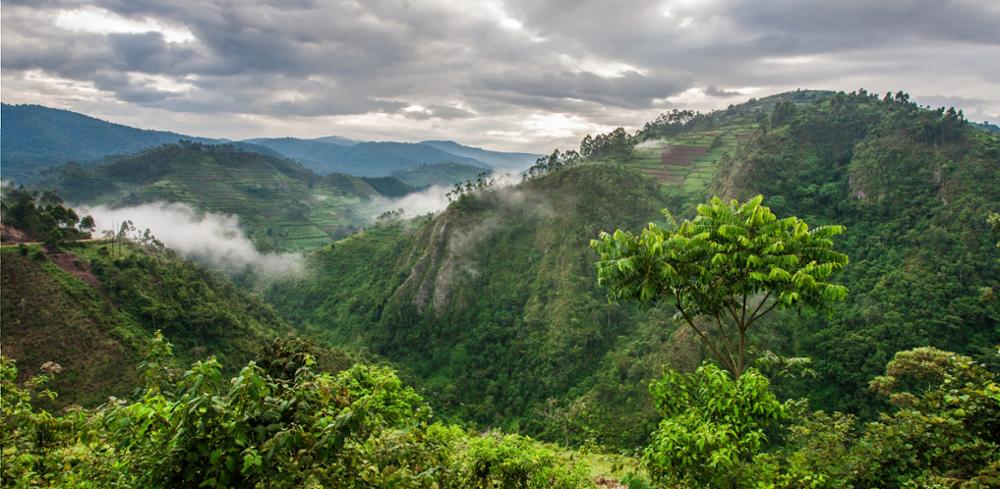
A radical change of scenery. Ocre savannas of the plains give way to humid high-altitude tropical forests in Uganda. It is in Bwindi National Park — its name means "impenetrable" in Runyakitara — that we take you on an experience of a different kind: a safari on the trail of great primates.
Listed as a UNESCO World Heritage site since 1994, Bwindi harbors nearly half of the world's mountain gorilla population, a species still considered endangered. Led by a ranger, trekking can last several hours through dense vegetation, but the encounter with a family — and perhaps the imposing silverback who ensures its protection — leaves a lasting impression. The park also welcomes chimpanzees, several cercopithecus species, remarkable bird life, multicolored butterflies and the greatest diversity of trees and ferns in all of East Africa.
Ngorongoro Conservation Area in Tanzania
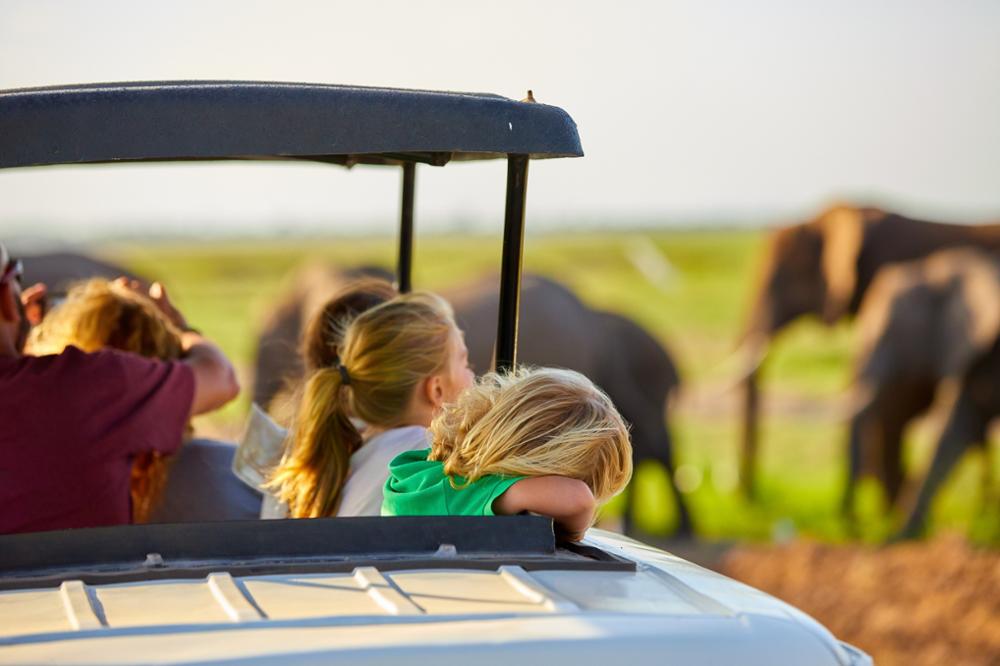
For travelers seeking landscapes as spectacular as their wildlife, Ngorongoro Conservation Area is a revelation. Its jewel: the Ngorongoro caldera, the world's largest intact caldera, whose walls rise over 600 meters around a crater of 260 km² formed nearly three million years ago. Grasslands, wooded savannas, highland forests, alkaline lakes, rivers and marshes juxtapose there in an almost unreal landscape.
This mosaic of habitats explains the unique concentration of species observed there. During a safari in Ngorongoro, wildebeest, buffalo, plains zebras, Grant's and Thomson's gazelles coexist with lions, spotted hyenas, leopards, cheetahs, African wild dogs and black rhinoceroses — one of the last populations still visible in this part of Africa. The site is also a birdwatcher's paradise with over 400 recorded species, among which pink flamingos and grey-breasted crowned cranes.
Masai Mara National Reserve in Kenya
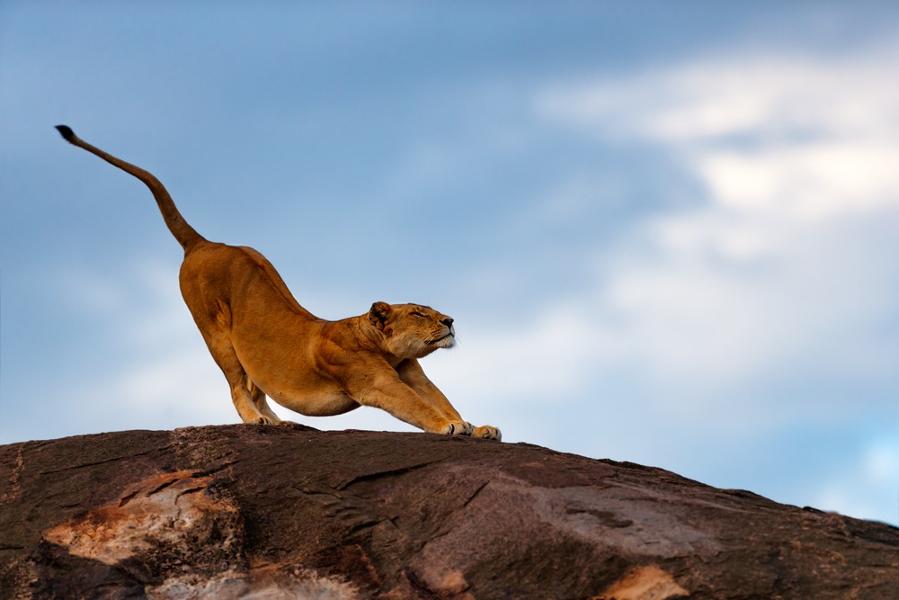
Natural extension of the Serengeti on the Kenyan side, Masai Mara National Reserve ranks among the unmissable destinations of an animal safari in Africa. Each year, from July to October, it is the scene of one of the most striking phenomena in the animal kingdom: the crossing of the Mara River by hundreds of thousands of wildebeest, Thomson's gazelles and zebras, under the watchful eye of crocodiles. A raw, sometimes harsh spectacle, whose images have traveled around the world.
Outside this season, the Mara maintains a remarkable animal density: elephants, lions (the reserve is famous for its imposing male coalitions), giraffes, hyenas, cheetahs and leopards are regularly observed there. And as its name suggests, this territory is also that of the Maasai people: meeting with inhabitants of the neighboring manyattas naturally allows for combining animal safari and cultural immersion.