Romania - the treasures of the west
A free journey through Crisana, where Secession facades and Hungarian traditions blend with Dacian remains.
Duration
8 days
From
€760/pers.
Ideal seasons
Apr, May, Jun, Sep, Oct
Style
Self-drive tour
Comfort
classique
Travelers
Couple, Solo, senior, With friends
The spirit of travel
Rarely included in tourist circuits, the western area of Roumanie, called Crisana, remains perhaps the most pleasant part of the country. Its elegant cities overflow with superbly preserved architectural wonders – the Secession movement experienced unprecedented popularity there. Historic Crisana is today divided between Hungary and Roumanie. The population, on the Roumanie side, still has a significant Hungarian minority.
The adjacent region, located between Huedin and Cluj is known by Hungarians as "Kalotaszeg". It is a very interesting area from a geographical, historical, but especially ethnographic point of view. It is a place where Hungarian culture has remained almost intact. Folk traditions are still alive, and inhabitants proudly wear their beautiful traditional costumes. Moreover, the embroidery from this region is well known, not only in Roumanie.
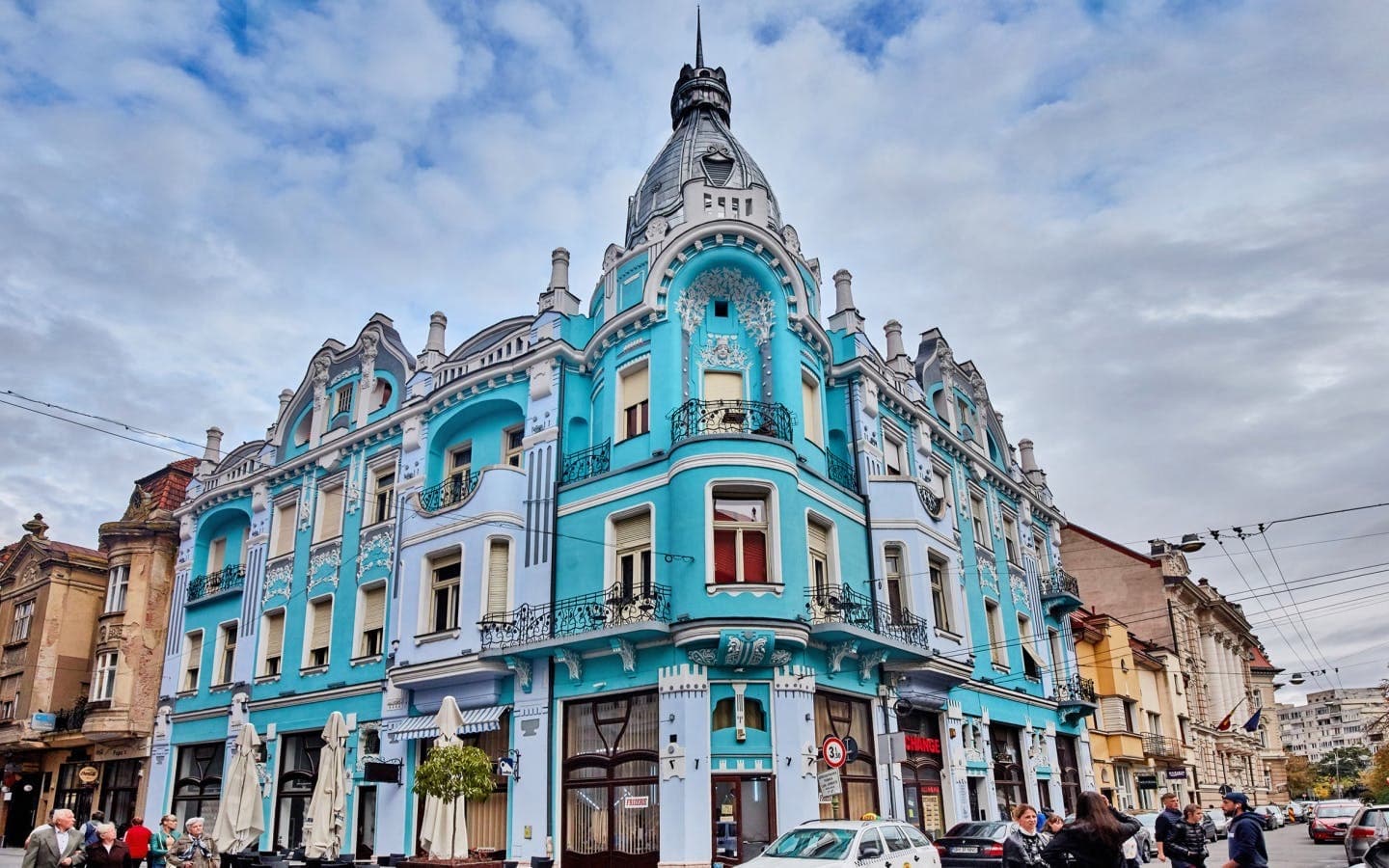
Oradea still preserves its strongly Hungarian character. Here the Secession style dominates the architecture of the city center. Recently restored buildings, of great beauty, attract the attention and cameras of travelers.
Timisoara is the symbolic city of the 1989 Revolution which made international headlines when the first sparks were ignited there on December 16. The city founded by Serbs in the 13th century on the ruins of a Dacian colony is currently the fourth city in the country, experiencing full economic and cultural growth. Timisoara will be European Capital of Culture in 2023!
Next you will pass through the cradle of Dacian civilization, the Deva – Sarmizegetusa region, and the Sibiu region located in the center-west of Roumanie – a true "melting pot" of Romanians, Germans, Hungarians. The city and its region represent a nice example of unity and success in diversity.
Proposed as a self-drive tour, this itinerary will give you the opportunity to discover the country in complete freedom. The suggested visits are only suggestions; you can decide on the spot whether you will do them or not, or if you wish to add more, according to your preferences. We will provide you with a detailed day-by-day travel guide and a GPS where all points of interest will be pre-registered.
The Dacians are our ancestors, who were conquered by the Roman legions led by Emperor Trajan, following two wars that took place at the beginning of the second century A.D.
The stages of your journey
Highlights
Day-by-day itinerary
Arrival in Cluj
To Cluj
Airport to hotel transfer by taxi at your own expense.
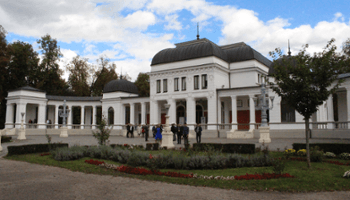
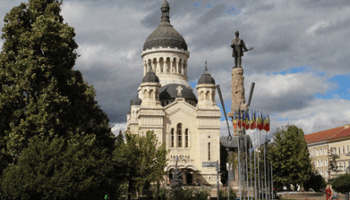
Cluj, the largest city in Transylvania, is one of the most important university, cultural and industrial centers in the country. If you arrive around noon, you will have time to discover the old city center, which is remarkable for the wealth of its Gothic and Baroque architecture: the Roman Catholic Church of Saint Michael, one of the oldest religious monuments in the city, the birthplace of Matei Corvin, Banffy Castle - built in the 18th century in Baroque style, which today houses the Art Museum. You can also admire the Orthodox Cathedral, the National Theatre and the Opera in Baroque and Rococo style.
On the way to Oradea
You will leave Cluj heading towards Oradea.
To begin your journey, we first suggest a stop in Sîncraiu - (Kalotaszentkirály in Hungarian), one of the most beautiful villages in the Calata region, built on both banks of the Calata river, approximately 6km from Huedin. The village's Reformed church is remarkable for its coffered ceiling, dating from the 13th century, representative of the ecclesiastical architecture of this region. It is still used by the Hungarian Reformed community and can be visited.
You will arrive in Oradea around noon, so you should take the opportunity to see all the wonders of Secession style: Palatul Vulturul Negru (Black Eagle Palace), Primaria (the Town Hall), Turnul cu ceas, Republicii Street, and much more.
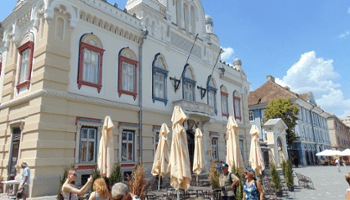
The city of Timisoara
To reach Arad and then Timisoara you will take the road that crosses the western plain, skirting the border with Hungary.
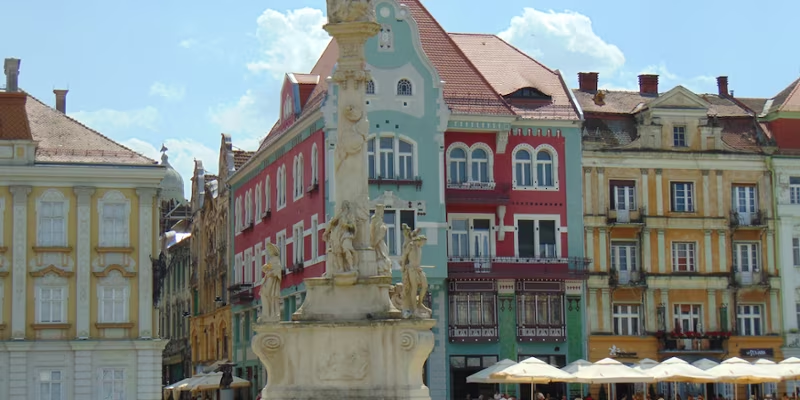
Arad is a modern city, an industrial center and a communications hub, which has many remarkable buildings. The Vauban citadel of Arad was built on the left bank of the Mureș river, during the reign of Empress Maria Theresa between 1762-1783. It cannot be visited....but a short stop in the old center where there are some lovely Baroque and Art Nouveau buildings is worth the effort.
In early afternoon you will arrive in Timisoara, so plenty of time to discover this lovely city, symbol of the 1989 revolution and European capital of culture in 2023!
On the Way to Hateg Land
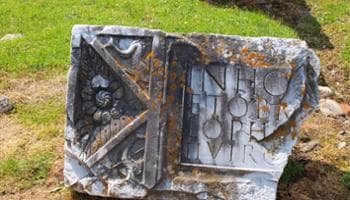
Route towards Sarmizegetusa Ulpia Traiana, the Daco-Roman capital, after the conquest of Dacia following the war of 105-106 AD. Besides the amphitheatre, you can stroll through the forum and discover the ruins of several temples, workshops (glass, ceramics), the gladiators' school… but many parts are still buried (orchards, fields, houses).
Continuation to Densus. Visit of Densus church, built in the 13th century, interesting in its appearance and structure. Stones from the ancient Roman city Ulpia Traiana Sarmizegetusa, used as building material, explain its particular appearance
Before heading to your accommodation we strongly recommend a detour to Hunedoara to visit Corvins Castle which is an impressive monument of Medieval architecture. It is built in Gothic style, with Baroque and Renaissance elements, the largest Castle in Roumanie.
Finally, the citadel of Deva, which can be seen from afar, also deserves a visit especially since there is a cable car… The citadel situated on a volcanic cone offers a splendid panoramic view over the Mures valley and the mountains to the south.

On the way to Sibiu
Today you will be off the beaten path, as these visits are rarely featured in tourist programs. The Dacian remains of Sarmizegetusa Regia – the spiritual center of the Dacians, are the highlight of the day. Stop along the way to visit Calnic Fortress and the Museum of Glass Icons and the village of Sibiel.

The City of Sibiu
In the morning you will visit the city of Sibiu – European capital in 2007.
Sibiu was founded in the 12th century by Saxon settlers established in the region. The city still retains its medieval atmosphere.
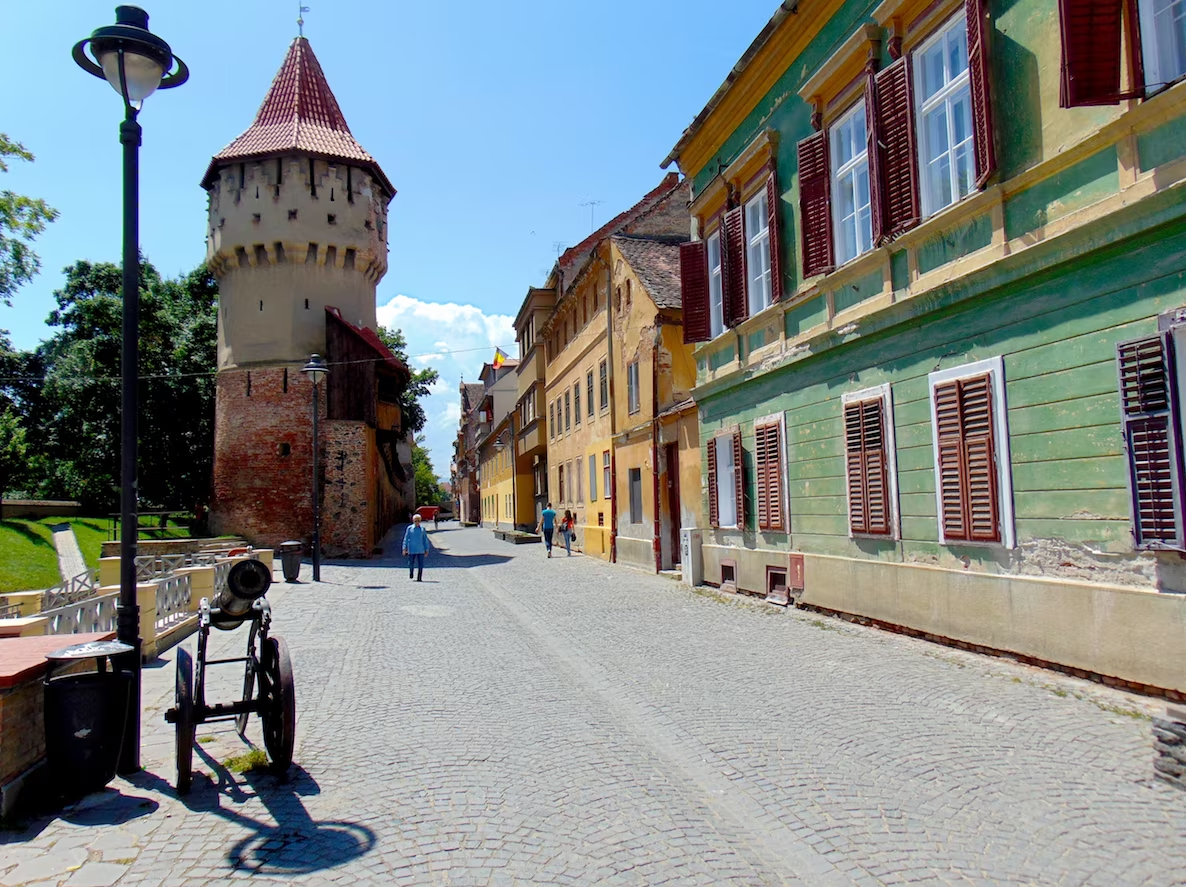
To visit: the Grand Square (Piata Mare) - center of the city since the 16th century where the Council Tower stands, one of the city's symbols; the Small Square (Piata Mica) and Huet Square; the Evangelical Church - the Liars' Bridge – which dates from 1859, is the first cast iron bridge in Southern Europe. It bears this name because it is supposed to collapse as soon as a liar crosses it.
Sibiu, cradle of Saxon civilization in our country, borders to the west with a grouping of Romanian villages that form an ethnological unit called Marginimea Sibiului. These villages bear witness to the cultural identity of Romanians in this region. Since time immemorial, these shepherd populations have been masters in the processing of wool and skins.

Return to Cluj
On your way to Cluj you will arrive at Alba Iulia, a city that is home to a recently restored Vauban citadel that will enchant you and transport you back to the early 18th century.
Next, a visit to the Turda Salt Mine is a must. This salt mine, exploited since antiquity, leaves no one indifferent. Over the centuries it has served as a makeshift shelter, cheese aging cave, tourist attraction, therapeutic centre, leisure centre…
In the afternoon, car return in Cluj.
Price per person
Indicative price per person, based on double room. Each trip is customized according to your preferences.
This trip can be tailored to your preferences
This itinerary provides an excellent foundation for discovery, but it can be fully customized. Our local advisors build each trip tailored to your budget, dates and preferences.
Not included
- International Transport
- Airport transfers
- Passport fees
- Insurance (repatriation, travel)
- Phone calls
- Meals not mentioned in the program
- Tips
Included
- Standard double room accommodation in 3* - 4* hotels, 4* manor or 3* guesthouse
- breakfast
- the dinners mentioned in the program
- 5-seater rental car from Day 2 to Day 7
- car insurance (liability, accident, theft)
- GPS (pre-registered accommodations and sites to visit)
- travel file (road map, tourist maps for hiking, detailed day-by-day route guide, practical information)
- our 24/7 telephone assistance throughout your stay
Practical Information
Registration is considered firm and final after payment of a deposit of 30% of the total price and acceptance of the specific terms of sale.
The balance must be paid no later than 45 days before the departure date.
See our specific terms of sale for full details.
In the event of cancellation by the traveller, the following fees apply:
- Plus de 60 jours avant le départ : 40 % du prix total (acompte retenu)
- Entre 60 et 30 jours avant le départ : 50 % du prix total
- Moins de 30 jours avant le départ : 100 % du prix total
We strongly recommend taking out cancellation insurance. See our specific terms of sale for full details.
The information below concerns travellers who are nationals of the European Economic Area (EEA), Switzerland and Canada travelling to Romania for a tourist stay. As entry rules may change, we recommend you verify the information with the official authorities before your departure.
Passport or ID card
Nationals of the European Economic Area and Switzerland can enter Romania with a valid passport or national identity card. The document must be in good condition (no damaged, torn or altered pages).
Canadian nationals must carry a valid passport for the entire duration of the stay, preferably with validity of at least six months after the date of entry into the country.
Tourist stay without a visa
Nationals of the European Economic Area and Switzerland have no length of stay restrictions in Romania as European citizens benefiting from freedom of movement within the EU.
Canadian nationals benefit from a visa exemption for tourist stays of a maximum duration of 90 days within any 180-day period in the Schengen area, of which Romania has been part since 31 March 2024.
Authorities may request Canadian travellers to provide:
an exit ticket from the territory (return or onward flight),
proof of sufficient financial resources for the duration of the stay,
an accommodation booking for all or part of the stay.
Schengen Area
Romania joined the Schengen area on 31 March 2024 for air and maritime borders, and on 1 January 2025 for land borders. Border controls at internal borders with other Schengen countries have been removed for travellers coming from these countries.
For Canadian nationals, the stay in Romania is counted towards the overall 90 days within 180 days limit applicable to the entire Schengen area.
Travelling with children
Minors must hold their own valid travel document (passport or identity card depending on nationality) covering the duration of the stay.
In some European countries, when a minor travels without one of their parents, an authorisation to leave the territory may be required according to the regulations of the country of residence.
Other nationalities
Entry conditions may vary depending on nationality. Travellers concerned should inquire with the embassy or consulate of Romania in their country of residence.
To participate in our trips, it is strongly recommended to be insured for repatriation assistance and medical expenses abroad.
Your local agency encourages you to review the specific policy developed with our partner CHAPKA ASSURANCES and AXA ASSISTANCE.
To subscribe to insurance, learn about coverage and rates, follow the link below.
CAP EXPLORER: The complete insurance solution designed for a worry-free trip!
Choose the plan that suits you best:
Explorer'Multirisque
Explorer'Annulation
Explorer'Assistance
Explorer' Complémentaire Carte Bancaire
Specific to our trips, we strongly recommend subscribing to them.
If you choose to subscribe to one of these plans, the policy detailing all coverage and claim declaration procedures is available on the insurer's website.
Your local agency will be aware of it, but only the participant is responsible for complying with claim declaration procedures. The participant must therefore keep this policy with them throughout their trip.
Chapka — Cap Explorer
Our insurance partnerTravel with peace of mind with our partner Chapka. Cancellation, repatriation, medical expenses, baggage… All the coverage for a worry-free trip.
Travel with peace of mind — I'll handle the insuranceFrequently asked questions
To enter Romania, you must have a valid identity document (ID card or passport). No special formalities are required. The local currency is the Romanian leu. Before traveling, check the entry conditions applicable to your nationality with the Romanian consular authorities.
Go to the My Trips section to find all your projects.
You can send a message to your host directly from the Tea Lounge.
For a tailor-made quality trip, expect between €110 and €180 per day and per person, including accommodation, meals, internal transfers and activities. International flights (€150-400 return) are additional. Romania is one of the most affordable destinations in the EU.
Your documents are accessible in the Documents tab of your trip.
Absolutely. We tailor each itinerary to our travelers' profiles. For families, we prioritize relaxed paces, family-friendly accommodations, engaging and educational activities, and comfortable private transfers. Our English-speaking local guides know how to captivate children with age-appropriate anecdotes.
It's simple. You'll exchange with our local team to define your wishes, budget and dates. You'll receive a detailed itinerary proposal within 48 hours. You'll refine every detail together until it's perfect. You'll confirm and travel with peace of mind. Your local agency remains available 7 days a week throughout your trip.
In case of emergency, contact your local agency immediately.
Payment is generally made in two installments.
Our agency is part of the Nomadays network, registered in France. You benefit from APST (Association Professionnelle de Solidarité du Tourisme) coverage, which protects 100% of your funds. Secure payment, repatriation insurance included, and English-speaking assistance 24/7 on the ground throughout your stay.
Let's talk about your adventure — Transylvania
Guardian of Romanian traditions, based in Cluj-Napoca
Romania is a country where many traditions still live naturally. It's often these simple moments and unexpected encounters that touch travelers the most.
— Cornelia