Machame Route: 8 days including 7 days / 6 nights in the mountain
Climbing Kilimanjaro via the Machame route, 8 days between tropical forest and glaciers on Africa's rooftop.
Duration
9 days
From
€1,300/pers.
Ideal seasons
Jan, Feb, Jun, Jul, Aug, Sep
Style
Expeditions
Comfort
rustique
Travelers
Solo, With friends, groupe
The spirit of travel
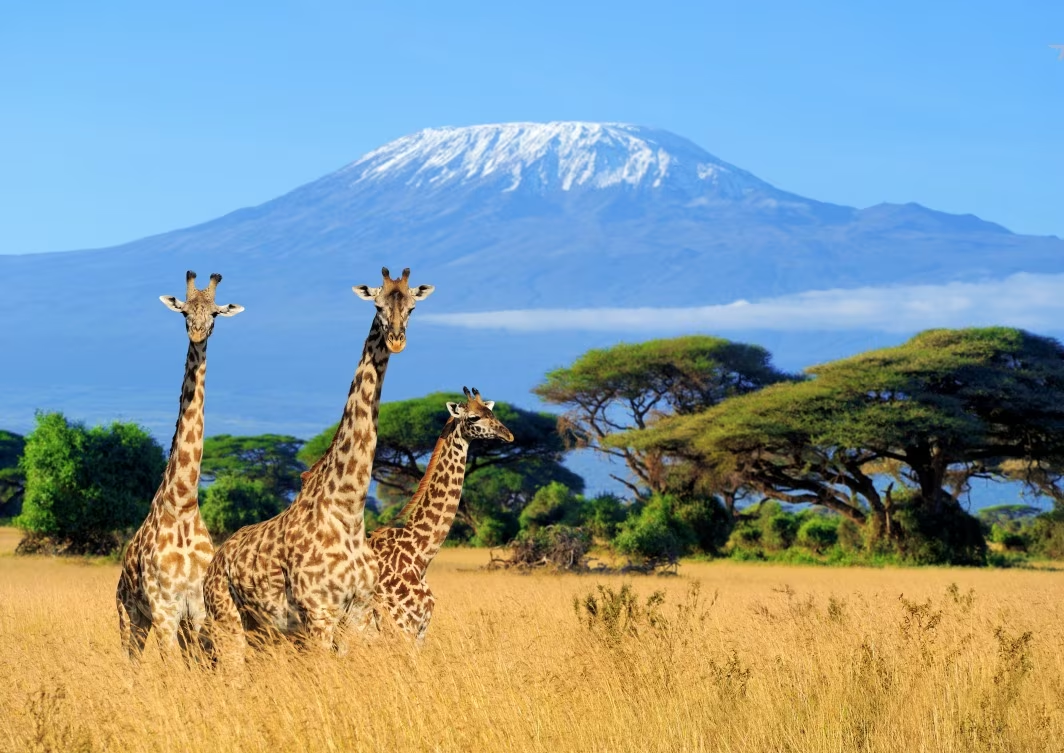
Climbing Kilimanjaro (5,895 m) in Tanzania is an adventure that combines high mountain trekking, immersion in nature and progression at the pace of the massif. This "Kilimanjaro Ascent" circuit takes you along the famous Machame route, a hiking itinerary recognized for the diversity of its landscapes and the richness of its environment.
Over the days, you traverse different ecosystems: humid forests inhabited by monkeys, highland moorlands dominated by lobelias and groundsels, then vast volcanic plateaus at the foot of Kilimanjaro's glaciers. Each stage allows for progressive acclimatization and immersion in the mountain's emblematic landscapes.
The final ascent, begun at night, leads to Uhuru Peak, Africa's highest point. At sunrise, the crater reliefs and panoramas over Tanzania offer a remarkable moment after several days of trekking.
Accompanied by a dedicated local team, this adventure journey in Tanzania invites you to fully experience the Kilimanjaro, between effort, nature and discovery of the massif.
The stages of your journey
Highlights
Day-by-day itinerary
Welcome and transfer to the hotel
Aéroport Du Kilimandjaro → Moshi
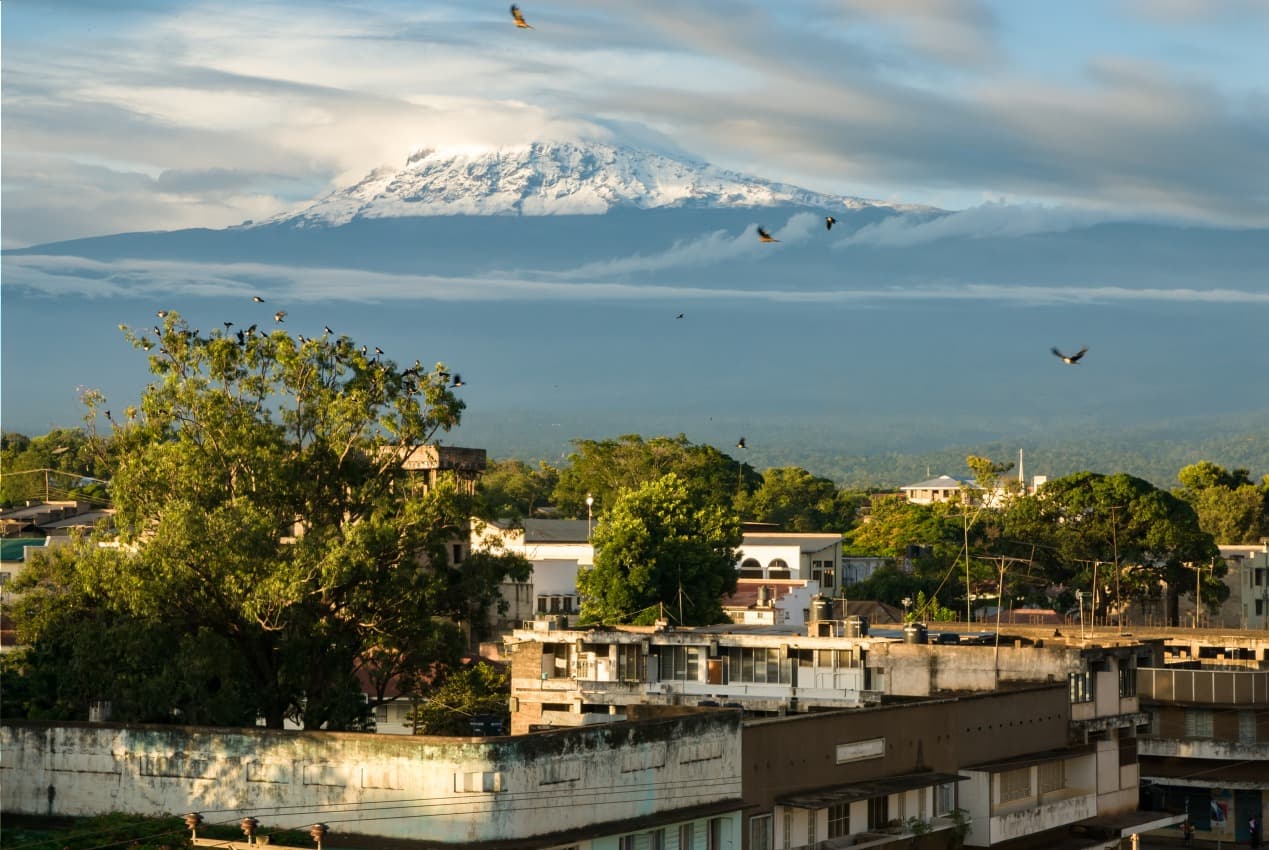
The Galago team welcomes you at the Kilimanjaro International Airport, then ensures your transfer to your hotel in Moshi, at the foot of the famous massif.
The rest of the day is free for you to settle in and recover after your journey. Depending on your arrival time, you can rest at the hotel or take a first opportunity to discover the atmosphere of Moshi at your own pace.
On the way to Machame Hut - 2900m
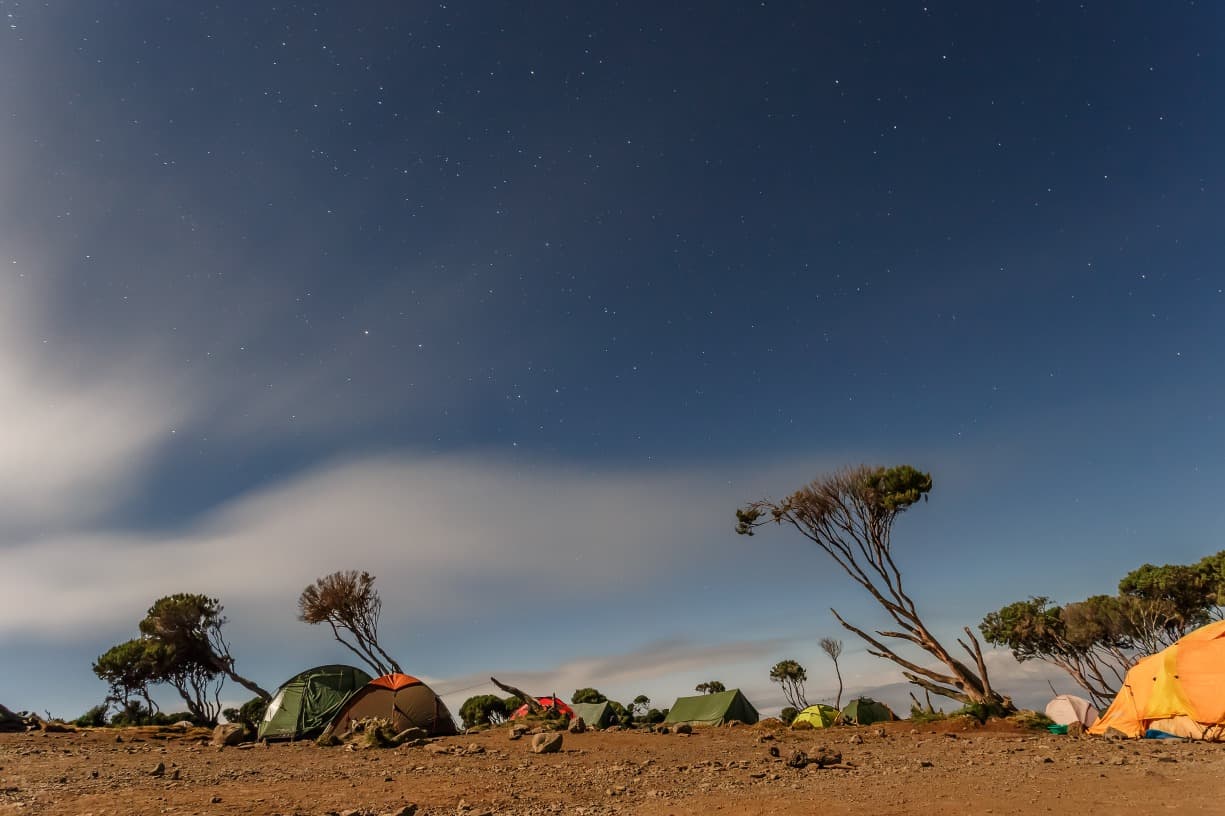
Your adventure begins at the Machame Gate, located at 1,500 m altitude. You progress through a dense and humid forest, where lush vegetation accompanies your first steps on the slopes of Mount Kilimanjaro. The trail crosses a living environment, punctuated by the sounds of the forest, streams and the presence of wildlife, notably monkeys visible in the canopy.
This first day allows you to gradually immerse yourself in the landscapes of the massif. At the end of the stage, you reach Machame Hut camp, where you settle in for the night in a peaceful atmosphere, conducive to rest and acclimatization.
Distance: 11 km
Elevation gain: +1400 m
Hiking time: 5 to 7 hours
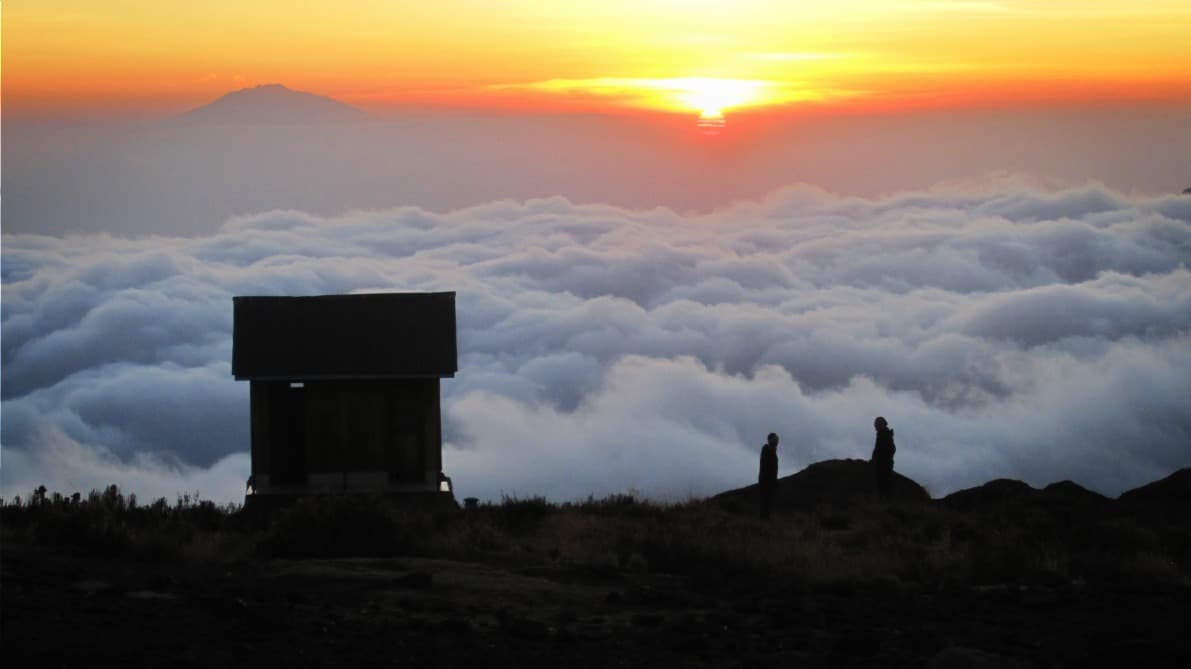
Shira hut 3800 m
At first light, after breakfast, you resume your progression on the slopes of Kilimanjaro. The route gradually leaves the dense forest to make way for more open landscapes, as you gain altitude towards the Shira plateau.
The climb takes you through a mineral and open environment, offering wide panoramas of the massif and surrounding reliefs. This stage marks a transition in landscapes, between high-altitude vegetation and vast expanses.
Upon arrival at Shira Hut, you settle in for the night in a peaceful setting, conducive to rest and acclimatization, as the light fades over the plateau.
Distance: 5 km
Elevation gain: +900 m
Walking time: 4 to 6 hours
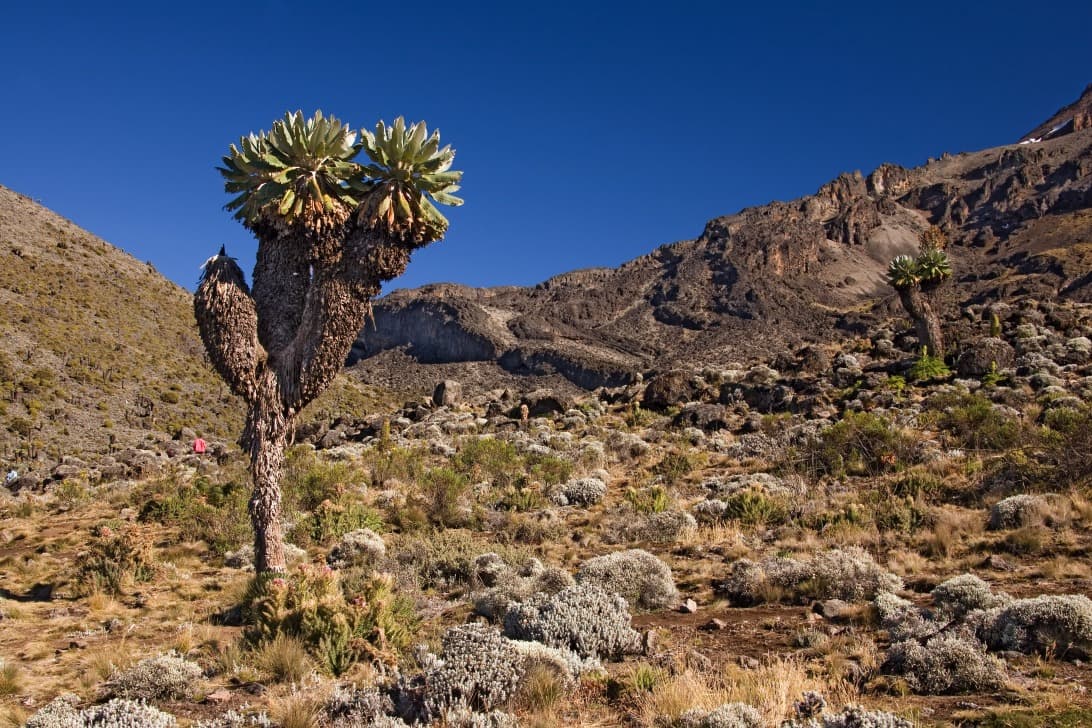
Barranco hut 3900 m
You continue your ascent towards Barranco Hut Camp, hiking across the slopes of Kilimanjaro through high mountain landscapes. The route traverses an environment marked by steep terrain, ridges and deep valleys, offering varied viewpoints over the massif.
After 5 to 6 hours of hiking, you reach the site of Barranco Hut, located at the bottom of a narrow valley. Access is via a descending trail, sometimes steep. This stage plays an important role in acclimatizing to the altitude, an essential phase for the rest of the ascent.
Once settled at the camp, you enjoy well-deserved rest time and the beauty of the end-of-day light on the glacier. The summit of Kilimanjaro now comes into view on the horizon.
Distance: 10 km
Elevation gain: +100 m / -200 m
Hiking time: 6 to 8 hours
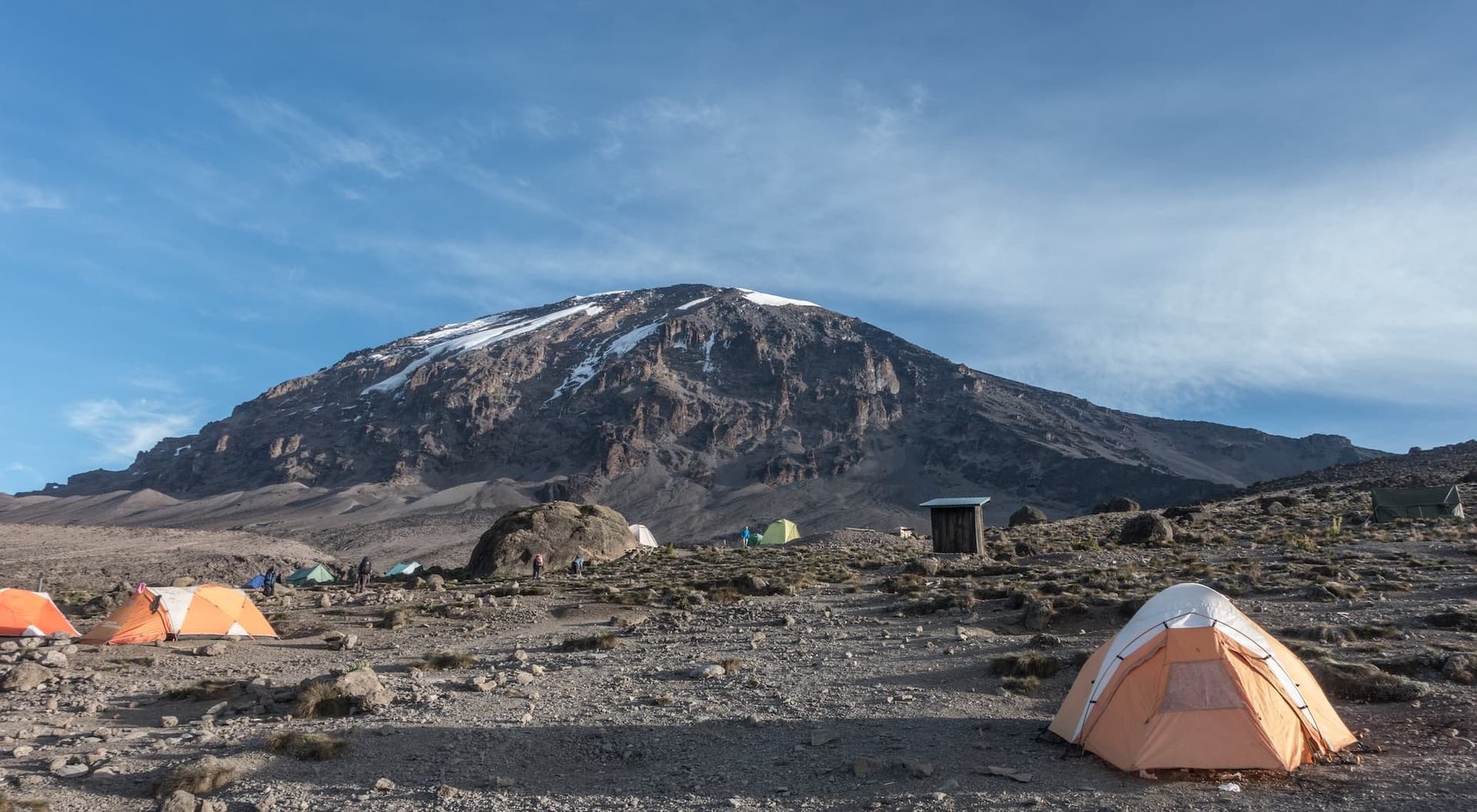
Karanga Valley 4000 m
After breakfast, you leave Barranco camp (3,960 m) to cross the famous Barranco Wall. This steep climb is one of the most memorable passages on the route. In some places, using your hands may be necessary to progress to the ridge.
Once this passage is completed, you continue your hike on a narrow trail offering beautiful views of the high altitude landscapes. The stage then unfolds at the pace of a succession of climbs and descents, promoting gradual acclimatization.
You continue to travel through an alpine environment heading towards Karanga camp, located at 4,000 meters. This day plays an important role in preparing for the final ascent to the summit.
Distance: 5 km Elevation gain: +100 m / -200 m
Hiking time: 4 to 5 hours
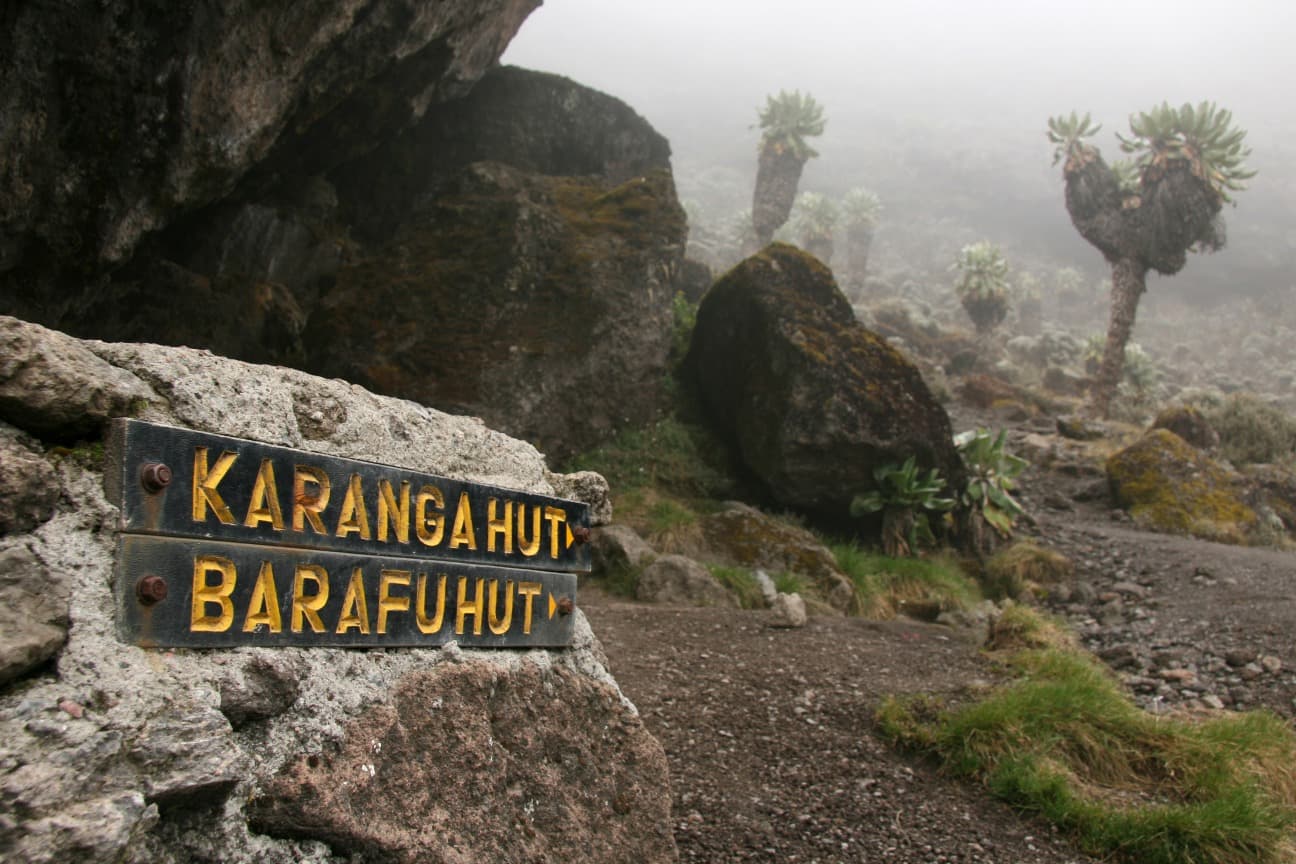
Ascension Barafu: 4650 m
You leave Karanga Valley to continue your progression towards the heights of the massif. The trail crosses a mineral landscape with desert-like features, while you gradually gain altitude towards Barafu Hut, the base camp for the final ascent.
After 6 to 7 hours of hiking, you reach Barafu Hut. The team takes care of setting up the bivouac while you take time to observe the surrounding reliefs. From the camp, the route leading to the summit is already visible.
In the evening, you have dinner before resting early. A short night awaits you, as departure for the final ascent is scheduled very early in the night.
Distance: 4 km Elevation gain: +650 m
Hiking time: 3 to 4 hours
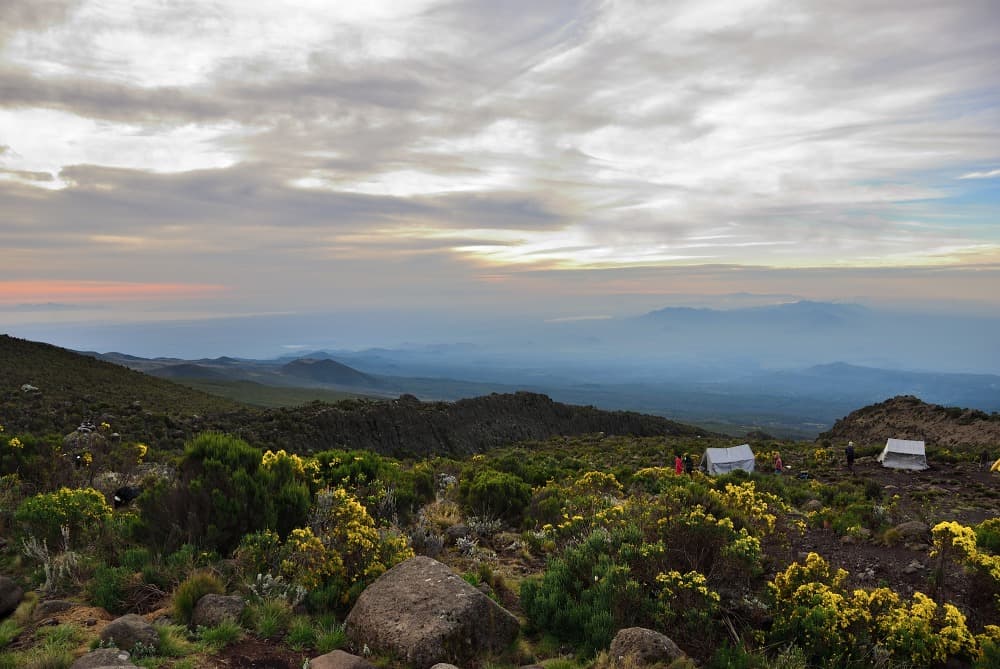
Acclimatization day
This day is dedicated to acclimatizing to altitude, in an environment where vegetation becomes increasingly sparse. The landscape is marked by the presence of lobelias and groundsels, characteristic of the high-altitude zones of Kilimanjaro.
You will hike for approximately 5 to 6 hours towards Mount Mawenzi, with a progression up to 4,500 meters. This stage plays an essential role in preparing your body for high-altitude conditions in preparation for the rest of the climb.
We then descend to the Horombo site to spend the night there.
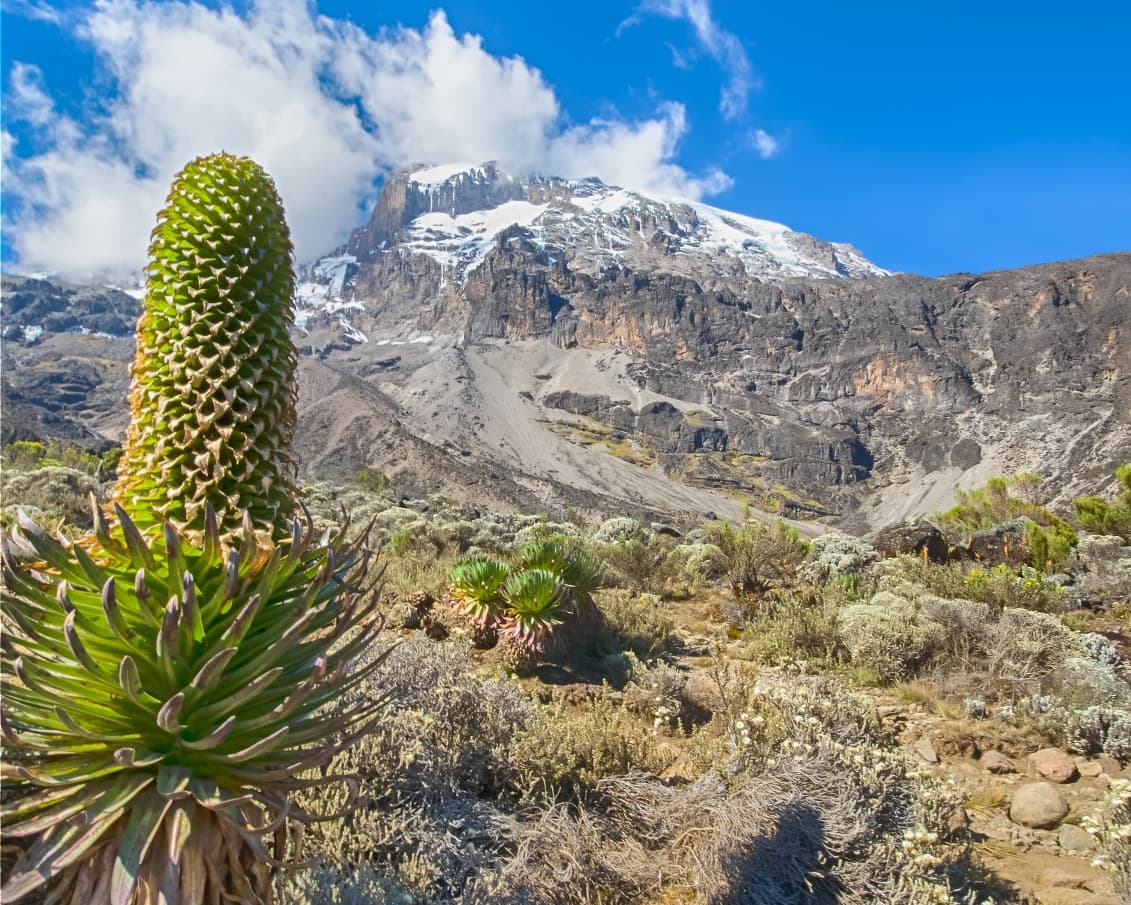
Uhuru Peak 5895, Mweka Hut
Final ascent.
Departure is scheduled around 1am to undertake the most demanding stage of the Kilimanjaro climb. In the light of your headlamps, you progress slowly through the darkness towards the summit Uhuru Peak, the highest point on the African continent. The ascent is made at a steady pace on a steep slope, in a high altitude environment where every step requires attention.
After approximately five hours of effort, you reach Stella Point, located at 5,800 m. The first light of day reveals the crater reliefs and surrounding landscapes.
You then have one final push of approximately one hour to reach Uhuru Peak. You reach the summit of Kilimanjaro, at 5,895 m altitude, the highest point in Africa. The objective of the ascent is achieved.
After enjoying the moment at the summit and taking time to recover, you begin your descent towards Mweka camp. The return is made via a different trail, allowing you to lose altitude quickly.
The progression requires vigilance, but air richer in oxygen makes the effort progressively more comfortable. After several hours of walking, you reach the camp, where well-deserved rest awaits you after this particularly demanding day.
Distance: 19 km (7 km to Uhuru, 12 km to Mweka)
Elevation gain: +1245 m / -2795 m
Walking time: 12 to 15 hours (6 to 8 hours to Uhuru, 5 to 7 hours to Mweka)
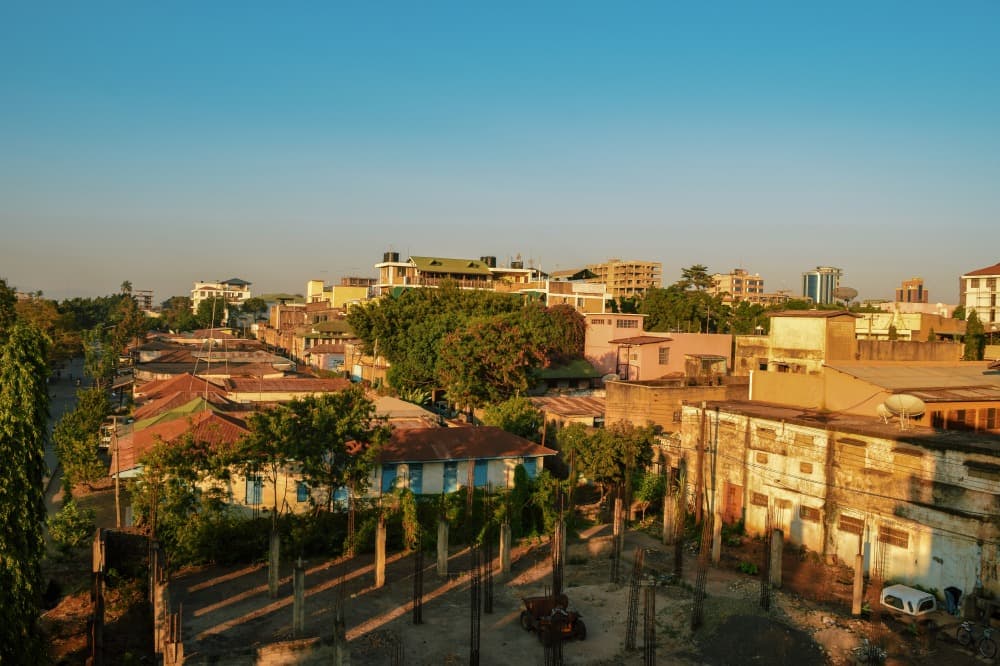
The descent to Mweka Gate.
Refuge De Mweka → Porte Mweka
You continue your descent to Mweka Gate, the official exit point of the park. This final stage allows you to gradually leave the high-altitude landscapes and find denser vegetation as you lose altitude.
Upon arrival, you take time to say goodbye to the team that accompanied you throughout the climb. The presentation of certificates marks the completion of your climb of Kilimandjaro.
Price per person
Indicative price per person, based on double room. Each trip is customized according to your preferences.
This trip can be tailored to your preferences
This itinerary provides an excellent foundation for discovery, but it can be fully customized. Our local advisors build each trip tailored to your budget, dates and preferences.
Not included
- Visa
- Drinks and personal extras
- Park entrance fees: $1015 (to be paid at balance)
- Single supplement: $100
- Dinner Day 1
- SUPPLEMENT (if delayed arrival):
- Airport transfer: €65 for 2 to 6 pax, $100 for 7 to 10 pax
- Airport transfer / Moshi: by vehicle: €65 for 2 to 6 pax, $130 for 7 to 10 pax
- Hotel night in Moshi: pp in ½ double BB: 45€, in single 60€
- Dinner at the hotel: $20 pp
- Tips (per client): 2 to 4 pax: $240, 4 to 7 pax: $210, 8 to 10 pax: $170
Included
- Airport transfers, hotel and mountain
- Camping equipment and meals (except sleeping bag)
- 1 night in hotel J1 in BB
- 1 day room J7 (max 3 per room)
- 5 nights under canvas
- Full board from breakfast on Day 2 to lunch on Day 8
- Tanzanian guides, assistant guides, cooks and porters
- English-speaking guidance
- Presence of a hyperbaric chamber (up to the last bivouac) + oxygen bottles (up to the summit)
- Mineral water + filtered water
Practical Information
Registration is considered firm and final after payment of a deposit of 40% of the total price and acceptance of the specific terms of sale.
The balance must be paid no later than 45 days before the departure date.
See our specific terms of sale for full details.
In the event of cancellation by the traveller, the following fees apply:
- More than 60 days before departure: 40% of the total price (deposit retained)
- Between 60 and 30 days before departure: 50% of the total price
- Less than 30 days before departure: 100% of the total price
We strongly recommend taking out cancellation insurance. See our specific terms of sale for full details.
Les informations ci-dessous concernent les voyageurs ressortissants de l'Espace économique européen (EEE), de la Suisse et du Canada se rendant en Tanzanie dans le cadre d'un séjour touristique. Les règles d'entrée pouvant évoluer, nous vous recommandons de vérifier les informations auprès des autorités officielles avant votre départ.
Passeport
Pour entrer en Tanzanie, votre passeport doit être valide au minimum six mois après la date d'entrée dans le pays et comporter au moins deux pages vierges pour les tampons d'immigration.
Le document doit être en bon état (pas de pages détériorées, déchirées ou modifiées).
Visa
Les ressortissants de l'Espace économique européen, de la Suisse et du Canada doivent obligatoirement disposer d'un visa pour entrer en Tanzanie.
Ce visa peut être obtenu de deux manières :
en ligne, via le portail officiel du gouvernement tanzanien (eVisa), avant le départ — solution fortement recommandée,
à l'arrivée dans certains points d'entrée (visa on arrival), bien que cette option soit soumise à conditions et peut évoluer.
Le visa touristique permet généralement un séjour jusqu'à 90 jours. Des frais de visa sont applicables et doivent être réglés lors de la demande.
Les autorités peuvent demander :
un billet de sortie du territoire (vol retour ou continuation),
une preuve de ressources financières suffisantes pour la durée du séjour,
une réservation d'hébergement.
Assurance d'entrée obligatoire
Depuis le 1er octobre 2026, tout visiteur étranger qui entre en Tanzanie continentale doit souscrire l'assurance voyage gouvernementale de la NIC (portail officiel inbound.nicinsurance.co.tz) : 44 USD par adulte, 22 USD par enfant de 3 à 17 ans, gratuite avant 3 ans ; elle est valable 92 jours, entrées multiples comprises. Si vous entrez d'abord par Zanzibar, c'est l'assurance de Zanzibar (ZIC, mêmes montants) qui s'applique : une seule des deux est exigée, selon votre premier point d'entrée. Montants à vérifier au moment de la souscription.
Elle est obligatoire même si vous avez déjà une assurance voyage et ne remplace pas une assurance assistance-rapatriement et frais médicaux, que nous vous conseillons vivement.
Santé et vaccinations
Aucun vaccin n'est officiellement obligatoire pour entrer en Tanzanie, sauf le vaccin contre la fièvre jaune si vous arrivez en provenance d'un pays où cette maladie est endémique. Dans ce cas, le certificat international de vaccination (carnet jaune) sera exigé à l'entrée.
Par ailleurs, plusieurs vaccinations et mesures de prévention sont fortement recommandées :
prophylaxie antipaludéenne : la Tanzanie est une zone à risque de paludisme, un traitement préventif est conseillé,
vaccins contre l'hépatite A, l'hépatite B, la typhoïde et le tétanos,
vaccination contre la rage recommandée en cas d'activités en zone rurale ou de contact avec des animaux.
Consultez un médecin ou un centre de vaccination international avant votre départ.
Voyage avec des enfants
Les mineurs doivent être titulaires de leur propre passeport valide couvrant la durée du séjour, ainsi que de leur propre visa.
Dans certains pays européens, lorsqu'un mineur voyage sans l'un de ses parents, une autorisation de sortie du territoire peut être exigée selon la réglementation du pays de résidence.
Autres nationalités
Les conditions d'entrée peuvent varier selon la nationalité. Les voyageurs concernés doivent se renseigner auprès de l'ambassade ou du consulat de Tanzanie de leur pays de résidence.
To participate in our trips, it is strongly advised to be covered by repatriation assistance and medical expenses insurance abroad.
Your local agency encourages you to familiarize yourself with the specific contract developed with our partner CHAPKA ASSURANCES and AXA ASSISTANCE.
To subscribe to insurance, learn about coverage and rates, follow the link below.
CAP EXPLORER: The comprehensive insurance solution designed to travel with peace of mind!
Choose the plan that best suits you:
Explorer'Multirisk
Explorer'Cancellation
Explorer'Assistance
Specific to our trips, we strongly recommend subscribing to them.
If you choose to subscribe to one of these plans, the policy detailing all coverage and the procedures for declaring a claim are available on the insurer's website.
Your local agency will be aware of it, but only the participant is responsible for complying with the procedures for declaring any claim. The participant must therefore keep this policy with them throughout their trip.
Chapka — Cap Explorer
Our insurance partnerTravel with peace of mind with our partner Chapka. Cancellation, repatriation, medical expenses, baggage… All the coverage for a worry-free trip.
Travel with peace of mind — I'll handle the insuranceFrequently asked questions
A tourist visa is required. It can be obtained online (e-visa, approximately 50 USD) or on arrival at major airports (50 USD, cash required). Your passport must be valid for at least 6 months after entry and have blank pages. Before booking, check the rules applicable to your nationality with the consular authorities of the destination.
Go to the My Trips section to find all your projects.
You can send a message to your host directly from the Tea Lounge.
For a tailor-made quality trip, budget between 280 and 500 euros per day per person, including accommodation, meals, 4x4 safaris, domestic flights and activities. International flights (800–1,300 euros round trip) are additional. Mobile camps in the Serengeti represent a major cost item.
Your documents are accessible in the Documents tab of your trip.
Absolutely. We adapt each itinerary to our travelers' profiles. For families, we prioritize relaxed paces, family-friendly accommodations, educational and entertaining activities, and comfortable private transfers. Our English-speaking local guides know how to capture children's attention with age-appropriate anecdotes.
It's simple. You exchange with our local team to define your wishes, budget and dates. You receive a detailed itinerary proposal within 48 hours. You refine every detail together until it's perfect. You confirm and travel with complete peace of mind. Your local agency remains available 7 days a week throughout your trip.
In case of emergency, contact your local agency immediately.
Payment is generally made in two installments.
Our agency is part of the Nomadays network, registered in France. You benefit from APST (Association Professionnelle de Solidarité du Tourisme) guarantee which covers 100% of your funds. Secure payment, professional insurance, and English-speaking assistance 7 days a week on the ground throughout your stay. Travel insurance (assistance and repatriation, cancellation) is not included: we offer it through our insurance partner and strongly recommend it.

Let's talk about your adventure — Kilimanjaro
Explorer of Tanzanian savannas, based in Arusha
A safari doesn't begin when you spot a lion. It begins much earlier, in the morning light, the dust on the trail, and the attention paid to every smallest movement.
— Fred