High-altitude Hiking in Mauritania: The Erg Maghteir and the Mysteries of the Adrar
Navigate in open-sea mode in the ocean of dunes of the Maghteir erg, guided by the stars like the ancient caravaniers.
Duration
16 days
Ideal seasons
Jan, Feb, Mar, Nov, Dec
Style
Expeditions
Comfort
rustique
Travelers
Solo, With friends, groupe
The spirit of travel
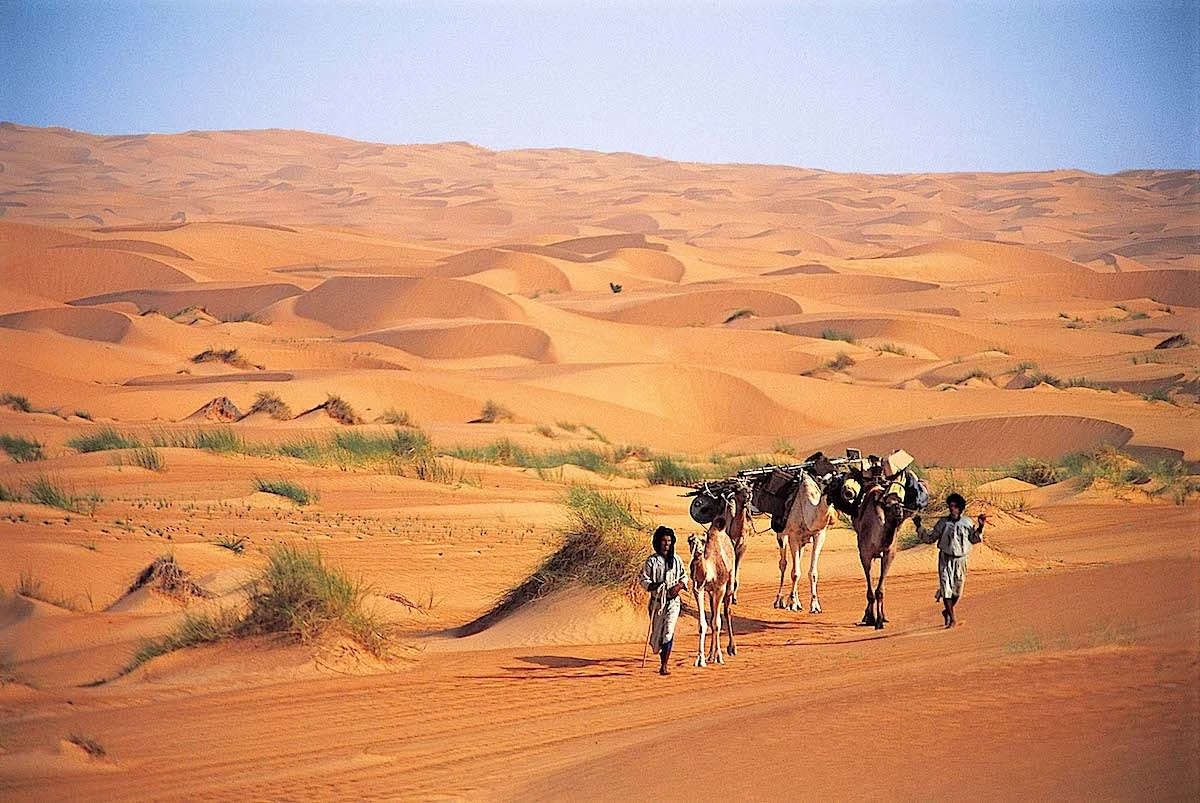
We embark on an exceptional adventure, reserved for experienced hikers seeking isolation and vast open spaces. Together, we will experience an unprecedented camel crossing, navigating like ancient caravan traders in an ocean of endless dunes, where the silence and immensity of the desert envelop us. Here, there are no marked trails, no recent human traces: only the Maghteir erg, a preserved desert where time seems to have stopped.
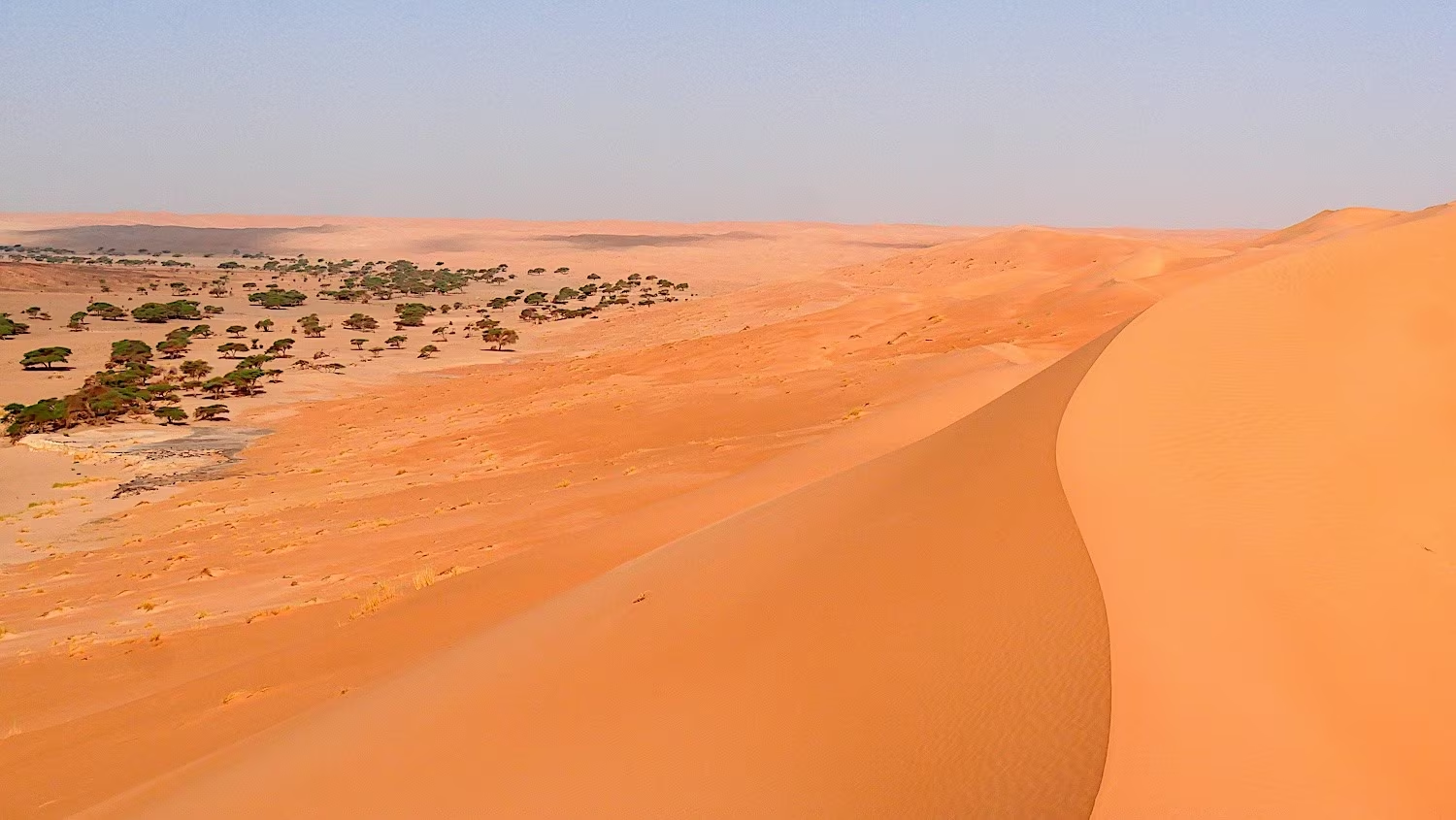
Our journey begins in the majestic dunes of the Maghteir erg, a universe where sand, shaped by the wind, forms immobile waves. We progress through open-water navigation, like a crew on the high seas, guided by the stars and the experience of our camel drivers. At the heart of this desert, the Aderg inselberg suddenly rises before us, like the prow of a ship emerging from a sea of sand. This solitary and mysterious rocky peak marks a symbolic milestone: we follow the traces of an ancient caravan route, one that, more than a millennium ago, allowed the gold of the Ghana empire to reach the Mediterranean. Every step we take resonates with the history of convoys laden with riches, crossing these hostile expanses to connect sub-Saharan Africa to northern trading posts.
After crossing the erg, our route leads us toward the dizzying cliffs of the Adrar, an impressive rocky wall that cuts across the horizon. We climb the plateau through the Akhmakou fissure, a narrow and spectacular passage that propels us into another world. The steep walls, sculpted by erosion, tell us millions of years of geological history. Once at the top, the landscape transforms: the sandy desert gives way to rocky plateaus, secret valleys and hidden oases, like a secret well kept by nature.
Our arrival at Tin Labe, then at Ouadane, two pearls of the Mauritanian desert, marks our return to a human-scale civilization, where time flows at the rhythm of caravans and ancestral exchanges. Ouadane, listed as a UNESCO World Heritage site, is a ruined medieval city with houses of ochre stone, a place where we still feel the soul of ancient trading posts. Its narrow streets, ancient libraries and discreet markets make it an unforgettable stop, a reward after the effort.
This journey is much more than a simple hike: it is an immersive experience, where we confront the immensity of the desert, its silence and its raw beauty. We sleep under a tent or under the stars, cradled by the Sahara wind, far from any light pollution. Meals shared around a campfire, exchanges with our camel drivers and the rare nomads we meet along our route add a human dimension to this adventure.
Why this adventure?
An itinerary off the beaten path, away from tourism, where we are the only witnesses to these grandiose landscapes.
An immersion in the history of trans-Saharan caravans, where every dune carries the memory of travelers of old.
Breathtaking landscapes: dunes, imposing cliffs, mineral plateaus and discreet oases.
Authentic logistics, based on the expertise of our Moorish teams and camel drivers, who accompany us with their wisdom and knowledge of the desert.
The stages of your journey
Highlights
Day-by-day itinerary
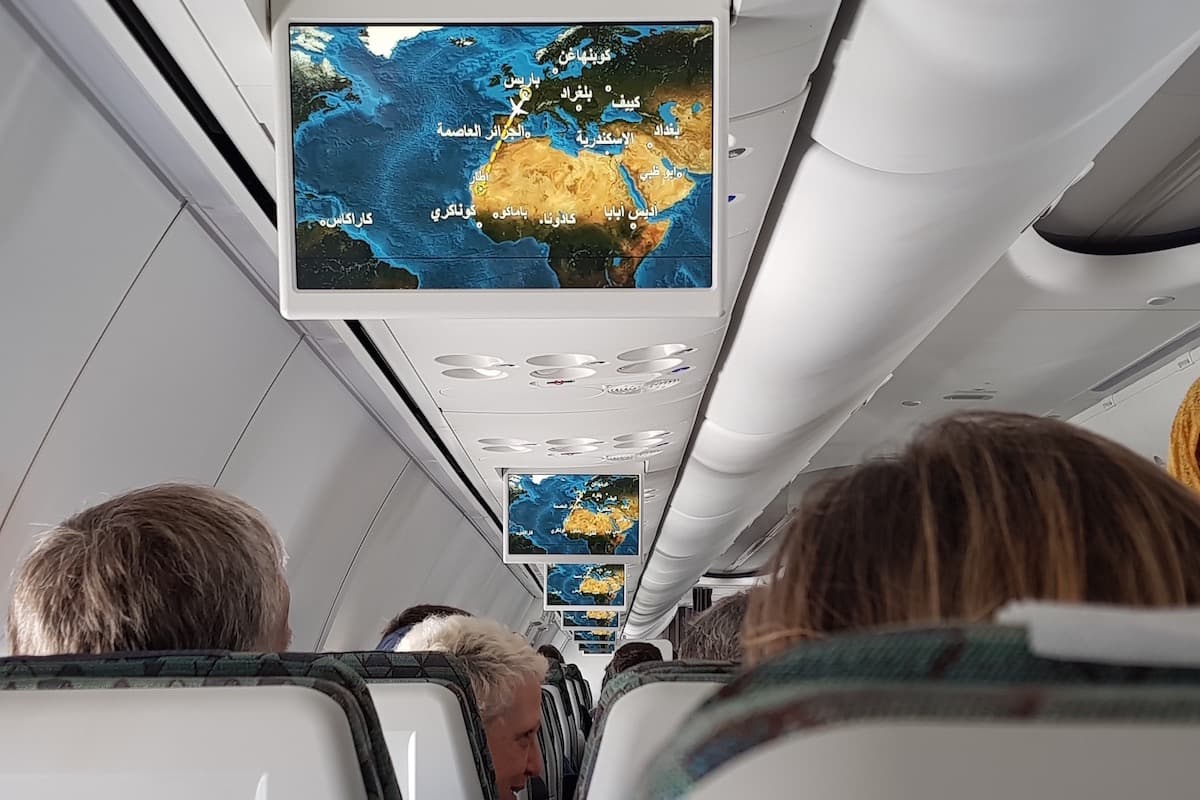
Flight departing from Paris to Atar, capital of Adrâr in Mauritania
Departure from Paris (chartered flight). Takeoff is scheduled for early morning with arrival in Atar in early afternoon.
Schedules given for information purposes and subject to change by the airline.
Departure from Paris Roissy CDG T3 at 07:30
Arrival in Atar at 11:20 (local time)
After formalities and obtaining the Mauritanian E-Visa, the local team welcomes us in the airport terminal.
In Atar, lunch is planned at a pleasant and comfortable inn according to the flight schedule.
After lunch, immediate departure to the desert.
We take the beautiful paved road heading north towards Mauritania. The road quickly leaves the Adrâr massif to head towards Choum in the corner bordering Western Sahara.
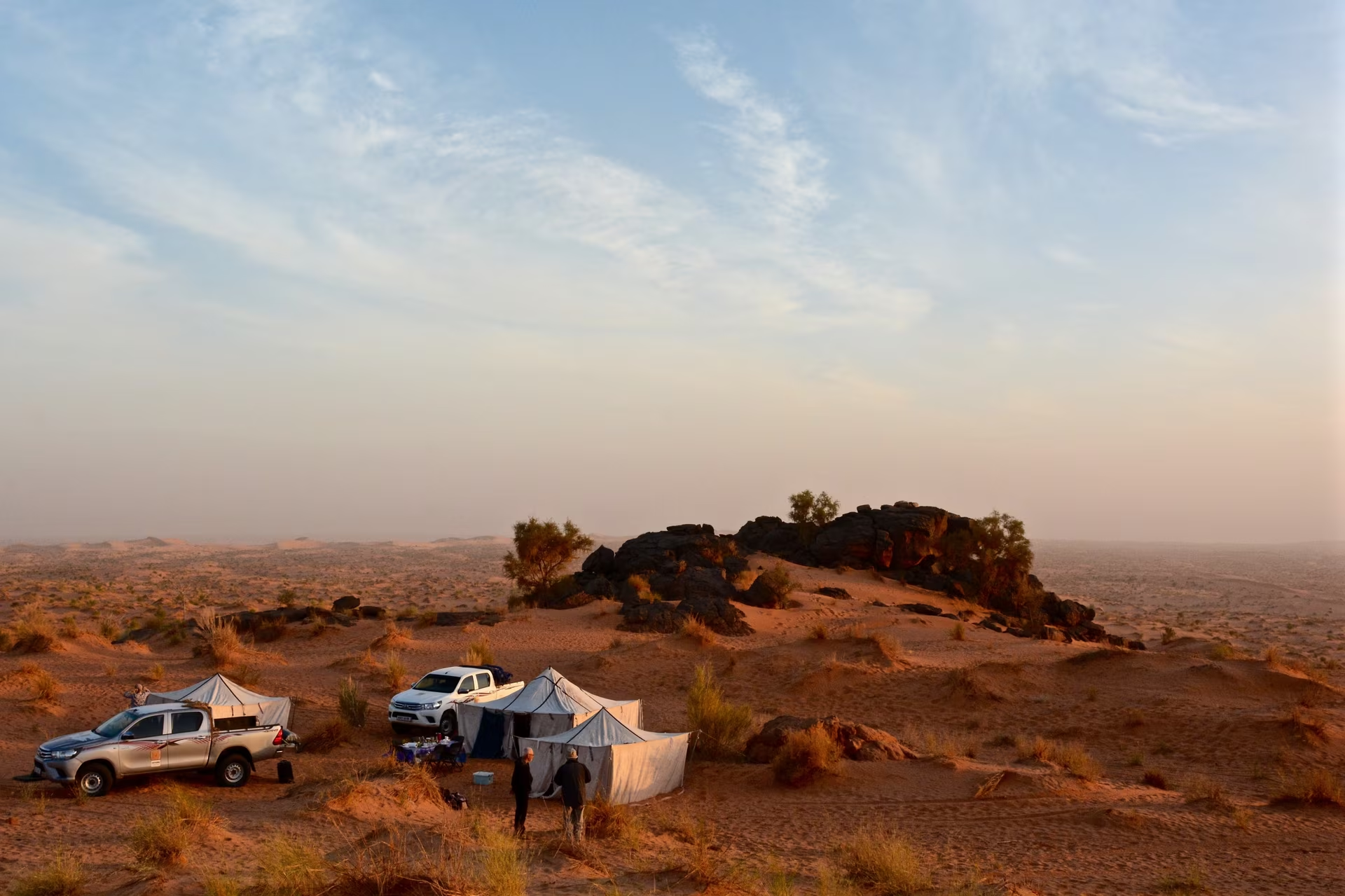
We establish our camp in a beautiful sandy valley often inhabited by nomads.
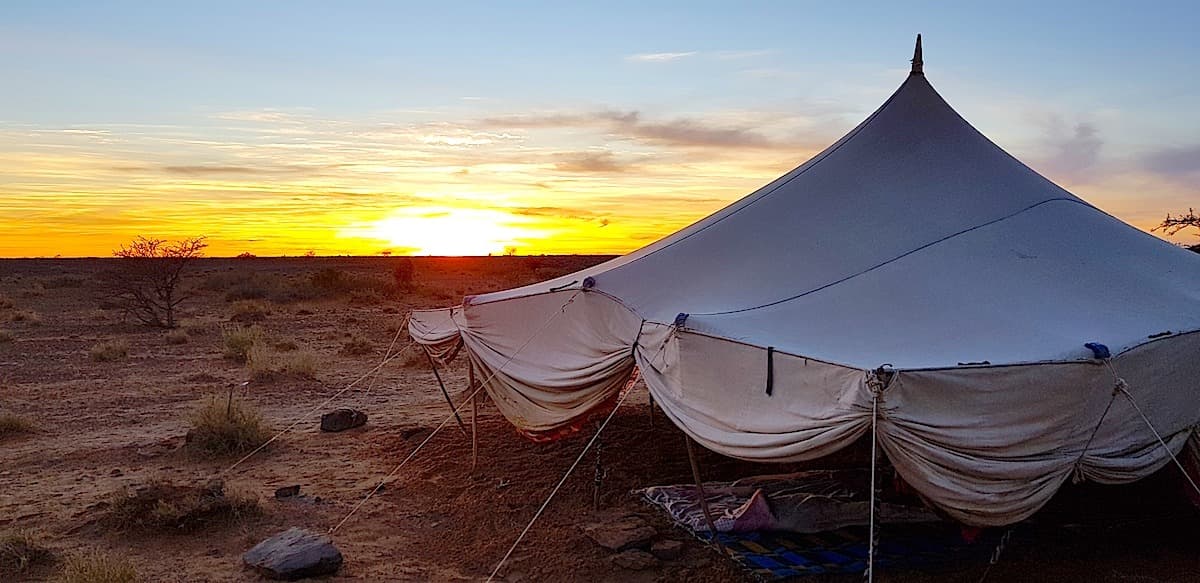
Oudei Choum > In Tourine
On the way to Tourine, an isolated place in the heart of arid expanses, and steeped in history.
For centuries, this crossroads served as a mandatory passage for great caravans transporting gold, salt and spices to Morocco or Mediterranean ports. Their traces still remain in the Saharan soil, like a distant echo of these legendary journeys.
Arrival at In Tourine, the camel team awaits us
The camel drivers are generally from the tribes of north-eastern Mauritanie: essentially Amgârîj, Kounta or more rarely R'gueïbat.
Very good travel companions for several years now, they are quick, efficient and discreet.
The bivouac is established alongside the camel drivers.
The vehicles leave for Atar after being unloaded.
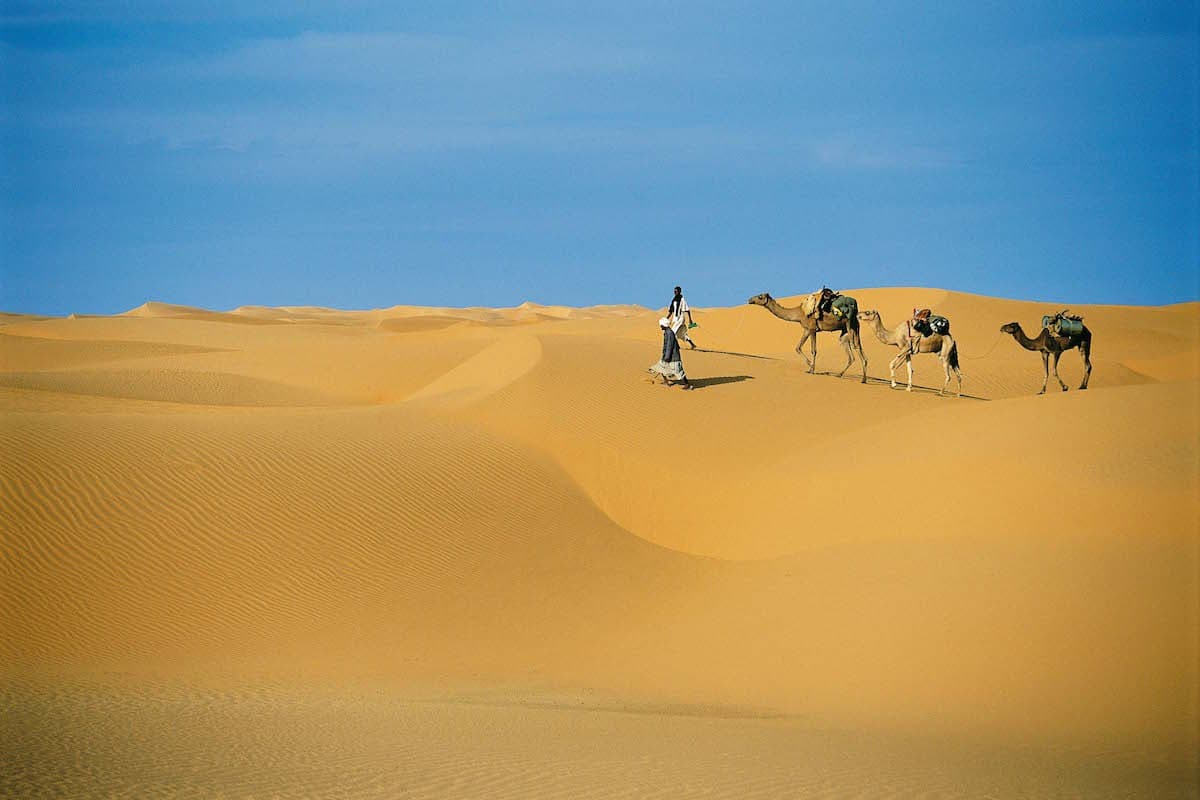
Beginning of the camel trek In Tourine > Oued Mejbour
Our camel team awaits us, the camels lined up and ready to depart. After the final preparations, we load the luggage onto the camels.
We set out on the age-old camel trails, following in the footsteps of the caravans of yesteryear to reach the Mejbour wadi, a dried-up riverbed where a few solitary acacias indicate the presence of underground water. This is where we set up our camp.
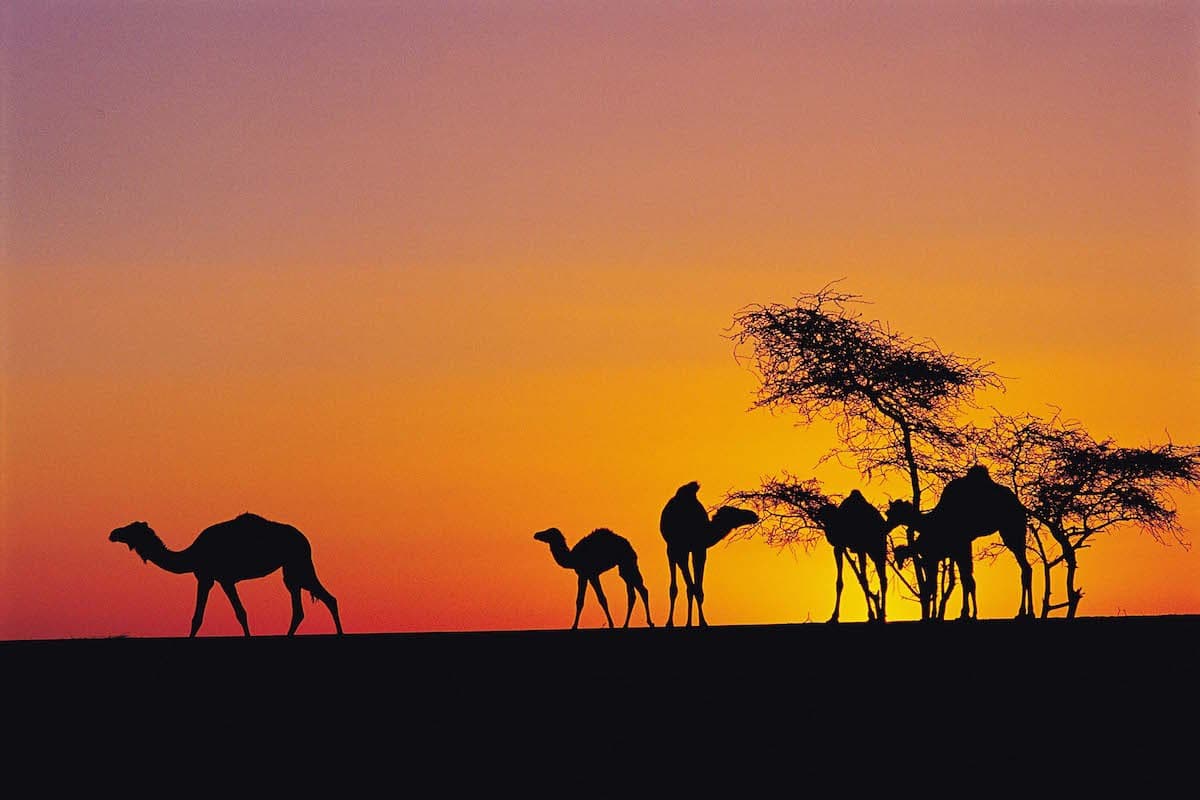
Oued Mejbour > Leftaiya
Two days of trekking in the desert, following the ancient caravan trails. After Wad el Mejbour, we cross endless stretches of sand, where nothing breaks the horizon.
Our route passes through Wad el Mejbour, El Medahiya, Etweiref Leleyatt and Lemleizem, before reaching Amzeyli (Leftaiya).
Suddenly, the landscape changes: a rocky plateau emerges from the dunes, like a stone island in the middle of the erg.PrNear Leftaiya, to the south-west, a large circular tumulus (approximately 50 metres in diameter) stands, a mysterious witness to the past.
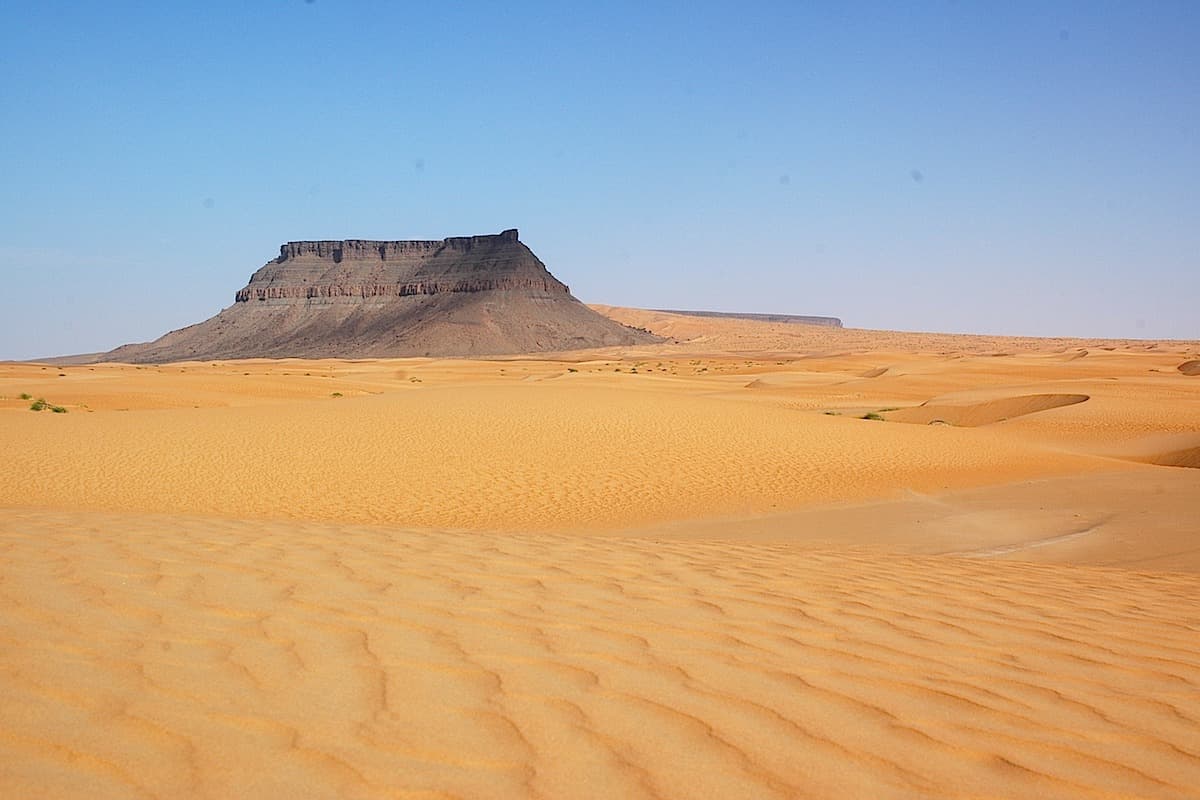
The Erg Makteir: from Leftaiya to Aderg
We now enter the heart of the erg Maghteir, an ocean of dunes where time seems suspended.
For four days, we will navigate in open sea mode, like sailors lost in a sea of sand, our compass being the imposing inselberg of Aderg. This rocky peak, standing like a ship's bow above the golden waves, guides us through the vast moving immensity of the desert.
Our itinerary unfolds thus, each place has, for the nomads of the region, a well-defined name:
Day 6: From Leftaiya to Emjeybira, then Amzeily Lessaba, before reaching Ewdey Erkayeze.
Day 7: We cross Ewdey Erkayeze to reach Lekleiwatt, then Hevret Berkam.
Day 8: Heading to Zirete El Moussawiya, a set of singular dunes.
Day 9: Final stage towards Aderg, where the inselberg finally rises before us, like a lighthouse at the end of our crossing.
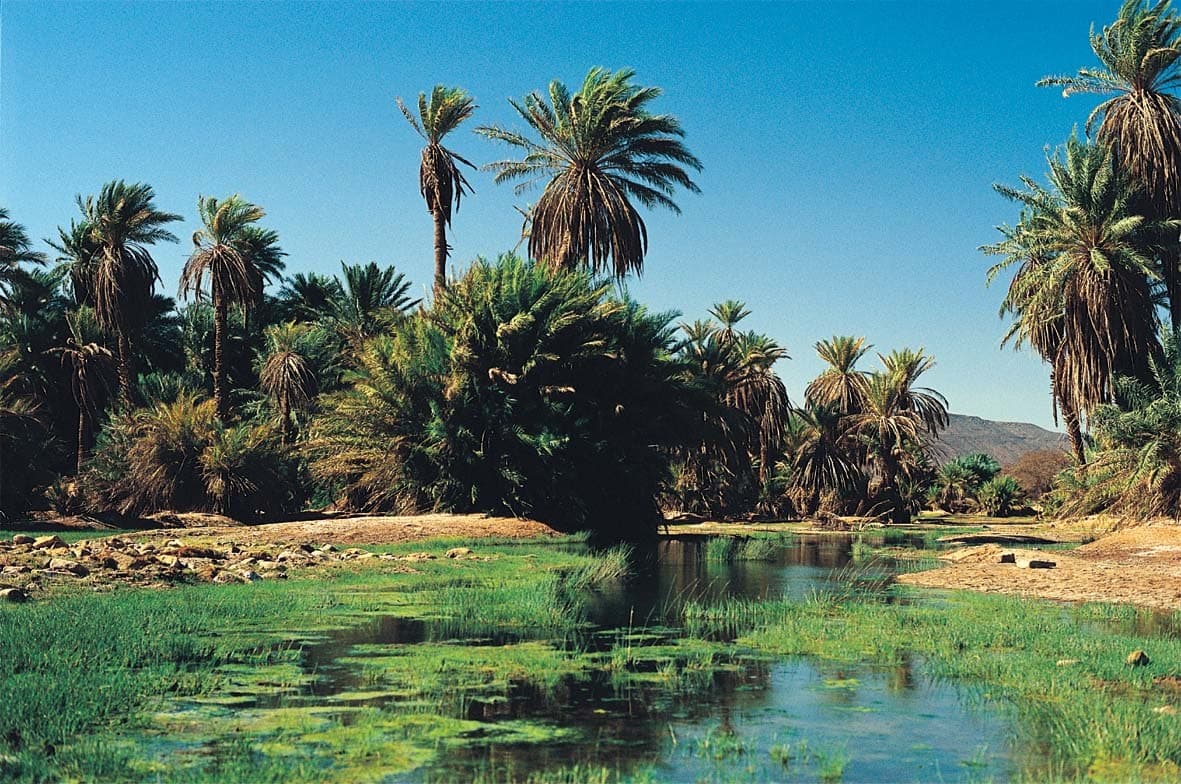
Adrar: Aderg > Hassi Naïtiri > Hassi Akhmakou
After crossing the small aklé of Oum el Beïdh, we now travel on a slight reg towards the alluvial basin of Naïtiri. We reach the Naïtiri well.
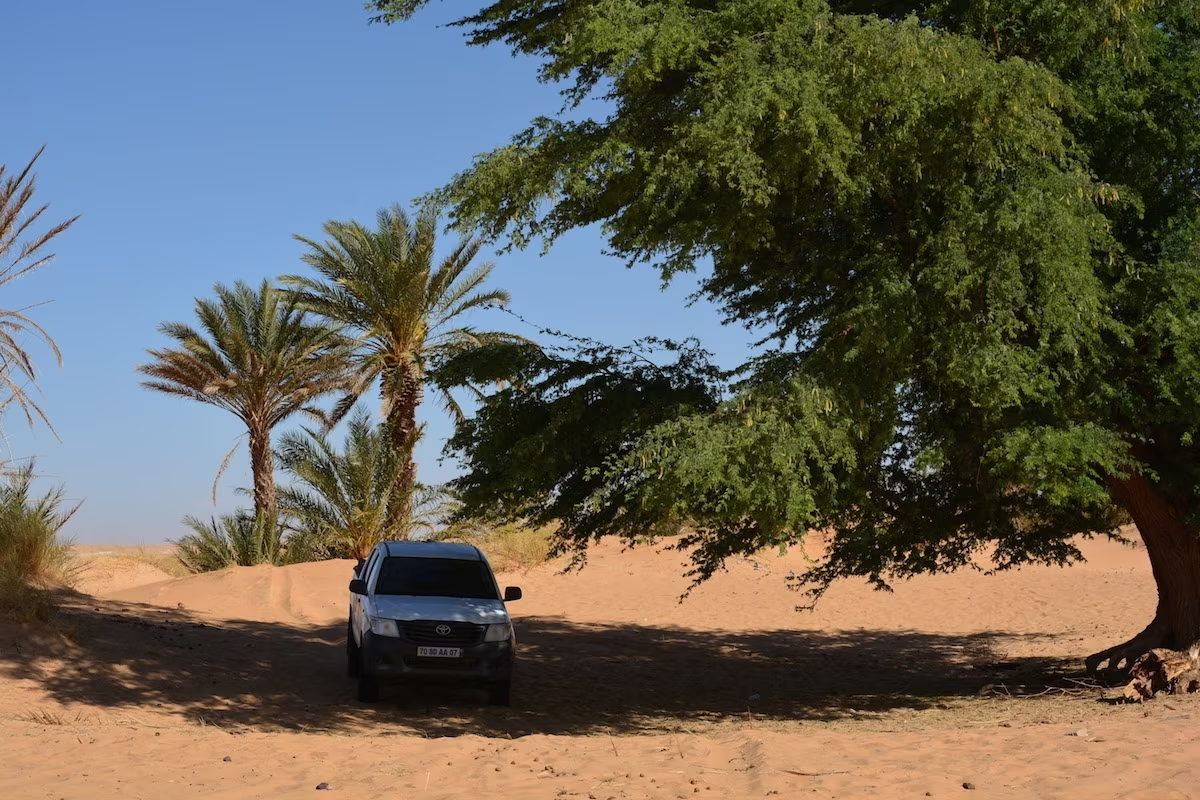
The area is very heavily wooded, with sometimes dense vegetation developing there. A few greïr are cultivated by sedentary people living in a few tents visible here and there, and very often, many herds roam the region. The camel drivers take advantage of stopping at the Naïtiri wells to water their animals.
Due south, we reach the foothills of Tarf Naïtiri before entering the Akhmakou fissure, a spectacular gash in the geomorphological complex of the Richât, parallel to the edge of Tagenzé. Here, sand gives way to rock, and the caravan progresses slowly through this mineral landscape, dotted with small abandoned palm groves, which nomads visit only for pollination.
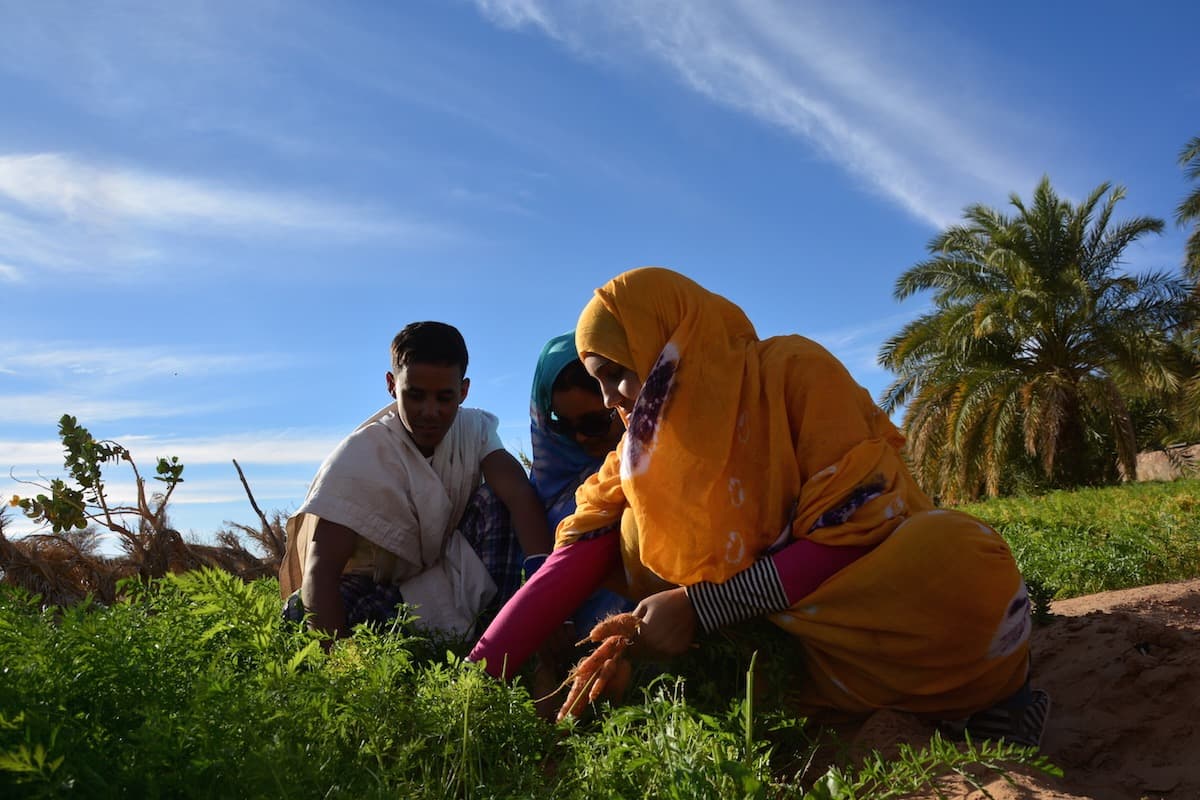
The Adrar: Hassi Akhmakou - Semssiyyât - Tin Labbé - Wadâne
Along a steep camel track, we reach the Adrâr plateau, where austere regs stretch as far as the eye can see.
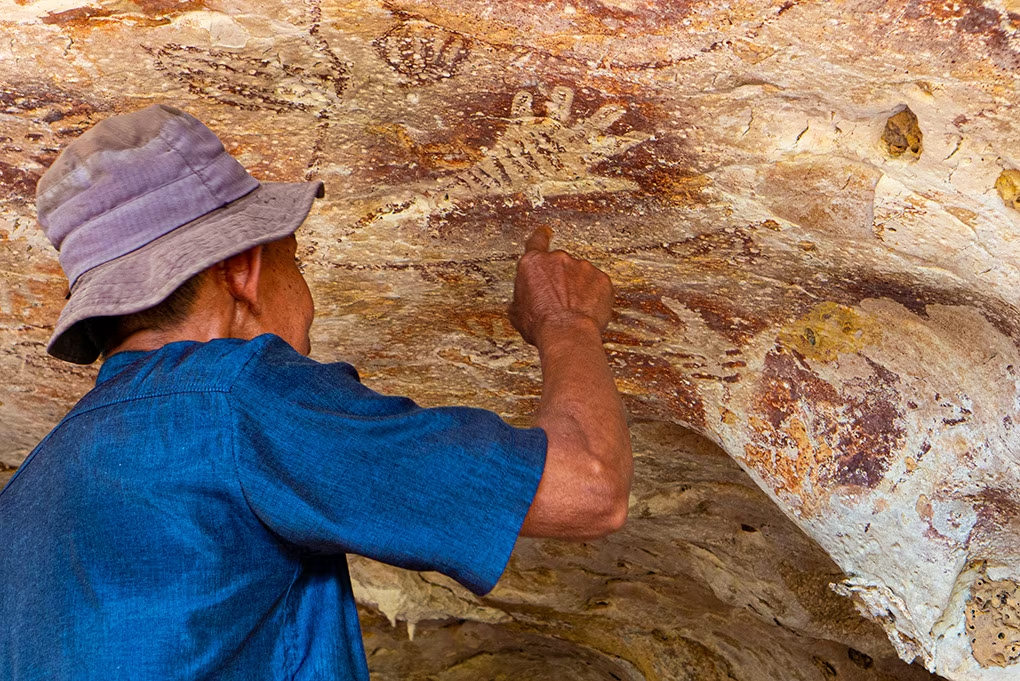
Halfway there, Semssiyyât ("the Sunny Places") reveals a geological formation evoking Guelb er Richât. We reach the Ivernouane wadi, a deep fault draining the waters from the plateaus. The gueltas of Fôum n-Moueï, in majestic succession, shelter a few palm trees and Tikkits (acacias), while discreet rock paintings adorn the walls. We finally emerge into the Tin Labbé valley, where we camp before reaching the first settlements. Near us, the ruins of Déshrât Bavour, the legendary city of the Bafours, shelter the tomb of their mythical sovereign, a non-Muslim figure associated with a distant past.
Tin Labbé, stronghold of the Amgârîj camel herders, is a place steeped in history. According to tradition, their name would come from Abou Bakr, an Almoravid leader (11th century) who, after his conquests, would have named the inhabitants Amgârîj (from Berber amgar, "to fertilize"), in reference to their palm pollination technique. Camel breeders, they only return here during the date season (guetna). Water, close to the surface, allows lush vegetation without irrigation.
The valley leads to Ouadane, where we arrive through the palm grove, at the foot of the ancient ramparts that once protected this caravan city.
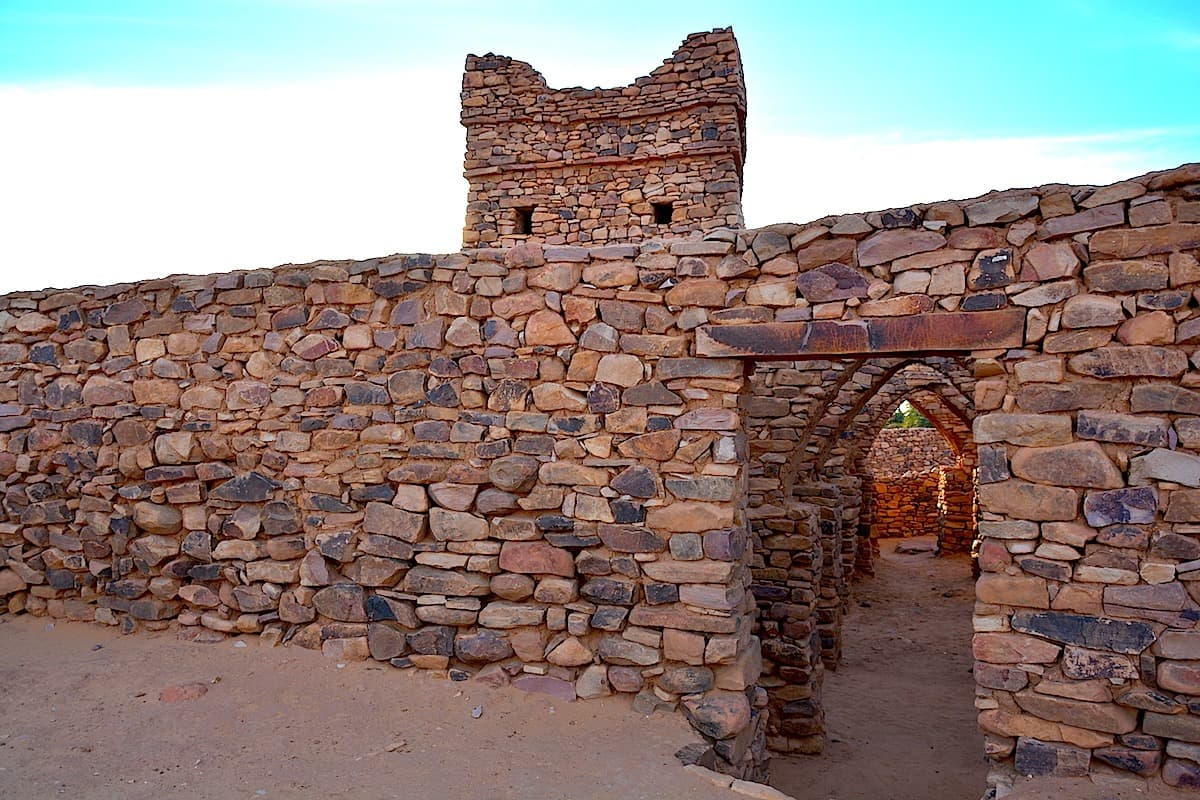
Wadâne - Guelb Er Richat - Wadâne - Tanouchert - Chinguetti
We drive towards the palm grove of Meyateg which was once prosperous. The tribes originating from Wadane preserve date palm trees.
Upon arriving in the geomorphological system of Richât, we reach the ruins of the old Portuguese fort of Agueidir.
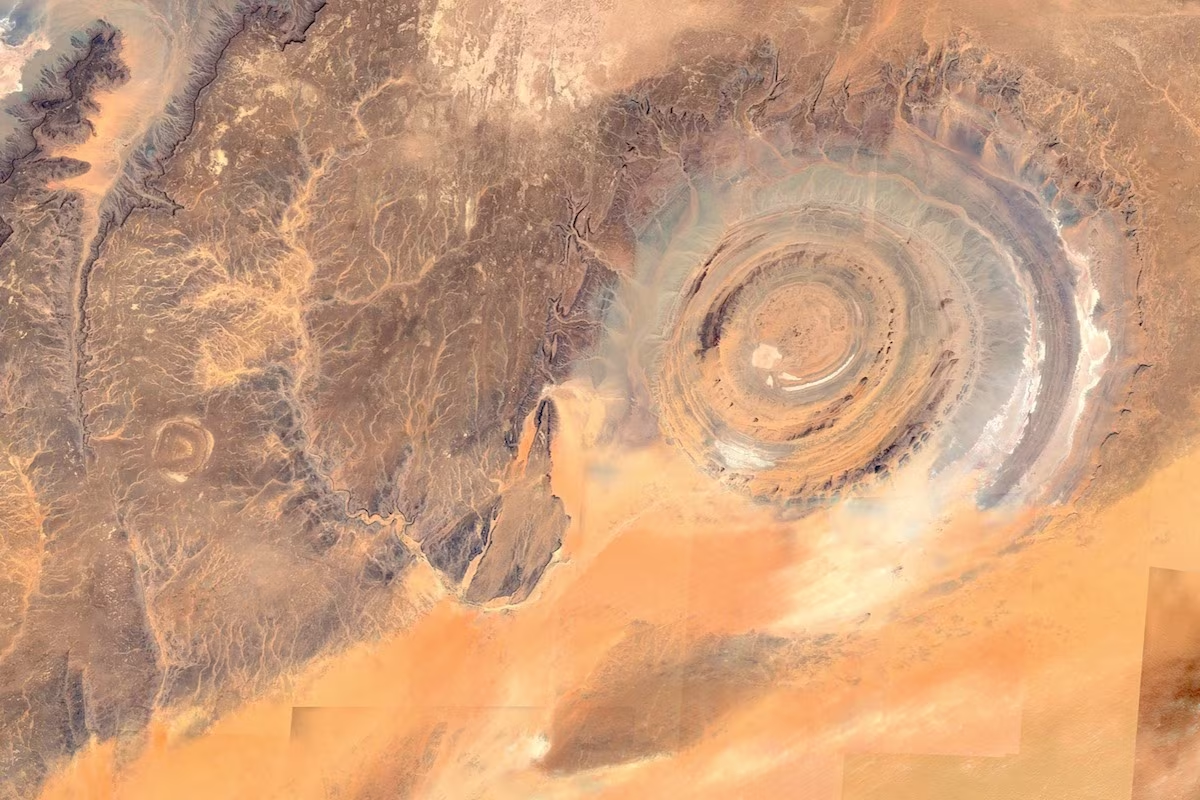
We arrive in the strange region of Guelb Er Richat.
The flattened dome of Guelb Er Richât, which appears during the Secondary period, is located at the borders of the black mountains of the Mauretanian Adrâr, to the west, and the vast expanses of rocks, rocky slabs and dunes of the Taoudenni basin, to the east.
The strange system of concentric ridges of the Richât is so impressive that it now appears on all maps, even at small scales.
Richât is the plural of richa (feather), a term that well describes the appearance of its ridges whose leeward sides are striped with tongues of sand and which dominate the deep plains where goats and camels graze… when, by chance, it has rained.
Because of its very size, it was only revealed much later, by professor Théodore Monod in 1934.
Indeed, no one, whether coming from the barren plateaus of the north or from the dunes of the Majabat Al Koubra (Monod, 1958), to the south and southeast, could imagine that these low ridges are organized in such a perfect concentric system, vaguely elliptical of 22 km and 25 km in diameter, emerging from a buttonhole of 45 km, the Taguenzé, opened in the sandstone plateau.
We leave the different circles of the Richat heading south, towards Hassi Thiba and the traces of the old Portuguese fort of Aguadir. Saharan forests are relatively developed in this area. As we dive towards the sands, the palm groves of Meyateg barely survive.
We reach Wadane and the very beautiful valley of Tin Labbe.
We now skirt the erg Warane which runs along the Adrâr plateau from the eastern confines. It marks the difficult-to-cross border by car of the immense empty space, the Majabat Al Koubra.
The Tanouchert palm grove nestled in its bed of dunes has crossed the centuries while retaining a certain lustre.
The Tanouchert palm grove extends along the edge of the Warane erg. Large sand dunes dominate it. We reach it after a lovely ride.
During the afternoon, we discover what makes our hosts' wealth. Date cultivation, as well as the strategic position of this water point are equally fascinating things.
As evening falls, we stay to sleep in traditional huts.
The semi-nomadic camp of El Kheouiya is settled there during major droughts. The camp has been organizing itself over the past few years: development of goat and camelid livestock (from 2 camels in 1993, now a herd of over 70 animals), creation of a school in 1994, establishment of a small palm grove associated with gardens in 1999 and, now, some permanent structures.
«But we, we stay under the tent» Atfeil, the camp leader, assures us …
The relationships we maintain with the different families of the camp are close and genuinely friendly.
Through the sands, heading due west, we set our course for the ancient caravan city of Chinguetti. The Chinguetti wadi, downstream from the city, is covered with trees, life there is intense. We pass through the city for lunch. Unfortunately, uncontrolled and unmanaged urbanization has broken the traditional charm of the city.
The ancient city of Chinguetti
Chinguetti was founded by the Ida Ouali around 1525, upstream from Abweyr, now disappeared, which itself was created in 1261.
The probable etymology of the toponym shingitî would be:
well of the horse, from Soninké: si: well + n: of + gede: horse.
Chinguetti was the most active commercial center and the most important city in the western Sahara. It was considered by Mauritanians as the 7th holy city of Islam with its 11 mosques, its 100 wells and its circle of scholars.
In 1675, a massacre perpetrated by part of the Ida-ou-Ali led to the breakup of the group whose survivors founded another ksar in the Tagant, Tidjikja.
Today only a single mosque and the memory of prosperous periods remain…
The main tribes that make up its population are the Ida-ou-Ali, the Laghlal and the Oulad Gheilan.
With their narrow and winding streets, their numerous dead ends, their low and dark houses made of local materials, their near absence of squares and communal spaces, Chinguetti and Wadâne have the structure of old ksour densely huddled around their mosques.
Chinguetti > Atar > departure flight to Paris
Return to Atar.
The city of Atar founded in the 17th century in the borderland plain (bâten) that stretches north of the great cliff, is protected from sand by its geographical location.
It is the most important city in the Saharan zone. It was formerly an emirate city, a garrison town for the Americans then the French and finally a regional capital.
The chartered flight departing from Atar is scheduled for early morning with arrival in Paris in mid-afternoon.
Price per person
This trip can be tailored to your preferences
This itinerary provides an excellent foundation for discovery, but it can be fully customized. Our local advisors build each trip tailored to your budget, dates and preferences.
Not included
- International flights
- Entrance fees and/or taxes not included in the program
- All meals not mentioned in the program
- Personal expenses, drinks
- Tips at your discretion
- Cancellation Insurance, First Aid Fees, Repatriation
Included
- Welcome and transfer at Nouakchott airport
- Transfer in 4x4 vehicle on D1, D2, D14 and D15
- English-speaking guide management Sylvain PHILIP
- Camel herding team during the trek
- English-speaking chef from Day 2 to Day 15
- Bivouac equipment, kitchen and supplies (except sleeping bag)
- All meals from lunch on Day 1 to dinner on Day 15
- Entry into manuscript houses in Wadâne and Chinguetti
Practical Information
Registration is considered firm and final after payment of a deposit of 30% of the total price and acceptance of the specific terms of sale.
The balance must be paid no later than 45 days before the departure date.
See our specific terms of sale for full details.
In the event of cancellation by the traveller, the following fees apply:
- More than 60 days before departure: 40% of total price (deposit retained)
- Between 60 and 30 days before departure: 50% of total price
- Less than 30 days before departure: 100% of total price
We strongly recommend taking out cancellation insurance. See our specific terms of sale for full details.
The information below concerns travelers who are nationals of the European Economic Area (EEA), Switzerland, and Canada traveling to Mauritania for a tourist stay. As entry rules may change, we recommend verifying this information with the official authorities before your departure.
Passport
To enter Mauritania, your passport must be valid for a minimum of six months after the date of entry into the country and must have at least one blank page for immigration stamps.
The document must be in good condition (no damaged, torn, or altered pages).
Visa
Nationals of the European Economic Area, Switzerland, and Canada must in principle have a visa to enter Mauritania. This visa can be obtained:
from the embassy or consulate of Mauritania in your country of residence before departure,
or, depending on current conditions, upon arrival at Nouakchott International Airport (visa on arrival), for a stay of up to 30 days.
It is strongly recommended to inquire with the Mauritanian authorities or the competent embassy before departure, as visa application procedures may change.
The authorities may request:
an exit ticket from the territory (return or onward flight),
proof of sufficient financial resources for the duration of your stay,
a hotel reservation or an invitation letter.
Health and vaccinations
No vaccinations are officially mandatory to enter Mauritania, with the exception of the yellow fever vaccine if you are arriving from a country where this disease is endemic.
However, several vaccinations are strongly recommended by health authorities:
Hepatitis A and B
Typhoid
Meningococcal meningitis
Rabies (depending on planned activities)
Update of your routine vaccination schedule (diphtheria, tetanus, poliomyelitis)
Antimalarial prophylaxis is recommended for the entire Mauritanian territory. Consult a doctor or an international vaccination center before your departure.
Security and registration
Mauritanian authorities may require the registration of foreign travelers with local police or gendarmerie services within 48 hours of arrival, particularly outside the capital. It is advisable to inquire about the obligations in place at the time of travel.
Due to the security situation in certain regions of the country, it is recommended to consult travel advice issued by the authorities of your country of residence before departure.
Traveling with children
Minors must hold their own valid passport covering the duration of the stay.
In some European countries, when a minor travels without one of their parents, an exit authorization from the territory may be required according to the regulations of their country of residence.
Other nationalities
Entry conditions may vary depending on nationality. Travelers concerned should inquire with the embassy or consulate of Mauritania in their country of residence.
To participate in our trips, it is strongly advised to be insured for evacuation assistance and medical expenses abroad.
Your local agency encourages you to review the specific policy developed with our partners CHAPKA ASSURANCES and AXA ASSISTANCE.
To subscribe to insurance, learn about coverage and rates, follow the link below.
CAP EXPLORER: The comprehensive insurance solution designed for a worry-free journey!
Choose the plan that suits you best:
Explorer'Multirisque
Explorer'Annulation
Explorer'Assistance
Explorer' Complémentaire Carte Bancaire
Specific to our trips, we strongly recommend subscribing to one of them.
If you choose to subscribe to one of these plans, the policy detailing all coverage and claims procedures are available on the insurer's website.
Your local agency will be aware of this, but only the participant is responsible for complying with claims reporting procedures. The participant should therefore keep this policy with them throughout their trip.
Chapka — Cap Explorer
Our insurance partnerTravel with peace of mind with our partner Chapka. Cancellation, repatriation, medical expenses, baggage… All the coverage for a worry-free trip.
Travel with peace of mind — I'll handle the insuranceFrequently asked questions
A tourist visa is required and is issued upon arrival at Nouakchott Airport or at the consulate. Your passport must be valid for at least 6 months beyond your entry date. The security situation requires heightened vigilance. Before booking your trip, please check with the consulate or embassy of your destination for entry requirements applicable to your nationality.
Go to the My Trips section to find all your projects.
You can send a message to your host directly from the Tea Lounge.
For a tailor-made quality trip, budget between 180 and 300 euros per day and per person, including accommodation, meals, 4x4 with driver and English-speaking guide. International flights (500-800 euros return) are additional. The desert, the Sahara train and the beaches offer unique experiences.
Your documents are accessible in the Documents tab of your trip.
Absolutely. We adapt each itinerary to travellers' profiles. For families, we prioritise relaxed paces, family-friendly accommodations, fun and educational activities, and comfortable private transfers. Our English-speaking local guides know how to capture children's attention with age-appropriate anecdotes.
It's simple. You exchange with our local team to define your wishes, budget and dates. You receive a detailed itinerary proposal within 48 hours. You adjust every detail together until you reach the perfect version. You confirm and travel with peace of mind. Your local agency remains available 7 days a week throughout your trip.
In case of emergency, contact your local agency immediately.
Payment is generally made in two installments.
Our agency is part of the Nomadays network, registered in France. You benefit from APST (Association Professionnelle de Solidarité du Tourisme) coverage, which protects 100% of your funds. Secure payment, repatriation insurance included, and English-speaking assistance 24/7 on the ground throughout your stay.
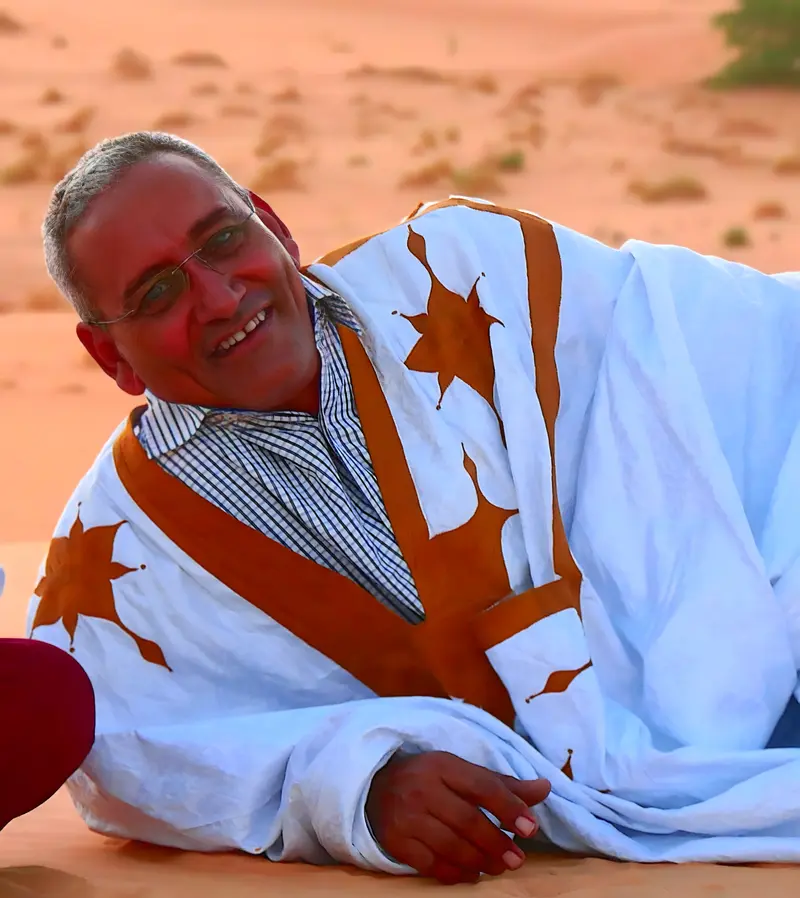
Let's talk about your adventure — Adrar
Craftsperson of journeys in the heart of Mauritania, based in Atar
Mauritania is a country that reveals itself with respect and patience. My role is to help each traveler approach it in the best conditions, with confidence and curiosity.
— Isselmou