
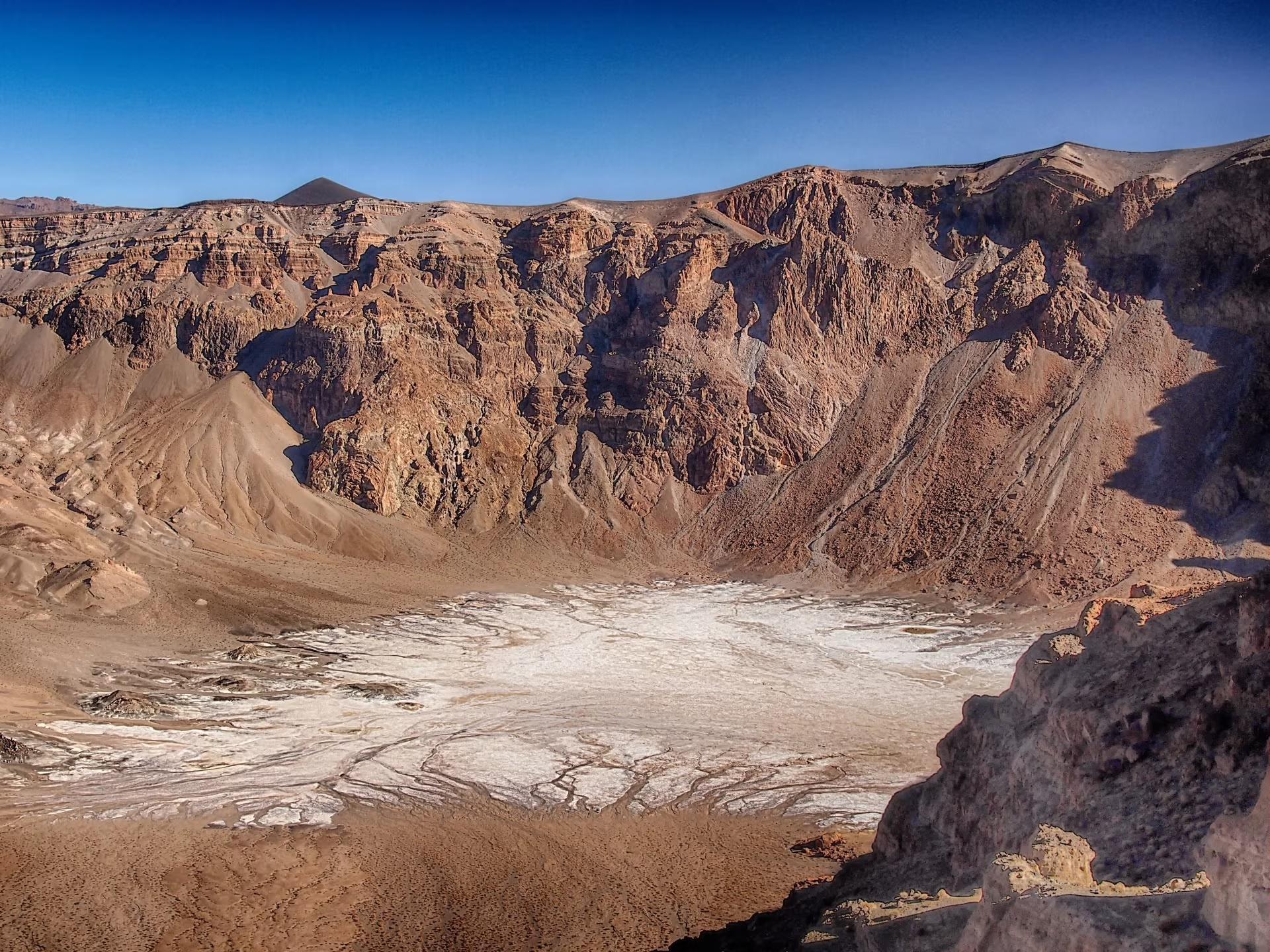
Tassili of Upper Borkou, ascent of Emi Koussi, Lake Ounianga and Faya oasis.
At the summit of Emi Koussi, the roof of the Sahara at 3415 meters reveals its lunar caldera and basalt fields.
Duration
19 days
Ideal seasons
Jan, Feb, Mar, Nov, Dec
Style
Expeditions
Comfort
rustique
Travelers
Solo, With friends, groupe
The spirit of travel
The Tibestiis an attractive destination that immerses us in the universe of a characterful desert. It is a long climb through empty expanses where immutable populations live, great nomadic herders, fierce and legendary.
This adventure allows us to understand a wild and mythical Sahara through trials on sandy and volcanic tracks. We will see from afar a bluish mass, a certain Lure mountain, an imposing mountain in a landscape of sandstone carved and shaken by various geological phenomena, including the relentless erosion of the Harmattan. We venture into the heart of one of the most beautiful Saharan landscapes, at the foot of the highest point of Tibesti, on the land of the Téda.
This circuit offers both the ascent of the Volcano which peaks at 3,445 m and the exploration of turbulent sedimentary massifs, which cluster at its base while forming one of the most sumptuous tassilis in the region. We discover sandstone citadels, vast sandy plains, arches, peaks, dunes, caves with paintings before reaching basaltic fields.
The stages of your journey
Highlights
Day-by-day itinerary
Climb towards Tibesti
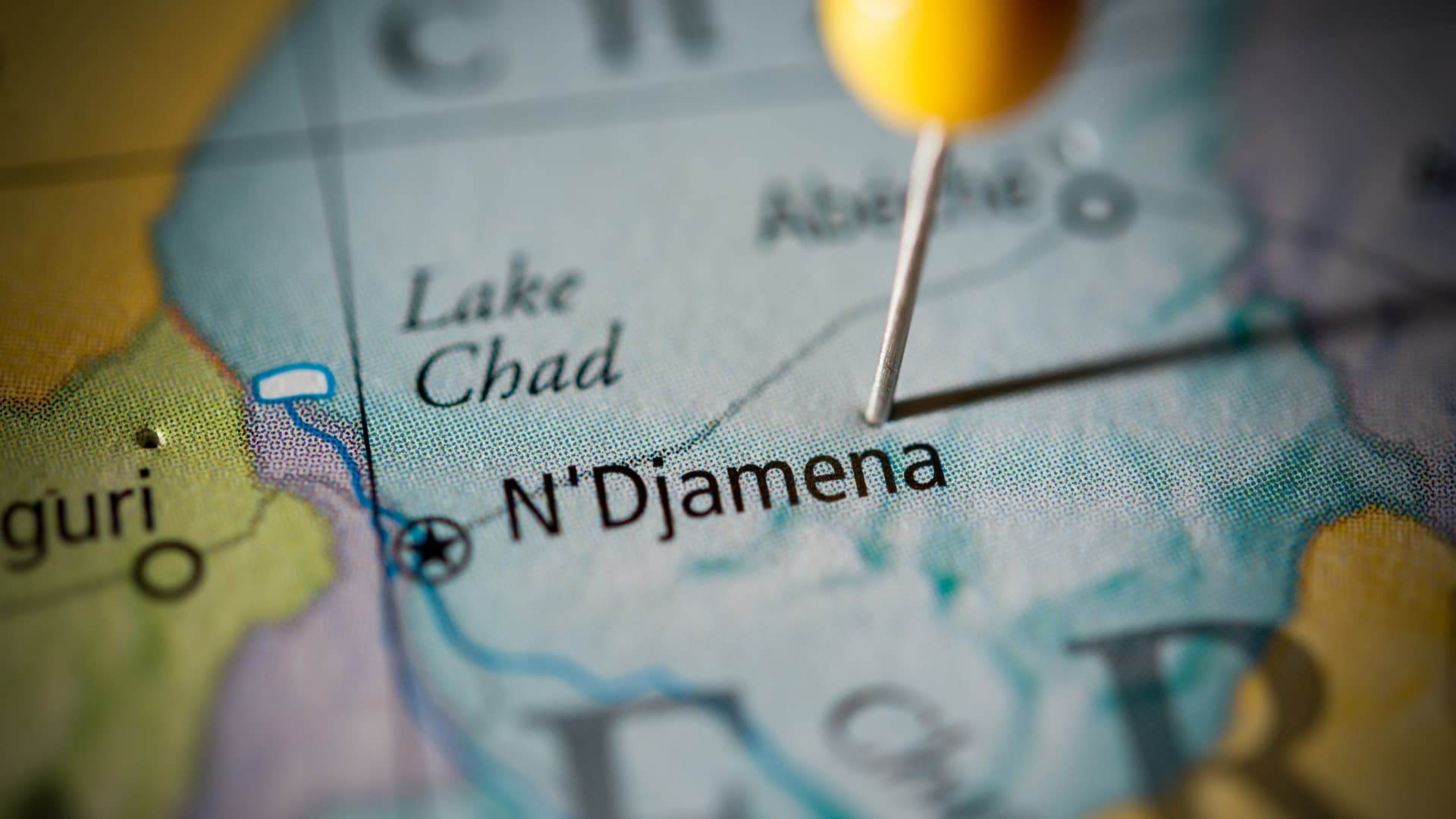
We head to the northwestern part of the territory and reach Mao, in Kanembou country to pick up the track that goes due north towards the Djourab dunes.
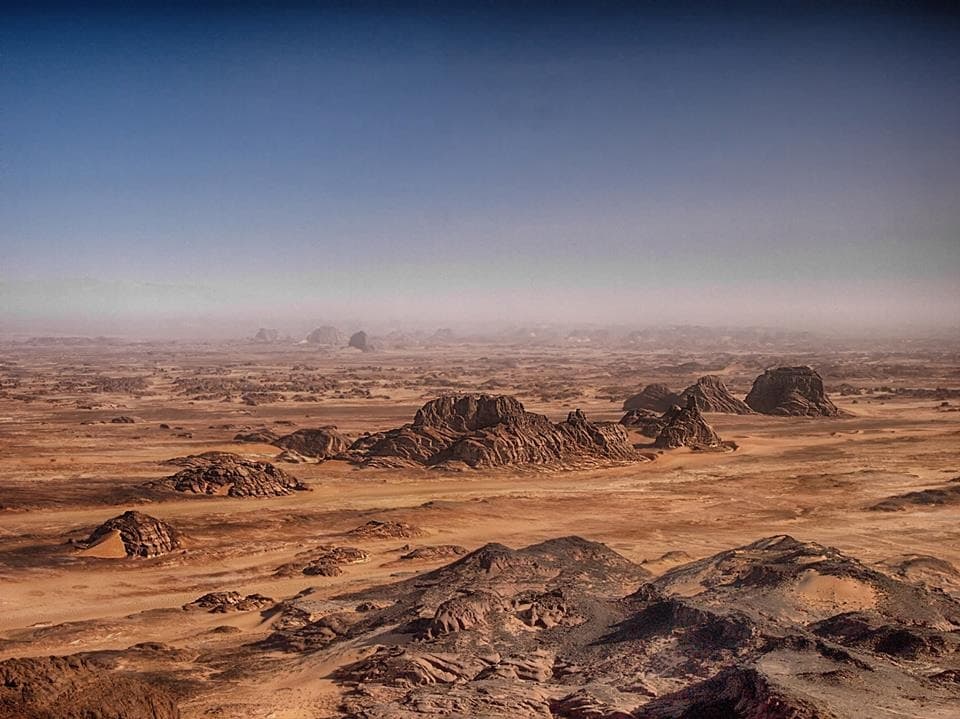
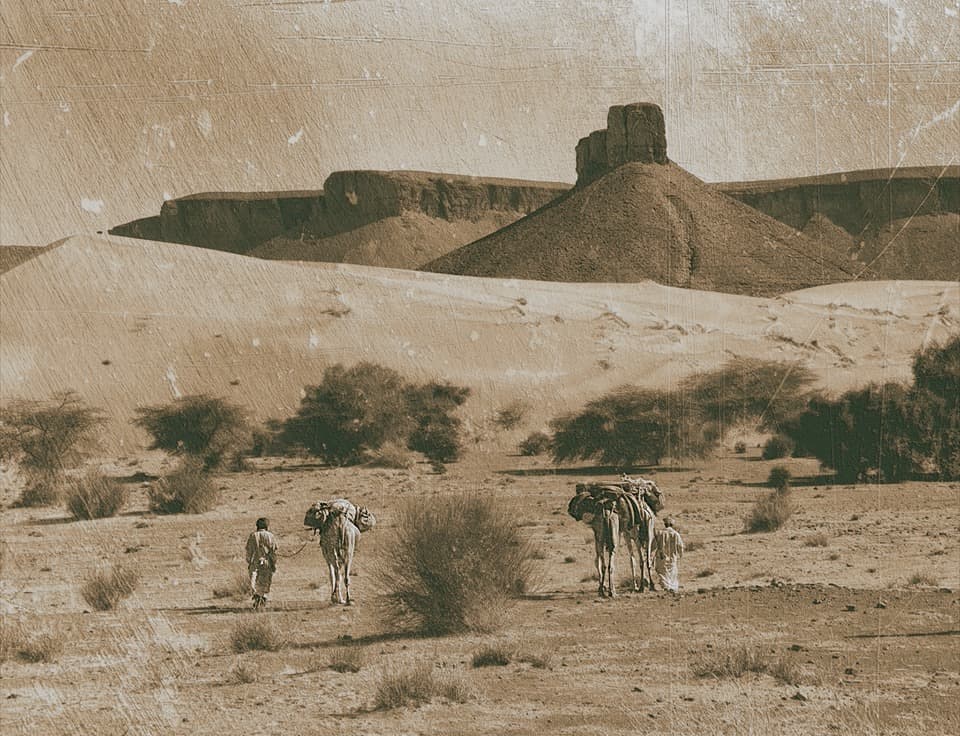
We take advantage of a walk in Anakaza to meet large herds of camels and cross dunes up to the foothills of Tibesti which is a gigantic volcanic mass representing a rebellious and unconquered stronghold.
On the third day, we set up our camp in the middle of the Djourab dunes, we then pass the Charles de Gaulle roundabout before turning off and heading to the Ourti dune.
On the fourth day, we camp in the Borkou tassilis. These are unforgettable landscapes comparable to those of southern Algeria.
In the Tassilis of Borkou
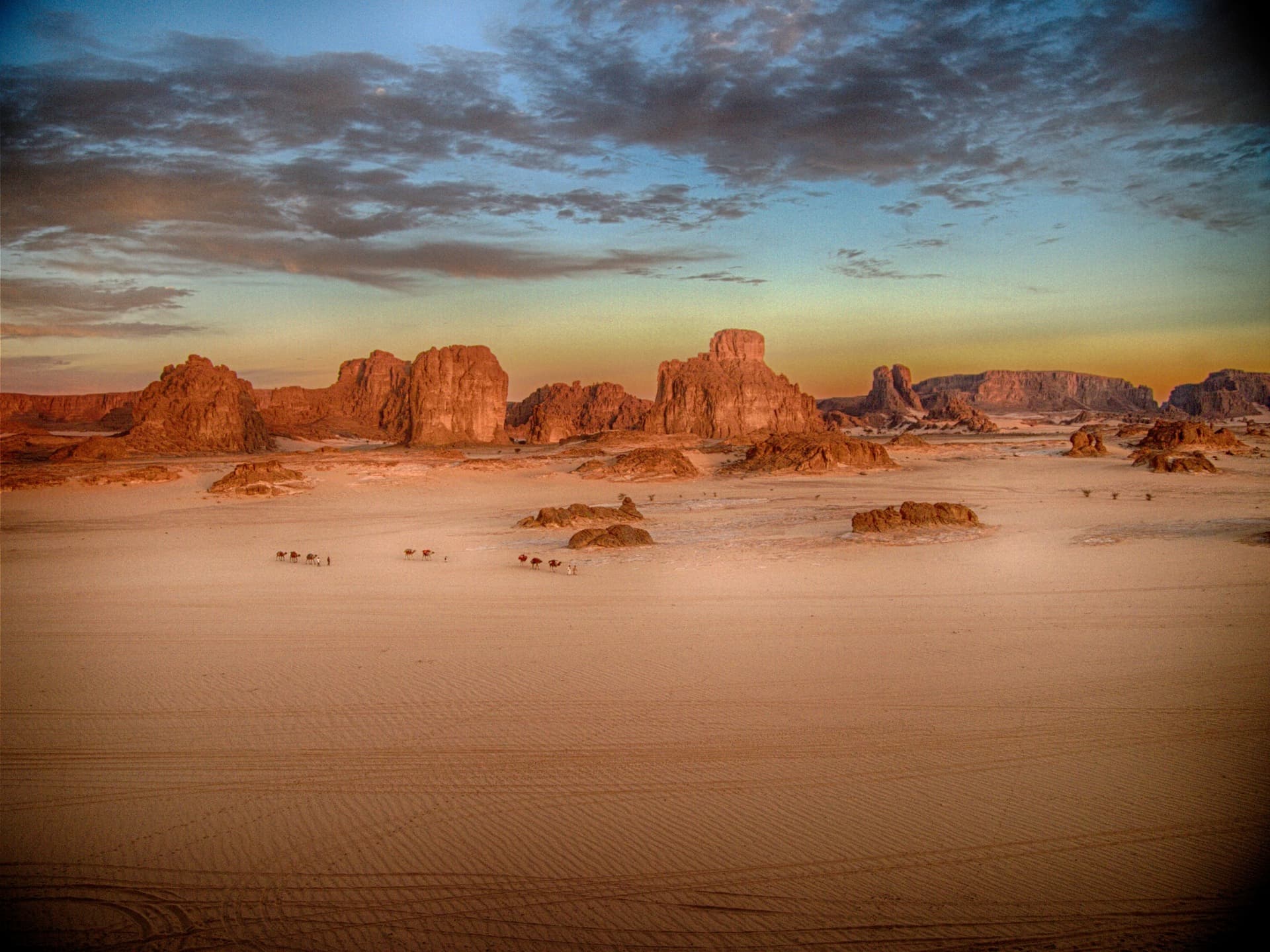
We explore the region, its eroded reliefs and sandstone citadels from the Laoua breach to Tigui.
We can go from citadel to citadel, they are separated by sandy plains.
We then visit the splendid Tigui Cocoïna cave with its well-preserved frescoes.
The walk lasts approximately 5 to 6 hours per day accompanied by 4x4s.
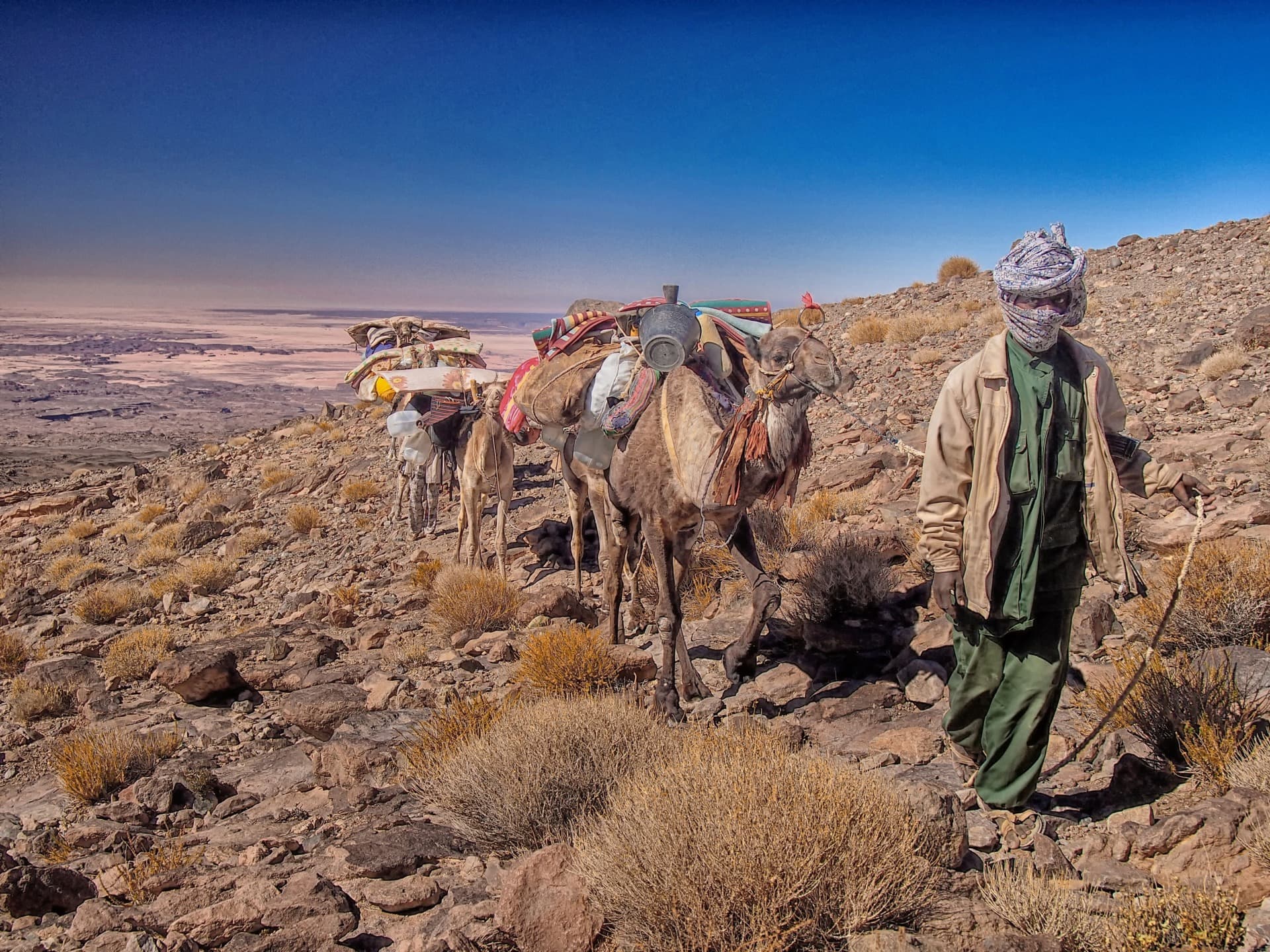
On the slopes of the volcano
Today, we meet up with our camels and we propose a camel trek towards the outer edge of the caldera of Emi Koussi.
We climb slowly through the basaltic fields starting at an altitude of 930 m to stop at 3,280 m.
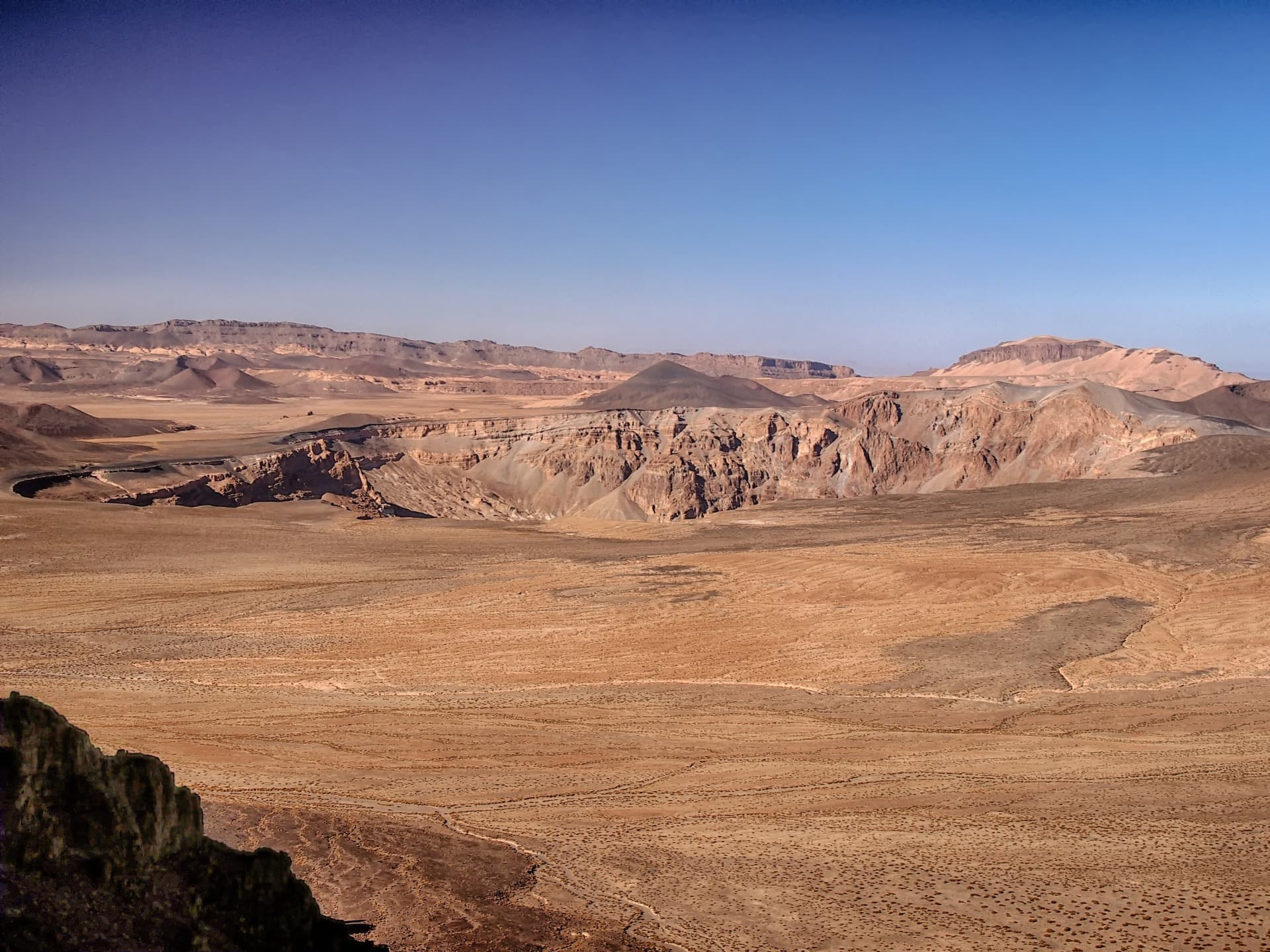
The trek progresses gradually through fields of basalts and ignimbrites resulting from the solidification of ash clouds, following the last volcanic eruption from a million years ago. These mineral landscapes that make up a large part of the Sahara allow us to walk while meditating.
We walk approximately 7 hours per day, ending with a bivouac in the winding courses of the wadis cutting through the slopes of the volcano.
On the third day, the day promises to be like the previous one. Yet, we notice a change in scenery when we arrive at the top. The horizon widens and allows us to see the ancient magma chamber of the giant which collapsed while forming a large caldera nearly 12 km in diameter. We have finally reached 3,280 m.
After 7 hours of walking, we spend the night in a bivouac with the characteristic cold of the altitude.
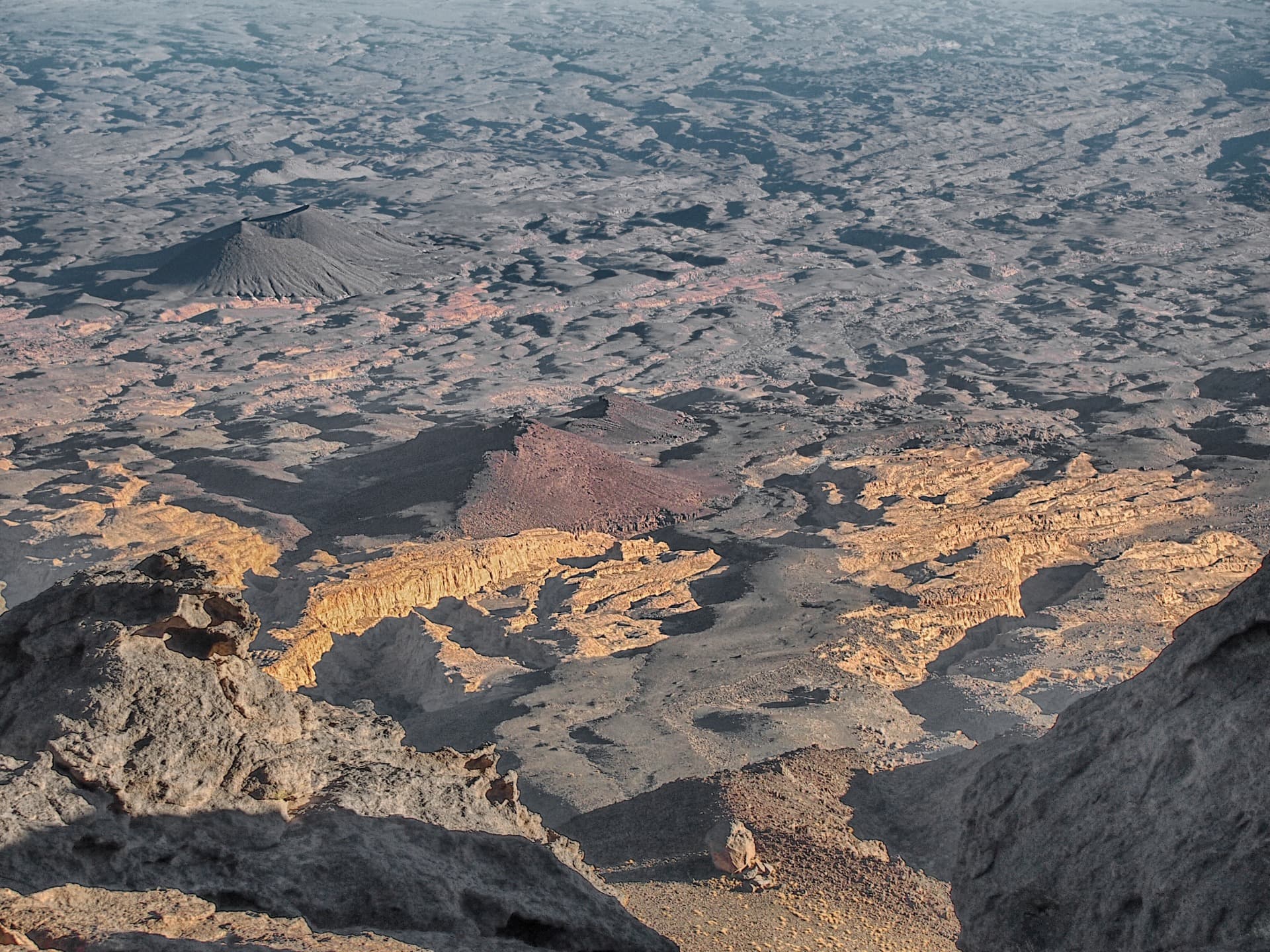
The Caldera of Emi Koussi
We venture into a lunar landscape formed by ash, abrupt relief and light green pasture that changes according to the season.
We then make the descent towards the Erra Kohor, a caldera concentric to that of the Emi Koussi.
After 5 hours of hiking, bivouac on the edge of this second crater located at 3,000 m.
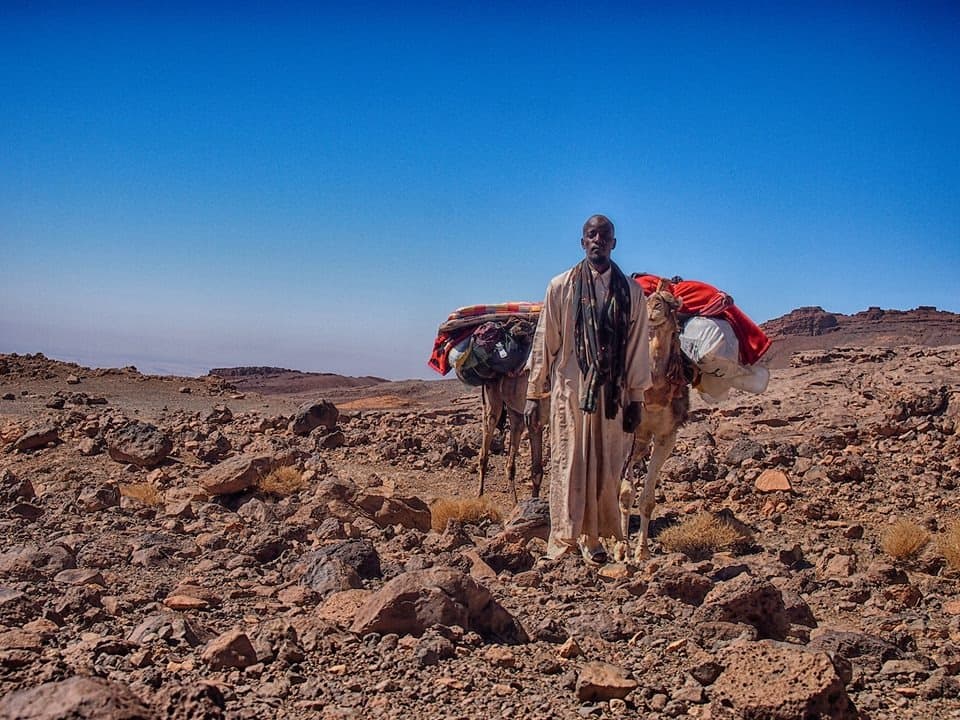
The highest point
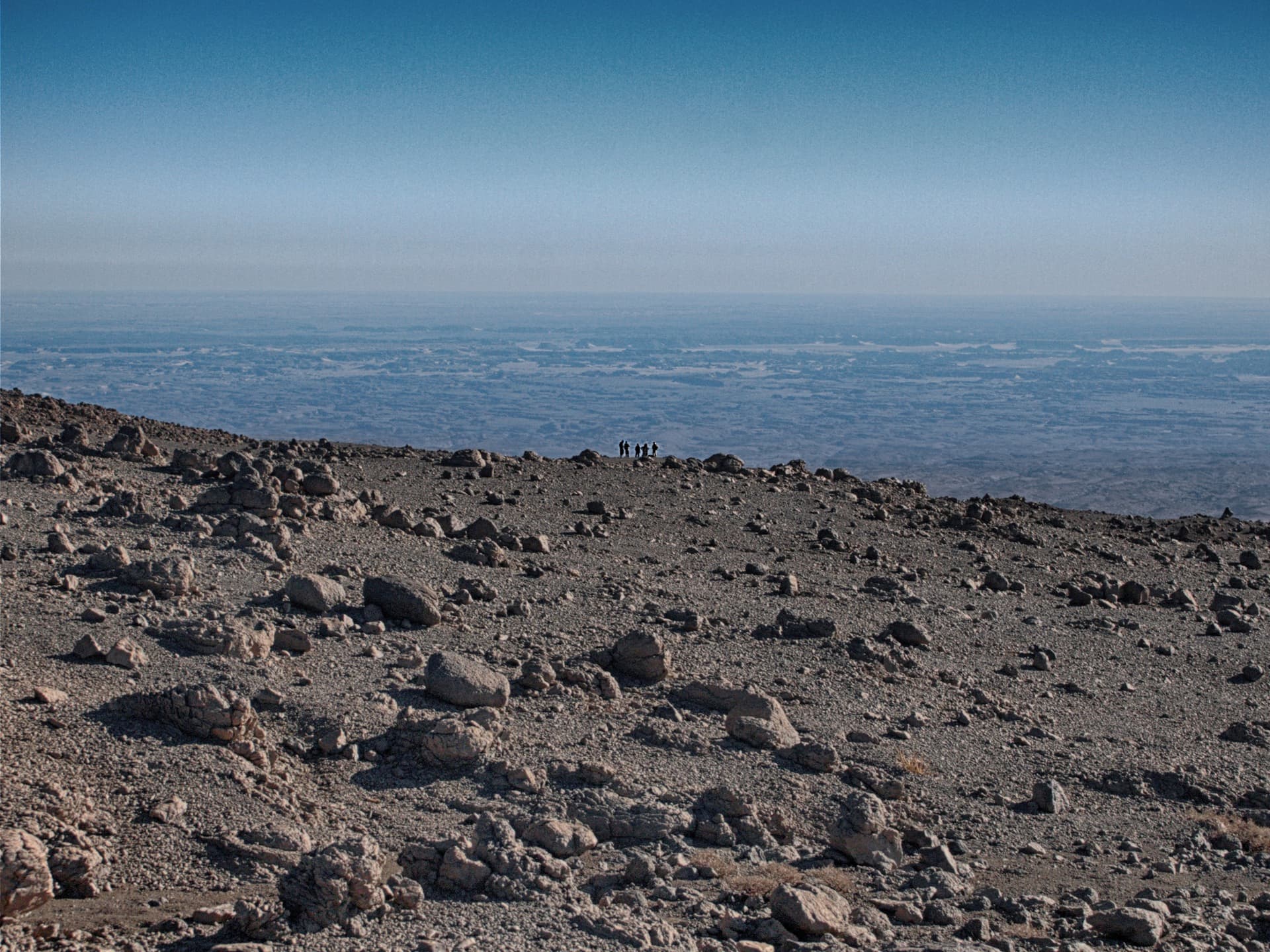
We pass through the Tataï Pass, then climb towards the mountain summit which peaks at 3415 m above the central Sahara.
We begin the descent with the camels.
We set up our camp at 2400 m altitude.
Gouro - Ounianga
We take a comfortable track 120 km from Gouro towards the Ounianga Lakes.
We complete the formalities at Ounianga Kebir and take the opportunity to admire its two large salt lakes.
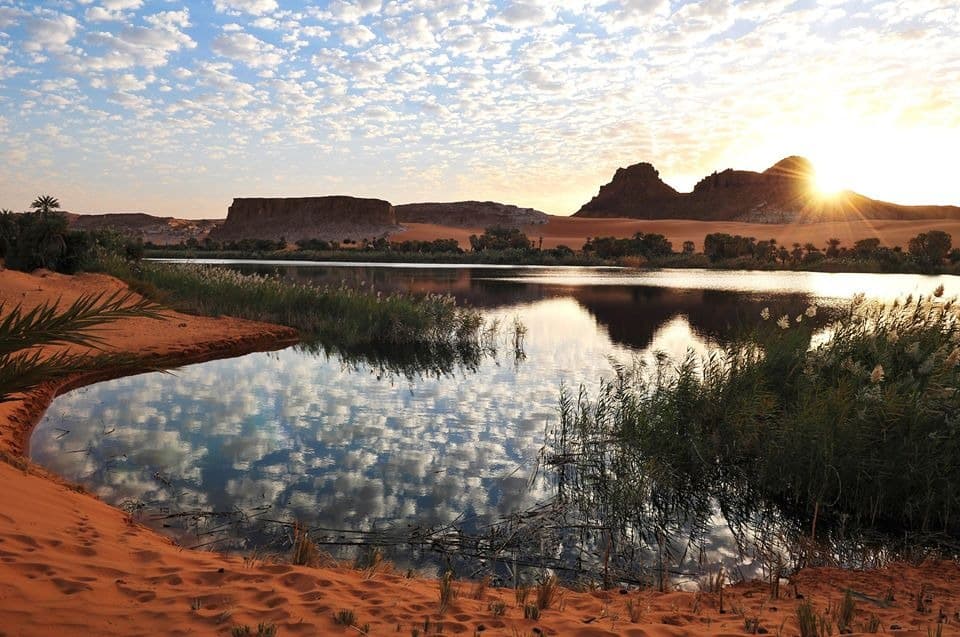
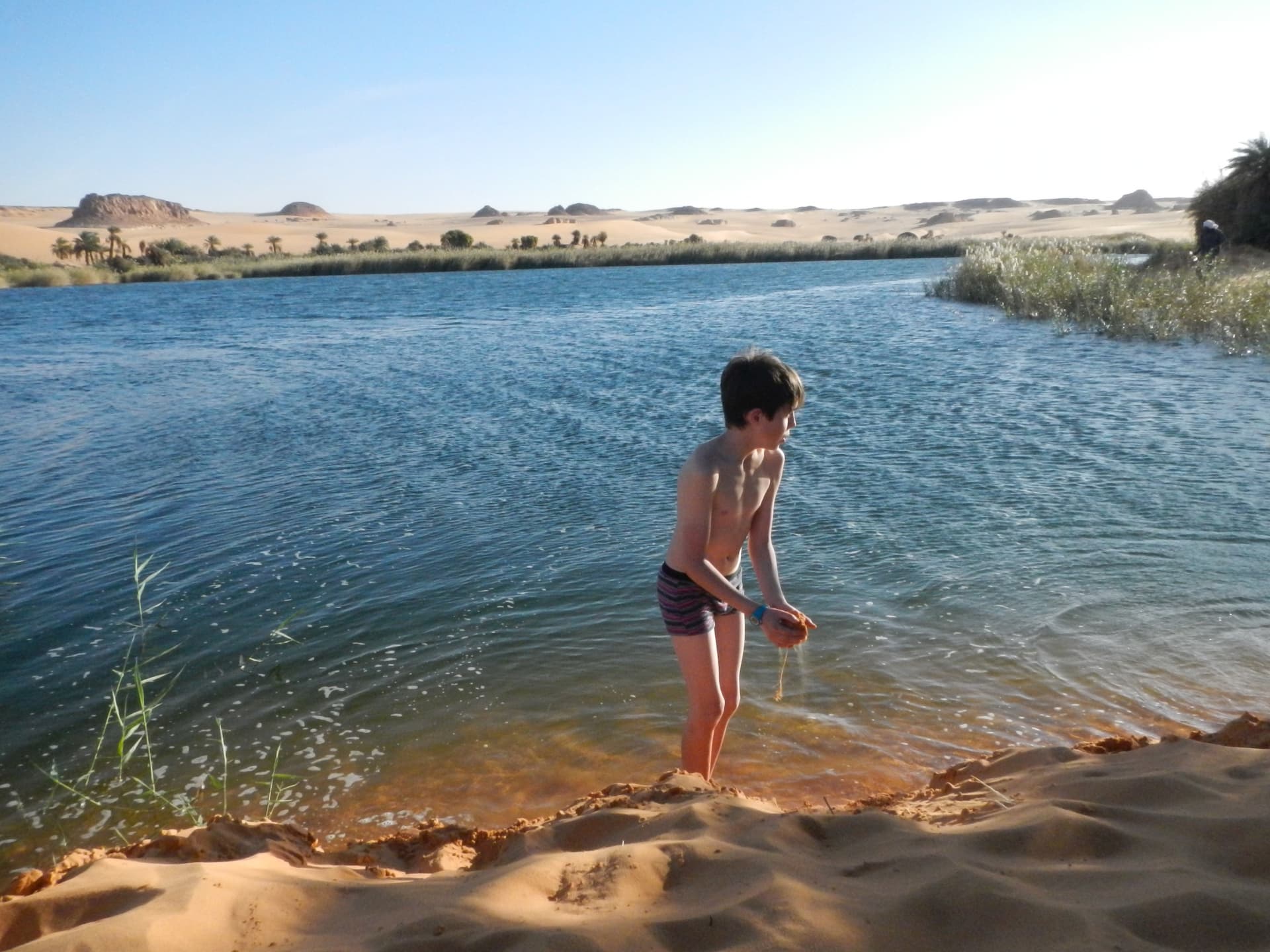
Camp at Ounianga Serir with Lake Bokou, a freshwater lake bordered by blonde dunes, allowing us to enjoy swimming.
Ounianga Serir - Wadi doum - Faya
We arrive in Faya at midday.
We head to the northern part of the oasis where you can find the beautiful tassilis of Archana and Ouchi Bani, magnificent paintings and reliefs of sandstone mixed with dunes.
Faya – Birrh Oasis 110
We treat ourselves to a beautiful getaway to Archana and its paintings.
We grab a bite to eat in town before strolling through the Libyan market.
In the evening, we leave the oasis town to reach the foot of the Djourab dunes.
We camp near well 110 on a white limestone ridge.
Tingliyate – Kuba Salal
In the early hours of the day, we venture onto the dunes where the sand is still cold.
We observe strange inselbergs planted in a wide clayey basin, the bottom of the Barh and Gazal, this inland sea of which Lake Tchad is the survivor.
We can make a trip a little further west to Korotoro, the place where the remains of the australopithecus Abel were discovered, then Toumay. These clayey bottoms have inevitably been covered with sand for some years now, which has initiated a true descent towards the Sahel.
Moussoro, Massakoury – N'Djamena
Dinner and airport transfer.
The descent journey to the capital continues, passing through Kréda territory in Moussoro and the onion fields of Massaguette, towards the dry savannas.
We have a free day if it hasn't been used before. We dedicate this to a walk in Ounianga or Faya.
Practical Information
Registration is considered firm and final after payment of a deposit of 30% of the total price and acceptance of the specific terms of sale.
The balance must be paid no later than 45 days before the departure date.
See our specific terms of sale for full details.
In the event of cancellation by the traveller, the following fees apply:
- Plus de 60 jours avant le départ : 40 % du prix total (acompte retenu)
- Entre 60 et 30 jours avant le départ : 50 % du prix total
- Moins de 30 jours avant le départ : 100 % du prix total
We strongly recommend taking out cancellation insurance. See our specific terms of sale for full details.
The information below concerns travelers who are nationals of the European Economic Area (EEA), Switzerland and Canada traveling to Chad for a tourism stay. Entry rules may change, and we recommend that you verify the information with official authorities before your departure.
Passport
To enter Chad, your passport must be valid for at least six months from the date of entry into the country and have at least two blank pages for immigration stamps.
The document must be in good condition (no damaged, torn or altered pages).
Mandatory visa
Nationals of the European Economic Area, Switzerland and Canada must hold a visa to enter Chad for tourism purposes. There is no visa exemption for these nationalities.
The visa can be obtained:
from the Chad embassy or consulate competent for your area before departure,
in certain cases, on arrival at Hassan Djamous International Airport in N'Djamena (visa on arrival), subject to prior confirmation with Chad authorities, and this option may be subject to conditions.
The authorized stay is generally 30 days, renewable on-site with Chad immigration services.
Authorities may request:
an exit ticket from the territory (return or onward flight),
proof of sufficient financial resources for the duration of your stay,
an invitation or accommodation proof.
Health and vaccinations
Yellow fever vaccination is mandatory to enter Chad. The international vaccination certificate (yellow booklet) will be required on arrival.
Additional vaccinations are strongly recommended by health authorities:
meningitis A, C, Y, W135 (Chad is located in the African meningitis belt),
hepatitis A and B,
typhoid,
rabies depending on planned activities.
Preventive antimalarial treatment (antimalarial prophylaxis) is strongly recommended, as malaria is present throughout the territory. Consult your doctor or an international vaccination center before departure.
Traveling with children
Minors must hold their own valid passport and an individual visa covering the duration of the stay.
In certain European countries, when a minor travels without one of their parents, an authorization to leave the territory may be required according to the regulations of the country of residence.
Other nationalities
Entry conditions may vary depending on nationality. Travelers concerned should contact the Chad embassy or consulate in their country of residence.
We strongly recommend you to take out evacuation and medical expense coverage abroad when participating in our trips.
Your local agency encourages you to review the specific policy developed with our partner CHAPKA ASSURANCES and AXA ASSISTANCE.
To purchase insurance, learn about coverage and rates, follow the link below.
CAP EXPLORER: The complete insurance solution designed for a worry-free trip!
Choose the plan that suits you best:
Explorer'Multirisque
Explorer'Annulation
Explorer'Assistance
Explorer' Complémentaire Carte Bancaire
Specific to our trips, we strongly recommend you subscribe to them.
Should you choose to purchase one of these plans, the full terms and conditions detailing all coverage and claim procedures are available on the insurer's website.
Your local agency will be aware of them, but only the participant is responsible for complying with all claim notification procedures. The participant should therefore keep this policy with them throughout their entire trip.
Frequently asked questions
A tourist visa is mandatory and must be requested from the embassy before departure. Your passport must be valid for at least 6 months beyond your entry date. An up-to-date vaccination record is required, particularly for yellow fever. The security context requires maximum vigilance. Before booking, verify with the consular authorities of your destination the entry requirements applicable to your nationality.
Go to the My Trips section to find all your projects.
You can send a message to your host directly from the Tea Lounge.
For a tailor-made quality trip, budget between €250 and €450 per day and per person, including accommodation, meals, 4x4 with driver-guide and activities. International flights (€800-1,200 return) are extra. Chad remains a rare and demanding destination, reserved for experienced travellers.
Your documents are accessible in the Documents tab of your trip.
Absolutely. We adapt each itinerary to the traveler's profile. For families, we prioritize relaxed pacing, family-friendly accommodations, engaging and educational activities, and comfortable private transfers. Our English-speaking local guides know how to capture children's attention with age-appropriate stories.
It's simple. You exchange with our local team to define your wishes, budget and dates. You receive a detailed itinerary proposal within 48 hours. You refine every detail together until it's perfect. You confirm and travel with peace of mind. Your local agency remains available 7 days a week throughout your trip.
In case of emergency, contact your local agency immediately.
Payment is generally made in two installments.
Our agency is part of the Nomadays network, registered in France. You benefit from APST (Association Professionnelle de Solidarité du Tourisme) guarantee which covers 100% of your funds. Secure payment, repatriation insurance included, and English-speaking assistance 24/7 on site throughout your stay.
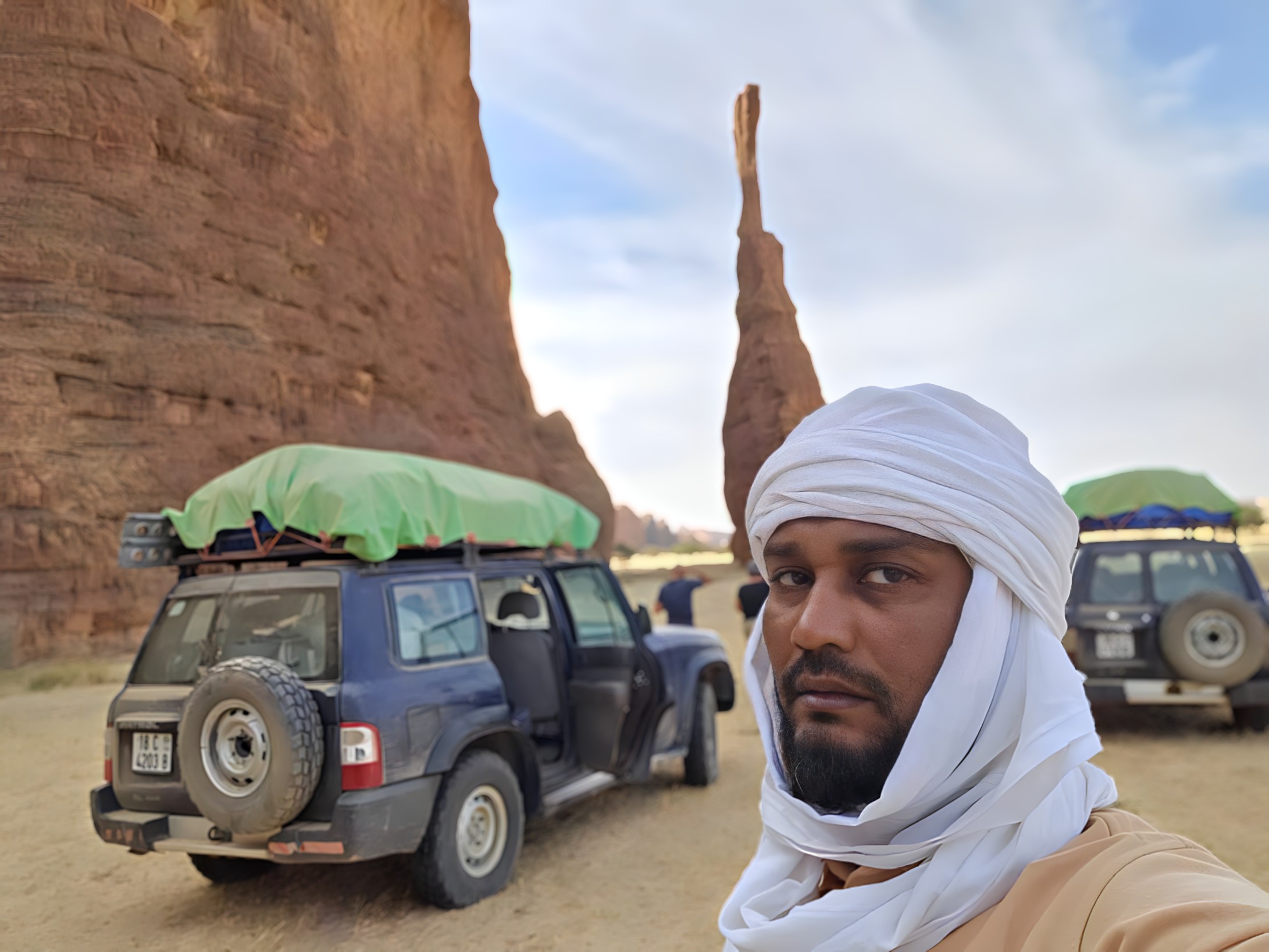
Let's talk about your adventure — Desert North
Sahara Guide from Chad, based in N'Djamena
In Chad, the desert is never empty. There are the traces, the landscapes, the stories, the camps, and that light that changes everything throughout the day.
— Faris