Madagascan Mosaic: From the Highlands to Ifaty Lagoon, in the Green Season
When the rains return, the rice paddies of the Highlands turn a brilliant green. Nine days from Antsirabe to the Ifaty lagoon, during the season when Madagascar is at its most beautiful and peaceful.
Duration
9 days
From
€800/pers.
Ideal seasons
Apr, May, Jun, Jul, Aug, Sep
Style
Guided tour
Comfort
classique
Travelers
Couple, Solo, With friends
The spirit of travel
From November to March, the first rains transform the Highlands into a mosaic of brilliant greens. Around Betafo, in the Vakinankaratra, the rice fields are laid out in terraces at the foot of volcanoes and villages cling to the slopes. In Ambositra, time stands still in the workshops where marquetry craftsmen draw their patterns in precious wood. Near Fianarantsoa, the Matsiatra river leads us to the heart of Betsileo village life.
Further south, the Anja village reserve is home to its ring-tailed lemurs at the foot of granite monoliths, then the ruiniform Isalo massif reveals its canyons and natural pools. The Horombe plateau then unfolds its endless expanses, where Bara herders lead their zebu cattle under an immense sky. The road winds between ornate aloalo tombs, then the ocean appears: the Ifaty lagoon, protected by its coral barrier, and the Vezo fishing villages.
We travel with driver-guides, at a rate of four travelers per car. Visits give considerable space to local initiatives: at Anja, the reserve is managed by the villagers themselves, and its revenue finances agriculture, health and schooling for riverside families; on the Matsiatra, it is the canoe operators and inhabitants of Iseta who welcome us.
This trip was designed for the rainy season. The landscapes are at their most beautiful, the sites are calm, and showers fall most often in the late afternoon: it is the time to see Madagascar differently.
The stages of your journey
Highlights
Day-by-day itinerary
Discovery of the Central Highlands, the city of Waters Antsirabe
We leave Antananarivo heading south on national highway 7, the great road of the Highlands. We drive over an old base of granite and gneiss, worn smooth by time into rounded hills, covered with red earth, laterite. During the rainy season, this landscape transforms: the terraced rice paddies, freshly transplanted, shine like mirrors or are covered in tender green, and each valley becomes a patchwork of colors.
The road crosses villages of brick houses with upper stories, wooden balconies, where life unfolds at the roadside: fruit and vegetable stalls, zebu-drawn carts, children on their way to school. Everywhere, the rural world is present, dynamic, working in the fields.
We pass Ambatolampy, at the foot of the Ankaratra volcanic massif. Plantations of pines and eucalyptus cover the slopes, and the town is known throughout the country for its artisanal foundries, where recycled aluminum becomes cooking pots and casseroles.
As we approach Antsirabe, the landscape changes. Volcanic cones and crater lakes remind us that this part of the Highlands has experienced recent volcanic activity, on a geological timescale. The volcanic soils are fertile: agricultural produce spreads along the roadside, potatoes, carrots, beans, seasonal fruits.
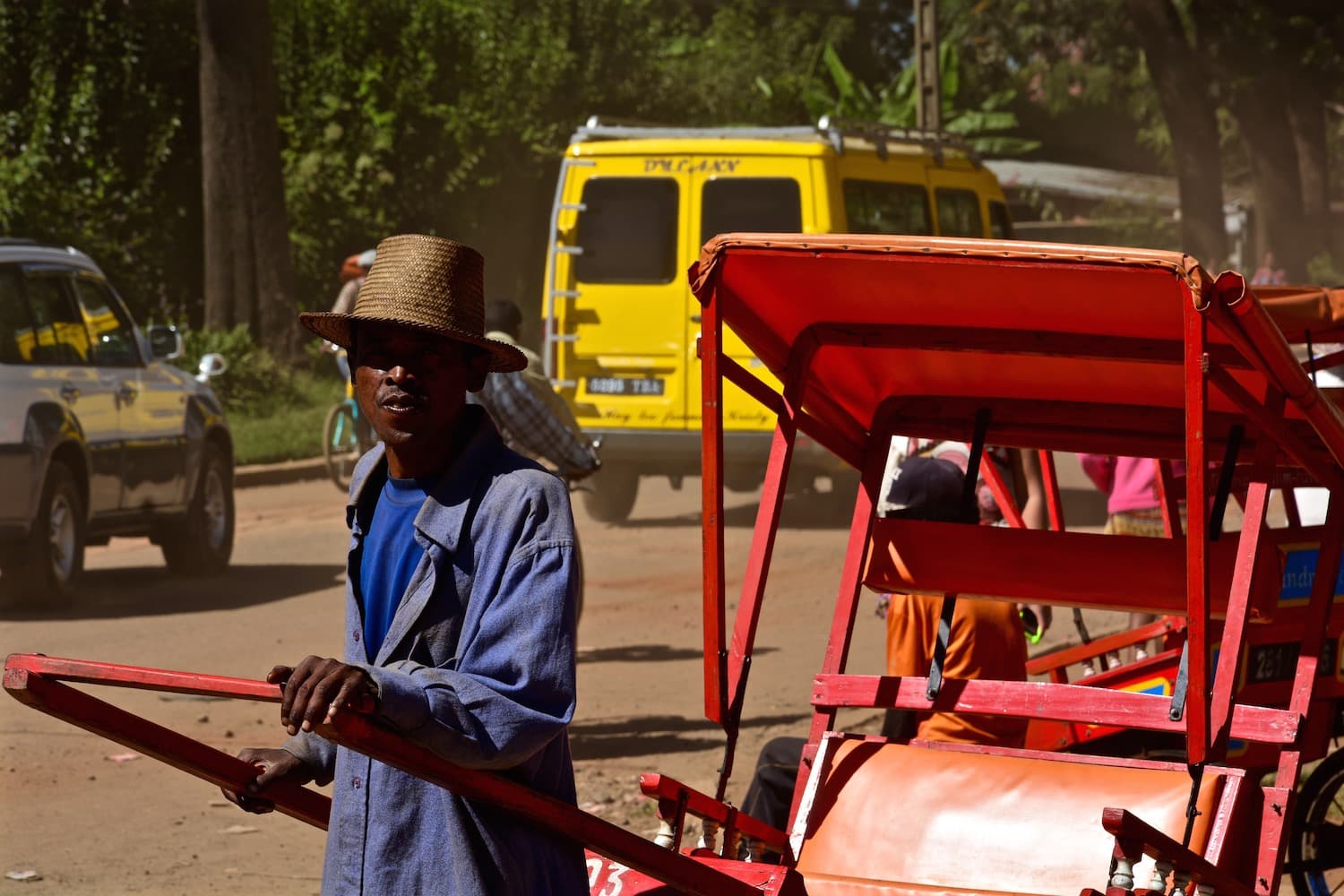
We reach Antsirabe, a thermal spa town nestled at nearly 1,500 meters altitude, in the heart of the Vakinankaratra region. The town developed around its hot springs; its broad avenues lined with jacarandas, its historic facades and cool climate make it a pleasant stop. Colorful pousse-pousse (rickshaws) handle most of the local transport, and a tour of the town by their side (not included) is a wonderful way to discover local life.
In late afternoon, we visit craftspeople who work with zebu horn or make miniatures of bicycles and cars from recycled materials: meticulous craftsmanship, passed down from generation to generation. We dine in town, then head to our ecolodge, whose bungalows are set in a peaceful garden. Night in Antsirabe.
Walks and discoveries between villages and rice fields in the Betafo valley, then continuation towards Ambositra
Early in the morning, we leave Antsirabe heading west and follow the wide valley of Vakinankaratra, which stretches between extinct volcanoes. The plain is entirely developed: every plot is cultivated, every slope arranged. After half an hour on the road, we reach the outskirts of the small town of Betafo.
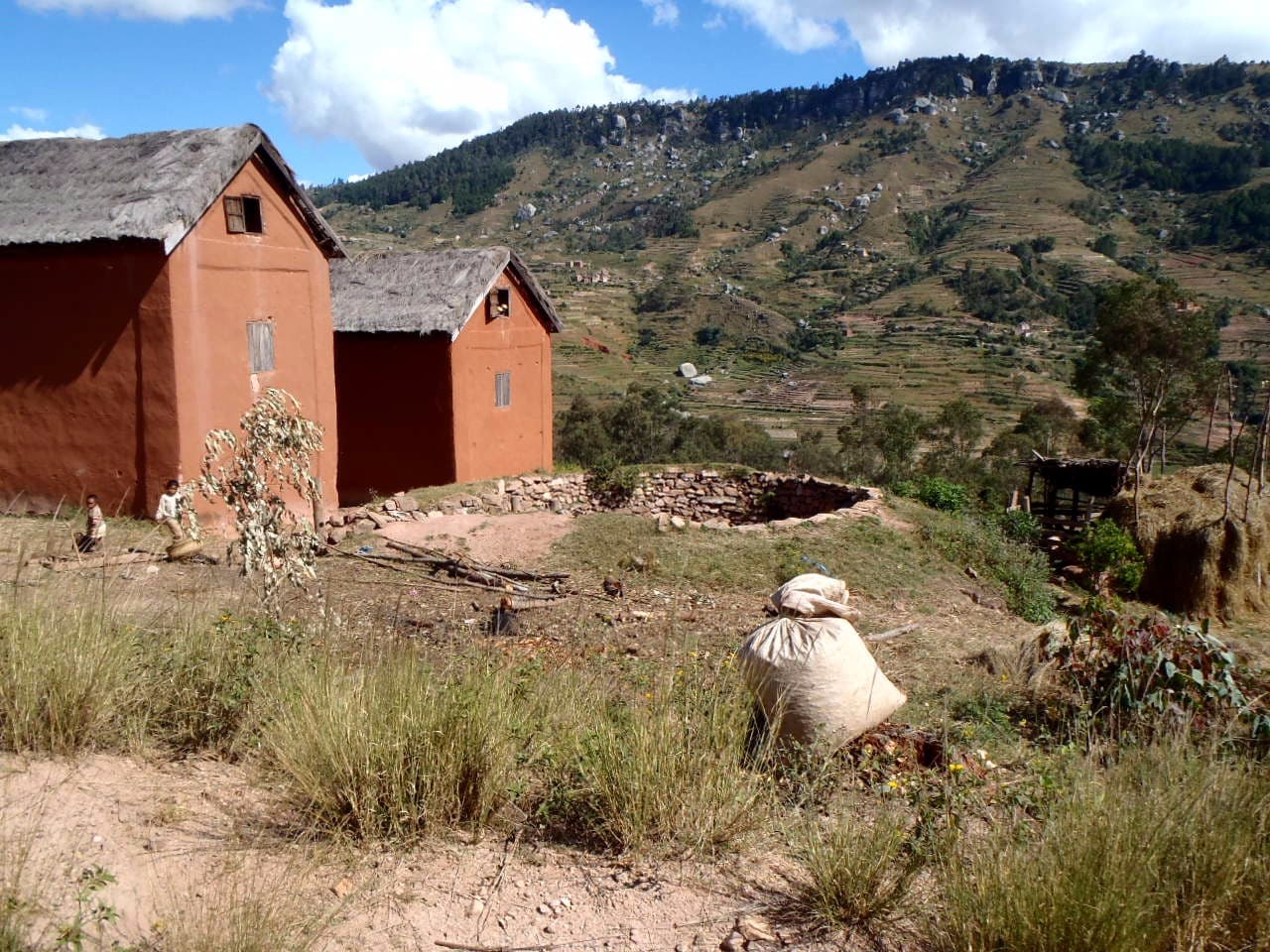
This is where we walk. On foot, we set out to discover the mosaics of rice fields that display, during the rainy season, a whole range of greens. Dominated by volcanic slopes, the valley offers one of the most emblematic landscapes of the Highlands: hills, perched villages, red brick houses with thatched roofs, and everywhere water, channeled from terrace to terrace by a network of canals maintained for generations.
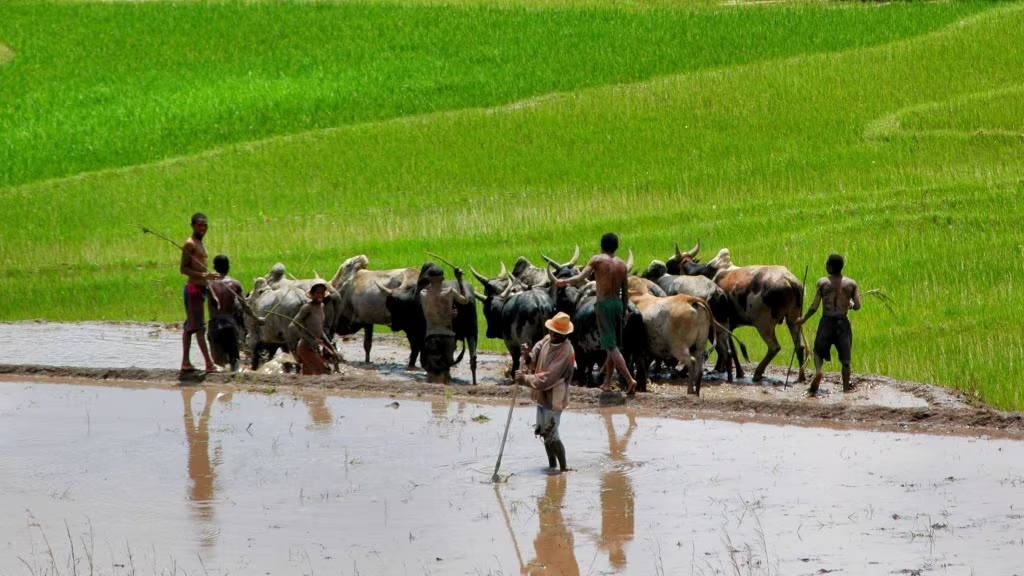
We go from village to village, meeting our hosts. It is the season of work: rice transplanting mobilizes entire families, zebus trample the rice fields to prepare the mud, children tend the herds. Our driver-guides explain to us the rice calendar, the place of the zebu and the organization of the villages.
The town of Betafo also has a history. It was the cradle of the kingdom of Andrantsay, one of the ancient kingdoms of the Highlands, before its integration into the Merina kingdom. Its tombs and standing stones preserve its memory. The volcanoes that surround it also feed hot springs, where inhabitants come to bathe and wash their clothes, and a crater lake with dark waters sleeps a few steps from the town.
We have lunch as a picnic in the middle of the rice fields, then return to Antsirabe. In the afternoon, we take National Road 7 heading south. The road crosses the Highlands in roller coaster fashion, from pass to valley, between pine forests, rice fields and villages. The landscapes widen, granite reliefs appear.
We arrive late in the afternoon at Ambositra, the capital of wood craftsmanship. The city is the gateway to the zafimaniry country, whose expertise in woodworking is inscribed by UNESCO in the intangible cultural heritage of humanity. We settle into a hotel in the center, just steps away from the workshops we visit tomorrow. Night in Ambositra.
From Betafo
In Betsileo country, the marquetry craftsmen of Ambositra and the Betsileo capital Fianarantsoa
This morning, we meet the inlay craftsmen of Ambositra. In their workshops, they assemble wood essences with natural colors, rosewood, palisander, ebony, to create scenes from Malagasy life: peasants in rice paddies, ox carts, pirogues. The sculptors, meanwhile, rival each other in imagination in making statuettes, boxes and furniture. We take time to watch the craftsmen at work, to understand their gestures and tools, and to talk with them about their craft.
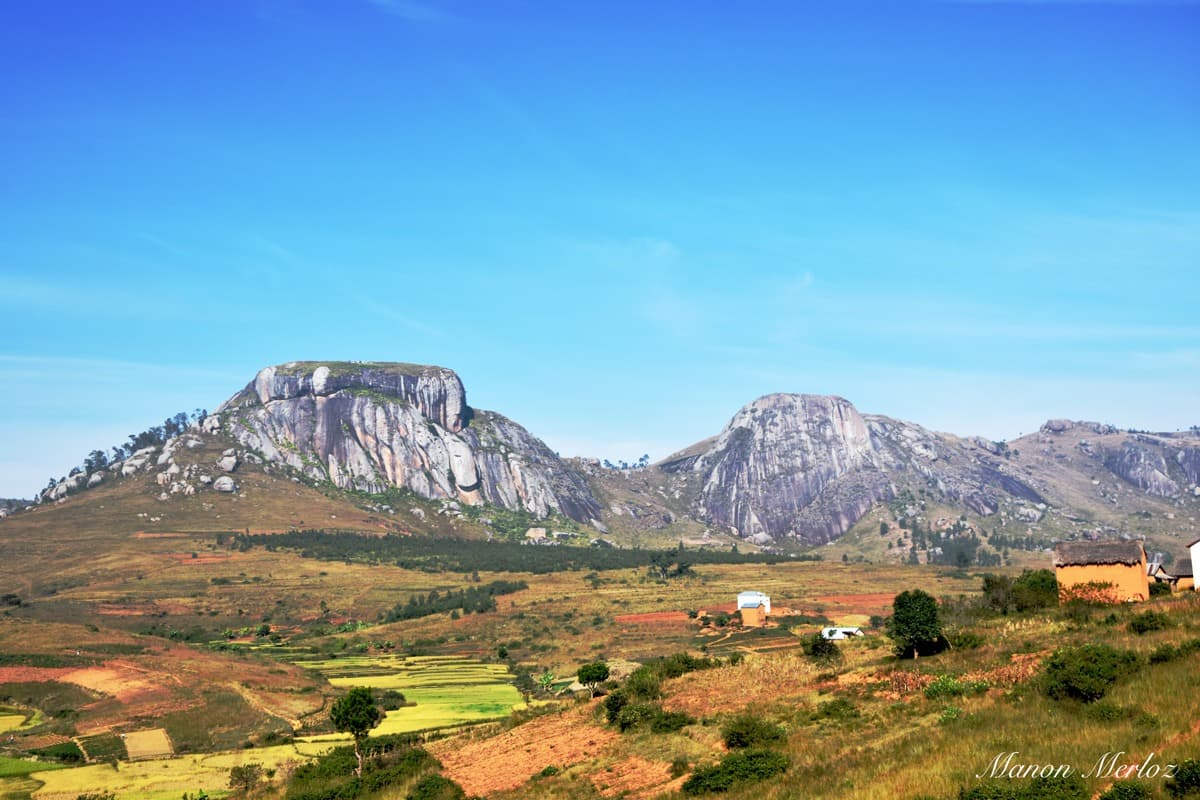
We then resume national road 7 heading south. It crosses one of the most beautiful sections of the Highlands. The granite base emerges in domes and peaks, the forest returns here and there on the slopes, and in the valleys terraced rice paddies draw green staircases. We enter Betsileo country, a people of rice farmers renowned for the quality of their terraced arrangements, among the most spectacular on the island.
The rainy season gives this journey all its beauty. Clouds cling to the summits, the light changes at every moment, and villages stand out against the green of the crops. We make a few stops to photograph or meet the inhabitants, as the road takes us, and to taste the fruits sold along the roadside.
We reach Fianarantsoa in the afternoon. Historic and cultural capital of the Betsileo country, it is one of Madagascar's cities with the most religious buildings and schools. Like Antananarivo, it is arranged in three levels. The upper town, former seat of the Merina governor, has retained its churches, its paved lanes and brick houses with balconies. The new town groups together administrations and the large market. The lower town is the commercial heart.
Weather permitting, we go up to the upper town at the end of the day. The view extends over the city, the rice paddies and the hills surrounding it, and the setting sun illuminates the old facades. Fianarantsoa is also known for its tea plantations and vineyards, which we discover from the next day onwards. Night in Fianarantsoa, for two nights, in a villa surrounded by gardens.
Entrance - Ambositra - Wood Workshop
Following the Water, from the Matsiatra River to the Sahambavy Tea Plantations
This day is devoted to the life of Betsileo villages, along the Matsiatra river. In the morning, we drive east from Fianarantsoa to the village of Ampatora, then walk for a short while through the fields to Tambohonihenjanana, the launch point, near Mahasoabe.
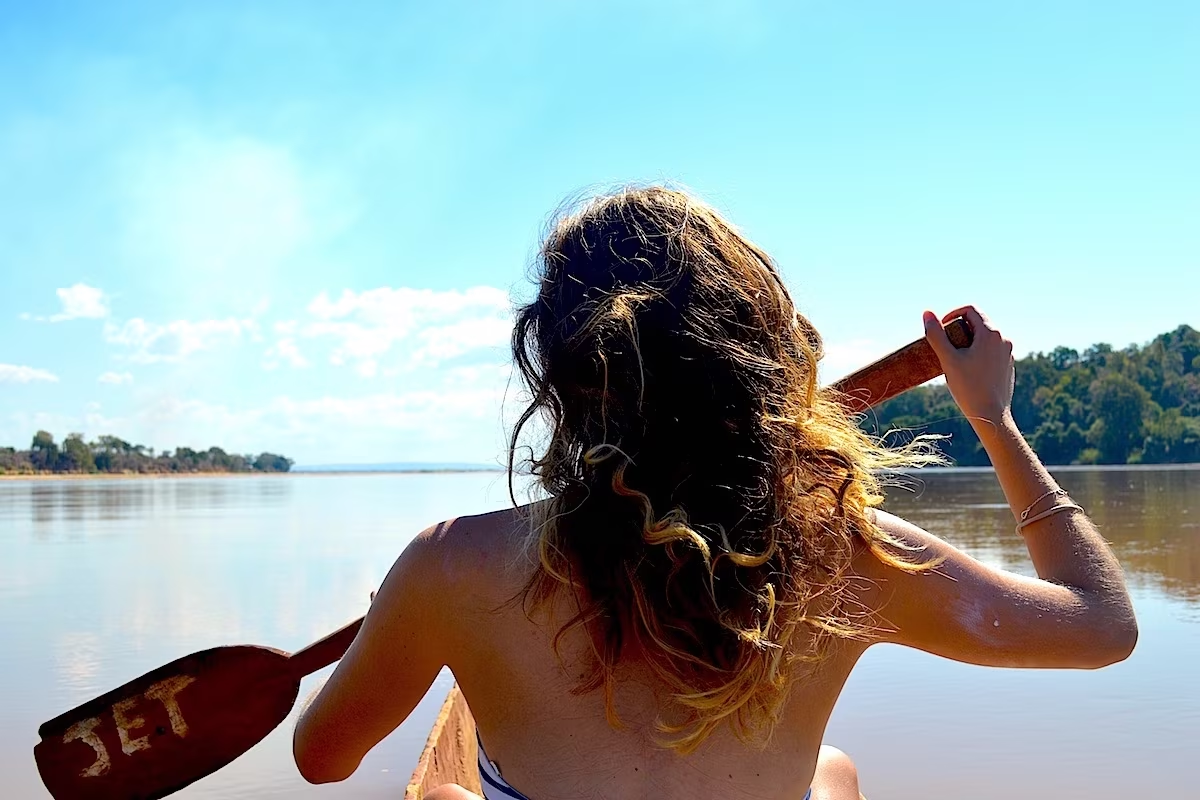
The boatmen welcome us and explain the safety guidelines. We board traditional pirogues for about two hours of peaceful navigation. The Matsiatra winds between rice paddies and granite mountains, in a landscape of great harmony. During the rainy season, the river is full and the banks are an intense green. Aquatic birds are abundant: herons, egrets, kingfishers. Those who wish can take a paddle and try their hand at navigating.
We dock at the village of Iseta. It is a cultural stop: we visit the school, a typical Betsileo house, and discover basketry, the craft of the village women. The exchanges are simple and warm, giving a glimpse of daily life far from the roads. The children willingly recite their lessons, and the elders tell the story of the village.
We then continue walking, about forty minutes through the fields and hamlets, to Ambalakofafa. Lunch awaits us there in a guesthouse: a traditional Malagasy meal, prepared with the valley's produce.
In the afternoon, we reach Sahambavy, in the heart of a valley where tea plantations extend. Founded in 1978, the estate covers several hundred hectares, part of which is cultivated by farmers from the region. The rows of tea plants follow the curves of the hills, and the view of the plantations, with the lake and mountains in the background, is one of the most beautiful in the region. We visit the factory, where the leaves are withered, rolled, oxidized and then dried, and we end with a tasting of this characterful tea.
Late in the afternoon, we return to Fianarantsoa. This day of approximately two hours of navigation and an hour and a half of walking, without difficulty, is one of the richest of the trip in terms of encounters. In the evening, everyone retains the memory of the gliding of the pirogues on the water. Night in Fianarantsoa.
Traditional Malagasy meal in a guesthouse, in Ambalakofafa
The Lemur Catta of the Anja Reserve, and the great steppes of the Horombe plateau
We leave Fianarantsoa heading south. The road crosses a patchwork of terraced rice paddies and various crops, where all shades of green are displayed in this season. Gradually, the landscape opens up and granite takes over: large domes of bare rock, polished by erosion, dominate the valleys.
We stop in Ambalavao, a small town known for its vineyards and its large zebu market, one of the most important in the country, held on Thursdays. We visit an antemoro paper workshop, handmade from the bark of a shrub and decorated with dried flowers, then we stroll through the village market, one of the most beautiful in the region.
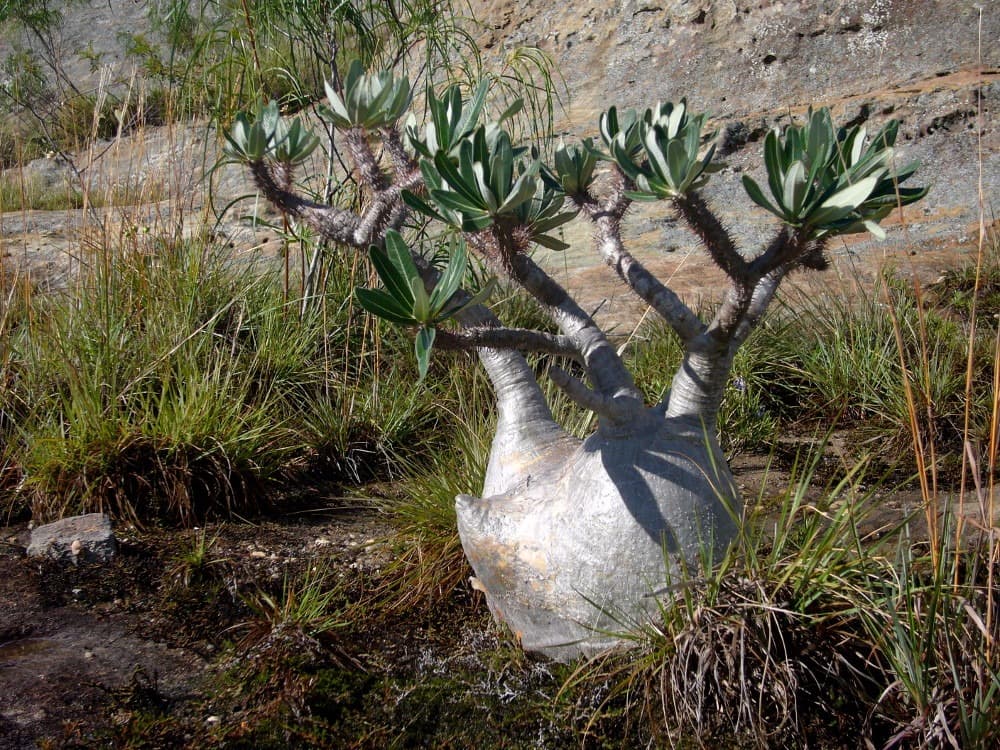
A few kilometers further on, we stop to visit the Anja village reserve. At the foot of a spectacular granite massif, a gallery forest of ficus trees, vines and orchids has developed among the rocky chaos, sometimes forming caves. On the slopes, succulent plants, kalanchoes and pachypodiums, have colonized the rock. In this green paradise live in small colonies the ring-tailed lemurs, these lemurs with ringed tails that are the emblem of the Great Island. They spend a lot of time on the ground, are not shy, and we can easily observe them, accompanied by a local guide.
Anja is an example of community tourism. The reserve is managed by the Anja Miray village association, and its revenues finance projects to improve agricultural yields, develop crafts, health and education for families living nearby. Our visit contributes directly to this, and the local guides who accompany us are themselves from neighboring villages.
We continue south, into Bara country. The landscape changes completely: we climb onto the Horombe plateau, the largest plateau in Madagascar. It is a vast grassy savanna, almost without trees, where the eye carries all the way to the horizon. Herds of zebus graze there under the guard of Bara pastors, a people of herders for whom the zebu is the measure of all wealth. During the rainy season, the savanna turns green again and the sky offers spectacular cloud displays.
Late in the afternoon, the sandstone cliffs of the Isalo massif appear on the horizon. We reach Ranohira, gateway to the national park. Night at the hotel, for two nights.
Walk in the Isalo National Park, between Canyons and Natural Pools
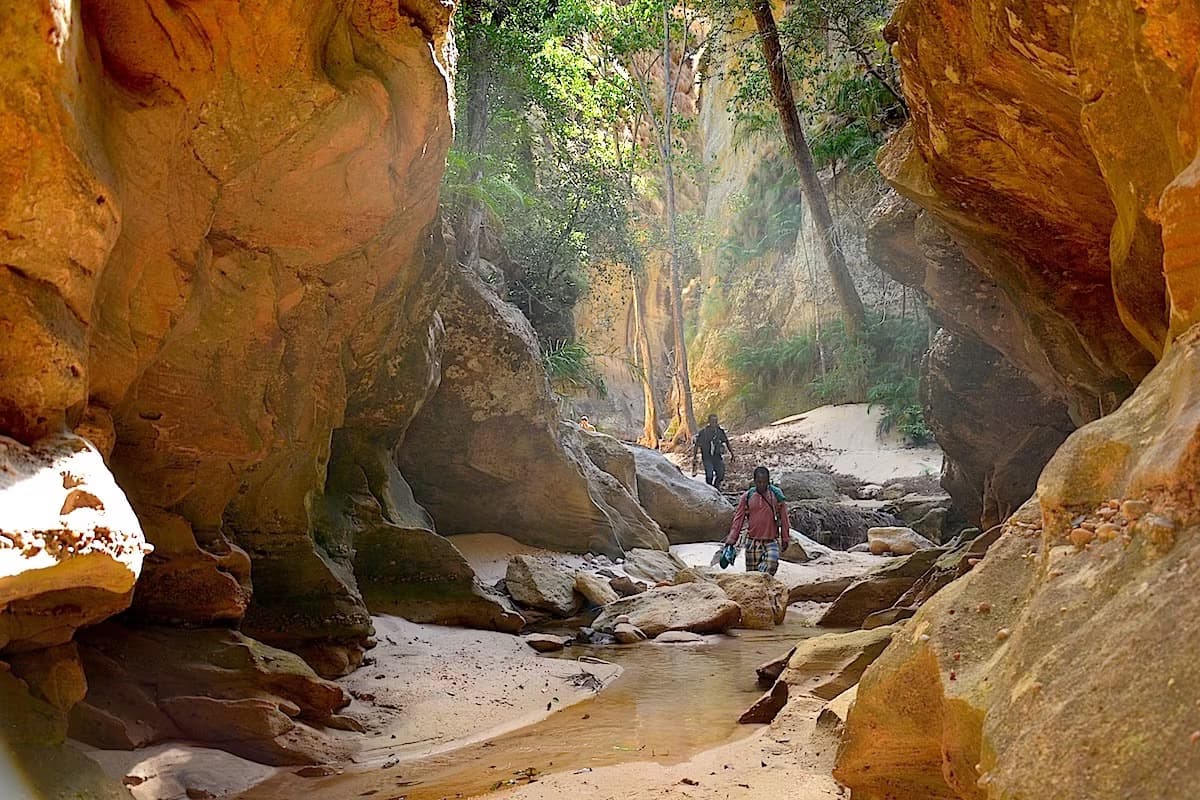
We dedicate the day to discovering the Isalo massif on foot, one of the most spectacular landscapes in Madagascar. The national park, created in 1962, extends nearly 100 kilometers from north to south. The massif is a plateau of continental sandstone, deposited by ancient rivers between the Triassic and Jurassic periods, then carved by erosion into deep canyons, towers, arches and domes. It is a ruiniform landscape, like an abandoned stone city.
We set off early, in the cool of the morning, accompanied by our driver-guides and a local park guide. The trail first climbs onto the plateau, between blocks of sandstone sculpted by wind and rain. The colors of the rock vary from yellow to red and black, depending on the oxides and lichens that cover it.
The vegetation is adapted to dryness and rocky terrain: aloe, spurge, and especially the pachypodium, a small tree with a swollen trunk nicknamed elephant's foot. During the rainy season, many plants are in flower and the plateau, otherwise so dry, becomes covered in greenery.
Then we descend into the canyons. The contrast is striking: at the bottom of the gorges, water flows year-round, and dense gallery forest has developed, with its ferns, pandanus and palms. We reach a natural swimming pool, a basin of clear water at the foot of a waterfall, where it is pleasant to swim. Lunch, as a picnic, is taken in this setting.
The fauna of Isalo is rich and largely endemic. In the canyon forests live ring-tailed lemurs, brown lemurs and Verreaux's sifakas, which move in spectacular bounds. The rock reptiles, lizards and geckos, warm themselves in the sun on the sandstone slabs.
The region is the land of the Bara, a people of zebu herders and farmers. The Isalo massif is for them a sacred place, where tombs are found set in the crevices of the cliffs. We observe them from a distance, with respect.
In late afternoon, we return to Ranohira. The setting sun sets the Isalo cliffs ablaze, a spectacle not to be missed. Night at the hotel.
Picnic lunch
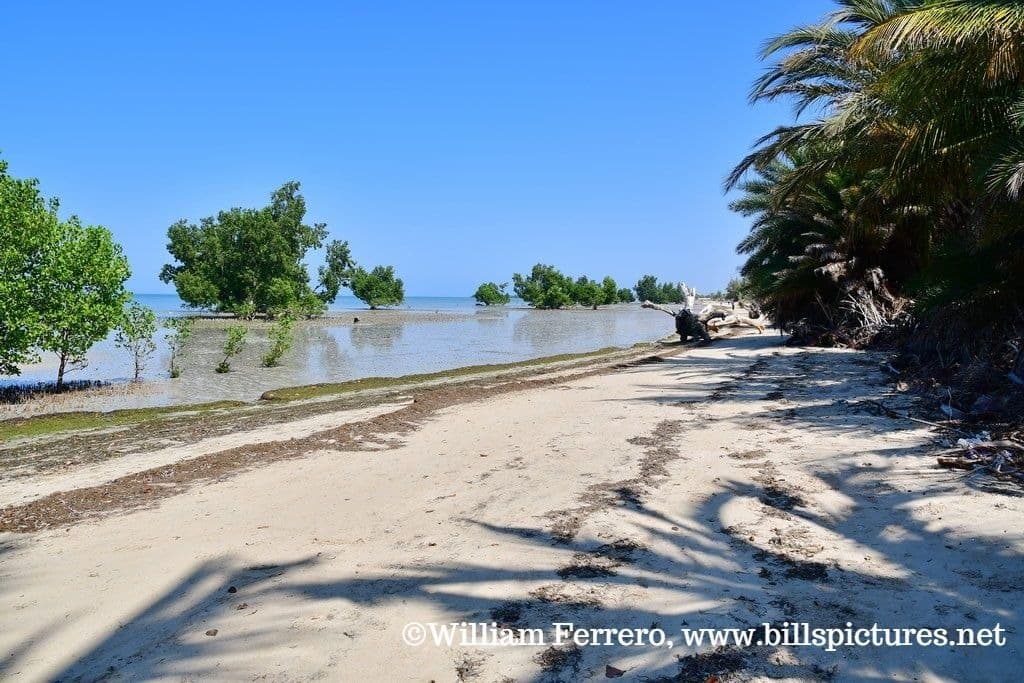
Towards Ifaty and the Mozambique Channel
We leave Ranohira via National Road 7, which descends towards the Mozambique Channel. We first skirt the cliffs of Isalo, then cross vast stretches of savanna, dotted with palm trees and termite mounds.
We pass through Ilakaka, then Sakaraha. These small quiet settlements were shaken up in the late 1990s by the discovery of a vast sapphire deposit. Within a few months, villages of just a few dozen inhabitants became veritable mining towns, with their buying counters, wooden houses and bustle, worthy of the American Wild West epic.
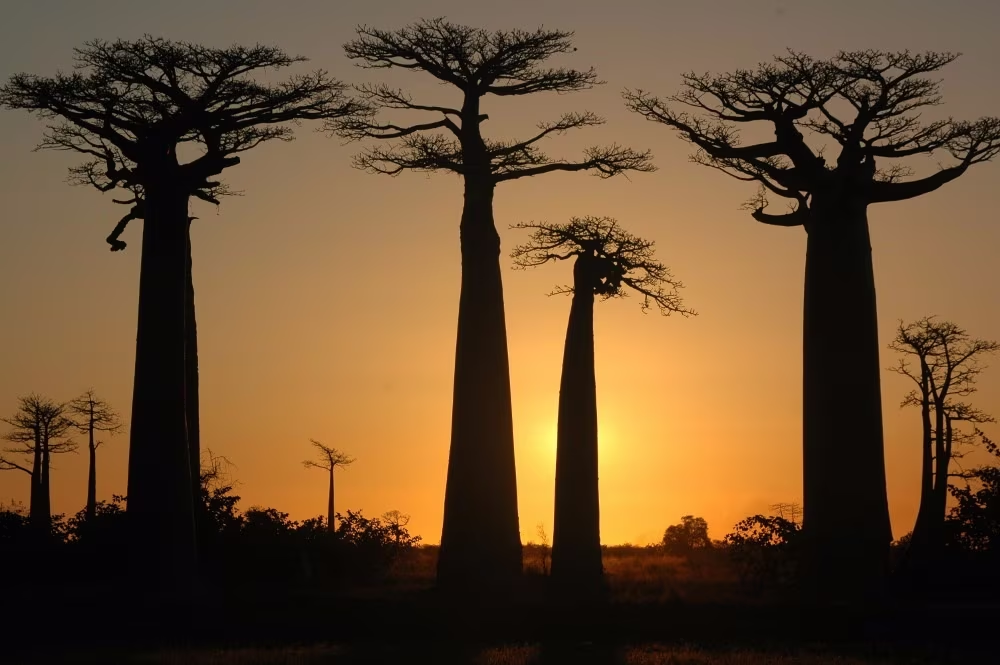
Further on, the landscape changes again. We enter the domain of the dry forest of the South-West. The first baobabs appear, massive silhouettes with swollen trunks, which store water to survive the dry season. We cross the Mahafaly limestone plateau, with its famous tombs. These large stone sepulchers are topped with wooden funeral sculptures, the aloalo, and zebu horns; they are painted with naive scenes from the life of the deceased. It is one of Madagascar's most original funeral arts.
We reach Tuléar, the major city of the South-West, on the edge of the Mozambique Channel. We take a tour of the city, from its seafront to its bustling markets, and have lunch there.
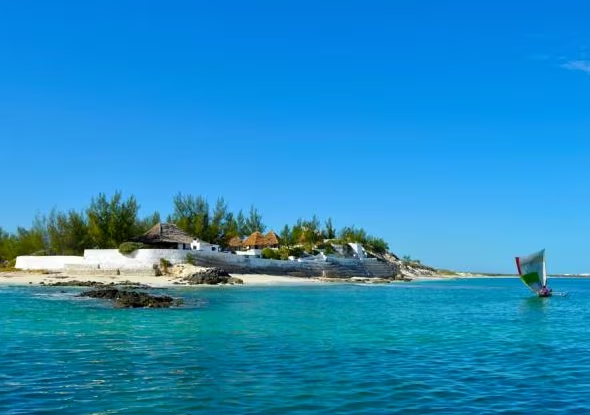
In early afternoon, we take the northern route along the coast. It crosses a forest of thorny trees, then approaches the sea. We reach the Ifaty and Mangily area, north of Tuléar, which stretches over ten kilometers along the Ranobe lagoon, in the land of the Vezo fishermen. The Vezo are a sea people, who have lived from fishing for generations, aboard outrigger canoes carved from a single trunk and rigged with a square sail.
We settle into a beachfront hotel, facing the lagoon. In the evening, the sun sets over the Mozambique Channel, and the canoes return from fishing.
Here, we part ways with our driver-guides, who head back to Antananarivo starting the next day. They have accompanied us since the capital, and the moment of farewell is always moving. Night in Ifaty, in a bungalow facing the beach.
Ranohira → Ifaty
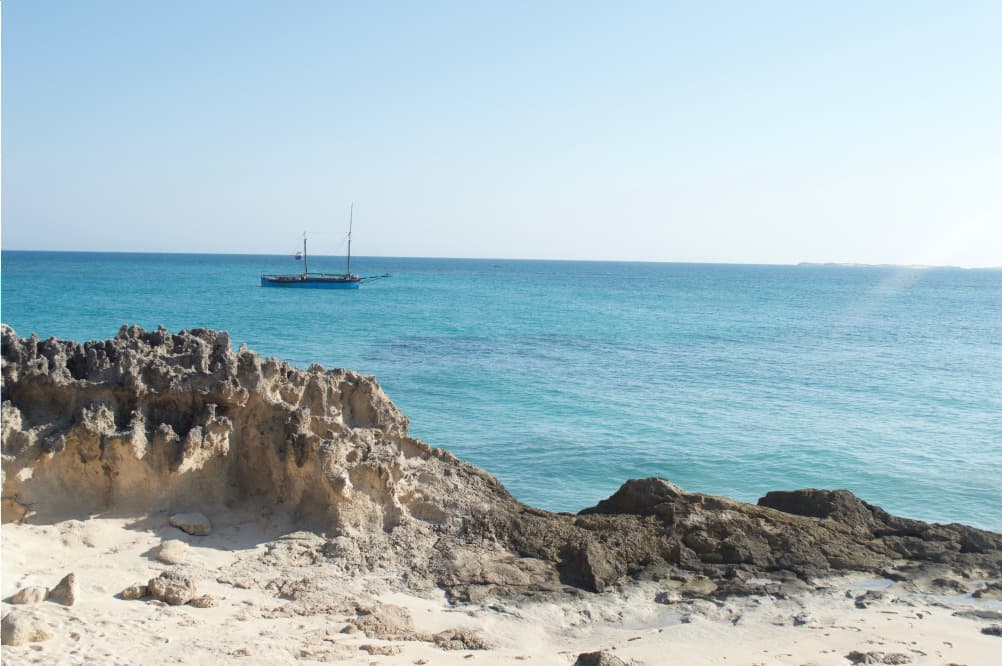
Free stay in Ifaty, on the Tropic of Capricorn Coast in Vezo Country
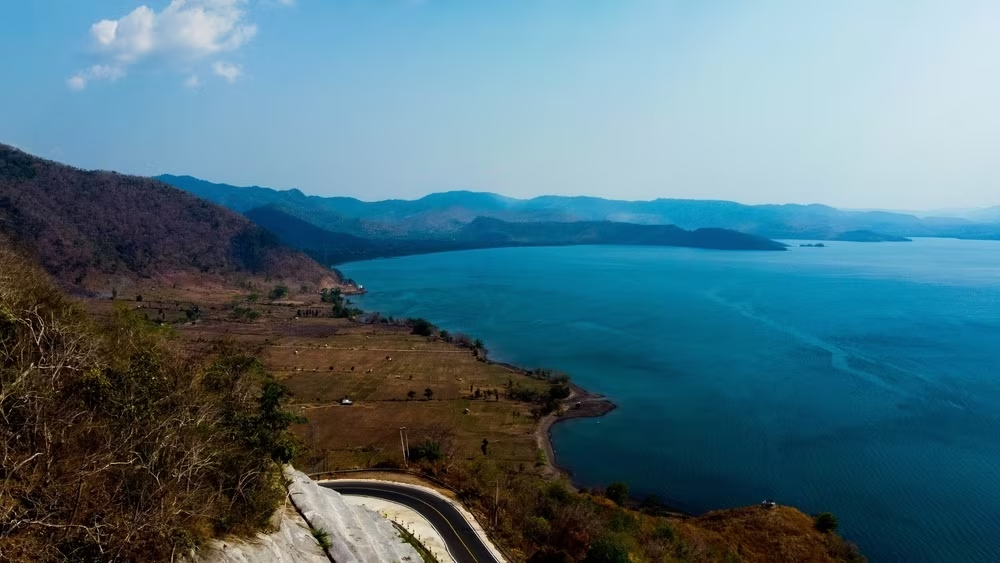
Ifaty, Mangily, Madiorano and Ambolimailaka are small villages facing the Ranobe lagoon, with its turquoise waters, protected by a coral reef spanning several tens of kilometers. This reef breaks the ocean swell and creates, between the barrier and the beach, a calm and shallow body of water, ideal for swimming.
This day is free. Each person organizes it according to their preferences, with the hotel's help, which offers many activities, to be booked and paid for on site.
Nature enthusiasts can venture out on foot or by zebu cart into the hinterland, to discover the thorn forest. This dry forest is one of the most original in the world. It is home to plants that exist nowhere else: the didiereaceae, with their long stems bristling with spines, euphorbias, pachypodiums and baobabs. Several species of endemic birds live there, as well as tortoises and chameleons.
Sea lovers are spoilt for choice: traditional outrigger pirogue excursion on the lagoon, snorkeling or scuba diving on the coral reef, trolling fishing. The coral beds are home to a great diversity of multicolored fish, starfish and sea urchins.
Those who prefer peace and quiet will simply enjoy the beach, swimming and sunshine. It's also an opportunity to stroll along the shore and meet the Vezo fishermen. In the morning, they set out to sea in their pirogues; in the afternoon, they return with their catch, which the women sell on the beach. Children play in the waves, nets dry in the sun, and the villages live to the rhythm of the tides.
The Vezo have an intimate relationship with the sea, which they know better than anyone. They read the currents, winds and depths, and navigate over long distances. Their simple way of life, oriented towards the ocean, is one of the most endearing facets of Madagascar.
In the evening, we enjoy one last sunset over the Mozambique Channel, while the pirogues make their way back to the beach, sails billowed by the breeze. Last night by the lagoon, in Ifaty.

Last morning in Ifaty, transfer to Tuléar and flight to Antananarivo (not included)
The morning is free to enjoy the lagoon one last time, its light and its calm. Depending on the flight schedule, we have time for one last swim, a walk on the beach, or one last look at the outrigger canoes of the Vezo fishermen setting out to sea.
This journey has taken us across Madagascar from the center to the southwest, through a succession of landscapes and peoples. We started from the granite and volcanic Highlands, with their terraced rice paddies and red brick villages, in the Merina then Betsileo country. We met the craftsmen of Ambositra, the canoe builders of the Matsiatra, the villagers of Anja. Then granite gave way to the sandstone of Isalo, to Bara country, and the Horombe savanna unfolded its endless expanses. Finally, the thorny forest and baobabs led us to the sea, to Vezo country.
In the rainy season, this journey reaches its full force. The rice paddies are at their greenest, the rivers are full, the vegetation is in bloom, and the sites are calm. The showers, which most often fall at the end of the day, cool the air and wash the landscapes.
Before leaving, we take time for one last lunch facing the sea, if the flight schedule allows: grilled fish and seafood caught that very morning by the Vezo.
In due course, the hotel ensures our transfer to Tuléar airport, approximately one hour's drive away depending on the hotel. The road runs along the coast and crosses the thorny forest one last time.
We take the domestic flight to Antananarivo. This flight is not included in the price of the trip: its rates vary greatly, and we book it for you separately, at the best time. Seen from the sky, the landscape passes in reverse: the coast, the dry forest, the plateaus, then the Highlands and their rice paddies.
Upon arrival at Ivato airport in Antananarivo, a member of the Madagascar Détours team welcomes you and accompanies you for the rest of your stay or your international flight.
Misaotra, thank you, and see you soon in Madagascar! We hope that this mosaic of landscapes will give you the desire to return.
Ifaty → Tuléar
Price per person
Indicative price per person, based on double room. Each trip is customized according to your preferences.
This trip can be tailored to your preferences
This itinerary provides an excellent foundation for discovery, but it can be fully customized. Our local advisors build each trip tailored to your budget, dates and preferences.
Not included
- The domestic flight Tuléar > Antananarivo on Day 9
- Lunches and dinners, except for picnic lunches which are included
- Activities not mentioned in the program and during free stay in Ifaty
- The guide and vehicle Détours Madagascar during the free stay in Ifaty
- The single room supplement or split single, 300 EUR / person
- Beverages (mineral water, sodas, beers...), during and outside meals
- Tips and personal expenses
- Annual cancellation and repatriation insurance
- Visa fees
Included
- The services of a driver-guide from Détours Madagascar for the entire trip duration except in Ifaty, from Day 1 to Day 7
- Car transport, four travelers per vehicle, fuel included, for the entire duration of the trip (except in Ifaty), from Day 1 to Day 7
- Accommodation in double / twin room in the mentioned hotels (or similar, depending on availability at booking)
- Breakfasts, from the breakfast on Day 2 to that on Day 9
- Picnic lunches on D2, D4 and D6 for the smooth running of the trip
- Visits and activities as described in the program, except during the free stay in Ifaty
- Entry fees to the parks and reserves mentioned, including mandatory local guide fees
- All transfers mentioned in the program
Practical Information
Registration is considered firm and final after payment of a deposit of 30% of the total price and acceptance of the specific terms of sale.
The balance must be paid no later than 45 days before the departure date.
See our specific terms of sale for full details.
In the event of cancellation by the traveller, the following fees apply:
More than 60 days before departure: 30% of the total price (deposit retained)
Between 60 and 30 days before departure: 50% of the total price
Less than 30 days before departure: 100% of the total price
We strongly recommend taking out cancellation insurance. See our specific terms of sale for full details.
Your Passport:
Important: your passport must be valid. It must be mandatory and obligatorily valid for 6 months after the end of your stay in Madagascar.
Your travel documents
Your valid passport,
Your international and/or domestic flight tickets,
Your repatriation insurance/first aid expenses contract, -
Your vaccination record, not mandatory,
Your blood group card if possible.
Obtaining a visa to enter Malagasy territory
Upon arrival in the territory:
The visa cost is €35 for a stay of less than 30 days.
It is easily obtained upon your arrival in Malagasy territory.
This applies to all airports in Madagascar that receive international flights.
Upon arrival in the terminal, upon exiting the plane, a corridor for passengers is dedicated to issuing tourist visas.
This procedure is the simplest. We recommend it to you.
From the embassies and consulates of your countries of origin:
For information, download the document explaining the procedure and the constitution of the file for obtaining a visa from the Madagascar embassy.
To participate in our trips, it is strongly recommended to be insured for repatriation assistance and medical expenses abroad.
Your local agency encourages you to familiarize yourself with the specific contract developed with our partner CHAPKA ASSURANCES and AXA ASSISTANCE.
To subscribe to insurance, learn about coverage and rates, follow the link below.
CAP EXPLORER: The comprehensive insurance solution designed to enjoy your trip with peace of mind!
Choose the plan that best suits you:
Explorer'Multirisque
Explorer'Annulation
Explorer'Assistance
Explorer' Complementary Credit Card
Specific to our trips, we strongly recommend subscribing to them.
If you choose to subscribe to one of these plans, the policy detailing all coverage and procedures for claiming any loss are available on the insurer's website.
Your local agency will be aware of it, but only the participant is responsible for complying with the procedures for declaring any loss. The participant must therefore keep this policy with them throughout their trip.
Chapka — Cap Explorer
Our insurance partnerTravel with peace of mind with our partner Chapka. Cancellation, repatriation, medical expenses, baggage… All the coverage for a worry-free trip.
Travel with peace of mind — I'll handle the insuranceFrequently asked questions
A tourist visa is required, issued upon arrival at Ivato Airport (Antananarivo) or online (e-visa). Your passport must be valid for at least 6 months from your date of entry. Before booking your trip, check with Madagascar's consular authorities for the conditions applicable to your nationality, including visa fees and authorized lengths of stay.
Go to the My Trips section to find all your projects.
You can send a message to your host directly from the Tea Lounge.
For a tailor-made quality trip, expect between 160 and 270 euros per day and per person, including accommodation, meals, internal transfers and English-speaking guide. International flights (900-1400 euros return) are additional. Long transfers and domestic flights represent a significant portion of the budget.
Your documents are accessible in the Documents tab of your trip.
Absolutely. We adapt each itinerary to suit your travel profile. For families, we prioritize relaxed pacing, family-friendly accommodations, fun and educational activities, and comfortable private transfers. Our local English-speaking guides know how to captivate children with age-appropriate anecdotes.
It's simple. You exchange with our local team to define your wishes, budget and dates. You receive a detailed itinerary proposal within 48 hours. You adjust every detail together until it's perfect. You confirm and travel with peace of mind. Your local agency remains available 7 days a week throughout your trip.
In case of emergency, contact your local agency immediately.
Payment is generally made in two installments.
Our agency is part of the Nomadays network, registered in France. You benefit from APST (Association Professionnelle de Solidarité du Tourisme) protection, which covers 100% of your funds. Secure payment, repatriation insurance included, and English-speaking assistance 24/7 on the ground throughout your stay.

Let's talk about your adventure — High Plateaus
Ambassador of Malagasy fihavanana, based in Antananarivo
For me, traveling to Madagascar is stepping into the spirit of fihavanana: sharing, helping one another, meeting people, and taking time to understand what connects them to their land.
— Noro