
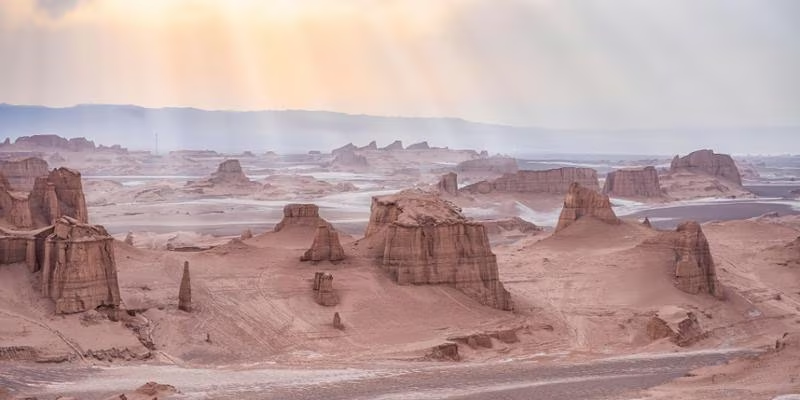
Iran between cities and deserts
From the palaces of Persepolis to the dunes of Dasht-e Lut, following the traces of the Achaemenid Empire and the caravans.
Duration
13 days
From
€1,050/pers.
Ideal seasons
Mar, Apr, Oct, Nov
Style
Guided tour
Comfort
classique
Travelers
Couple, Solo, With friends, senior
The spirit of travel
Iran is a little-known country. A few confused images of beautiful mosques, one or another legendary name like Shiraz or Isfahan, the reputation for hospitality of Iranians… We often know little more about this country. And inevitably the visitor - even the best informed - is astonished and amazed by the beauty of what he discovers. Beauty of landscapes (high snow-capped mountains, vast deserts, green oases, subtropical coastline), architectural beauty (sumptuous mosques, paradisiacal gardens, traditional alleyways and villages) and above all beauty of the people, whose kindness and smiles will remain one of the greatest memories of the trip.
And what can we say about the history of Persia, which has left countless extraordinary vestiges, from Antiquity (notably the Achaemenid era) to the Islamic era. This itinerary offers a balanced discovery of these different aspects of Iran: the most beautiful cities in the country (Tehran, Shiraz, Abarkouh, Yazd, Isfahan, Kashan, …), the finest archaeological sites (Persepolis, Necropolis, Pasargades, Natanz, Rayen, …), the rural world and the desert (Dasht-e Lut, Varzaneh, the caravanserais, …).
The stages of your journey
Highlights
Day-by-day itinerary
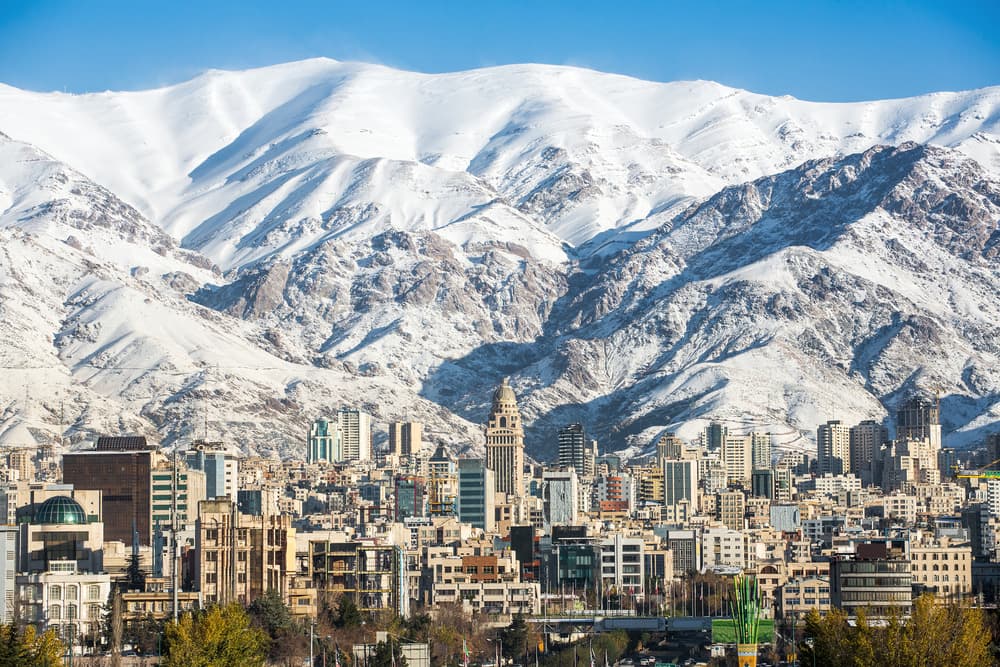
Welcome to Iran!
Upon our arrival at Tehran airport, we are welcomed by our guide and taken to our hotel for some rest.
Without further ado, we embark on our first discovery of Iran's capital. Given the city's legendary traffic jams, we travel by metro and taxis, which also gives us the opportunity to have our first encounters with Iranians. We visit the Carpet Museum where we discover the art of hand-woven Persian carpets, with more than a hundred magnificent pieces on display. We continue to the Sa'ad Abad complex, which houses jewels of Iranian architecture: the palaces built in the 19th century by the Qajar monarchs and where notably the Pahlavi dynasty lived.
After our first culinary discoveries in a delicious local restaurant, we head to the Reza Abbasi Museum where we discover an exceptional collection of Persian art ranging from the 2nd millennium BC to the Islamic period. We continue to Borj-e Milad tower, one of the highest in the world at 435 meters, or even to Pol-e Tabi-at (with additional fee), Iran's longest pedestrian bridge which overlooks one of the main arteries in the north of the city.
Night at the hotel.
Program subject to modifications based on your arrival time and museum closures.
Visit to Tehran and train to Shiraz
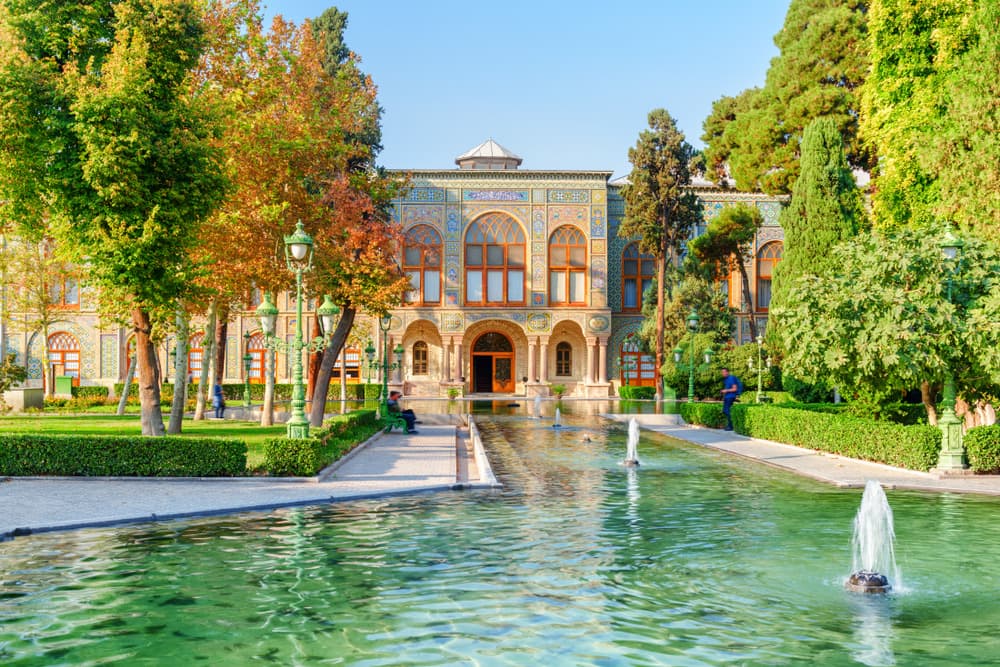
We start our day at the National Museum, which traces the rich history of the country from ancient Persia to the Islamic era. Ancient objects are numerous and testify to a flourishing past. The Golestan Palace, former Qajar royal palace, is located in the citadel of Tehran, in the heart of the old city. Its magnificent architectural ensembles are arranged around a garden composed of pools and overflow with rich collections of Iranian craftsmanship. Our morning ends at the Grand Bazaar of Tehran. Bazaars (from old Persian vāzār) are genuine institutions here: people come to stroll, exchange, haggle, chat…
In the afternoon, if train schedules to Shiraz permit, our last stop in the capital takes us to the National Museum of Crown Jewels, an absolutely stunning place that houses one of the greatest treasures in the world: jewels, precious stones, diamonds, … an absolutely unique collection of wonders gathered by the shahs.
After our visits we head to the station for our night train to Shiraz.
Visit to Shiraz
Shiraz, situated at 1500m altitude at the foot of the Zagros mountains, capital of Persia under the Zand dynasty in the 18th century, amazes travelers. A sumptuous city of culture, poetry, perfumes and arts, it also houses ancient sites thousands of years old.
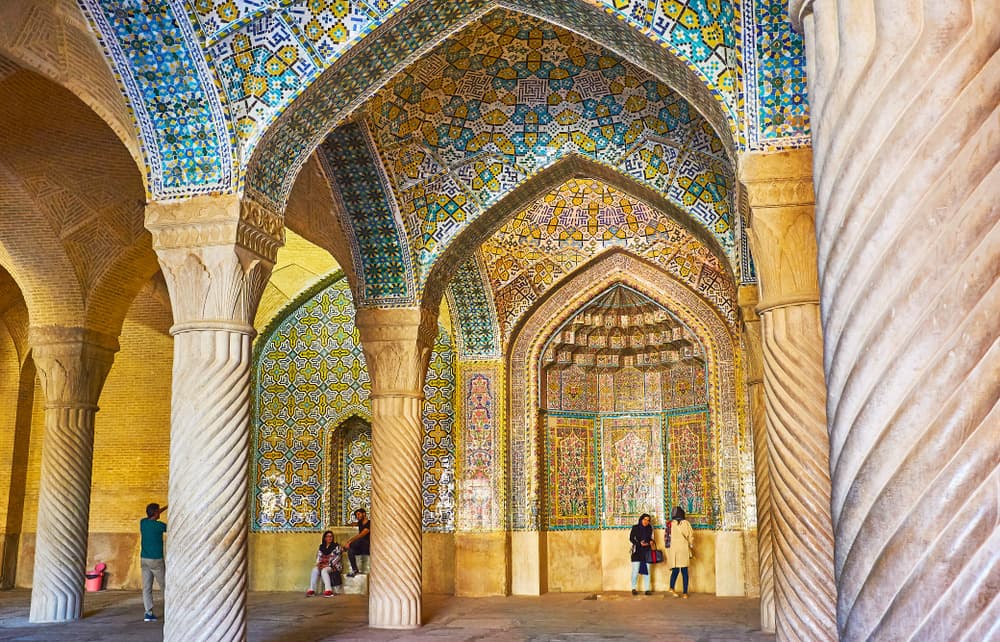
Our first steps lead us to the magnificent Karim Khan Palace, to the Vakil Bazaar, its adjacent mosque and its Saraye Moshir caravanserai with its multiple shops, before reaching a jewel of the city: the sumptuous Nasir-al-Mulk Mosque famous for its magnificent stained glass windows.
Our efforts are rewarded by a well-deserved moment of relaxation in a charming traditional restaurant in the city. In the afternoon, we visit the mausoleum of Ali-Ebn-e-Hamzeh and its thousands of mirrors, located near the tombs of the famous poets Hafez and Sa'adi, before taking a few steps in the superb Jahan Nama garden surrounded by its giant cedar trees. At sunset, the view over the city of Shiraz is particularly striking from the tomb of Khajoy-e-Kermani.
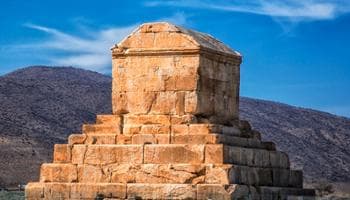
History and Heritage
An hour's drive takes us this morning to a mythical place: the city of Persepolis, capital of the Achaemenid empire, founded 2500 years ago by the "King of Kings" Darius I. The ruins of buildings, partly carved into the rock, are remarkably well preserved and show architecture influenced by Mesopotamian models. It is likely that the city served both as a center of government and as a sumptuous venue for spectacles and royal receptions.
A short distance to the north, the site of Nécropolis is where the Achaemenid kings were buried.
Persépolis → Pasargadae
We continue our journey towards the northeast and reach another exceptional relic of the Achaemenid civilization: the ancient city of Pasargades, created by Cyrus the Great in the 6th century BC and the first capital of the Achaemenid Empire.
Pasargadae → Saadat Shahr
Finally we return a few kilometers back to drop our luggage in Saadat Shahr where we spend the night.
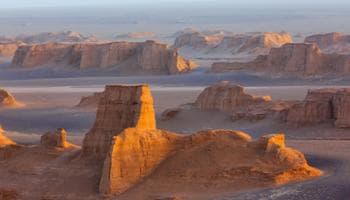
Towards the desert
Saadat Shahr → Shahdad
Today we head due east towards the Dasht-e Lut desert, one of the driest and hottest on the planet, in Kerman Province.
We make several stops along the way to admire Lake Bakhtegan, the village of Dehmurd, as well as the cities of Herat and Rafsanjan, the birthplace of former Iranian president Rafsanjani and the pistachio capital.
Past Kerman, one last mountain range separates us from the desert, which we explore in wonder until Shahdad. The strong seasonal winds here cause colossal erosion that produces spectacular landscapes alternating between rocky massifs and undulating ridges.
Night with a local family in a small village.
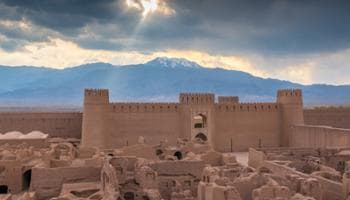
Garden and Citadel
Early morning departure to the small town of Mahan, located in an oasis and featuring two particularly interesting sites: the mausoleum of the Sufi leader Ne'mat Ollah-e-Vali with its minarets and turquoise dome, and the paradisiacal Shahzadeh Garden, a magnificent green oasis between desert and mountains inscribed on the UNESCO World Heritage list.
Mahan → Rayen
Our next stop, an hour to the south, is the village of Rayen, where an extraordinary citadel built during the Sassanid period and remarkably well preserved stands. This immense construction made of rammed earth and its location at the foot of Mount Hezar (4500 m) make it a spectacular site.
Rayen → Kerman
Transfer to Kerman and hotel check-in.
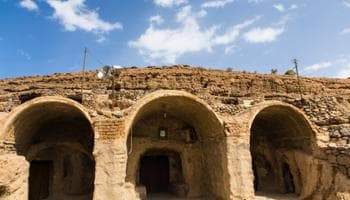
On the Caravan Routes
Kerman → Zeinoddin
We leave Kerman this morning and head northwest toward the province of Yazd. Along the way we make a detour to the troglodytic village of Meymand. Meymand is a very old village (10,000-year-old engraved stones and 6,000-year-old pottery fragments have been found there), one of the oldest settlements on the Iranian plateau. Nowadays the inhabitants still live in houses carved into the rock.
The word caravan comes from Persian kârvân, which designates a procession of camels and travelers. Since a caravan was generally a merchant convoy, it is not surprising that Persia, at the heart of the Silk Road, invented the term! To ensure accommodation and other needs for these convoys, the desert was dotted with caravanserais (the Persian sarây designating a large house), fortified places consisting of stables, stores and rooms.
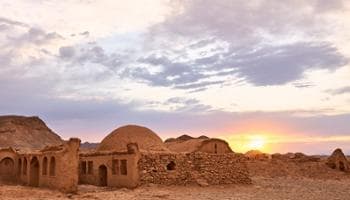
Our destination for the day is one of the oldest caravanserais in the region: Zeinoddin, built during the Safavid era and beautifully restored.
This evening we experience an unforgettable moment and settle for the night in the caravanserai. What an atmosphere in this ancient stone building in the middle of the desert!
(Depending on availability, it is possible that the Zeinoddin caravanserai may be replaced by that of Fahraj.)
Arrival in Yazd
Zeinoddin → Yazd
On the way to Yazd, we pass by two other very ancient caravanserais: Saryazd (Seljuk and Safavid periods, and its impregnable Sassanid citadel where harvests and precious objects were stored) and Mehriz (Sassanid period).
Upon arriving at Yazd, we visit two major Zoroastrian sites: the Towers of Silence, where corpses were exposed to be eaten by carnivorous birds, and the Fire Temple, one of the most important Zoroastrian places of worship in the world.
Finally, at the beginning of the evening we head to the Amir Chakhmaq complex. It is a square gathering a mosque, a caravanserai, a tekyeh, a hammam, a well and a confectionery. When night falls, the lighting gives the place a magical appearance.
Yazd, one of the oldest cities in the world
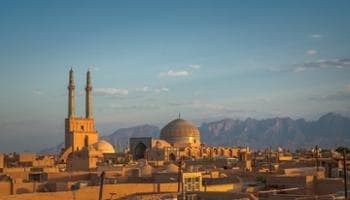
One of the oldest cities in the world, close to the Silk and Spice Routes, Yazd built its fortune on trade, as evidenced in particular by its numerous caravanserais. It is also the capital of Zoroastrianism, and one of the rare ancient cities made of earth that has been preserved and protected from modern urbanization. Its listed historic center is a labyrinthine gem of clay alleyways. An oasis in the middle of the desert, Yazd is a captivating city.
We set off and discover the splendid Jameh Mosque, the 15th-century domotics school which houses numerous craft workshops and of course we wander with delight through the alleyways of the magnificent old city.
Our steps then lead us to the Dowlatabad Garden, a magnificent example of Persian garden, an ancient art that dates back to 4000 BC and was designed to create earthly paradises (and whose most famous example is none other than the Taj Mahal in India).
Finally, our last visit of the day allows us to understand one of the characteristics and one of the major heritage features of Yazd. The most arid major city in Iran (barely 60 mm of rain per year), the city was able to develop thanks to an ingenious underground irrigation system dating back thousands of years, using a network of tunnels called qanats. It is at the Water Museum that we discover these ancestral techniques and tools.
Citadels and Desert
Yazd → Meybod
We continue our journey today and make our first stop in Meybod, an ancient city that was also the capital of the Mozaffarid kingdom in the 14th century. The Narin Citadel, from the Sassanid era, is one of the oldest in Iran and an important historical remnant.
Continuing our journey north, we enter the province of Isfahan and arrive at the city of Nain. An ancient city, Nain is home to one of the oldest mosques in Iran, the Jameh Mosque. It is also an ideal place to observe the qanats, which still function today and convey water from the mountains to the city.
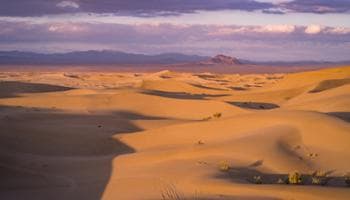
A largely desert country, it is in Varzaneh that it is easiest to observe magnificent sand dunes at the gates of the city. What a spectacle! In town, we will not miss visiting the Jameh Mosque as well as the ancient Ghoortan citadel.
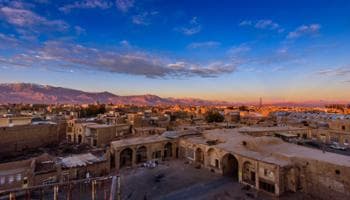
Evening arrival in Isfahan, jewel of the Middle East and most beautiful city in the world in the hearts of many Iranians. Perched at 1500m altitude in the middle of the arid Iranian plateau, it appears as an oasis of greenery thanks to its irrigation systems. Isfahan was the capital of the Persian Empire under the Safavid dynasty between the 16th and 18th centuries.
Check-in at the hotel.
Isfahan Visit
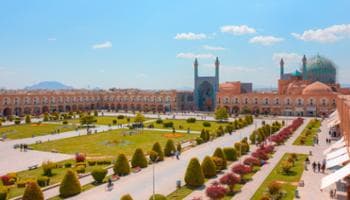
This morning we take our first steps in Ispahan, the Half of the World as it was nicknamed. After visiting the Chehel Sotoun palace built by Shah Abbas II, we arrive at the pearl of the city, the heart of the metropolis, the immense Naqsh-e-Jahan square. The eye doesn't know which architectural beauty of the Safavid era to turn towards: the Shah Mosque to the south, the Ali Qapou palace to the west, the Sheikh Lotfallah Mosque to the east or the gate of the grand bazaar of Ispahan to the north.
Free evening to enjoy the charm of the place.
The Natanz Region
On the northern route, we devote a good part of the day to the Natanz region, rich in historical heritage and also renowned for its climate and food crops. Among the local sacred sites, we can mention the sanctuary of Sufi Sheikh Abd al-Samad dating from the 14th century.
A short distance away, the Tarq Castle is a very beautiful remnant of the Sassanid era, which from the 3rd to the 6th century preceded the arrival of Islam.
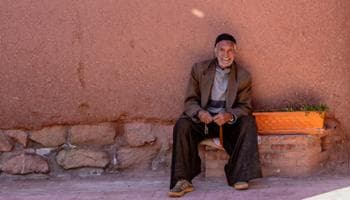
About forty kilometers west of Natanz, tucked at over 2000m altitude in the Karkas Mountains, lies one of the oldest and most beautiful villages in Iran, Abyaneh. Witnesses of the Sassanid era are clearly visible here: ruins of an old fort, traditional clothing and local dialect infused with remnants of the Pahlavi language from that era.
Have a good trip!
The beginning of the day is dedicated to visiting Kachan. This city with rich architecture is also one of the great oases of the deserts in central Iran, and traces of human habitation date back to the 6th millennium BC. The remarkable buildings of the city are relatively recent, notably the magnificent traditional residences of the Tabatabaei and Boroudjerdi, which date from the Qajar era (19th century). The Fin Garden is the oldest garden in Iran.
We then head towards Tehran. Along the way we stop in Qom, a sacred Shi'a city, where we visit the sanctuary of Fatima Masoumeh, daughter of the seventh Shi'a imam Musa al-Kazim.
Arrival at Tehran airport and end of services.
(If desired, possibility to visit the Maranjab caravanserai instead of Qom).
Price per person
Indicative price per person, based on double room. Each trip is customized according to your preferences.
This trip can be tailored to your preferences
This itinerary provides an excellent foundation for discovery, but it can be fully customized. Our local advisors build each trip tailored to your budget, dates and preferences.
Not included
- International flights
- Airport taxes & visa fees
- Lunches
- Beverages, personal expenses & tips
- Travel Insurance & Assistance
- Everything not mentioned in the inclusions
Included
- Invitation Letter for Iranian Visa (or Authorization Number)
- Transfer to/from the airport
- Accommodations (mid-range 3*/4* class) with breakfasts
- Private and air-conditioned ground transportation
- The services of an experienced English-speaking guide throughout your stay
- The dinners
- The Tehran-Shiraz Train
- All entrance fees
- An Iranian credit card
Practical Information
Registration is considered firm and final after payment of a deposit of 30% of the total price and acceptance of the specific terms of sale.
The balance must be paid no later than 45 days before the departure date.
See our specific terms of sale for full details.
In the event of cancellation by the traveller, the following fees apply:
- Plus de 60 jours avant le départ : 40 % du prix total (acompte retenu)
- Entre 60 et 30 jours avant le départ : 50 % du prix total
- Moins de 30 jours avant le départ : 100 % du prix total
We strongly recommend taking out cancellation insurance. See our specific terms of sale for full details.
The information below concerns travelers who are nationals of the European Economic Area (EEA), Switzerland, and Canada traveling to Iran for a tourist stay. Entry rules may change, and we recommend that you verify this information with the official authorities and consular services of your country before your departure.
Passport
To enter Iran, your passport must be valid for a minimum of six months after the date of entry into the country and must contain at least two blank pages for immigration stamps.
The document must be in good condition (no damaged, torn, or altered pages).
Holders of a passport bearing entry or exit stamps from Israel may be refused entry to Iranian territory.
Visa
Nationals of the European Economic Area, Switzerland, and Canada must in principle hold a valid visa to enter Iran. There is no generalized visa exemption for these nationalities.
Several options are available for obtaining a visa:
the visa on arrival (VOA), issued at certain international airports (notably Imam Khomeini Airport in Tehran), generally valid for 30 days, and extendable on site;
the electronic visa (e-visa), to be requested online before departure via the official Iranian authorities portal;
the consular visa, to be requested from the Iranian embassy or consulate in your country of residence.
The authorized length of stay is generally 30 days, with the possibility of extension through Iranian immigration services.
Please note: nationals of the United States, United Kingdom, and Canada are subject to specific restrictions and must generally conduct their visits as part of a guided tour led by an authorized guide. Canadian nationals are particularly advised to consult their government's recommendations before any travel.
Prior Authorization
In certain cases, a prior authorization issued by the Iranian Ministry of Foreign Affairs (authorization reference) is required before the visa can be granted, particularly for consular visa or e-visa applications. An authorization number is then provided by the Iranian embassy or via the online portal and must be presented upon arrival.
Health
No vaccination is mandatory to enter Iran from the EEA, Switzerland, or Canada. However, certain vaccinations are recommended as a preventive measure:
updating routine vaccinations (diphtheria, tetanus, poliomyelitis, measles);
vaccination against hepatitis A and hepatitis B is recommended;
vaccination against typhoid is advised depending on the areas visited.
It is recommended that you consult a doctor or international vaccination center before departure.
Traveling with Children
Minors must hold their own valid passport covering the duration of the stay.
When a minor travels without one of their parents, an authorization to leave the country may be required according to the regulations of the country of residence. Documents proving parental authority or custody of the child may also be requested by Iranian authorities.
Other Nationalities
Entry conditions may vary depending on nationality. Travelers concerned should inquire with the Iranian embassy or consulate in their country of residence.
To participate in our trips, it is strongly recommended to be covered for repatriation assistance and medical expenses abroad.
Your local agency encourages you to review the specific contract developed with our partners CHAPKA ASSURANCES and AXA ASSISTANCE.
To subscribe to insurance, learn about coverage and rates, follow the link below.
CAP EXPLORER: The comprehensive insurance solution designed for a worry-free trip!
Choose the plan that suits you best:
Explorer'Multirisque
Explorer'Annulation
Explorer'Assistance
Explorer' Complementary Credit Card Coverage
Specific to our trips, we strongly recommend subscribing to them.
If you choose to subscribe to one of these plans, the terms and conditions detailing all coverage and claim procedures are available on the insurer's website.
Your local agency will be aware of this, but only the participant is responsible for complying with claim notification procedures. The participant must therefore keep this terms and conditions document with them throughout their trip.
Chapka — Cap Explorer
Our insurance partnerTravel with peace of mind with our partner Chapka. Cancellation, repatriation, medical expenses, baggage… All the coverage for a worry-free trip.
Travel with peace of mind — I'll handle the insuranceFrequently asked questions
A tourist visa is required and must be obtained through an approved agency with an official invitation letter. Your passport must be valid for at least 6 months and must not bear an Israeli stamp. The geopolitical context requires active vigilance: consult your government's official recommendations before booking. Also verify entry conditions applicable to your nationality with the consular authorities of your destination.
Go to the My Trips section to find all your projects.
You can send a message to your host directly from the Tea Lounge.
For a tailor-made quality trip, budget between €130 and €200 per day and per person, including accommodation, meals, internal transportation and English-speaking guide. International flights (€600-900 return) are additional. Foreign bank cards do not work: plan to bring euros in cash.
Your documents are accessible in the Documents tab of your trip.
Absolutely. We adapt each itinerary to the traveler's profile. For families, we prioritize relaxed paces, family-friendly accommodations, educational and engaging activities, and comfortable private transfers. Our local English-speaking guides know how to capture children's attention with age-appropriate anecdotes.
It's simple. You exchange with our local team to define your wishes, your budget and your dates. You receive a detailed itinerary proposal within 48 hours. You adjust together each detail until the perfect version. You confirm and set off with peace of mind. Your local agency remains available 7 days a week throughout your trip.
In case of emergency, contact your local agency immediately.
Payment is generally made in two installments.
Our agency is part of the Nomadays network, registered in France. You benefit from APST (Association Professionnelle de Solidarité du Tourisme) guarantee which covers 100% of your funds. Secure payment, repatriation insurance included, and English-speaking assistance 24/7 on the ground throughout your stay.
Let's talk about your adventure — Modern Tehran
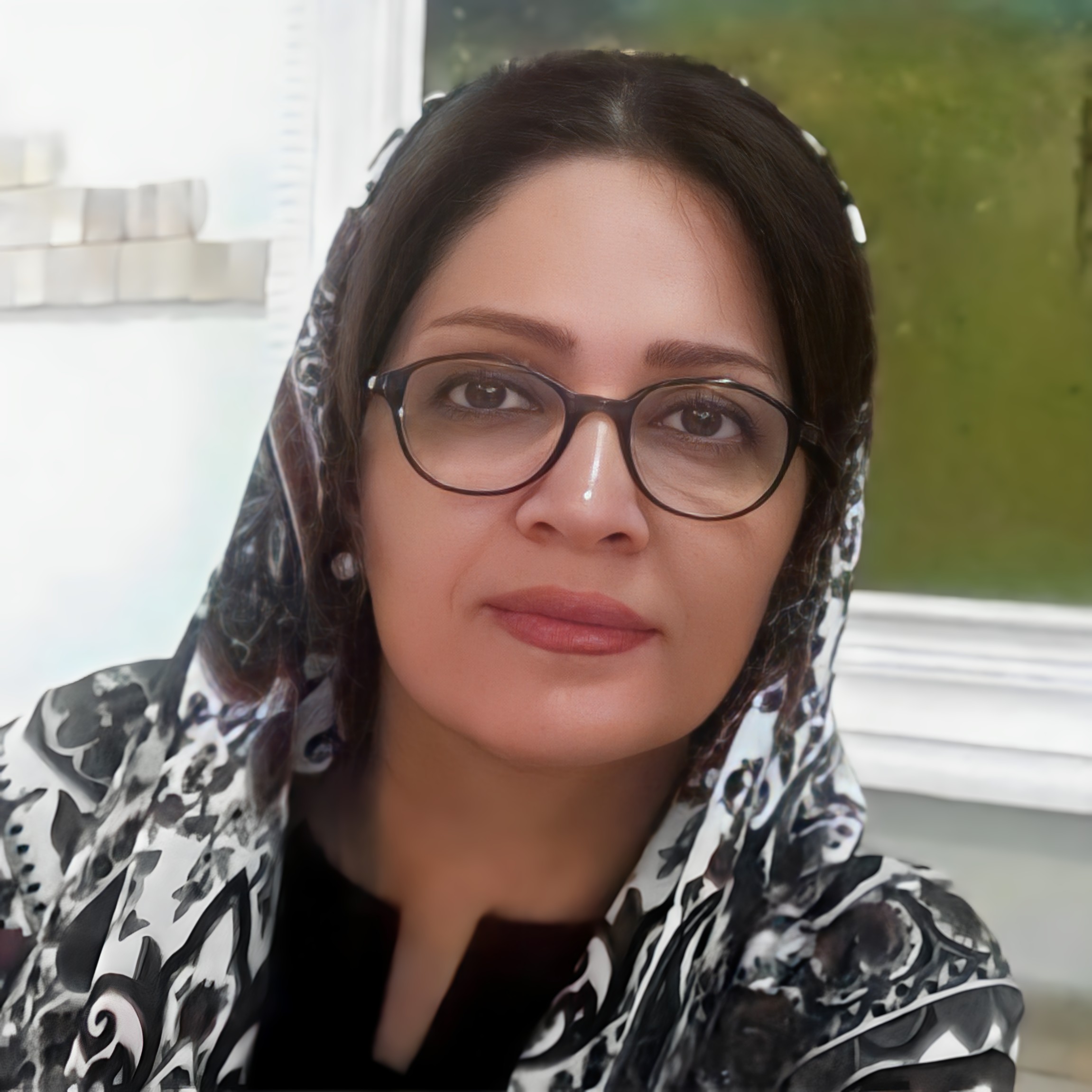
English-speaking Advisor, Persian Routes, based in Shiraz
Iran often surprises people with the warmth of its welcome. My role is to help travellers discover it with confidence, curiosity and openness.
— Afrooz