A mix of cultures
Between Adriatic fjords and medieval cities, explore three countries with multiple influences
Duration
15 days
From
€1,355/pers.
Ideal seasons
Apr, May, Jun, Sep, Oct
Style
Self-drive tour
Comfort
classique
Travelers
Couple, Solo, With friends
The spirit of travel
Embark on an immersive journey through Monténégro and the Balkans, between medieval cities, national parks and Adriatic shores. This itinerary takes you from the Bay of Kotor to the streets of Dubrovnik, from the Durmitor mountains to the preserved landscapes of Lake Skadar, passing through Bosnia-Herzegovina and neighboring Albania.
Through this self-drive circuit, you discover a mosaic of cultures, influences and traditions: UNESCO-listed cities, fortified villages, monasteries, fortresses and remarkable natural sites succeed one another in an authentic atmosphere. Between nature, culture, heritage and local immersion, this journey reveals all the richness of a territory where sea, mountain and history coexist harmoniously.
From the panoramas of Durmitor National Park to the ancient cities of Ulcinj, Shkodër or Trebinje, each stage offers a new facet of this charming region, ideal for travelers seeking escape, discovery and adventure.
The stages of your journey
Highlights
Day-by-day itinerary
Arrival
Aéroport de Podgorica → Kotor
Arrival at Podgorica or Tivat airport.
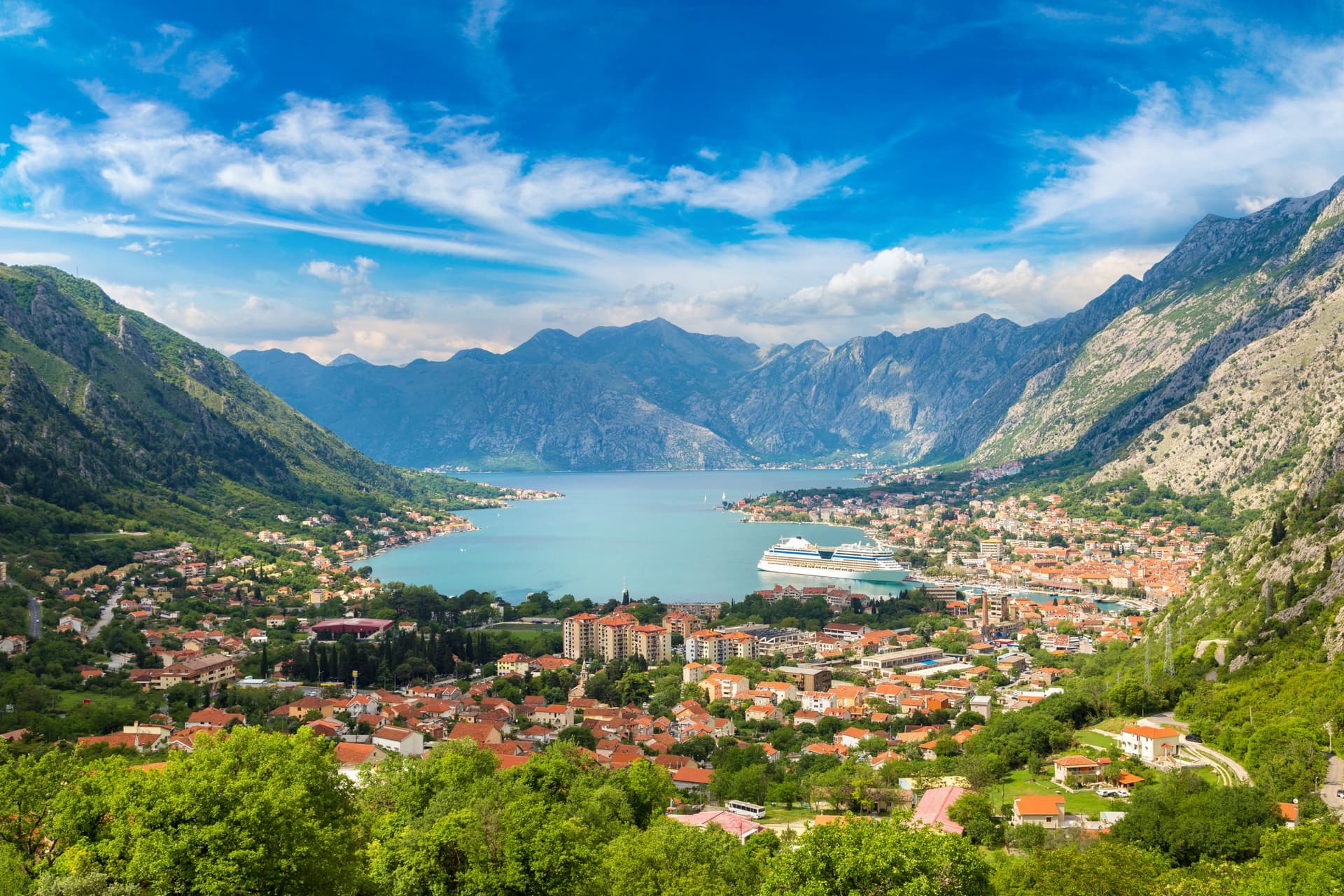
Upon arrival, pick up your rental car directly at the airport, then drive towards Kotor. This journey allows you to freely reach one of Montenegro's emblematic cities, between the Adriatic Sea and mountainous terrain.
Check-in at your hotel.
Exploration of Kotor and Perast
Discover the old town of Kotor, listed as a UNESCO World Heritage Site for the richness of its natural and cultural heritage. During your visit, you will discover a city shaped by multiple influences, reflecting the peoples who succeeded one another throughout its history.
Its architecture still bears the traces through emblematic monuments such as Saint-Tryphon Cathedral, its picturesque streets and its ramparts stretching 4.5 kilometres long. A former major port and important commercial center of the Adriatic, Kotor today preserves a remarkably well-preserved medieval ensemble. Founded in Roman times, the city has borne its current name since the 7th century.
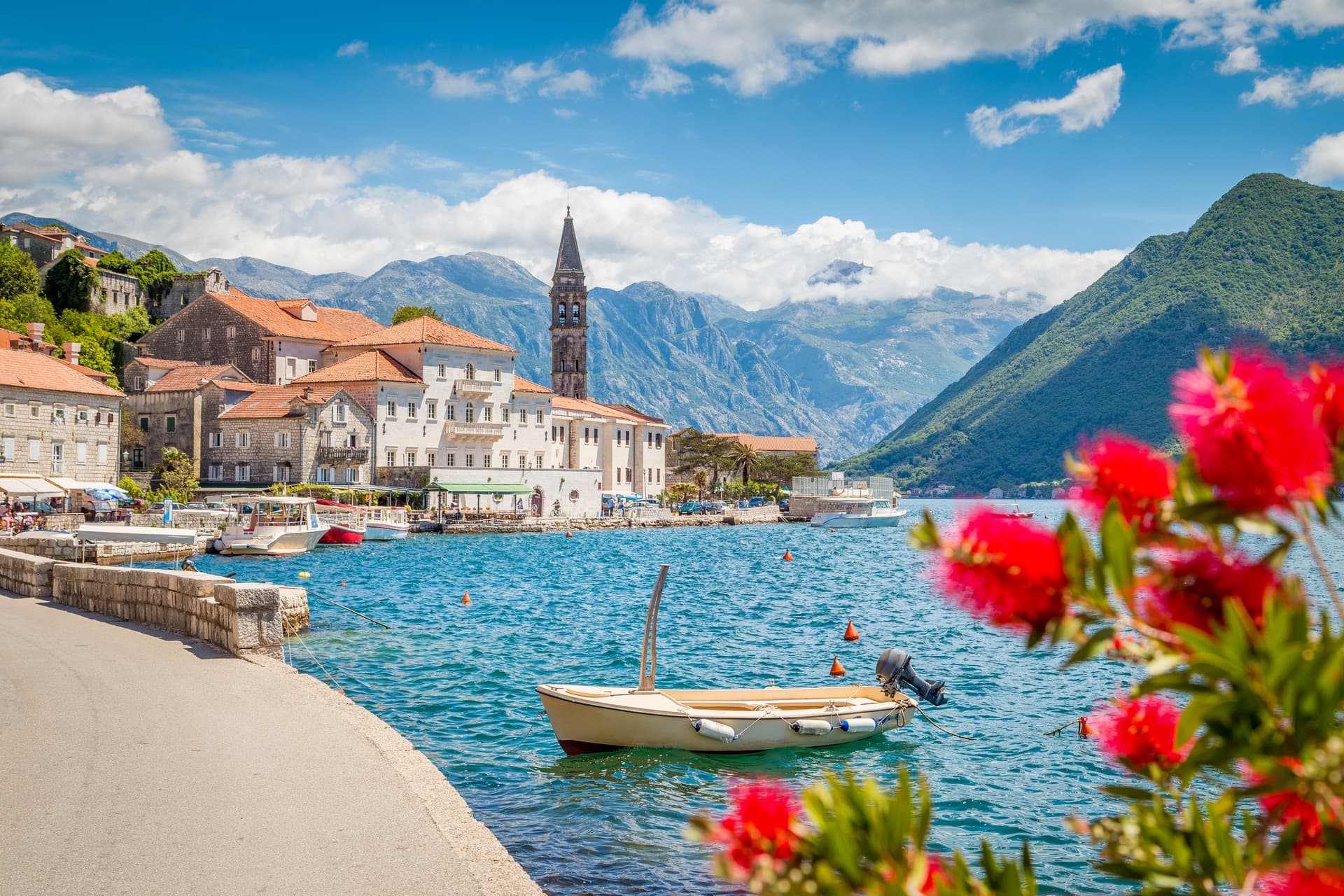
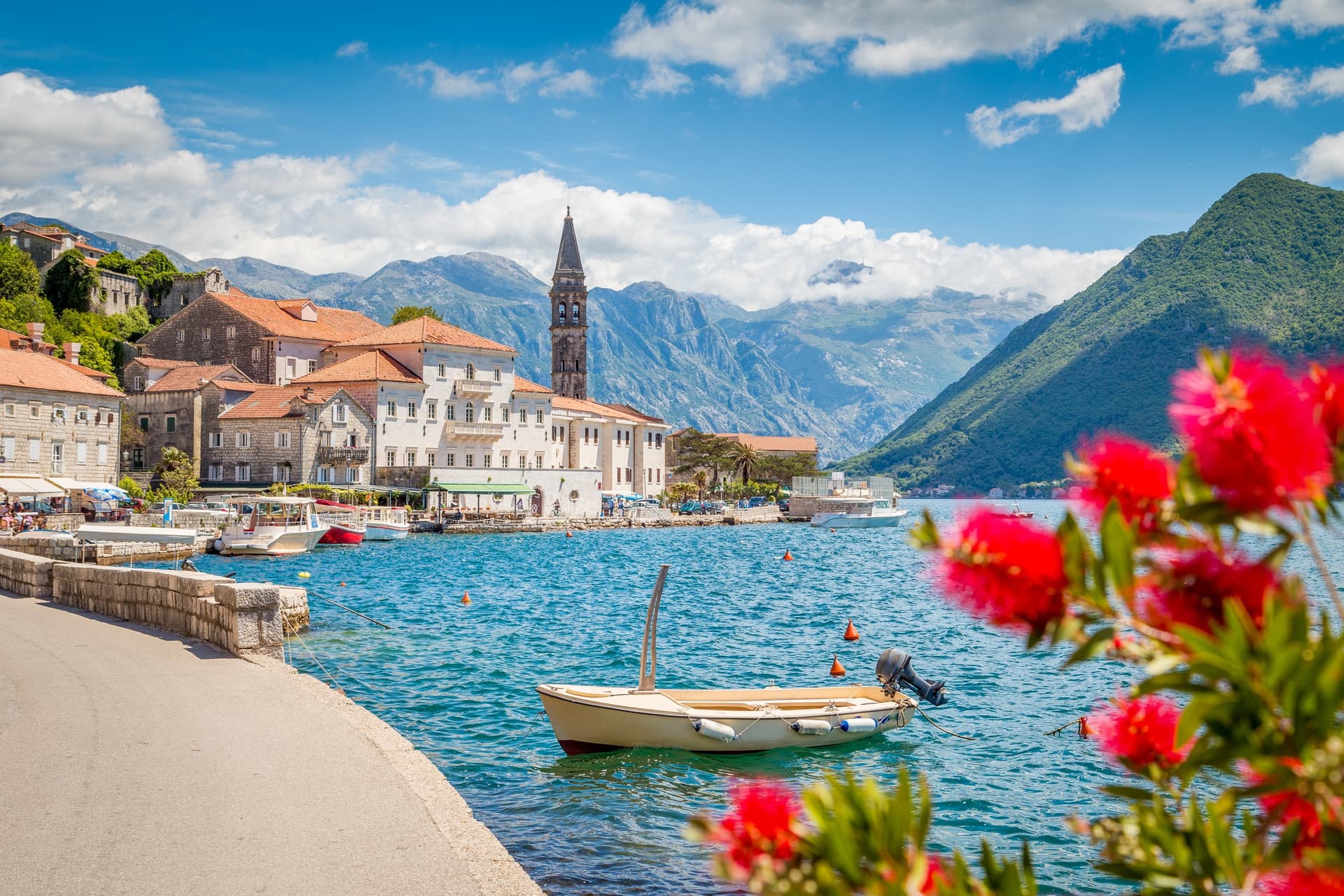
Not far from Kotor, continue your discovery towards Perast, an elegant Baroque town whose buildings from the 17th and 18th centuries testify to its rich maritime past. At that time, Perast had more than a hundred merchant ships sailing the seas, and its most renowned captains had beautiful villas built there that still mark the landscape today.
Once, the town was also home to a naval training center, where young Russian aristocrats came to train in maritime arts. Facing Perast, two small islets shaped by the inhabitants stand in the bay. You can embark on a boat trip to the island of Our Lady of the Rock, where you will find its church and museum.
Njeguši, the Lovćen Mausoleum and Cetinje
Kotor → Njeguši
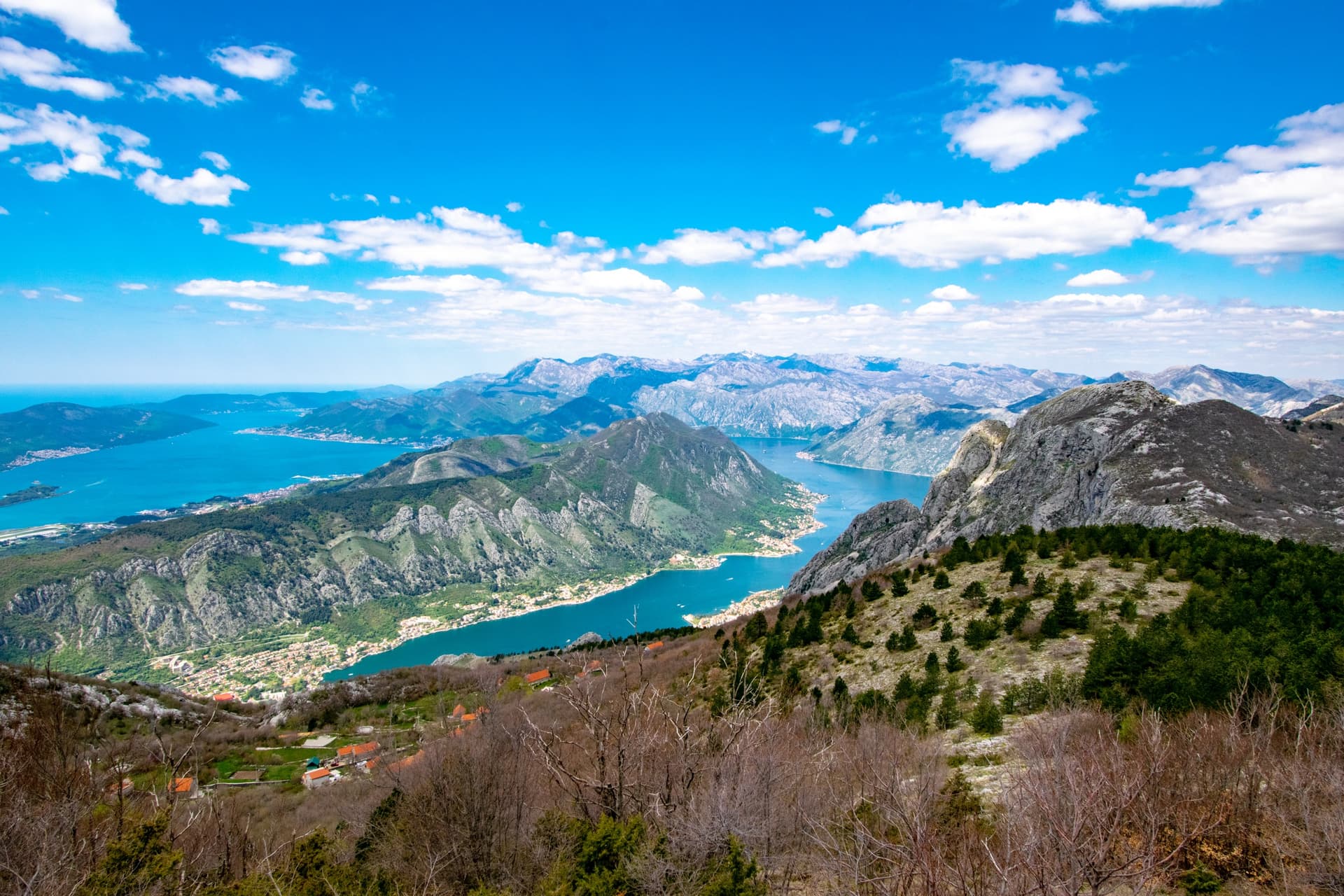
Leave Kotor towards Njegusi, the birthplace of the last Montenegrin dynasty of the Petrovics, taking the old serpentine road, famous for its thirty or so hairpin turns. Narrow and winding, this route impresses with its successive switchbacks, but it is one of the emblematic roads of Monténégro. Throughout the climb, beautiful panoramas open up over the bay and the city of Kotor.
At Njegusi, stop at one of the village inns for lunch and discover some traditional specialties of Monténégro. You can taste the local smoked ham, Njegusi cheese or honey, emblematic products of this region renowned for its gastronomic expertise.
Njeguši → Lovćen
Continue then to the Njegos Mausoleum, located in the heart of the Lovcen National Park. Perched on one of the highest peaks of Mount Lovcen, this emblematic place offers a remarkable panorama over nearly 80% of Montenegrin territory. To reach the mausoleum, you will need to climb its 461 steps, an ascent rewarded by a clear view of the surrounding landscapes.
Lovćen → Kotor
Then head to Cetinje, the former royal capital of Monténégro, now known as the museum-city due to its many museums and art galleries. This small town with singular charm captivates with its characteristic architecture, made up of modest one or two-story houses, surrounded by abundant vegetation.
Once, Cetinje hosted twelve embassies and held a central place in the country's history. It was here that the first book of the Balkans was printed, and where the first hospital and first hotel of Monténégro were built. The city also saw the birth of the country's first government palace, while it now houses the residence of the President of the Republic. During your visit, the King Nikola Museum deserves a stop.
The Mediterranean escape Herceg Novi and Dubrovnik
From Kotor
After check-out, take the road to Dubrovnik, with a stop to discover Herceg Novi, a coastal town with a unique character.
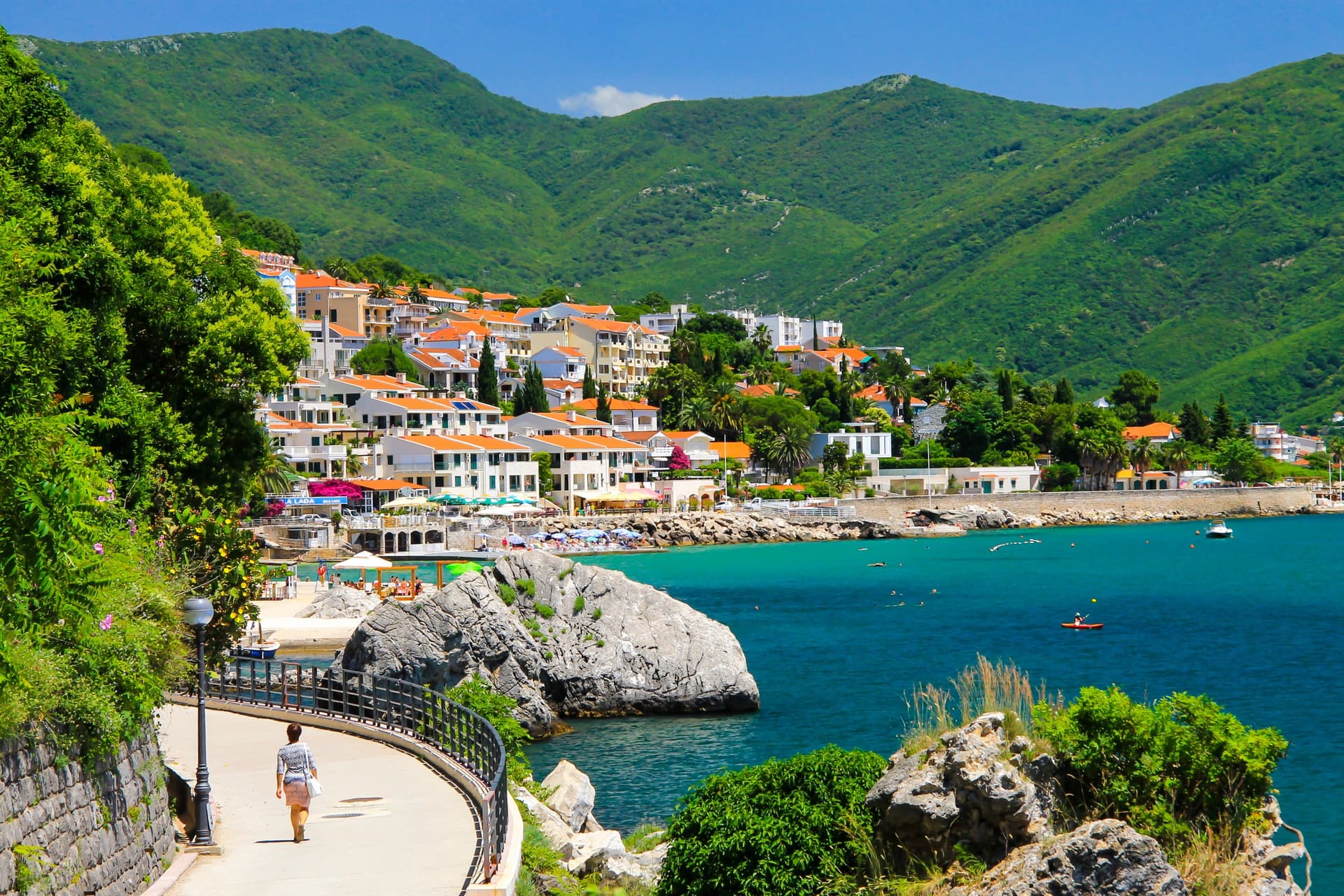
Herceg Novi is renowned for its abundant vegetation, particularly its mimosa trees, celebrated each year during a carnival in February. Built on a hillside above the sea, the town stretches between three fortresses from different eras: Kanli-Kula from the 15th century, the Spanjola fortress from the 16th century, and Forte Mare, overlooking the coastline. Nicknamed "the city of the sun" due to its large number of sunny days, Herceg Novi also appeals with its historic center and old town (Stari Grad), where you can discover notably the Sahat-Kula, a clock tower dating from 1667. Take advantage of your visit to pause at the Gradska Kafana, whose terrace offers a beautiful view over the sea and the fortress.
To Dubrovnik
After your visit to Herceg Novi, continue your journey towards the border between Montenegro and Croatia. Once customs formalities are completed, allow approximately 45 minutes travel time to reach Dubrovnik.
Check-in at your hotel.
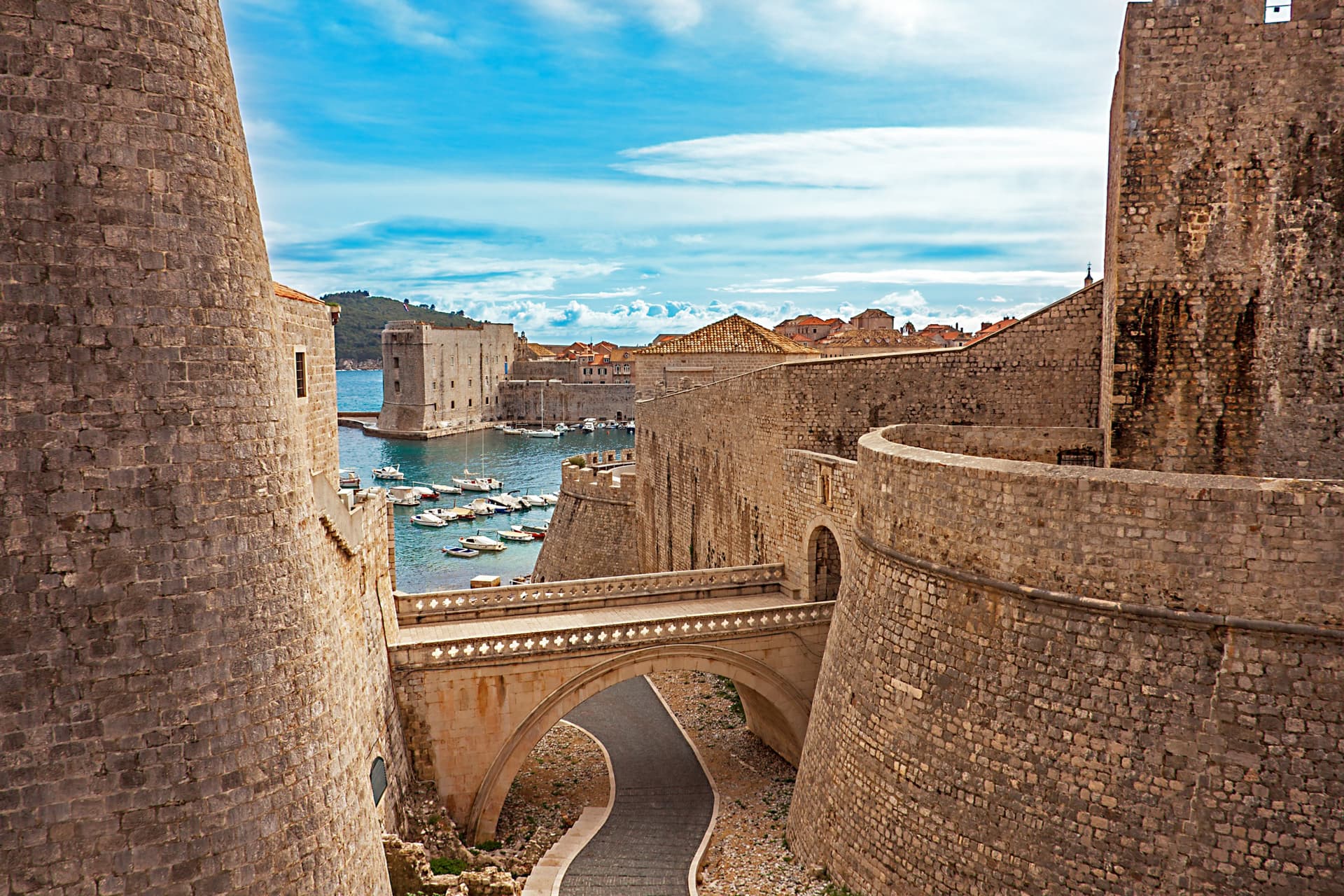
Discovery of Dubrovnik, a journey to the heart of the old town
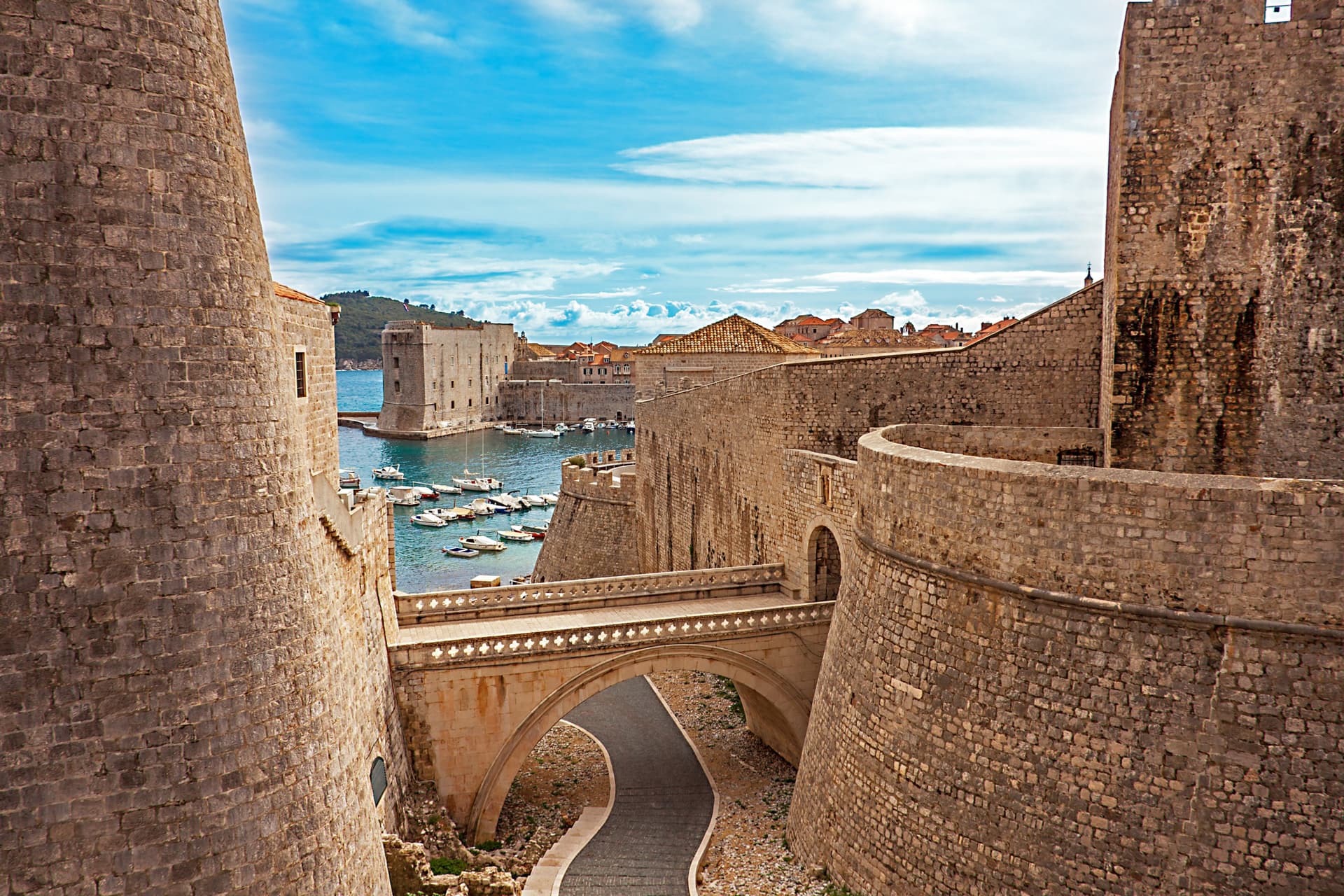
After breakfast, set off to discover the old town of Dubrovnik, a UNESCO World Heritage Site. You can walk along its ramparts, visit Fort Minceta, the Franciscan monastery or stroll through Placa, the beating heart of the city.
Its ramparts, emblematic of Dubrovnik, extend for 1,940 meters without interruption and completely surround the city, giving it this instantly recognizable silhouette. Take a walk along Stradun, the main street and a favorite meeting place for locals. To admire Dubrovnik from another angle, the cable car also takes you to the top of Mount Srđ, at 405 meters altitude, with an open view over the sea and the roofs of the old town.
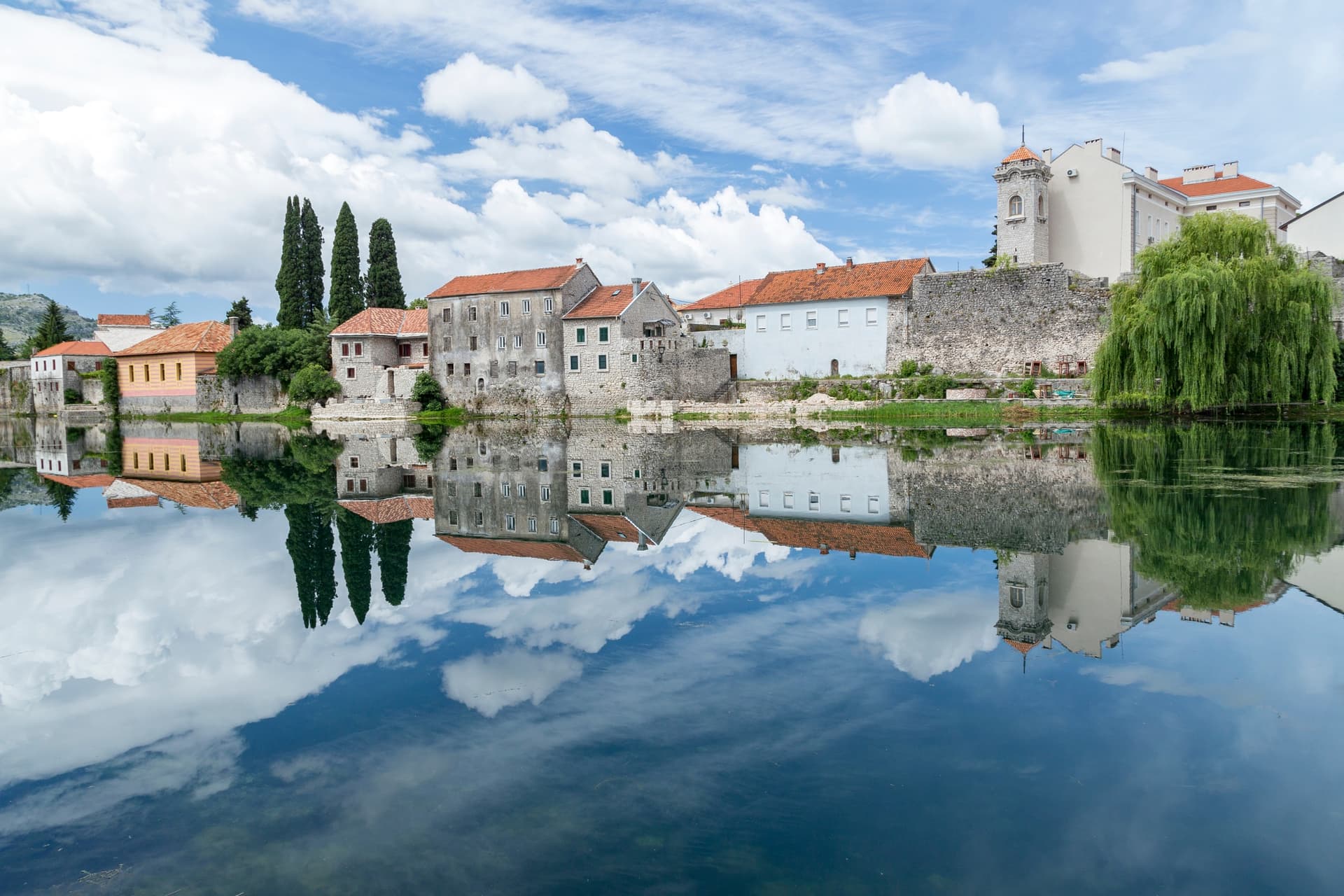
Route to Trebinje
Dubrovnik → Trebinje
After breakfast, head towards the city of Trebinje, in Bosnia and Herzegovina. Built on the right bank of the Trebišnjica, Trebinje is the historical and cultural center of southern Herzegovina.
The current old town, called Kastel, developed around the former commercial and craft district. On the successive foundations of the Roman, medieval and Ottoman city, an Austrian military camp was built at the end of the 19th century; it now houses the Herzegovina Museum. During your visit, we also recommend discovering the Tvrdoš monastery, located 4 kilometers from the city, where you can taste the wine produced by the monks.
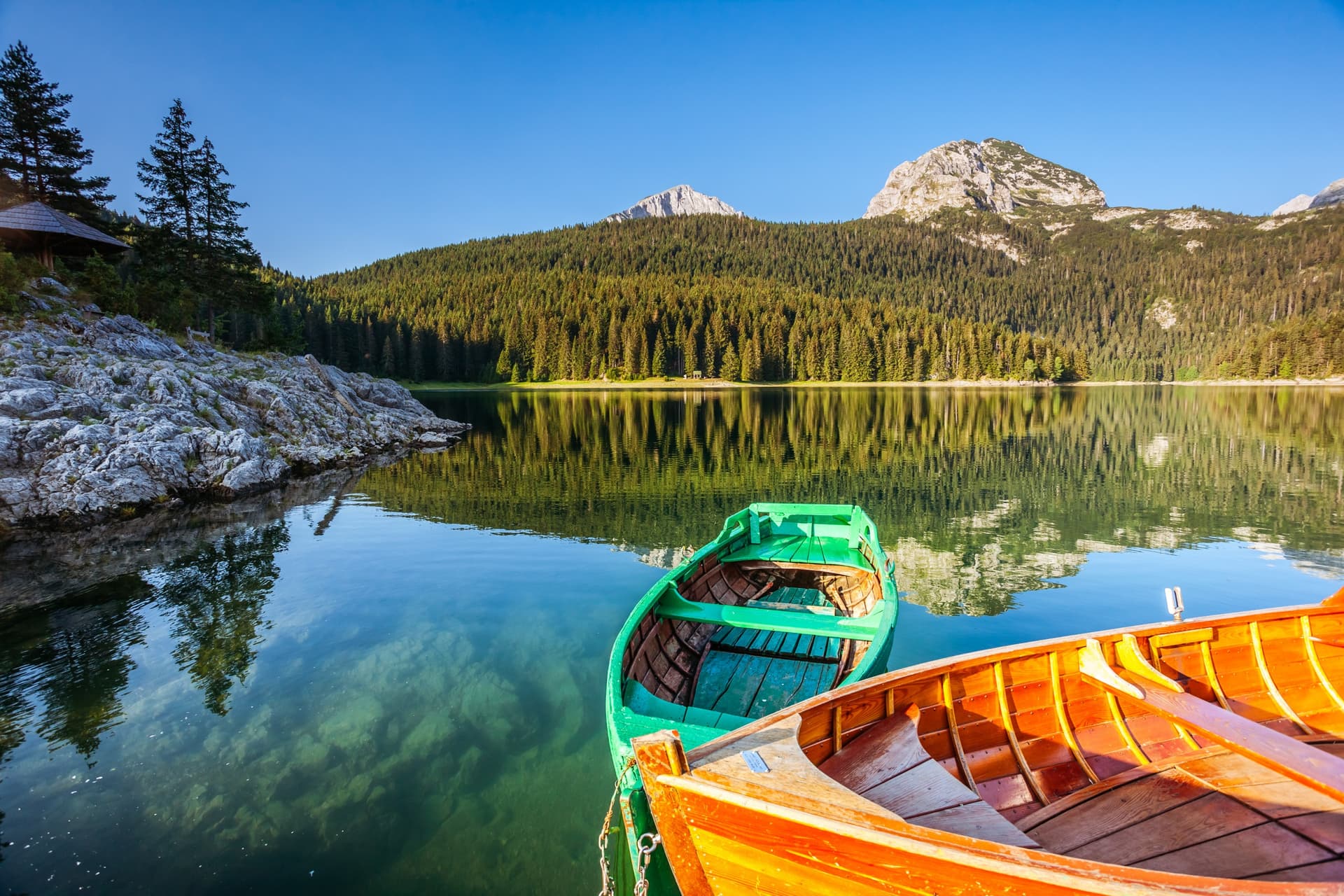
The route to Durmitor National Park
Trebinje → Žabljak
After checking out of your hotel, leave Trebinje to head north to Monténégro. After crossing the border, continue your journey via Niksic to Zabljak, where you will arrive after approximately two hours of travel. Check-in at your hotel.
Located in the north-west of Monténégro, in the heart of Durmitor National Park, Zabljak is the highest city in south-east Europe, perched at 1,456 metres altitude. Situated at the foot of the Durmitor massif, it is surrounded by 23 peaks exceeding 2,200 metres, 18 mountain lakes and the canyon of the Tara river, the deepest in Europe.
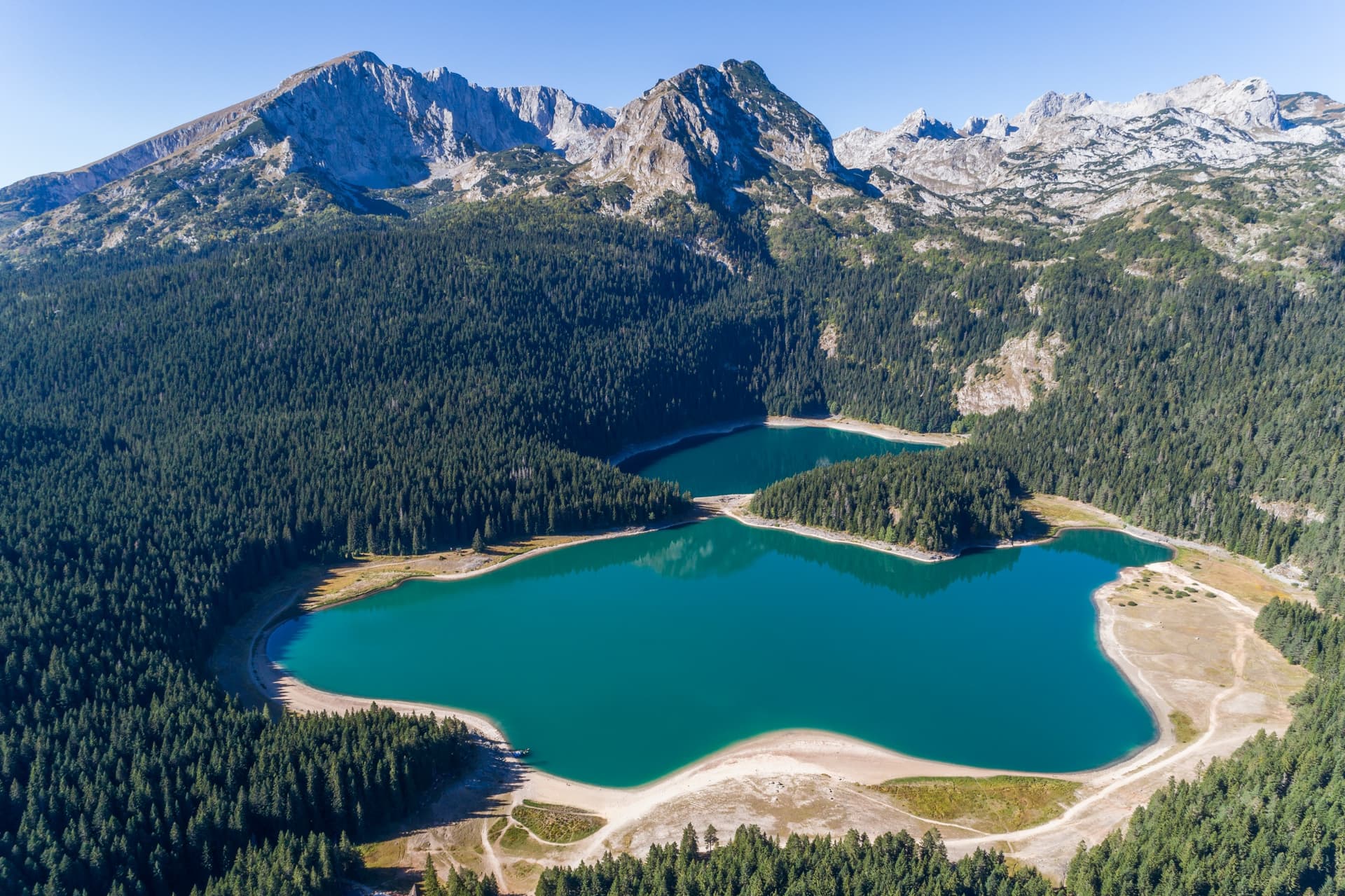
Discovery of a natural gem of Monténégro
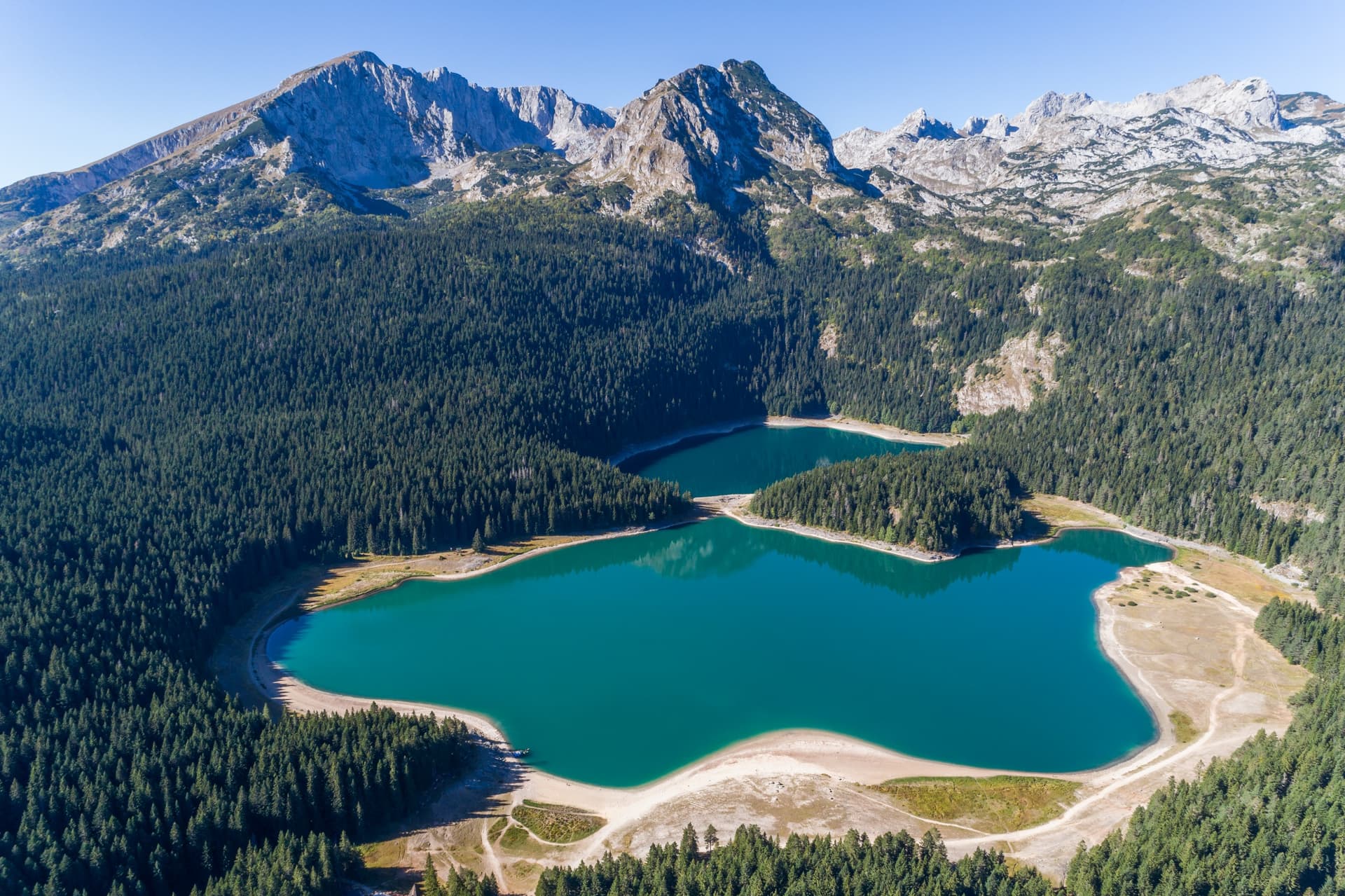
Discover the Durmitor National Park and Black Lake, located at over 1,400 meters altitude, in a well-preserved mountain environment.
Listed as a UNESCO World Natural and Cultural Heritage site since 1980, Durmitor Park covers 39,000 hectares. It is home to many peaks exceeding 2,000 meters, vast coniferous forests, caves and several glacial lakes that shape its landscapes. On site, you can take a walk around Black Lake or drive to Momčilov Grad, from where the view opens onto the whole of Žabljak and the surrounding mountain ranges. To admire a panorama of the Tara Canyon, the Curevac viewpoint is also a great option, accessible after approximately 25 minutes of hiking.
It is possible to organize this discovery with a mountain guide.
Visit to Biogradska Gora National Park
Žabljak → Djurdjevica Tara
After breakfast, leave Zabljak heading towards the Biogradska Gora National Park and the town of Kolasin.
The road runs along the Tara River canyon, renowned as one of the purest rivers in Europe. With a depth of 1,300 meters, this canyon is the deepest on the continent and the second deepest in the world after the Colorado Canyon. Classified by UNESCO, it offers impressive landscapes throughout the journey.
Stop at the Djurdjevica Tara Bridge, an emblematic crossing point allowing you to enjoy a beautiful view of the canyon and the river below.
Djurdjevica Tara → Parc national de Biogradska Gora
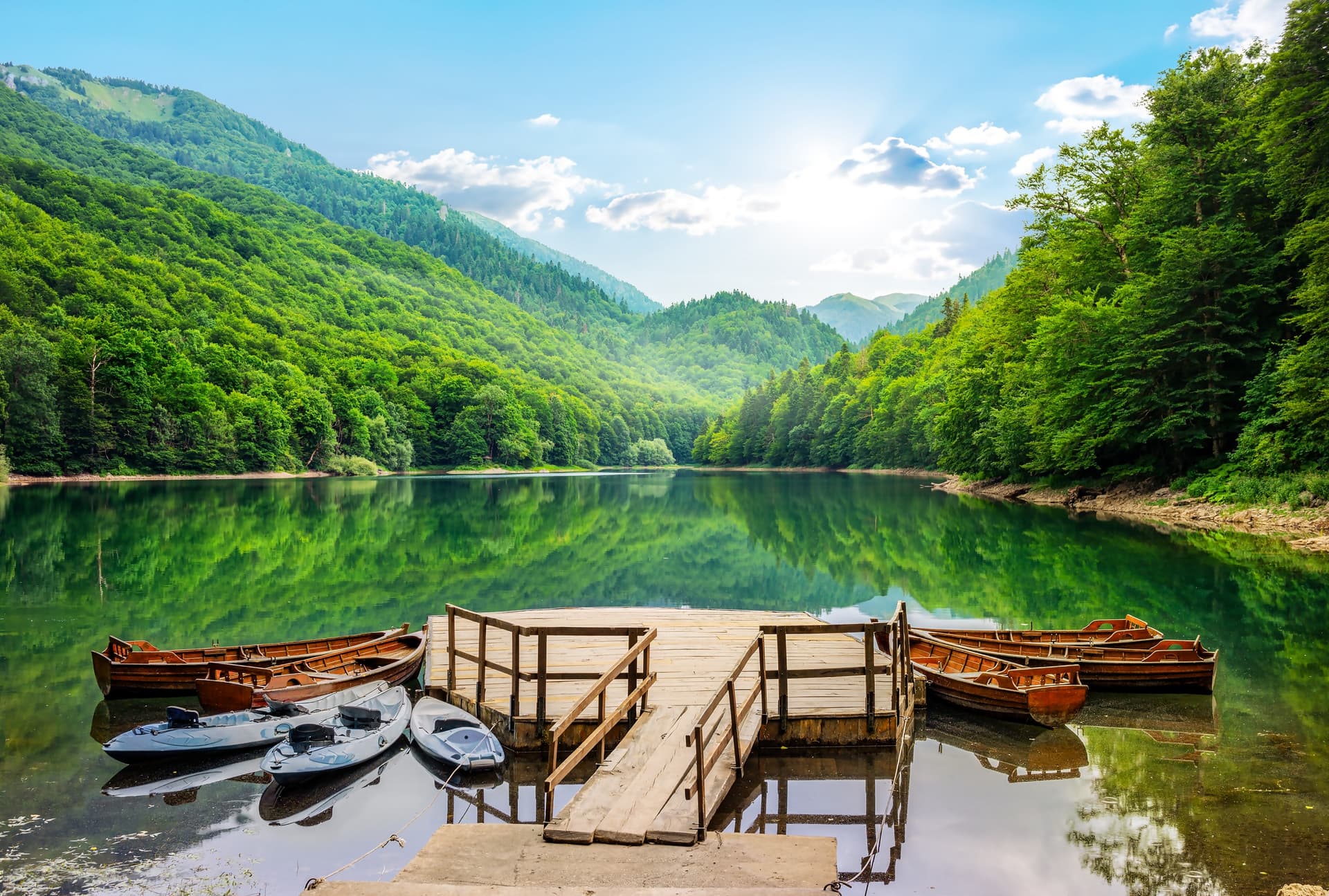
Continue your journey to the Biogradska Gora National Park, which is home to one of Europe's last three primary forests. You will discover pristine nature, surrounded by centuries-old trees that make this protected site so rich.
Lake Biograd, located at 1,094 meters altitude in a former glacial basin, is fed by the Biogradska River and the Bendovac stream. Its crystal-clear water invites you to take a stroll: a trail of approximately three kilometers allows you to walk around it. You can also take the path leading to the Bendovac summit to enjoy a beautiful viewpoint over the lake and the surrounding reliefs. At 1,100 meters long and 410 meters wide, the lake offers beautiful reflections in its emerald-tinted waters.
Parc national de Biogradska Gora → Kolasin
About 20 kilometers from Biogradska Gora, you will reach Kolasin, a small mountain town located at 960 meters altitude, which becomes a ski resort during the winter season.
From Kolasin to Shkoder in Albania
Kolasin → Moracha Monastery
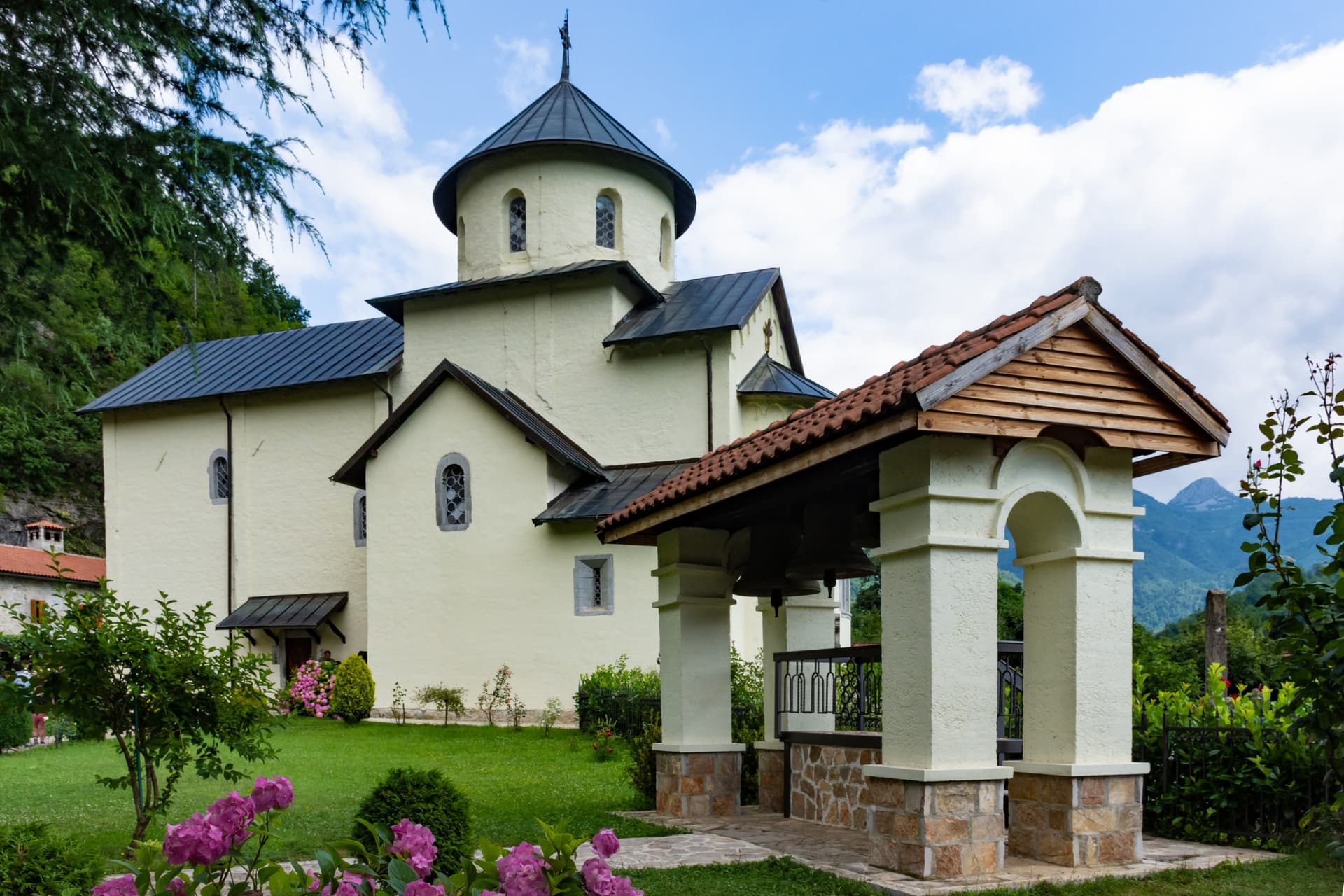
After checking out of your hotel, leave Kolasin heading towards Albania by crossing the Morača River canyon, then passing through the capital Podgorica. Along the way, stop to visit the Morača Monastery, built in 1252, one of the most important historical, spiritual and cultural monuments in Montenegro.
Moracha Monastery → Shkodra
Continue your journey via the capital Podgorica towards the Albanian border.
Discovery of Shkodër
Take a stroll through the city of Shkoder, where many remnants of the Ottoman era still remain. As you wander through the old bazaar, you will discover a unique atmosphere, between Oriental heritage and architecture marked by the Stalinist era. Don't miss the mosque nicknamed the diamond of Shkoder, remarkable for its whiteness and brilliance in the sunlight.
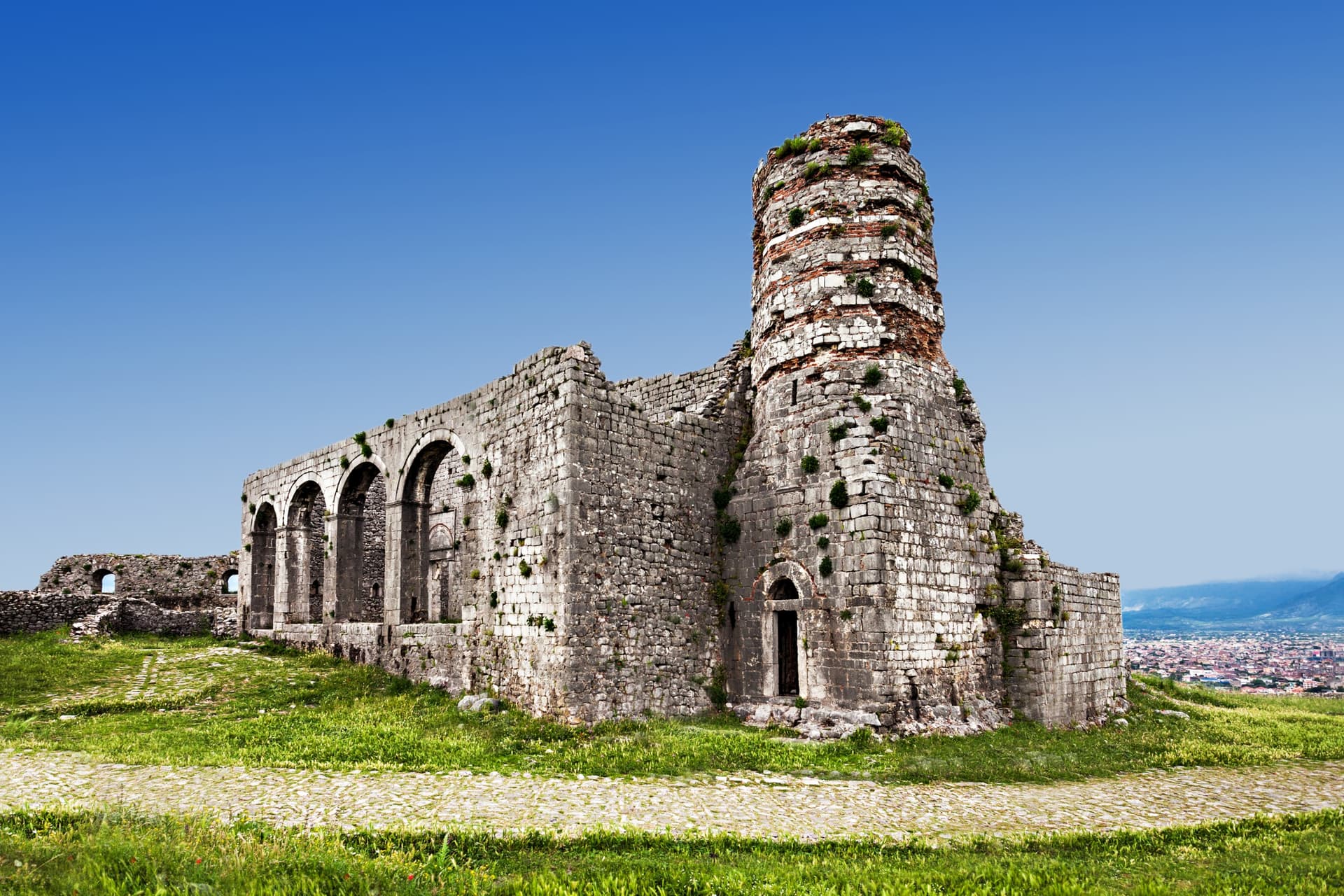
Continue with a visit to the Rozafa fortress, linked to the legend of the three brothers who would find their work destroyed each morning. From its heights, the fortress offers a panoramic view over the city, its rivers and the lake that has made the region famous.
From Shkodër to Budva: The most beautiful stages between Albania and Monténégro
From Shkodra
After checking out of your hotel, head back to the road towards Montenegro. Join the Montenegrin coast heading towards Budva. After crossing the border, make a stop to discover the old town of Ulcinj as well as the old Bar.
Discover the old town of Ulcinj, whose narrow and winding streets invite you to step back in time. Successively Illyrian and then Ottoman, the city has retained a unique identity, marked by these successive heritages. The fortress-citadel, which overlooks the city, offers a beautiful panorama of the sea, while the proximity of the Albanian border can be felt in the local atmosphere.
Mentioned as early as Roman times, Ulcinj still preserves vestiges from this period as well as from Byzantine administration. Among its major monuments is the complex located near the North Gate: this church, built in 1510 and then rebuilt in 1569, was transformed into a mosque by the Ottomans in 1693 before housing today the archaeological museum of Ulcinj.
To Bar
Upon arriving in Bar, you can make a stop to discover the old olive tree, a remarkable specimen over 2,000 years old, considered one of the oldest in Europe.
You then head to Stari Bar ("stari" meaning old), an ancient city perched on a hill at the foot of Mount Rumija. You can leave your car in the parking lot located below, then reach this history-laden site on foot by taking a picturesque and lively pedestrian street. Along the way, take a break on one of the terraces to enjoy a Turkish coffee, an emblematic tradition of the Balkans.
Bar → Budva
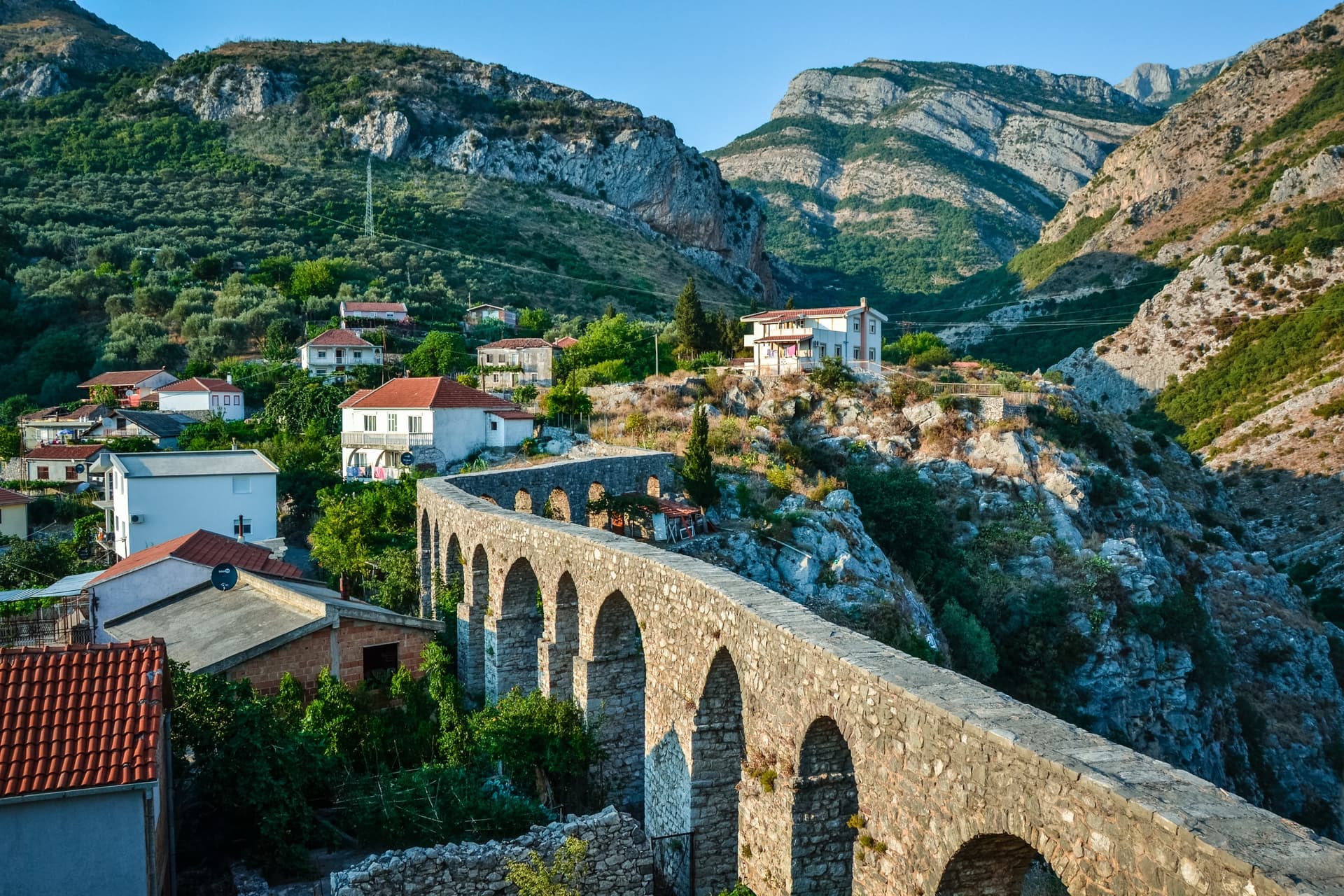
Then set off to discover the remains of the old town, which experienced many rulers over the centuries, from Byzantium to the Venetian Republic, then to the Ottoman Empire. Each of these periods left its mark on the site. Among the still-visible buildings are the hammam, the gunpowder factory, the clock tower as well as the aqueduct built during the Ottoman era, which supplied Stari Bar with drinking water.
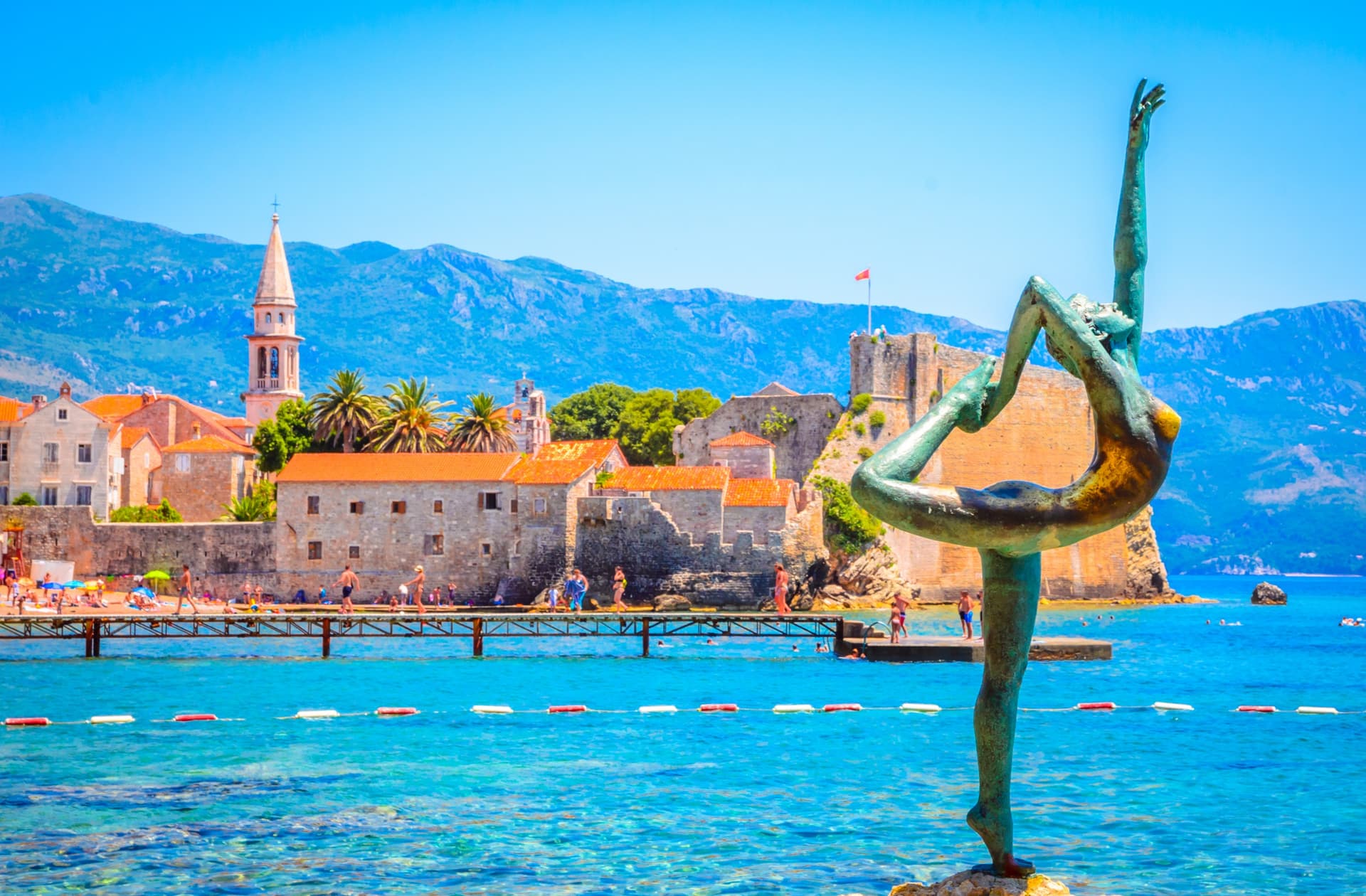
Budva and Sveti Stefan, the itinerary between beaches and charming villages
Budva → Sveti Stefan
The architecture of the old town of Budva bears the marked imprint of Venetian influences. Take time to discover this city surrounded by ramparts, whose small streets invite you to wander. First mentioned in the 4th century BC, Budva was built on a peninsula that reinforces its singular character. Its stone houses and churches, its narrow streets and small walled gardens compose the charm of a typical medieval seaside town.
Sveti Stefan → Budva
Not far from Budva, discover Sveti Stefan, a fortified former fishing village built in the 15th century on a rocky islet. Originally, this place served as a refuge for inhabitants fleeing Turkish incursions. The fortified town was built thanks to the wealth accumulated by the Pastrovic tribe after their attacks against Turkish galleys at the place called Jaz.
Connected to the coast by a narrow strip of sand, Sveti Stefan is distinguished by its singular architecture, which fully contributes to the identity of the site. Transformed into a luxury hotel town in the 1960s, the peninsula retains its historical character today. Access to the site remains possible, subject to an entrance fee.
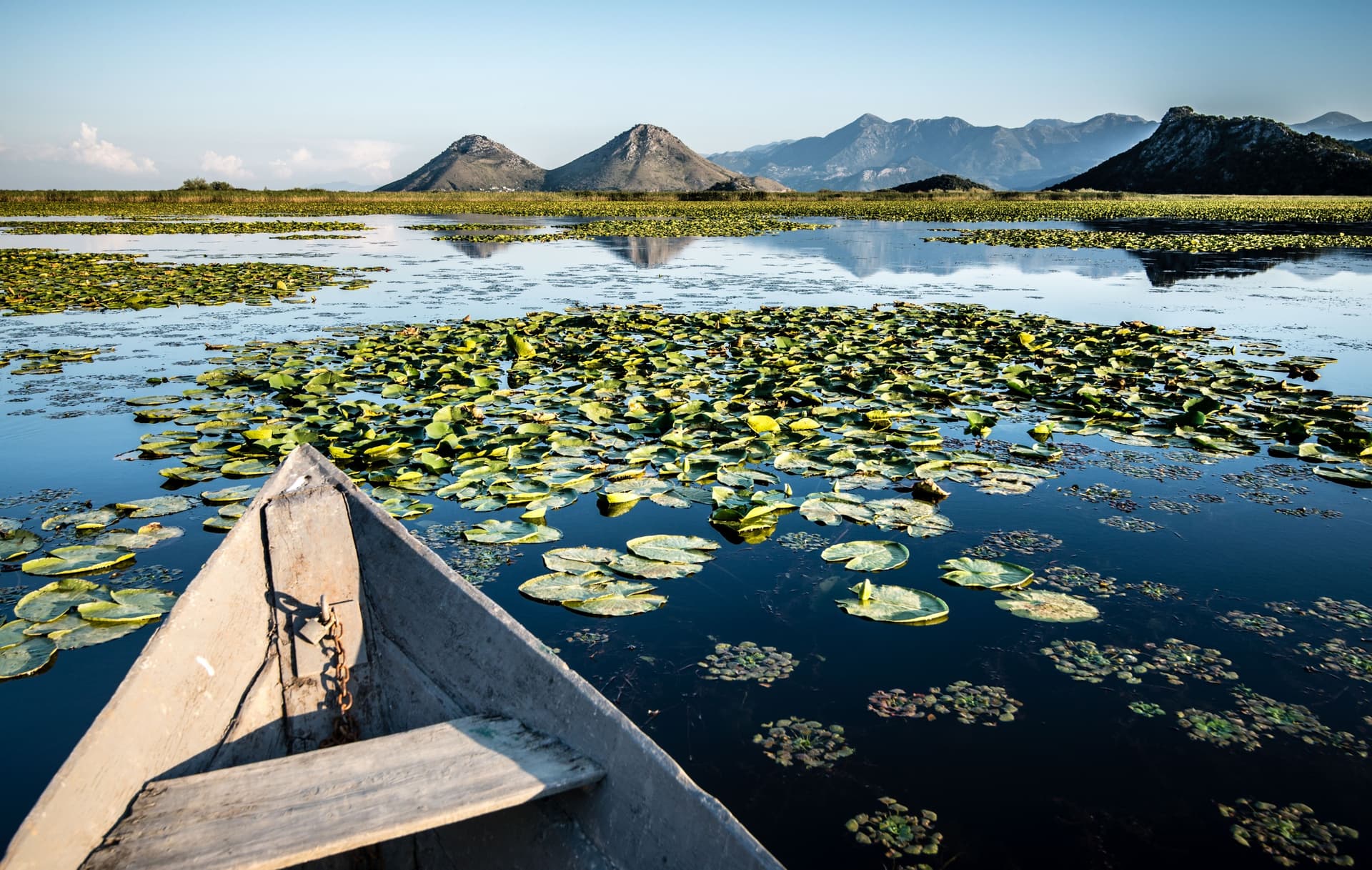
Discover Lake Skadar, wild nature and authentic villages
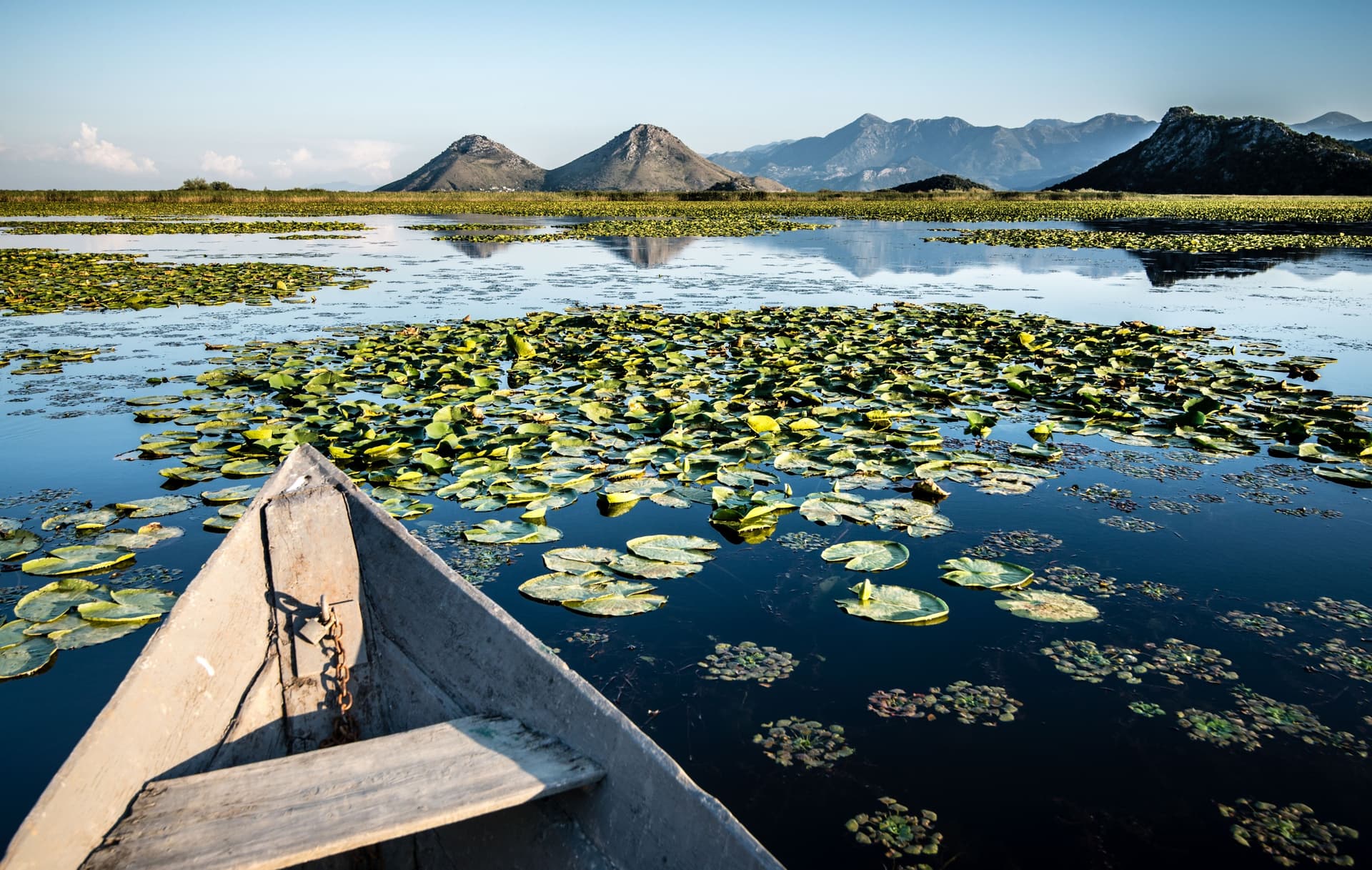
Take the road to the small fishing village of Virpazar, located on the shore of the Lake Skadar, the largest lake in the Balkans. From this charming village, enjoy a boat ride to discover the islets, natural landscapes and observe the numerous birds that inhabit this vast wetland area.
Lake Skadar is an important reserve for migratory birds and represents one of the main bird migration sites in Europe. This body of water is part of a national park covering 44,000 hectares, whose marshes, which are particularly remarkable, are listed on the Ramsar list. Also rich in fish, the lake is recognized internationally for the ecological value of its wetland areas.
Goodbye!
Budva → Aéroport de Podgorica
Breakfast, then check-out of your hotel.
Depending on your departure flight, drive to Tivat or Podgorica airport, where you will return your rental car before your departure.
Price per person
Indicative price per person, based on double room. Each trip is customized according to your preferences.
This trip can be tailored to your preferences
This itinerary provides an excellent foundation for discovery, but it can be fully customized. Our local advisors build each trip tailored to your budget, dates and preferences.
Not included
- International flights
- Entrances to sites and museums
- National Park Taxes
- Meals and drinks
- GPS
- Supplementary Insurance
Included
- 3 nights in Kotor, 3-4* hotels on bed and breakfast basis
- 2 nights in Dubrovnik, Croatia, 3-4* hotels on bed and breakfast basis
- 1 night in Trebinje in Bosnia and Herzegovina, 3-4* hotels on bed and breakfast basis
- 2 nights in Zabljak, 3-4* hotels on bed & breakfast basis
- 1 night in Kolasin, 3-4* hotels on bed and breakfast basis
- 2 nights in Shkoder in Albania, 3-4* hotels on a bed and breakfast basis
- 3 nights in Budva (or in the Budva region), 3-4* hotels on a bed and breakfast basis
- Car rental category B (Toyota Yaris or similar) for 15 days with pick-up and drop-off at the airport
- Accommodation tax
Practical Information
Registration is considered firm and final after payment of a deposit of 30% of the total price and acceptance of the specific terms of sale.
The balance must be paid no later than 45 days before the departure date.
See our specific terms of sale for full details.
In the event of cancellation by the traveller, the following fees apply:
- Plus de 60 jours avant le départ : 40 % du prix total (acompte retenu)
- Entre 60 et 30 jours avant le départ : 50 % du prix total
- Moins de 30 jours avant le départ : 100 % du prix total
We strongly recommend taking out cancellation insurance. See our specific terms of sale for full details.
Les informations ci-dessous concernent les voyageurs ressortissants de l'Espace économique européen (EEE), de la Suisse et du Canada se rendant au Monténégro dans le cadre d'un séjour touristique. Les règles d'entrée pouvant évoluer, nous vous recommandons de vérifier les informations auprès des autorités officielles avant votre départ.
Passeport
Pour entrer au Monténégro, votre passeport doit être valide pour toute la durée du séjour et comporter au moins une page vierge pour les tampons d'immigration.
Le document doit être en bon état (pas de pages détériorées, déchirées ou modifiées).
Les ressortissants de l'Union européenne peuvent également entrer au Monténégro avec une carte d'identité nationale en cours de validité.
Séjour touristique sans visa
Les ressortissants de l'Espace économique européen, de la Suisse et du Canada bénéficient d'une exemption de visa pour les séjours touristiques.
Cette exemption permet un séjour pouvant aller jusqu'à 90 jours sur une période de 180 jours à compter de la première entrée sur le territoire monténégrin.
Les autorités peuvent également demander :
un billet de sortie du territoire (vol retour ou continuation),
une preuve de ressources financières suffisantes pour la durée du séjour,
une réservation d'hébergement ou une adresse de résidence pendant le séjour.
Enregistrement auprès des autorités locales
Tout voyageur séjournant au Monténégro est tenu de se faire enregistrer auprès des autorités locales dans les 24 heures suivant son arrivée.
Dans la pratique, cette démarche est généralement effectuée automatiquement par l'hôtel ou l'hébergement. En cas de logement chez un particulier (location privée, chez l'habitant), il appartient à l'hôte de procéder à cet enregistrement. Il est conseillé de s'assurer que cette formalité a bien été accomplie, sous peine d'une amende.
Voyage avec des enfants
Les mineurs doivent être titulaires de leur propre document de voyage (passeport ou carte d'identité selon la nationalité) valide couvrant la durée du séjour.
Dans certains pays européens, lorsqu'un mineur voyage sans l'un de ses parents, une autorisation de sortie du territoire peut être exigée selon la réglementation du pays de résidence.
Autres nationalités
Les conditions d'entrée peuvent varier selon la nationalité. Les voyageurs concernés doivent se renseigner auprès de l'ambassade ou du consulat du Monténégro de leur pays de résidence.
Pour participer à nos voyages, il est fortement conseillé d'être assuré en assistance-rapatriement et frais médicaux à l’étranger.
Votre agence locale vous encourage à prendre connaissance du contrat spécifique élaboré avec notre partenaire CHAPKA ASSURANCES et AXA ASSISTANCE.
Pour souscrire à une assurance, connaître les garanties et les tarifs, suivez le lien ci-dessous.
CAP EXPLORER : La solution d’assurance complète conçue pour vivre sereinement votre voyage !
Choisissez la formule qui vous correspond le mieux:
Explorer'Multirisque
Explorer'Annulation
Explorer'Assistance
Explorer' Complémentaire Carte Bancaire
Spécifiques à nos voyages, nous suggérons fortement d’y souscrire.
Si vous choisissez de souscrire à l’une de ces formules, la convention détaillant l’ensemble des garanties et les modalités de déclaration du sinistre sont disponibles sur le site Internet de l'assureur.
Votre agence locale en aura connaissance, mais seul le participant est responsable du respect des procédures de déclaration de tout sinistre. Le participant doit donc conserver cette convention avec lui pendant toute la durée de son voyage.
Chapka — Cap Explorer
Our insurance partnerTravel with peace of mind with our partner Chapka. Cancellation, repatriation, medical expenses, baggage… All the coverage for a worry-free trip.
Travel with peace of mind — I'll handle the insuranceFrequently asked questions
To stay in Montenegro, a valid passport is required for at least 3 months after entry (an identity card may be accepted in certain cases). No visa is necessary for short-term tourist stays. Check the conditions applicable to your nationality with the Montenegrin consular authorities before your departure.
Go to the My Trips section to find all your projects.
You can send a message to your host directly from the Tea Lounge.
For a tailor-made quality trip, expect between €130 and €220 per day per person, including accommodation, meals, internal transport and activities. International flights (€200-450 return) are additional. The Budva and Sveti Stefan coastlines are more expensive in summer.
Your documents are accessible in the Documents tab of your trip.
Absolutely. We tailor each itinerary to suit traveler profiles. For families, we prioritize relaxed paces, family-friendly accommodations, engaging and educational activities, and comfortable private transfers. Our local English-speaking guides know how to capture children's attention with age-appropriate anecdotes.
It's straightforward. You exchange with our local team to define your wishes, budget and dates. You receive a detailed itinerary proposal within 48 hours. Together you refine every detail until it's perfect. You confirm and depart with peace of mind. Your local agency remains available 7 days a week throughout your trip.
In case of emergency, contact your local agency immediately.
Payment is generally made in two installments.
Our agency is part of the Nomadays network, registered in France. You benefit from APST (Association Professionnelle de Solidarité du Tourisme) guarantee which covers 100% of your funds. Secure payment, repatriation insurance included, and English-speaking assistance 24/7 on site throughout your stay.

Let's talk about your adventure — Adriatic Coast
Guide to Montenegrin Mountains and Traditions, based in Budva
Montenegro is a small country, but it constantly changes its face. In just a few hours, you can go from mountains to stone villages and then to the Adriatic Sea.
— Lidija