
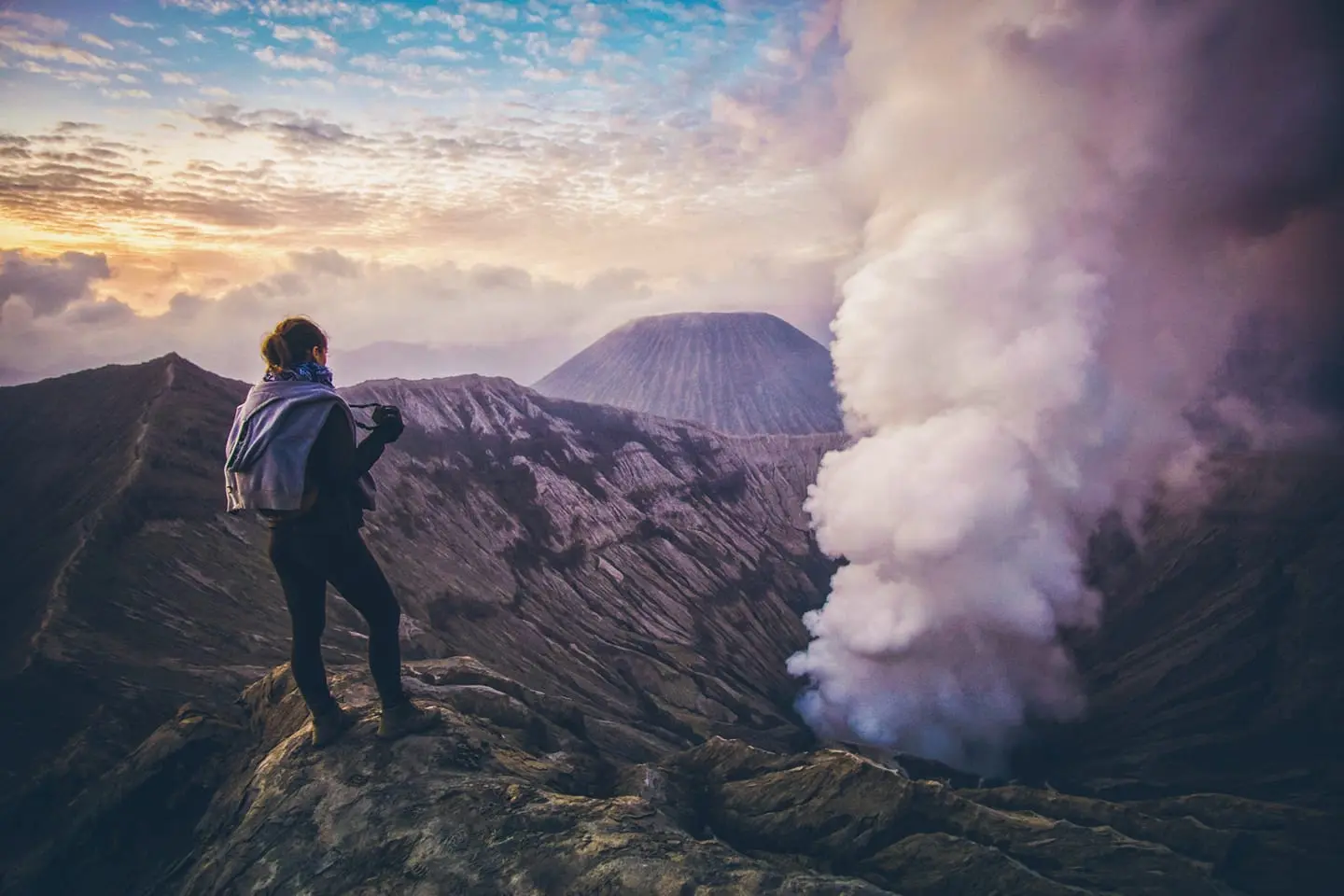
On the occasion of International Women's Rights Day, we look back at the journeys of inspiring figures who, long before travel became a shared leisure activity, crossed the world at considerable risk. Disguised as men, dressed as beggars, sent alone onto the roads of Asia or defying the bourgeois codes of their time: these four explorers pushed back the boundaries of the possible and paved the way for all female travelers of today.
Contents
- Jeanne Barret, smuggled clandestinely around the globe
- Alexandra David-Néel, the European woman who forced the gates of Lhassa
- Nellie Bly, the reporter who beat Phileas Fogg
- Ella Maillart, the nomadic spirit of the 20th century
Jeanne Barret, the first woman to complete a world tour
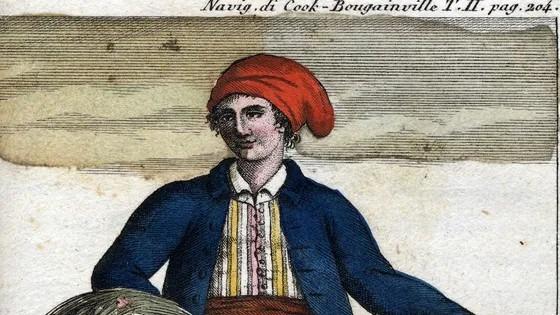
Jeanne Barret (1740-1807) embarked under the appearance and name of a man in order to set out on an expedition around the world. © AFP – Costa / Leemage
Born into a modest family in Burgundy, Jeanne Barret (1740-1807) entered history as the first woman to accomplish a world tour. Her secret: a deception maintained for nearly two years aboard Royal Navy ships.
In 1766, when Louis-Antoine de Bougainville's expedition was preparing to set sail aboard La Boudeuse and L'Étoile, the regulation was clear: no women were allowed to board the king's vessels. But Jeanne would not be deterred. She bound her chest, cut her hair, adopted the identity of "Jean" and presented herself as the valet and assistant to naturalist Philibert Commerson, her companion.
During the voyage, she proved to be far more than a simple lady's maid. A self-taught botanist of remarkable endurance, she collected plants on the coasts of South America, climbed slopes to collect, classify and preserve specimens — the flower that would become the bougainvillea is said to have been harvested by her own hands. Her cover was blown during a stopover in Tahiti in 1768. The couple, who disembarked with some difficulty on the island of Mauritius, would not return to France until several years later.
Upon her return, she obtained an annual pension of 200 livres awarded by the Ministry of the Navy, which praised in an official report the courage of this "extraordinary woman".
Alexandra David-Néel, the adventurer who penetrated forbidden Lhassa
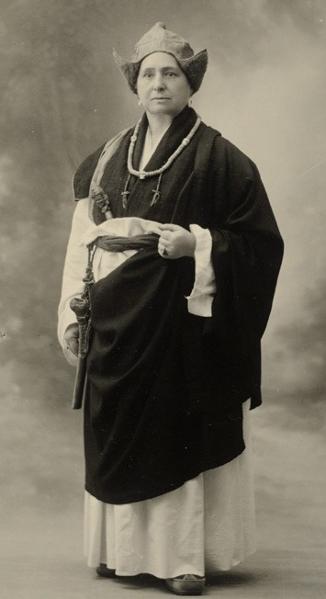
It is difficult to sum up Alexandra David-Néel (1868-1969) in a single word. Opera singer, journalist, writer, convinced feminist, explorer and practitioner of Tibetan Buddhism, this Franco-Belgian woman lived multiple lives with rare intensity. Converted to Buddhism at the age of 21, she became passionate about Eastern wisdom at a time when female travel remained suspect.
In 1911, she left France for what was supposed to be an eighteen-month study trip to India. She would not return for fourteen years. Through her wanderings, she encountered major figures in Buddhism: the prince and spiritual leader of Sikkim, Sidkéong Tulku, who wished to reform the religious practice of his kingdom, and then the thirteenth Dalai Lama, Thubten Gyatso, with whom she formed a lasting friendship.
But her most sensational feat dates to 1924. At age 55, accompanied by her adopted son, the lama Yongden, she entered Lhassa, the capital of Tibet, which was then strictly closed to Westerners. To cross the Himalayan passes and evade patrols, she disguised herself as a Tibetan beggar, blackened her face with soot and dyed her hair with Chinese ink. She spent two months in the holy city before her true identity was discovered.
This adventure gave birth to the work Journey of a Parisian Woman to Lhassa (1927), a bestseller translated throughout the world. The graphic novel A Life with Alexandra David-Néel, by Fred Campoy and Mathieu Blanchot, offers a beautiful entry point to discover this extraordinary destiny.
Nellie Bly, the fearless reporter who journeyed around the world in 72 days
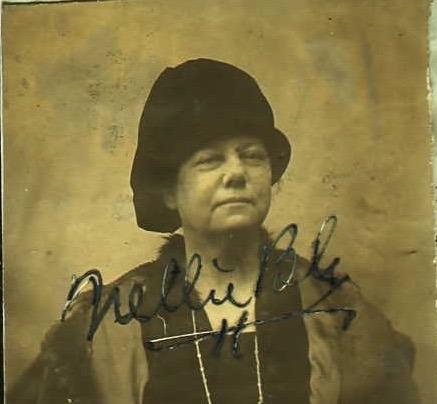
Behind the pseudonym Nellie Bly lies Elizabeth Jane Cochrane (1864-1922), a pioneering American journalist of immersion journalism. Hired by the Pittsburgh Dispatch after submitting a scathing letter to the editorial office, then recruited by Joseph Pulitzer's New York World, she established herself by conducting investigations that were considered unthinkable for a young woman of the late 19th century.
Her most famous report led her, in 1887, to have herself committed for ten days to the asylum for women on Blackwell's Island in New York, while feigning madness. The account she drew from it, Ten Days in a Mad-House, shook American public opinion and forced authorities to undertake a thorough reform of the psychiatric system. She also infiltrated the networks of a New York trafficker, Edward Phelps, and exposed the working conditions of female workers.
In 1889, another kind of challenge drove her forward: to beat the fictional record of Phileas Fogg, hero of Jules Verne's Around the World in Eighty Days. Her editorial office balked — such a journey, without a chaperone, was deemed improper — but she prevailed. On November 14, she left Hoboken (New Jersey) with only a single suitcase.
Train, steamship, junk, carriage, donkey and even a few sections on foot: Nellie Bly traveled nearly 40,070 kilometers, made stops in England, France — where she met Jules Verne in person in Amiens —, Italy, Suez, Ceylon, Singapore, Hong Kong, Japan, before crossing the Pacific. She returned to New York on January 25, 1890, after 72 days, 6 hours and 11 minutes of travel. Her book Around the World in 72 Days, published that same year, became an international success.
Ella Maillart, a major figure in 20th-century exploration
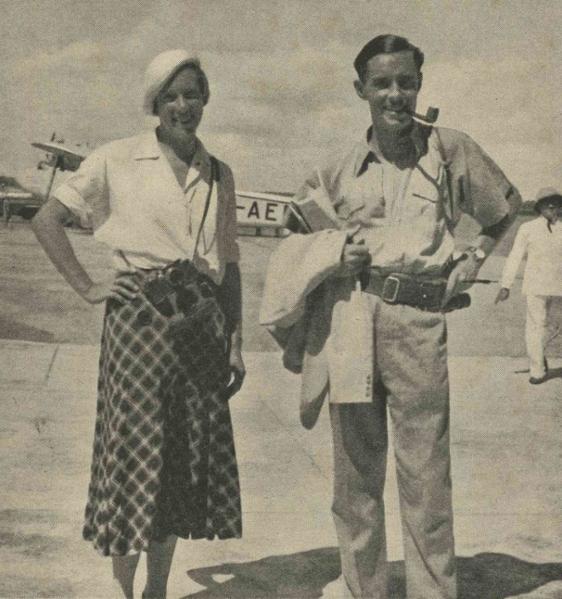
Elite athlete, secretary, actress, stunt performer, traveler, writer, photographer: Ella Maillart (1903-1997) seems to have lived several lives in one. Born in Geneva into a bourgeois family, she rejected early on the prescribed path laid out for her.
At 16, she founded the first women's field hockey club in French-speaking Switzerland. She represented her country as the only woman — and youngest participant — at the Paris Olympic regattas in 1924, before taking part in the first four Alpine skiing world championships. But sport, however demanding, was not enough for her.
In the early 1930s, she discovered Soviet Russia. From this stay came her first book, Among Russian Youth (1932), an unflinching portrait of a sacrificed generation. She then crossed the Caucasus on foot, then went as a reporter to Russian Turkestan — present-day Central Asia, then almost inaccessible — before heading to China in 1934.
It was there, in Manchuria, that she met Peter Fleming, senior correspondent for the Times and brother of the author of James Bond. Together, they undertook a seven-month crossing from Beijing to Srinagar in Kashmir, through the deserts of Xinjiang and the foothills of Tibet. From this she would draw Forbidden Oases (1937), considered a classic of travel literature.
In 1939, she left Geneva at the wheel of a Ford headed for Kabul with Swiss writer Annemarie Schwarzenbach, a journey recounted in The Cruel Road. When the Second World War broke out, she took refuge for five years in southern India, in Tiruvannamalai, near the sage Râmana Maharshi. Upon her return to Europe, she settled in Chandolin, in Valais, where she welcomed travelers and readers until the end of her life, eager to draw from her wellspring of experience.
Beyond the kilometers traveled, Ella Maillart would impose a style: slow travel, attentive, demanding, mindful of both people and landscapes — an ethic of displacement that resonates more than ever today.
Florine Dergelet