
Table of contents
- Thailand
- Tanzania
- Australia
- Brazil
- Canary Islands
- FAQ
Thailand
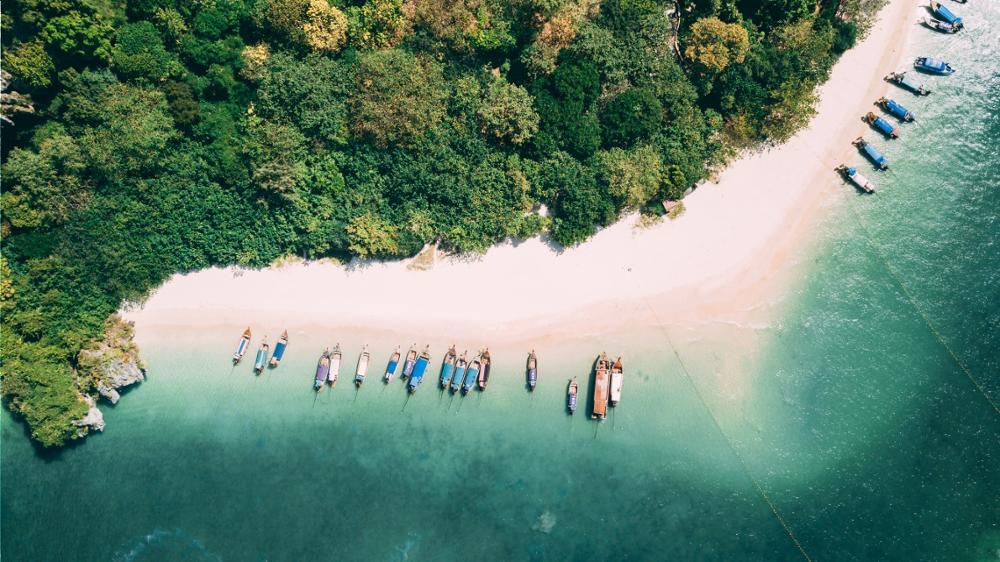
When the French sky turns grey and the days grow shorter, the Land of Smiles becomes the obvious choice. Thailand combines into a single trip nearly everything one expects from a winter escape: the gentleness of omnipresent Buddhism, a cuisine that speaks to all the senses, beaches whose turquoise colour is no exaggeration, and national parks where the jungle reclaims barely marked trails.
Climate-wise, Thailand follows three distinct seasons: the monsoon from May to October, the dry season from November to February, then the hot period from March to May. For a trip with friends, family or as a couple, the November to March window remains the most comfortable: plenty of sunshine, pleasant humidity levels, rare and brief showers.
This season opens all the doors of the kingdom. In the north, the Chiang Mai region reveals its lush mountains, Karen villages and temples clinging to hillsides, without the exhaustion of intense heat. In the centre, Bangkok can be explored temple by temple, bowl of pad thai in hand, through the warm, humid streets of Banglamphu or Chinatown. In the south, two options depending on mood: the Gulf of Thailand and its tranquil islands (Koh Samui, Koh Tao, Koh Phangan), or the Andaman Sea with Phuket, Koh Phi Phi and Koh Lanta.
A small note for marine life enthusiasts: the November to April window is also when the Andaman Sea offers the best visibility, sometimes up to thirty metres. The Similan and Surin sites, accessible only during this period, rank among the finest diving spots in Southeast Asia.
Tanzania
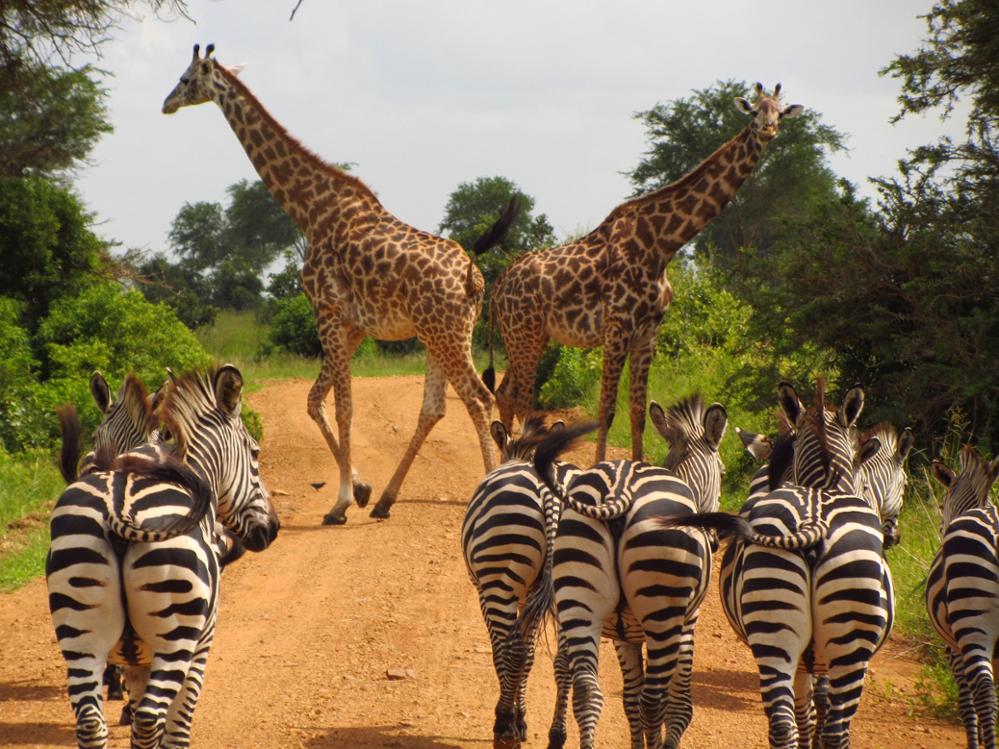
For those dreaming of an escape as sunny as it is exotic, Tanzania ticks many boxes. The warmest period extends from October to February, with temperatures generally ranging between 25 and 30 °C during the day. But it's above all what unfolds in the savanna, on the horizon of the highlands and along the Indian Ocean, that makes this country so singular in the depths of European winter.
Winter coincides with a major event in the great migration: this perpetual movement of nearly two million wildebeest, zebras and antelopes following the rains across the Serengeti-Mara ecosystem. From October to December, herds move towards the north of the Serengeti; in January and February, they settle in the southern plains and around Ngorongoro. It's also calving season: an estimated 8,000 wildebeest are born each day, a vital spectacle that attracts its share of predators.
Winter is also the best season to climb Kilimanjaro. While climbing the roof of Africa (5,895 m) remains possible year-round, the months of December to February offer clearer skies, less muddy trails and summits often snow-capped above 4,500 m.
Then comes the essential finale: Zanzibar. The archipelago, with its white sand beaches, spice plantations and the labyrinthine UNESCO-listed Stone Town, extends the journey gently. The coral reefs of Mnemba or Pemba rank among the richest in the western Indian Ocean.
Australia
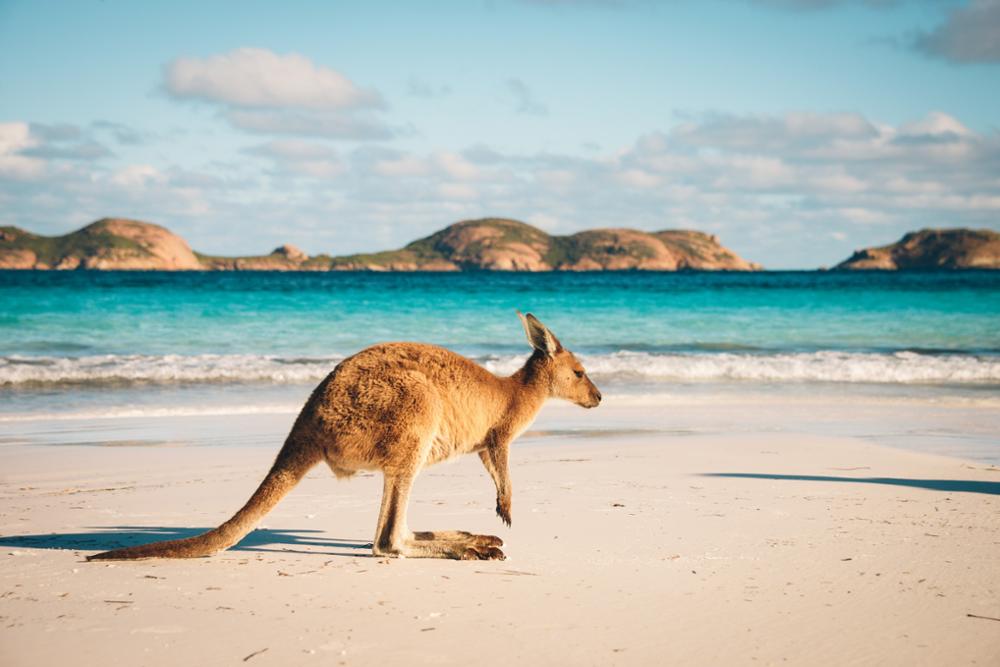
Smallest continent and sixth largest country in the world: Australia plays in a category of its own. People visit for its landscapes — ochre deserts, eucalyptus forests, vibrant reefs — as much as for wildlife found nowhere else: kangaroos, koalas, wombats, platypuses.
The advantage of the southern hemisphere is well-known but unbeatable: when Europe brings out its coats, Australia enters summer. From November to February, most of the territory enjoys warm and stable weather. The only downside is that the tropical North (Darwin, Kakadu, the Top End) goes through its humid season at this time, marked by torrential rains and sometimes cyclones — better to visit these regions between May and September.
The perfect opportunity, in fact, to head towards a less crowded Australia: that of the South, whose diversity sometimes borders on concentrated rather than comprehensive.
- The vast ochre expanses of the Outback, where silence takes on another dimension;
- Wild beaches of a spectacular coastline, playground for surfers and walkers;
- Kangaroo Island and its wallabies, koalas, sea lions and pelicans, to observe in their natural habitat;
- Barossa Valley, one of the country's most renowned wine regions, to explore from cellar to guesthouse;
- The volcanic landscapes of Mount Gambier, its crystal-clear lakes and dizzying caves;
- Adelaide, a human-scale cultural city, famous for its festivals and galleries;
- The Murray River, Australia's longest river, to travel at the leisurely pace of a river cruise.
Brazil

When France switches to winter time, Brazil enters its southern summer. From December to March, temperatures rise, cities vibrate, and the high tourist season is in full swing. With more than 7,400 km of coastline, over 2,000 beaches and a thousand islands scattered throughout the Atlantic, the choice for relaxation is far from limited.
That said, not all regions are equally suited to this season. The tropical climate of the interior imposes its own rules: the Pantanal, the world's largest wetland, becomes partially inaccessible under rains, while Amazonian humidity can discourage the less hardy. Better to reserve these regions for the dry season, between June and September.
But these wetter months also have their own magic. Iguazu Falls, shared between Brazil and Argentina, reach their maximum flow and deploy their full power — up to 13 million litres of water per second at the height of the flood. In the Amazon, the Igapós, these flooded forests where canoes circulate between the treetops, give the jungle a strange and fascinating face.
And then there is, of course, the event that punctuates the beginning of the Brazilian year: the Rio de Janeiro Carnival. Four days and four nights of parades, samba and street blocos, where the boundary between spectators and participants always ends up blurring.
Canary Islands
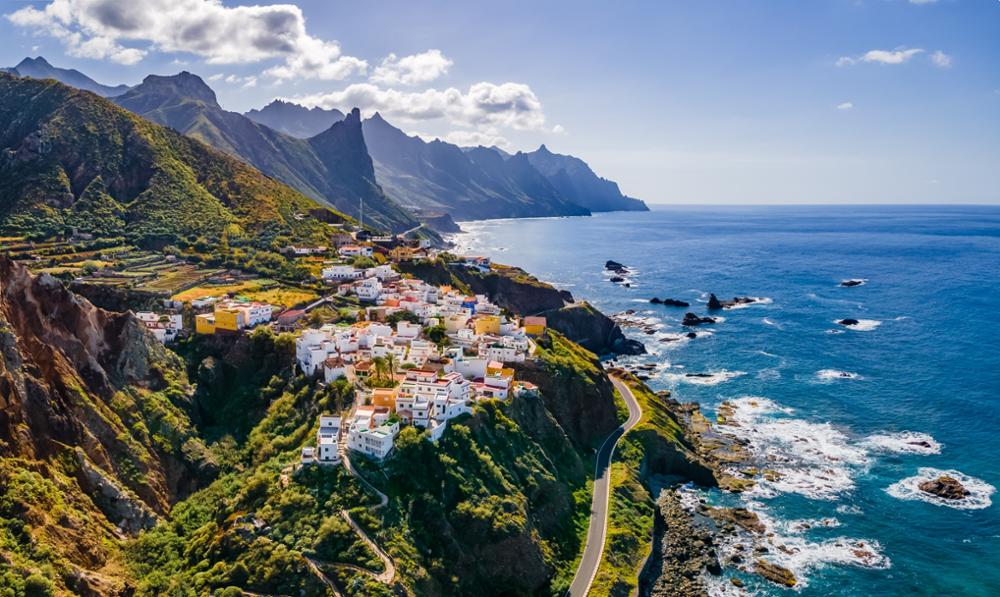
Not everyone has the desire — or the time — to cross multiple time zones to find the sun again. This is precisely where the Canary Islands come in. Nicknamed "the archipelago of eternal spring", this Spanish volcanic group off the coast of Morocco enjoys temperatures that oscillate year-round between 20 and 30 °C, with rainfall that's almost negligible. Count on four to five hours of flight from France, with no time difference or heavy paperwork: hard to get simpler than that.
It remains to choose your island, and each has its own personality.
- Lanzarote: the most mineral, shaped by 18th-century eruptions. Timanfaya National Park offers landscapes bordering on lunar, made famous by the work of artist César Manrique.
- Fuerteventura: its immense coastline and constant winds make it a paradise for surfing, windsurfing and kitesurfing, but also for long barefoot walks.
- La Palma, El Hierro and La Gomera: the most discreet, perfect for hiking and stargazing (La Palma is even classified as a Starlight Reserve). A different idea of the Canaries, wilder and slower.
- Tenerife and Gran Canaria: the largest and most lively, ideal for combining beaches, hikes up Teide (3,715 m, Spain's highest peak), typical villages and nightlife.
Florine Dergelet
FAQ
What is the best time to visit Thailand?
The November to March window corresponds to the dry season: plenty of sunshine, low humidity, rare showers. It's also the best period for diving in the Andaman Sea, where visibility reaches its maximum.
Can you observe the great migration in Tanzania in winter?
Yes. From October to December, herds concentrate in the north of the Serengeti. In January-February, they move to the southern plains and the Ngorongoro region, where the spectacular calving season takes place.
Is Australia pleasant from November to February?
It's the southern summer: almost the entire country enjoys warm and stable weather. Only the tropical northern regions (Darwin, Kakadu) experience their wet season at this time, so better to favour the South, Centre and east coast.
Which regions of Brazil should be avoided during European winter?
The Pantanal and Amazon experience their rainy season then, with stifling heat and some areas inaccessible. Conversely, the coastlines of the Northeast and Southeast, as well as Iguazu Falls, can be visited in superb conditions.
Which Canary Island to choose for a first trip?
For a versatile stay combining beaches, hikes and heritage, Tenerife and Gran Canaria remain the most complete. For a more nature-oriented and less crowded approach, La Palma or La Gomera are excellent alternatives.