
When evoking a trip to Asia, the collective imagination almost automatically conjures up the rice paddies of Vietnam, the temples of Thailand, or the alleyways of Kyoto. Yet the continent stretches far beyond these Southeast Asian classics. To the west, where the steppe meets the desert and ancient empires left their mark, five countries cultivate a rare art: that of welcoming travelers without succumbing to mass tourism.
In this article
- Jordan, living memory of the Middle East
- Armenia, Christian sentinel of the Caucasus
- Oman, the sultanate of a thousand landscapes
- Georgia, discreet crossroads between Europe and Asia
- Iran, Persian heritage under open skies
1. Jordan, living memory of the Middle East
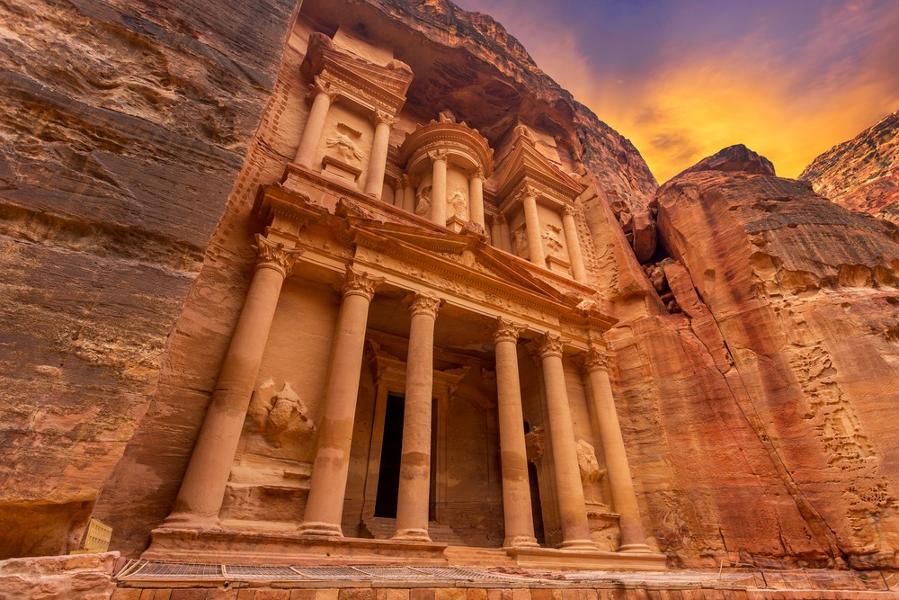
Squeezed between Syria, Iraq, Saudi Arabia, and Israel, Jordan has long been an island of stability in a region under tension. This singular status makes it one of the most accessible destinations in the Middle East, without surrendering to tourist uniformization. The civilizations that succeeded one another there — Nabataeans, Romans, Byzantines, Umayyads, Mamluks — left a vertiginous archaeological stratification in their wake.
The jewel is obviously Petra, a city carved from pink rock by the Nabataeans more than two millennia ago. Listed as a UNESCO World Heritage site and designated as one of the seven new wonders of the world in 2007, it is best discovered at dawn or at the end of the day, when the low sun ignites its facades. But reducing Jordan to Petra would be a mistake: Jerash and its Roman colonnades, the Crusader castle of Kerak, or the fortresses of the eastern desert deserve to be lingered over.
The country also retains a profound spiritual dimension. The Kings' Highway, one of the oldest known trade routes, crosses Madaba — famous for its sixth-century Byzantine mosaic map — and leads to Mount Nebo, from where Moses is said to have beheld the Promised Land. On the nature side, Wadi Rum offers one of the most breathtaking desert landscapes in the world, while the Dead Sea allows the unsettling experience of floating effortlessly 430 meters below sea level.
2. Armenia, Christian sentinel of the Caucasus
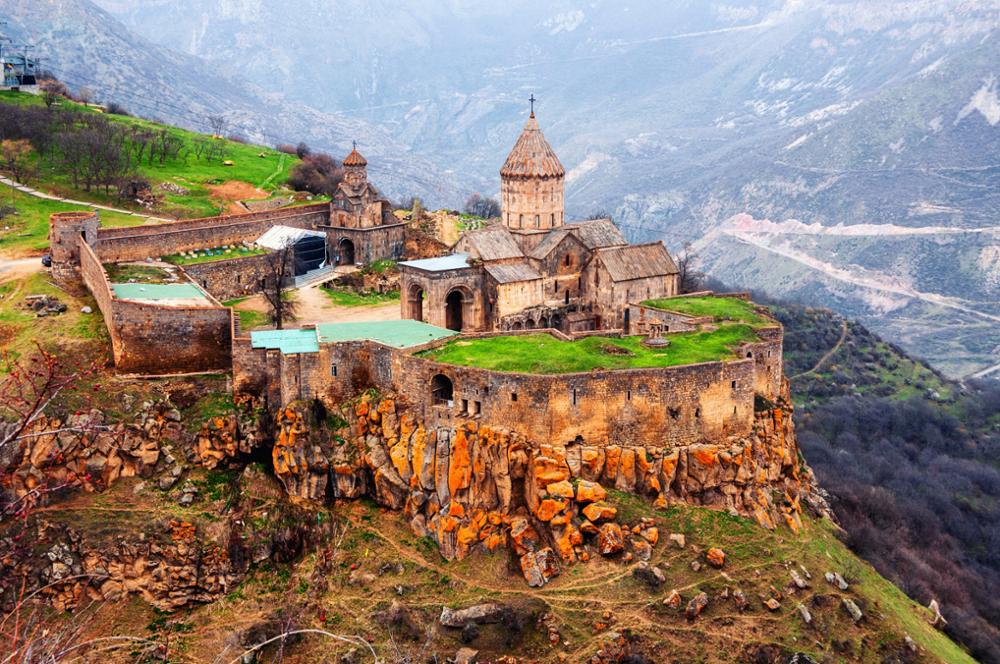
The first nation to adopt Christianity as a state religion in 301, Armenia preserves in its stones the trace of this early choice. The Geghard monastery, partially carved into the cliff, the Tatev monastery perched at 1,600 meters altitude, or the Haghpat complex listed by UNESCO tell of a faith that took root in the mountains to survive successive invasions — Persian, Arab, Mongol, Ottoman, Soviet.
Independent since 1991, this former Soviet republic remains largely off the beaten path of European tourism circuits. Yet its landscapes rival those of the Alps or the Pyrenees. Mount Ararat, the emblematic peak for every Armenian, although it now lies in Turkish territory, can be contemplated from Yerevan in clear weather. Lake Sevan, one of the highest freshwater plateaus in the world, displays its turquoise hues at 1,900 meters altitude. Hiking enthusiasts will appreciate the trails in the Tavush region or the still-quiet Syunik valleys.
What remains most memorable is hospitality. Shaped by painful history — from the 1915 genocide to recent conflicts with Azerbaijan — Armenian culture has made sharing second nature. An invitation to table, a glass of blackberry brandy, a conversation over thick black coffee: so many ordinary gestures that make up the fabric of a journey here.
3. Oman, the sultanate of a thousand landscapes
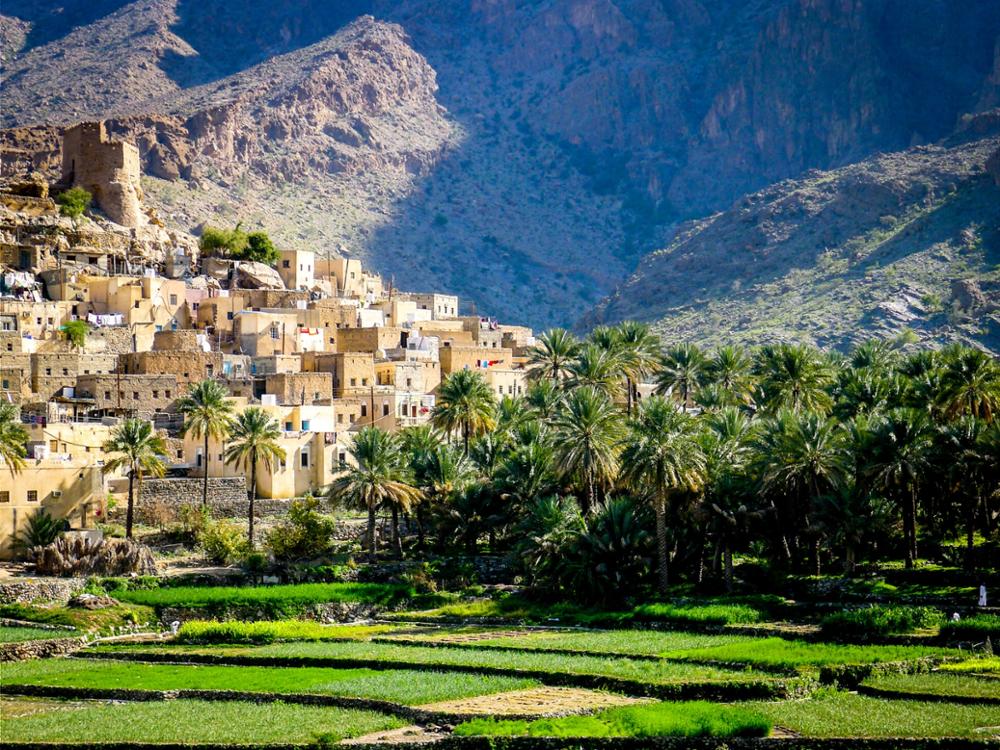
Often overshadowed by its flashier Emirati neighbor, the Sultanate of Oman moves at its own pace. The country was long ruled by Sultan Qaboos (1970-2020), who opted for controlled development, keen to preserve vernacular architecture and cultural identity. Result: Muscat, the waterfront capital, retains a peaceful horizontal feel where Dubai bet on verticality.
Geographically, Oman is a condensed Arabia. In the north, the spectacular fjords of Musandam plunge into the Strait of Hormuz. In the center, the ochre dunes of Wahiba Sands invite bivouacking under the stars, while the Jebel Akhdar massif (the "Green Mountain") reveals terraced cultivation above 2,000 meters. Further south, the Dhofar region around Salalah experiences a unique phenomenon in the Arabian Peninsula: the khareef, a summer monsoon that transforms the desert into verdant hills from June to September.
On the coast, the beaches of Ras Al Hadd welcome thousands of green turtles each year coming to nest, in one of the last great nurseries of the Indian Ocean. The diversity of experiences — desert, sea, mountains, oasis villages like Misfat al Abriyeen — makes Oman a particularly suitable destination for families, in a peaceful, secure climate with excellent road infrastructure.
4. Georgia, discreet crossroads between Europe and Asia
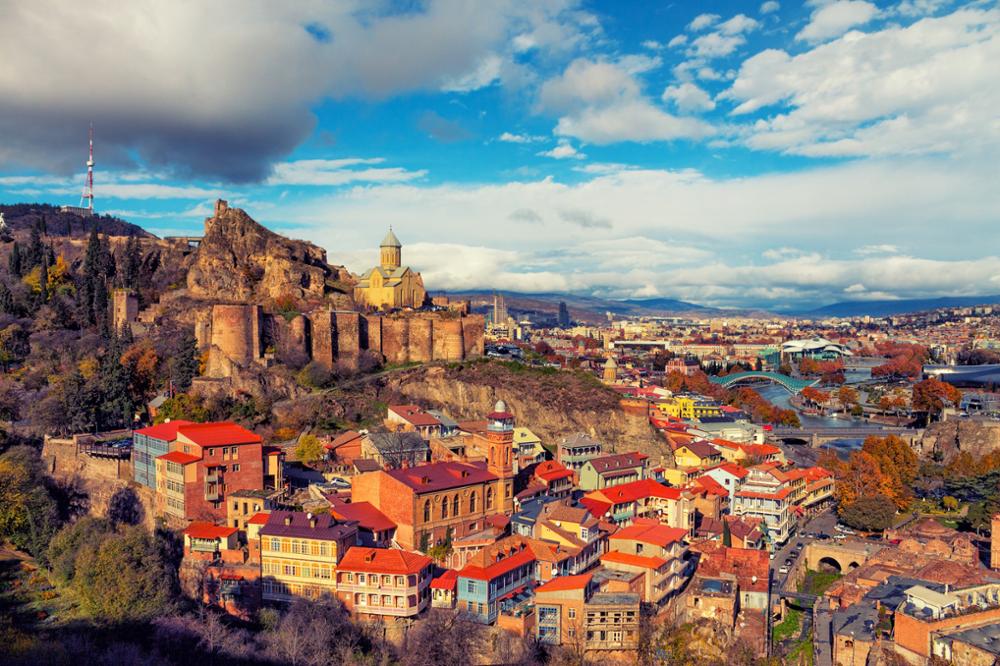
Five hours by plane from Paris, Georgia paradoxically remains little known. This small South Caucasus country nonetheless has weighty arguments: spectacular nature, affordable cost of living, inventive cuisine, and one of the oldest winemaking traditions in the world. Archaeological excavations indeed attest to continuous winemaking over 8,000 years, in clay jars called qvevri still used today in Kakheti.
The geographical contrast is striking. In the north, the peaks of the Greater Caucasus culminate at over 5,000 meters and shelter fortified tower villages like those of Svaneti, listed by UNESCO. In the east, vineyards stretch to the horizon. In the south, the semi-desert high plateaus of Djavakheti contrast with the subtropical lushness of Adjara on the Black Sea. Tbilisi, the capital, plays with this métissage with its historic center of wooden balconies, Ottoman sulfur baths, and contemporary art quarters.
The religious heritage alone deserves the trip: troglodytic monasteries of Davit Gareja on the Azerbaijani border, the Ananouri complex on the Georgian Military Road, archaeological sites of Dmanisi where some of the oldest hominids outside Africa were found (1.8 million years old). And everywhere, that Georgian hospitality whose ritual of the supra — a long banquet rhythmed by the toasts of the tamada — remains the most emblematic expression.
5. Iran, Persian heritage under open skies
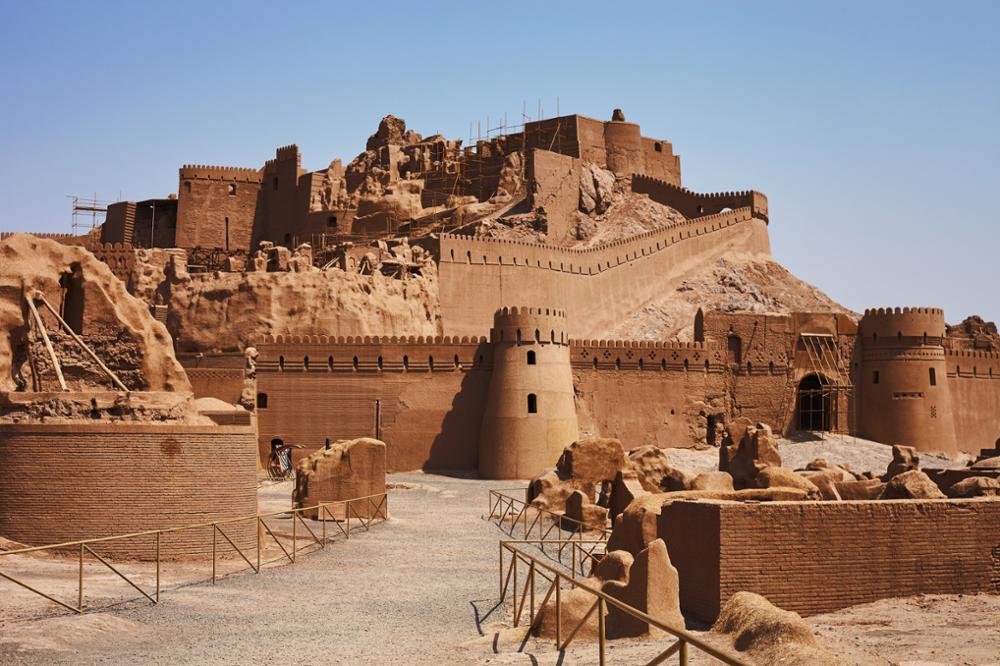
Traveling to Iran requires careful preparation and regular reading of current events — the political situation and access conditions evolve — but rewards with an experience of rare intensity. Ancient Persia saw the birth of one of history's first great empires, and the ruins of Persepolis, capital founded by Darius I in the sixth century BC, still testify to this splendor. Nearby, the royal tombs of Naqsh-e Rostam, carved into the cliff, extend this dialogue with antiquity.
But Iran is not limited to its Achaemenid past. Isfahan and its Naghch-e Djahan square, jewel of Safavid art; Yazd, a mud-brick city where Zoroastrianism is still practiced; Shiraz, city of poets where Hafez and Saadi rest; Tabriz and its grand bazaar listed by UNESCO: each stage adds a layer to a millennial narrative.
The landscapes, for their part, defy all caricature. The Lut Desert, one of the hottest points on the planet, alternates with the Hyrcanian forests of the north, the Persian Gulf beaches, the snow-capped peaks of the Alborz Mountains, and the salt lake of Urmia. And at the heart of this diversity, the famous ta'arof, this refined Iranian politeness, transforms the slightest exchange — shared tea, a direction asked — into a suspended moment.
Florine Dergelet